With a small field, open countryside and long stretches of uninterrupted running, Flanders Fields became one of the most reflective road races I have experienced.
Most of the marathons I had run until this point were in capital cities or major destinations.
The In Flanders Fields marathon was different.
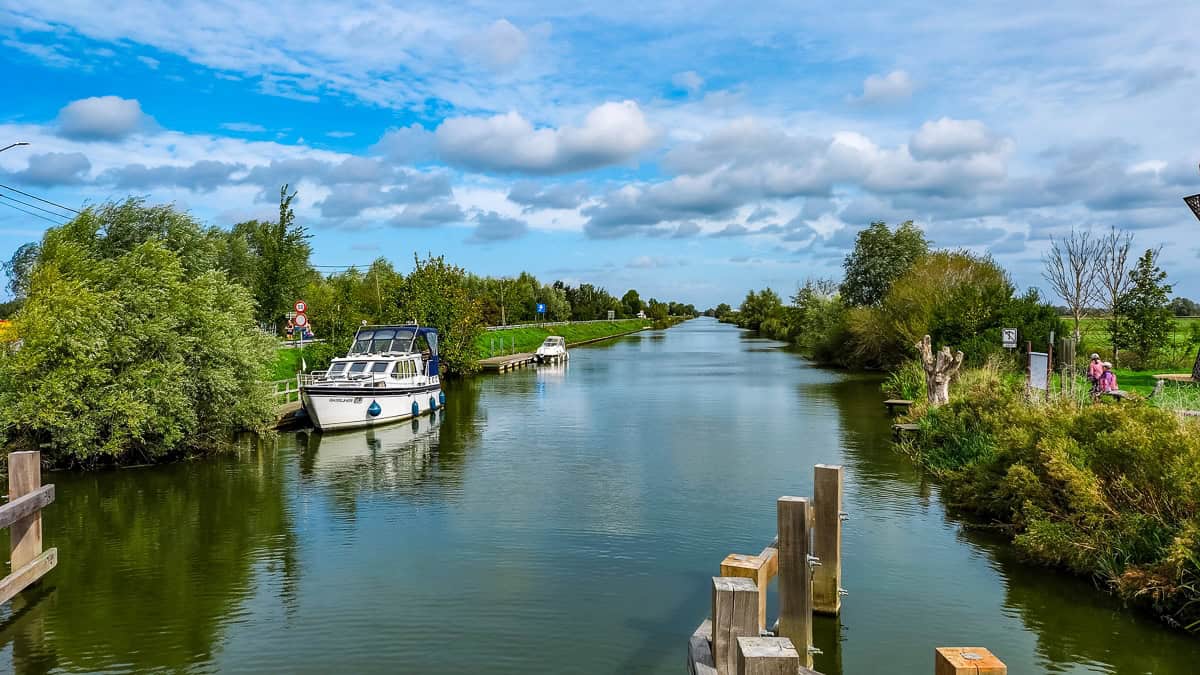
This underrated race starts in Diksmuide and finishes in Ypres, following a largely flat point-to-point course through the countryside of West Flanders.
That concept interested me.
Not because I had some deep personal connection to this particular chapter of World War I history. I did not.
But the idea of running through a landscape shaped by history felt very different from another loop around a European city.
I had also never explored this part of Belgium. So while the race required a detour from the rest of my travel route, it felt like one worth making.
Using Ghent as a base
Compared with a major city marathon, there were fewer accommodation options around Diksmuide and Ypres for the kind of solo trip I was making.
I eventually based myself in Ghent, which had a direct train to Diksmuide on race morning. And it’s a popular destination. Traveling is still a big part of this world marathon project, even though that adds a lot of walking between marathons.
Race morning did not begin particularly smoothly. I had stored my breakfast and race food inside the hostel kitchen the night before. Rookie mistake.
When I woke up at 530am, reception closed, kitchen locked. Fortunately, I had been sensible enough to keep my gels in my race bag.
As I brushed it off and opened the door to leave, I was greeted by heavy rain.
Now I had a 40 minutes walk to the train station, through early-morning rain without breakfast. Shoes were getting wet even with an umbrella, and left knee feeling worse than I wanted it to.
Not ideal for my fourth marathon in four weeks, but I decided to solve one problem at a time.
Get to the station. Get to Diksmuide. Find food there. Eat. Start the race.
A small race with simple logistics
Once I reached Diksmuide, things became much calmer.
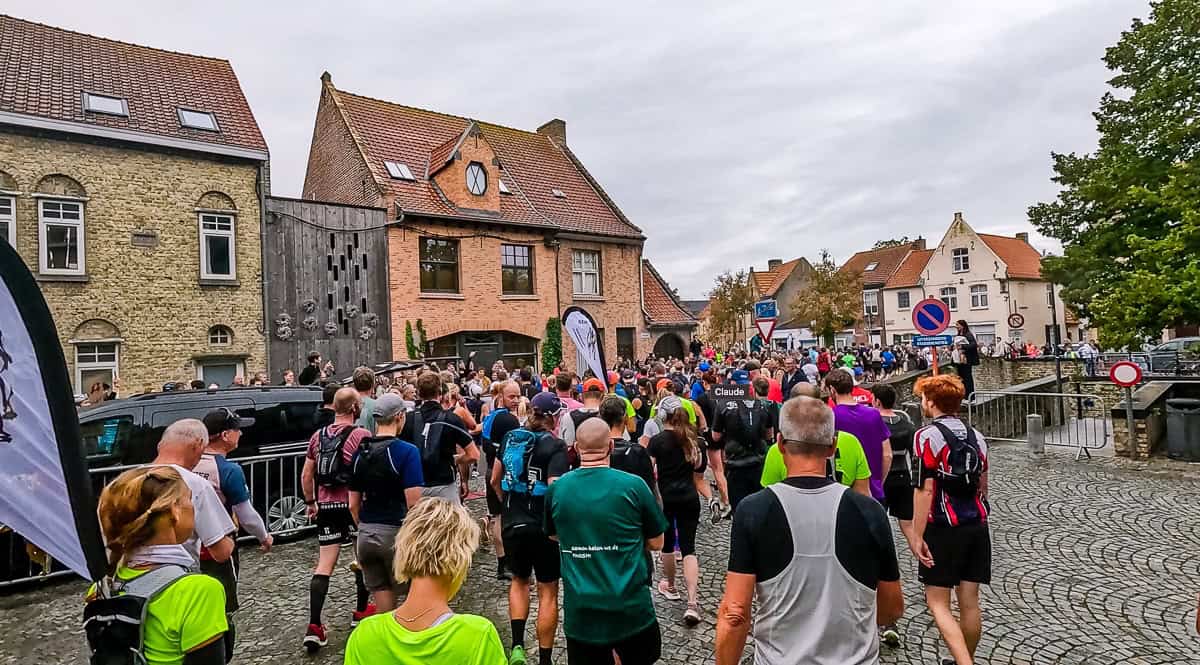
Bib collection took place inside a school building rather than at a large expo.
For a smaller race, that worked well.
There were proper toilets, somewhere to sit, and a straightforward process for collecting the bib and leaving a bag to be transported to the finish.
The smaller field was immediately noticeable.
The atmosphere felt more intimate than most of the city marathons I had entered.
People were sitting around preparing, talking, and waiting for the weather to improve.
I started chatting with another runner there, and we would eventually explore Ypres together after the race.
By the time we moved toward the start, the rain had stopped.
The morning had been miserable, but the race weather would turn out to be much better.
The knee I hoped would disappear
The main concern remained my left kneecap.
It had first become a significant issue in Dingle two weeks earlier.
Tallinn had irritated it again.
Throughout the week in Belgium, I kept assuming it would recover enough that I would simply notice it rather than have to manage it.
By race morning, I was less convinced.
It hurt.
Not enough to stop me starting. But enough that I knew it would be part of the race from kilometer one.
That mattered because the original plan relied on patience.
I wanted to begin with a controlled run-walk strategy, then gradually increase the effort if the knee and muscles remained cooperative.
Instead, the small field changed the plan almost immediately.
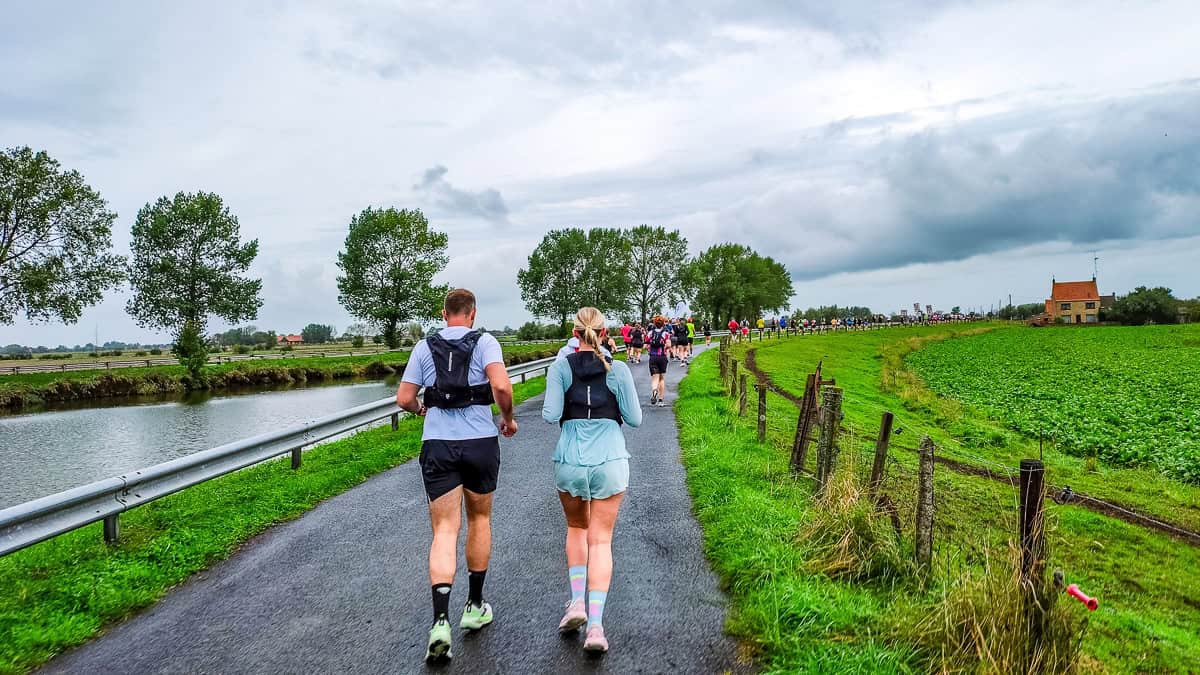
I started near the back, with race vehicles following behind the final runners.
Taking an early walk break would have left me right at the back with those vehicles directly behind me.
Technically, that might have been fine. Psychologically, I disliked the idea.
So I ran. No early walk breaks. Just a slower continuous pace.
Within the first kilometers, the knee was already complaining.
I kept hoping it would warm up. But it only settled after an hour, though not disappear.
A landscape that gives you room to think
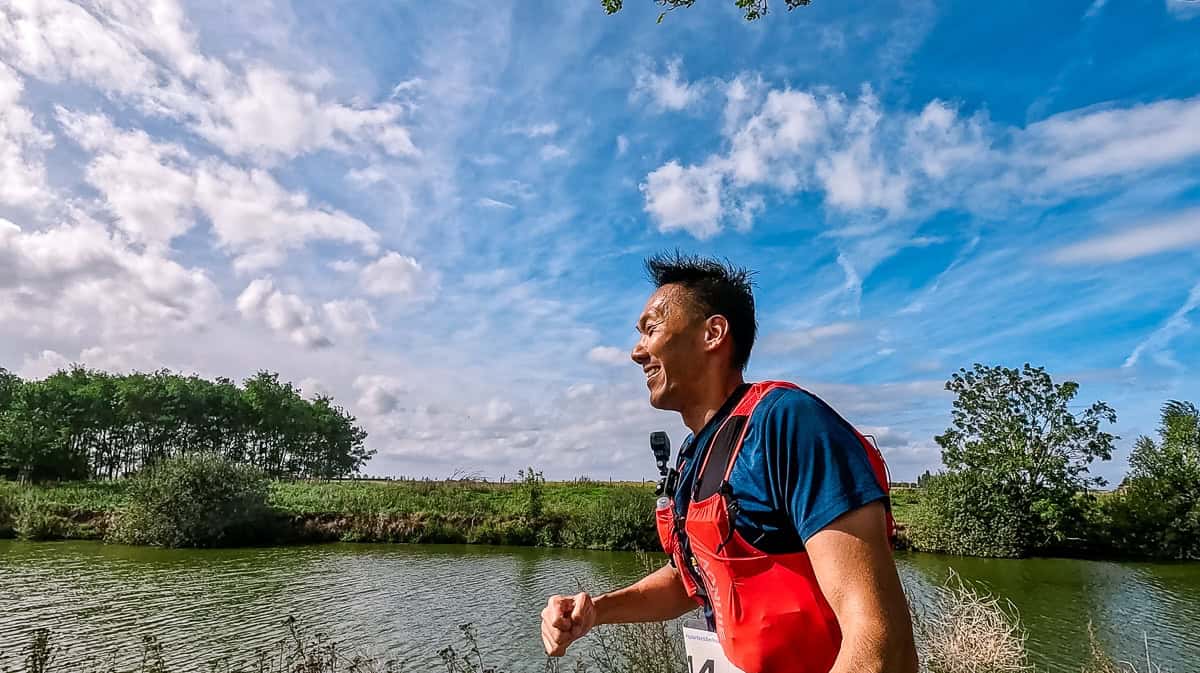
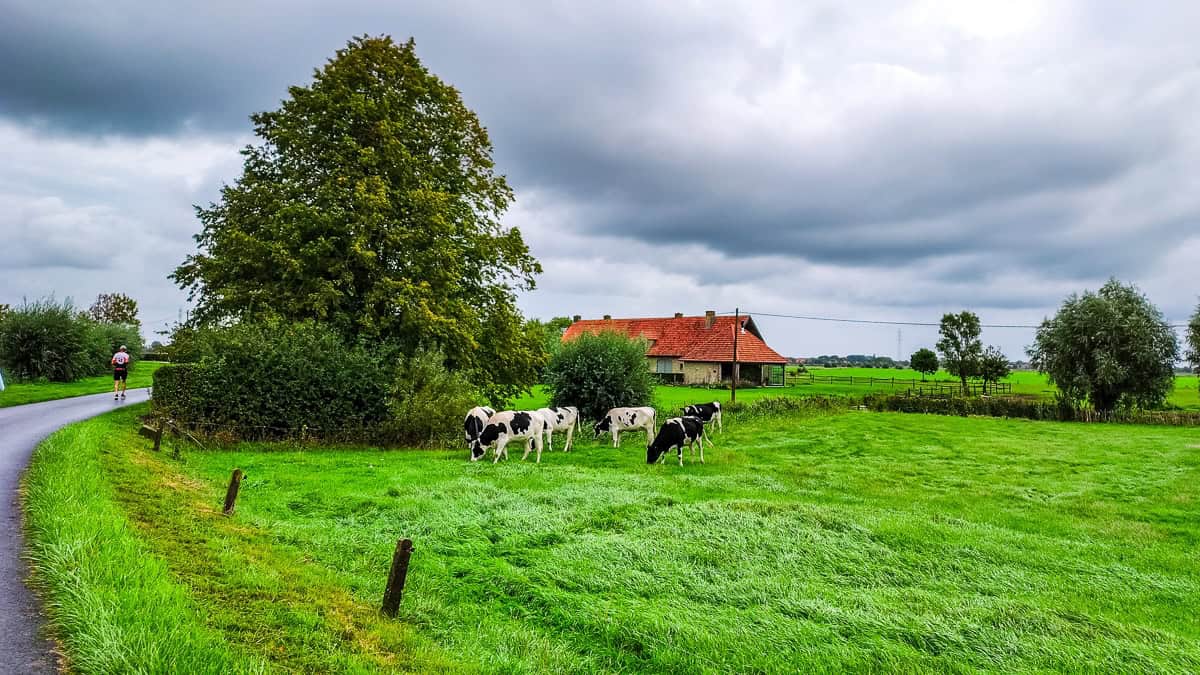
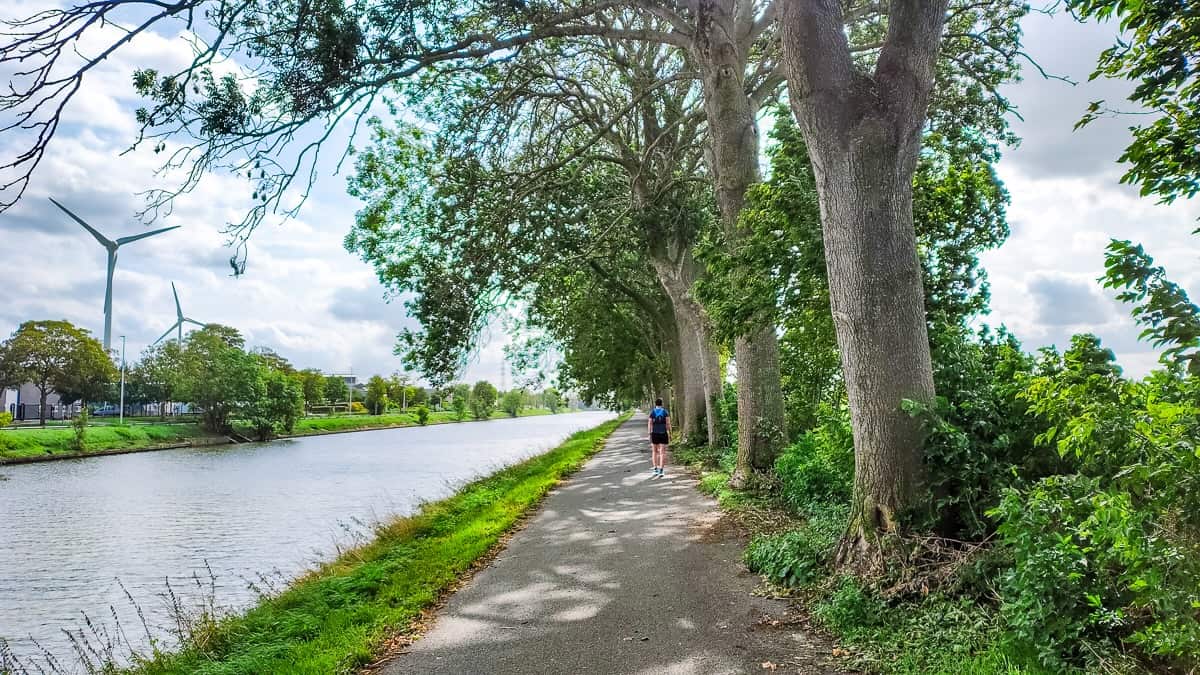
The beautiful scenery outside Diksmuide helped. It was nice but not dramatic. That was exactly what I liked about it.
Fields stretched toward the horizon.
Canals and waterways ran alongside parts of the road.
Because the terrain was so flat and open, I could sometimes see strings of runners extending far into the distance.
It was a completely different kind of scenery from Dingle.
Dingle demanded attention.
Cliffs. Ocean. Mountains. Animals.
Every corner seemed to produce another photograph.
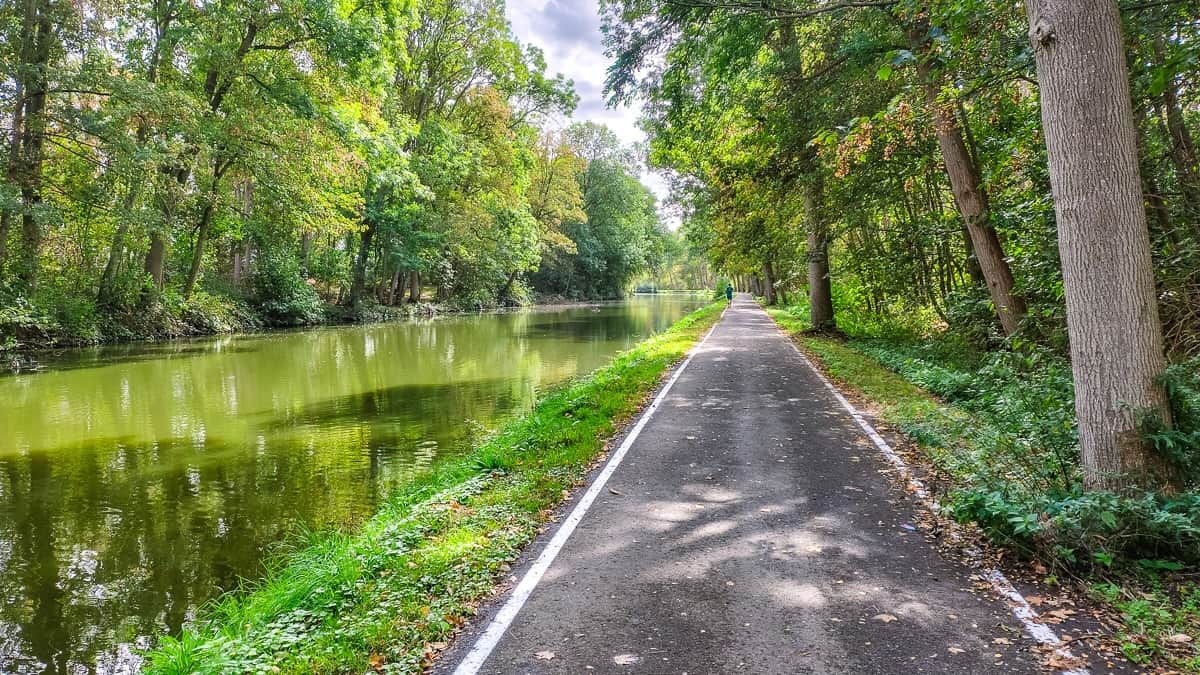
Flanders was quieter.
The landscape rarely shouted for attention. It simply stayed with you.
Green fields. Waterways. Small villages. Long straight roads. A huge sky.
I found it incredibly peaceful.
That was what made the marathon unusually reflective.
Running through history
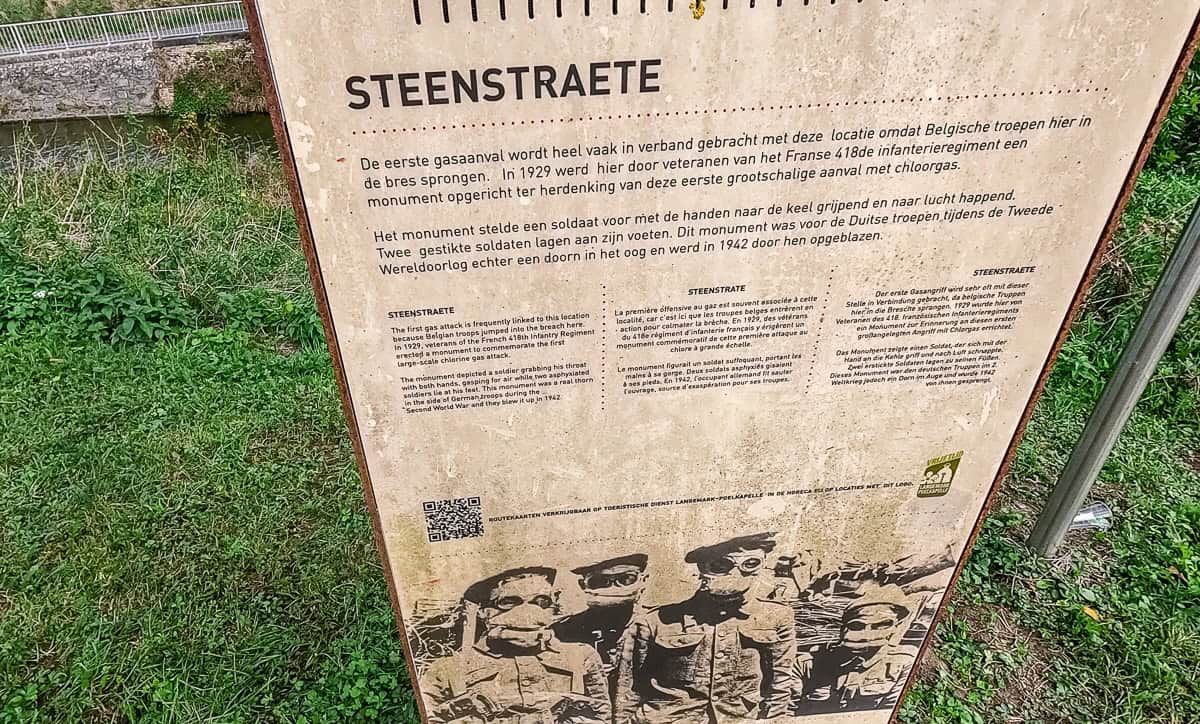
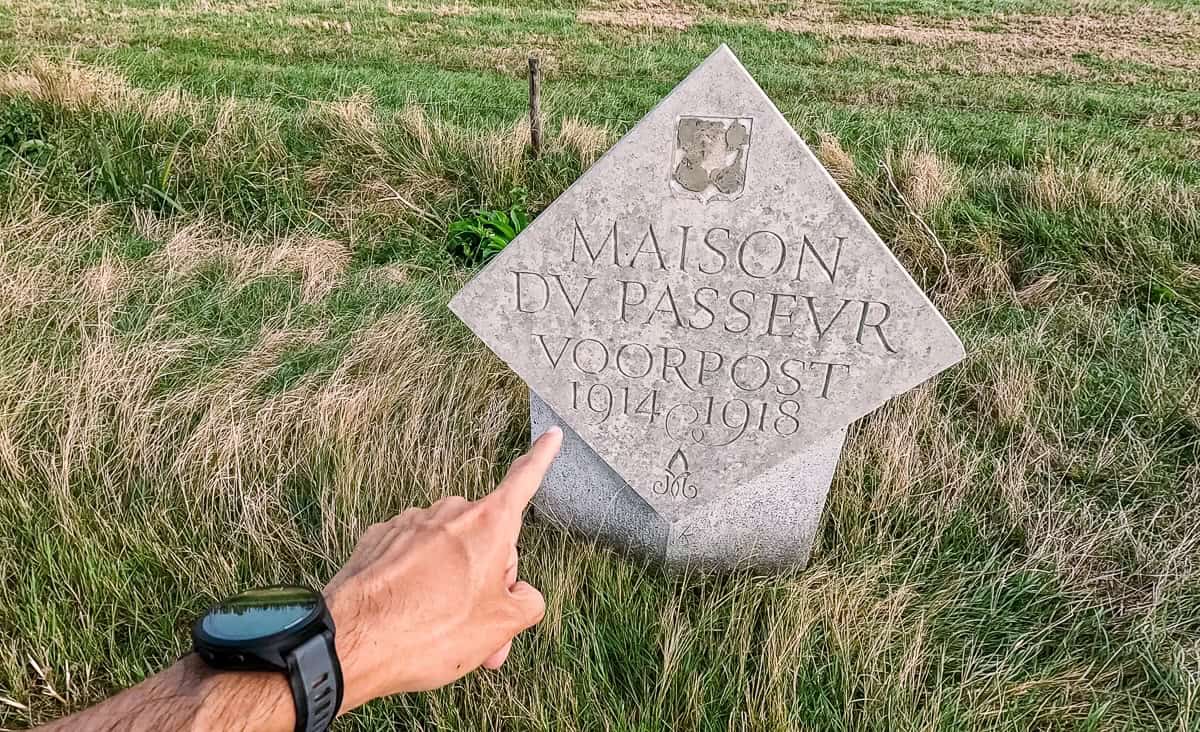
The First World War context remained present throughout the race.
There were signs, monuments, preserved sites and places connected with the fighting that once took place across this landscape.
But I would not describe the marathon as a 42-kilometer history lesson.
The history formed the backdrop.
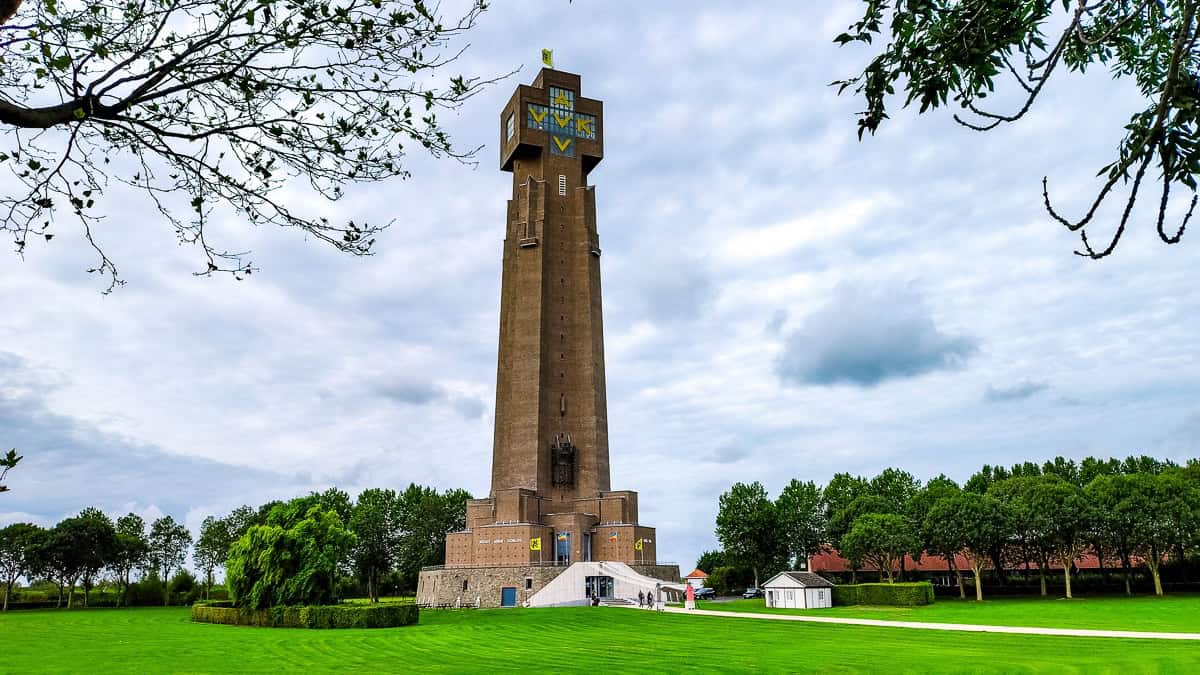
For someone with a deeper knowledge of the region, I imagine many of those places would carry considerably more meaning.
My own experience was simpler.
I knew what this landscape represented.
I appreciated seeing parts of that history.
But the strongest feeling for me came from the combination of open terrain, long stretches of road and the ability to spend time inside my own thoughts.
Perhaps that is fitting for a race through a region so strongly associated with remembrance.
Quiet roads, passionate support
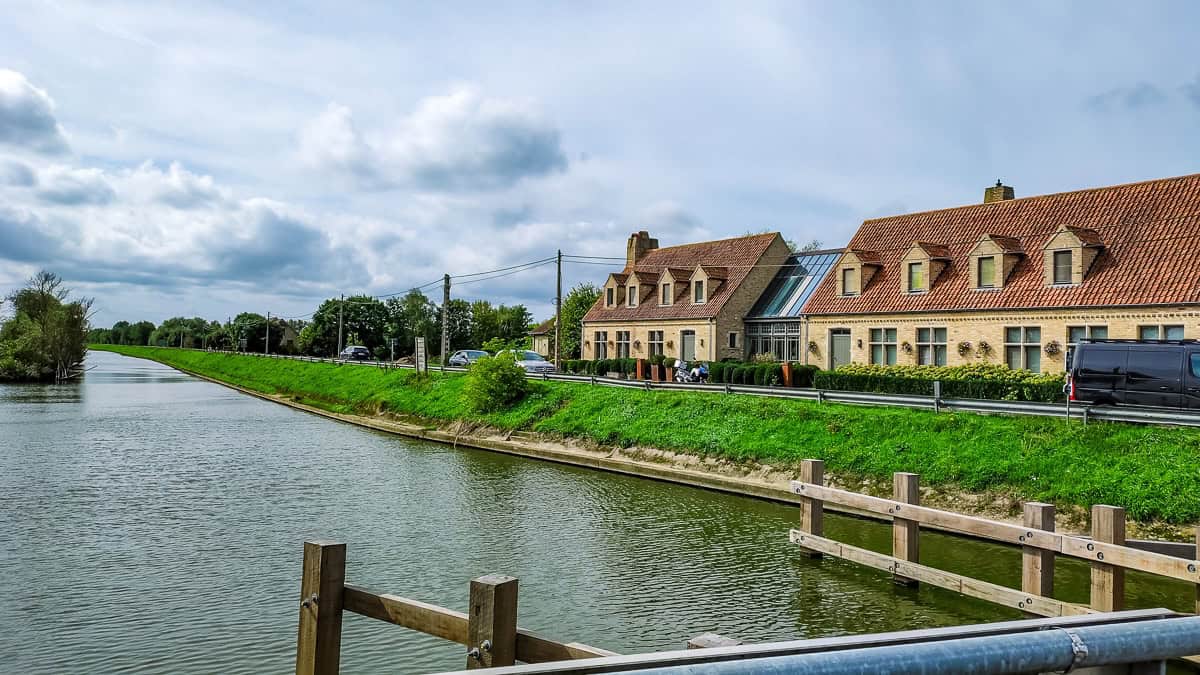
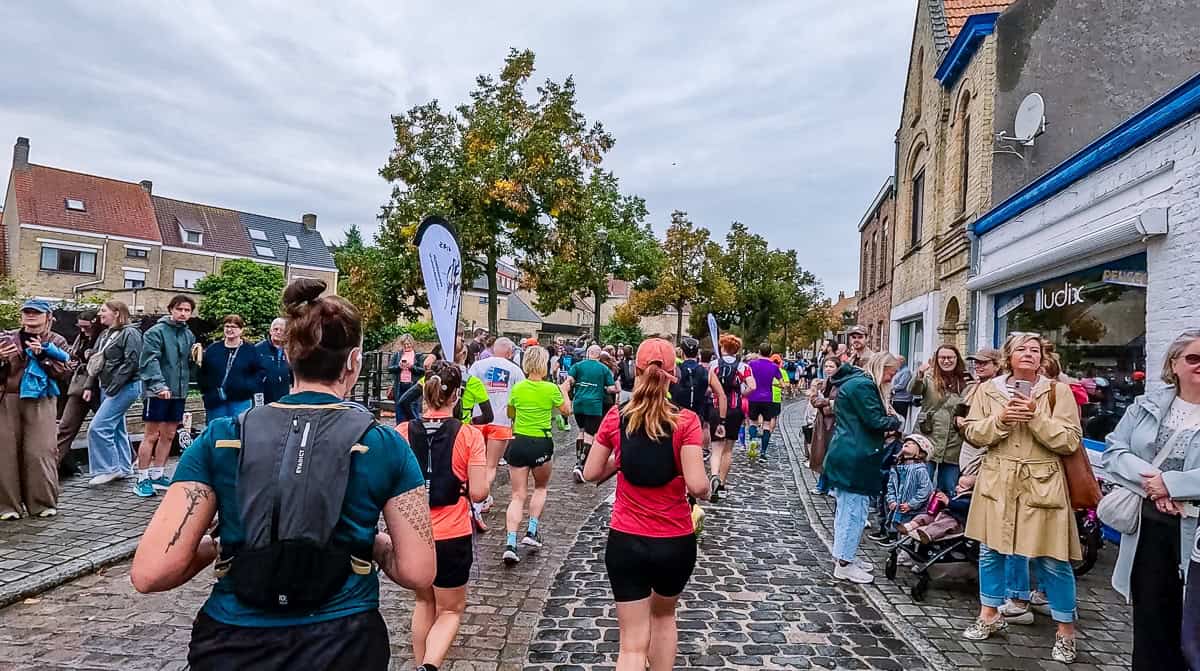
There were long stretches without spectators as much of the marathon passes through countryside.
Yet, some of the most memorable support came from people living directly along the route.
Residents stepped outside their houses.
Small groups appeared in villages.
Volunteers waited at aid stations.
There might only be a handful of people at a time, but they were enthusiastic. I enjoyed that.
That created a different feeling from a city marathon lined with thousands of spectators.
For runners who need constant crowd support to stay motivated, Flanders Fields may feel sparse.
If you enjoy settling into a peaceful run surrounded by open space, it works extremely well.
Simple aid stations that had everything I needed
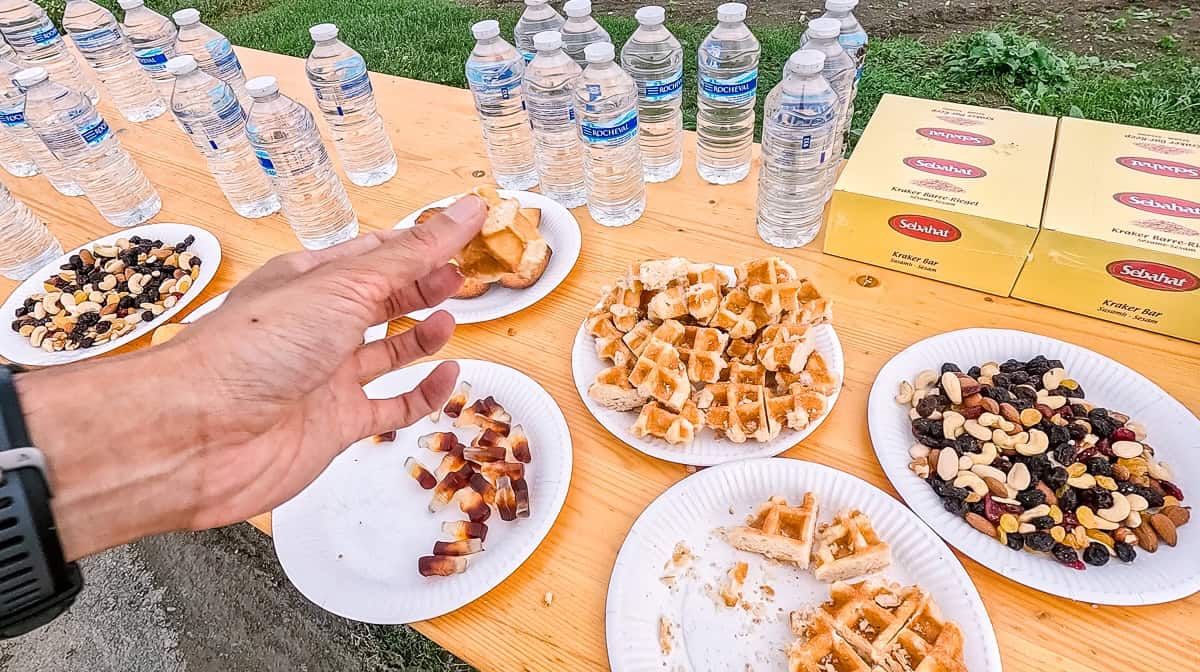
The aid stations followed the same pattern as the rest of the event.
They looked modest.
Usually just a couple of tables rather than the long multi-station setups of major city marathons.
But they were well stocked.
Sports drink. Coke. Waffles. Candy.
For such a small race, I rarely felt undersupplied.
The main practical difference was that toilets were more sparse than at many city races. That is worth knowing beforehand.
The wind you only notice when it hurts
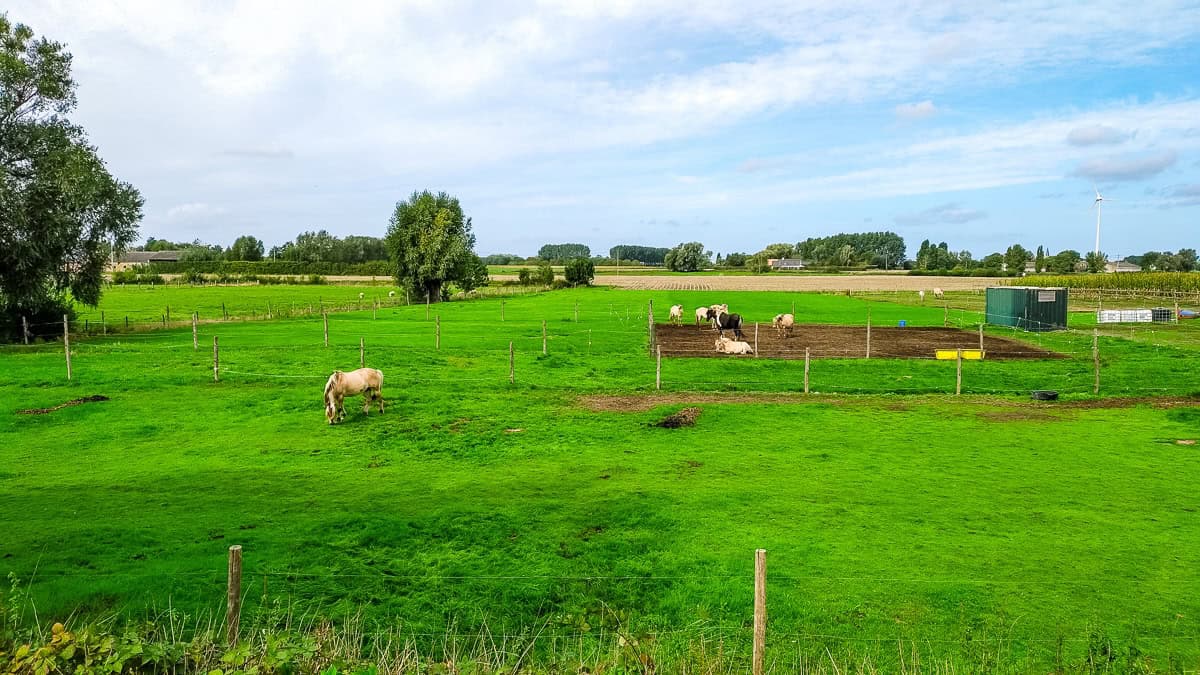
The other constant was wind.
In an open landscape like West Flanders, there is not much shelter.
Of course, the wind could not have been against me for the entire marathon. But runners rarely notice a tailwind.
You notice the moments when the wind pushes straight into your face.
Still, the knee had improved and the course was flat.
For a while, things were going reasonably well.
Then the accumulation started.
Where continuous running began to cost me
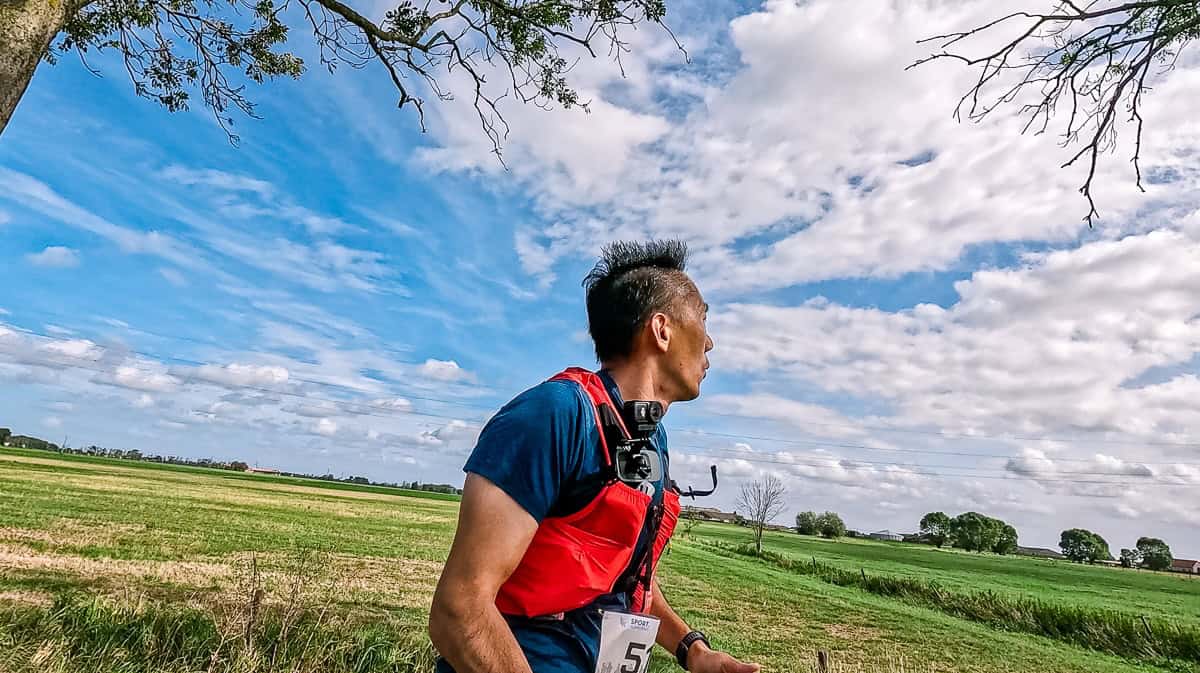
By the second half, the legs were becoming tighter.
This was where I began questioning the decision to abandon run-walk completely.
Helsinki had shown me that planned walking could preserve enough muscular reserve for a very strong finish.
Tallinn had reinforced how much repeated loading mattered.
Flanders was now asking me to run continuously at a higher average effort than either.
By KM30, I could feel the margin narrowing.
The knee was still manageable. The muscles were still working.
But there was a sense that if I pushed too aggressively, something might suddenly go wrong.
This was not a dramatic collapse.
Nothing had blown up.
It was more subtle than that.
I still had speed available.
Whenever I walked or stopped briefly for a photo, I could accelerate again afterward.
But the final kilometers no longer felt like something I could attack recklessly.
That was the key difference from Helsinki or Tallinn.
Those races had ended with huge reserves.
Flanders required more management.
I still had something left. Just not an unlimited amount.
A race that required more patience than expected
I had entered Flanders knowing I would need to run harder than I originally expected when I first put the race on the calendar.
That created an unusual balance.
I could not simply turn the final third into a sightseeing walk.
But neither could I empty the tank too early.
As the remaining distance dropped, I became increasingly conscious that I needed to keep moving with purpose.
There was still room for occasional walking.
There was still room to manage the knee and muscles.
But this was not one of those finishes where I could completely relax and assume the result would take care of itself.
Eventually, the countryside began giving way to Ypres.
That was when I knew it was finally time to commit.
Toward Ypres
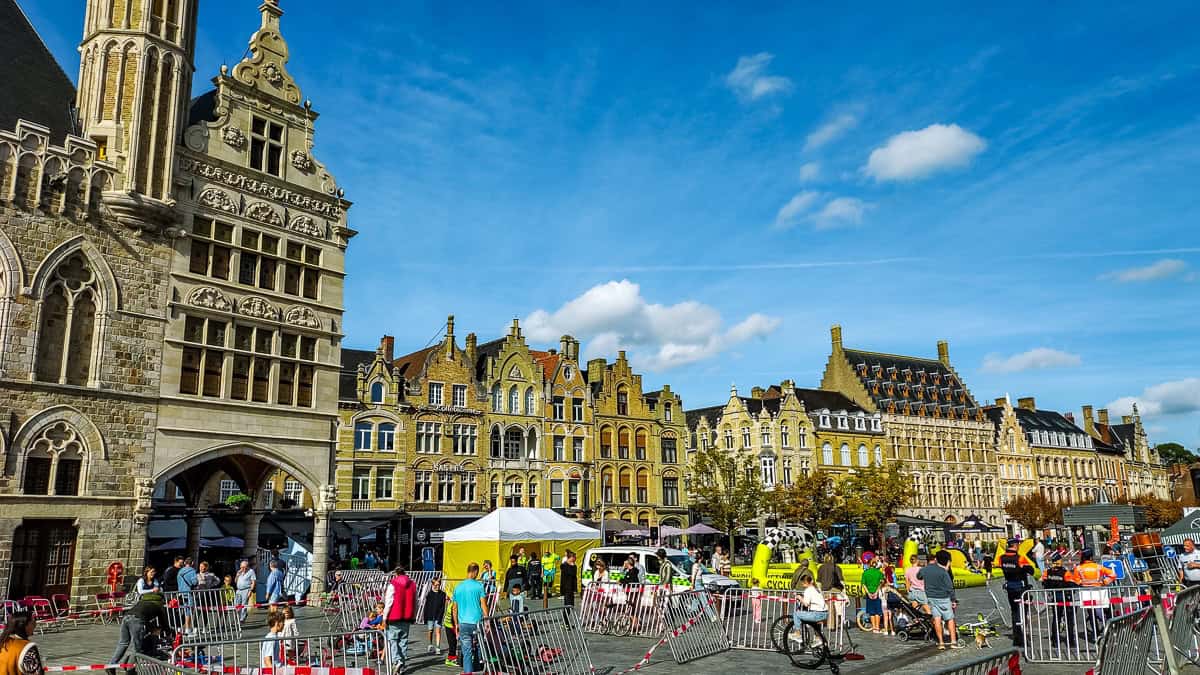
The change felt significant after so many kilometers of fields, canals and open roads.
I was ready to increase the pace.
The route had other ideas.
The approach into the city included some uphill running just when I wanted to accelerate.
It was an awkward contrast.
Mentally, I was ready to push.
Physically, the terrain made the effort feel harder than I wanted it to.
I knew I was speeding up.
My body simply was not giving me the effortless sensation I wanted in return.
Still, once the remaining distance became small enough, I committed.
Enough conserving.
Run.
Through the Menin Gate
Then Ypres gave the race its best moment.
After hours of quiet fields and scattered villages, suddenly there was architecture, sound and people again.
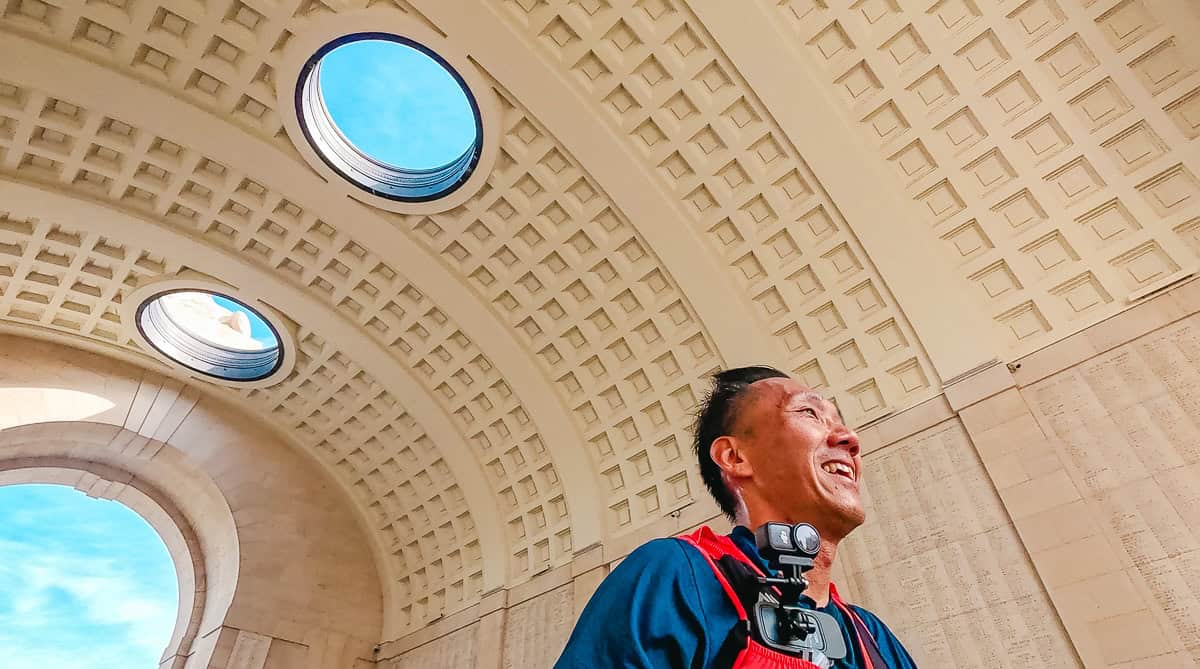
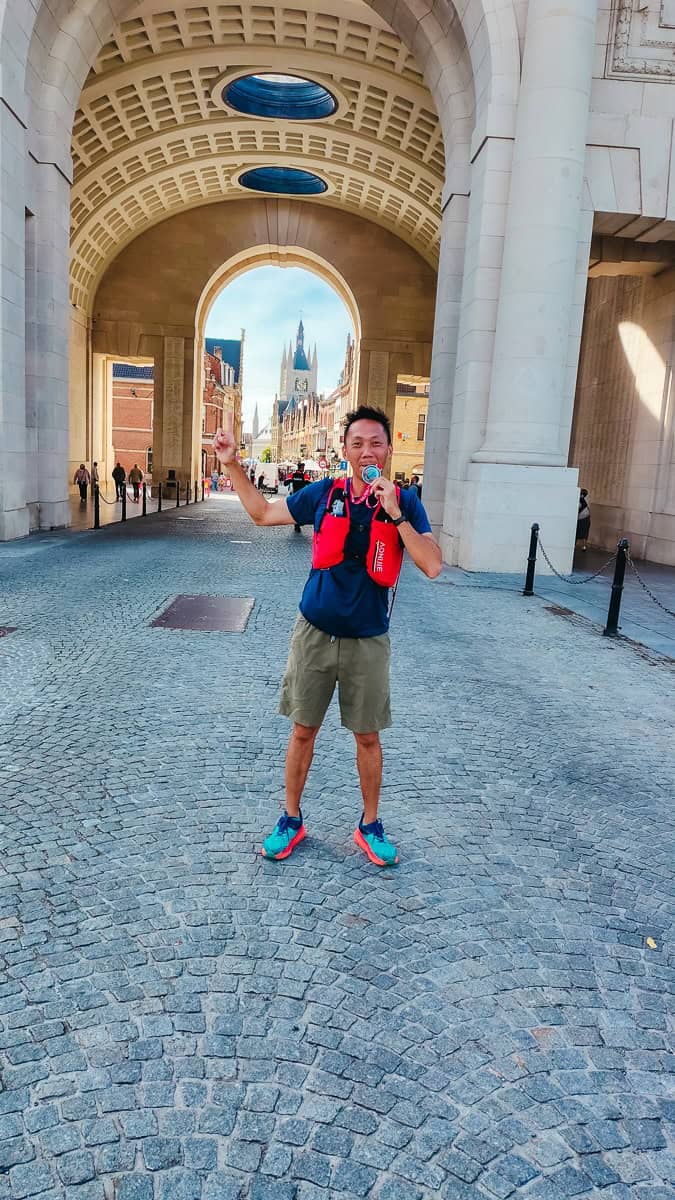
The route passes beneath the Menin Gate before continuing toward the finish in central Ypres.
The monument is imposing even when you visit it casually.
Running underneath it after crossing more than 40 kilometers of the surrounding landscape felt completely different.
There was a bagpiper playing as I approached.
People were gathered around.
After hours of open countryside, suddenly there was noise again.
The contrast was excellent.
The race may not have overwhelmed me with its history throughout the course, but here the history, architecture and marathon finally came together.
That was where the identity of the race felt clearest.
Finishing the fourth marathon
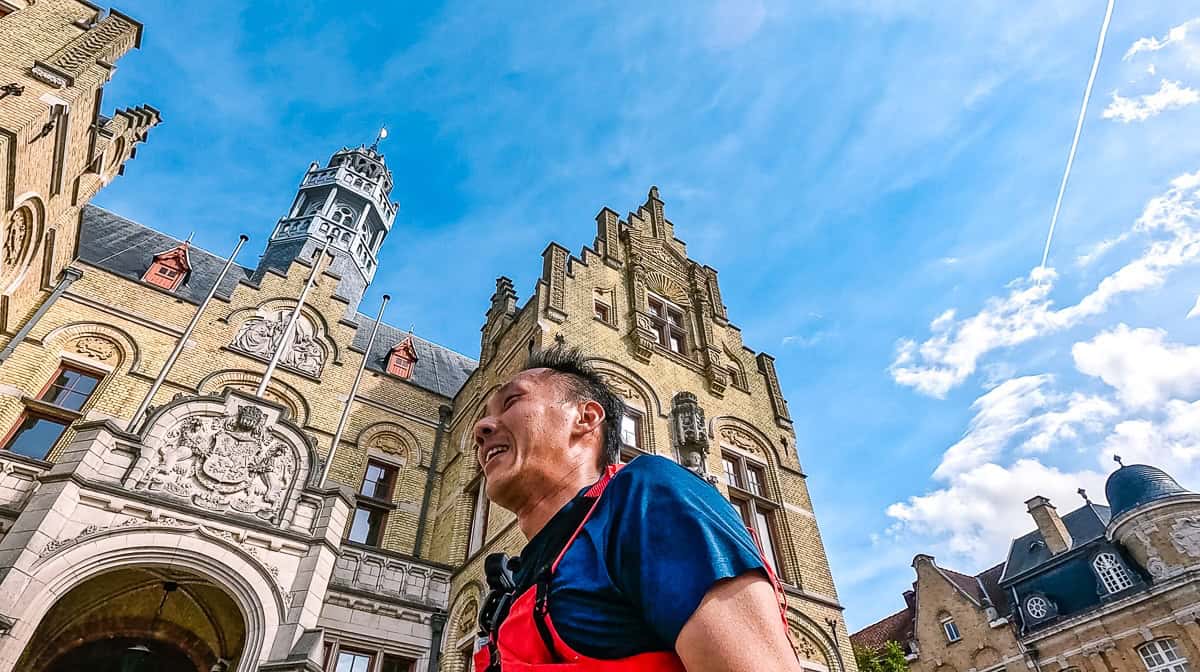
I crossed the line clocking my fastest race of the four-marathon block, though the time itself was not the biggest takeaway.
There was relief at accomplishing the mission. The knee had worried me from the first kilometer.
The final third had required more management than I wanted.
Yet I had never reached a point where the race became desperate.
The finish had been tight, but it had not been devastating.
Four marathons in four weeks.
Finished.
Seeing Ypres without the clock
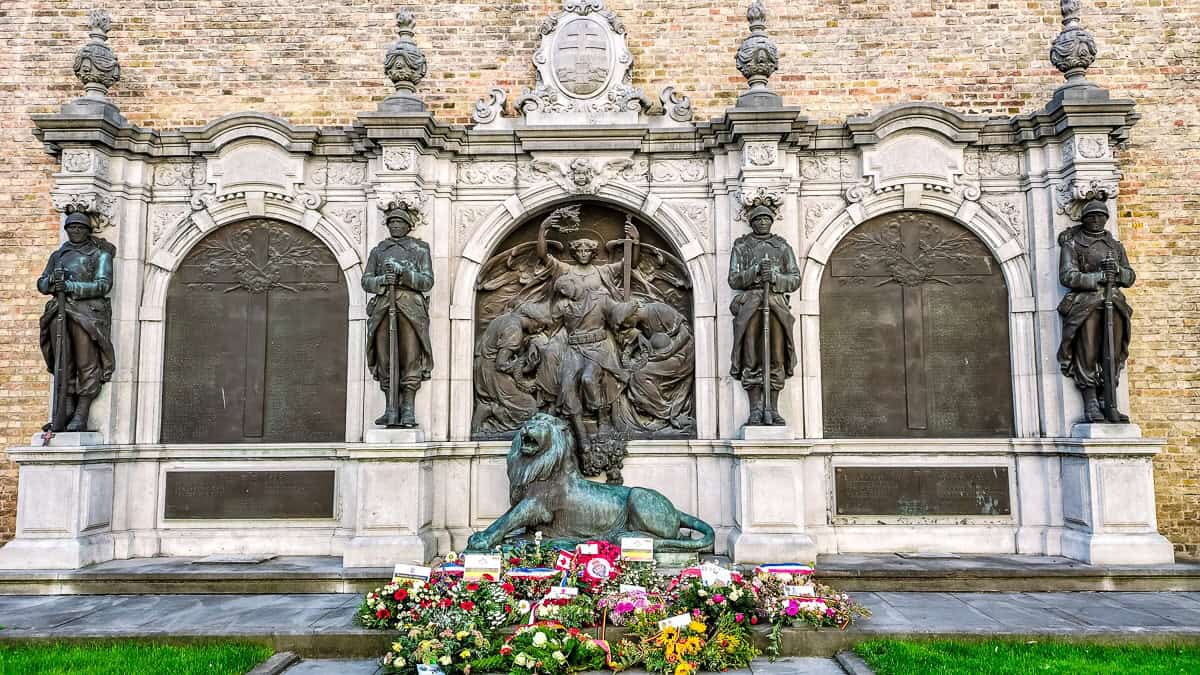
The post-race support was more modest than some of the other events I had completed.
There was water and bread available, but I guess I’ve been spoilt by Tallinn just the week before.
Bag collection was at another school building which gave access to proper toilets and showers.
My knee remained the biggest physical concern. The right calf was tight too. But I was still mobile enough to continue exploring Ypres afterward with a runner I met in the morning.
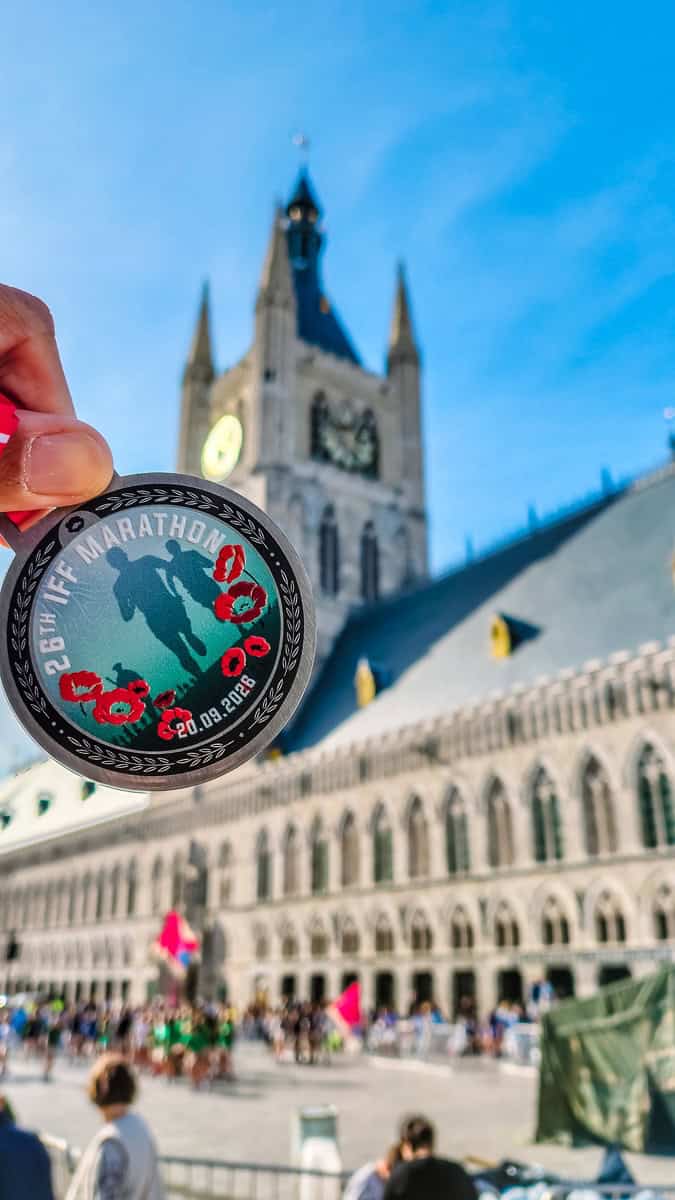
We returned to the Menin Gate for photos and walked around the center, taking in more of the architecture and another energetic youth event happening around the Grote Markt.
The visit added context to what I had run through. But what I enjoyed most remained simpler.
The peaceful countryside. The kind volunteers. The ability to run for long stretches with nothing demanding my attention.
That was what made Flanders distinctive.
Who should run the Flanders Fields Marathon?
If you enjoy smaller races and can appreciate long stretches of peaceful running, it is excellent.
The course is predominantly flat and paved, while much of the route runs beside waterways and through open countryside.
That gives it something I increasingly enjoy in road races.
You get the tranquility of running through nature without needing the technical skills of trail running.
The history adds another layer for anyone particularly interested in the First World War. For me, though, the landscape was enough.
A different kind of marathon atmosphere
Flanders Fields reminded me that a race does not need enormous crowds to have atmosphere. Sometimes atmosphere comes from the opposite.
It was not dramatic in the way Dingle was.
It was not social in the way Copenhagen was.
It did not have Tallinn’s elaborate recovery lounge.
Flanders offered something more tranquil than all of them.
Space to run. Space to think.
And one of the most reflective marathon experiences I had found so far.


