Seven days after Copenhagen, Riga became my first back-to-back marathon weekend. The strategy was not executed perfectly, but the race introduced me to a greener, livelier side of Latvia than I had expected.
Riga marathon was one of the earliest races I added to the project.
Latvia was a country I had never visited, and the race gave me a reason to experience another European capital that I might not otherwise have prioritized.
By the time I arrived, however, Riga had become more than another destination.
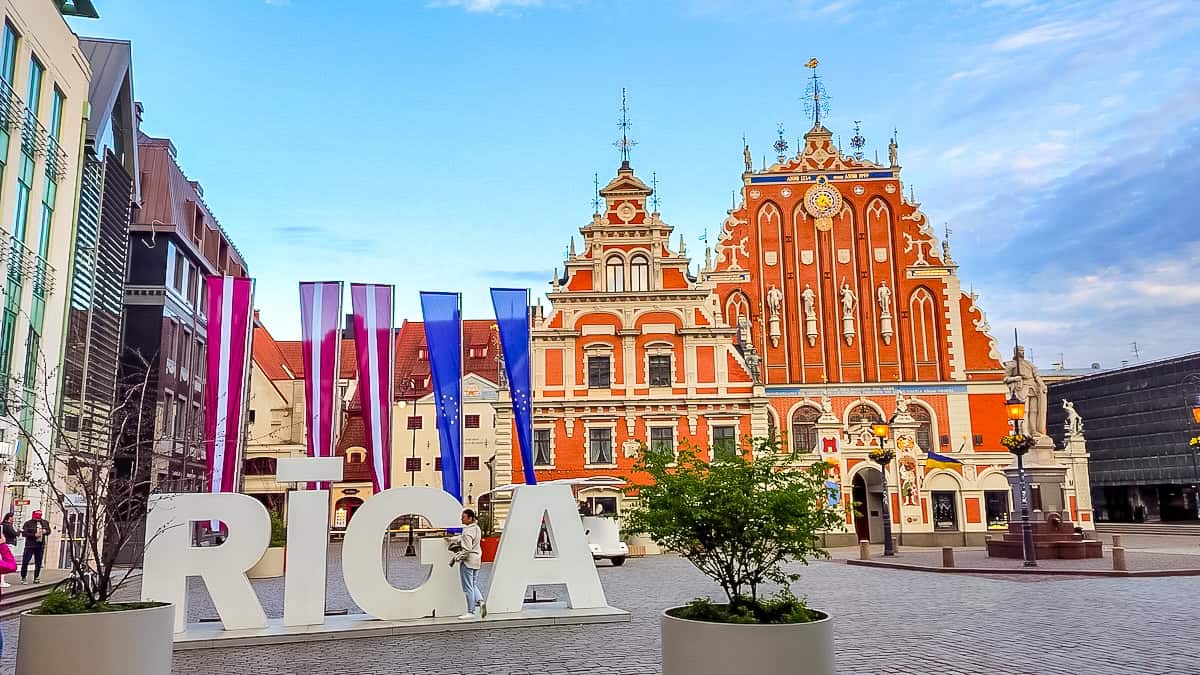
I had completed the Copenhagen Marathon only seven days earlier. Riga was now the middle race in my attempt to complete three marathons in three weeks, with Stockholm still to come at the end of the month.
My body felt generally fine after Copenhagen, but Riga would be my first experience of running full marathons on consecutive weekends.
The goal was simple: finish, minimize unnecessary damage, and repeat the conservative run-walk approach that had worked one week earlier.
Riga would show me that even a good strategy can fail when it becomes too complicated to follow.
A greener capital than I expected
I was staying close to one of Riga’s large central parks, with a canal running through it.
On warmer days, locals sat or lay on the grass, while some sunbathed beside the water. It was a surprisingly relaxed scene for somewhere so close to the middle of the city.
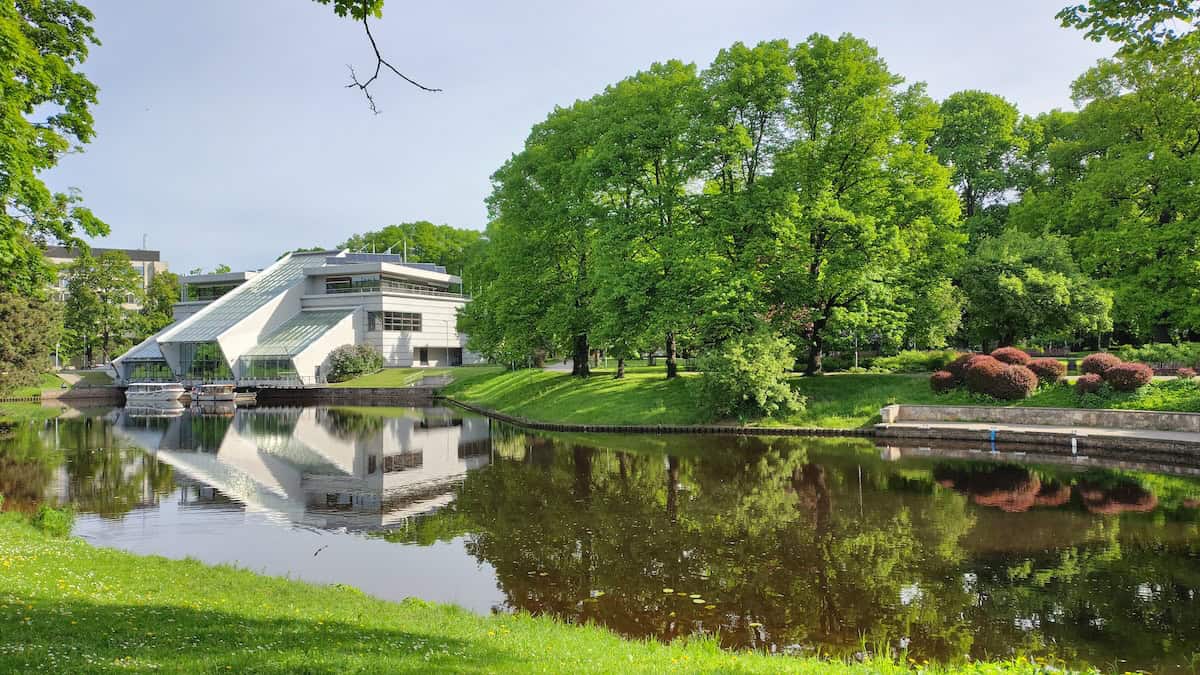
Greenery is one of the quickest ways for a destination to win me over, and Riga had far more of it than I expected.
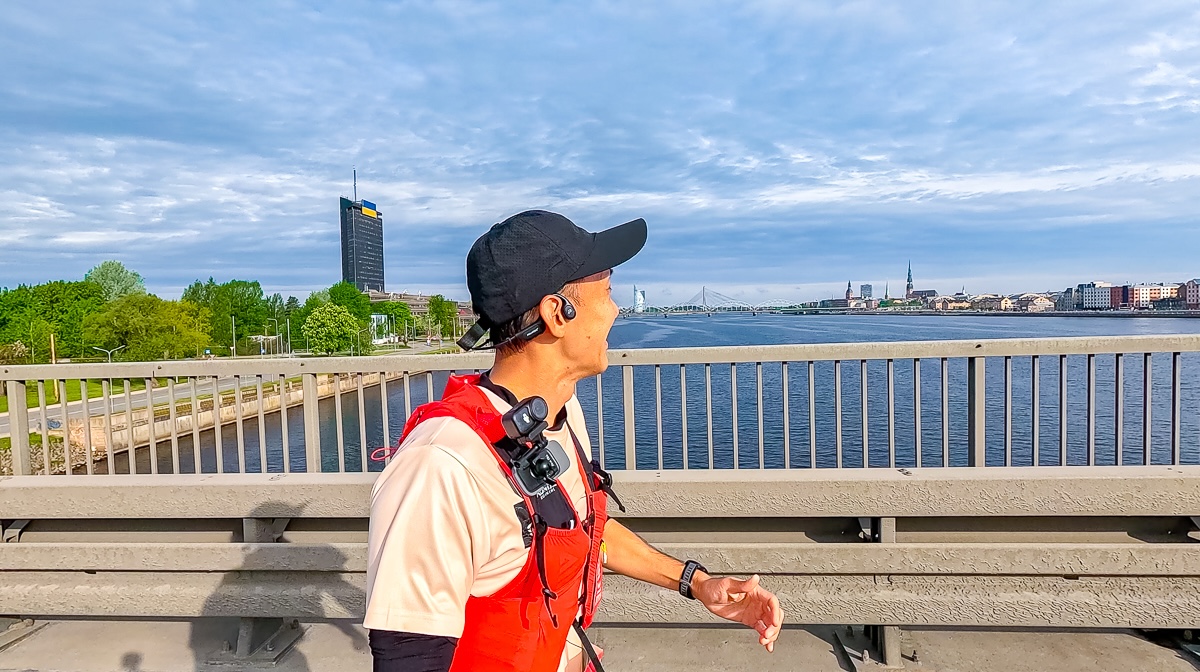
The city felt spacious, with large parks, broad streets, and open views across the Daugava River. Even around the center, it rarely felt overcrowded.
It was also an easy place to slow down between races. I could sit in the parks, walk beside the water, work from cafes, and recover without feeling that I needed to complete an aggressive sightseeing itinerary.
That combination of liveliness and space became one of the things I appreciated most about Riga.
Finding the local running community
The marathon weekend began for me at the expo, which was held inside a sports and events venue within walking distance of where I was staying.
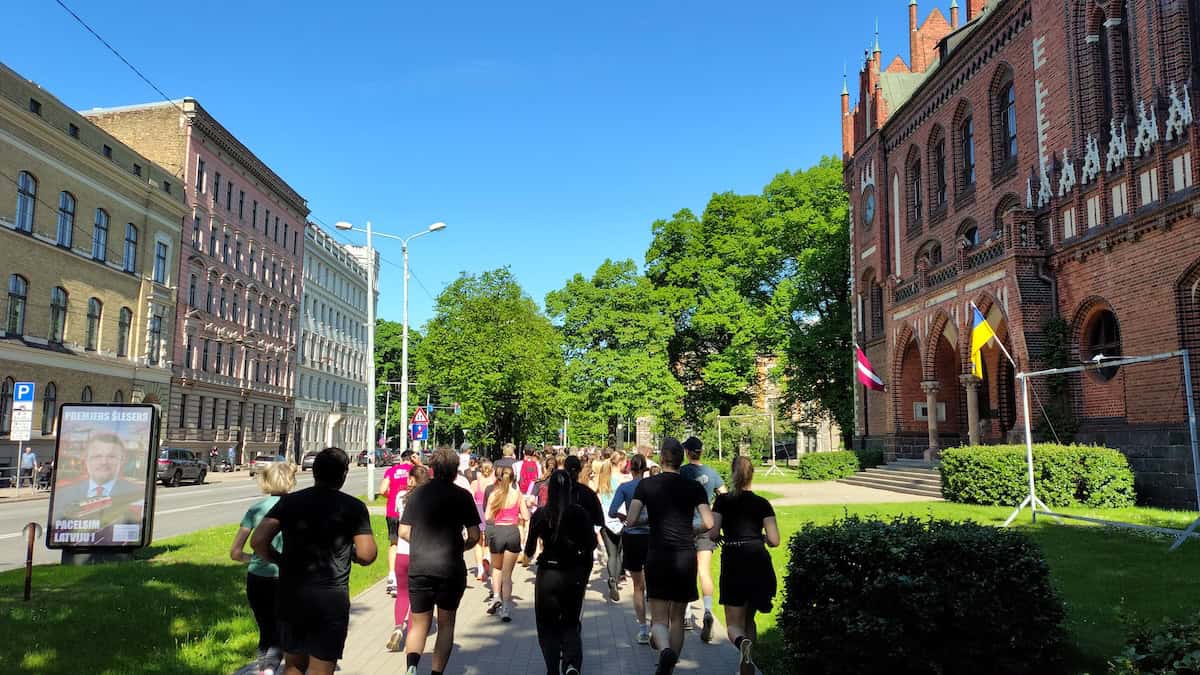
Bib collection was busy when I arrived, but the process moved normally, and the expo had everything I needed before the race. I also used the opportunity to restock gels and other essentials.
More importantly, Copenhagen had encouraged me to look beyond the official race schedule and search for a local social run.
I found a shakeout run with Riga Run Club, which appeared to be part of the club’s regular schedule but naturally attracted visiting marathon participants that weekend.
The group was large, social, and noticeably young. Local runners mixed easily with visitors, and the run gave me an introduction to parts of central Riga before ending at a coffee shop.
Because I stayed in the city after the marathon, I later joined the club’s run again.
That became one of the more meaningful parts of the trip. The marathon brought me to Riga, but the local running community helped make the city feel less temporary.
An early start beside the river
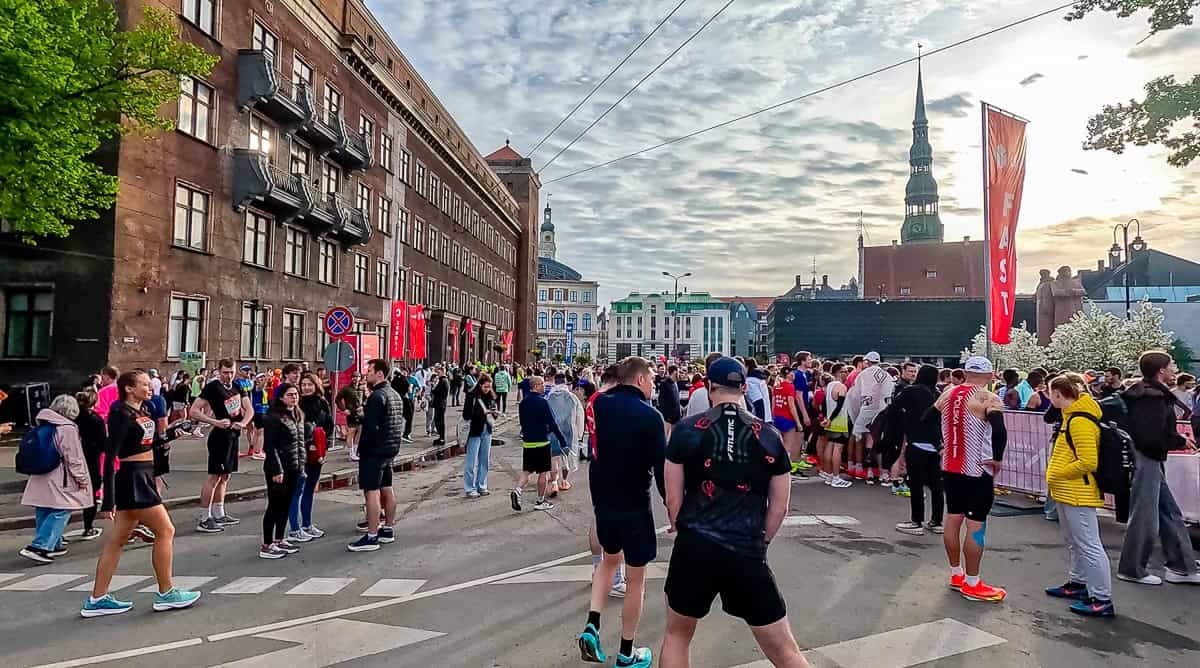
The marathon began at 7 a.m., the earliest start time I had encountered so far.
I walked to the starting area beside the Daugava River and Riga’s Old Town while my legs still felt tight and heavy.
That was not especially reassuring one week after another marathon, but the stiffness disappeared fairly quickly once the race began and my body warmed up.
The riverfront setting made an immediate impression.
Runners warmed up beside the water, the Old Town stood behind the starting area, and the broad views across the river gave the event a much larger sense of scale than I had expected.
The course began with a bridge crossing and continued through a mixture of waterfronts, urban neighborhoods, central streets, and green park areas.
Riga did not rely on one single type of scenery. The route constantly shifted between different parts of the city.
A simple idea made too complicated
I planned to use the same general approach that had worked in Copenhagen: controlled running, planned walking, and enough restraint to preserve myself for the final marathon in Stockholm.
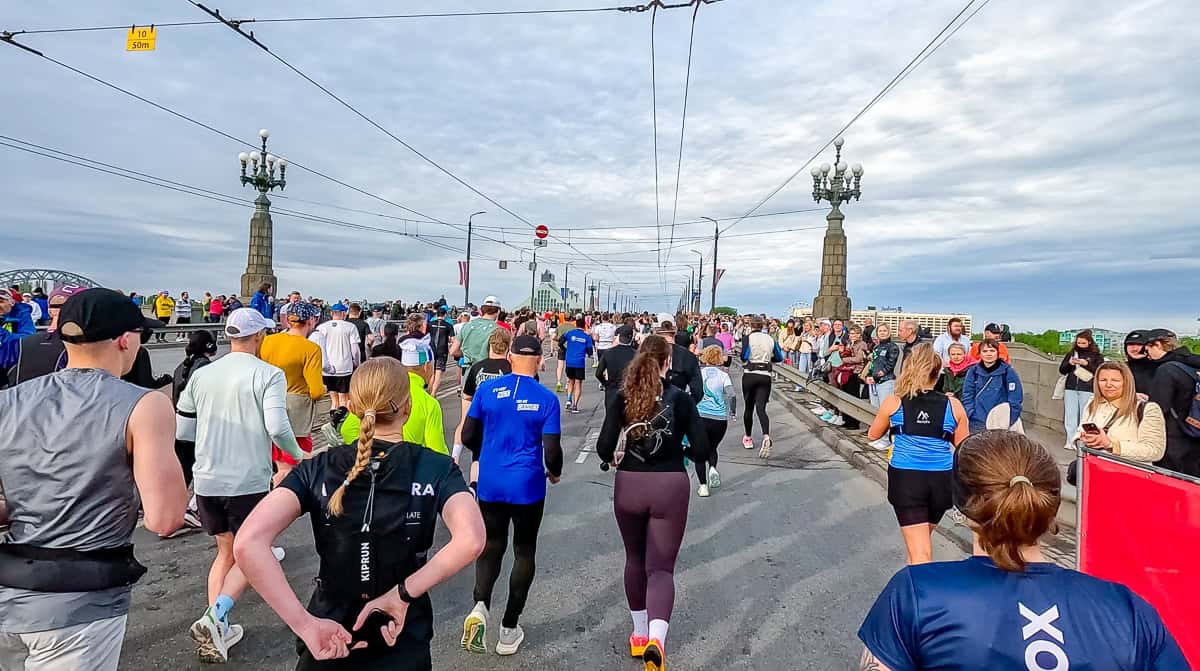
The problem was that the Riga version of the strategy was more complicated.
Instead of following one rhythm that was easy to remember, I had different timings and adjustments depending on how the race developed.
That became difficult once I was also filming, taking in the surroundings, speaking to other runners, and reacting to the atmosphere.
At several points, I lost track of whether I was supposed to be running or walking. I would restart the timing mentally, follow it briefly, and then become distracted again.
The strategy was still conservative in principle, but the execution became increasingly improvised.
That was the main lesson Riga gave me.
A race plan is only useful when it remains simple enough to follow during the race itself.
Scenery over constant spectators
Riga’s crowd support was concentrated around the Old Town, city center, and major event areas.
Those sections felt energetic, with music, cheering, and spectators close to the route.
Outside the center, however, long stretches became much quieter.
That did not bother me. I run alone regularly, and I do not need spectators along every kilometer. The quieter sections also made it easier to settle into my own rhythm.
What carried the course instead was the scenery.
There were repeated views across the river, long bridge crossings, green parks, and quieter neighborhoods that most short-term visitors may never see.
Even when I could not identify every landmark in the distance, the combination of landscape and varied architecture kept the route interesting.
The marathon offered a broader impression of Riga than I would have gained by remaining only in the Old Town.
When the plan began to slip
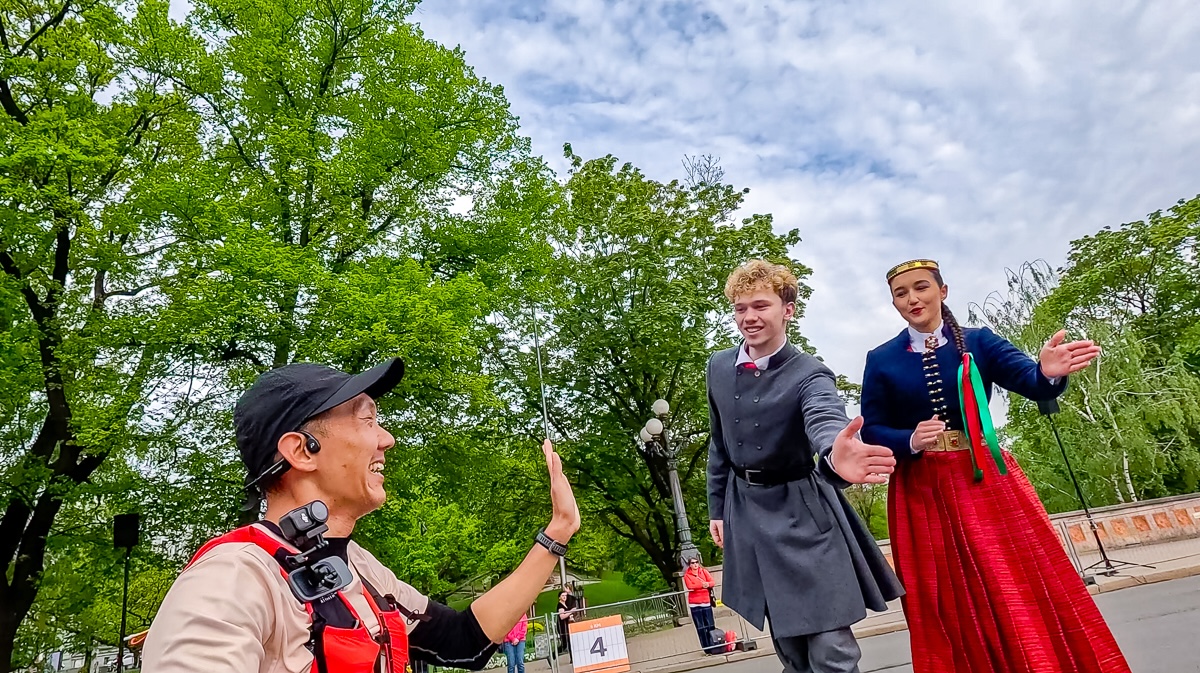
The strongest spectator areas formed some of my most iconic memories from the race, but also created one of the main problems.
Whenever I entered a crowded section, I naturally began running faster. Part of that came from the energy around me, and part came from trying to capture better footage.
I had also gained confidence from finishing Copenhagen in good condition and began wondering whether Riga might go even better.
That confidence made it easier to move away from the conservative plan.
Around the middle of the race, fatigue began arriving earlier than it had the previous weekend. The inconsistent walk breaks and faster sections were starting to add up.
At one aid station, I stopped to use the toilet. When I came out, there were no other runners in sight. For a moment, I wondered whether I had somehow become the last participant in the marathon.
There was simply a large gap between groups, but the uncertainty affected my pacing. I increased the effort because I did not want to fall too far behind, even though I had no reliable sense of where I actually stood.
It became another example of how easily a race strategy can be disrupted by what is happening around you.
Managing rather than racing
By the second half, I knew the race was not unfolding as cleanly as Copenhagen.
I felt more tired, and there were occasional warning signs that cramping could become a concern.
I never seriously believed I would not finish, but I also knew that becoming complacent could create a problem very quickly.
So I adjusted.
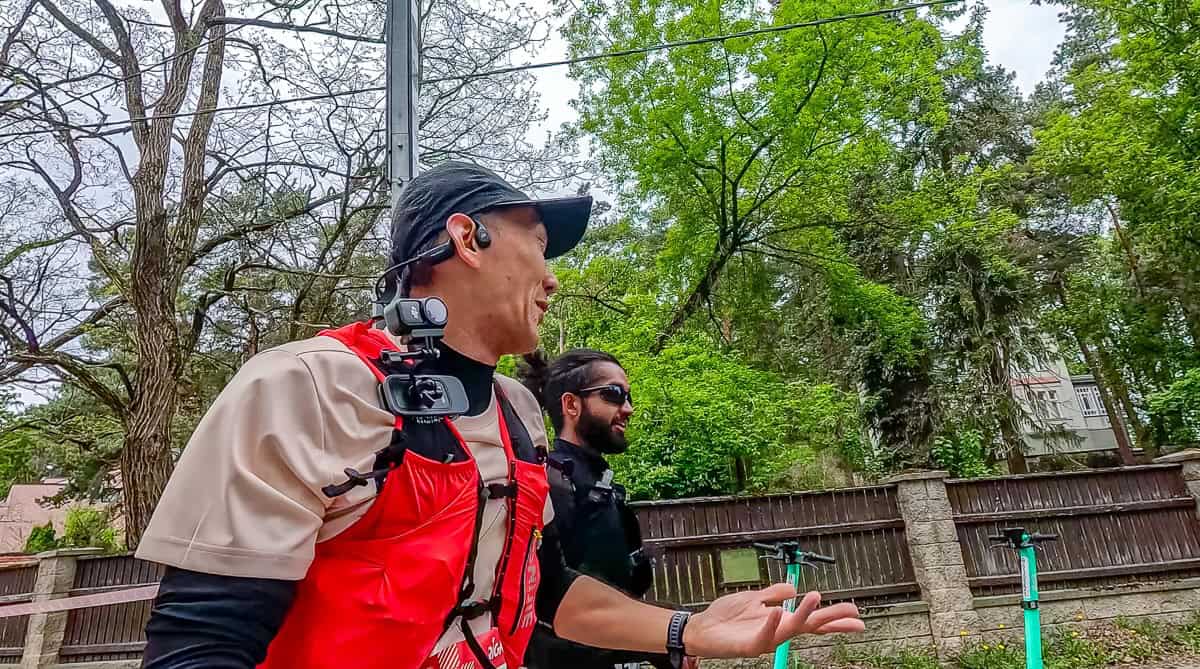
During the final ten kilometers, I moved between easy running, walking, filming, and chatting with other runners.
In one of the quieter sections, I met a man pushing a wheelchair participant through the marathon. I spoke to them briefly about what had inspired them to take part.
Seeing someone complete a marathon while helping another person experience it was a reminder that not every meaningful performance is measured by pace.
By then, I had accepted that Riga would not be another perfectly executed race.
The objective was to keep moving, manage the warning signs, and finish without turning a difficult section into a serious physical problem.
A finish that remained energetic
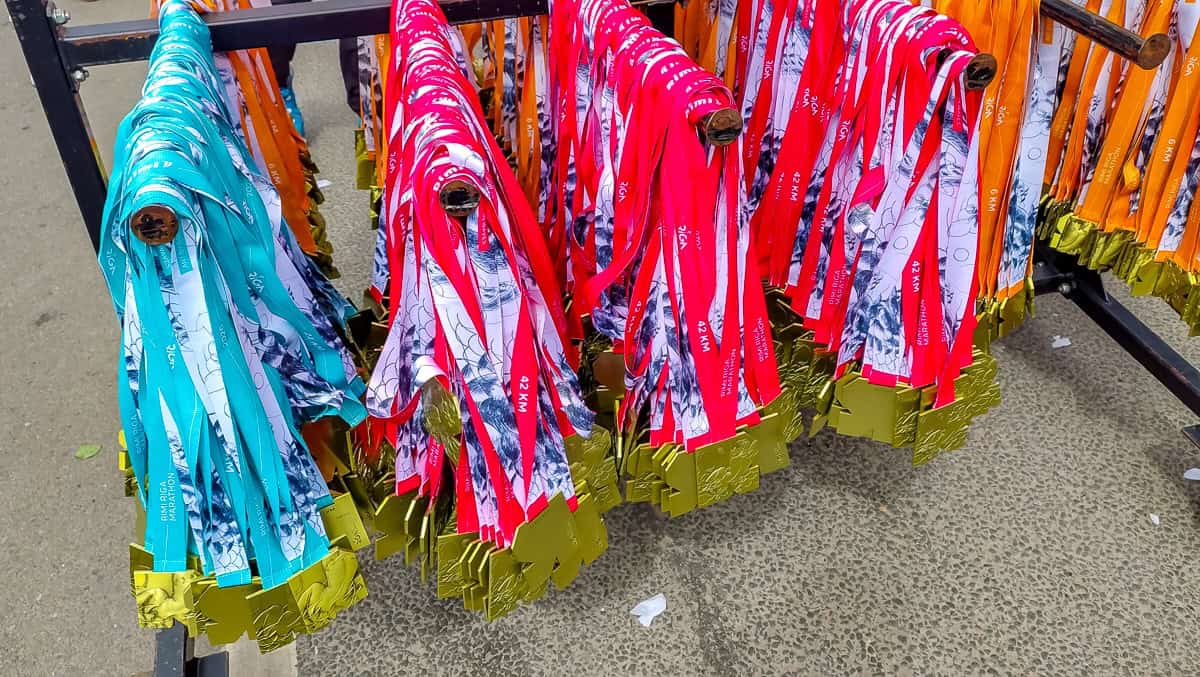
The race returned toward the Old Town and riverfront for the final kilometers.
This was where Riga Marathon’s multi-distance format became particularly valuable.
At many marathons, the finish area begins quieting down by the time later runners arrive. The main groups have already finished, spectators start leaving, and parts of the race village may be winding down.
Riga felt different because shorter races were still taking place.
Near the end of my marathon, the course merged with faster runners from another distance. Some of the leading 10K competitors came through at speed while marathoners around me were approaching the end of a much longer day.
It created an unusual contrast.
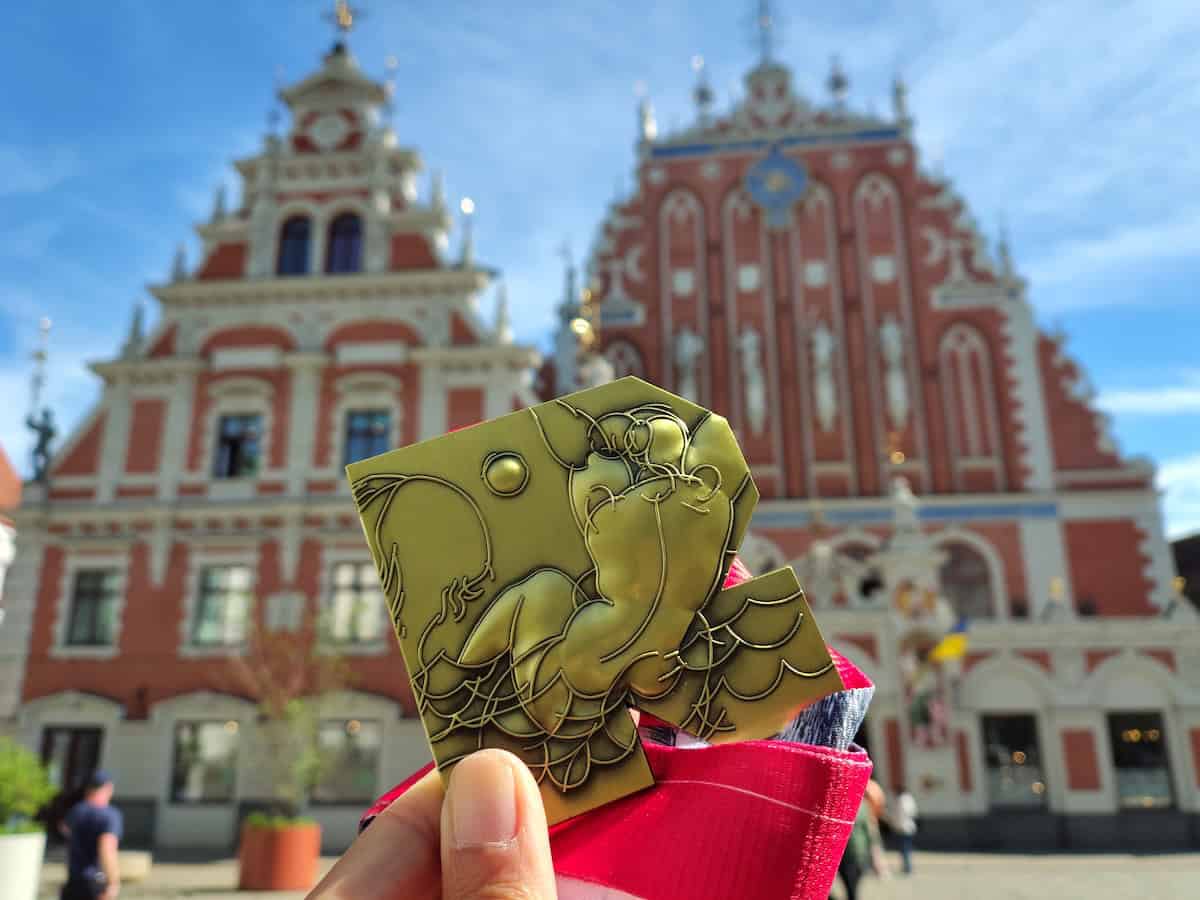
A power zone near the finish had people dancing, jumping, and cheering. Some of that energy may have been directed toward the faster runners, but everyone arriving through the area benefited from it.
The waterfront remained active because some participants were finishing while others were arriving for their own races.
For a later marathon finisher, that made a significant difference.
I did not return to an emptying event. I arrived while the wider running festival was still fully alive.
Tired, but still able to enjoy the finish
I crossed the line proud and relieved. The strategy had been messy, but I had completed my first back-to-back marathon weekends.
I could still walk around, stand, talk, and take in the atmosphere rather than immediately needing to collapse somewhere.
The finish area offered a generous selection of snacks, drinks, and refreshments. I collected my medal, took photos, and continued speaking to runners I had seen along the route.
Riga beyond race weekend
Staying in Riga after the marathon allowed me to experience the city at a slower pace, and dig into some hearty Latvian food.
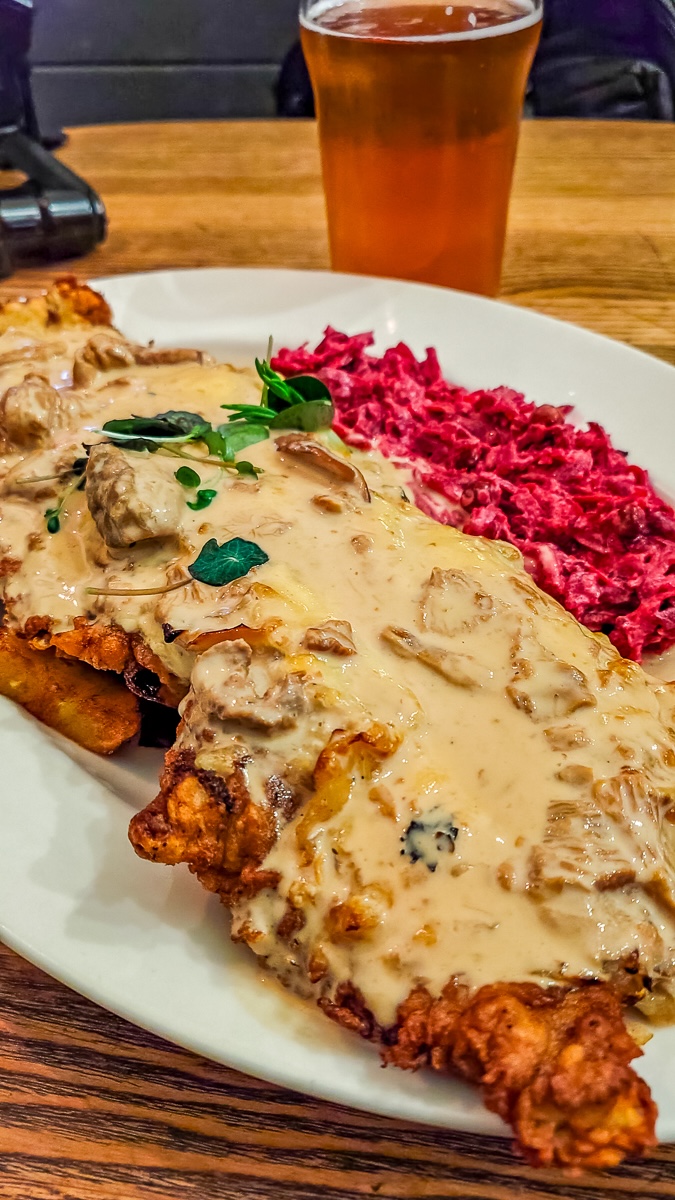
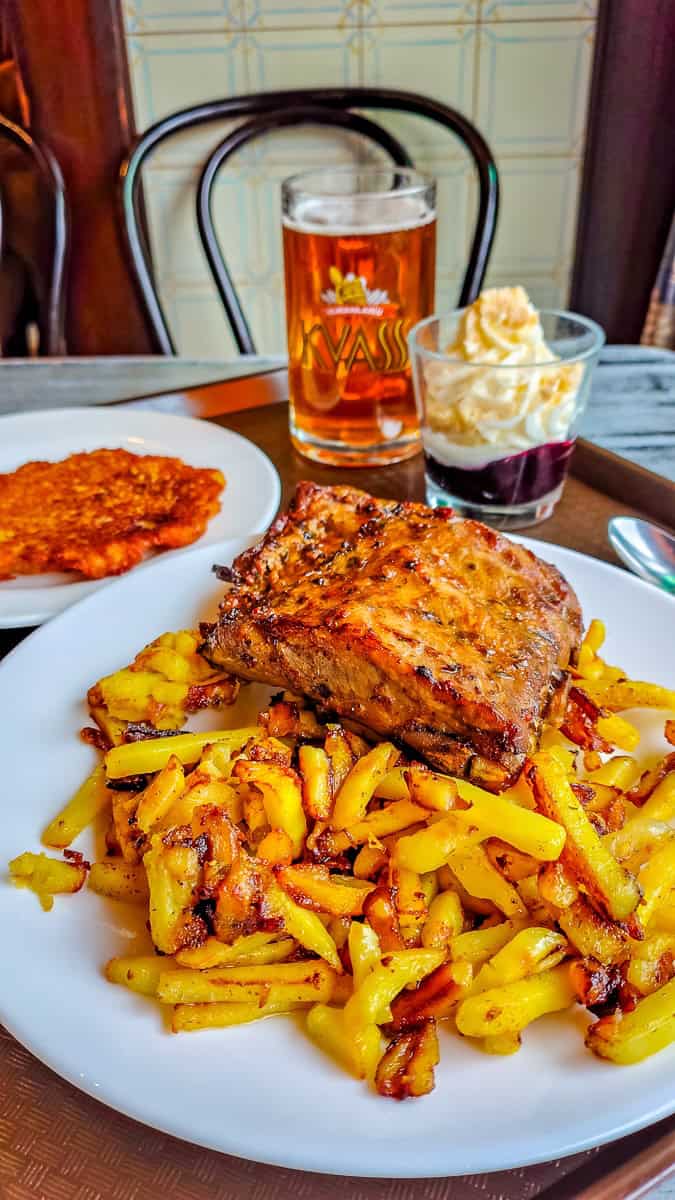
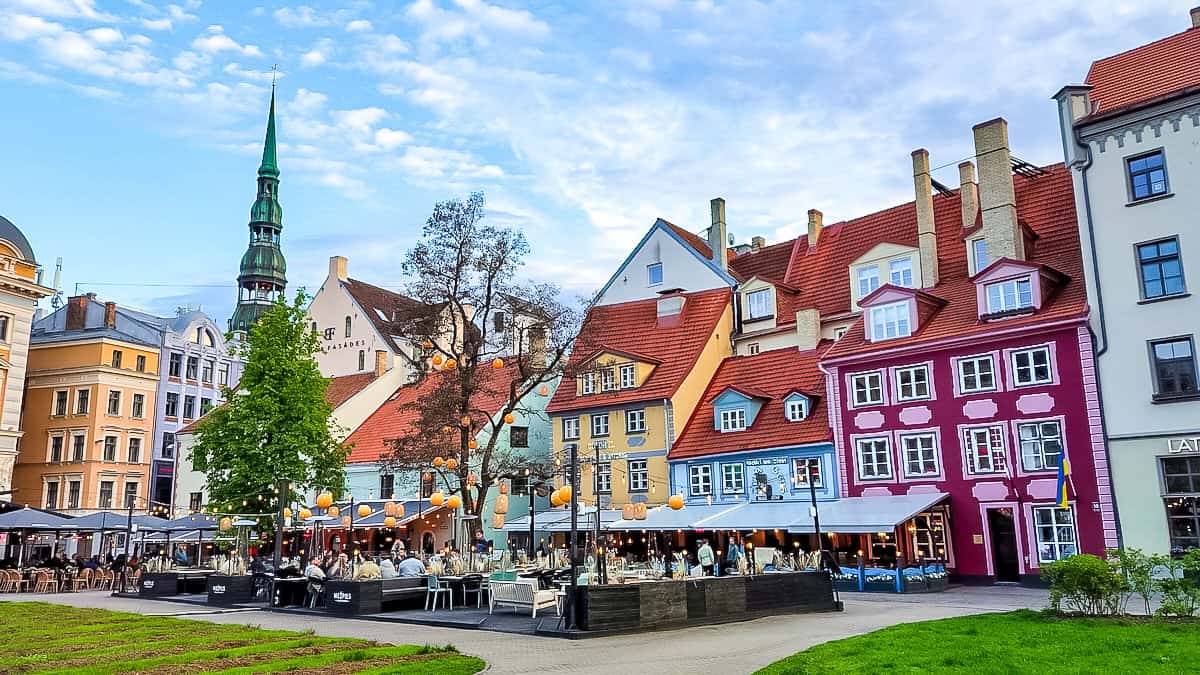
The Old Town was particularly enjoyable in good weather, with outdoor seating, cafes, and live music creating a lively atmosphere without making the city feel overwhelming.
The parks and waterfront remained my favorite parts.
Riga felt relaxed but not sleepy. Young people filled coffee shops, families used the parks, and people sat outside enjoying the weather.
I also took a half-day trip to Jurmala, the seaside destination outside the city. Someone who enjoys beaches could easily spend a full day there, making Riga a useful base for combining a city trip with time by the coast.
It was easy to imagine staying longer than a standard race weekend.
Who should consider Riga Marathon?
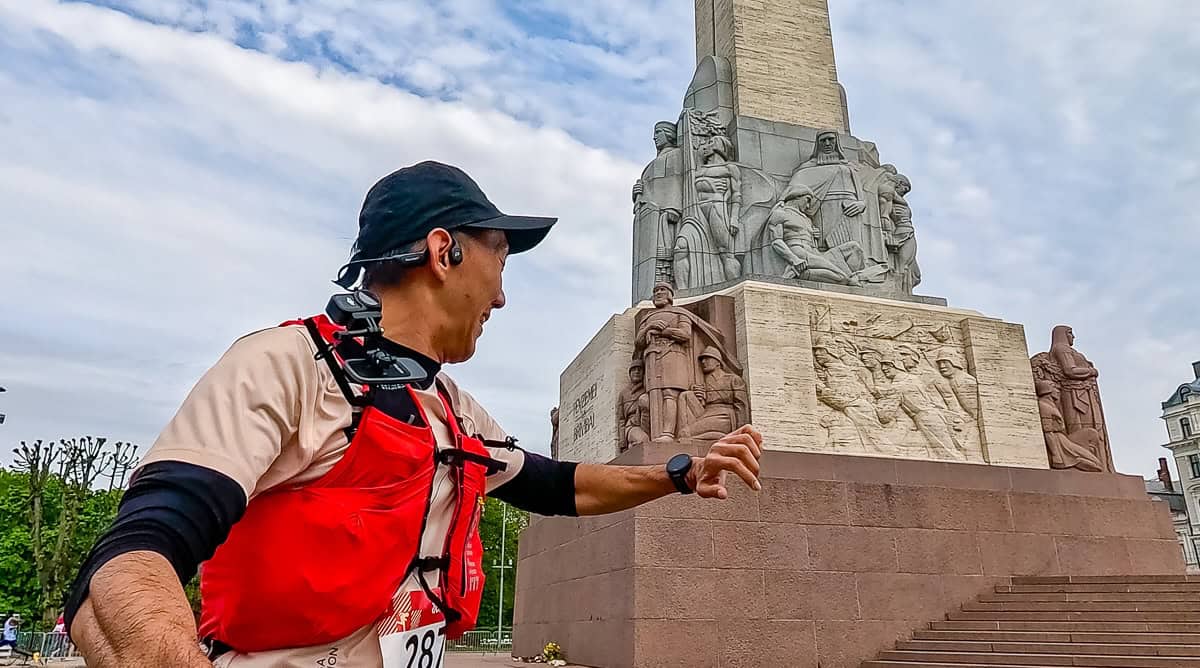
Riga Marathon suits runners who enjoy scenic variety and do not require continuous crowd support.
The loudest sections are concentrated around the Old Town, city center, and finish area. Other portions of the course can become very quiet.
For some runners, that may be a drawback.
For others, the changing scenery will be enough. The course offers river views, bridge crossings, parks, neighborhoods, and a medieval center within a single marathon.
The event also works particularly well for runners who want to turn the race into a longer city break.
Riga is a capital city with enough food, culture, cafes, public spaces, and nearby excursions to justify staying beyond the weekend. At the same time, it remains manageable enough that the trip does not need to feel rushed.
Latvia is a major travel hub in the Baltics, and you can find affordable flights with airBaltic.
The multi-distance schedule is another major strength. It keeps the event area active for longer and creates a better atmosphere for participants finishing toward the back of the marathon field.
The lesson Riga left me with
Riga did not prove that I could repeat Copenhagen perfectly.
It taught me something more useful.
A good race strategy must remain simple enough to survive filming, crowds, conversations, toilet stops, and the unpredictable rhythm of the race itself.
The marathon also showed me a side of Riga I had not expected.
It was greener, more spacious, and more lively than I had imagined, with a race route that connected its parks, bridges, riverfront, neighborhoods, and Old Town.
For a few hours, the waterfront became the center of the city’s running community.
Then the barriers disappeared, the music stopped, and the streets returned to normal.
I completed the middle race of three marathons in three weeks, but Riga left me with more than another finish.
It gave me a destination I would happily return to and a race lesson I would carry into everything that came next.


