Runtalya combines a scenic coastal course with the relaxed atmosphere of a smaller race, in a city where the marathon can easily become part of a longer Mediterranean trip.
When international runners think about racing in Türkiye, Antalya is probably not the first destination that comes to mind.
Istanbul has the spectacle of a marathon that crosses between continents. Cappadocia has its dramatic landscape and established trail races. Antalya, meanwhile, is more commonly associated with resorts, beaches, and summer holidays.
That was part of why I chose Runtalya as my first marathon in 14 years, and as the opening race in a new project to do 100 marathons across 100 countries. Even though I ran it while dealing with a foot injury, I came away thinking that the event deserves far more attention from anyone looking for a destination race.
The course is scenic without being especially difficult, the event is easy to navigate without feeling too small, and Antalya is one of those cities where recovering after a marathon can be as simple as finding a cafe beside the coast and chilling there for the afternoon.
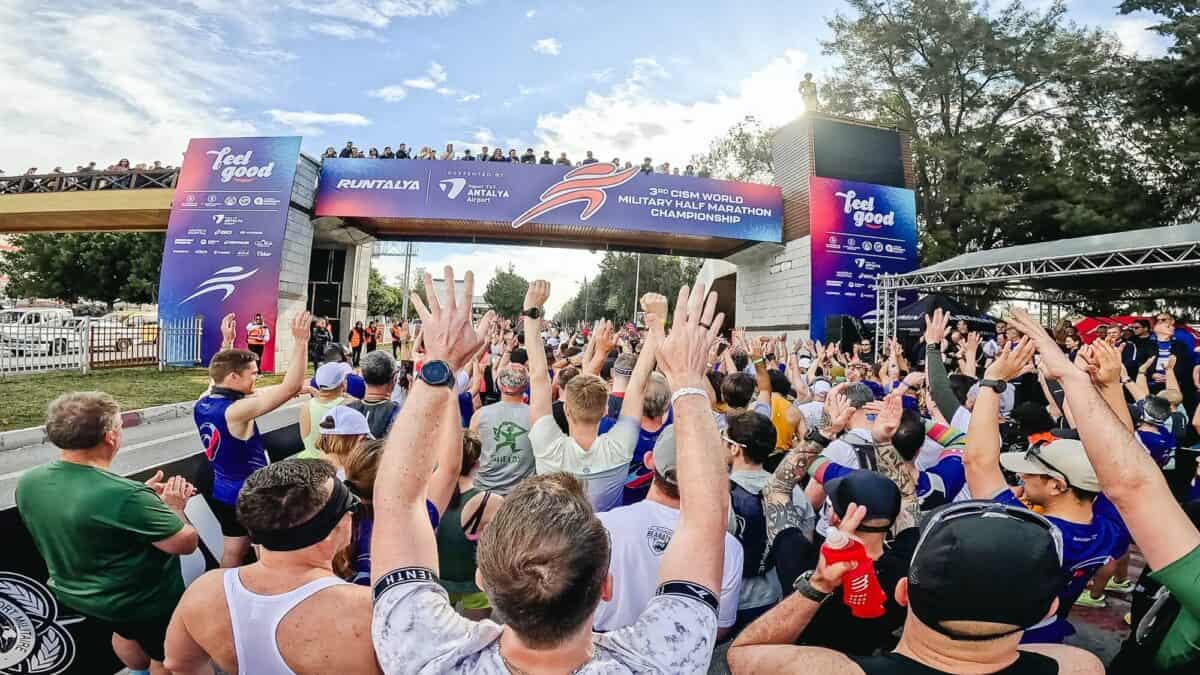
It is not a race that tries to match the scale or spectacle of a major. What it offers is something quieter.
A different way to experience Antalya
Before arriving, I had imagined Antalya as something closer to a conventional resort city. The coastline and harbor certainly delivered the Mediterranean views I expected, but the city itself felt much more varied.
Beyond the old town and waterfront, there were ordinary apartment blocks, busy roads, local restaurants, independent cafes, and neighborhoods that felt distinctly Turkish rather than designed only for visitors.
The marathon lets you experience both sides of the city.
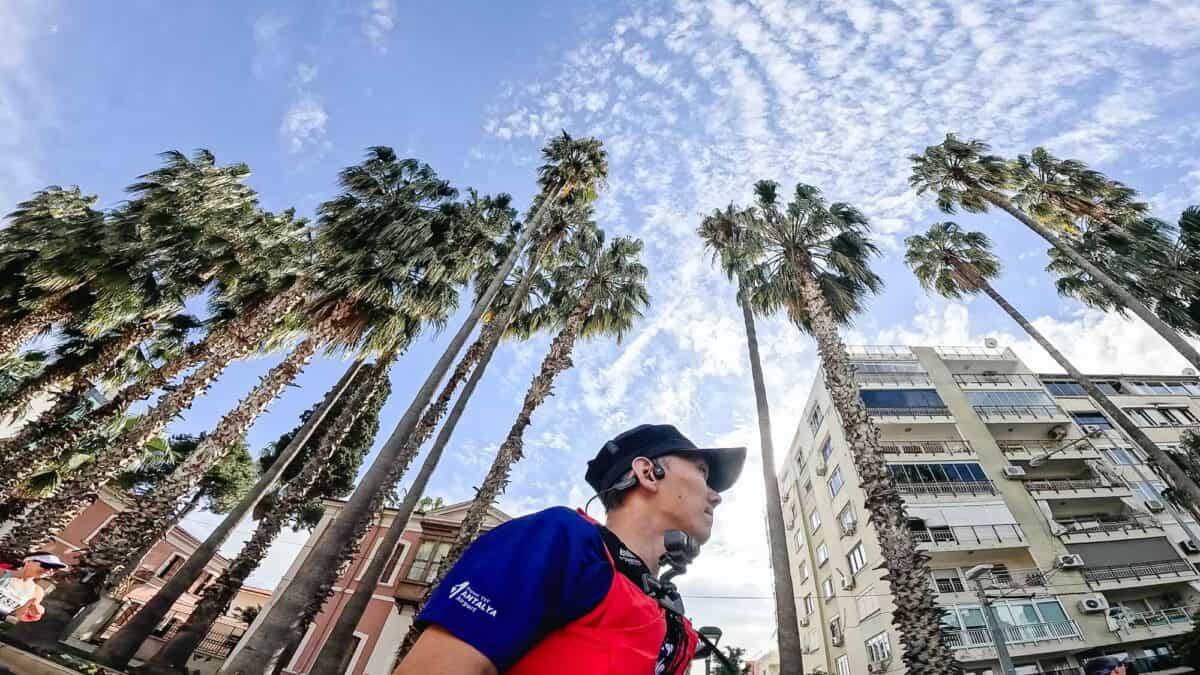
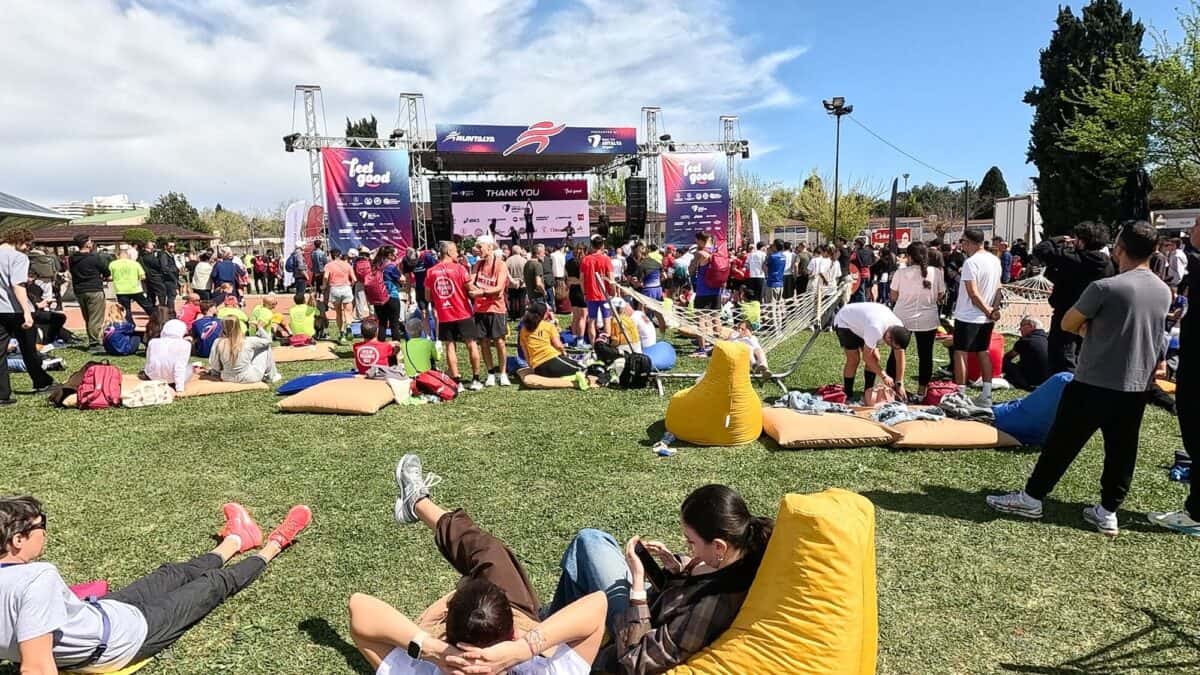
The opening kilometers have the liveliest atmosphere, with runners from several distances sharing the broad roads through central Antalya. There is music around the start, palm-lined avenues, city landmarks, and the excitement of everyone starting together.
Once the runners doing the shorter distances loop back, the full marathon changes.
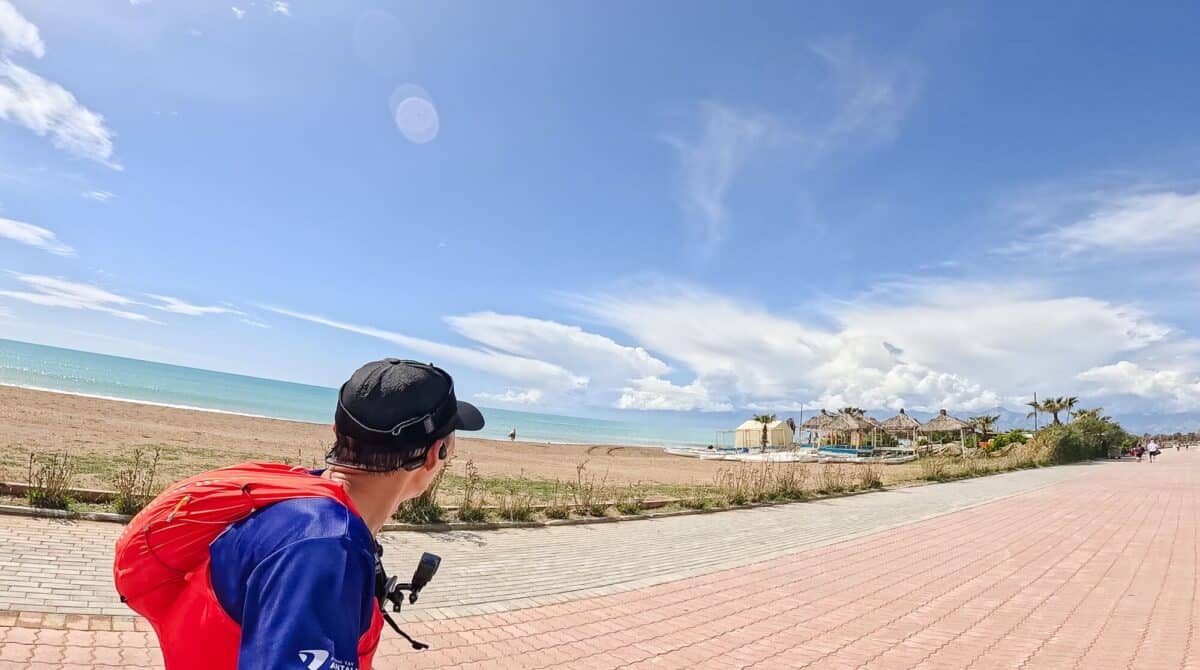
The field becomes smaller, the road opens up, and the route moves through parks and coastal stretches with increasingly clear views of the Mediterranean. There are portions near the turnaround that are less picturesque, but overall, the course offers more visual variety than many urban road marathons.
What stayed with me most, though, was how different the same route felt several hours later.
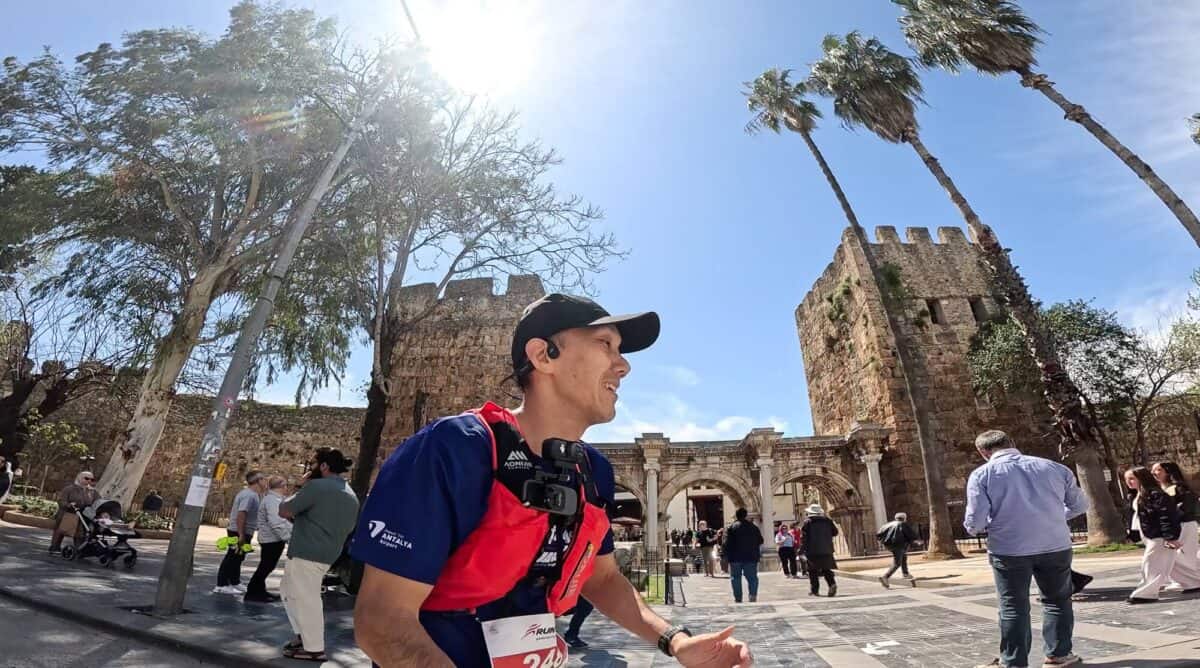
The parks had been quiet when I passed through them in the morning. On the return, families had arrived, children were playing, and the coastal cafes and public spaces had filled with people enjoying the weekend.
You may be retracing some of the same roads, but the city does not stay the same. You get to watch Antalya come to life while running through it.
I travel partly because I enjoy seeing how ordinary life unfolds in different places. For me, that was more interesting than simply passing one famous landmark after another.
Smaller than a major, but not without atmosphere
Runtalya is not a marathon with crowds lining every part of the course.
Support is strongest near the start, around the city center, and in the busier public areas. The volunteers remain encouraging throughout, but once the different race distances separate, some parts of the full marathon become noticeably quiet.
If you depend on spectators to carry you through the difficult sections, this may be the event’s main limitation.
For me, it was simply part of the race.
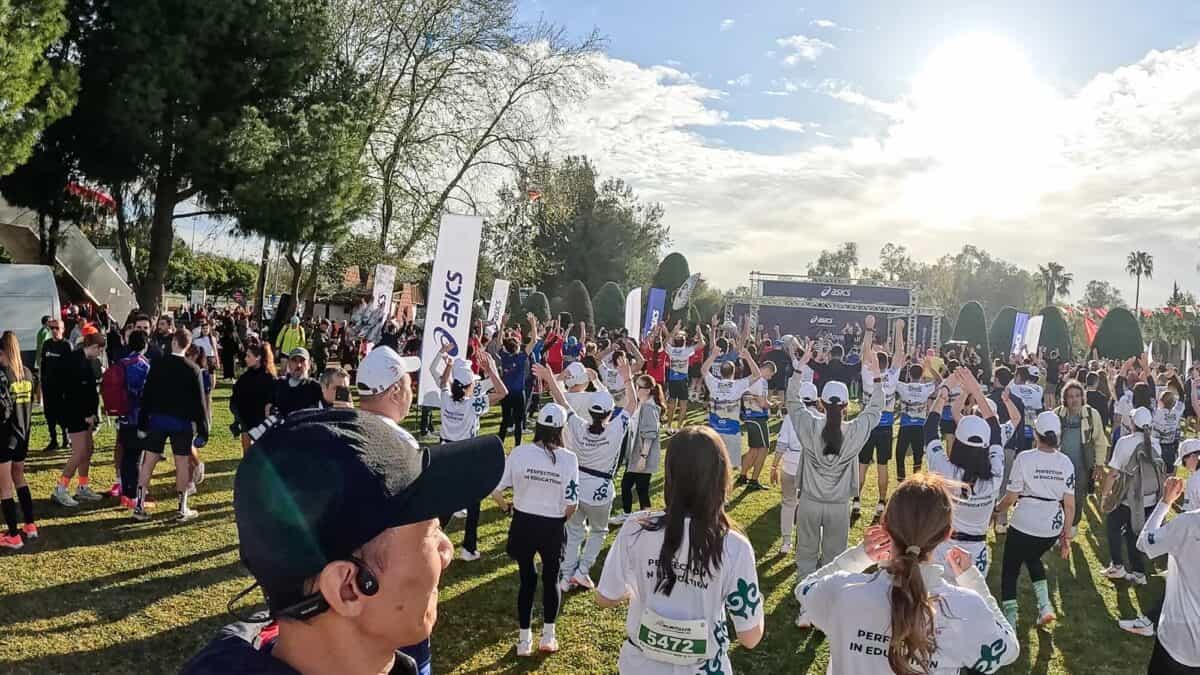
I usually train alone, so I did not mind the quieter sections. The smaller field gave me more space to notice the surroundings, talk to other runners, and settle into the experience without constantly navigating around people.
The race also felt more social than intensely competitive. During the opening section, I ran for several kilometers with another international runner I had only just met. Later, runners traveling in opposite directions encouraged one another as we passed.
One of my favorite moments came close to the city center, when a young boy saw me on the course and began running beside me. I held out my fist, and despite the crowd, he reached forward to bump it before returning to his family, visibly delighted.
It lasted only a few seconds, but it summed up something I liked about the event. The race felt connected to the city around it rather than completely separated from everyday life.
An approachable course that still requires respect
The Runtalya course is mostly flat and runnable, with broad roads and only one slope that stood out to me as particularly significant.
This makes it a realistic option if you are a slower runner, planning your first international marathon, or simply want a scenic road race without too many difficult climbs.
Ironically, the foot I had been worried about caused no problems during the race. My own marathon became difficult for reasons that had less to do with the course and more to do with how I ran it.
I started faster than planned. The pace felt comfortable because it was similar to what I might run during an ordinary training session, but a speed that feels easy for 10 or 15 kilometers can still be too aggressive for a marathon.
By the middle of the race, I was feeling warning signs in my calves and quadriceps and had begun alternating between running and walking. Aerobically, I still felt capable. It was my muscles that had started to fail.
That was one of my first real marathon lessons. Feeling comfortable early does not mean the pace will remain comfortable for the full distance.
I also underestimated how much fuel I would need.
The aid stations during my edition were frequent, which made the route feel well supported. Water and fruit were readily available, but electrolyte drinks were not, and gels appeared at fewer stations than I had expected.
Because I assumed I could rely on what was available along the course, I carried less fuel than I would now.
This does not mean the race lacked support. The frequent aid stations were one of its strengths. But you should check exactly what will be available and carry your own gels, electrolytes, or salt products if they are an important part of your plan.
Even while struggling, I never felt that the course itself was beyond my ability to finish. The regular stations made it easier to slow down, work out what I needed, and continue.
An event that feels thoughtfully put together
One of the most positive surprises came after the finish.
The organizers had set up a massage area, which I initially assumed would offer a quick and fairly casual treatment. Instead, the intern helping me asked questions, checked where my leg was tight, and spent much longer working on it than I had expected.
She only managed to complete one leg before the team had to pause, but the difference between the treated and untreated sides was immediately noticeable.
It was a small part of the overall event, but it left a strong impression.
Along with the medal, race shirt, proper backpack, and frequent aid stations, the massage area made the race feel like very good value. Runtalya may be smaller than many better-known European events, but it did not feel basic or carelessly organized.
Bib collection was straightforward, information was available in English, and you could reach the race village from central Antalya using public transportation or a taxi.
Antalya is also easier to reach internationally than you may expect. If you are traveling from farther away, you can connect through Istanbul. Because Antalya is already a major holiday destination, there are also seasonal and direct flights from several European cities.
A city that makes the whole race trip easy
Antalya works particularly well as a marathon destination because you do not need to plan an exhausting itinerary around the race.
If you stay near the historic center and harbor, you are close to restaurants, old streets, and city life. If you stay farther west along the coast, you are nearer to the race village, parks, beaches, and waterfront cafes.
Both areas work. I would simply recommend staying reasonably close to the coast.
Definitely try to arrive at least one or two full days before the marathon. That gives you enough time to collect your bib, figure out where everything is, and enjoy part of the city without spending the day before the race walking too much.
After finishing, Antalya becomes even easier to enjoy.
You can recover beside the water, eat Turkish food, explore the harbor at a relaxed pace, or spend an afternoon in one of the coastal parks. I remained in the city for almost two weeks, and the coastline worked just as well for working remotely and recovering as it did for sightseeing.
I find the city to be less resort-like than its international reputation might suggest, but it still has everything that makes a coastal destination appealing. You can experience local life while still having easy access to beaches, cafes, parks, and Mediterranean views.
Who should consider Runtalya?
Runtalya makes the most sense if you want the marathon to be part of a wider trip.
It is a particularly good fit if you are traveling alone, expect to finish farther back in the field, prefer a smaller event, or want a more affordable coastal alternative to Europe’s larger marathon cities.
It may not be the right race if your ideal marathon depends on constant entertainment and huge spectator crowds. The full-marathon field becomes small, and some quiet stretches are part of the experience.
A well-prepared runner could potentially achieve a fast time on the mostly approachable course, but that is not the main reason I would recommend Antalya.
The real appeal is the full experience: coastal scenery, simple logistics, regular aid stations, a relaxed field, and a city that is easy to enjoy before and after the race.
The race showed me parts of Antalya I had not yet explored and gave me the chance to interact with other runners and locals. Those small moments made the city more memorable than ordinary sightseeing would have.
Antalya may not be the most obvious name on the marathon calendar. But after running Runtalya, I think the marathon itself is a good reason to go.


