Running the Wild Atlantic Way gave me ocean cliffs, grazing livestock, rolling Irish countryside and one of the easiest marathon recommendations I have made so far.
Of all the marathons I had run by this point, Dingle was probably the easiest one to recommend.
Not because it was the easiest race.
It definitely was not.
I arrived expecting the toughest road course of my four-marathons-in-four-weeks block. Dingle was hillier than the races around it, exposed to whatever weather arrived from the Atlantic, and came only two weeks after Helsinki.
But I had chosen it for one reason above everything else.
The scenery.
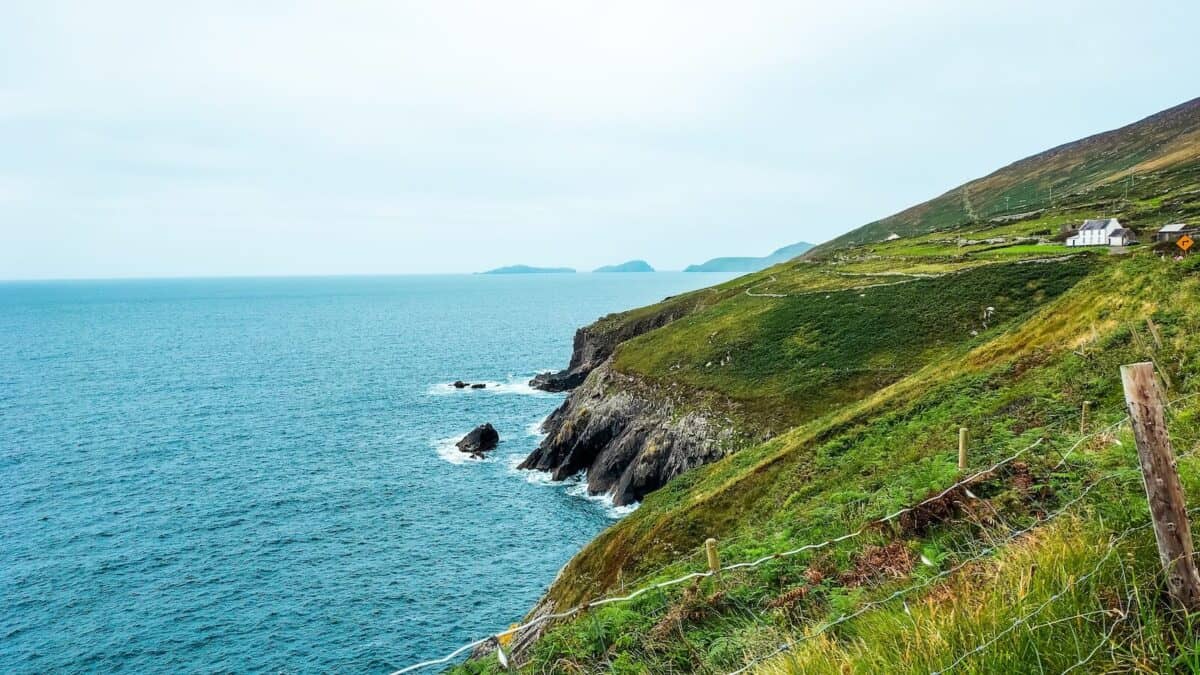
I had never visited Ireland before, and when I learned that a marathon could take me around part of the Dingle Peninsula and along the Wild Atlantic Way, it became an obvious addition to the project.
I do not drive either, which made the idea even more appealing.
A lot of this part of Ireland is normally experienced as a road trip.
I was going to run through it instead.
Arriving in Dingle at sunrise
Accommodation required more planning than for most of my city races.
Dingle is a relatively small destination, and affordable accommodation can become limited around marathon weekend, particularly if you are booking late.
I eventually based myself in Tralee and took the first bus to Dingle on race morning.
It worked, but it meant starting much earlier than usual because I was also collecting my bib that morning.
That early journey gave me one of my favorite memories of the entire trip.
When I arrived in Dingle, the town was still quiet and the sun was beginning to rise.
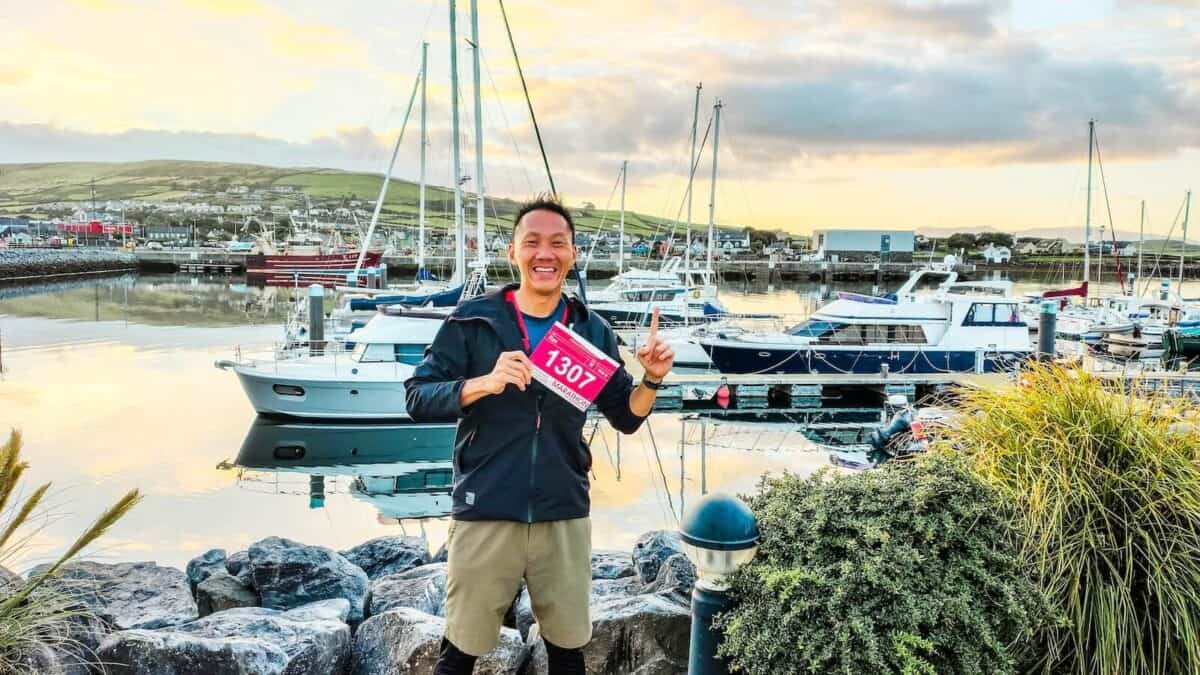
I walked toward the marina after collecting my bib.
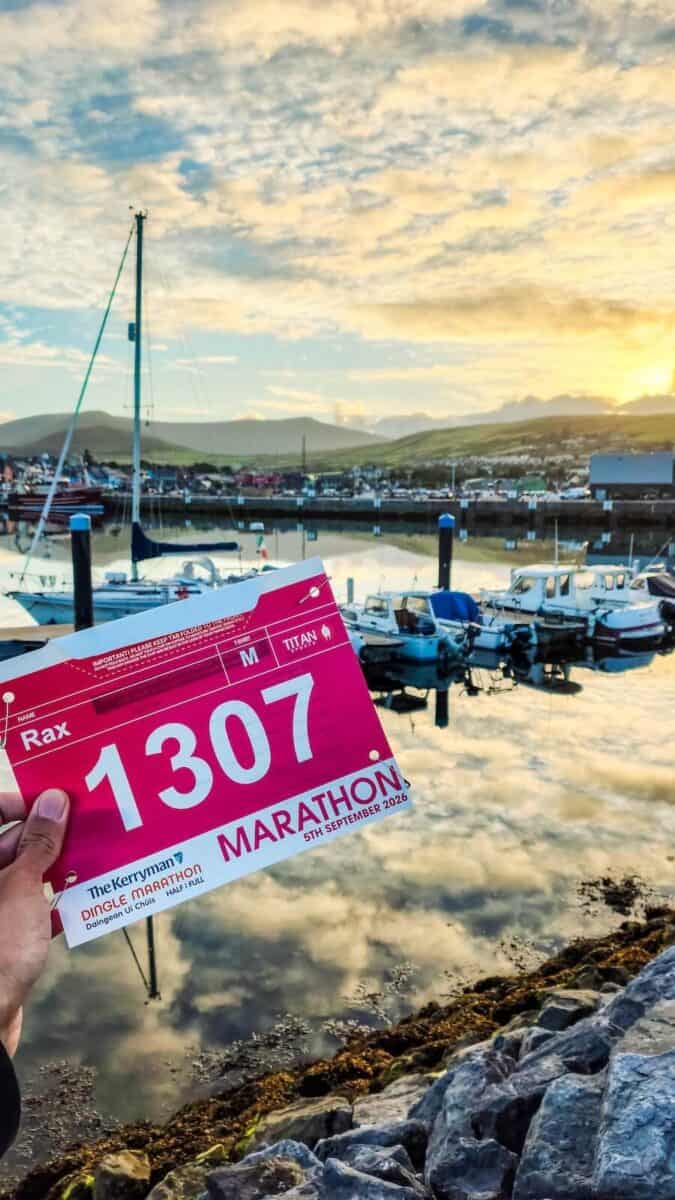
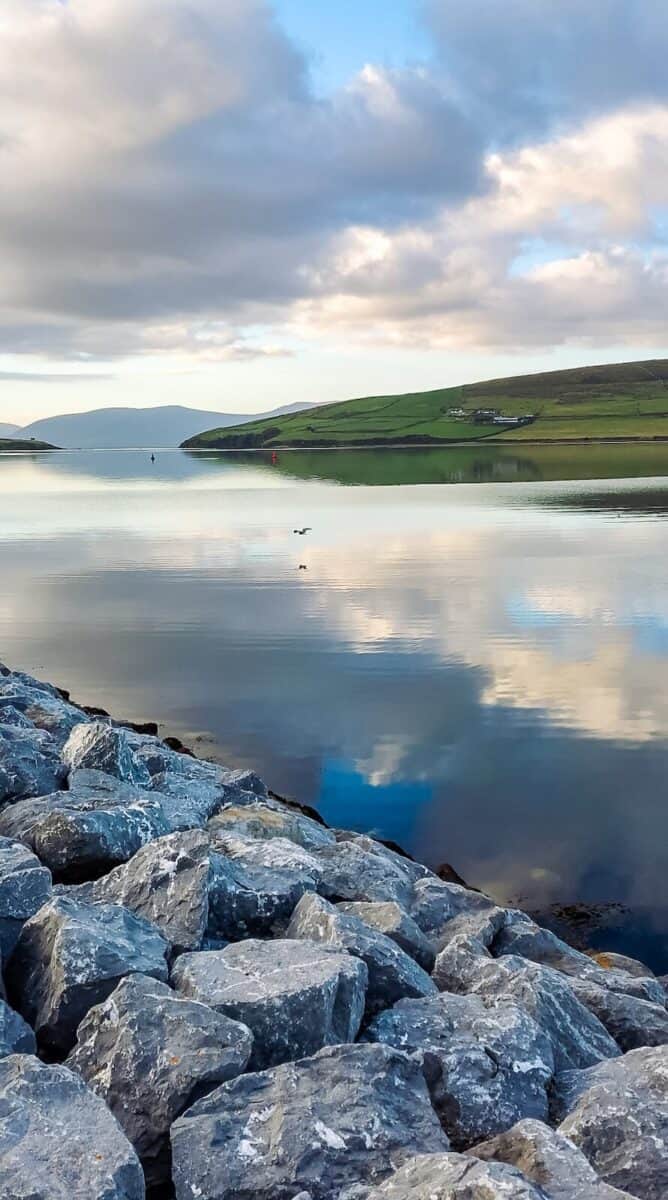
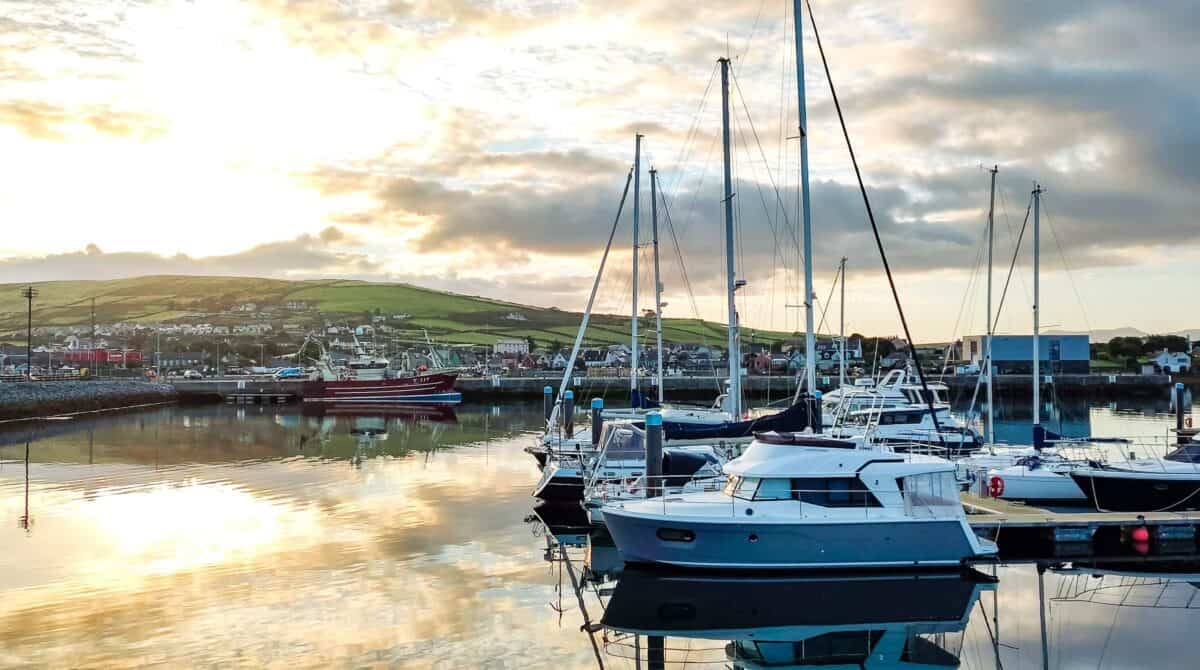
The water was so still that it looked almost like a mirror. Boats reflected perfectly across the surface, and as I stood watching, a bird glided over the marina with its reflection moving beneath it.
The light from the sunrise was beginning to hit the water and surrounding landscape.
For a few minutes, before runners filled the streets and weekend visitors arrived, Dingle felt less like a tourist destination and more like a small Irish harbor town waking up.
I had not even started the marathon yet, and the trip already felt worthwhile.
A small race with a big atmosphere
Bib collection itself was simple.
There was no enormous expo or long maze of exhibitors. I collected my number from the kind volunteers who were already cheery in the early morning, took a few photos and continued preparing for the race.
That simplicity suited Dingle.
As more runners arrived, the compact start area became increasingly lively.
There was music, runners warming up, people greeting one another and a noticeably more local atmosphere than I had experienced at some of the larger capital-city marathons.
It felt as though many participants either knew one another or had come from elsewhere in Kerry and Ireland for the weekend.
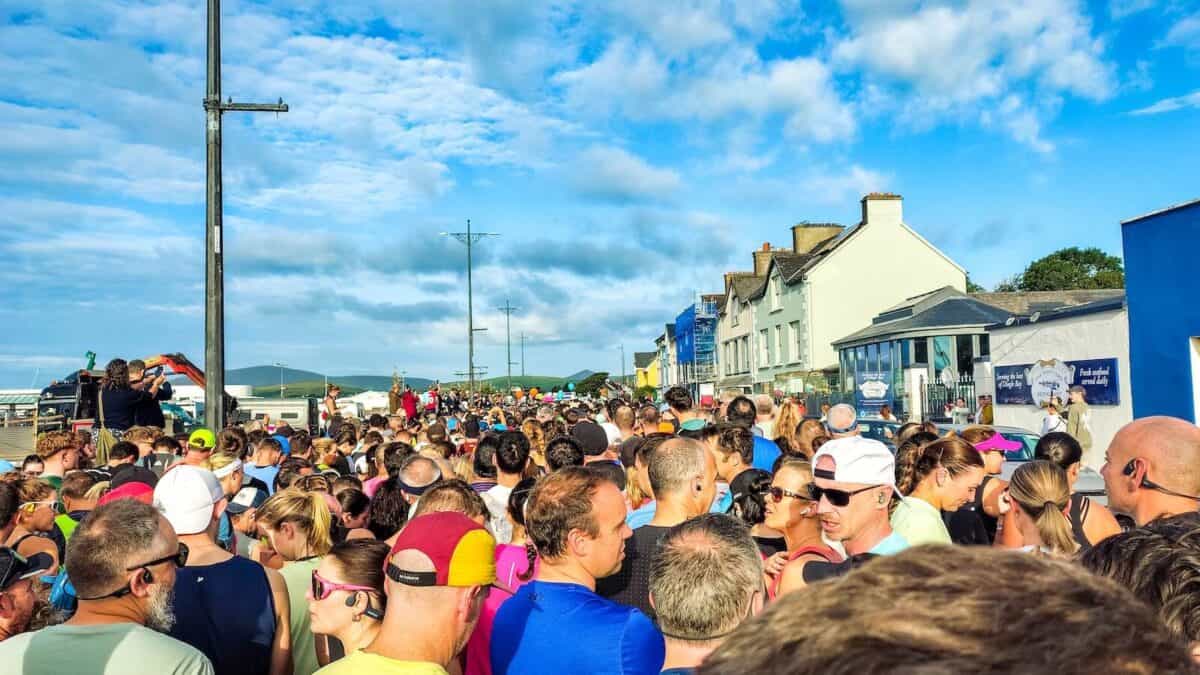
Whether or not that impression was completely accurate, the race felt cozy rather than anonymous.
The weather certainly helped.
The morning was sunny and calm, despite forecasts suggesting that wind and rain could arrive later.
For a marathon so exposed to the Atlantic, I knew that could change quickly.
For now, though, conditions were perfect.
Letting the terrain control the strategy
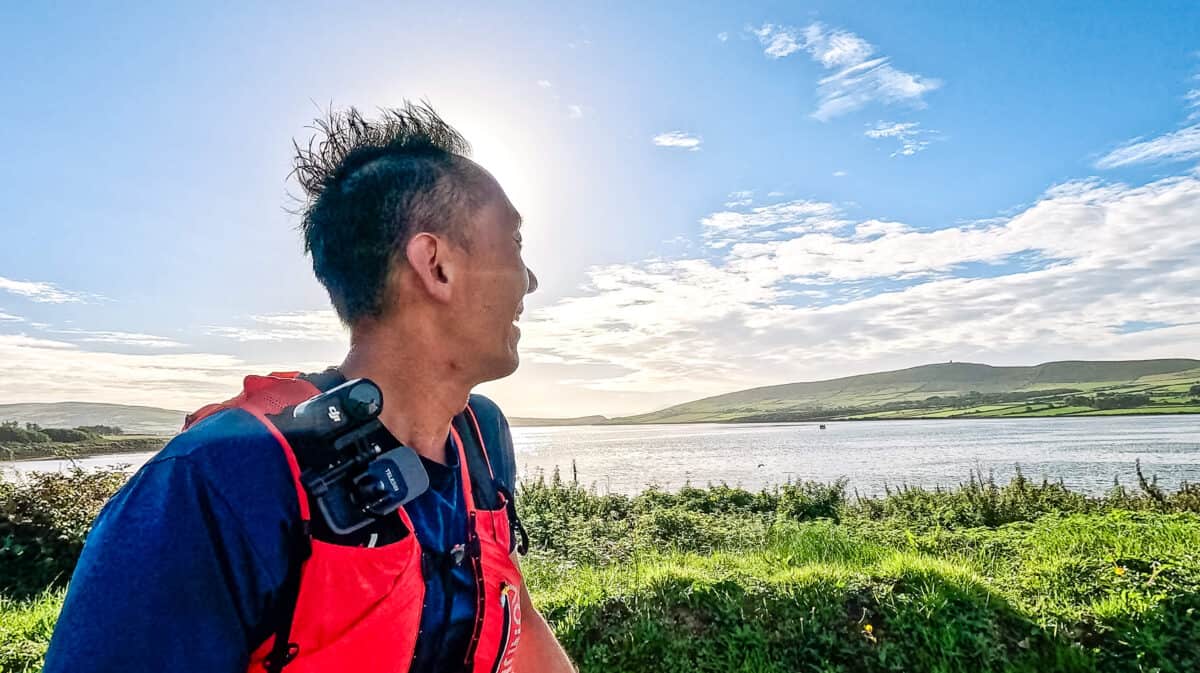
I came into Dingle with one major lesson from Helsinki.
A strict run-walk timer becomes much less useful on a rolling course.
The basic plan was still conservative, but terrain would take priority.
If a significant climb appeared during a running interval, I could walk it.
If a downhill arrived during a scheduled walk, I could use it.
The goal was to manage effort rather than blindly follow a timer.
That approach made the early hills feel surprisingly manageable.
I never expected to run every climb in the first place, so walking uphill did not feel like the race was going badly.
Other runners were doing the same.
Instead of worrying about pace, I could look around.
And there was a lot to look at!
When the marathon becomes the sightseeing
The first half of Dingle was unlike any road marathon I had run.
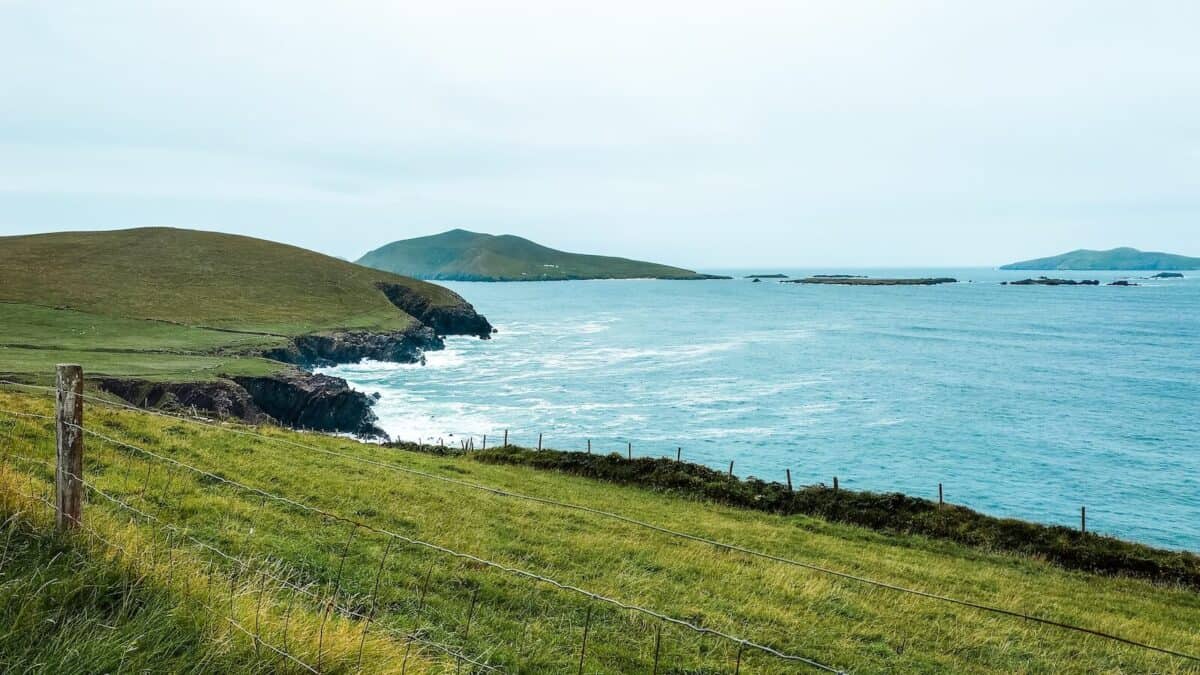
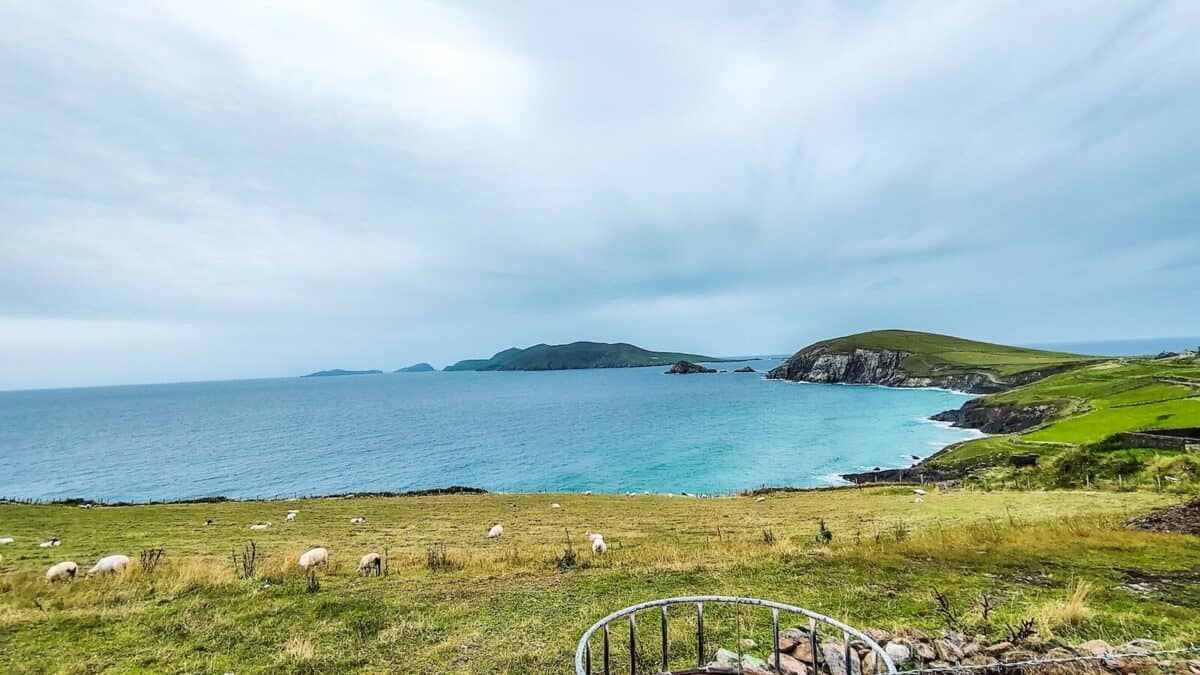
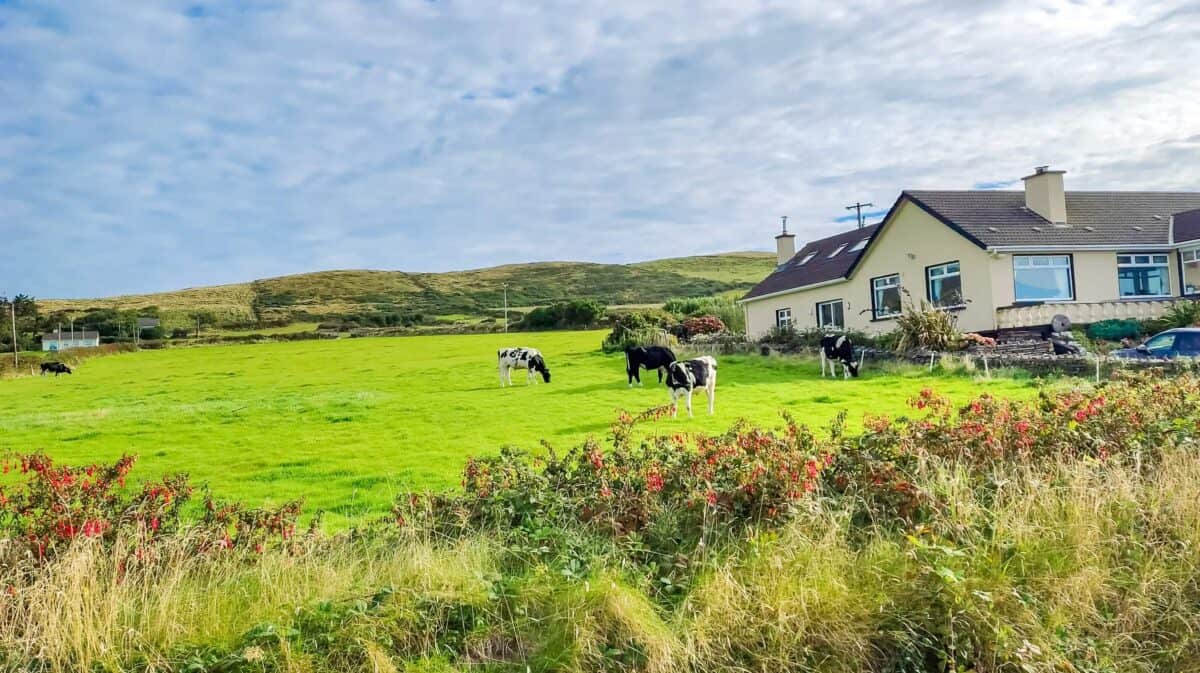
At one point, I had the Atlantic Ocean stretching out on one side of the road and cattle grazing in green fields on the other.
I remember thinking: where else do you get this during a marathon?
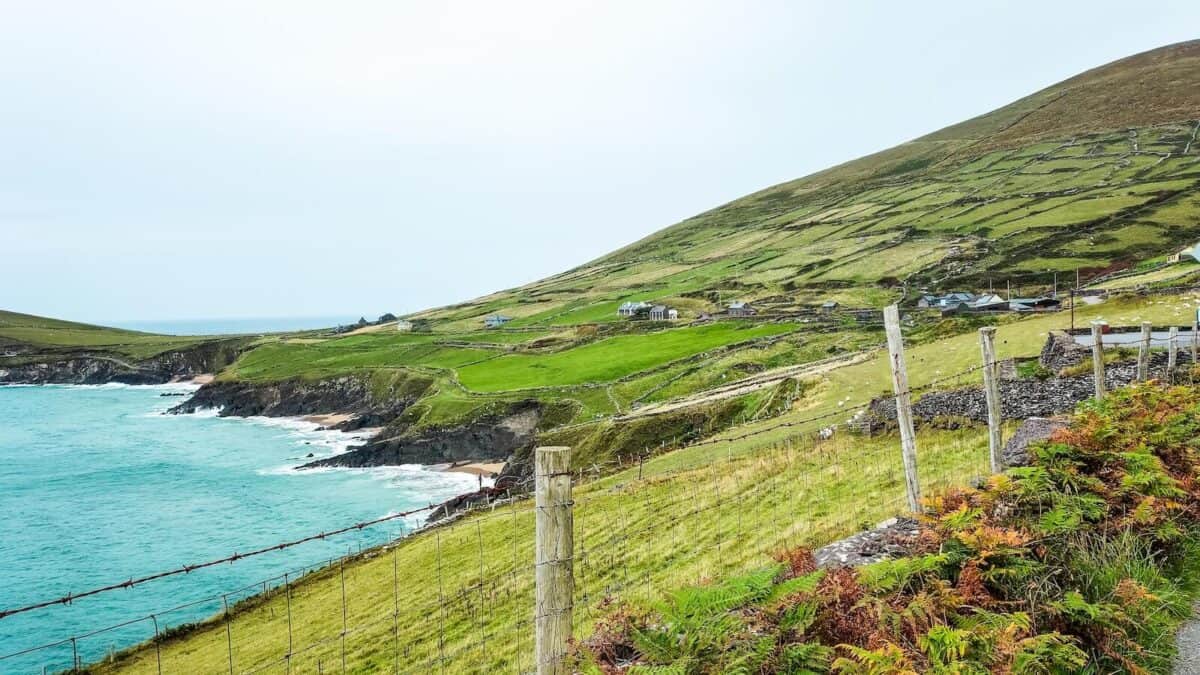
Further along came the scenes I had imagined when thinking about Ireland.
Cliffs dropping toward the ocean.
Green hills disappearing into the distance.
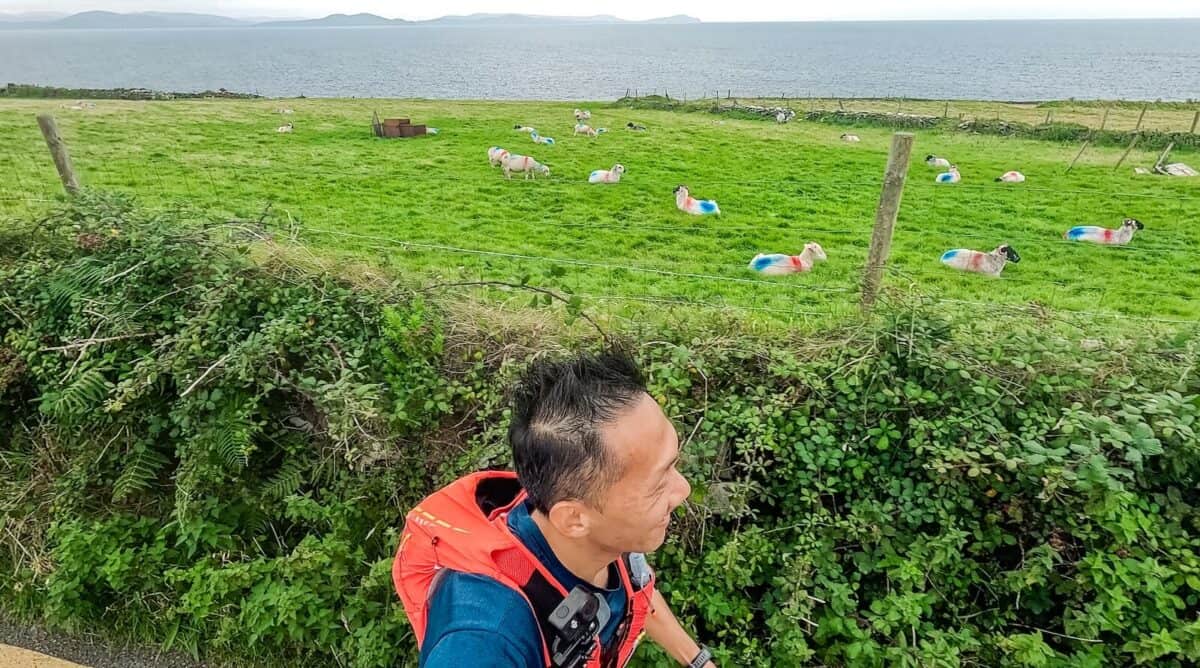
Pastures dotted with livestock.
There was a section near a farm where several of us stopped specifically to take photographs. Sheep, goats and other animals were gathered around the landscape, including what I remember as either llamas or alpacas.
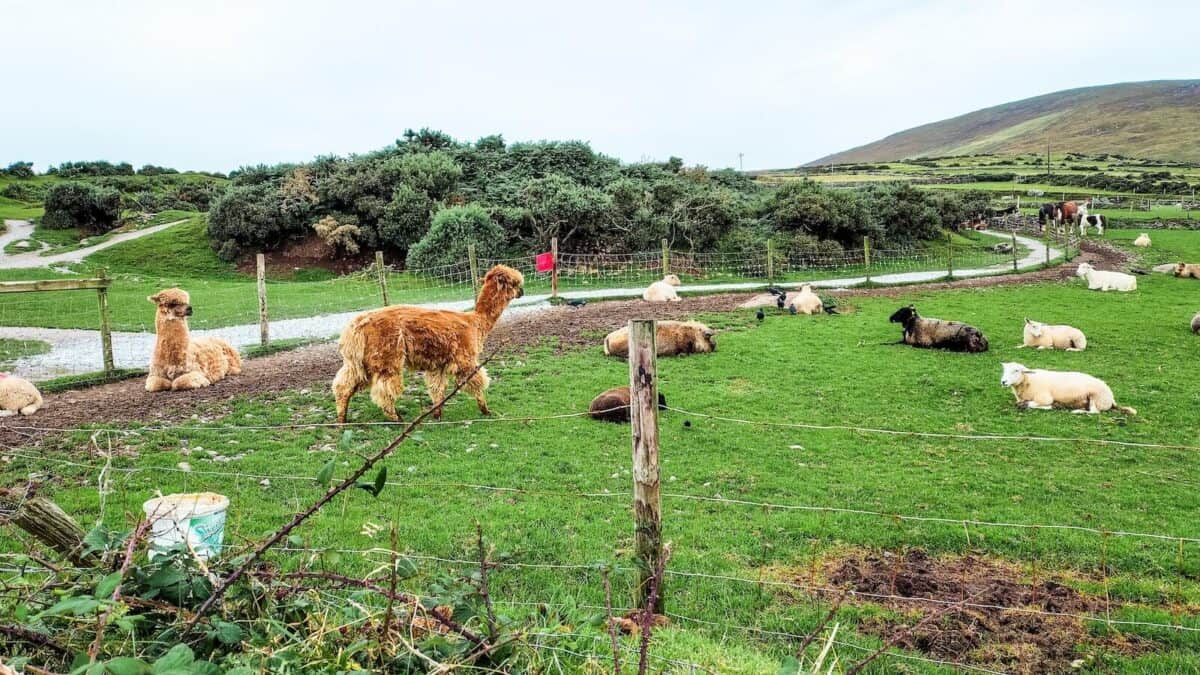
I stopped too.
Another runner from Norway and I ended up taking photos for each other before continuing.
That happened repeatedly through the first half.
I was not simply running through the scenery.
I was stopping to experience it.
Dingle became less of a race against the clock and more of a sightseeing run with a marathon distance attached to it.
The Wild Atlantic Way without a car
That was one of the things I appreciated most about the course.
The official marathon heads west from Dingle toward Ventry and Slea Head, with views toward the Blasket Islands, before continuing around the peninsula and eventually returning to Dingle.
For someone who does not drive, running it offered an unusual way to experience part of the Wild Atlantic Way.
I did not need to organize a car rental, repeatedly stop at viewpoints or work out how to reach different parts of the peninsula.
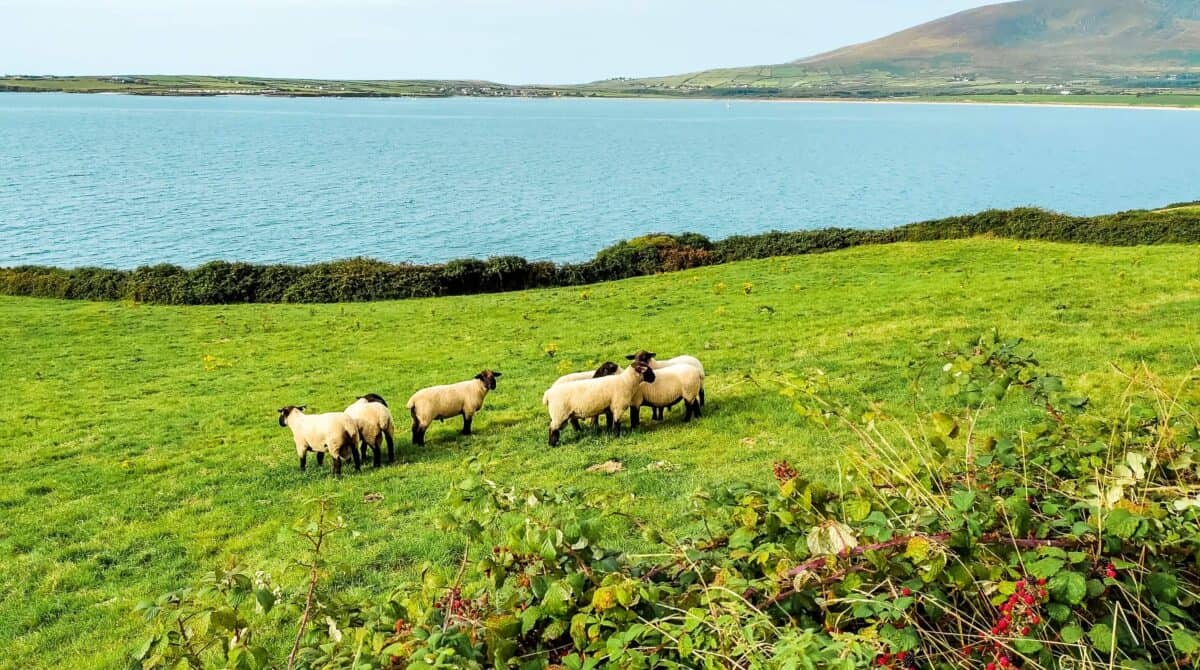
The road itself became the itinerary.
The marathon simply kept moving me from one view to another.
There were few spectators through many of these stretches, but I did not miss them.
This was not a race where I needed constant music, shouting or crowds.
The landscape did the work.
Quiet roads, passionate support
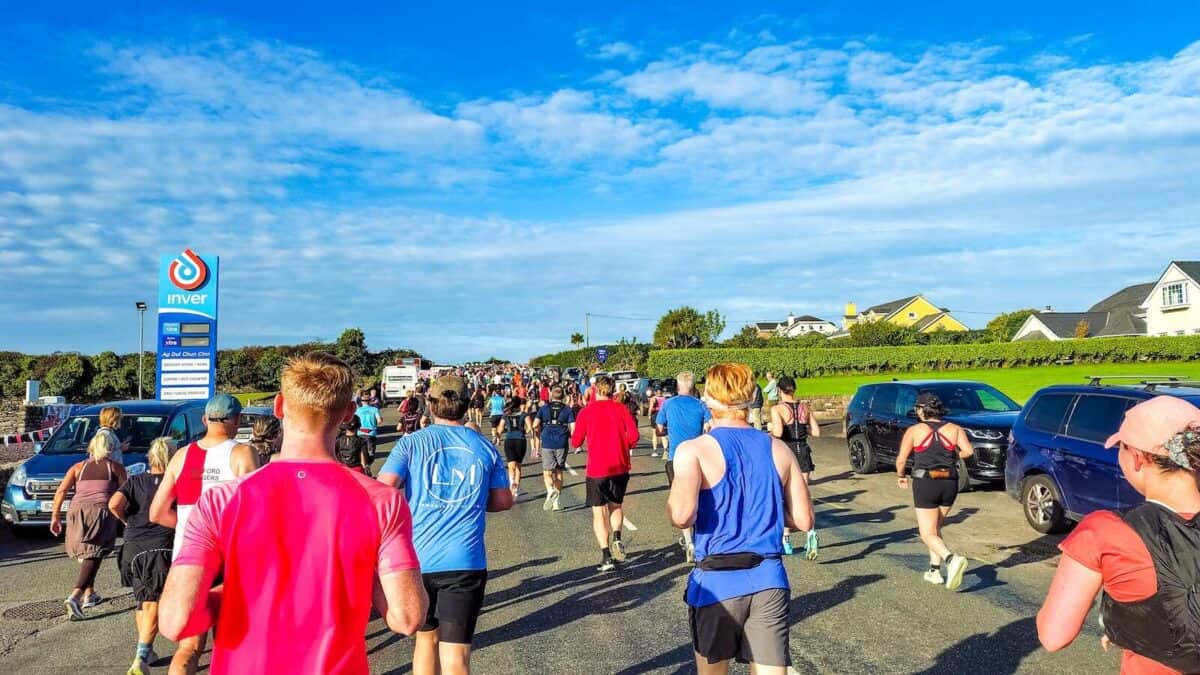
Outside Dingle town, spectator support became sparse.
That makes sense.
Much of the marathon follows roads where people cannot easily gather without creating logistical problems.
Instead, some of the most memorable support came from residents living directly along the route.
People stepped outside their houses to cheer runners passing through.
There might only be a handful of them at a time, but they were enthusiastic.
That created a different feeling from a city marathon lined with thousands of spectators.
The encouragement felt almost personal.
For long stretches, though, it was mostly runners, road and nature.
If you need constant crowd support to stay motivated, Dingle may not be the marathon for you.
If you enjoy being able to settle into a quiet run surrounded by scenery, it is difficult to think of a better setting.
When the hills start adding up
The course difficulty did eventually become more obvious.
Around the halfway point and beyond, the accumulated climbing began making itself felt in the legs.
There were also periods of wind and passing rain.
Neither became disastrous during my race, and overall I think we were very fortunate with the weather.
But the exposure made it obvious how different Dingle could feel on another day.
There is not always a building to block the wind or somewhere to hide from rain.
When the weather arrives, you experience it.
Even then, I never found myself thinking that the course was miserable.
Part of that came from the strategy.
I was already walking the climbs.
Part came from the scenery.
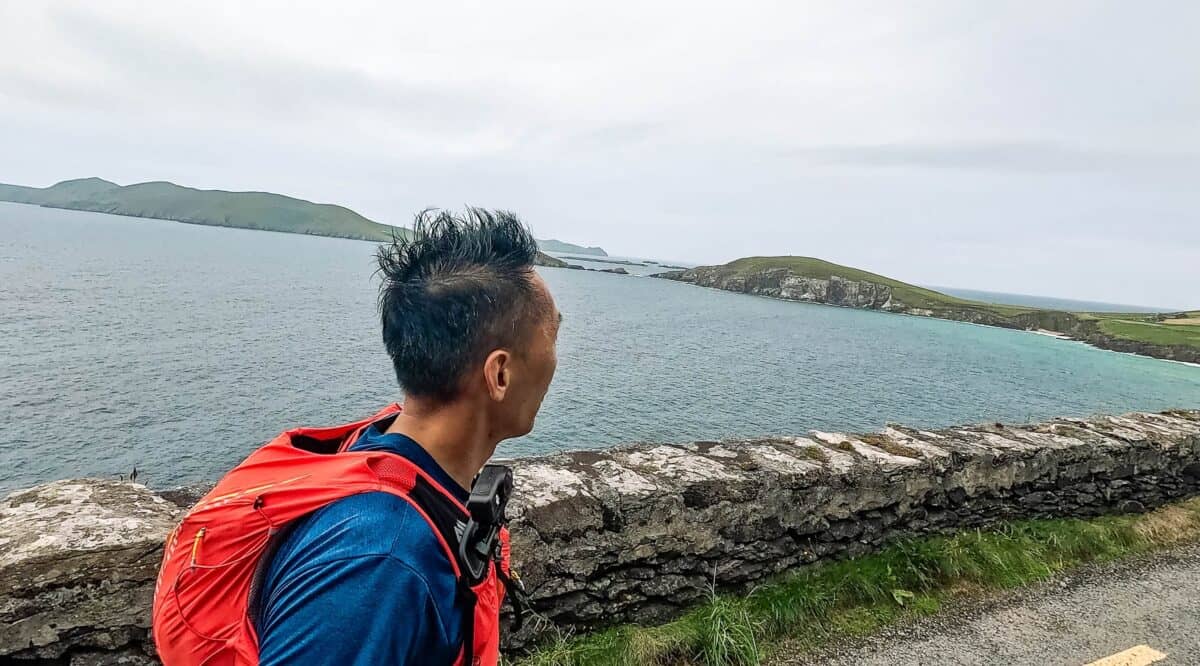
Even when other runners told me that the second half was less impressive than the first, I struggled to see it that way.
Perhaps the landscape becomes familiar if you live in rural Ireland.
It did not feel familiar to me.
Wide green fields stretched toward hills in the distance. Livestock appeared as tiny white dots against the slopes. Long grass moved beside the road.
To someone visiting Ireland for the first time, that was scenery very much worth running through.
The climb everyone waits for
The major late climb arrived roughly in the final quarter of the marathon.
I had known it was coming.
What surprised me was that it did not feel particularly intimidating once I reached it.
It was long rather than brutally steep.
So I walked.
And kept walking.
Three kilometers of climbing still takes energy, but I was not under serious time pressure and never felt that I needed to force the pace.
Eventually, the road turned downward.
And that was when I actually made the bigger mistake.
Feeling good after the climb, I began running the descent quickly.
At first, it felt fantastic.
I started overtaking runners again and finally had gravity working in my favor.
Then my left kneecap began hurting.
When downhill became harder than uphill
The pain appeared quickly enough to get my attention.
I had spent much of the marathon protecting myself on climbs, only to discover that aggressively running downhill could create a completely different kind of stress.
I slowed down and walked.
There was also some tightness building elsewhere in the legs, particularly around the right calf, but the knee became the main concern.
Tallinn was only one week away.
There was no reason to turn temporary discomfort into something that could threaten the next marathon.
After walking for a while, I tested running again.
The knee felt better.
As the terrain flattened out, I could run without triggering the same sharp discomfort.
That told me something important.
The problem did not seem to be that my legs were simply incapable of continuing.
The fast downhill had aggravated the knee.
Once that stimulus disappeared, the situation became manageable again.
It was another lesson in how differently climbing and descending can load the body, even when running downhill initially feels easier.
Returning to Dingle
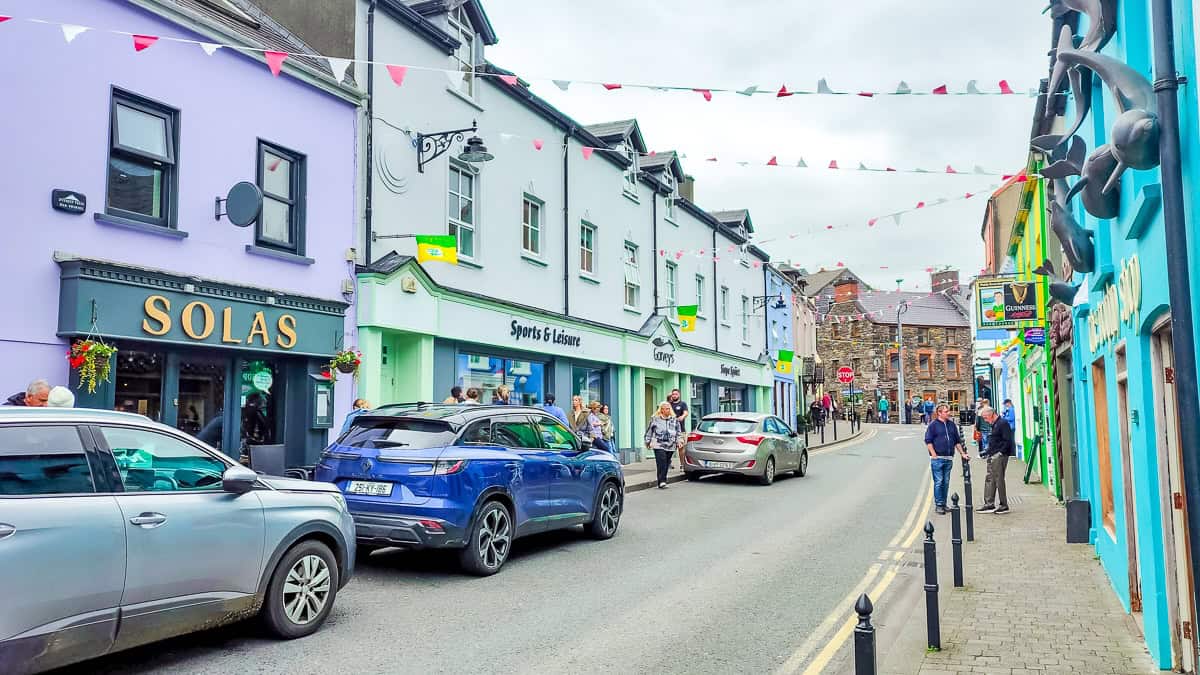
As the course approached town again, the atmosphere changed.
The quiet coastal roads gave way to more people, more noise and the sense of returning somewhere populated after several hours in the countryside.
My knee had settled enough that I could run again.
I increased the pace and began chasing down some of the runners ahead.
It was not the enormous late surge I had produced in Helsinki, but I still had enough left to finish thriving rather than simply survive the final kilometers.
Crossing back into Dingle felt satisfying for a reason that had very little to do with the clock.
In fact, at Dingle, it barely mattered.
I had spent half the marathon stopping for photographs, walking climbs and taking in one of the most scenic courses I had ever experienced.
That was the point.
A finish worth staying around for
By the time I finished, Dingle had transformed from the quiet harbor town I had seen at sunrise.
The streets were busy with runners, families, locals and weekend visitors.
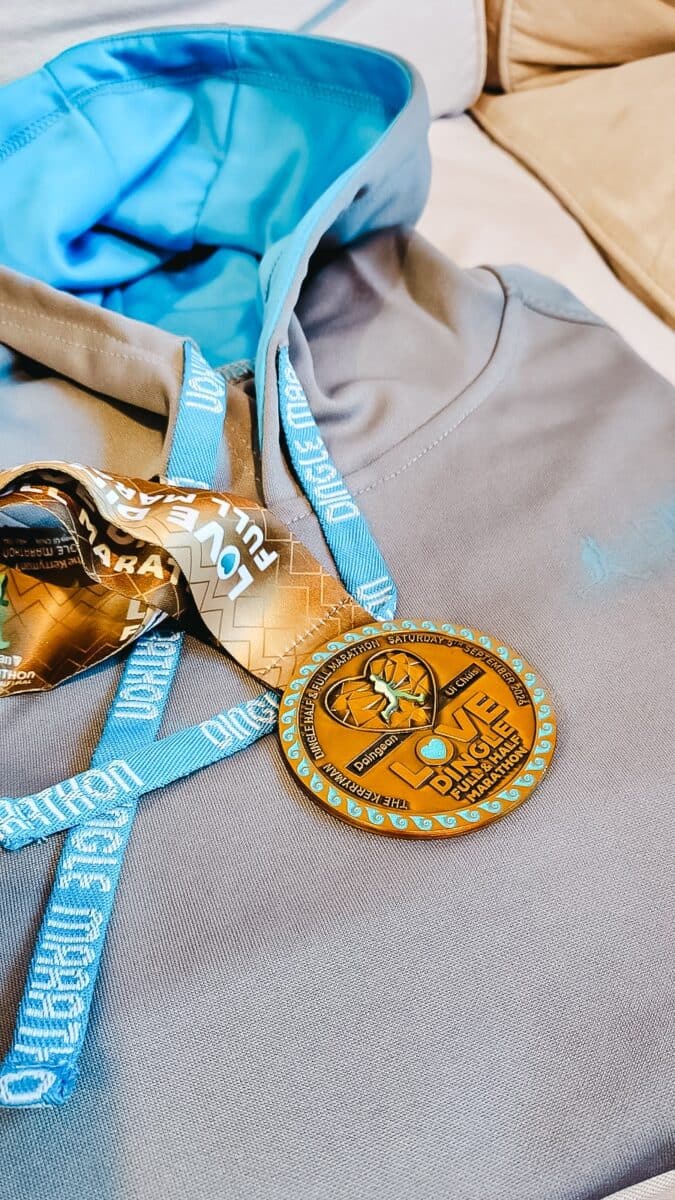
The race provided food and drinks afterward, along with a substantial medal and a finisher hoodie.
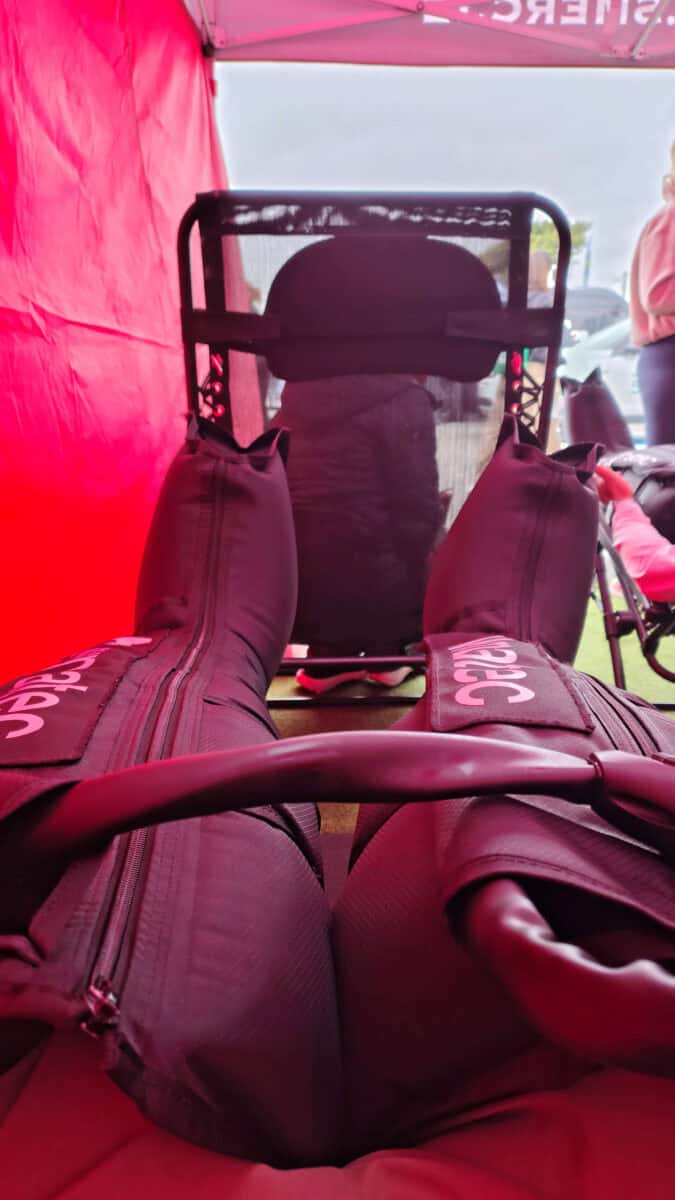
I particularly appreciated the recovery area, where massage boots were available for runners to use.
After 42.2 kilometers of rolling roads, they were very much welcome.
My legs were tired and the knee remained something I wanted to watch, but overall I felt fine.
More importantly, I had another marathon seven days later and had avoided turning the late discomfort into something worse.
With time before my bus back to Tralee, I stayed in town.

I walked around, explored more of the streets and found the best local fish and chips.
The contrast with the morning was striking.
The silent marina at sunrise had become a lively weekend town.
I had seen two completely different versions of Dingle within the same day.
Who should run the Dingle Marathon?
Dingle is probably the marathon I would most readily recommend from the races I had completed so far.
Especially if scenery matters to you.
It sits somewhere unusual between a city marathon and a trail race.
You get the natural landscapes that attract people to trail events, but you remain on paved roads and do not need to manage technical terrain, rocks, roots or mountain trails.
For road runners who want to experience something wilder without becoming trail runners, that is a compelling combination.
The tradeoff is that this is not a flat, predictable city marathon.
The course rolls.
The weather can change.
The Atlantic exposure means wind and rain can become part of the experience.
And if you want spectators screaming along every kilometer, Dingle is unlikely to provide that.
But that is also what makes it special.
You are not running through a city that happens to have attractive sections.
You are running through a landscape.
The main challenge comes before the start
If I had one practical warning, it would be logistics.
Dingle requires more planning than most capital-city marathons, especially for international runners.
Dingle is a popular destination with a more limited accommodation supply than a major city, particularly for solo travelers trying to keep costs reasonable.
If I were running it again, I would organize accommodation much earlier.
Staying in Tralee and taking the morning bus worked for me, but staying closer would simplify race morning considerably.
That extra logistical effort is worth understanding before booking.
It is also undoubtedly worth making.
More than a marathon course
Dingle changed how I thought about destination races.
At many city marathons, the race and the destination sit beside each other.
You run the marathon, and still have other days to see the city.
Dingle was different.
The marathon itself was the main way I experienced the destination.
The Wild Atlantic Way, ocean cliffs, farmland, animals, hills and coastal roads were not things I needed to visit after the race.
They were the race.
I arrived before sunrise watching a bird glide over mirror-still water.
A few hours later, I was running with the Atlantic on one side and cattle grazing on the other.
Later still, I was walking through green hills, passing farms, getting caught in patches of Irish rain and eventually running back into a busy Dingle town.
For someone trying to use marathons as a way to experience the world, it is difficult to ask for much more.
Dingle was the hardest race course I had run at that point.
It was also the one I would most happily tell someone else to put on their calendar.


