Europe’s oldest marathon turned out to be much more than a Sunday road race. From runners returning for decades to a social run, marathon flame and six-hour medal party, Košice showed me what happens when an event becomes part of a city’s identity.
The Košice Peace Marathon first caught my attention for one simple reason.
It is the oldest marathon in Europe.
That alone was enough to make the race difficult to ignore.
I had visited Slovakia before, but only briefly in Bratislava. Košice was completely new to me, and unlike many of the capital-city races I had chosen, this was a marathon that could introduce me to a place I might otherwise never have considered visiting.
Originally, I wondered whether I really needed a full weekend there.
The practical option would have been to arrive shortly before the marathon, run it, and leave, which many international runners did.
Instead, I decided to stay for three nights and experience the events around the race as well.
That decision ended up shaping my entire impression of Košice.
Because the most interesting part was not simply running Europe’s oldest marathon.
It was seeing everything that had grown around it.
A marathon you notice before race day
Košice felt compact almost immediately.
Much of what I wanted to see was concentrated around the historic center, with the long main street running through the heart of it.
And from the moment I arrived, preparations for marathon weekend were already becoming part of that streetscape.
Event infrastructure appeared around the center.
Banners lined parts of the route.
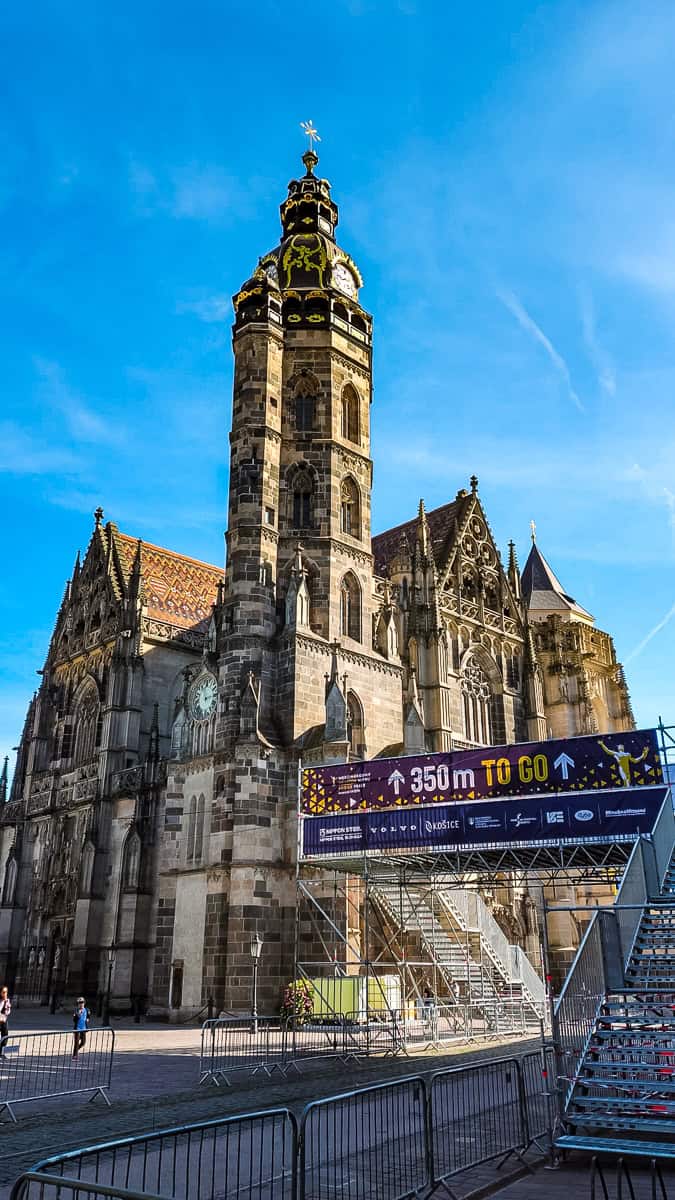
Areas surrounding the cathedral were being prepared for the different events taking place across the weekend.
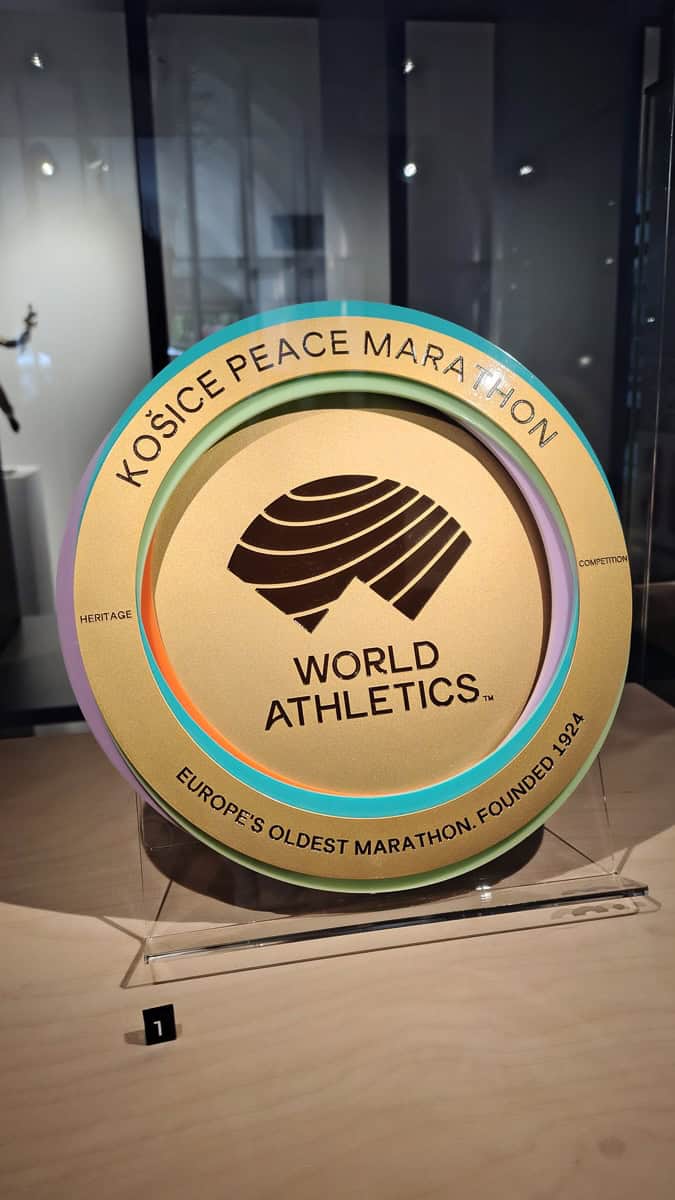
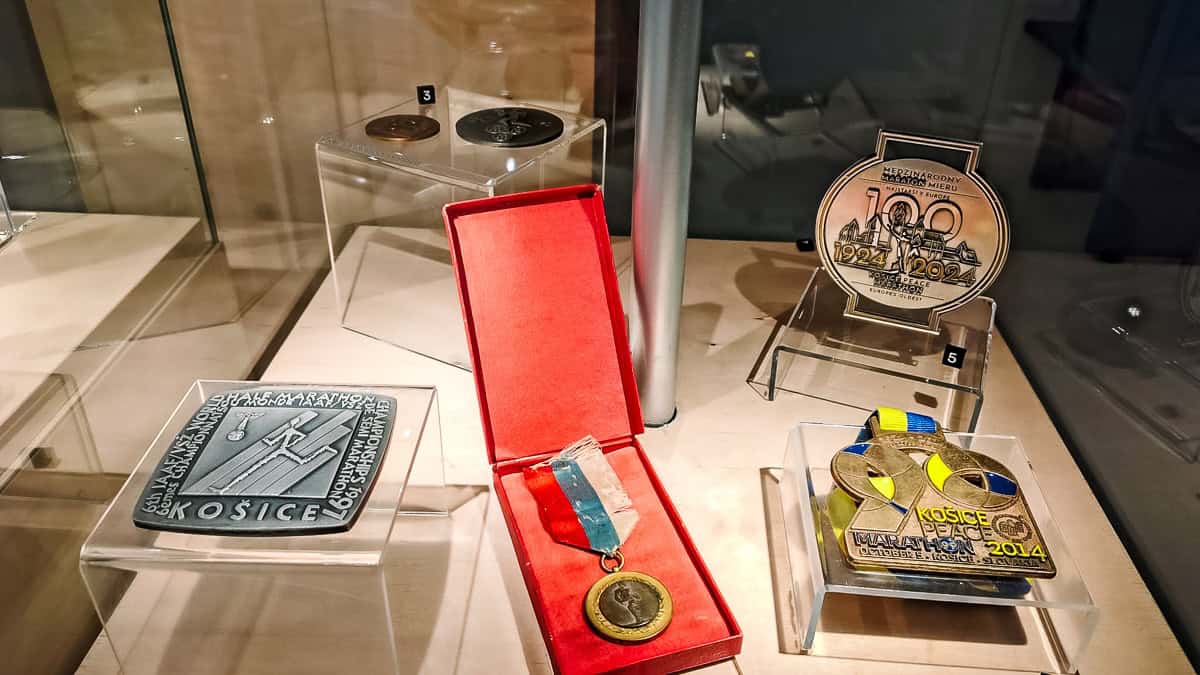
There were also permanent reminders that the marathon existed beyond race weekend, including MarathonPoint and monuments connected with its history.
As more runners arrived, the atmosphere became even more obvious.
In a larger city, marathon participants can disappear into everything else happening around them.
In Košice, they seemed concentrated into the same compact center.
Running shoes.
Event shirts.
People collecting bibs or heading toward the expo.
The marathon began to feel less like something temporarily occupying the city and more like something the city was preparing to celebrate.
An expo for more than marathon runners
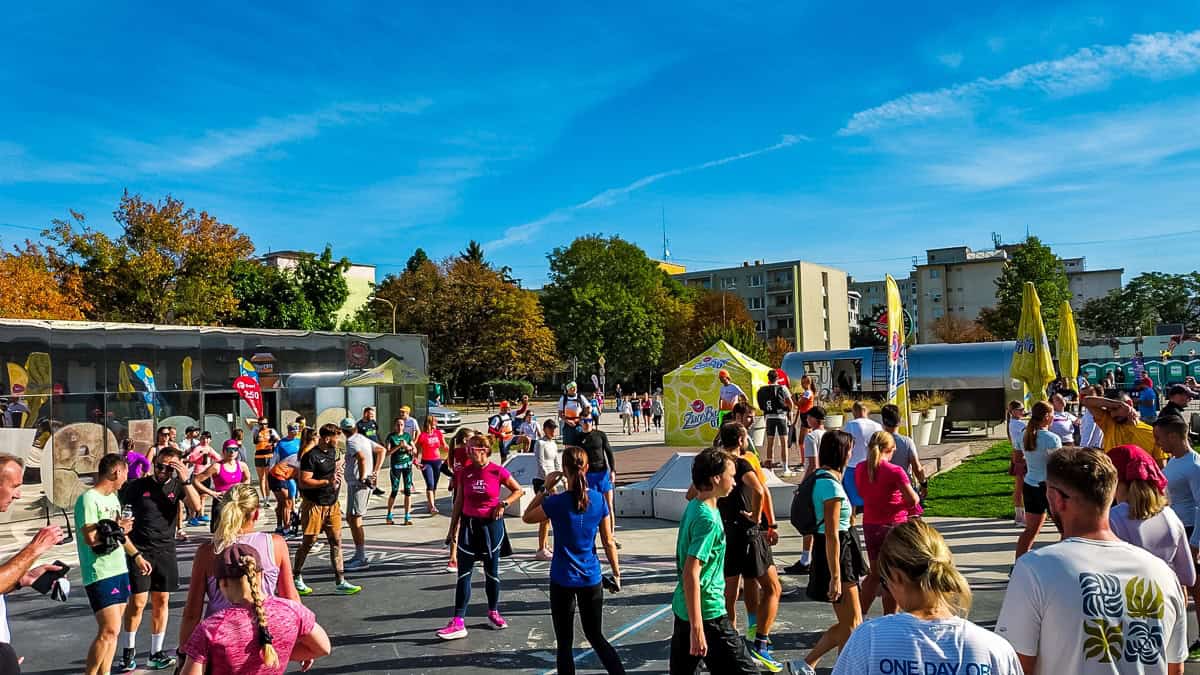
The expo reflected that wider sense of participation.
There were sponsors, practical running products and places to pick up last-minute supplies.
But what stood out to me was how many families were there.
Košice also holds its Family Run on Saturday, bringing adults and children into the weekend before the marathon and half marathon take place on Sunday.
That changed the atmosphere considerably.
Children were collecting numbers.
Families were moving around together.
There were interactive activities alongside the usual race-weekend booths.
It reinforced something that would become increasingly obvious over the weekend.
This was not simply an event for the people running 42.2 kilometers.
There were multiple ways for the city to participate.
Running together before racing
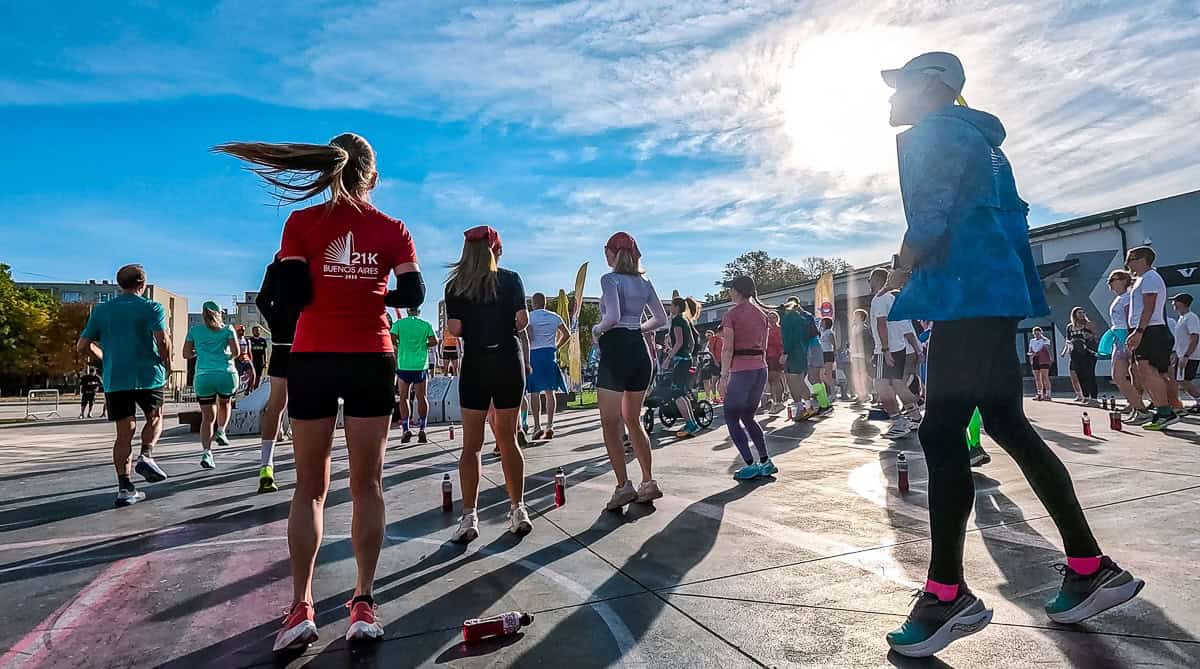
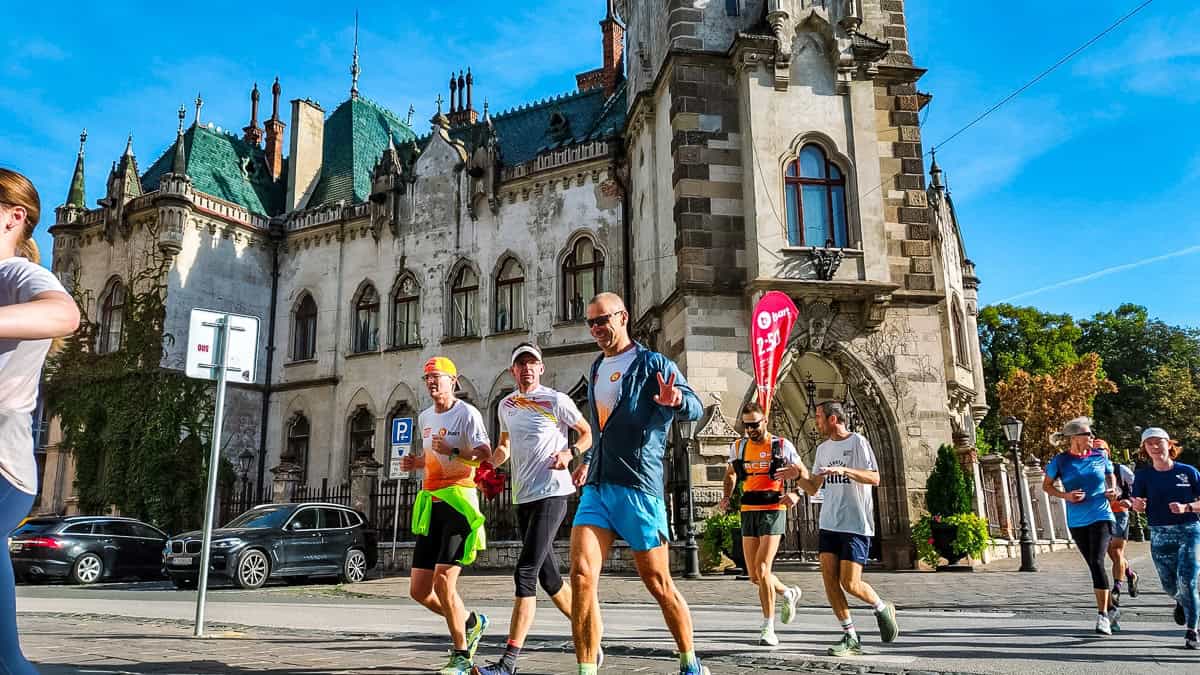
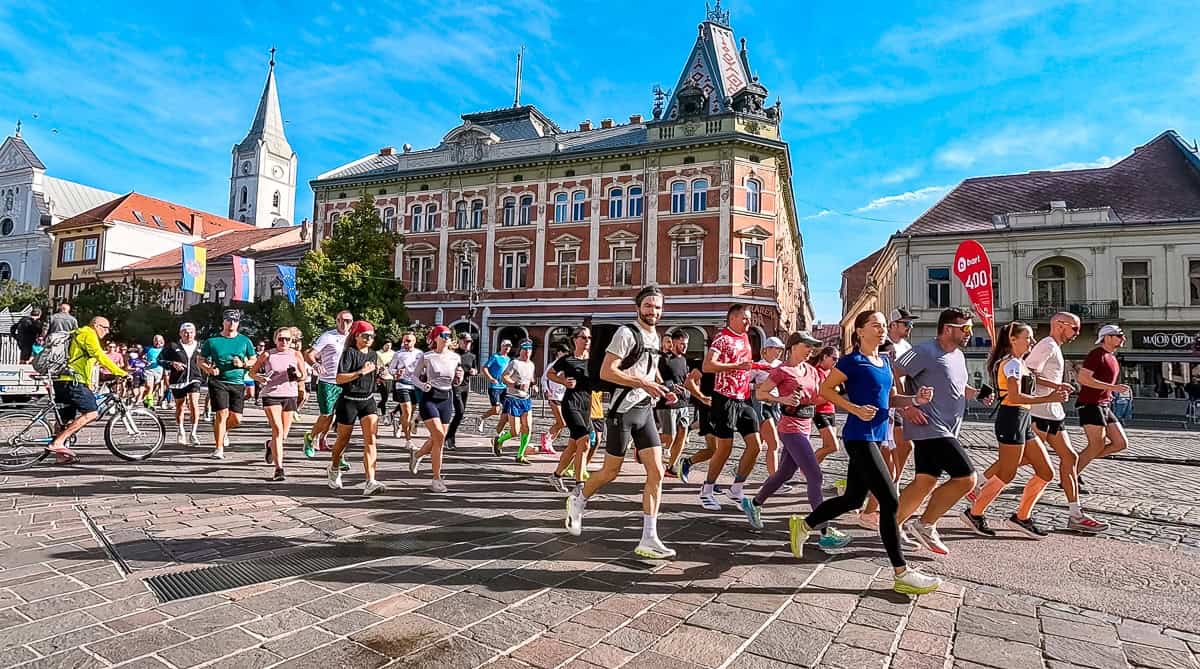
On Saturday morning, I joined the Košice Marathon Social Run.
2026 was the first year the organizers added it to marathon weekend, positioning it as a noncompetitive community run for runners, supporters and anyone who wanted to experience the marathon atmosphere before Sunday.
The turnout felt almost ideal.
Large enough to create energy.
Small enough that it still felt social.
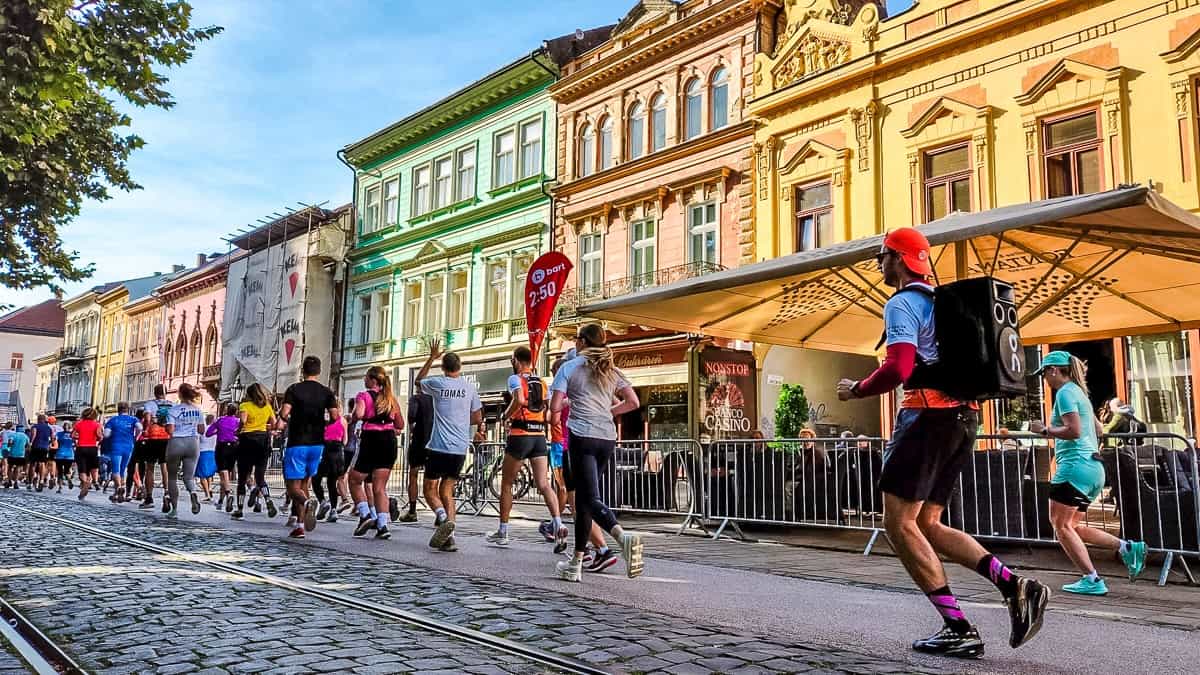
We ran around parts of central Košice without any concern for pace or timing.
My experience was slightly different because I spent much of it behaving more like media than a runner.
Run ahead.
Stop.
Film everyone coming past.
Catch up.
Find another angle.
Repeat.
I enjoyed that almost as much as the run itself.
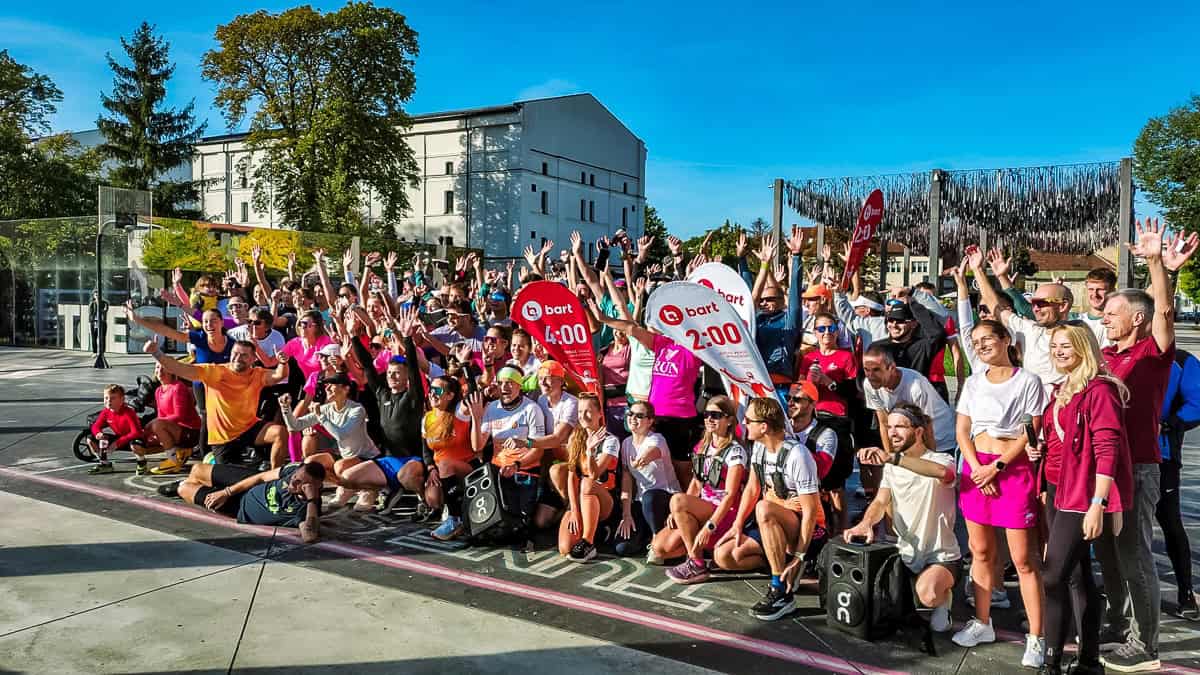
The social run gave me a chance to see the city center filled with runners before the competitive event began, but without any of the tension of race morning.
It also added another layer to the weekend.
You did not need to wait until Sunday morning for the marathon experience to start.
What 25 years of the same marathon actually means
Another part of the weekend that gave me a different perspective was the Diamond Club ceremony.
Membership is reserved for runners who have successfully completed the Košice Marathon at least 25 times.
At first glance, 25 marathons does not necessarily sound extraordinary when viewed purely as a number.
I was already running enough races that I could imagine accumulating 25 marathons relatively quickly.
Then I realized that was completely missing the point.
These runners had not simply completed 25 marathons.
They had returned to this marathon across decades.
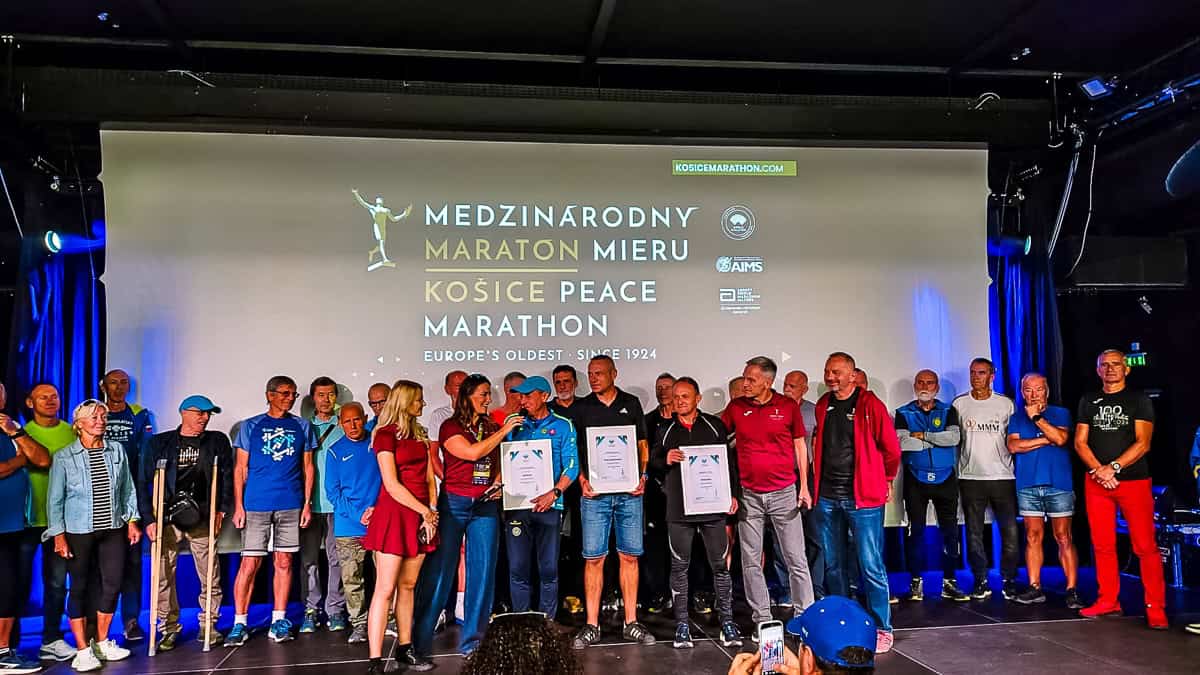
Twenty-five years of showing up.
Twenty-five race mornings.
Twenty-five different versions of themselves arriving in Košice and running the same event.
One pacer I met had been participating for 11 consecutive years.
Another runner being celebrated had reached an even more extraordinary milestone, completing Košice across roughly half a century.
That changes how you think about longevity in running.
It is easy to become focused on totals.
How many races?
How many countries?
How quickly?
Košice showed another version.
Consistency measured in decades.
Lighting the marathon flame
The traditions extended beyond returning runners.
The official weekend program even included the ceremonial lighting of the marathon flame before race day.
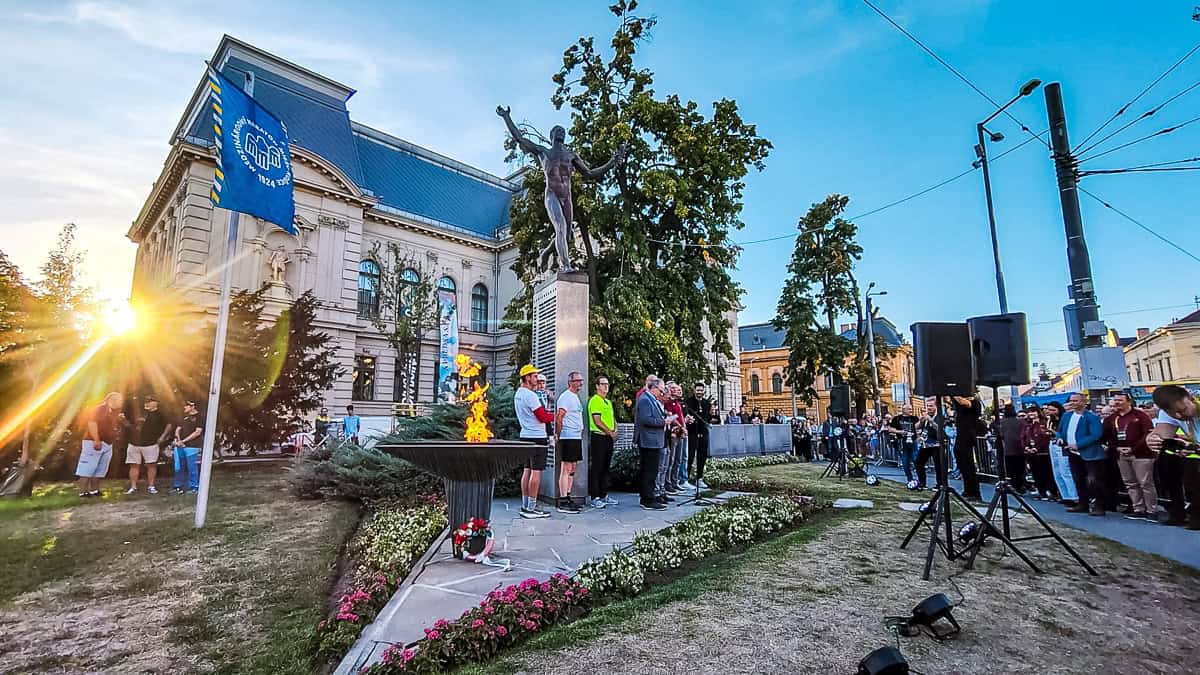
That might sound ceremonial for the sake of ceremony.
But combined with the Diamond Club, MarathonPoint, the Family Run and everything else happening around the center, it made sense.
Košice does not treat its marathon purely as a sporting competition.
There is heritage attached to it.
Ritual.
People who remember previous editions.
People who have run it for decades.
Children participating long before they are old enough to consider a marathon.
By Saturday evening, I understood why staying for the full weekend mattered.
And I had not even run the marathon yet.
Race morning in the center of Košice
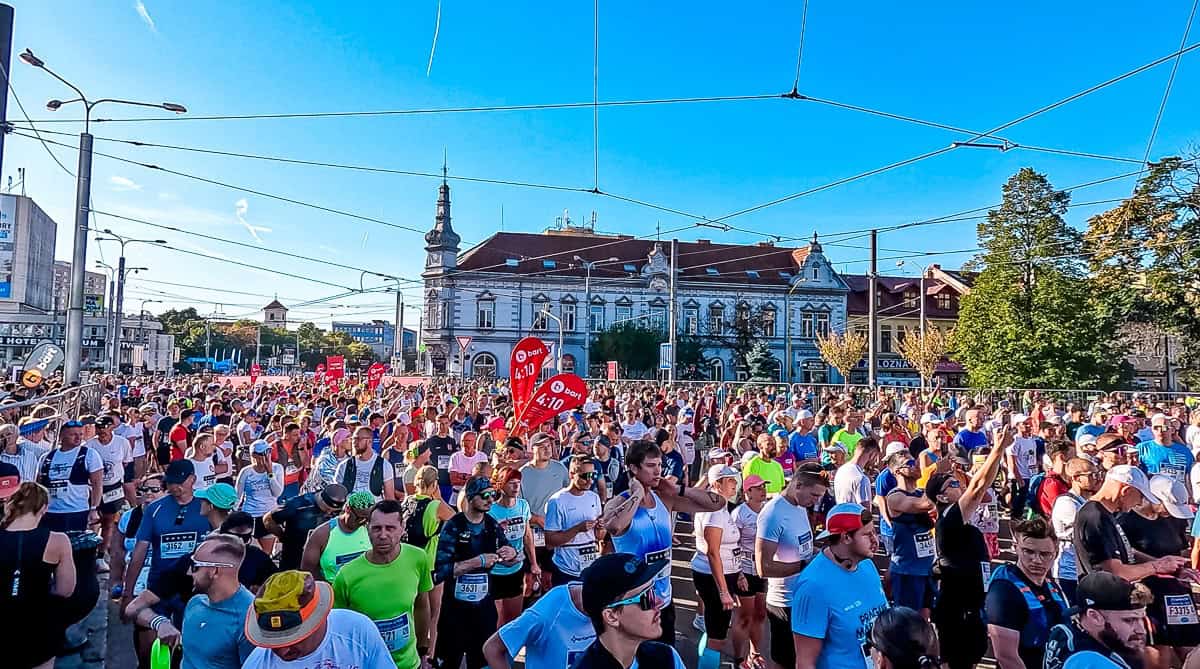
Sunday morning brought everything back to the main street.
The weather was good.
The start area stretched through the city center, with runners spread across a much larger space than the events from the previous day.
It felt lively without becoming chaotic.
I had arrived with a sensible plan.
After two weeks without a marathon, my left knee finally felt normal again.
The Košice course was also relatively flat.
So the idea was simple.
Start with a 9/1 run-walk.
Keep plenty in reserve.
Then, if the body still felt good late in the race, accelerate.
I almost immediately ignored it.
When the marathon feels worth capturing
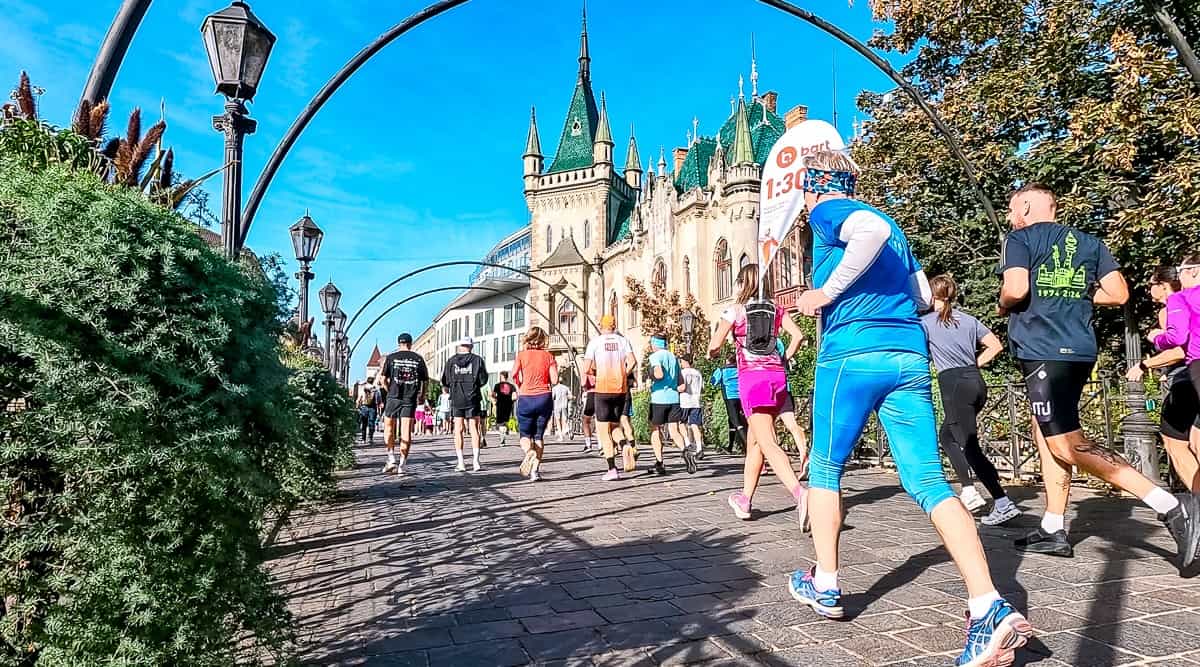
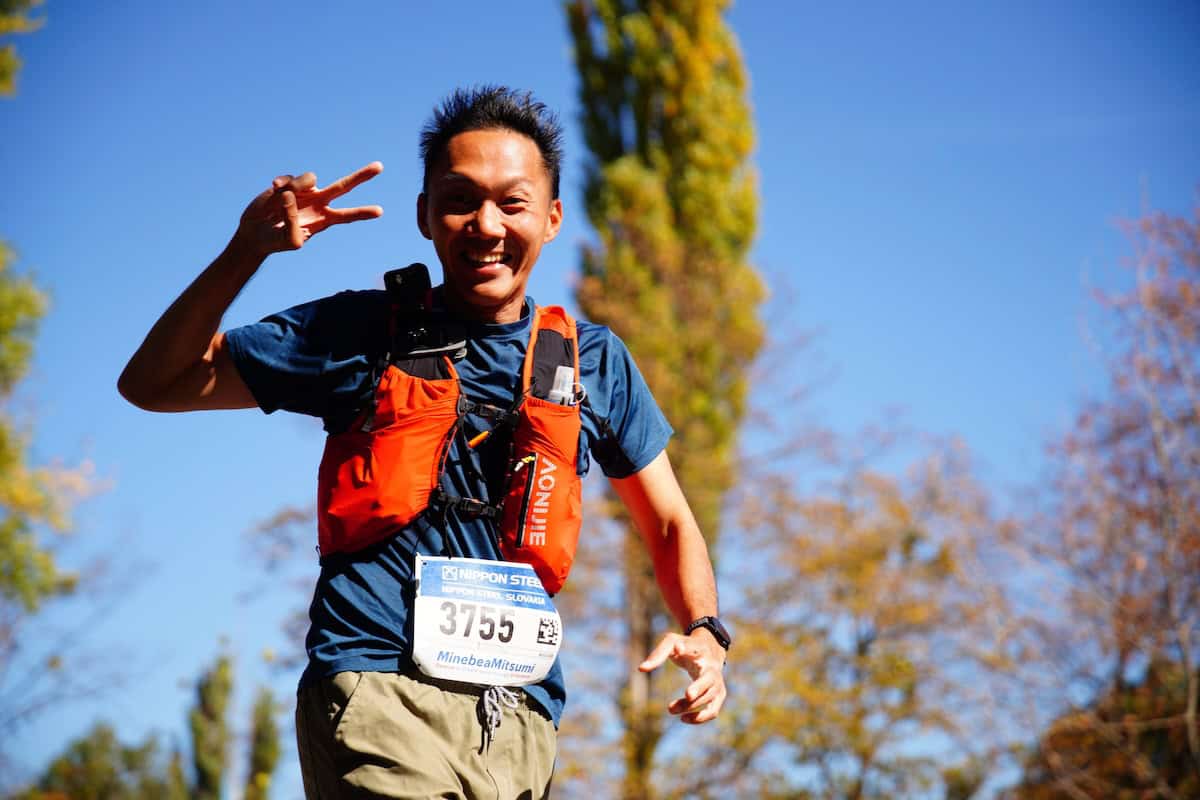
Part of the reason was that I wanted to capture the event while I was inside it.
The Social Run had given me a taste of covering Košice from within the moving crowd, and race morning offered far more to film.
Early on, I stopped beside the course, positioned the camera and filmed other runners passing.
Then I picked everything up and ran again.
I was high-fiving children.
Looking for shots.
Taking in the city.
Trying to document an event that, by then, felt genuinely worth documenting.
The legs also felt good.
The atmosphere felt good.
So I ran. No 9/1. No disciplined early restraint.
A course built around the city
The marathon uses two laps.
Normally, I prefer a course that continually shows me somewhere new.
But the repetition bothered me less than I expected.
The course moved between different sides of Košice.
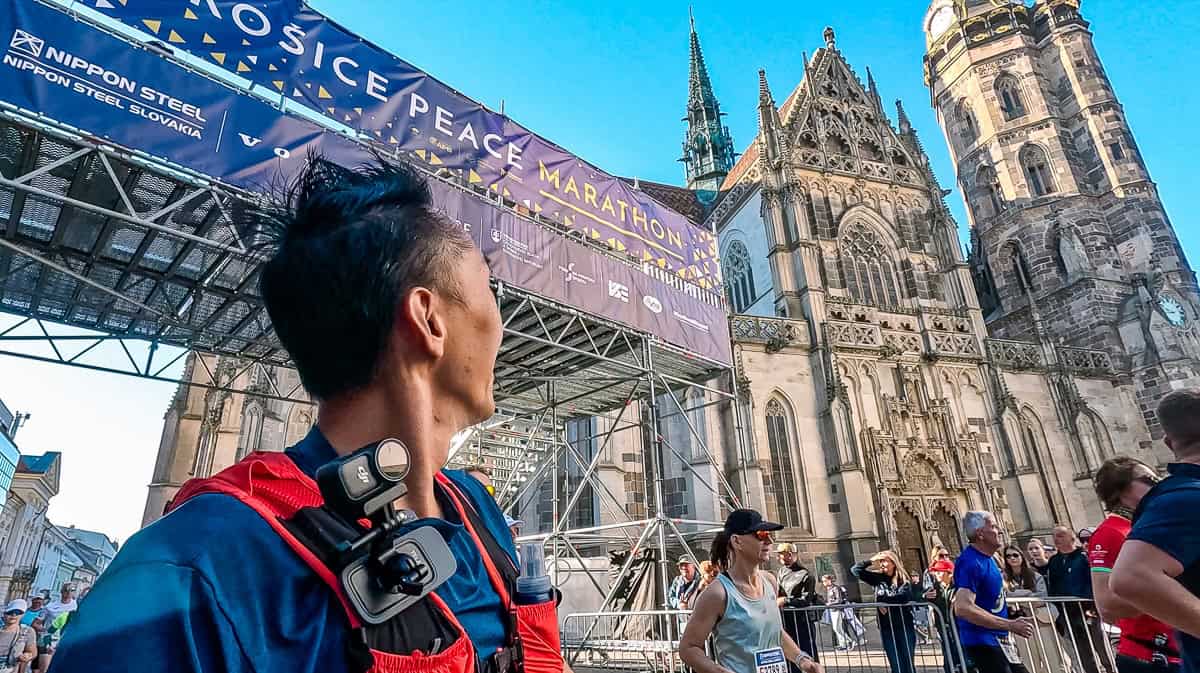
The historic center was easily the strongest section, particularly around Hlavná Street and the areas surrounding the cathedral.
Those were also the parts with the greatest spectator support.
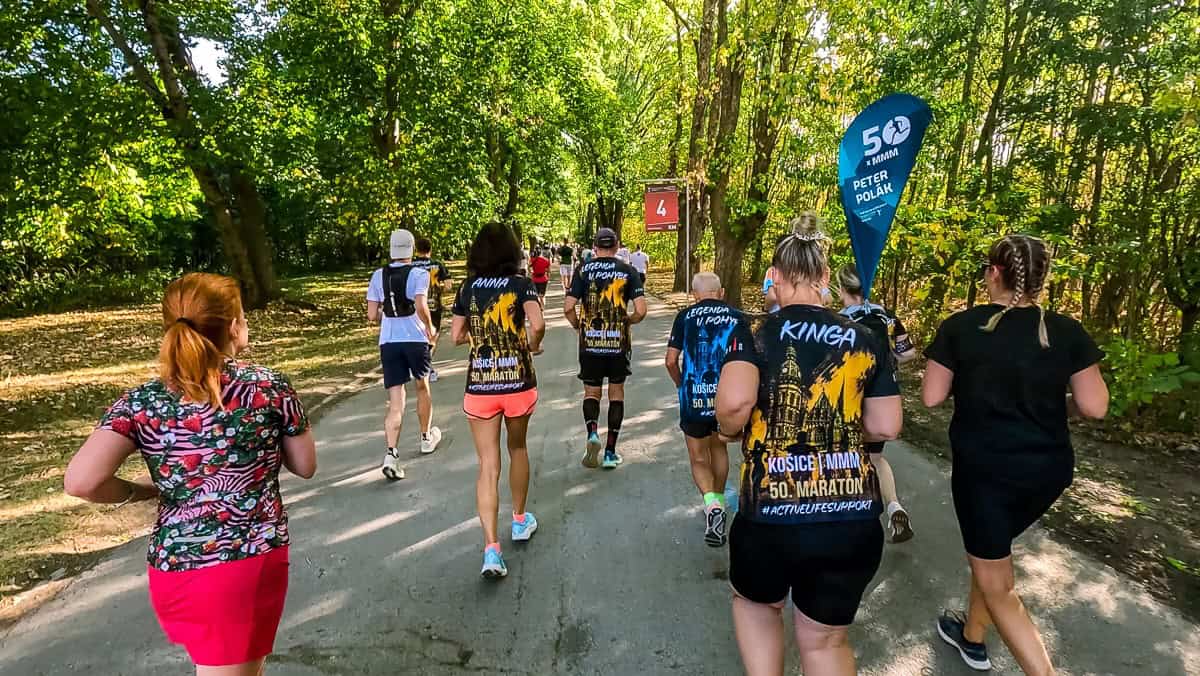
Elsewhere, the course moved through greener areas, wider roads and more functional parts of the city.
Some sections were visually stronger than others.
But for someone visiting Košice for the first time, two laps never became mentally oppressive.
If anything, the second lap made the contrast clearer.
You knew where the crowds were coming.
You knew which quieter roads were ahead.
You knew when the city center would return.
Kids waiting for high fives
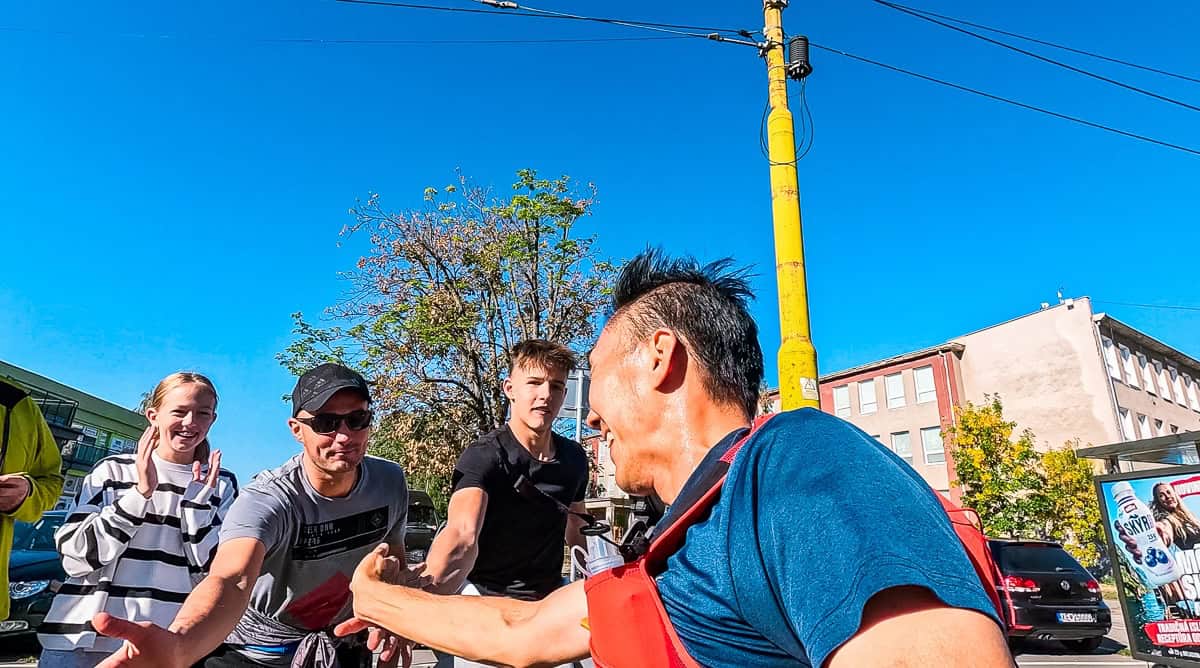
The support was strongest around central Košice, but spectators appeared in pockets throughout the course.
Families were particularly noticeable.
And there seemed to be children everywhere sticking their hands toward the runners.
I started making a point of reaching them.
Sometimes that meant moving slightly off the shortest line just to give someone a high five.
The reaction was always worth it.
For the child, getting a runner to respond seemed like a tiny victory.
For me, it turned an otherwise ordinary stretch of road into another interaction.
Those moments contributed to the sense that the marathon belonged to more than the people wearing bibs.
The first lap hid the mistake
For a while, everything worked.
That was probably the problem.
The legs felt good enough that nothing forced me to respect the original plan.
The course was manageable.
The atmosphere kept pulling me forward.
And when the first lap returned toward central Košice, it was tempting to run harder again.
By halfway, however, the race was beginning to tell a different story.
The warning was not cardiovascular.
My breathing was fine. The problem was muscular.
My right quad had already started giving signals that it might cramp.
I knew I had probably spent more of the legs than I intended.
I also knew I did not really want to admit it yet.
When the reserve disappeared
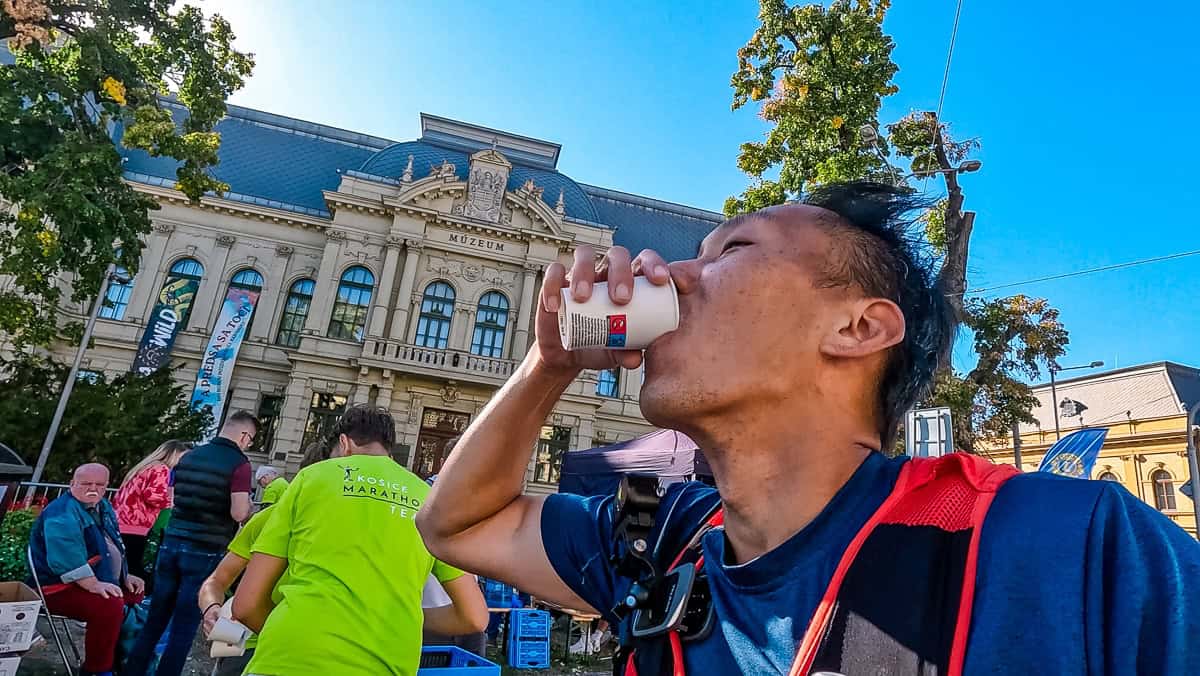
The warnings became harder to ignore during the second half.
After one faster downhill section, the right quad came particularly close to cramping.
Continuous running started to feel increasingly risky.
By the mid-30-kilometer range, the walking stretches were becoming much longer.
The muscles simply were not willing to cooperate for long enough.
A poorly executed race inside a great marathon
There were several likely contributors.
I had started more aggressively than planned.
I had ignored the run-walk strategy that had worked well before.
The afternoon became warmer.
I probably under-fueled slightly.
And despite feeling recovered, the previous four-marathon block might still have been sitting somewhere deeper in the legs.
But those details do not need to become excuses.
The simplest explanation is enough.
I executed this marathon poorly.
That is part of running.
The interesting thing was that it did not make me enjoy Košice any less.
An ending I probably would not have had otherwise
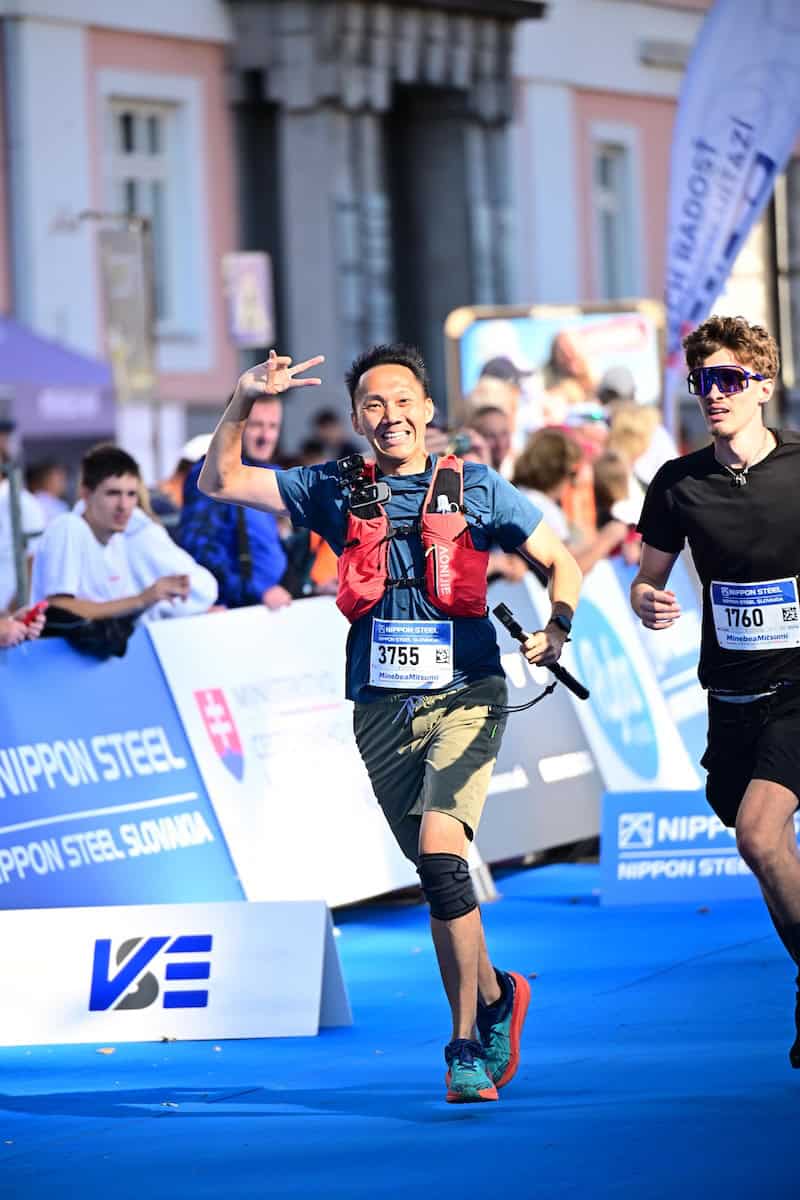
Eventually, the historic center returned.
Normally, this is where I love to accelerate.
If I had managed the race like Helsinki or Tallinn, I might have been focused entirely on chasing one last fast finish.
This time I did not have that kind of reserve.
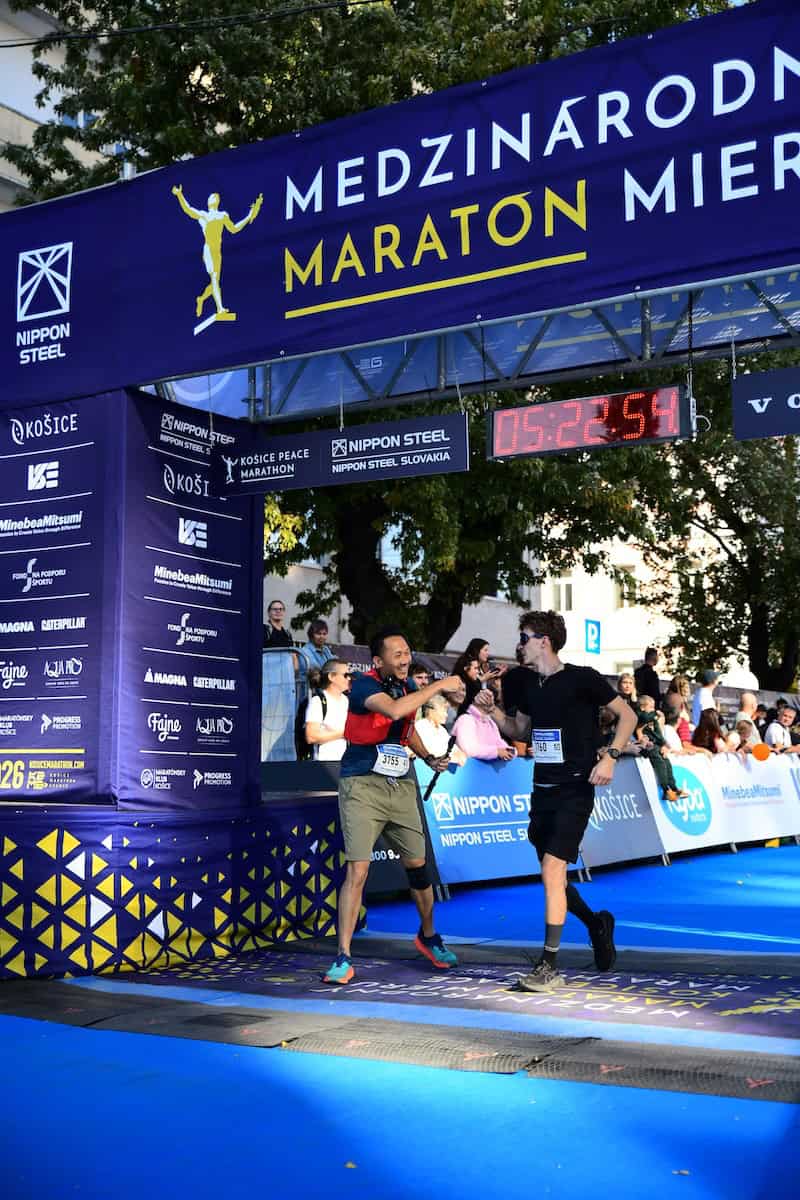
And that may be why I noticed another runner struggling ahead of me.
He was limping badly but still trying to move toward the finish.
As I reached him, I gave him some encouragement.
He responded by starting to run again.
So instead of continuing past, I stayed with him.
I told him to focus on driving his arms rather than thinking about his legs.
Asked his name.
Kept talking enough to distract him from whatever his body was telling him.
Then we sprinted toward the finish together.
Afterward, I found out this was his first marathon.
My own execution had been disappointing.
But helping someone finish his first marathon was a far better memory than another solo sprint would have been.
When the medals run out
After the finish, runners moved through the recovery area for food, drinks and goodie bags.
There was just one fairly significant thing missing.
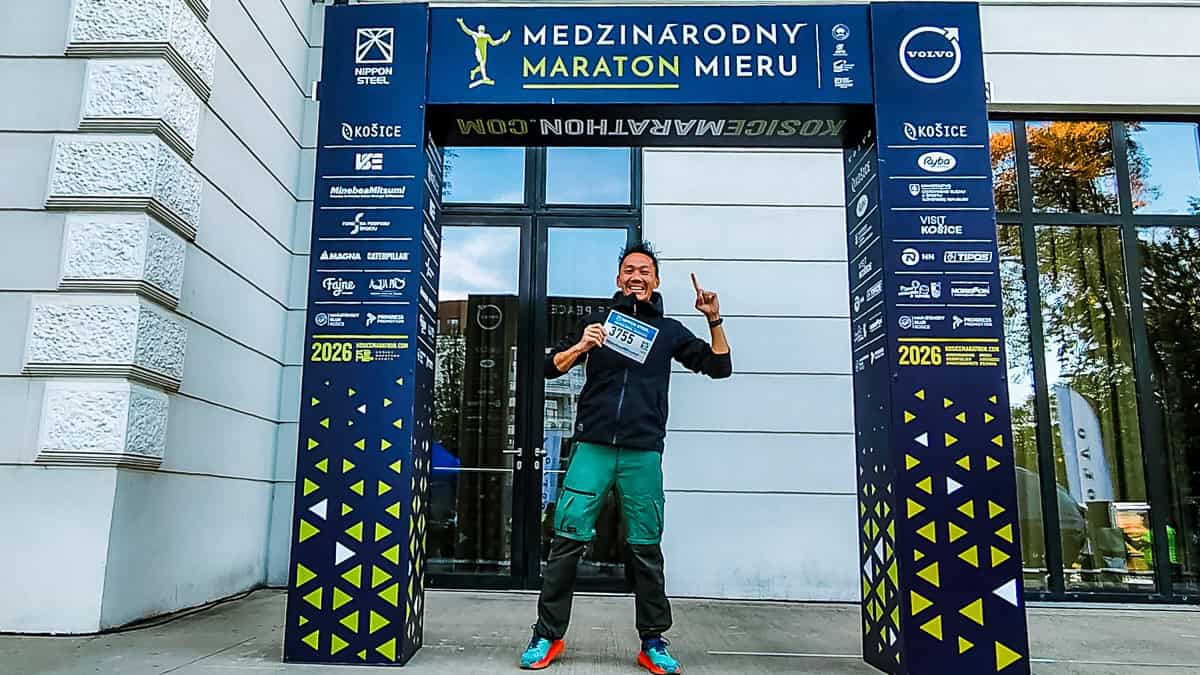
The medal. They had run out.
At the oldest marathon in Europe, that was certainly not something I expected. I suspected the strong response from last-minute sign-ups might have contributed.
The staff mentioned that replacement medals would be sent afterward, so I confirmed what was happening and moved on.
There was one small upside for me. I was already carrying 10 other medals and event shirts from races on this trip, and my bag was beginning to hit its weight limit. Having this one delivered straight home was actually pretty convenient.
For me, it was just a blip in an otherwise excellent weekend rather than something that defined my experience.
Especially because the weekend was not over yet.
The marathon ends. Then everyone comes back.
At most races, the finish area is the end of marathon weekend.
People receive their medals.
Eat something.
Take photos.
Return to hotels.
Košice does something different.
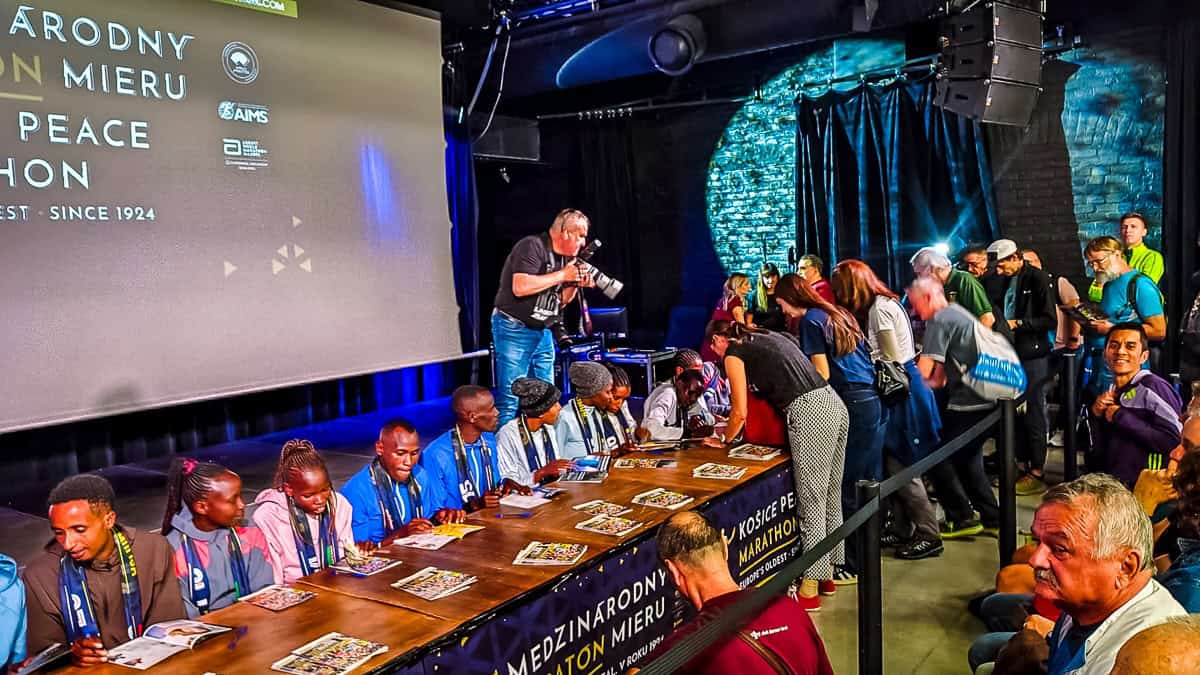
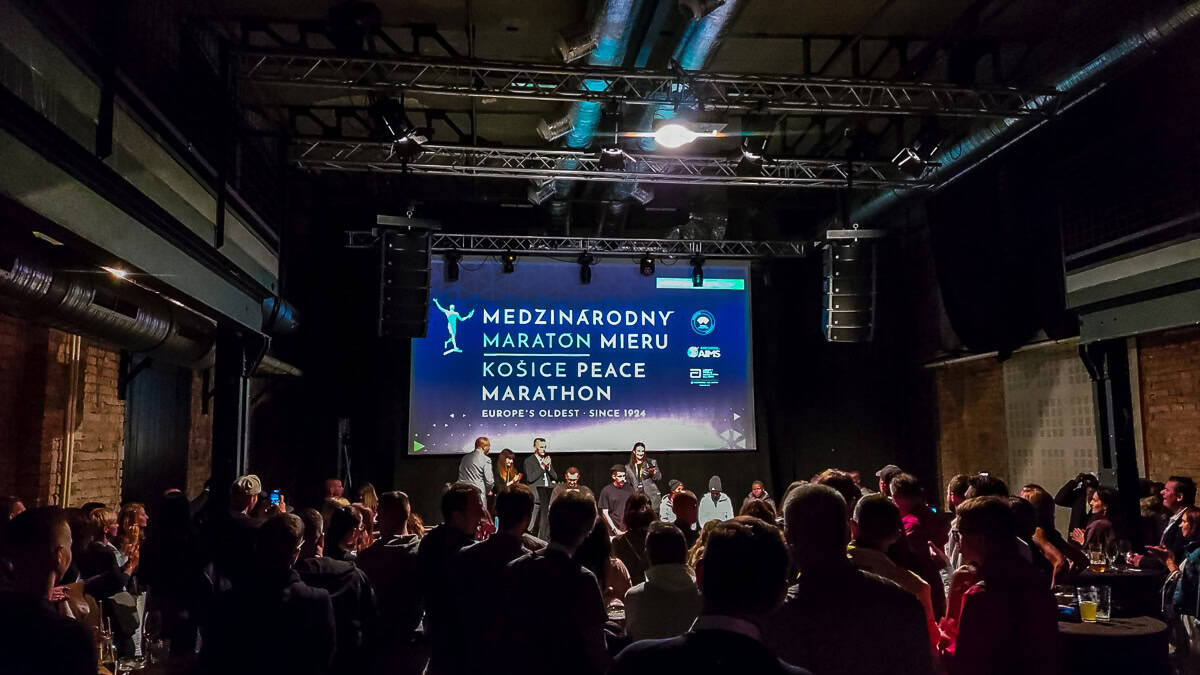
At 6:30 p.m., runners and organizers were invited back out for the official Medal Party at Tabačka Kulturfabrik.
This sounded fun. But I did not expect it to become one of my favorite parts of the entire weekend. After all, I do not consider myself a night-party person.
Six hours at the medal party
I headed there with another Slovak runner staying at my hostel.
Initially, the plan was simple.
Go. Have a drink. Talk to people.
Maybe leave around 10 p.m.
Instead, the evening kept unfolding. We sat around talking over beers and slivovica (a local plum spirit), swapping stories about races, travel and life well beyond running.
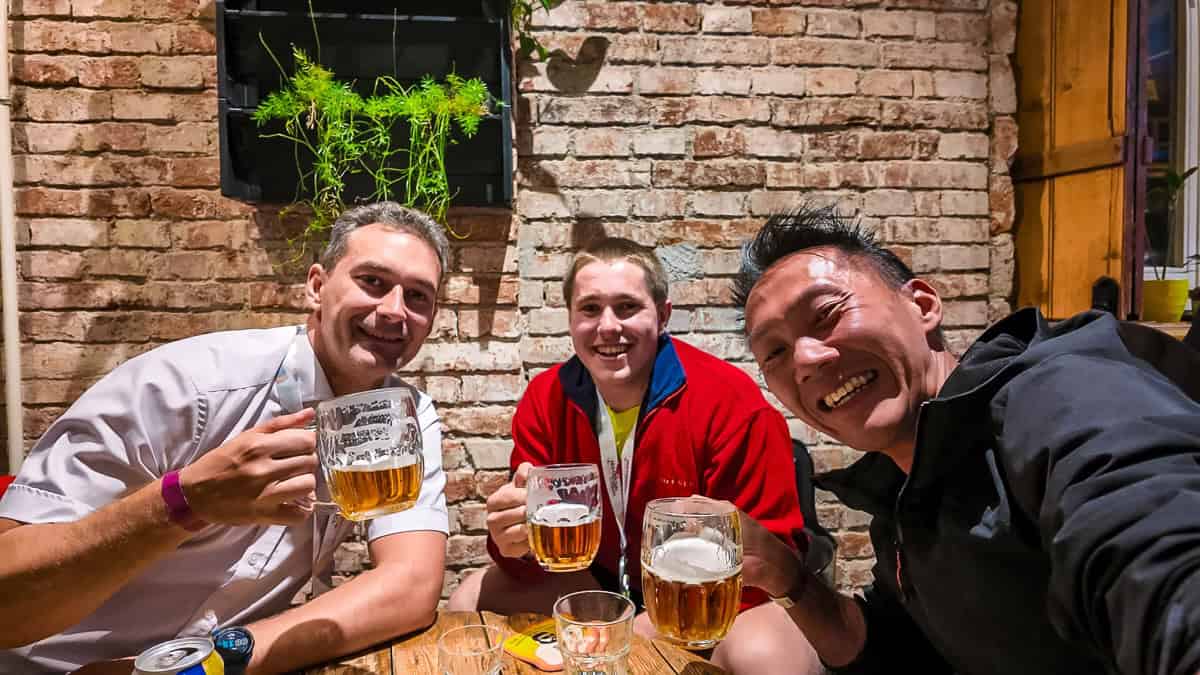
Among the people I met was Peter Polák, who had just completed his 50th Košice Marathon at 77 years old, becoming the first runner to reach that milestone.
Then the night shifted again. Music started in the pub area, more people arrived, food came out and the gathering turned into a proper party.
So we stayed. And stayed. And stayed.
By the time I finally left, it was around 1 a.m.
I had spent roughly six hours at the medal party.
Longer than I had spent running the marathon.
What I expected to be a post-race drink ended up becoming one of my best introductions to Slovakia. I danced to Slovak music which was surprising addictive, and had conversations with people I would never otherwise have met.
The marathon had given us an immediate reason and environment to talk, but classic human connection is everything after.
This is why I run marathons around the world.
Why staying longer changed the experience
Most runners at my hostel seemed to follow the practical schedule I had originally considered.
Arrive. Run. Leave.
By Sunday evening, many were already gone.
I understand why. People had work on Monday.
But staying longer changed my impression of Košice completely.
If I had only arrived for the race, I would have experienced a good city marathon with more than a century of history behind it.
By staying for the whole weekend, I experienced the culture that had grown around that history.
That was the part I would have missed.
A city that lives for its marathon
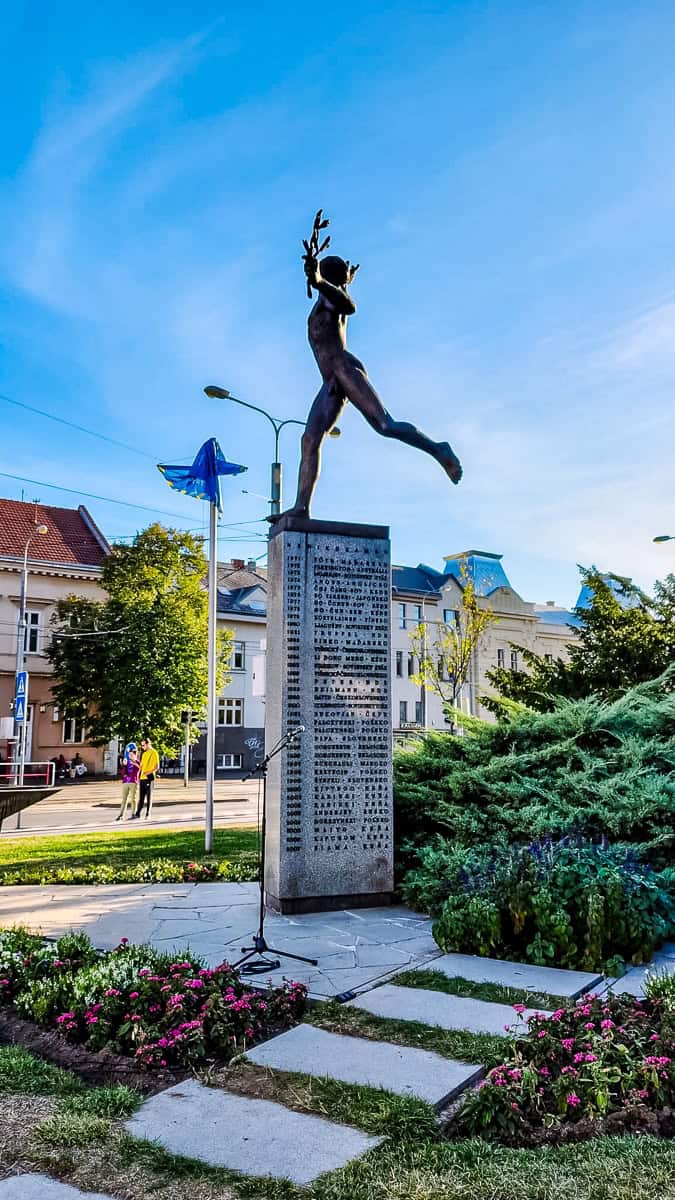
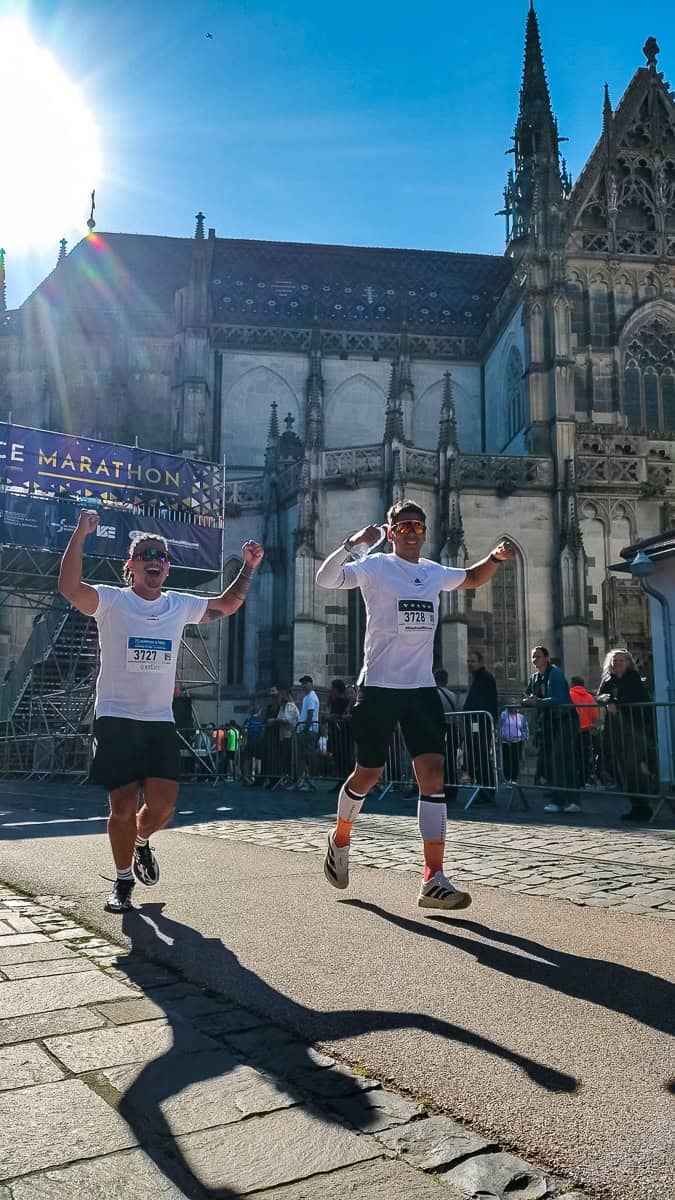
I heard someone describe Košice as a city that lives for its marathon.
Sure, it can sound like an exaggeration. After all, Košice exists for far more than one weekend every October.
But compared with the other races I had experienced, the statement made sense.
The Košice Peace Marathon is not enormous by global marathon standards.
Yet its presence in the city felt disproportionately large.
That comes partly from history, but longevity alone does not create atmosphere.
People do.
Runners returning year after year.
Families participating together.
Locals lining Hlavná Street.
Volunteers maintaining traditions.
A party continuing long after the timing mats have stopped mattering.
That was what made Košice distinctive.
Who should run the Košice Peace Marathon?
If you only care about the 42.2 kilometers, Košice offers a relatively flat city course with strong support around its historic center and enough variety to keep a two-lap route interesting.
But I do not think that is the best reason to come.
Košice makes the most sense for runners who enjoy the culture surrounding a race.
Come early enough for the Saturday events.
Visit the expo.
Join the Social Run.
See the traditions.
Stay for the Medal Party.
Talk to people.
The marathon becomes much more memorable when you experience everything around it.
That is particularly true for an international runner visiting Košice for the first time.
The event gives you an immediate connection to the city and its people that ordinary sightseeing might never provide.
More than Europe’s oldest marathon
I originally came to Košice because of one fact.
Oldest marathon in Europe.
That was enough to put the race on my calendar.
It was not what I remembered most afterward.
I remembered the runners who had been returning for decades.
The children reaching for high fives.
The marathon flame.
Helping someone through the end of his first marathon.
And then, hours later, standing inside a cultural center with runners I had only just met, still talking and dancing long after I had expected to leave.
My own marathon was not particularly well executed, and it hardly mattered, because the weekend was.
Košice showed me that the strongest marathon destinations are not always the places with the biggest races.
Sometimes they are the places where the race means the most to the city hosting it.


