Circling one of Austria’s most scenic lakes, the Wolfgangsee Marathon combines alpine villages, mountain views and peaceful roads with one steep forest section that briefly transforms the character of the race.
Some marathons appeal because of the city they run through.
Wolfgangsee appealed because of the landscape.
The route circles Wolfgangsee in Austria’s Salzkammergut region, taking runners through villages, countryside and mountain scenery while remaining predominantly a road marathon.
That combination immediately caught my attention.
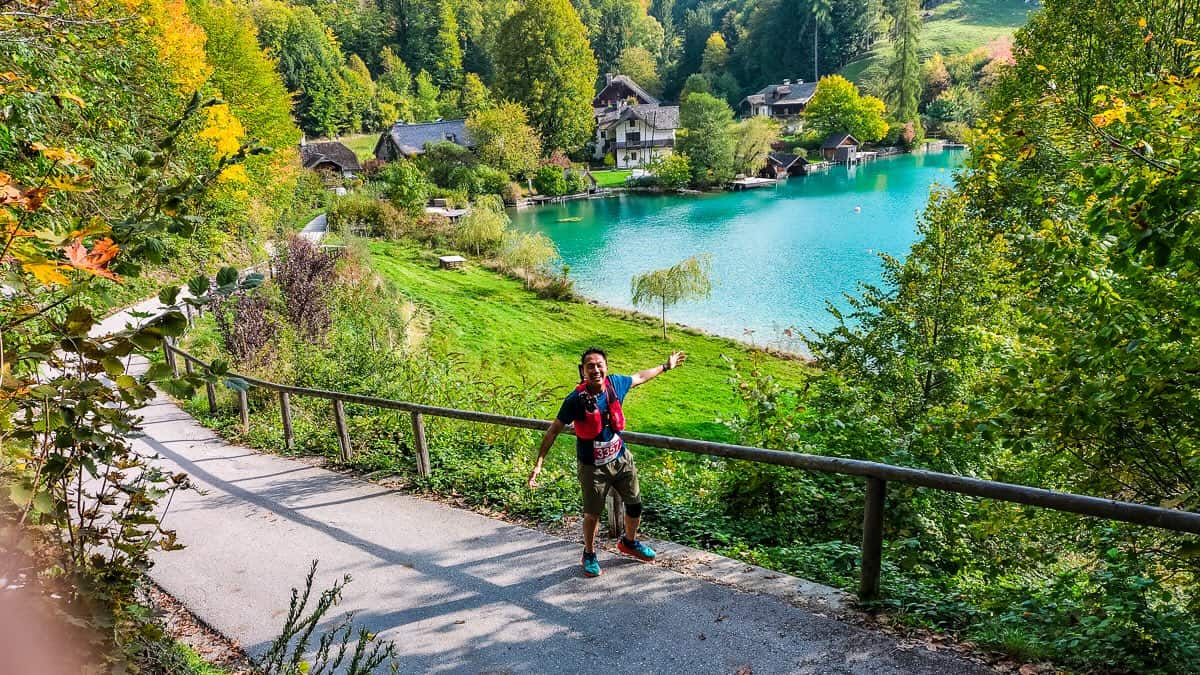
I had already discovered through Dingle how much I enjoyed races where natural scenery becomes the main attraction, and Wolfgangsee offered another opportunity to experience that in a completely different landscape.
Here, it was the Austrian Alps.
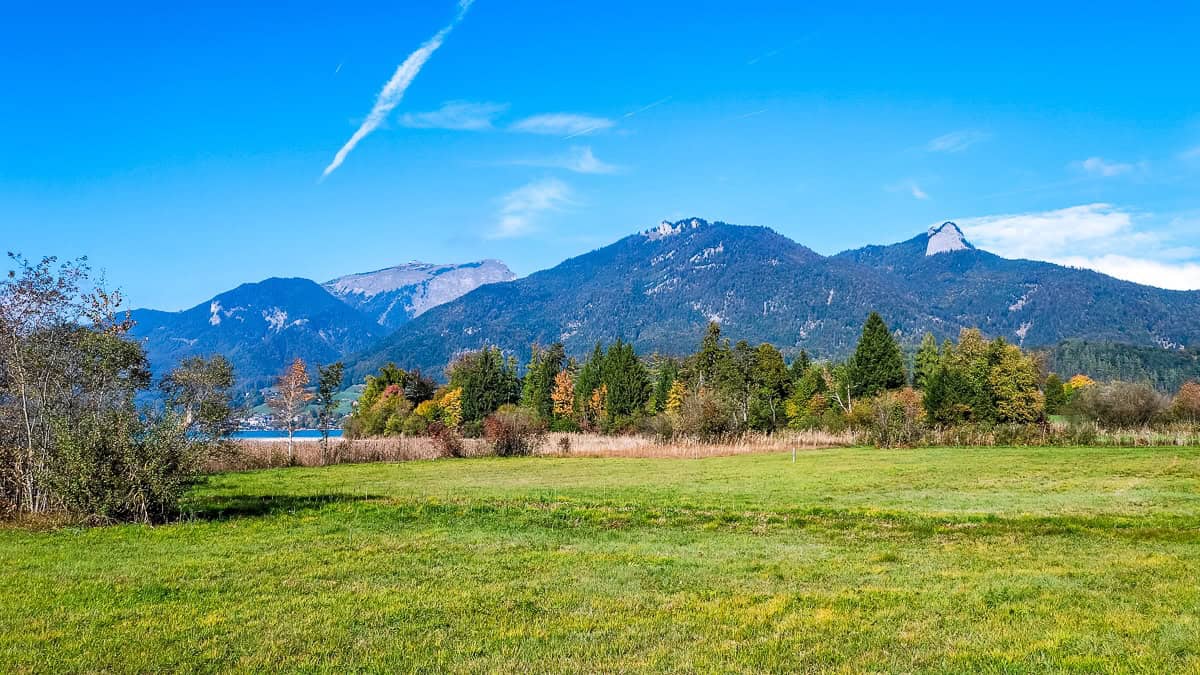
A huge lake. Green hillsides. Alpine villages. Mountains surrounding the route.
For someone who enjoys being out in nature but does not necessarily want every scenic race to become a technical trail run, Wolfgangsee looked like an ideal middle ground.
Starting from Salzburg
I chose to base myself in Salzburg which meant a much earlier start on race morning, but still more straightforward than the distance might suggest.
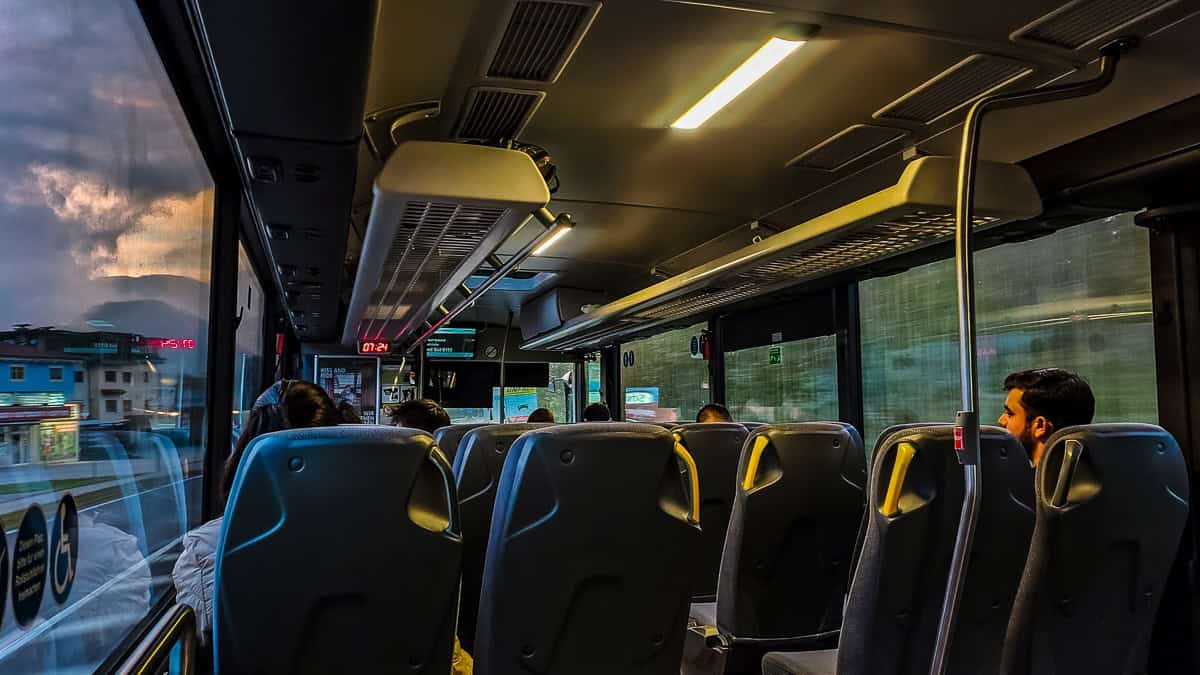
The full marathon begins in Bad Ischl which is almost two hours away. However, there’s a direct bus that connects Salzburg with the town.
Staying closer to Wolfgangsee would obviously be more convenient, but there are more accommodation options in Salzburg. And I could combine the marathon with several days in a major city and still reach the start entirely by public transport.
A cozy marathon start in Bad Ischl
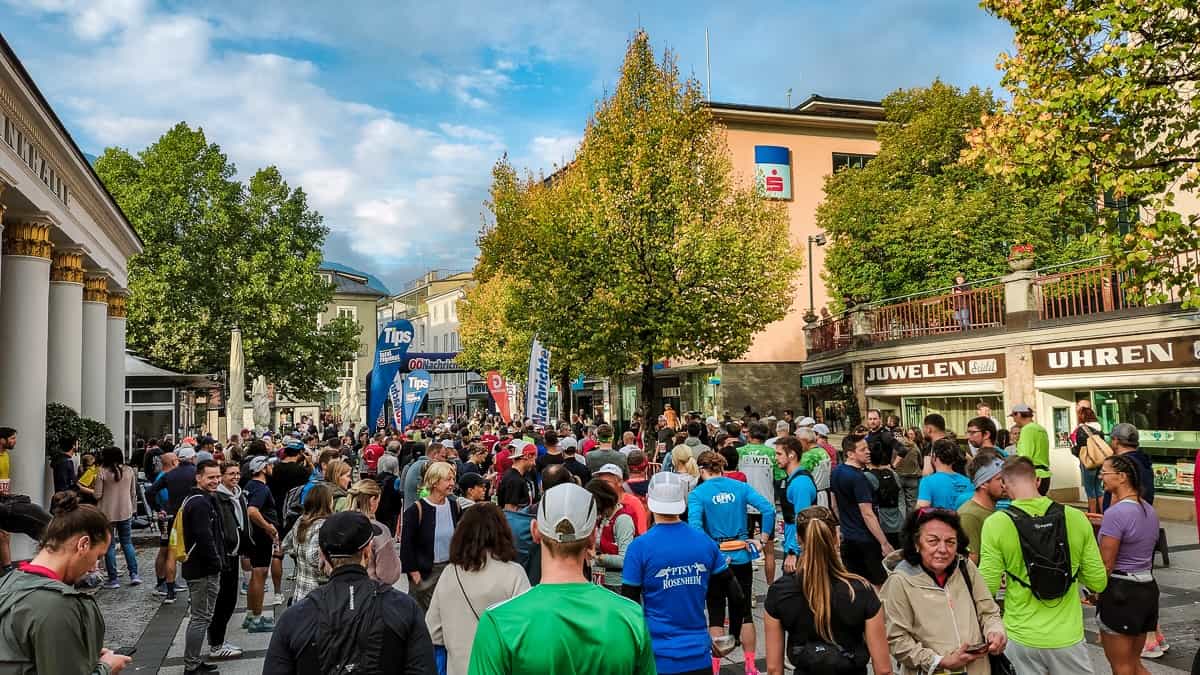
Bad Ischl gave the full marathon a very different atmosphere from the larger city races I had been running.
Since the shorter-distance races start elsewhere around the lake, Bad Ischl had a comparatively compact group, all preparing for the same 42KM journey.
For runners who prefer minimal pre-race logistics, the organizers allow same-day bib collection inside the town hall.
The small field made the morning feel intimate and relaxed.
It reminded me of the appeal of smaller races like Flanders Fields, where you never feel swallowed by an enormous event.
And once we started, the size of that field created an interesting test almost immediately.
When sticking to the plan puts you last
I had come into Wolfgangsee exactly one week after Budapest.
By then, I had already run six marathons within roughly seven weeks.
The biggest concern was my left ankle, which remained sore enough that I decided to bandage it before the race.
The right calf was another unknown after the cramp warnings in Budapest.
So this was not the day for ambition.
Budapest had taught me that lesson rather effectively.
The plan for Wolfgangsee was a disciplined 4/1 run-walk from the beginning, with every significant climb walked regardless of what the timer said.
Almost everyone else started fast.
In a field of hundreds rather than thousands, the effect was immediate.
Before long, I was the last runner.
There was even a cyclist behind me assigned to protect the back of the race.
That created a strange psychological pressure.
Part of me felt like I was burdening the cyclist every time I deliberately slowed to walk. And nobody particularly enjoys watching the entire field disappear ahead.
The temptation was to abandon the strategy and catch up.
This time, I resisted it.
The whole point was to protect the legs, so I kept walking while filming during the walk breaks.
As the race wore on, that decision started paying off. I gradually caught runners who had gone out faster, and being at the very back became a temporary part of the morning rather than the story of the race.
Into the Austrian countryside
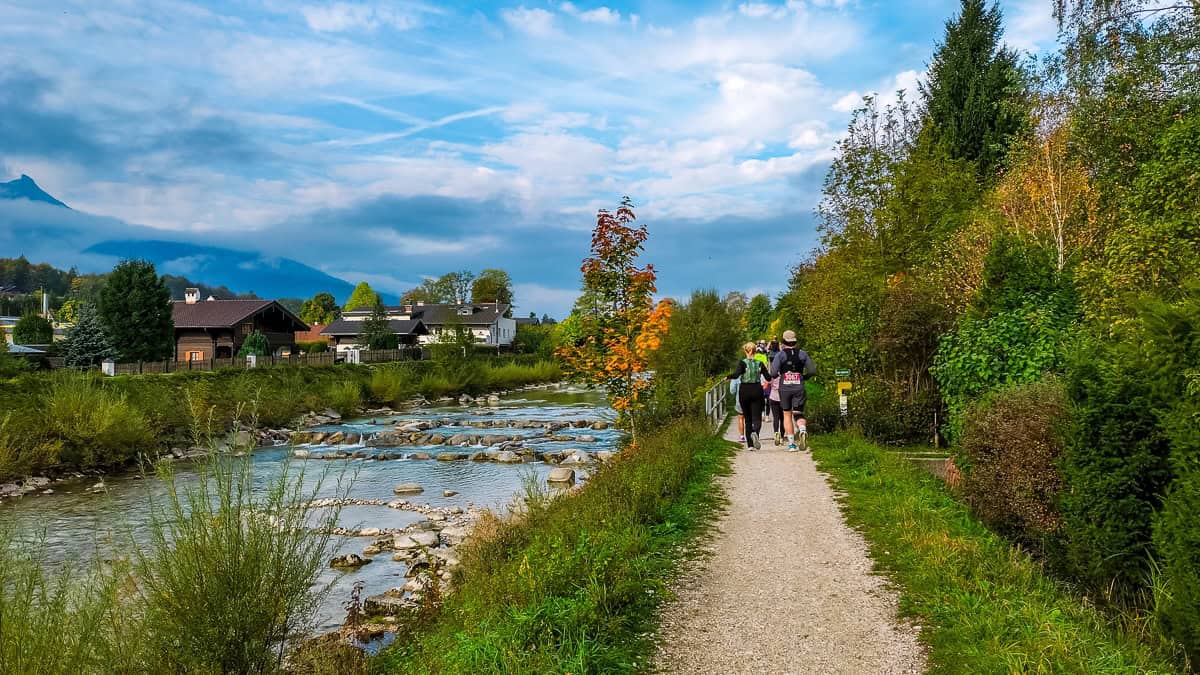
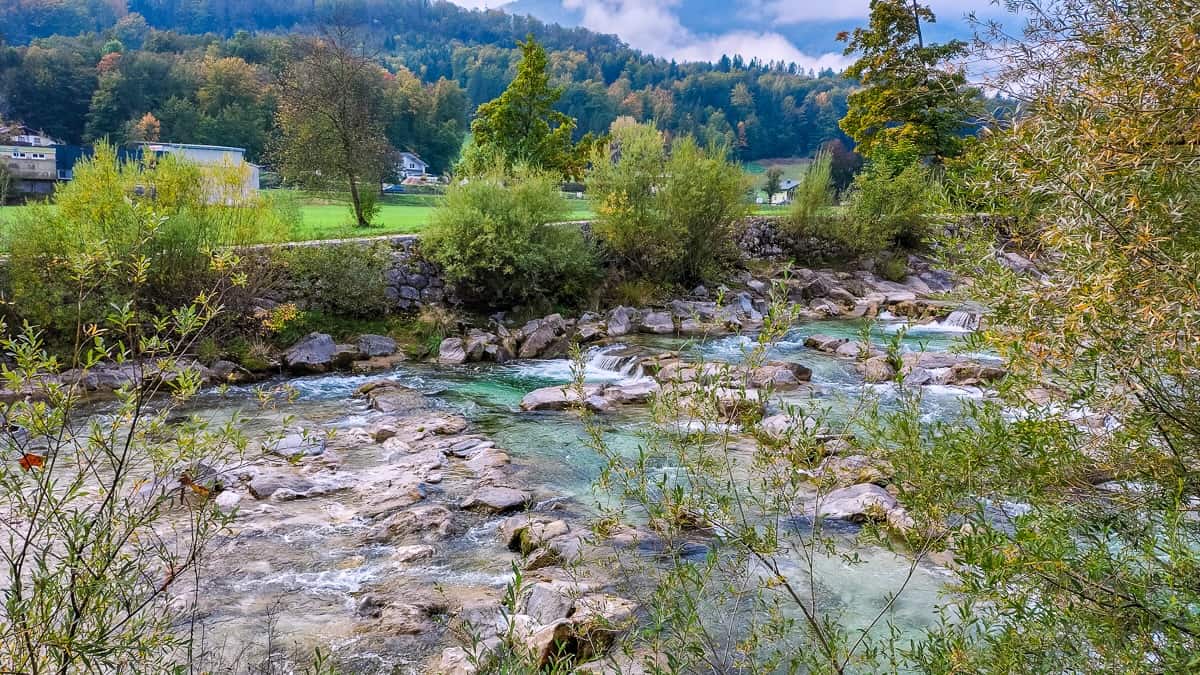
Nature became part of the experience almost immediately after leaving Bad Ischl.
Wolfgangsee itself had not appeared yet, but the opening kilometers already showcased many of the defining features I associate with the Austrian Alps.
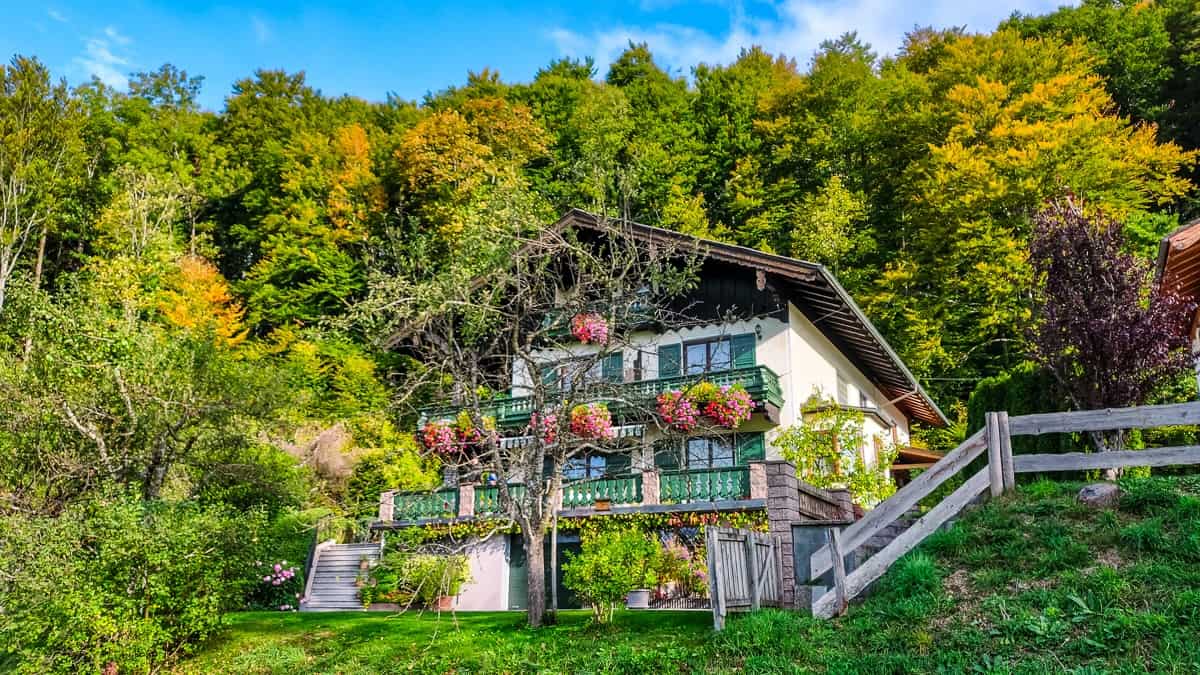
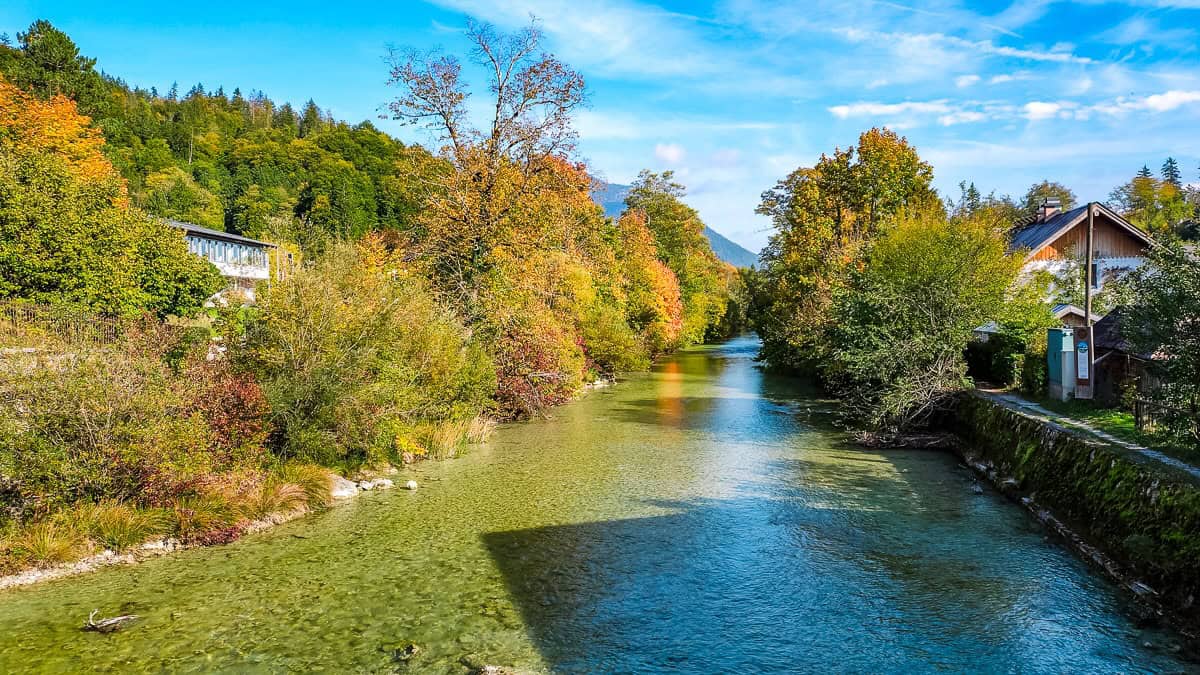
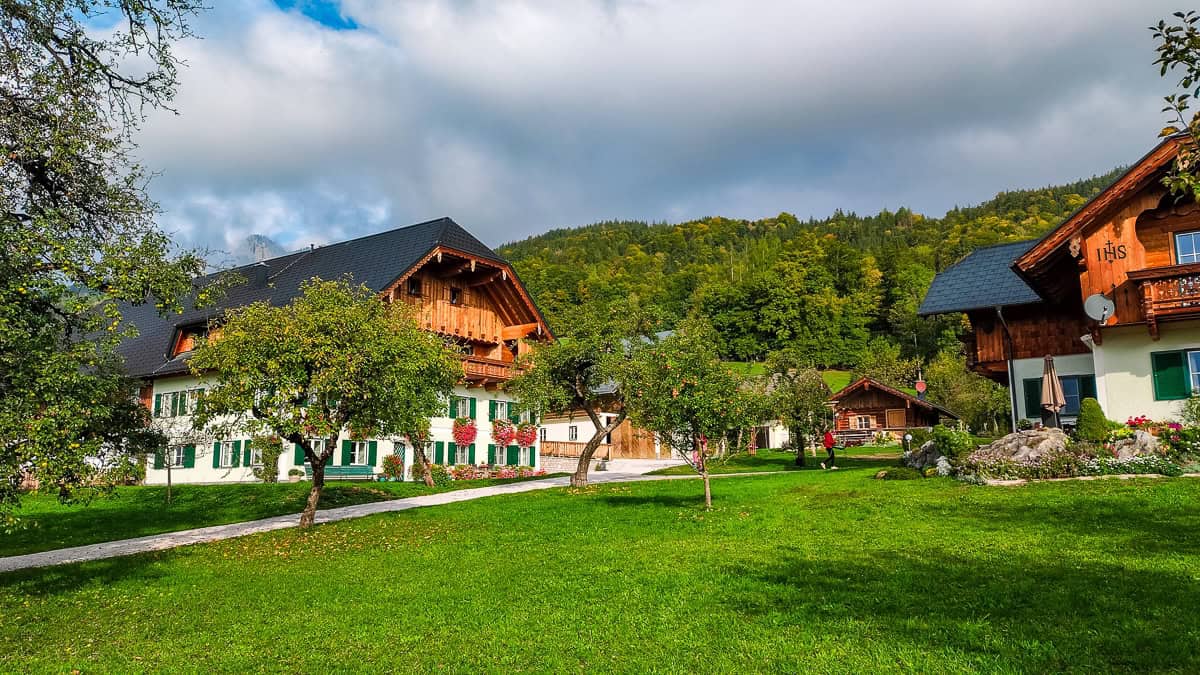
Traditional houses sat beside wide stretches of green where cattle grazed peacefully. Waterways accompanied sections of the route, while mountains remained visible in the background almost everywhere I looked.
It was a gentler introduction to the landscape before the lake eventually became the dominant feature.
When the wider event comes alive
The first approach into St. Wolfgang also brought a noticeable change in atmosphere.
For the early part of the race, I had mostly been surrounded by the relatively small full-marathon field.
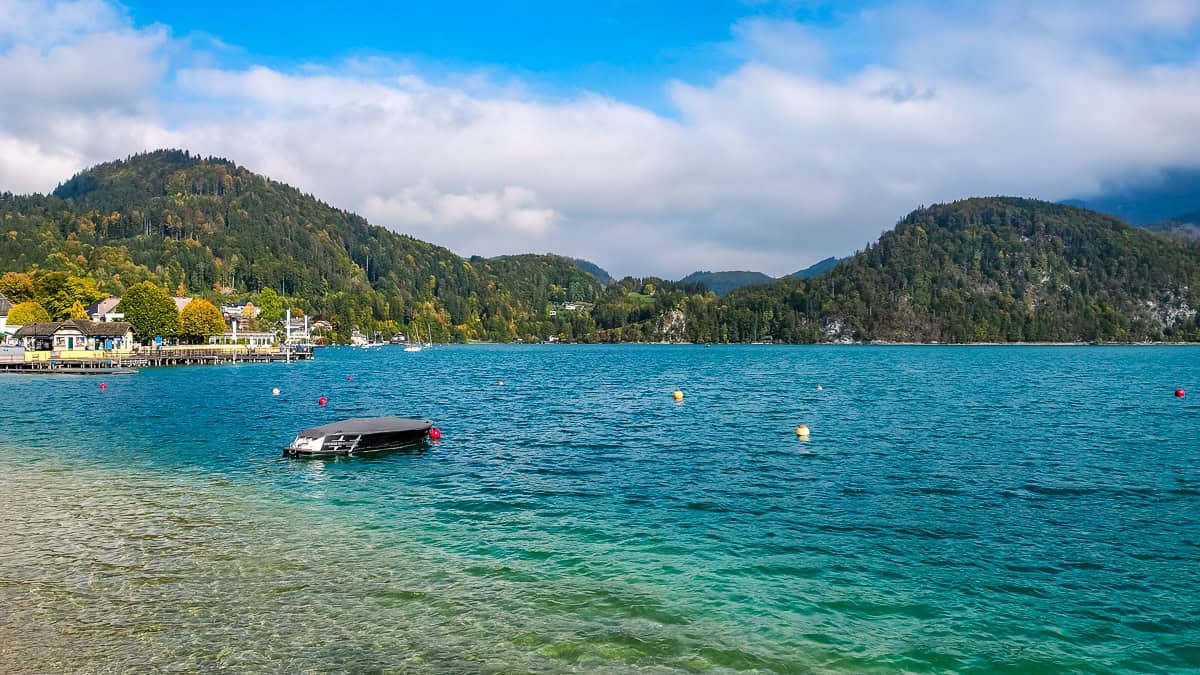
Around St. Wolfgang, the wider event suddenly became much more visible as we got our first proper views of the famous lake.
There were runners from shorter distances, younger participants, spectators and considerably more activity around the course.
After the peaceful opening through the countryside, the extra energy was a fun contrast.
It also reinforced how different the full marathon experience can feel within the wider Wolfgangsee event.
You start with a small group in Bad Ischl, then gradually enter a much larger running festival around the lake.
There were many viewpoints across the water, with the surrounding towns, hills and mountains completing the scene.
An endurance test built into the course
And all of this came before the steepest part of the course: Falkenstein.
That placement is part of what makes the marathon interesting physically.
Wolfgangsee does not throw its biggest climb at you while your legs are fresh.
By the time Falkenstein arrives, the legs have already absorbed close to half a marathon of road running.
Then the route suddenly asks for something completely different.
A steep climb on a forest trail, followed eventually by a descent on legs that are already carrying considerable mileage.
It reminded me of the way a well-designed workout can tax specific muscles first and then introduce a completely different physical demand.
You are not simply testing whether you can climb.
You are testing whether your legs can handle climbing and descending after already spending a long time running.
That makes the descent especially interesting from a muscular-durability perspective.
The climb itself was steep, but manageable.
The road disappeared and the surface became dirt and rock as the route moved into the forest. For a short period, the marathon started resembling a trail race.
It was not particularly technical.
You do not need advanced trail-running skills or experience navigating difficult terrain.
But it is enough of a change to give the marathon a completely different character for several kilometers.
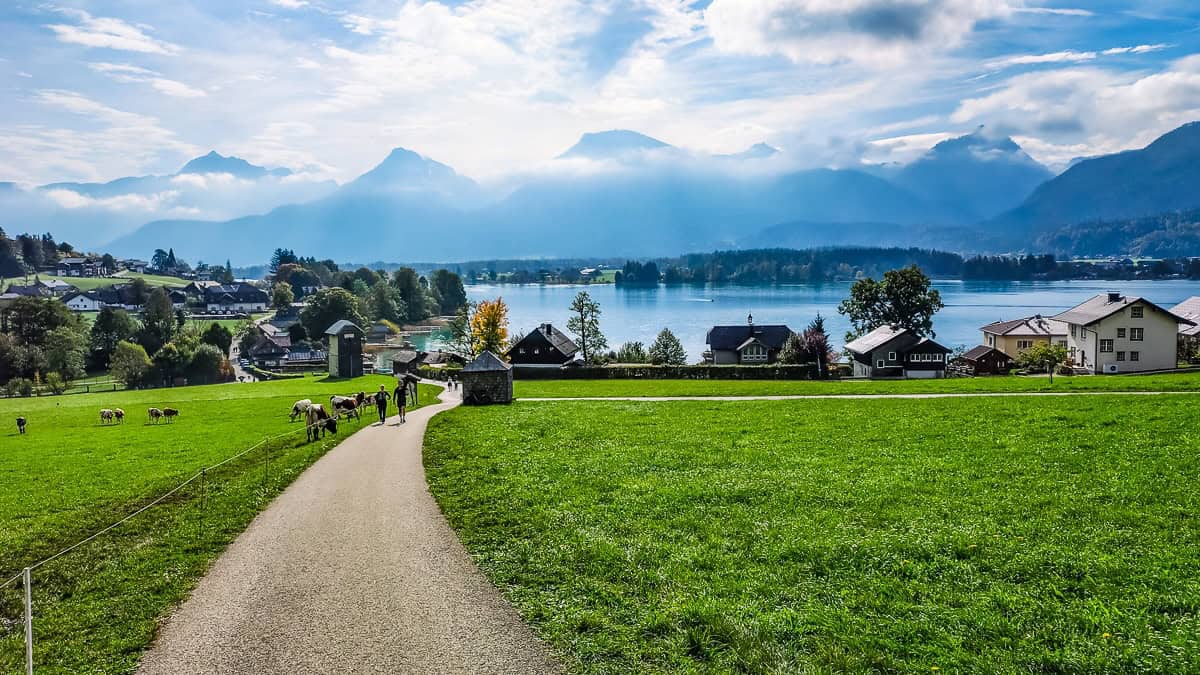
In fact, one of my favorite views came just before disappearing fully into the forest.
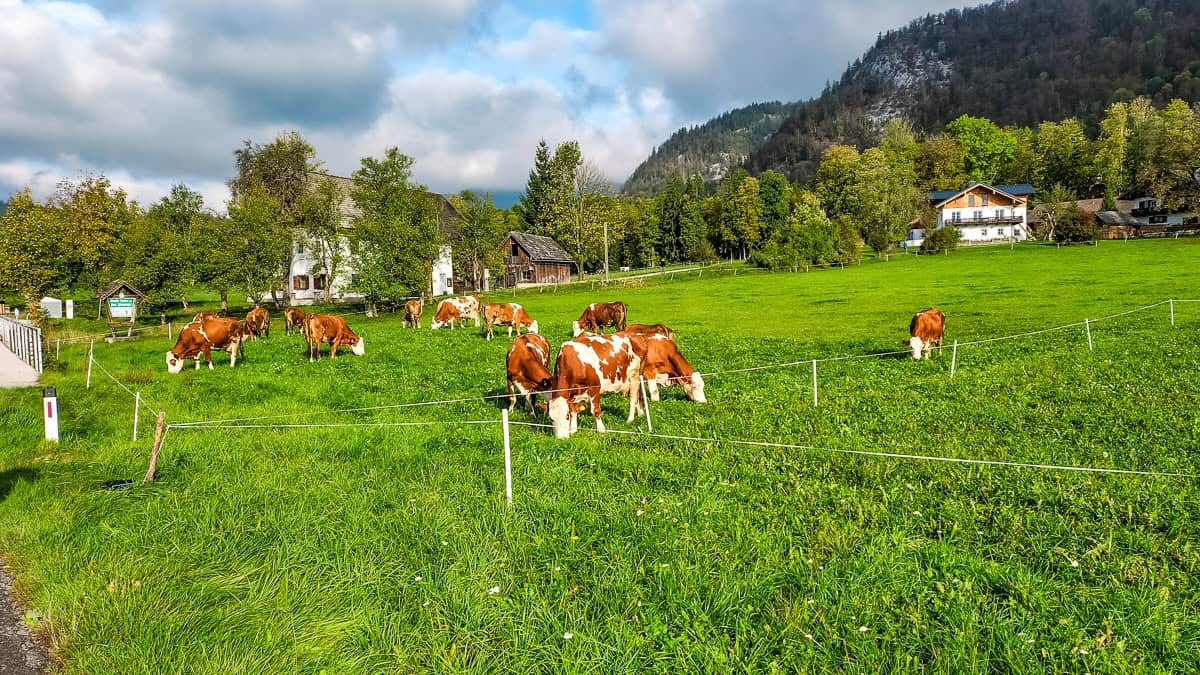
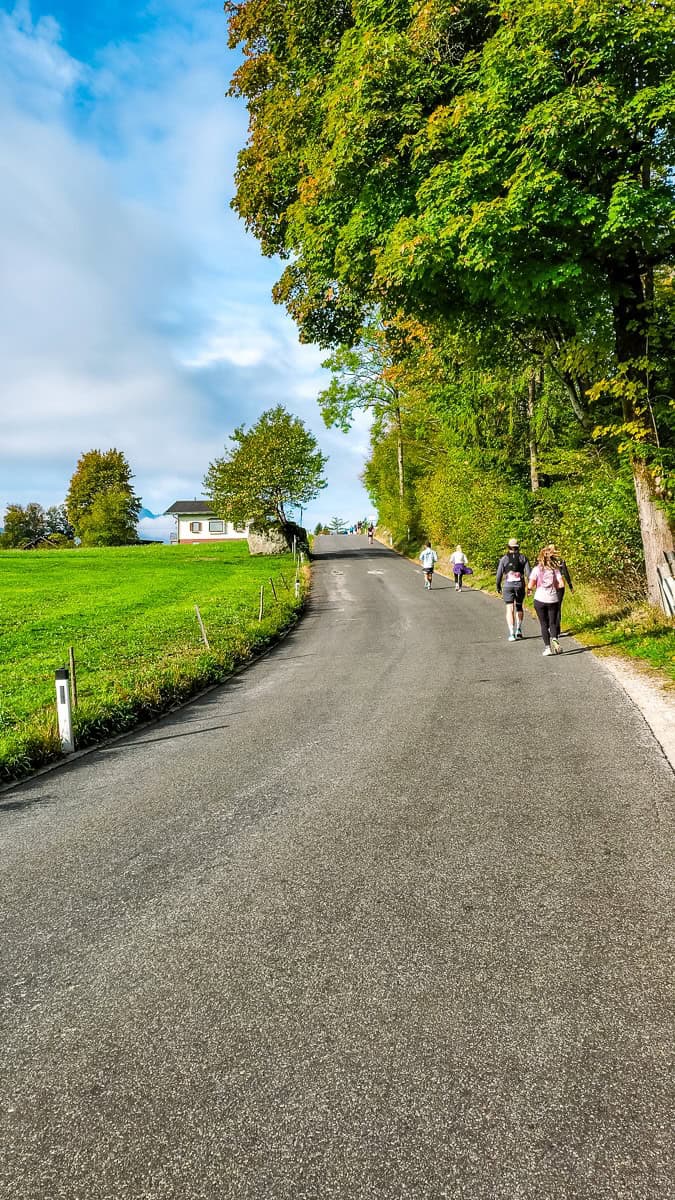
The route was already climbing, with cattle grazing in the green meadows beside us. From the elevated position, the lake and town opened below.
That combination captured Wolfgangsee perfectly.
Alpine countryside, lake scenery and a marathon route that was about to disappear into the mountain.
Walking the entire mountain
I had already decided before the race that the major climb would be power hiked.
Once I reached it, there was no reason to change that decision.
Trying to run a steep mountain section would only burn energy I would need later.
So I walked all of it. Then I walked the descent too.
That second decision was probably even more important.
The climb increased the effort, but the descent placed a different kind of load on legs that were already fatigued.
My left ankle was already compromised.
The right calf and quad were beginning to feel taxed.
Whenever I tried to move faster downhill, I could feel the tightness becoming more noticeable.
So there was no reason to force it.
There was still plenty of marathon left.
Respecting the course changed the experience
Here, I chose restraint before anything went wrong.
By the time I cleared Falkenstein, the early pacing had worked and there was enough buffer.
The legs were taxed, but functional.
Instead of wondering whether I could get through the race, I could settle back into enjoying it.
The reward after Falkenstein
Some of my favorite running came after the descent.
The course flattened and once again returned to the beautiful lakeside.
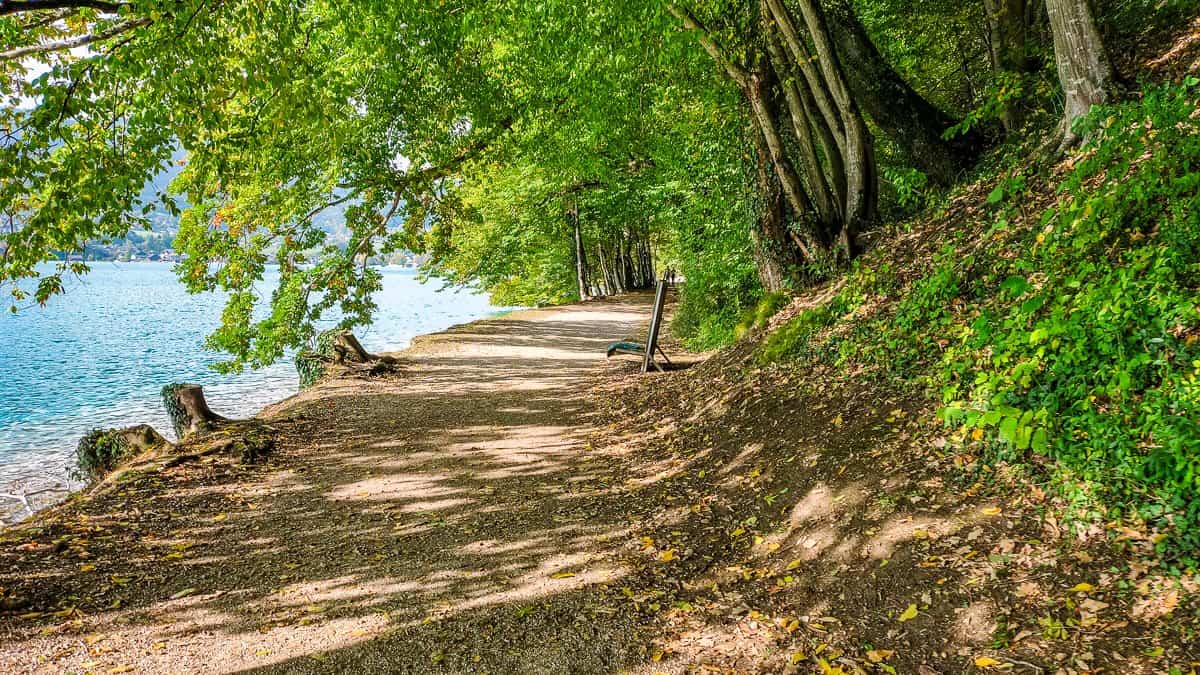
People were strolling beside the water in the opposite direction.
Some were tourists. Some were locals.
Some probably had no particular interest in the race until runners started passing them.
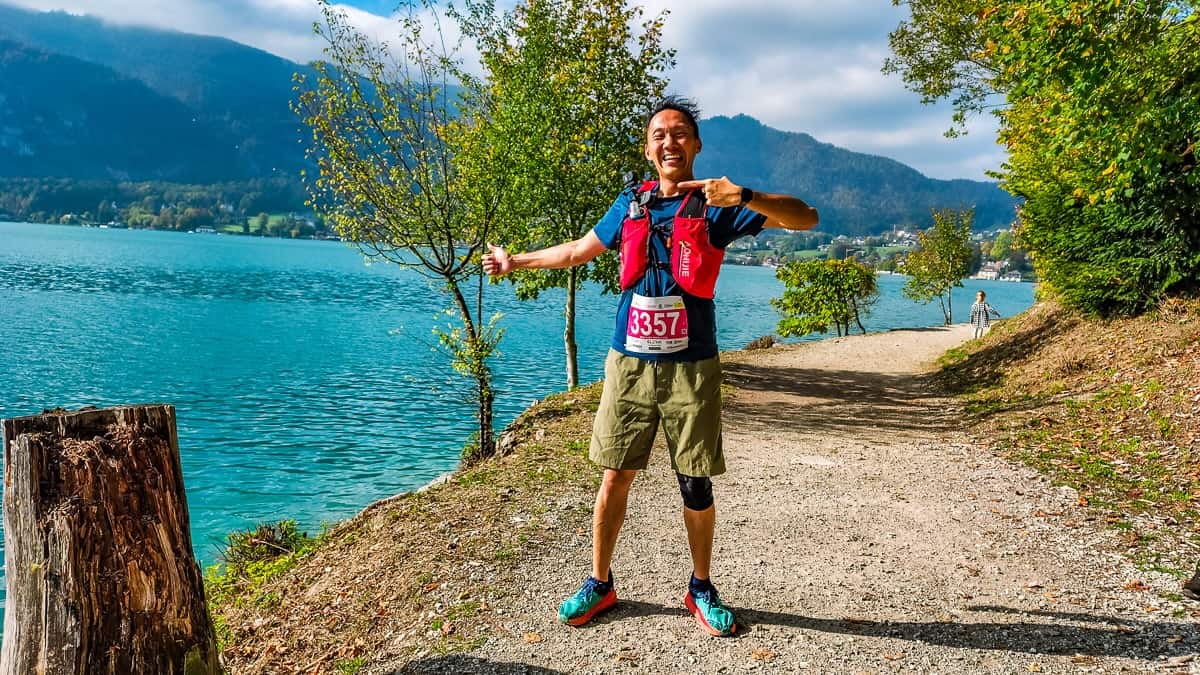
Yet people kept cheering, saying hello and encouraging us.
I even asked some of them to help take photos.
That kind of interaction suited the race perfectly.
There were not huge spectator crowds waiting behind barriers, but there did not need to be.
The support came naturally from people who were already out enjoying the same place we were running through.
And after the mountain section, being able to run comfortably beside the lake felt like a reward.
Not every kilometer was effortless
Although beautiful weather helped the photographs, it did not always help the running.
Around midday, some of the more exposed road sections became warm.
The lake might still be visible beside you, but with the sun overhead and relatively little shade, those stretches became noticeably less comfortable.
There were also later rolling sections.
Falkenstein was the obvious climb, but it was not the final hill of the marathon.
Still, none of the later climbs felt comparable.
The 4/1 run-walk continued to provide a useful structure for much of the day, and neither the calf nor the ankle ever reached a point where I thought finishing was seriously threatened.
My only real complaint about the course was probably navigation.
A few quieter sections could have used clearer markings or additional volunteers, and there were moments when I relied on other runners to confirm the route.
The contrast on Falkenstein, though, was noticeable.
The trail section itself was very well staffed, which felt like a deliberate effort by the organizers to prioritize safety where runners were most likely to need it.
Returning to St. Wolfgang
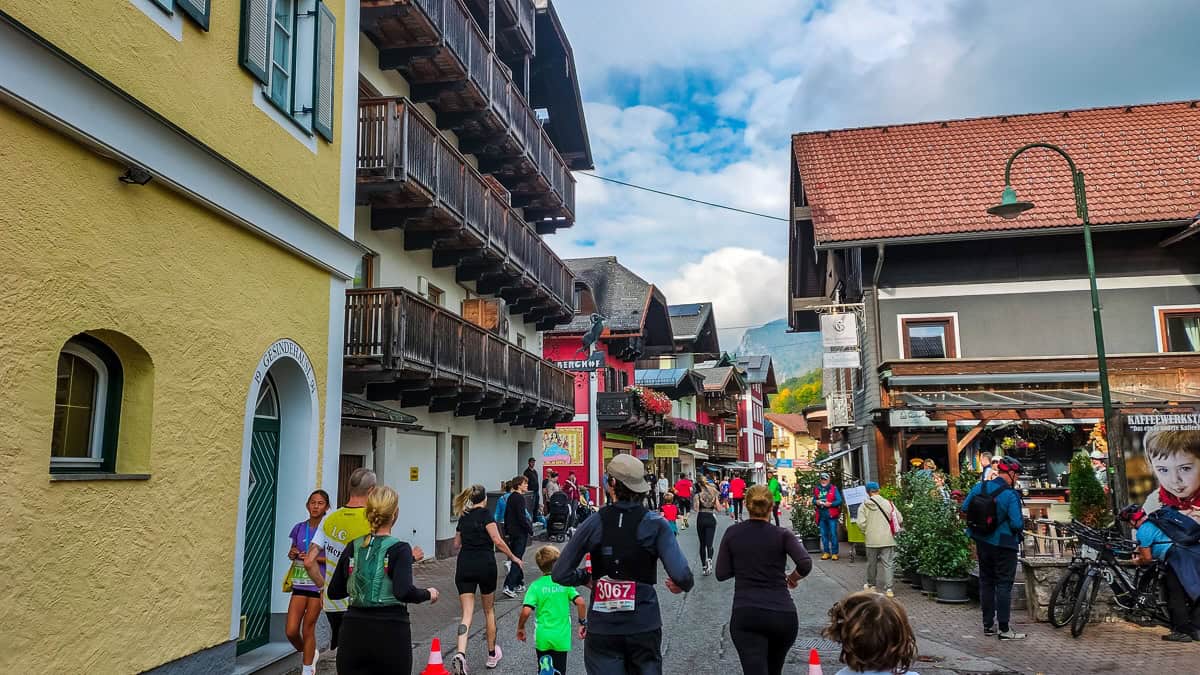
Eventually, the route brought us back toward St. Wolfgang for the finish.
By then, the atmosphere was very different from the intimate marathon start in Bad Ischl.
St. Wolfgang was busy with visitors and runners from the different distances, giving the final approach a much stronger sense of occasion.
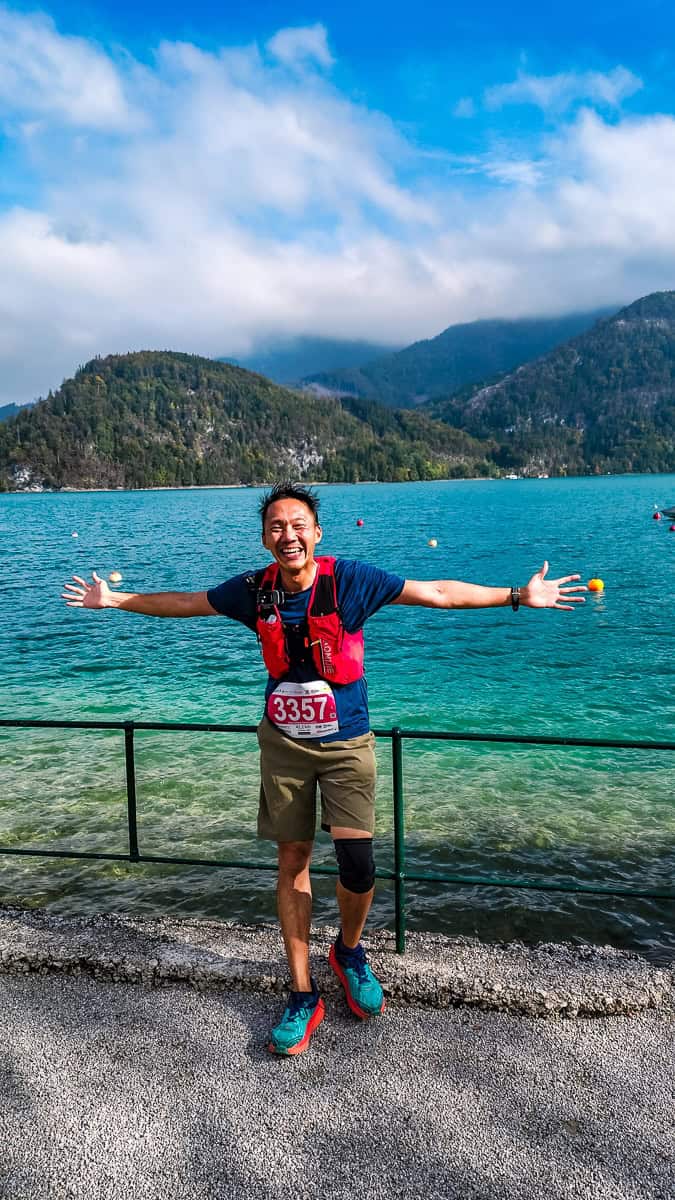
I was tired and the legs had been through enough.
But I had managed the race properly.
That was probably the biggest success of the day.
I could reach the finish having actually enjoyed the course rather than spending the second half worrying about what might go wrong.
Choosing massage before food
I collected the medal and headed toward the bag area.
There was food available for finishers, but to my delight, there was also a massage room right beside bag collection.
I naturally chose the massage first.
After seven marathons in a short period, that seemed like the obvious priority.
And it was nothing short of excellent.
Unfortunately, by the time I finished and went looking for food, much of the post-race area was already being packed away.
So I cannot give a particularly useful review of the finisher meal.
The race pack itself was simple, with a drink, energy bar and some recovery products.
I ate what I had and used the muscle cream almost immediately.
Experiencing the Austrian Alps on foot
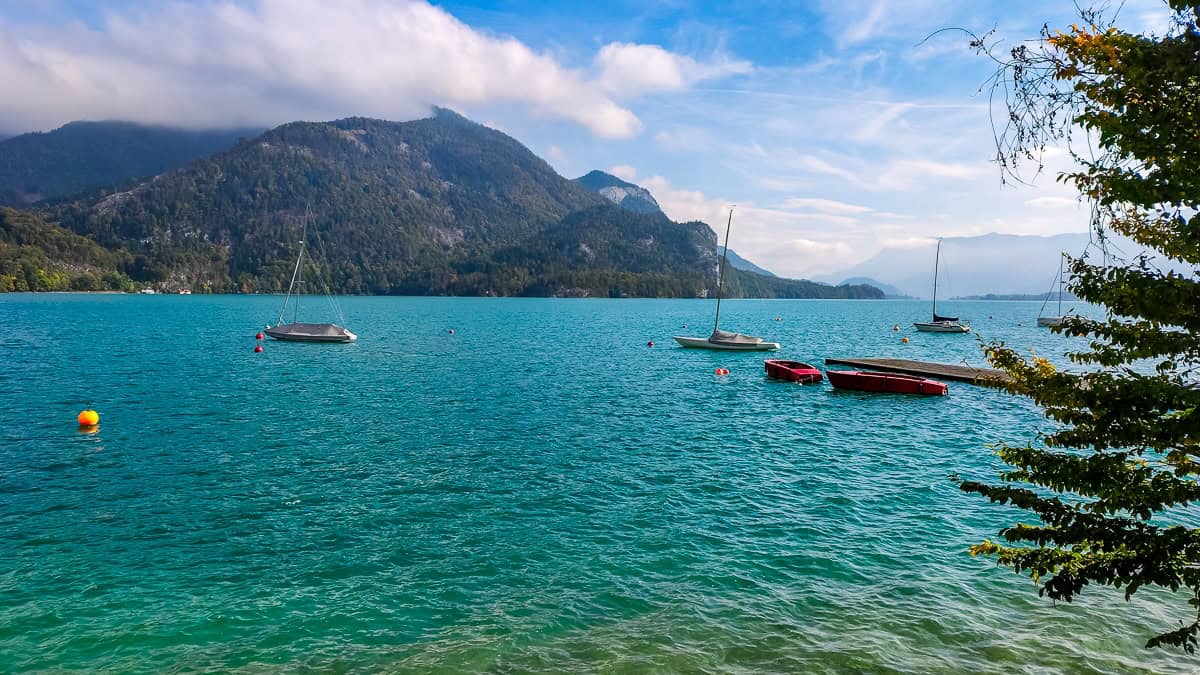
Wolfgangsee absolutely delivered what had attracted me in the first place.
It was very different from the dramatic cliffs I had experienced in Dingle, but still incredibly scenic in its own way.
The appeal here came from the variety of alpine landscapes you move through over the course of one marathon.
Rivers and waterways.
Traditional villages.
Wide grasslands with grazing cattle.
Forest trails.
Mountain views.
And, of course, the lake itself.
Much of the Wolfgangsee region is also relatively easy to explore independently. Public transport can take you around the area, and several of the places runners pass are destinations people visit anyway.
What the marathon gives you is a reason to connect all of those different environments together on foot.
Who should run the Wolfgangsee Marathon?
I would recommend Wolfgangsee to runners who prioritize natural scenery over city sights and constant crowd support.
If you need spectators lining every kilometer like a big-city major, this is probably not the race for you.
There are long, peaceful stretches through countryside and around the lake, which I personally always enjoy.
If you prefer road running and want mountain and lake scenery without committing to a technical trail marathon, Wolfgangsee offers a really interesting middle ground.
The Falkenstein climb should be respected, but definitely not feared.
Plan for it. Accept that your average pace will change.
And remember that the descent can test the legs just as much as the climb itself.
That section is part of what gives Wolfgangsee its personality.
A scenic marathon worth respecting
Wolfgangsee gave me exactly what I had come for: a marathon built around the landscape of the Austrian Alps.
I arrived with an ankle already hurting and six marathons worth of accumulated fatigue in my legs.
Yet my physical condition never became the defining story of the day.
If anything, respecting the course allowed me to enjoy it more.
I walked when the terrain or my body called for it, ran when it made sense, took photos and soaked in the landscape around me.
After several weeks of races where I had been thinking about pace, fatigue and what might go wrong, Wolfgangsee gave me something much simpler.
A beautiful place, an interesting course and a marathon I took the time to experience.


