The Budapest Marathon delivered exactly what I expected from the city: a scenic course along the Danube, iconic architecture and plenty to look at. What I did not expect was how carefully I would have to manage the race just to hold everything together.
Budapest was one of the easier marathon choices on my calendar.
I had spent weeks in the city before, and it is easily one of my favorite cities in Europe.
Even without covering every major attraction, a marathon that spends significant time near the Danube is likely to be visually scenic.
Budapest is a city strongly defined by its riverfront.
The bridges. The Parliament building. The views between Buda and Pest.
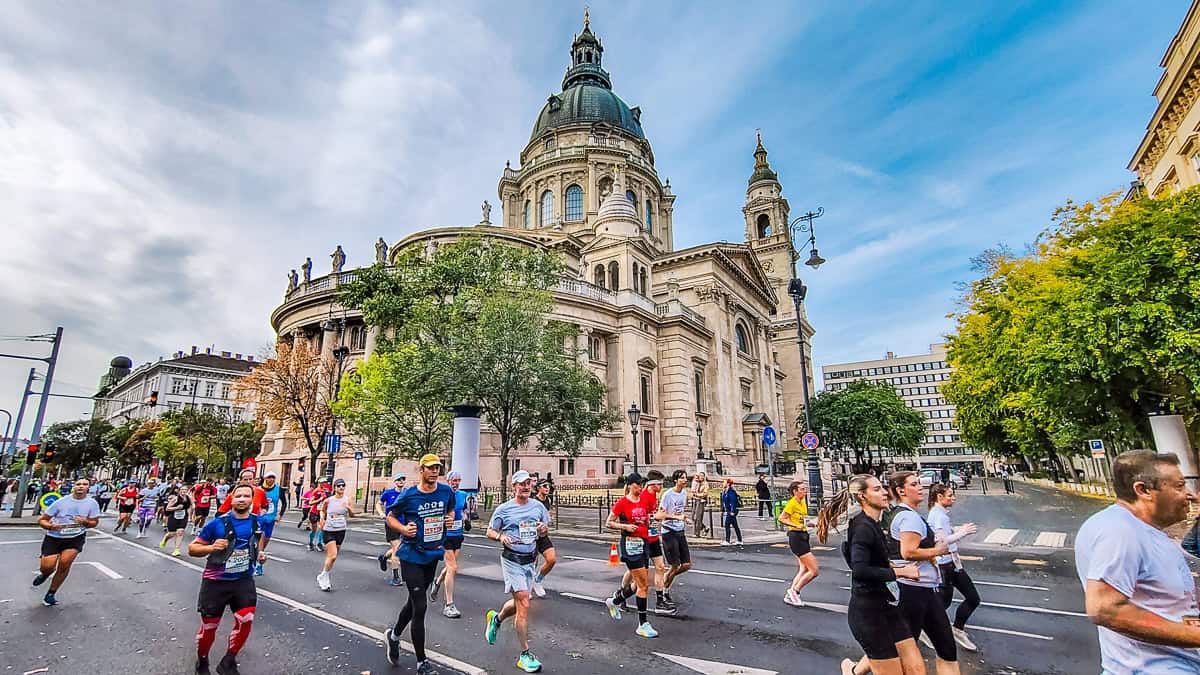
For an international runner looking to run a marathon in Hungary, Budapest is a clear choice.
It is the country’s best-known destination, easy to reach, easy to combine with sightseeing, and representative enough that running through the capital still feels like a meaningful way to experience the country.
What I did not expect was how difficult the race itself would become.
Marathon number 6 in 7 weeks
Budapest came deep into an autumn block that had already included Helsinki, Dingle, Tallinn, Flanders Fields and Košice.
There had been small breaks between some of them, but not enough to make each race feel truly isolated.
By the time I reached Budapest, the cumulative fatigue was becoming harder to ignore.
The left knee that had caused problems earlier in the block was no longer the main concern.
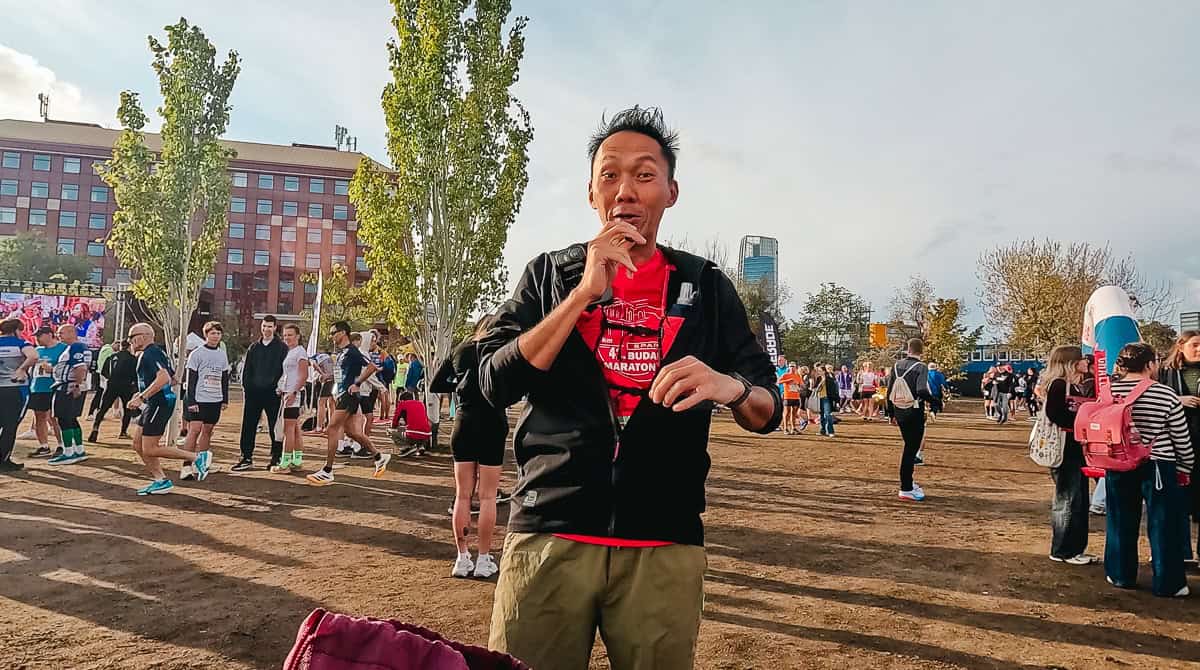
But the legs were tired. The body did not feel fresh.
Still, I did not arrive thinking this would become a survival exercise.
The course was relatively flat, and I was not chasing a personal best.
The plan was simply to start conservatively, use a run-walk strategy, stay comfortably ahead of the cutoff and accelerate later if the body allowed it.
That seemed manageable, but it was not quite how the day unfolded.
A race village built for the crowd
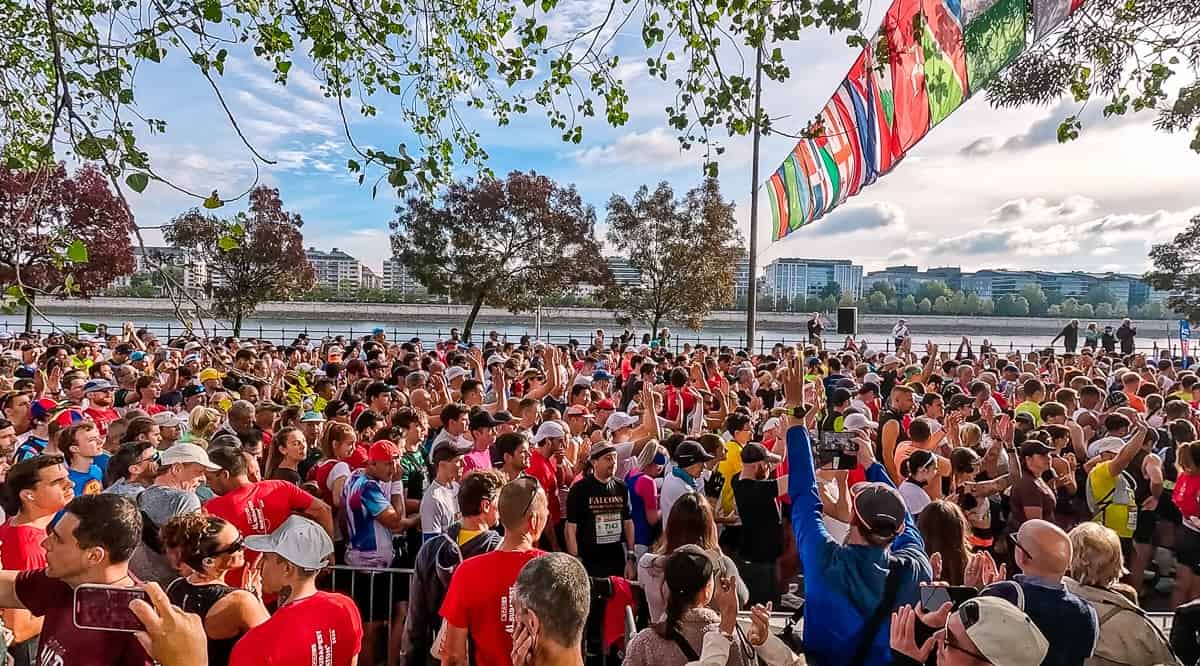
I collected my bib early on the first day of collection, which meant I barely saw the expo in full operation.
By race morning, the scale of the wider race village made much more sense.
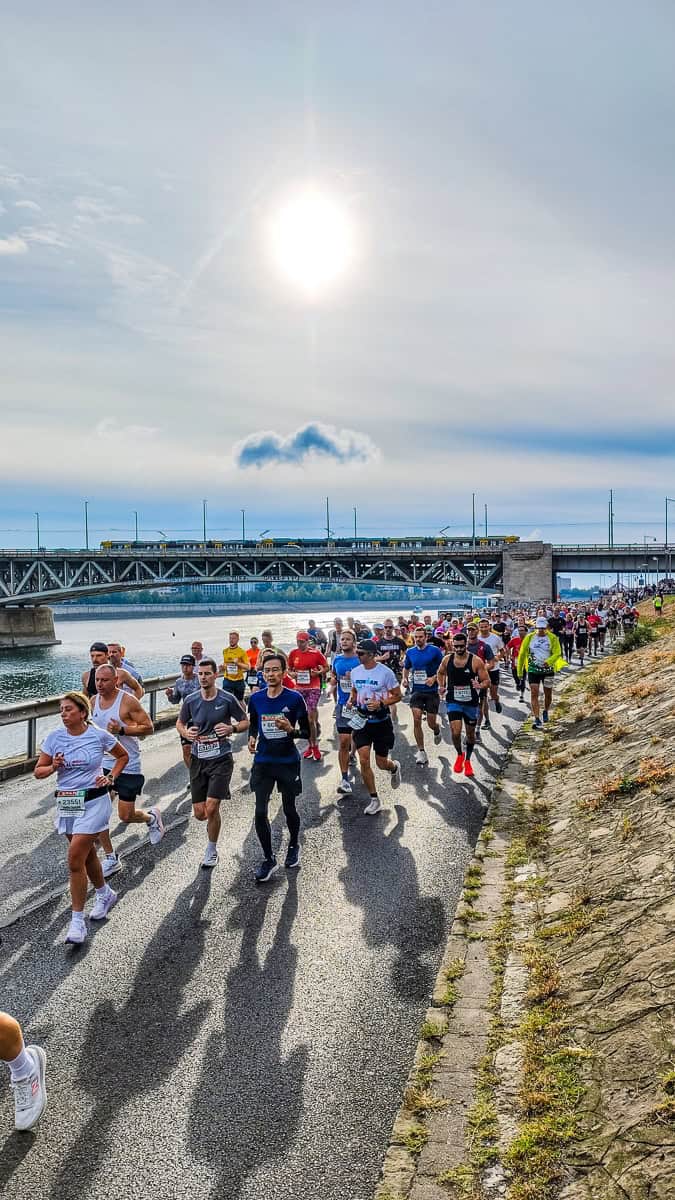
Budapest hosts several distances over the weekend, including a 30K alongside the marathon and other races, so there were a lot of runners, supporters and families to accommodate.
The area was spread out, with food stalls, sponsors, toilets, bag drop and different start zones across a fairly large footprint.
That meant a little more walking and navigation, but it also prevented the crowd from feeling overwhelming.
I had a direct tram to the start, which made getting there straightforward despite the packed public transport.
Once inside the event area, it was busy without becoming claustrophobic.
Friends and families were already around.
Runners were moving between the different facilities.
Food stalls were open.
There was energy without chaos.
My physical state, though, was less reassuring.
The plan that never really happened
In theory, a run-walk strategy would keep the effort controlled and preserve enough muscular reserve for the later stages.
In reality, I never executed it particularly well.
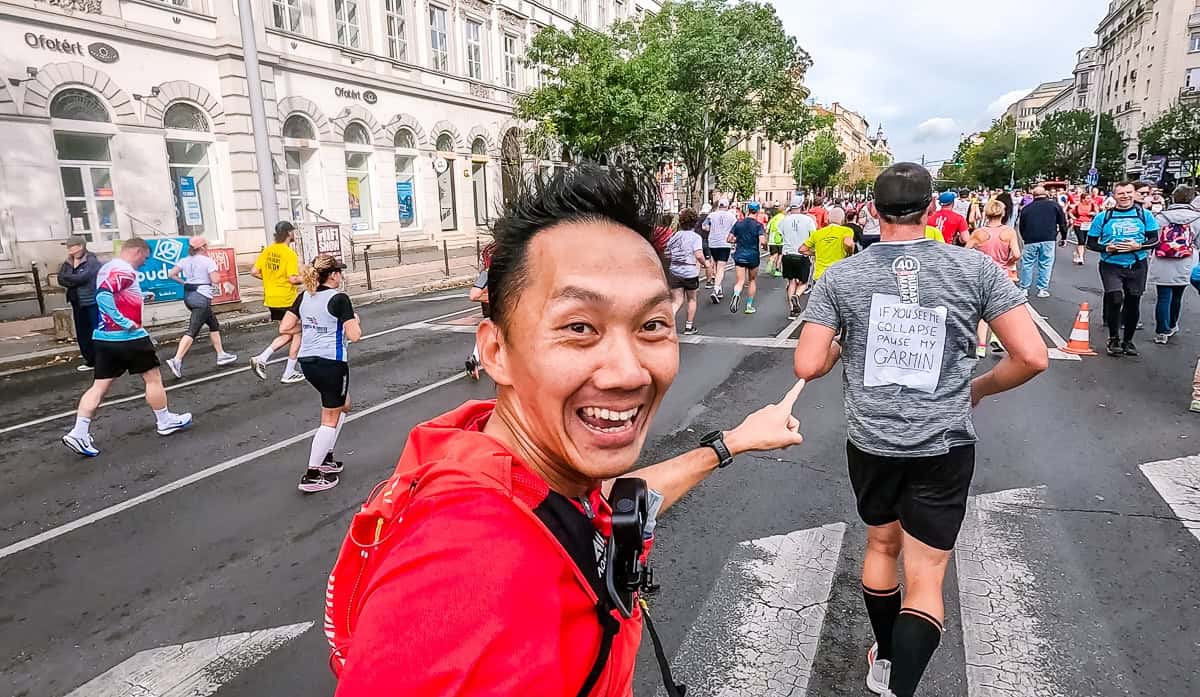
Much of that came from wanting to capture the crowd energy and the beautiful scenery.
I stopped to film, then ran faster to catch up.
Stopped again. Moved again.
The average pace looked roughly sensible, but the movement pattern underneath it was not.
Instead of steady conservative running mixed with deliberate walking, I was often running faster than planned, then losing time while filming or stopping.
That distinction would come back to bite me later, and become one of the biggest lessons I took from the marathon.
A course that feels unmistakably Budapest
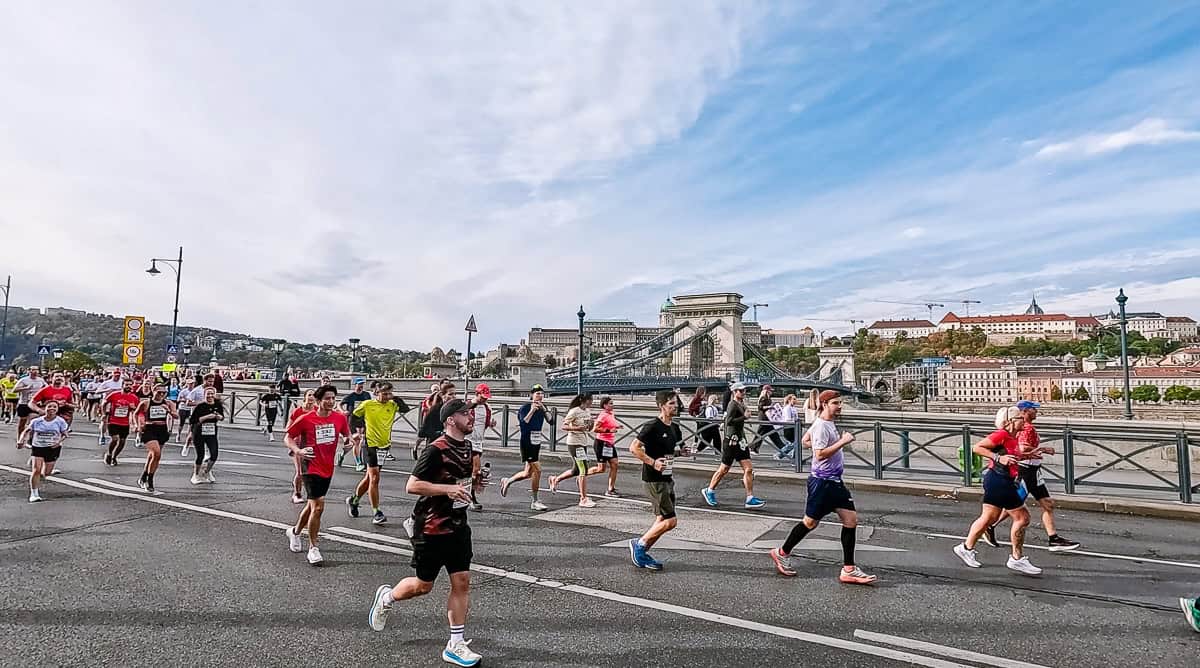
The scenery delivered almost immediately.
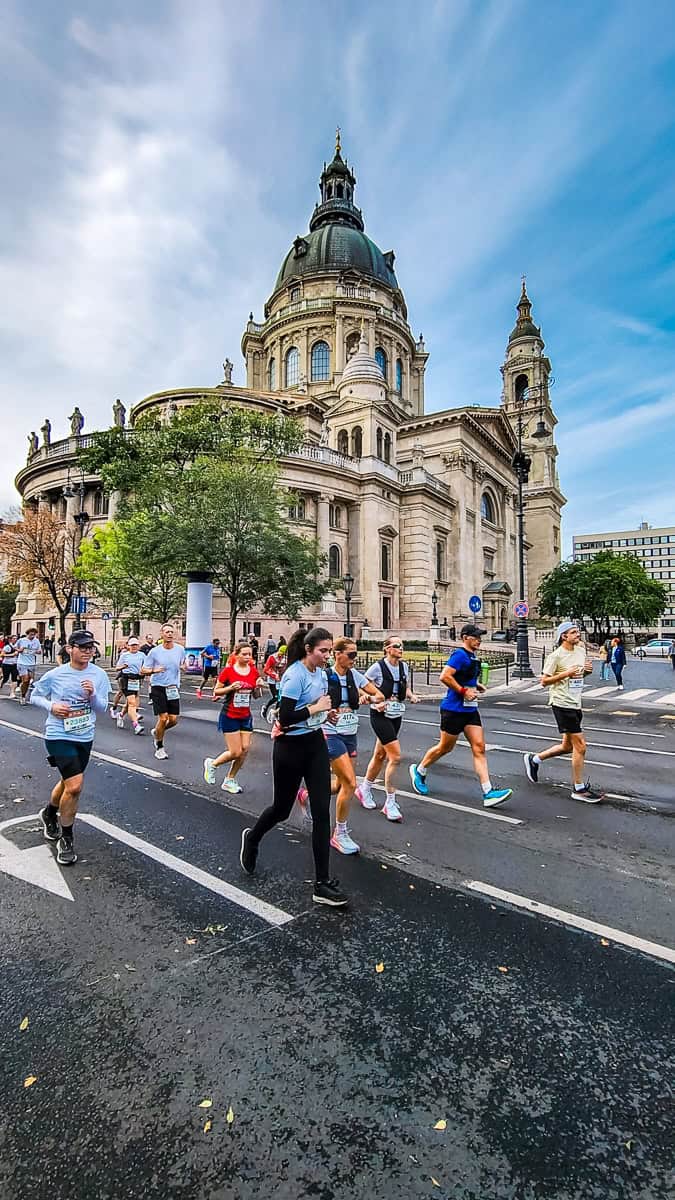
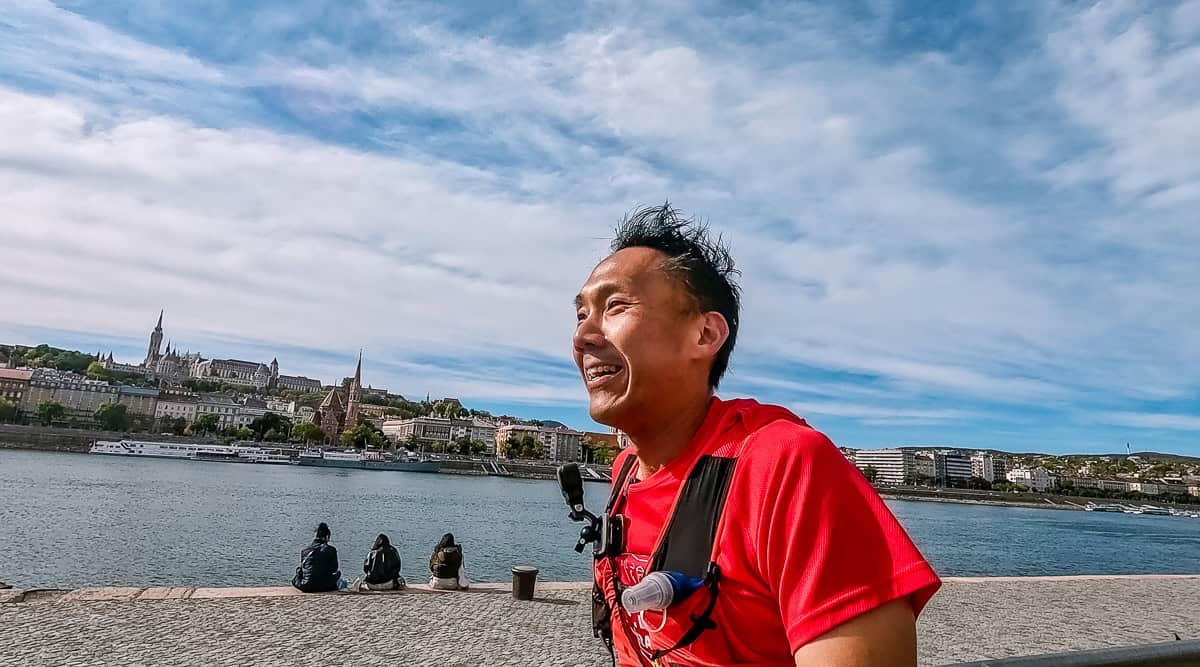
Running beside the river meant bridges, historic architecture and regular views between Buda and Pest remained part of the course, with several standout moments along the way.
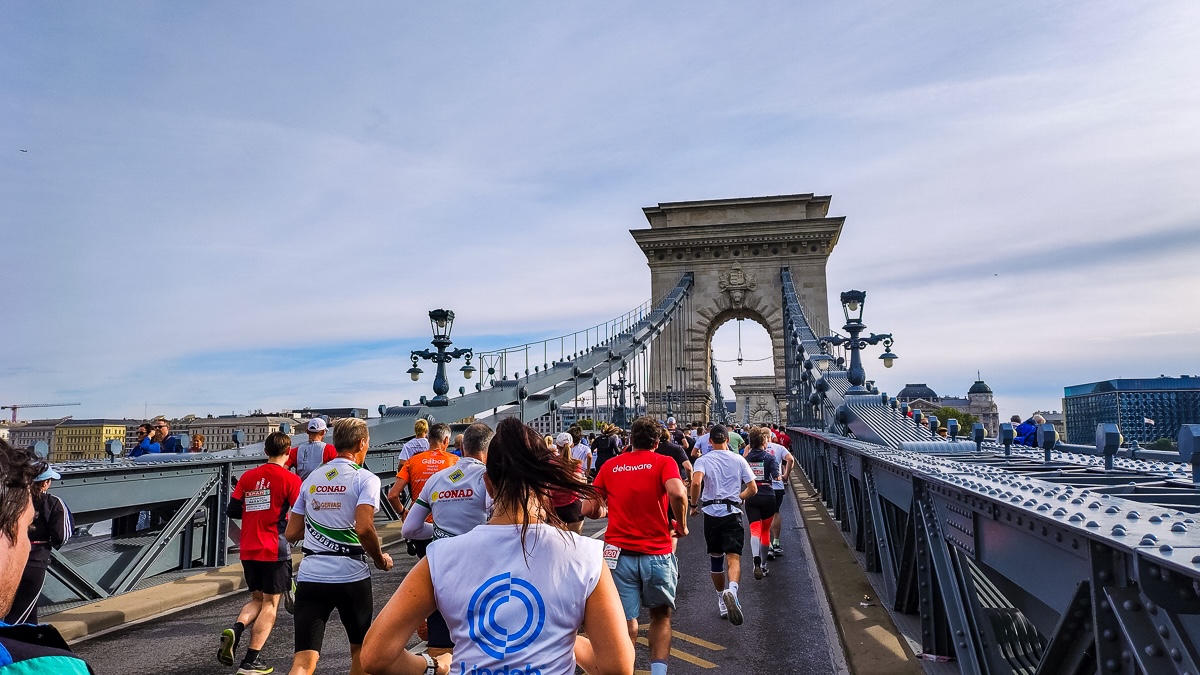
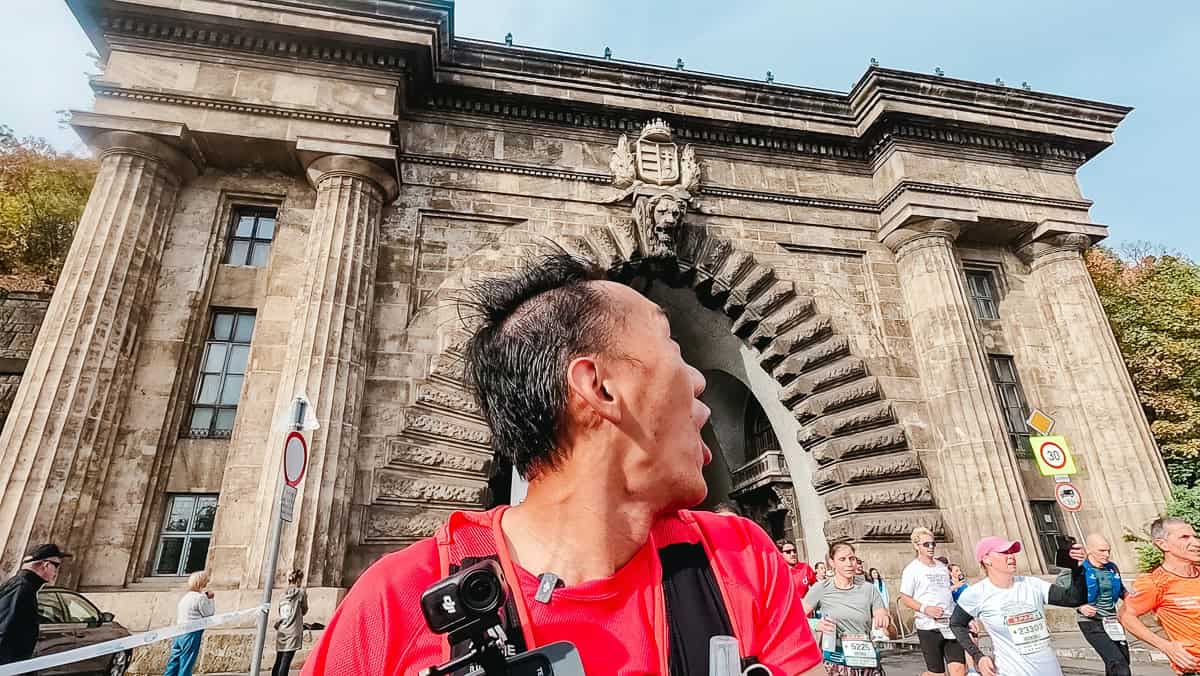
One was the tunnel near the Széchenyi Chain Bridge.
Runners naturally started shouting inside it.
The sound echoed. People laughed.
Then the tunnel opened towards the impressive bridge and stunning riverfront.
It was one of those simple race moments that becomes memorable because hundreds of people experience it together.
The Parliament building was another obvious highlight.
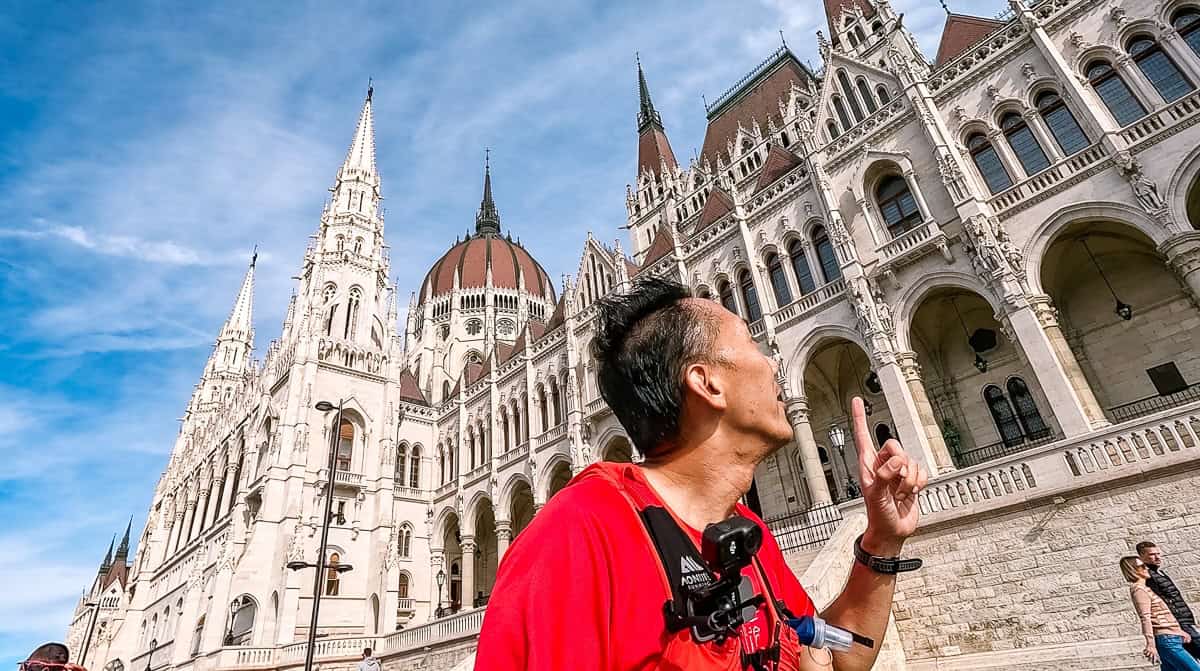
Running directly past one of Budapest’s most recognizable landmarks felt exactly like the kind of moment I had hoped this marathon would provide.
Margaret Island added greenery, while bridges kept appearing throughout the route and spectators gathered around the busier waterfront sections.
The marathon does not take you directly past every major attraction, and there were even a few repeated sections, but I did not mind it at all.
The Danube is too central to Budapest’s identity for that.
Spend enough time running beside it and the city remains unmistakably present.
That helped drastically.
Because while the course remained enjoyable, my body was becoming much less cooperative.
Feeling tired far too early
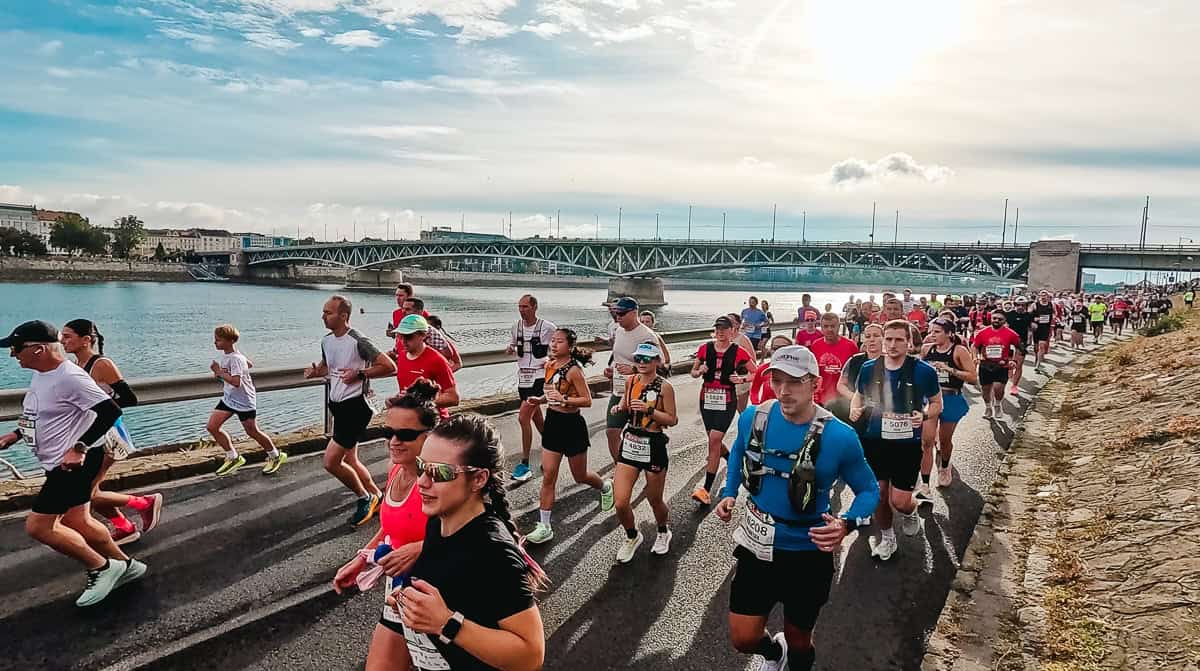
The first warning came around 8 to 10 KM.
Nothing dramatic happened.
I simply felt more tired than I should have.
With enough marathon experience, that becomes noticeable.
Anything before 10 KM should still feel easy.
If fatigue is already creeping in at that stage, especially while running conservatively, it usually means the body is not as fresh as you hoped.
That was the first sign.
Managing the warning before the cramp
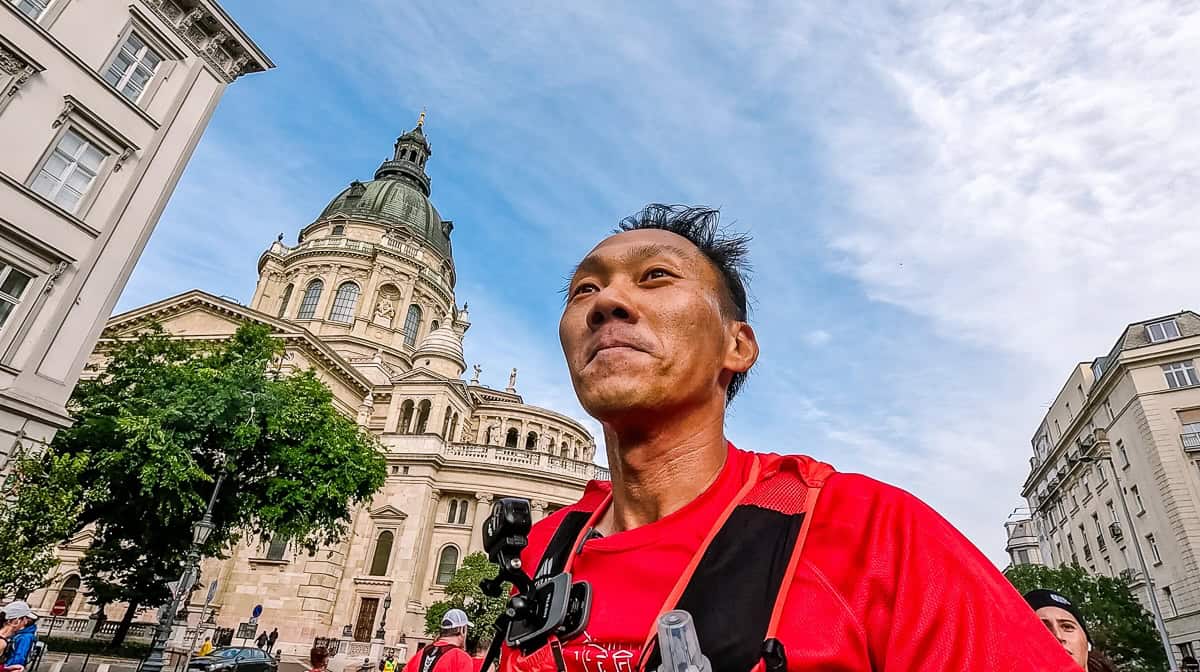
I knew I had to react earlier than I did in Košice.
The moment the right calf began feeling tight in a way that resembled the early stages of cramping, I paid attention.
This was not a full cramp. And I had to make sure it would never become one.
That meant slower running.
More walking.
Less acceleration.
More attention to how each movement felt.
The original plan was effectively gone.
Now the goal was simply to find a rhythm that would keep me moving.
Discipline born from necessity
If there is anything I am proud of from Budapest, it is the discipline.
But it was not elegant discipline.
It was not the kind that comes from confidently executing a perfect race plan.
It came from necessity.
If I got carried away, I might cramp.
If I backed off too much, I might miss the cutoff.
That left very little room for emotion.
The safest option was simply to continue doing what was working and trust it.
Even when I wanted to run faster.
Even when I wanted to walk longer.
Even when negative thoughts started creeping in.
Stick to the plan.
Do not do anything stupid.
Keep moving.
That became the race.
And despite how precarious the second half felt, there was no dramatic collapse.
The calf never fully cramped.
The pace never completely fell apart.
The discipline was working, even if it did not feel particularly impressive in the moment.
Not relaxing too early
Ironically, when the finish finally began to feel more achievable during the mid-30KM range, that relief almost created another problem.
I got complacent and started to relax too much.
There was still enough distance left for a cramp to turn the final stretch into something ugly, so I had to pull myself back into the same controlled rhythm that had carried me through the previous kilometers.
Interestingly, the scenery that had done such a good job of distracting me from the physical concerns could also become a trap.
Running past the grand Parliament late in the race, with enthusiastic spectators cheering, naturally made me want to accelerate.
But this was not the moment to suddenly become ambitious.
Finishing without throwing the plan away
Normally, the final kilometers are where I love to push.
My body never really gave me complete freedom to do that in Budapest.
I did increase the effort somewhat as the remaining distance became small enough to tolerate more risk.
But there was no reason to suddenly undo hours of careful management for the sake of one dramatic sprint. Especially with another race at Wolfgangsee coming a week after.
So the final kilometers became an extension of everything that had come before.
And despite spending so much of the second half feeling as though things could go wrong at any moment, I had held it together.
Looking back, that is what I appreciate most about Budapest.
Not the finishing time itself.
The decision to react before the warning became a crisis.
The willingness to keep doing the boring, controlled thing for kilometer after kilometer.
One of the better-stocked aid station setups
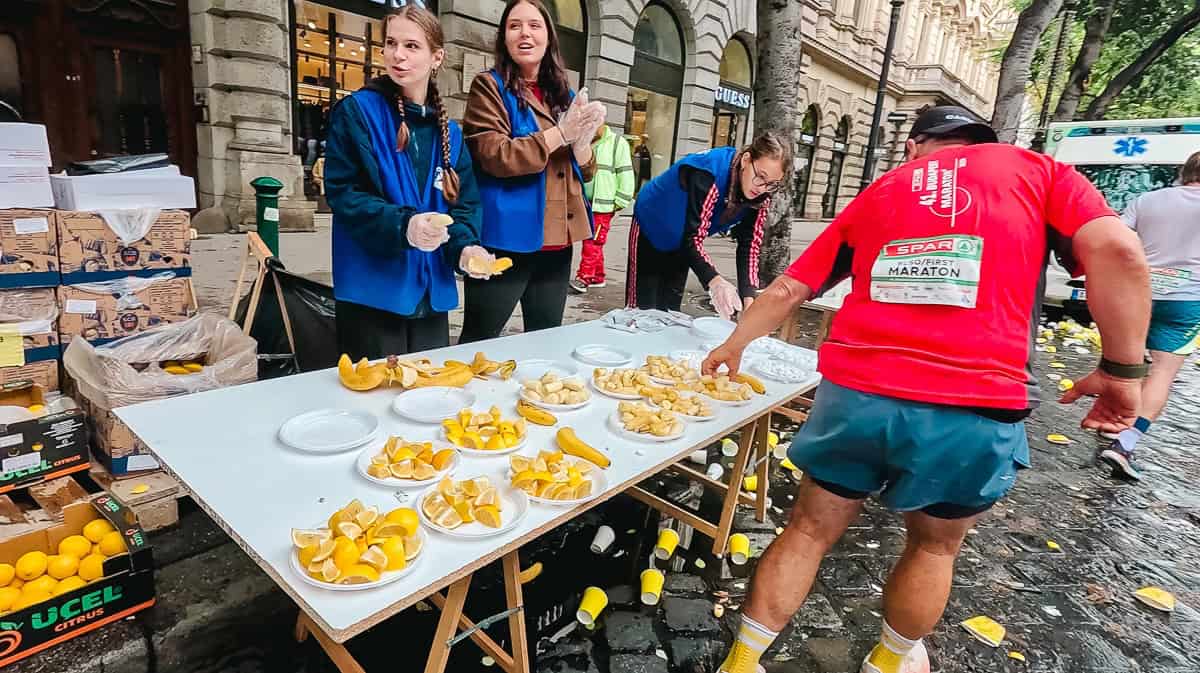
The race organization helped.
Aid stations appeared frequently enough that I rarely found myself waiting desperately for the next one.
They were well supplied with the basics.
Water. Fuel. Sports drinks.
And something I do not see often at other races: different drink options including mineral or electrolyte-focused choices such as magnesium and calcium drinks.
It was not about having an enormous buffet at every stop, but consistently having what runners needed.
For a race where I was already managing muscular problems, that reliability mattered.
Finishing back at the race village
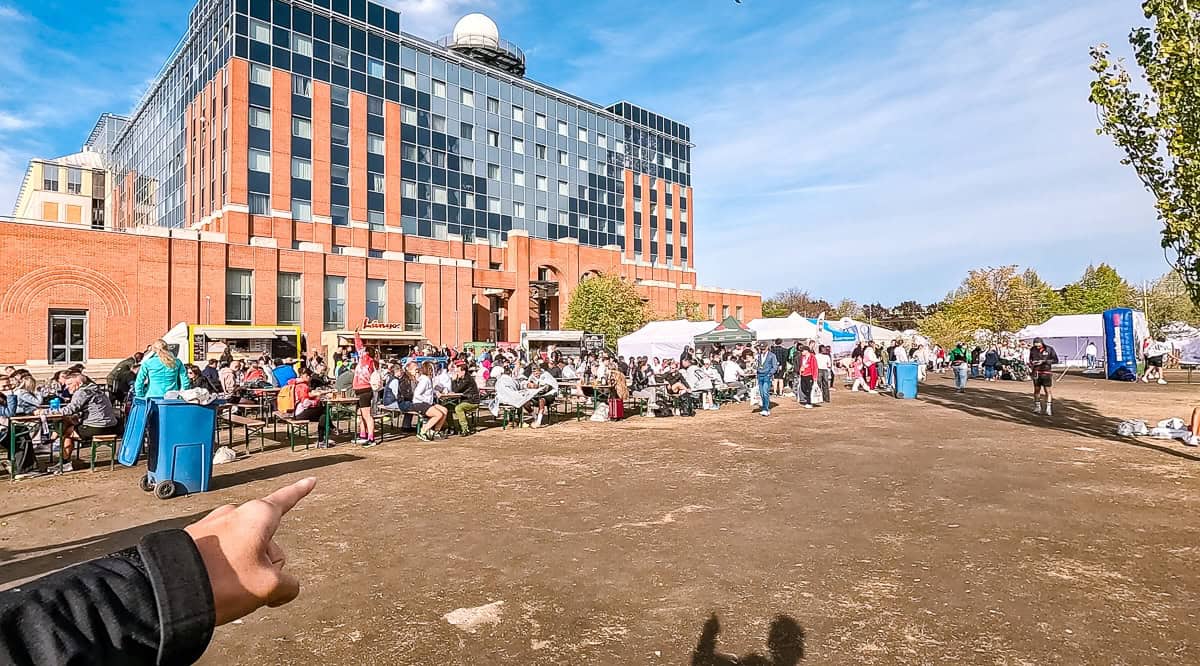
The finish returned runners to the same wider race village.
That gave the post-race experience a relaxed feel.
People sitting around food stalls. Friends and family waiting. Runners moving through the recovery area.
Thanks partly to a supermarket sponsor, the finisher bag felt more like receiving a small bag of groceries than just a token snack. Drinks, chips, energy bars and more.
While there was no elaborate hot meal or recovery lounge, it was sufficient for refueling immediately. The wider event area gave runners somewhere to stay if they wanted to keep hanging around.
Seeing a familiar city differently
The marathon gave me a different way to revisit a city I already knew and loved.
That was probably more interesting to me than discovering another checklist of attractions.
For several hours, Budapest stopped being somewhere I was navigating as a visitor and became the environment of the race itself.
There were runners around me.
Locals and tourists watching from the side.
Families cheering.
People spilling out from cafes.
Parts of the city I already recognized suddenly became attached to completely different memories.
That is one of the things I enjoy most about running marathons in places I have visited before.
The destination does not need to be new for the experience to feel new.
A marathon changes the way you move through a city, who you interact with and what you end up remembering from it.
Budapest was a good example of that.
Who should run the Budapest Marathon?
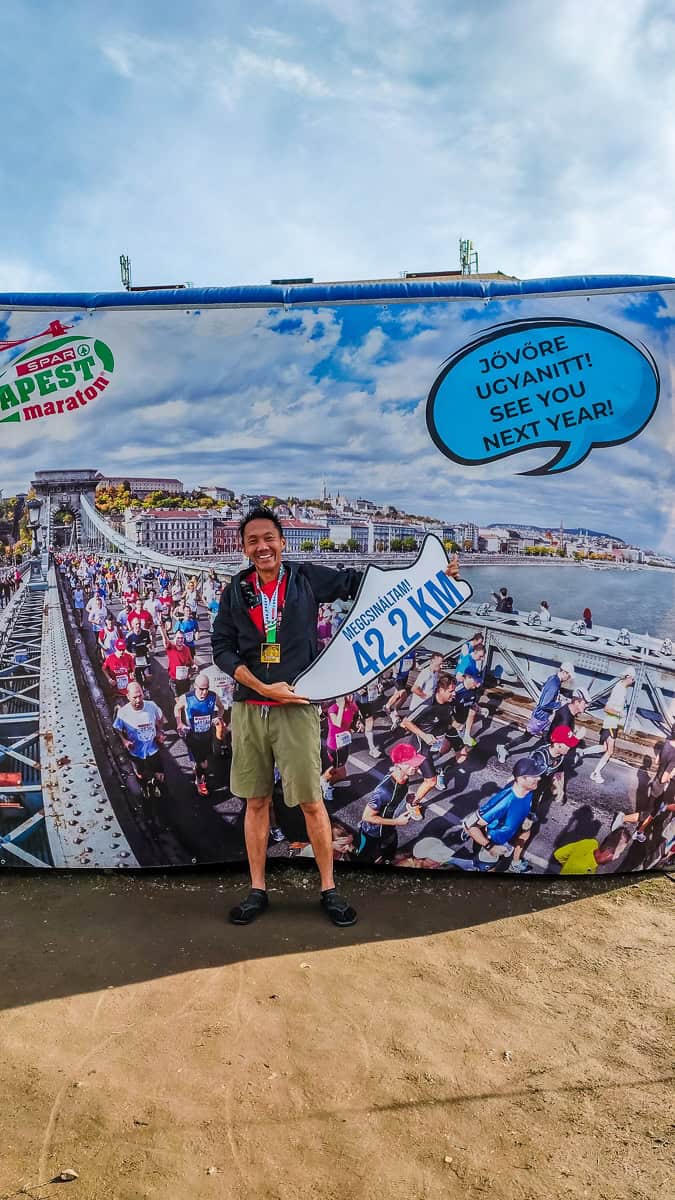
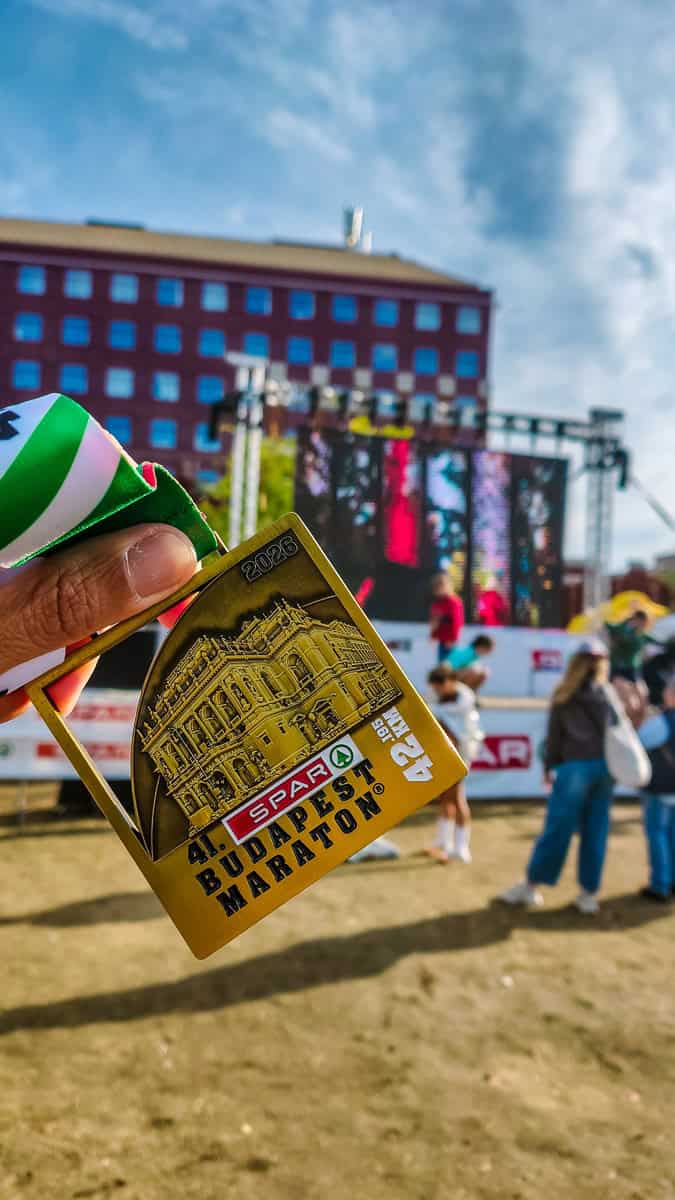
Budapest makes sense for runners who want a major city marathon that is easily accessible.
The course is scenic.
The Danube gives it a strong identity.
There are genuine landmark moments.
The aid stations are reliable. And the wider city gives international runners plenty to do before or after the race.
The 5:30 cutoff is worth respecting, especially if you are arriving with tired legs.
For me, it became much more significant than expected.
A scenic marathon that demanded restraint
I came to Budapest expecting the city to carry the experience.
In that sense, it certainly delivered.
But arriving deep into a heavy running block turned what I expected to be a straightforward scenic city marathon into one of the more mentally demanding races.
For much of the second half, I had to sit inside a narrow range between pushing too hard and giving away too much.
The discipline did not feel heroic.
It felt necessary.
But it kept the race together.
And Budapest still gave me exactly what I had come for in the first place: a memorable way to experience one of my favorite cities from the road.


