Ireland has so many delights to enjoy. Here poets have pondered on profound subjects among castles and historic colleges. There are wonders of all sorts in Ireland, so you will need a good meal to get exploring. Luckily, Irish breakfast is as hearty and satisfying as can be imagined. Ireland is sure to enchant you with its creative spirit and spirited breakfast foods!
What Is Special About Irish Breakfast
Ireland can be cool and harsh, but the breakfast in Ireland never is! Traditional Irish breakfast has something for everyone and is made to fill you up even on the coldest days. The typical breakfast ingredients are humble, but Irish chefs know exactly how to elevate simple ingredients.
A wonderful Irish breakfast features the local bounty. Despite its cool climate, some crops do well in Ireland, like apples, potatoes, and grains. These elements are frequent stars of the Irish breakfast plate.
Ireland’s green grasses also support some of the best dairy cows in the world, so expect to see butter on every Irish breakfast table. Simple seasonings are all the hearty Irish breakfast needs to shine, and never forget the breakfast tea to complete your morning meal in Ireland!
Most Famous Breakfast In Ireland
Full Irish Breakfast
The full Irish breakfast is an all-in-one breakfast sensation! Beyond filling, it has everything you need to start your day and then some.
This hearty classic is served in pubs and restaurants all across Ireland. Before checking out the things to do in Dublin, why not enjoy this rustic traditional Irish breakfast that will keep you warm through the cool weather?
A full Irish breakfast is a platter that includes tons of great Irish breakfast staples. This extravagant breakfast has bacon, white pudding, sausage, beans, and fried eggs to cover the protein. There are mushrooms, grilled tomatoes, and delicious crispy potatoes for the vegetables on this platter. Of course, soda bread with jam and butter finishes off the perfect full Irish breakfast.
Traditional Irish Breakfast Foods
Steel-Cut Oats
Everyone loves porridge on a cool morning and nobody makes oatmeal as tasty as the Irish do. This satisfying bowl of comfort is an authentic Irish breakfast.
The process the groats undergo to become oatmeal is what sets this special porridge apart from other oats. The oats are cut with sharp blades so they are not crushed in the process.
To eat Irish breakfast like a local, try delicious steel-cut oats with fruits or a light touch of honey.
Irish Scones
Scones are a staple at both teatime and breakfast in Ireland. Sweet and buttery Irish scones are a delightfully bright way to start your day. Irish scones use rich and creamy local dairy in their dough for nice buttery scones.
Irish scones tend to be on the sweet side and they taste delicious when paired with local Irish butter and jam. Enjoy the sweet side of Irish breakfast with Irish scones!
Irish Breakfast Roll
The epic Irish breakfast roll is a wonderfully handheld take on the classic. This is the super casual take on breakfast in Ireland that locals may eat as a grab-and-go meal throughout the week. The Irish breakfast roll includes typical elements from a full Irish breakfast but is served as a morning sandwich.
Everywhere from convenience stores to casual eateries offers these delicious sandwiches, so tons of variations exist. Generally, an Irish breakfast roll includes one or more morning meats, like bacon, sausage, or black pudding, with mushrooms, tomatoes, and brown sauce.
Some versions include fried eggs while others do not. It’s a hearty breakfast in Ireland that is sure to set you up for a great day on the go!
Sneem Black Pudding
For many residents in Ireland, only one type of black pudding comes to mind and that is Sneem black pudding. This traditional Irish breakfast mainstay is made from an uncased blood pudding that is tray-baked to create a rectangular shape.
Black pudding consists of blood, suet, onions, and spices. This savory sausage is eaten with toast or as part of a larger breakfast in Ireland. You can find sausages in many traditional Irish food and dishes.
Wicklow Pancake
This Irish breakfast dish is kind of like a pancake and an omelet all rolled into one tasty package. The beautiful breakfast creation uses eggs, breadcrumbs, and tons of fresh Irish herbs to make a light and crispy egg pancake.
This Irish breakfast food is sometimes served with soda bread and bacon. Wicklow pancakes have all the rich flavor and protein you need to explore Ireland!
Potato farls are a traditional Irish breakfast that makes use of leftovers and basic ingredients to create a tasty and crispy potato cake. It is one of the many things that Ireland is famous for.
Farls are made from leftover mashed potatoes that are mixed with flour to make potato dough. The dough is shaped into nice flat cakes and cooked on the griddle so they become nice and crispy.
Farls are often served in a full Irish breakfast or with eggs and toast. This waste-not breakfast dish is so tasty you will want to eat it all day!
Soda Bread Muffins
Irish soda bread is one of the most iconic foods in all of Irish cuisine, and the locals find ways to eat soda bread with every meal. One particularly delicious interpretation of the national bread is soda bread muffins. They are a scrumptious and sweet way to enjoy Irish breakfast.
Soda bread muffins have a muffin-like texture and bite but the irresistible flavors of soda bread, like caraway and currants. This fun twist on a classic Irish breakfast item tastes great with a warm breakfast tea on a cool Irish morning!
This traditional Irish bread dates back centuries and is a well-loved staple of Irish breakfast. This bread is a close relative of Irish soda bread in terms of style, but very different in flavor. It is an unyeasted dough that combines whole wheat and white flour for a more full flavor.
The bread is leavened with baking soda giving it that familiar Irish bread texture. People here love to have brown bread toast with Irish butter for a simple breakfast.
Irish Potato Apple Bread
This delicious Irish breakfast classic is a relative of the potato farl. It is essentially a potato and apple pie, where the potato is the crust.
Leftover potatoes and flour make a dough that is filled with luscious Irish apples and sugar. It is sealed up like a hand pie and pan-fried so the exterior is nice and crispy. The potatoes and apples bring out the best in each other making this Irish breakfast bright, sweet, and irresistible.
Potato apple bread is also sometimes eaten as a sweet snack later in the day.
Discovering Traditional Irish Breakfast
Ireland can be cold and harsh but the food is a true bright spot among the Irish clouds. Rich and rustic Irish breakfasts have been sustaining this spectacular island for ages with simple yet spot-on flavors.
The Irish people know how to take humble ingredients and turn them into breakfast foods that you will crave long after the last bite. Wake up hungry and enjoy the abundance of Irish breakfast before heading out to the beautiful landmarks in Ireland.
For many Ireland feels like the perfect country. It has a coast, cliffs, fields, and cities, no matter what your appetite for adventure craves there is a beautiful locale in Ireland for you. The most appetizing thing you will find in Ireland is their irresistible Irish desserts. Desserts in Ireland are as warm and welcoming as the Irish people and have been cheering the spirits of locals for decades.
What Is Special About Desserts In Ireland
The cool climate in Ireland has done little to dampen the spirits of local dessert makers. The Irish people understand the importance of enjoying the sweeter side of life, and they have truly mastered the art of desserts in Ireland. Their sweets and treats are crafted with a balanced form that marries style and substance.
Desserts in Ireland tend to feature local ingredients whenever possible. Some favored local flavors are Irish dairy, Irish whiskey, chocolate, and apple. Unsurprisingly, things that Ireland is famous for. Irish desserts are often paired with Irish breakfast tea or a small sipper of local whiskey.
Most Famous Irish Dessert
Irish Apple Tart
Apples are one thing that Irish locals are very proud of. Delicious varieties of apples grow on this cool-weather island, and even in lean times, Irish bakers have been able to turn local apples into extravagant desserts. The most famous of all these apple-packed Irish desserts is the Irish Apple Tart.
This traditional Irish dessert may seem familiar to Westerners because it looks a lot like apple pie. What sets these Irish sweets apart from other apple treats is the flavor. You will not find American apple pie spice in this tart. The simply sweet flavor of Irish apples paired with sugar and a flakey crust is all you need!
Often this Irish pastry is decorated with gorgeous pie crust leaves and served warm with creamy vanilla ice cream.
Traditional Irish Desserts
Guinness Chocolate Mousse
Chocolate and Guinness were made for each other! Enjoying Guinness Chocolate Mousse for desserts in Ireland is an authentic taste experience that you won’t want to quit.
This luxurious Irish dessert is constructed with a lush chocolate mousse that has been infused with Guinness. The chocolate Guinness mousse is topped with an airy whipped cream that balances the richness of the mousse.
You will find this Irish dessert on gourmet dessert menus.
Oat Flapjacks
These classic desserts in Ireland are satisfying to crunch and taste great! Irish oat flapjacks are almost like a granola bar; they are made of oats and golden syrup to make a bar that holds up.
Since they’re easy to grab and run, this dessert is great for getting your sweet fix in the middle of the day. Many variations of these Irish sweets exist, some will include dried fruits or other grain, while others will top the treats with chocolate.
Irish Scones
No tea time is complete without scones, and Irish scones are a special treat! This authentically Irish dessert is made differently from other countries’ scones. Here in Ireland, bakers like to use a little more sugar in their scones for sweeter scones that eat more like a treat.
Irish scones are served at all times of day, but what makes them distinctly dessert is not just their sweeter flavor but the way they’re served. Irish scones are often served split with lush clotted cream and tart berry jam.
Rhubarb Fool
Irish dairy makes Irish desserts so delectable you won’t believe your tastebuds. These beautiful Irish sweets that feature the great local dairy are the rhubarb fool.
This nostalgic Irish dessert combines the dreamy flavor of freshly whipped cream with awesome local rhubarb. The rhubarb is cooked with bright citrus to make a popping flavor that balances the cream. Pair rhubarb fool with a warm cup of black tea for the perfect after-dinner delight!
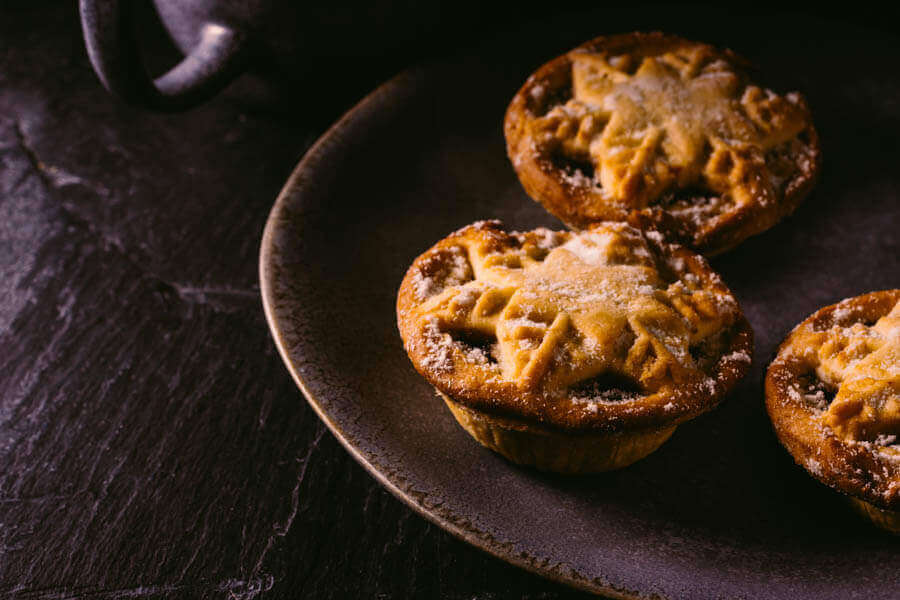
Irish Mince Pie
Many locals rejoice when winter comes around because that means it’s Irish mince pie season! This misunderstood dessert may sometimes be called a “mince meat pie,” but there is no meat in this Irish treat!
The filling of this Irish Christmastime treat is made of a mixture of fruits, liqueur, spices, and sweetener. The warm-flavored filling sits inside flaky individual-sized pie shells to make a festive and grabbable Irish dessert!
Irish Pastries And Cookies
Chocolate and Caramel Shortbreads
Shortbread is a staple of Irish sweets and treats, and the only things that can make those buttery biscuits even better are decadent toppings like chocolate and caramel.
Chocolate and caramel shortbreads are a delectable twist on the classic Irish dessert of shortbreads. These cookies are topped with buttery caramel and dark chocolate and then finished with a touch of salt. These Irish sweets are gorgeous to look at and impossible to stop eating.
Irish Lace Cookies
Incredibly light and tasty Irish lace cookies are desserts in Ireland that locals love. These Irish cookies can be found at most local Christmas celebrations, and they are too delicious to be missed.
This traditional Irish dessert is an extremely thin cookie made from oats in a caramelly batter that is baked to crisp perfection. Don’t worry if you’re visiting outside of the holiday season, because these Irish sweets are so beloved that bakeries carry them all year round.
Pair this sweet cookie with a warm tea or coffee for a lovely afternoon pick-me-up.
Shamrock Shortbreads
You will find shamrock shortbreads everywhere in Ireland. The shortbread may be Ireland’s favorite cookie and cutting them into fun shamrock shapes is a local tradition. The thing that makes these cookies an Irish dessert favorite is their simple yet irresistible flavor.
Shortbreads have a very short list of ingredients and use a lot of butter, so the resulting cookie is crumbly and creamy. Irish butter helps contribute to the amazing flavor of these Irish sweets.
This fun Irish dessert twist on classic soda bread is a tasty update. These fluffy cookies have an excellent texture. They bring the flavor of traditional Irish soda bread by incorporating caraway seeds and raisins. These fun cookies are the perfect Irish sweets to pair with afternoon tea.
Irish Desserts: Puddings
Carrageen Moss Pudding
Carrageen moss puddings serve some tasty surprises for desserts in Ireland. This unique Irish pudding features a special local ingredient, carrageen moss or seaweed.
This dessert is composed of a simple yet delicious vanilla pudding; the pudding is topped with dried carrageen moss. The moss adds a briny and almost spiced flavor that is in perfect balance with the vanilla. This Irish dessert is supremely local and awesomely delicious!
Plum Pudding
Plum pudding is a beautiful bombe of an Irish dessert that locals wait all year for! This classic dessert is a Christmastime favorite in the Emerald Isle. No winter celebration is complete without these decadent and fruity Irish sweets.
Every Irish family has their own recipe for plum pudding, but they generally include plums, apples, carrots, almonds, and cherries in a delicious bread pudding. The pudding commonly includes brandy, but some variations use different liqueurs. This traditional Irish dessert is sometimes topped with a tasty brandy sauce for a festive treat.
Bread and Butter Pudding
Locals love to warm their winters with delicious Irish sweets, and none are as hearty, luscious, and delicious as Irish bread and butter pudding.
This delightful Irish take on bread pudding almost eats like French toast with its custardy flavors and warm spices. Raisins and perfectly buttery bread make this Irish dessert out-of-this-world! Try this delicious treat with a warm coffee on a cool Irish evening.
Irish Cream Trifle
Locals love a little Irish cream with their desserts in Ireland, so an Irish cream trifle is an ideal treat. This decadent Irish dessert hits all the notes with layers of Irish cream-soaked chocolate cake, whipped cream, and chocolate shavings. This is the chocoholic’s answer to Irish dessert, and it pairs perfectly with a hot cup of coffee on a cool Irish day.
Irish Sweets And Candies
Irish Clove Rocks
Many countries in Europe and the U.K. love to get their sweets in a mixed bag known as pick-’n-mix, and Ireland is no exception to this sweet craze. Irish sweets shops carry a colorful array of confections that are sure to delight anyone’s inner child, but one local favorite shines above the rest, clove rocks.
Spicy and sweet clove rocks are an Irish dessert classic. These hard candies have the sharp flavor of cloves to keep you warm even on the coolest Irish day.
Irish Toffee
Irish toffee is a real triumph of Irish desserts. It is crafted with the best local dairy Ireland has to offer and has a decadent sweetness that never sticks to your teeth!
Delicious Irish toffee is from caramelized butter and sugar then topped with delicious chocolate and nuts. These Irish sweets are so irresistible you will want to make space in your bag to bring this Irish dessert home!
Irish Whiskey Truffles
Whiskey is a key component of Irish culture; it employs people and brings revenue to this small island nation. Nothing pairs with whiskey like chocolate and that is why whiskey truffles are a favorite Irish dessert.
These luxurious Irish sweets infuse dark chocolate with whiskey and enrobe the whole confection in rich cocoa powder. These truffles balance bitter and sweet perfectly and they, of course, go well with a sipper of Irish whiskey.
Irish Apple Drops
Penny candies have the power to make us so nostalgic, and when the locals want Irish sweets that will bring back the flavor of childhood they choose apple drops. These colorful hard candies have the delicious flavor of local Irish apples just boiled down into a sugary sweet and irresistible confection.
These traditional Irish sweets are available on their own or sold as part of a pick-’n-mix selection.
Irish Rhubarb and Custard Candies
Rhubarb is a beloved Irish dessert flavor. Locals love this tart vegetable so much that they even eat it in their candies.
Along with other pick-’n-mix candies in Ireland, you will there delightful tart and creamy rhubarb and custards. These pink and white sweets have been enchanting the Irish people’s sweet tooth for decades, and they are authentically Irish sweet!
Irish Cakes
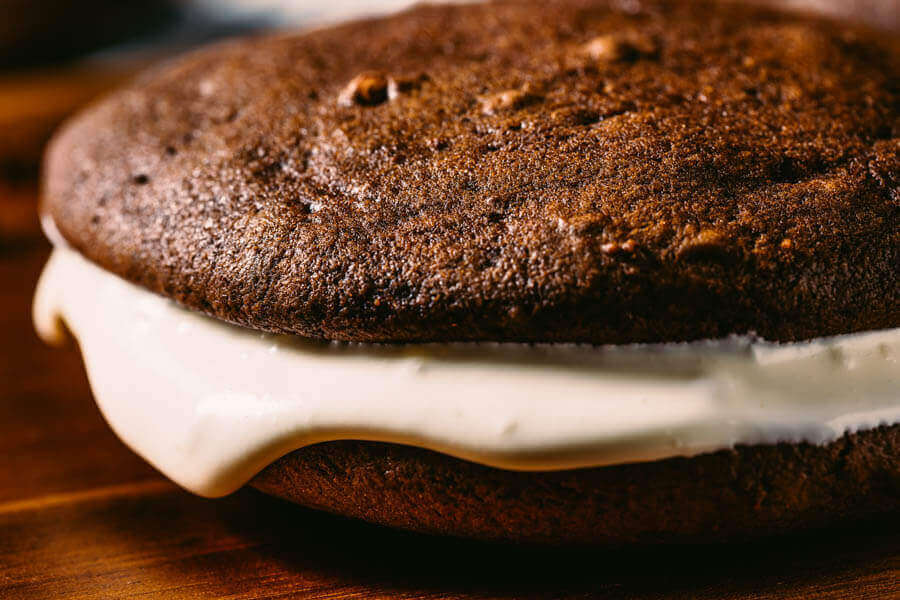
Chocolate Whoopie Pie
These amazing sandwich cakes are the perfect desserts in Ireland to showcase the top-tier local dairy. Whoopie pies are two small cakes sandwiching cream and in Ireland, they have truly perfected this treat.
The Irish chocolate whoopie pie uses appetizing chocolate in the cakes and the best cream the isle has to offer. Some varieties will flavor the cream filling with Irish cream liqueur or whiskey for a little heat. This fun Irish cake is perfect with a warm cup of black tea.
Irish Coffee Cake
This luxurious Irish dessert is inspired by one of locals’ favorite drinks, Irish coffee. It is a beautiful, typically dual-layered cake with all the decadent flavors of an Irish coffee. These scrumptious Irish cakes are composed of a coffee-flavored sponge cake that is layered with decadent whiskey-infused chocolate buttercream.
The frosting is made even better by the local Irish dairy and this Irish dessert really captures the flavor of the iconic Irish coffee!
Irish Cream Cheesecake
Irish cream has been a sensation in Ireland for the last several decades because it combines two of Ireland’s favorite flavors: cream and whiskey. There is no better testament to this love of all things dairy and distilled than the Irish cream cheesecake.
This sensational Irish dessert is as rich and luxurious as desserts come. These Irish cakes feature a biscuit crust and the most alluring cheese and Irish cream liquor filling. Some variations of the cheesecake include chocolate icing for a sumptuous flavor boost.
One bite of this rich Irish dessert will send you buzzing with delight!
Fifteens
This is a Northern Irish dessert delicacy. Fifteens are a nostalgic refrigerator cake that is beloved across the whole of the United Kingdom. The unusual name comes from their composition.
Fifteens are traditionally made up of fifteen digestive biscuits, fifteen cherries, and fifteen marshmallows. These ingredients are held together by a little coconut and condensed milk and then chilled to set up.
Home bakers across Ireland love to make these Irish sweets, but you can also find fifteens in bakeries around Ireland.
Irish Tea Cake
Tea time is a wonderful excuse to enjoy some sweet Irish desserts, and the Irish tea cake is a great example of Irish cakes! It follows a simple yet delicious formula that makes for a mouthwatering cake with an inviting shortcake-like texture. The Irish tea cake is typically flavored just with vanilla and served topped with fresh berries and whipped cream.
Souffle Pie
Irish desserts tend to rely on simplicity and traditional methods. One traditional Irish dessert you find on high-end dessert menus is the souffle pie.
This treat is crafted with the expert precision required to make a souffle but with the size of a pie. The insides will be soft and decadently textured, and the flavors range from chocolate to whiskey to citrus.
This delicate and delicious Irish dessert is a luxurious treat that shows the true skill of Irish bakers and chefs.
Discovering Traditional Irish Desserts
Ireland is a magical country full of history, diverse modern culture, and stunning Irish landmarks. The desserts in Ireland are a perfect reflection of the Irish spirit. They are designed to comfort you and make you warm and welcome, just like the wonderful Irish people. Let your sweet tooth reign as you discover all the bounty of Irish desserts!
Ireland is a remarkable country like no other. The culture in Ireland is steeped in folklore and tradition. The people are welcoming and the traditional Irish food in Ireland is an extension of that welcoming spirit.
In Ireland, you can find castles, fairies, adventure, and some of the best food you will ever eat. Dublin is full of restaurants and pubs serving up Irish culture on a plate, so be ready to dig into delicious traditional Irish food!
What Is Special About Irish Food
Ask any visitor or local what makes Ireland so special and they will tell you it’s the people. Locals are friendly, warm, and welcoming. The food is an extension of that spirit.
Traditional Irish food is full of comforting flavors and satisfying ingredients. Some of the best places to find great Irish food are the pubs, they serve inviting meals in a friendly authentically Irish environment.
Ireland has seen its share of hardship, but the resilience of the Irish people has caused them to create unique and satisfying Irish dishes. The local cuisine is built on meat and potatoes, but it’s not all Irish pub food here.
The Irish are not afraid of herbs and seasonings, though spicy dishes here are very rare. Typical Irish food hits all the great notes of flavor while being filling enough to keep you going on this cold island.
Most Famous Food In Ireland
Irish Stew
Rich, warm, and comforting Irish stew is the national food in Ireland. It’s a spectacular testament to the warmth of the culture and the richness of the ingredients available in Ireland.
This comforting and cozy Irish food is typical of the cooking style used by locals. Traditional Irish dishes are hearty, saucy, and packed with herbs.
Irish stew uses mutton or lamb as the starring protein, along with typical stew vegetables including potatoes, parsnips, and onions. This amazingly saucy dish has great savory notes and enough unctuousness from the meat to keep you coming back for another bite.
Many variations of this comfort classic exist, and you will find this stew prepared in homes and as Irish pub food.
Traditional Irish Food
Soda Bread
Beautifully baked soda bread is an iconic Irish food. This classic Irish bread is an unyeasted bread made with baking soda as the leavening agent, which is where it gets its name.
Typical loaves of soda bread are studded with dried fruits like currants or raisins, and a touch of buttermilk is added to the doubt to bring some rich, creamy flavors to this crusty bread.
You will find this tasty Irish snack at breakfast, lunch, and dinner. It pairs well with meats and sweets alike and has a flavor that is authentically Irish.
Cottage Pie (Shepherd’s Pie)
This humble Irish meal is familiar to many people around the world. It consists of simple ingredients, but they truly shine in this wonderful savory pie. Like many Irish dishes, cottage pie was born out of necessity but has grown far from its humble roots.
Comforting cottage pie layers ground meat, like local beef or lamb, and hardy vegetables like carrots and peas, with velvety mashed potatoes and sumptuous gravy. This filling casserole is served as an Irish pub food staple, but it has been elevated by many high-end Dublin chefs as well.
Cockles and Mussels
Everyone in Dublin knows Molly Malone, and her offerings, but not every visitor realizes cockles and mussels are actually a beloved Irish food. These tasty shellfish have helped native Irish people survive through leaner times and today they are a common dish to find on Irish pub menus.
The typical Irish food preparation of these two shellfish is, like all great Irish foods, with bacon. The shellfish are steamed and served in creamy bacon and herb sauce. This Irish dish is often served as an appetizer or in larger portions as an entree.
Fall or Autumn in Ireland is not complete without this cake. Barmbrack is classic autumnal food in Ireland.
Barmbrack
Barmbrack is a bronze bread with the luxurious flavors of sultanas and golden raisins. The surprise of this bread is the pop of pumpkin pie spices that give this bread its signature harvest flavor.
This Halloween-inspired bread is inspired by the fall harvest and traditionally this bread may be baked with a special prize inside for a fortunate eater. Autumn in the Emerald Isle is just sweeter with this delectable Irish food.
The Ulster fry originated in Northern Ireland, but it is enjoyed across the whole island today. This wonderfully filling spin on an Irish breakfast is so beloved in Northern Ireland that it is eaten all day.
This traditional Irish food is a combination of many Irish favorites served on one tasty platter. The Ulster fry features fried eggs, soda bread, potatoes, black pudding, sausages, and back bacon to create a show-stopping Irish meal.
Some variations on the Ulster fry exist and may include mushrooms or streaky bacon, but the best part of this abundant plate is that it can be found anywhere in Ireland even after breakfast time!
Waterford Blaa
Locals in Ireland love baked bread. They enjoy it simply with butter or cheese or stuffed with appetizing local meats, and the favorite roll for Irish locals to dine on is the Waterford blaa.
These wonderfully light white bread rolls are baked up across the whole island. What makes blaas so special is the extra long proof time the dough gets before baking. This extra time allows the yeast in the dough to grow and develop into the tastiest rolls you will ever find.
Blaas are often enjoyed for a fast grab-and-go breakfast, snack, or on the side of a hearty stew for dinner.
Irish Breakfast
The weather can be harsh in Ireland and the locals work hard, so they love to start their day with a bountiful breakfast. This great Irish food has everything you will want to get started.
The dish packs in full flavors and plenty of choices! Irish breakfast is served in pubs and restaurants all over Ireland, and it is the preferred breakfast calorie splurge.
A full Irish breakfast includes sausage, black pudding, streaky bacon, fried eggs, potatoes and cabbage, mushrooms, baked beans, fried tomatoes, soda bread, and of course Irish breakfast tea.
This plentiful breakfast platter has everything you need to get going, and then some! Experience morning the authentically Irish way with this traditional Irish food. It makes for a great start to exploring all the famous landmarks in Ireland.
White Pudding
White pudding is a protein-packed Irish food that locals like to eat in the mornings. Traditionally, white pudding is a sausage made from a mixture of oats, suet, and occasionally whole bits of pork and pork liver.
It is sometimes confused with black pudding, but white pudding uses no blood in the sausage. This hearty Irish food is sliced and pan-fried to be served as an authentically Irish way to start your day!
Potatoes are one vegetable that flourishes well in the cool island climate, and they are essential to Irish life and culture. These humble spuds are part of tons of Irish meals, but one local favorite is the comforting potato soup.
Potato soup is a creamy bisque that uses a short ingredient list to craft a welcoming Irish dish. The perfect potato soup in Ireland includes onions for a punch of aromatic flavor. Tasty potato soup is perfect to eat with blaas or soda bread for a warm and fling Irish lunch!
Boiled Bacon and Cabbage
While Americans may think corned beef and cabbage is the ultimate Saint Patrick’s Day food, the authentic Irish version is actually boiled bacon and cabbage. Cabbage is a cool-hardy vegetable that has grown in Ireland for ages and Irish boiling bacon is a ham-like cured pork. The two together make a simple yet tasty dish!
This classic Irish pub food brings so much flavor! Boiled bacon and cabbage are made even better when it is served with potatoes and creamy bechamel. This Irish food is a real celebration of the comforting feeling you get from food in Ireland.
Bangers and Mash
The English influence on Irish life is impossible to ignore. Many Irish foods take inspiration from their complicated history with England, and no English import in Ireland is as iconic as bangers and mash. Bangers and mash are simply sausages and mashed potatoes.
This pub classic gets the authentic Irish flavor from the sausage; in the Irish version of this dish, the sausage is made with rusk, especially dry bread, which gives the sausage a great toothsomeness.
Some Irish versions of this classic sub out the mashed potatoes for mashed cabbage. It’s a great midday fillup food in Ireland!
Gammon
Locals love this salty Irish food! Gammon is a cured pork product made from the pig’s hindquarters. Typically the cut of pork is glazed to balance the saltiness.
The rich ham hock is amazing on a butty (or roll) as a quick lunch or eaten on its own as a rich afternoon snack. Gourmet restaurants and Irish pubs all serve variations of this wonderfully decadent meat.
Steamed Buns
This Irish street food is a testament to how much growth and possibility there is in Irish cuisine. Airy and addictive steamed buns can be found all over the streets of Dublin and have become a local staple.
This Chinese import is made from a simple yeasted bun that is steamed and then filled with decadent savory fillings. Dubliners love to eat steamed buns filled with pork or even sometimes beef.
This food in Ireland shows that there are plenty of satisfying surprises to be found when eating in Ireland! You can find both age-old traditional Irish food as well as international cuisines adapted to local tastes.
Irish Food: Snacks And Sides
Colcannon and Champ
Champ and colcannon are Irish pub food favorites, and you can find them served just about everywhere! People in Ireland may get testy if you confuse champ and colcannon. Even though both Irish foods are made from vegetable mashes they are seen as two distinct Irish dishes.
Champ is a scrumptious side dish made simply from mashed russet potatoes, cream, butter, and scallions; whereas, colcannon is made up of mashed potatoes, cream, butter, and cabbage. They are both lightly seasoned with white pepper and served with an extra pat of butter. Champ and colcannon are both delicious when paired with gammon or local Irish beef.
Carrots and Parsnips
The food in Ireland is a testament to how much flavor you can get from simple, fresh ingredients. Carrots and parsnips are a locally loved side dish with plenty of earthy vegetable flavor. This quintessential Irish food is made by boiling and mashing together carrots and parsnips.
Rich butter makes the mash velvety and smooth and herbs are sometimes added for extra flavor. This colorful dish is nicknamed “sunshine” by the locals because the flavors are so bright you won’t be able to stop smiling!
Boxty
Many international cuisines include some form of potato pancake, and boxty is the Irish snack interpretation of this classic. Boxty are wonderfully seasoned, thin potato cakes that are made in an authentically Irish way.
These crunchy cakes are made with both grated and mashed potatoes for a better mouth feel. They are seasoned with white pepper and scallions and then pan-fried. Savory boxty makes a great snack or side to rich Irish meats, and can even be a tasty Irish meal in the morning!
Spice Bag
The bustling streets of Dublin are full of people, and those people all need to eat! The spice bag is the Irish street food way to satisfy your hunger on the streets of Dublin.
A spice bag is a great way to fill up while out on the town because it is literally served in a paper bag. The bag is filled with tasty seasoned chicken, chips (or “fries”), onions, and warmly spiced chili sauce. It’s the perfect street food and displays the modern side of Irish cuisine.
Crubeens
This traditional Irish food may not be for the faint of heart, because crubeens are pig’s feet. This traditionally handheld food has been eaten in Ireland for centuries as a way to use all of the hogs.
Crubeens are made from boiled pig’s feet that are then fried to give them a crispy, irresistible exterior. These unique Irish snacks are sometimes found at Irish horse races and are sometimes paired with cabbage.
Sometimes called a Dublin coddle, this irresistible Irish dish is a waste-not local favorite. Coddle is made with leftovers which means that although this is a typical Irish food it does not follow a typical recipe.
This rustic dish generally includes potatoes, sausages, bacon, onions, and herbs all layered together and then baked in an oven. The resulting dish is bubbling with succulent flavors and a smooth sauce from cooking everything down together.
Variations of this Irish food can be found in pubs and homes all over Ireland.
Irish Smoked Salmon
Ireland’s island status means excellent access to seafood. Locals love to eat seafood with almost every meal of the day, and the hands-down favorite fish in Ireland is the Irish smoked salmon.
The cold waters off the coast allow local fishers to catch large Atlantic salmon that make the base for this flavorsome Irish food.
Irish smoked salmon is traditionally cold smoked and often shaved very thin. This delightfully rich fish is usually served on top of brown bread, crackers, or rye, then garnished with crème fraîche and a squeeze of lemon. Locals will eat this rich Irish dish as a snack, lunch, or dinner.
Fish Pie
Fish pie may feel familiar to fans of the cottage pie because it is also a protein and potato pie but with an oceanic twist. This Irish dish is so decadent that it is often eaten at holiday celebrations. Fish pie highlights great points of Irish cuisine, like their mastery of fish and sumptuous sauces.
The dreamy fish pie consists of flakes of briny, flaky white fish like cod or haddock in a smooth, creamy sauce. The wonderful fish layer is topped with a healthy helping of perfectly seasoned mashed potatoes.
The whole pie is baked so the potatoes get satisfyingly crisp. This comfort food is perfect with a pint and some Irish rye.
Drisheen
Many countries have different interpretations of sausages, including blood sausages. Drisheen is the Irish version of blood sausage. It may not be for everyone, but many locals love this traditional Irish food.
Like other blood sausages, drisheen began as a way for local ranchers to make the most of their livestock, and now it is a traditional staple food in Ireland.
Drisheen is made from the blood of cows, sheep, or pigs mixed with animal fat, milk, and spices. The sausage is boiled in the animal’s intestines and differs from other blood puddings because of its gelatinous texture. In some cities, drisheen is paired with other classic Irish foods like tripe.
Guinness Stew
Guinness is a pillar of Irish culture, even for non-drinkers. It is one of the iconic things Ireland is famous for. The brand has long been a major employer and supporter of the Irish people.
Guinness stew is the perfect Irish food to showcase the connection between Ireland and this dark stout.
Decadent Guinness stew is an Irish pub food staple. It is made with delicious Irish beef, local potatoes, and of course Guinness. The beer helps make the sauce in this stew full and luxurious.
Variations of this stew may include carrots and/or Irish herbs, like parsley. This rustic dish is enjoyed in restaurants, pubs, and homes all across Ireland.
Seafood Chowder
The bountiful Irish coastline offers the locals so many tantalizing options. One wonderful ocean-inspired Irish food is the creamy Irish seafood chowder. No Irish pub food menu is complete without seafood chowder.
This unctuous soup features all the amazing offerings of the Irish sea, like haddock, prawns, crab, and mussels, along with some fatty bacon for good measure.
Vegetables are thrown into the mix in the form of potatoes, celery, and onions. The cream base is made from local dairy and seasoned gently to make an inviting and luxurious soup. Enjoy this Irish food with soda bread as a nice warm-up after a coastal day.
Irish Food: Desserts In Ireland
Irish Shortbread
No tea time is complete without a little something sweet, and the perfect Irish food to satisfy that need is the Irish shortbread. These sweet and sandy cookies are an iconic part of life in Ireland.
Traditional Irish shortbreads are buttery, light, and crumbly. Thanks to the simple ingredients in these delectable cookies, they have been enjoyed by locals for centuries, even through the leanest of times. Sip some Irish breakfast tea with some shortbreads for a relaxing Irish respite.
Bread Pudding
People in Ireland love to live on the sweeter side, and the perfect Irish food to help you taste the sweet life is bread pudding. This decadent treat combines all the best textures and flavors dessert has to offer into one comforting treat.
This complex dessert is made from wonderful local bread, typically soda bread with raisins or cinnamon raisin bread. The bread is torn up and soaked in a lush cream sauce that frequently features Irish whiskey.
The delectable dish bakes into an irresistibly warm, pudding-like dessert that is perfect when topped with an Irish whiskey cream sauce.
Apple Cake
One bite of this perfect Irish dessert and you will be hooked! Apple cake is the perfect sweet Irish food. Apple trees are amazingly cold-hardy and for centuries they have been flourishing on the Emerald Isle.
Comforting apple cake is a hybrid of a coffee cake and an apple pie. It has the dense texture of a coffee cake with a tart and sweet apple and cinnamon filling.
This dessert may seem rustic, but apple cake takes wonderful Irish apples and turns them into a unique and satisfying piece of Irish cuisine.
Porter Cake
Great beer is easy to find in Ireland, even in your dessert! Porter cake is a classic Irish dish that uses rich porter beer in the cake batter. It is a dark and dense cake with complex flavors that will captivate you.
This cake uses dark brown sugar, warm spices, and citrus peel to compliment the stout. This all adds up to a lusciously rich and flavorful cake; bright sultanas and golden raisins are added to some porter cakes for a wonderful bit of interest.
For the perfect dessert food in Ireland, pair porter cake with local cream and delight in the inviting Irish flavors!
Yellowman
Children of all ages in Northern Ireland crave yellowman. Yellowman is a honeycomb toffee. The confection forms with large air bubbles in the toffee making this candy airy and delightful.
It’s not just the textures that will entice you to this sweet Irish food, the flavor is arguably that of the best toffee you will ever try! This traditional sweet food in Ireland is so beloved by locals for its buttery texture and unbeatable caramel-like flavor that it has grown far beyond its Northern Irish origins. You can find this beguiling Irish snack in candy shops all over Ireland and Northern Ireland.
Ireland is a beautiful country full of history, culture, and amazing Irish food. The food in Ireland is rich and full of irresistibly satisfying flavors. From the amazing hearty Irish pub food to the warm and comforting flavors of Irish snacks and sweets there is something here for everyone. Come hungry and you’ll be very happy to find such delicious food in Ireland.
We speculate on the new state of travel following 2 major shifts in the travel industry. From the rising travel costs to the remote work/nomad movement, we talk about the latest observations and trends. More importantly, we discuss age old cost saving strategies that still applies, and what are some things to look out so you avoid making costly mistakes.
00:41: Introduction
3:39: Rising costs of travel as world opens
9:22: Will budget airlines scale again
12:14: Accommodations when traveling
17:08: Ways to stretch your travel budget when traveling
20:49: Understanding flights and hubs
25:32: Absolute cost vs time/comfort cost
30:08: Remote work in the new state of travel
35:31: Nomad hotspots and debates around impacts
43:13: Balkans and other underrated destinations
47:37: Determining cheapest destinations and getting out of tourist hotspots
50:59: Taking advantage of currency strengths and economic changes
56:56: Quick fire questions and tips from Tim Leffel
Catalonia is a region in the northeast of Spain, and its capital is Barcelona. The official language is Catalan, which is spoken by a majority of the population. Catalan is a Romance language, like Spanish, French, and Italian. There are many things that Barcelona is known for which make it such a popular tourist destination. The city receives over 20 million visitors per year.
What Is Barcelona Known For?
Barcelona is known for its art scene, unique Catalan culture, and stunning architecture. The city is home to some of the most famous modernist buildings in the world, including the Sagrada Família church by Antoni Gaudí. In addition, Barcelona is also famous for its beaches as well as a thriving vibrant nightlife scene, with many bars and clubs to choose from. There are also several Michelin-starred restaurants awaiting traveling foodies.
History, Culture, And Traditions Barcelona Is Known For
Catalan Culture & Language
Barcelona is the capital of Catalonia, an autonomous community in the northeast of Spain with its own culture and language. The Catalan language is spoken by about 10 million people in the world and it’s one of the official languages of Barcelona, together with Spanish.
If you want to get a taste of Catalan culture, I recommend going to La Boqueria Market, one of the largest and most famous markets in Europe. Here, you can find all kinds of food, from fresh fruit and vegetables to cured meats and seafood.
And, of course, no trip to Barcelona would be complete without watching a football game. Barcelona has one of the most successful teams in the world, F.C. Barcelona, also known as Barça. If you’re lucky enough to get tickets to a game, make sure to enjoy the electric atmosphere at Camp Nou Stadium.
Beautiful Weather
Barcelona enjoys a Mediterranean climate, with mild winters and warm summers. The average temperatures in winter are between 10ºC and 15ºC, while in summer they can go up to 30ºC. This is whyBarcelona in winter continues to be an attractive destination.
The best time to visit Barcelona is from late April to early June, or from September to early November. These months offer the perfect combination of good weather and smaller crowds.
If you want to avoid the heat, I recommend coming in March or October, when the temperatures are still pleasant but not as hot as in summer.
Mediterranean Beaches
Barcelona is a beach city, blessed with a large coastline that goes on for almost 4.5 km. One of its main attractions is the golden sandy beaches. The city has over 9 beaches, all of them easily accessible by public transport.
The water temperatures are pretty warm from June to September, making them perfect for a refreshing swim or just sunbathing.
Most of the beaches are urban, so you’ll find plenty of restaurants, bars, and showers nearby.
Some of the busiest and most touristic beaches are Somorrostro, Nova Icaria, Bogatell, Mar Bella, and Barceloneta.
If you want to avoid the crowds, you can always take a quick metro ride to any of the beaches further along the coast. I recommend going to one of the beaches further north, such as Ocata, Sant Sebastià, Castelldefels or Sant Vicenç de Montalt.
Festivals and Street Parties
No matter what time of year you come, there will always be a festival or street party to join in Barcelona. The most important and famous one is La Mercè, which takes place every year on September 24th in honor of the city’s patron saint.
During this festival, you can enjoy a wide array of cultural activities, including concerts, human towers, correfocs (fire runs), castellers (human castles), and the traditional Sardana dance.
If you come during Christmas, don’t miss the spectacular Caga Tio. This huge log “pooing” candies and torrons (nougats) is a must-see for both children and adults.
And, if you’re in town during Easter, make sure to try the Mona de Pascua, a very popular Catalan dessert. It’s a cake decorated with different symbols related to the holiday, such as eggs and lambs.
Cosmopolitan Atmosphere
Barcelona is a lively and cosmopolitan city, with a rich history and culture that has been shaped by Roman, Gothic, Renaissance and Modernist influences. Barcelona is famous for its unique atmosphere, a perfect mix of history, architecture, culture, and beach life.
The city has been shaped by many cultures that have left their mark throughout the centuries. This is evident in the variety of architectural styles that can be seen all around town, from roman remains to gothic quarters and modernist landmarks. Nowadays, it is known for its art and architecture, as well as its Mediterranean cuisine and vibrant nightlife.
Barcelona is also a very popular tourist destination, which contributes to its vibrant and cosmopolitan atmosphere. You can hear many different languages being spoken on the streets and enjoy the city’s international atmosphere. With attractions such as the Sagrada Familia, Park Guell, Casa Mila and Casa Batllo, there is plenty to do whether you’re looking to explore its history and culture, or just soak up the Mediterranean atmosphere.
Abandoned Metro Stations
The Barcelona metro system is one of the best in Europe, but there are a few abandoned stations that are interesting to know about. Most of these stations were built during the early 20th century and abandoned during the Civil War. Some of these platforms like Gaudí station remain intact but closed while others, like the Ferran Station, are demolished as they modified the tunnels.
Innovation and Startups
Barcelona is not only a beautiful city to visit, but it’s also a great place to live and work. In recent years, the city has become a hub for startups and innovation.
This is thanks to initiatives such as the Barcelona Activa Business Model Canvas, which helps entrepreneurs validate their business idea, and the Barcelona Startup Map, which connects startups with investors.
There are also plenty of coworking spaces, such as Betahaus where startups can share ideas and work on their projects.
If you’re interested in learning more about the startup scene in Barcelona, make sure to check out some of the city’s most popular startup events, such as the Barcelona Startup Week and the 4YFN Mobile World Congress.
Architecture And Landmarks Barcelona Is Famous For
Barcelona is a city in Spain that is known for its architecture, culture, and Mediterranean atmosphere. Some of the most famous landmarks in Barcelona include the Sagrada Familia, Park Guell, Casa Mila, and Casa Batllo. The city is also a hub for startups and innovation.
Gaudí & Modernisme
You can’t come to Barcelona and not visit at least one of Antoni Gaudí’s buildings. This world-renowned architect left an indelible mark on the city with his unique, modernist style.
Some of his most emblematic works are La Pedrera, Casa Batlló, Park Güell, Sagrada Familia and Casa Milà.
If you want to learn more about Gaudí and his work, I recommend taking a guided tour of one of his buildings. You can also visit the Gaudí House-Museum in Park Güell, where the architect lived for 20 years.
This world-famous basilica is one of the most visited monuments in Barcelona. Designed by Antoni Gaudí, La Sagrada Familia is a symbol of Catalan Modernism and one of the city’s most iconic landmarks. Construction started in 1882, but it was halted due to the Spanish Civil War and wasn’t resumed until 1950.
The basilica is still unfinished, but it’s expected to be completed by 2026, the centenary of Gaudí’s death. In the meantime, you can enjoy its striking facade and take a tour of the inside. Make sure to buy your tickets in advance, as they often sell out fast.
The Barcelona Aquarium is one of the largest in Europe and houses over 11,000 animals. It is located in the city center, next to the Port Vell marina. The aquarium has more than 30 tanks, which represent different ecosystems from around the world.
Some of the highlights include the Amazonian rainforest tank, which is home to piranhas, anacondas, and electric eels. There is also a Mediterranean Sea tank, which is home to sharks, rays, and octopuses. The aquarium also has a penguin pool, where you can see these adorable creatures up close.
The Barcelona Aquarium is a great place to visit if you’re interested in learning about the different types of marine life. It is also a great place to take the kids, as there are plenty of interactive attractions and educational shows.
No list of what Barcelona is known for would be complete without mentioning La Rambla. This is one of the most iconic streets in all of Spain. It’s a must-see for first-time visitors.
La Rambla starts at the Plaça de Catalunya and goes all the way down to the Columbus Monument, by the maritime front. Along the way, you’ll find several interesting points, such as the Boqueria Market, Liceu Opera House, Gran Teatre del Liceu, Palau de la Virreina, and many more.
The Gothic Quarter (or Barri Gòtic in Catalan) is the center of the old city of Barcelona. It’s full of narrow medieval streets and interesting architecture.
Some of the most popular landmarks in this area are Plaça Reial, Plaça Sant Jaume, Catedral de Barcelona, Basílica de Santa Maria del Mar, and Palau Guell.
Port Olímpic Barcelona
Built for the 1992 Olympic Games, the Olympic Port of Barcelona is one of the most recognized leisure harbors on the Mediterranean coast. It is also one of the city’s main touristic points.
It’s located in front of the Olympic Village, nestled between the beaches of Somorrostro and Nova Icària.
There’s plenty to do here. Between the water view and green space, it is a great area for a pleasant walk at any time of the day. You can also enjoy its vibrant nightlife or even just go shopping at the malls
Sports And Dance Barcelona Is Famous For
Flamenco and Sardana
Barcelona is also home to two traditional Spanish dances: flamenco and sardana.
Flamenco is a type of music and dance from Andalusia, in southern Spain, and it’s one of the things that Barcelona is known for. The music is characterized by its intense and passionate sound, while the dance is very sensual and expressive.
The Sardana, on the other hand, is a much more cheerful and upbeat dance. It’s the national dance of Catalonia and it’s usually performed in a circle.
To see these dances performed live, you can go to one of the city’s many tablaos, such as Tablao de Carmen, Las Carboneras, and Tablao Cordobés, or Los Tarantos. And if you want to learn how to dance flamenco, there are plenty of classes available for all levels.
Camp Nou and FC Barcelona
Barcelona is the city of one of the most popular and successful soccer teams in the world: Futbol Club Barcelona, or Barça. Its home ground is Camp Nou, which has a capacity of about 99,000 people. This team has had some of the best players in history, such as Johan Cruyff, Diego Maradona, Ronaldinho, and of course, the one and only Lionel Messi.
If you’re a soccer fan, you can’t leave Barcelona without going to Camp Nou to see Barça play. Even if you’re not that into sports, a visit to this massive stadium is still a must. You can take a tour of the facilities and see the museum, which showcases the team’s rich history.
One of the things Barcelona is known for is its food. The cuisine of Barcelona is heavily influenced by Catalan culture and traditions. The city has a wide array of Catalan dishes to offer, such as paella, fideuà, calçots, and escalivada.
You don’t want to miss out on the popular Barcelona foodie tours that will give you a compact introdution to the city’s gastronomy.
Seafood Paella
One of the most famous dishes from the region is paella, a rice dish that originally came from the city of Valencia. Paella is typically made with chicken, seafood, vegetables and saffron, and it is common to find it on restaurant menus throughout Barcelona. With Barcelona being a coastal city, it’s no surprise that seafood is also very popular here.
Fideuá
Some of the most common seafood dishes you’ll find in Barcelona include fideuà, a dish similar to paella but made with pasta instead of rice; calamares a la plancha, grilled squid; and gambas al ajillo, shrimp in garlic.
Escalivada
Another popular dish from Catalonia is Escalivada, which is a roasted vegetable dish typically made with red peppers, aubergines, and onions. It is often served as a starter or a side dish. This is a healthy dish that you can enjoy with warm, fresh bread or main meats.
Crema Catalana
When it comes to dessert, Crema Catalana is a must-try. This dessert is similar to crème brûlée, and it is made with milk, egg yolks, sugar, starch, lemon zest and cinnamon. If you are looking for something sweet, this is definitely something to try.
Famous People From Barcelona
Many famous people have called Barcelona home over the years, including athletes, artists, actors, and musicians. However, the city itself also has many natives that are well known in their industries and around the world. Here are just a couple of them.
Gerard Pique
One of the most famous residents of Barcelona is none other than Gerard Pique, the world-renowned soccer player. Pique was born in Barcelona and started his career with FC Barcelona’s youth academy. He quickly rose through the ranks and became one of the team’s most important players. He has won many trophies with Barcelona, including the Champions League, La Liga, and the World Cup.
Pique is not only famous for his soccer skills, but also for his good looks and celebrity status. He is often seen attending red carpet events with his wife, the Colombian singer Shakira. The couple has two children together and they are often photographed enjoying
Daniel Brühl
Barcelona-born actor Daniel Brühl is best known for his roles in the films Inglourious Basterds, Rush, and The Alienist. He has also starred in several Spanish films and TV shows.
Brühl started his acting career at a young age and has appeared in many different films and TV shows. He is a very versatile actor and is equally at home in English-language productions as he is in Spanish-language ones.
In recent years, he has become one of the most sought-after actors in Hollywood. He has starred in several blockbuster films, such as Captain America: Civil War and Avengers: Infinity War.
Many More Things Barcelona Is Known And Famous For
These are just some of the things Barcelona is known for. The city has so much to offer, from its rich history and culture to its delicious food and beautiful coastline.
If you’re visiting the Catalan city, make sure to check out some of its most famous monuments and landmarks in Barcelona and enjoy its unique atmosphere. You are bound to discover more things that Barcelona is famous for.
Alaska is undoubtedly the largest state in America, spanning over 600,00 square miles. Consequently, it comes as no surprise that the landmarks in Alaska bring a feel of history, adventure, and fun.
With its gignormous size and rugged terrain, Alaska is blessed with some breathtaking wonders within its pristine nature. But that is not all; amongst the diverse wildlife and majestic landscape, you will still find plenty of indigenous heritage, dramatic history and interesting culture.
Here are some of the famous landmarks in Alaska that you can visit to experience all that diverse offering. From UNESCO Sites to National Parks, they are among the best Alaska has to offer.
Most Famous Landmark In Alaska
Wildlife, glaciers, history, parklands, and unique culture are some of the top things that Alaska is known for. That diverse terrain attracts millions of visitors yearly.
Glaciers can be seen up close on cruises and day cruises in various places in Alaska, including Glacier Bay, the Kenai Fjords, and Prince William Sound.
These excursions provide an excellent opportunity to see coastal Alaska’s stunning mountain vistas and tidewater glaciers.
Alaska is outstanding, but Denali National Park and Preserve is arguably the most interesting. Here’s what you should know about the landmarks in Alaska.
Denali National Park
Nestled in the wild heart of Alaska, you will find North America’s tallest peak, Mount Denali. This is probably Denali National Park’s biggest claim to fame. Nevertheless, you will be mistaken to think that it is the only thing this famous Alaskan landmark is known for.
Sprawling over six million acres, Denali National Park is a grand mixture of forest, high alpine ranges and snowy mountains. This makes it a paradise for nature enthusiast and outdoor lovers looking for some action or escape.
While scaling Mount Denali is only for adventurous and experienced, there are countless other activities you can engage in throughout the vast nature and landscape. So fret not if you are more of a regular joe like us.
There are many other trails for more casual trekkers, and the diverse terrain also means an abundance of interesting wildlife. If you are lucky, you might even see some along the way.
In addition, Denali National Park is a year round destination. It is one of the landmarks in Alaska that receives visitor during the winter as the natural landscape are great for winter sports/activities.
Famous Sitka, Alaska Landmarks
Saint Lazaria Wilderness
When it comes to landmarks in Alaska that are filled with wildlife, Saint Lazaria Wilderness is the state’s feathered kingdom! Sitting off the coast of Sitka, this place is a mass of rugged cliffs and surreal landscapes where about half a million seabirds set up their home base.
The wilderness sprawls over two small islands, and it’s a prime nesting spot for birds like puffins, storm-petrels, and kittiwakes. That said, the terrain is super raw and it is really kind of an exploration into the wilderness, with a bunch of squawking going around.
So if you are looking for more of an offbeat adventure, Saint Lazaria Wilderness certainly fits the bill. Definitely keep a safe distance while you admire the wildlife and soak in the serenading sounds of the sea.
Sitka, Alaska
Alaska Native Brotherhood Hall
For a dose of Alaska’s rich history, the Alaska Native Brotherhood Hall is an interesting one. While the name might inspire some fancy imagination of a secret gangsta guild among the gaming enthusiasts, it is not particularly that.
The ANB Hall is actually a historic gem that stands tall as a testament to the strength and unity of the indigenous people of Alaska. In fact, it has earned the title of being one of the National Historic Landmarks of Alaska since 1987.
Established in the early 20th century, the Alaska Native Brotherhood and its counterpart, the Alaska Native Sisterhood, aimed at bringing together Native peoples to champion civil rights and promote a sense of unity.
Fighting against racism and for equality, one of big decisions that their efforts contributed to is the ability for Native Americans to acquire full US citizenship.
This hall is like their HQ, where big decisions were made, rights were fought for, and history was penned down. Visually, it’s a charming wooden structure that gives off those “old-school-cool” vibes. The place truly radiates significance, and you will get a newfound appreciation for the rich tapestry of Alaskan history.
Sitka National Historical Park
Sitka National Historical Park is where history meets Mother Nature in Alaska. This park holds the title of Alaska’s oldest federally designated cultural and historic park. It was established in the early 1900s and subsequently also becomes a National Monument.
The key highlight here has to be the intricate and visually striking totem poles. They’re tall, they’re proud, and they’re a representation of local Tlingit and Haida tales. The park also honor historical events such as the wars between the Russian American Company and the indigenous Tlingit people.
It’s one of the iconic cultural landmarks in Alaska that will offer you a glimpse into the state’s dramatic past before it even became part of the United States.
Sitka National Historical Park also houses the famous Russian Bishop’s House. Built in the 1840s, it’s a throwback to when Sitka was having its “It’s complicated” relationship phase with Russian settlers.
And if you’re more into trees than totems, there are several tranquil trails waiting for you. It’s perfect for contemplative walks and nature photography. The Mount Verstovia trail is arguably the most scenic (depending what kind of views you prefer) but is also more challenging.
Totem Poles in Sitka, Alaska
Castle Hill
Castle Hill might not be a sprawling fortress from a medieval tale, but it played an important role in the storybook of Alaskan history. First off, to set expectation, Castle Hill isn’t so much a “castle” as it is a hill, so don’t be expecting a “Lord of the Rings” kind of grand fortress.
Nevertheless, this elevated land has seen its fair share of dramatic history with different tribes and rulers trying to stake their claim.
In the very early days, the Tlingit people used it as a strategic stronghold. This was until the Russian rolled in and took it over. However, the park’s greatest significance today stems from the fact that Alaska was transferred to the United States in 1867, with the famous Alaska Purchase ceremony.
While you won’t find impressive fortified walls or grand halls here, there’s a quaint park perfect for panoramic selfies and soaking in the surrounding views.
Russian Bishop’s House
Built in the early 1840s, this historic pad once housed Russian Orthodox bishops, priests, and probably a fair amount of incense. After all, Sitka used to be the colonial capital for the Russian Empire.
This cultural Alaskan landmark is one of the few remaining physical reminders of when Alaska had a “Made in Russia” tag, before the U.S. decided to snag it in the ultimate real estate deal.
Architecturally, it’s a delightful mix of logs, heavy timber, and that classic Russian oomph. However, if you’re expecting fancy onion domes like ones in Moscow, keep those expectations in check. It’s more like the subtle, understated cousin of those flashier Russian landmarks.
Nevertheless, the interior is like stepping into a time capsule. The National Park Service has done a stellar job at keeping things authentic. There is also something pretty surreal about seeing Russian artifacts and Orthodox icons in the middle of Alaskan wilderness. Sort of ironic but also unique in its own way.
This is one place to visit to check out some of the architectural vibes that Russia left in Sitka.
Famous Gulf of Alaska Landmarks
Prince William Sound Glacier
Prince William Sound
Situated in the northernmost nook of the Pacific Ocean, Prince William Sound is a labyrinth of fjords, islands, and bays. It’s like Mother Nature’s version of a maze littered with impressive wildlife.
Navigating this watery wonderland feels like flipping through a glossy nature magazine. One moment, you’re ogling at the cascading tidewater glaciers that form into artistic shapes. The next, you’re playing ‘spot the otter’ as these furry floaters sunbathe without a care.
This is easily one of the most popular natural landmarks in Alaska with cruises and tours taking curious and excited travelers to explore the wonders of the region.
For the history buffs, the Sound is more than just pretty views. It’s had its share of headlines, some grand, like the discovery of gold, and some not-so-grand like the Exxon spillage into pristine nature.
If you’re seeking an immersive place where the ocean whispers tales and wildlife reigns supreme, Prince William Sound is your jam. Just remember to dress well so you can soak it all in.
Kayak Island
Tucked away in the Gulf of Alaska, Kayak Island isn’t your typical sun, sand, and coconut cocktail kind of island. After all, this is Alaska! Instead, expect dramatic cliffs, tempestuous waters, and maybe even a playful sea otter or two.
That said, the island’s name has nothing to do with the activities. You don’t really want to be kayaking around here with all that turbulent conditions. “Kayak Island” got its name from Lt. Sarychev who felt that the shape of the Island resembled that of skin canoes.
The rugged and raw landscape alongside a gloomy weather day actually makes for a really dramatic set. A standout feature of the Island is Cape Saint Elias, where you will find the pointy Pinnacle Rock. There is also a lighthouse here that help to navigate the tricky surrounding waters.
Historically, Kayak Island is also believed to be where Georg Wilhelm Steller first set foot on Alaskan soil way back in 1741. That made him one of the first Europeans to visit Alaska.
Nestled deep in the Gulf of Alaska, Kodiak Island has that rugged charm you’d expect from an Alaskan landmark. It’s the kind of place where trees are plenty, wildlife is abundant, and the WiFi? Let’s just say trees don’t make great signal boosters. But who needs WiFi when you’ve got stunning wild vistas.
The splendid great outdoors is a paradise for the outdoorsy souls. When hiking around, you’ll probably find yourself taking a thousand photos of the same mountain from different angles or even just because the light is hitting differently. But hey, nobody is judging.
If you fancy yourself an angler, this is the place for you. The waters around Kodiak teem with fish, making it a prime spot for people who have the patience to catch their own food.
However, the highlight of the wildlife kingdom here is not actually the fishes, but rather the famous Kodiak brown bears. These gigantic creatures are majestic and imposing.
If you’re hoping to catch a glimpse, consider guided bear-viewing tours. They’ll give you that safe front-row experience while ensuring you’re not accidentally crashing a bear’s lunchtime.
In addition, Kodiak Island isn’t just all about nature. The Alutiiq heritage is rich and runs deep. You can check out the local museums where they beautifully preserved this important culture. Immerse yourself and learn how the indigenous communities thrived in these often-harsh conditions.
Landscape of Kodiak Island
Famous Anchorage, Alaska landmarks
Alaska Native Heritage Center
The Alaska Native Heritage Center (ANHC) in Anchorage is where you’ll get an authentic, hands-on glimpse into the traditions, lifestyles, and art of Alaska’s indigenous folks. It is is among the most important landmarks in Alaska.
Spanning across a lovely lakeside campus, the center is dotted with some actual-size traditional dwellings. They are like ‘life-sized dollhouses’ offering a look into how the OG Alaskans lived. From the semi-subterranean home of the Inupiaq and Yup’ik people to the Athabascan log cabin, it’s eye-opening and fun to hop around the different structures.
While the big exhibits are obvious, don’t miss out on the smaller yet equally interesting displays. The center boasts a mesmerizing array of native artwork. From intricate beadwork to soul-stirring masks, it’s a feast for the eyes.
The ANHC even hold events such as native music and dance performances, as well as workshops. So you might even be able to catch some action when visiting at the right time.
One quick tip: don’t leave without chatting with the center’s guides and storytellers. These folks are like living libraries, full of tales, traditions, and tidbits.
Tony Knowles Coastal Trail
Spanning 11 gorgeous miles, this trail starts in downtown Anchorage and stretches all the way to Kincaid Park. With all its stunning beauty, the trail is like a nature-made runway where the models are bikers, joggers, and skaters in all their outdoor gears.
Nevertheless the main highlight come from the surrounding scenery which is a major reason that attracts the outdoor enthusiasts. From the majestic views of Mount Susitna to the Cook Inlet, it’s a nice feast for the eyes. If you get lucky with the weather, you might even catch a glimpse of Mount Denali, North America’s highest peak.
Whether you’re biking, hiking, or just out for a casual saunter with your camera, the Tony Knowles Coastal Trail has a bit of everything. Gentle inclines, forested bits, beach views, and even some handy rest spots for when you realize you’ve been gawking at the landscape more than moving.
Historical Landmarks In Alaska
Oscar Anderson House
If you plan to see interesting landmarks in Alaska to learn more about life in Anchorage in 1915. Head over to Oscar Anderson House.
As Anchorage’s first wood-frame home, the Oscar Anderson House Museum in Elderberry Park exemplifies Alaskans’ interior design and way of life in the early 1900s.
Oscar Anderson, the initial owner, was a prominent businessman in the early development of Anchorage. Anderson was instrumental in developing several sectors, including meat packing, coal manufacturing, air transportation, and newspaper printing.
The house is lavishly decorated during the first two weekends of December, and tour attendees are served traditional Swedish sweets.
Abandoned Kennicott Mine
Kennicott Mine & Ghost Town
Glacier hoppers departing from Anchorage should stop at one of the fascinating Alaska landmarks. The mine is an abandoned copper mining camp founded in 1903 by the Kennecott Mining Corporation, which ran five mines in the area at the time.
The mining colony quickly grew into a lively village teeming with miners and their families. The mineral boom, however, did not last long, and Kennicott was a ghost town by 1938.
Kennicott is now a famous tourist destination and one of Alaska’s most frequently visited landmarks. As a result, the National Park Service is restoring many historic camp buildings and giving tours of the ones that are safe.
For example, the enormous red mill building, a massive 14-story structure in front of the Kennicott Glacier, provides a postcard-perfect photo opportunity. Tours of the mill are available with an NPS guide to learn about the community and its history.
Fort William H. Seward
Fort William H. Seward, a short distance from Skagway, is an outstanding piece of American history. It deserves its place on the list of famous landmarks in Alaska and is worthy of a visit.
The United States Army built the fort to keep an eye on the rowdy gold miners who rushed to Alaska during the Klondike Gold Rush.
Aside from maintaining order, the military post supplied a critical military presence in Alaska during a boundary dispute with Canada.
After the US and the United Kingdom settled the boundary issue in 1903, Fort William H. Seward quickly became the only active Army post in Alaska. This rule lasted from 1925 to 1940.
During World War I, the US Army utilized the relatively new army base for training Alaskan draftees. During WWII, the fort primarily served as a recruitment post.
The Army utilized the relatively new army station to teach Alaskan draftees during World War I. It is among the many Alaska landmarks that the US Army heavily utilized during World War II.
Miner’s Cabin at Crow Creek Mine
Crow Creek Mine
The Crow Creek Mine is one of the oldest landmarks in Alaska. There are hundreds of gold panning spots in Alaska, but very few allow you to work the claim as panhandlers did during the Alaska Gold Rush.
If you want an authentic and fun-filled experience, head to the Gold Rush of Alaska landmarks for a hands-on and interactive trip. Crow Creek is a family-run mine located less than an hour from Anchorage. During a tour of the facilities, you’ll learn how to operate a pan and a creek-side sluice box.
After filling your pockets, take a trip through the 400 acres of spectacular wilderness, including the historic Iditarod Trail, or visit the beautiful outdoor museum that highlights Anchorage’s oldest buildings.
Other Famous Landmarks In Alaska
Totem Bight State Historical Park
Located just north of Ketchikan, this isn’t your typical park with frisbees and picnic baskets. No, siree! Instead, it’s a visual feast of towering totem poles that weave tales of legends, myths, and family crests.
Way back in the day, native clans of the region would carve these towering totems to showcase their ancestry, tales, and maybe even a hint of their spirit animal. But as time went by, some of these magnificent masterpieces faced the wrath of Mother Nature and neglect.
Fortunately, the U.S. Forest Services decided not to give up on them. They hired indigenous carvers to salvage and restore them. And boy, did they deliver.
Now, aside from the Insta-worthy totem poles, there’s even a traditional clan house where you can uncover historic stories about the Alaskan clans. Each totem pole has a story to tell, representing intriguing legends of the past.
Japanese Occupation Site
While the Russian Bishop House is a remnant of Russian history in Alaska, the Japanese Occupation Site on Kiska Island is a reminder of World War II.
Located in the remote Aleutian Islands, Kiska might not be the first place you’d expect an international wartime drama. It seems a bit out of the way – even for a war. And that’s turned out to be kind of true, as the Japanese never really did use the island for anything significant until the US reclaimed it in 1943.
Today, while the soldiers are long gone, their footprint remains. Rusty relics, old bunkers, and remnants of wartime infrastructures dot the landscape, offering a fascinating glimpse into a lesser-known chapter of WWII.
Grizzly bear at Katmai National Park and Preserve
Katmai National Park
Located way out on the Alaska Peninsula, Katmai isn’t your everyday national park. Sure, it’s got the usual suspects: pristine landscapes, breathtaking volcanoes, and a lake that’s like a mirror on a good day. But what makes this place pop up on everyone’s wilderness bingo card? The bears! The fabulous, furry, fish-flipping creatures!
You know those Nat Geo scene where you see that majestic bear trying to grab their share of salmon in the river. This is one of the places that you can catch all that action. The park even has a designated ‘bear cam’ at Brooks River and it can be captivating to watch.
While you can enjoy that at home, there are still many natural landscape in the National Park that is certainly best seen in real life. This is after all one of the most famous landmarks in Alaska for good reason.
Katmai’s volcanic wonders like the Valley of Ten Thousand Smokes will surely ignite that spark of adventure for any outdoor lovers.
Hubbard Glacier
Nestled snugly between Yukatat and Disenchantment Bay, Hubbard Glacier is one of the gigantic landmarks of Alaska. It is basically what happens when snow gets serious about sticking around.
Spanning around 76 miles, this colossal hunk of ice is an A-list celebrity within the glacial world. Gazing at the glacier, especially when it’s calving – which is essentially the glacier’s version of dropping the mic – is pure drama.
Picture mammoth chunks of ice, some the size of small buildings, crashing into the sea with a thundering splash. Videographers set up their cameras, patiently waiting to catch that iconic moment.
One of the more unique thing about Hubbard though is that while most glaciers are retreating at an increasingly pace, Hubbard’s a bit of an odd ball rebel. In fact, it’s actually advancing into Disenchantment Bay.
Whether you’re cruising by on a ship, flying overhead, or just chilling by the the coastline, the Hubbard Glacier offers an incredible spectacle.
The famous Hubbard Glacier
Mendenhall Glacier
Right near Juneau, Alaska’s lively capital, lies a frosty gem that’s just jaw dropping even amongst the several glaciers in the region.
Nestled within the Tongass National Forest, this 13-mile long icy marvel is a sight to behold. And while it’s been around for a few millennia, it’s got the charisma of a superstar in its prime.
The best thing is that Mendenhall Glacier is not just meant to be admired visually, but travelers can actually explore it. Don on some crampons and go for a glacier walk. Explore the towering ice walls, deep blue crevasses, and if you listen closely, you might hear the glacier whisper (or rather, creak) its ancient secrets.
The surrounding scenery is actually no less dramatic, despite being overshadowed by this impressive block of ice. The nearby Nugget Falls adds a nice watery soundtrack to the icy views. And if you’re lucky, you might spot a bear or two.
Discovering Landmarks In Alaska
Unleashing the wild, untamed beauty, and rich history, Alaska is truly a treasure trove of wonders. From the icy grandeur of glaciers to the towering totem poles that whisper tales of the past, the “Last Frontier” never fails to amaze.
These are just some of the famous landmarks in Alaska that is bound to weave magic around you. With a nice blend of history and nature, there are many options for creating memorable experiences regardless of your interest.
Make sure to plan sufficient time to check out the state, as this is definitely one that you don’t want to just rush through. Pack some warm layers, a decent camera and most certainly, your adventurous spirit as you discover the best of Alaska!
One of the most important geographic facts about the UK to know is – The United Kingdom consists of the countries England, Scotland, Wales, and Northern Ireland. The Republic of Ireland is a separate country and not part of the UK.
The UK is one of the most popular destinations for tourists and a powerful economic leader, but what makes this country so fascinating? Here are 30 fun facts about the UK you might not know.
Interesting Historical Facts About the UK
Greenwich Mean Time was the first time zone.
The most impressive Britain facts are historical achievements.
Greenwich Mean Time (GMT) is the name of the time zone that the UK operates within. It was created to help mariners but became the first standard time zone across the world before Coordinated Universal Time was introduced.
It traditionally refers to the time when the sun passes over the Royal Observatory in Greenwich. However, this typically occurs within 16 minutes on either side of noon, rather than at 12pm exactly.
There are 14 UK Overseas Territories.
One of the fun UK facts is that the UK does not just comprise the major countries mentioned. It also has overseas territories spread across the world.
The British Empire colonized almost a quarter of the world during the 16th – 19th centuries. Despite most countries regaining independence, 14 former colonies still have constitutional ties to the UK.
They are self-governed and not part of the UK, but the Monarch is their head of state. The biggest territories are Bermuda, the British Virgin Islands, the Cayman Islands, and Gibraltar.
Vaccines were invented in the UK.
Edward Jenner invented the first ever vaccine in London in 1796. It was the smallpox vaccine, which saved hundreds of thousands of lives.
Jenner was a doctor and discovered the vaccine after noticing that milkmaids appeared to be immune to smallpox. He realized that many of them already had cowpox, and used the pus from their blisters to create his vaccine.
The UK left the European Union in 2020.
After a controversial 2016 referendum where 48.1% of voters chose to remain, the UK agreed to leave the EU after being a member for almost 50 years. It took four years before an agreement was reached and the UK officially left in 2020.
Britain’s exit, nicknamed Brexit by the media, remains one of the most heated political debates in the country because of the close result. It will likely go down in history as one of the most significant events and historic facts in the UK.
London Zoo was the world’s first.
London Zoo was founded in 1828 as a scientific research project before opening as a public attraction in 1847. Before animal welfare became a priority, the zoo homed dangerous wild animals including grizzly bears and black bears.
The zoo is still open today and has 19,289 individual animals, across 673 species. Head to Regent’s Park and you’ll often see a giraffe pop its head up! It is one of the proud landmarks in London.
The UK fought the shortest ever war.
In 1896, a war broke out between the UK and the Zanzibar Sultanate. It lasted approximately 40 minutes until Zanzibar surrendered, making it officially the shortest war ever.
Only one sailor from the UK suffered injuries but over 500 Zanzibaris, mostly civilians recruited to help fight, were wounded.
The Great Plague of London killed 100,000 people.
Between 1665 and 1666, over a quarter of the population of London was wiped out by The Great Plague. It was a pandemic of bubonic plague caused by bacteria transmitted by rat flea bites. It spread rapidly due to poor hygiene standards at the time and limited access to healthcare.
Cultural Facts About the UK
The UK’s flag is the Union Jack.
The official flag of the United Kingdom is the Union Jack, which is two red and white crosses on a navy background.
An interesting fact about the UK flag is that the design is a combination of the flags of St George, St Andrew, and St Patrick – representing a united England, Scotland, and Northern Ireland.
The Welsh flag isn’t represented because it was already united with England when the flag was created in 1606, whereas the other countries were separate principalities.
Christianity is the dominant religion.
Although the United Kingdom is one of the most secular countries in the world, it was largely a Christian country for the past 1,000 years.
Christianity remains the most common religion in the UK and the Church of England is the state church, but more people have identified as atheists in recent decades.
The second biggest religion is Islam, followed by Hinduism, Sikhism, Judaism, and Buddhism.
UK workers get Bank Holidays.
There are eight bank holidays every year in the UK, which employees get to take off work. They are named because most businesses close these days, even banks.
Apart from Christmas Day, Boxing Day, and New Year’s Day, there are several other bank holidays in recognition of Easter and Saints days. Additional Bank Holidays are sometimes granted to mark special days relating to the Monarch.
It is an important fact about the UK to know when traveling so you are prepared for shop closures during the major holidays. Although Pubs typically remain open so it’s traditional to go for a beer!
Bonfire Night marks a foiled treason plot.
Bonfire Night is celebrated every year on the 5th of November in the UK. It commemorates the Gunpowder Plot of 1605 – a failed attempt to assassinate King James I.
A gang of English Catholics, led by Guy Fawkes, plotted to blow up Parliament. Fortunately, they were caught and the plan was foiled. It’s still a tradition to burn effigies of Fawkes and light fireworks to celebrate the survival of the King. These interesting events are some of the reasons to visit UK cities like London in November.
The UK holds some strange World Records.
If you’re interested in funny British facts, look no further than the Guinness Book of World Records. Some of the world records held in the UK include the largest external foot rotation (157 degrees) and the fastest piggyback (1.6km in 11 minutes, 11 seconds).
More unusual records include the most baked beans eaten with chopsticks in one minute (71) and the biggest Lego Batmobile figure (5.51 meters long).
Oxford is the oldest university in the UK.
The University of Oxford was established in 1096. It’s the UK’s oldest university and the second-oldest in the world. It’s known as the most prestigious academic establishment in the country.
It has produced an extensive list of alumni, most notably many British Prime Ministers. Some of its other famous alumni include T S Eliot, Emily Davison, Hugh Grant, Stephen Hawking, and Rupert Murdoch.
UK Facts About People and Demographics
The population is 67 million.
The UK population has grown every year since 1982 and is projected to increase by a further 2 million over the next 10 years. There are approximately 27.8 million households. Despite the continual increase, the birth rate is currently just 1.61 per woman.
The biggest factor driving population increase is migration. The UK is generally a safe, healthy, and wealthy country, which makes it an attractive destination for economic migrants. It has also taken in many refugees who were displaced after the wars in Afghanistan, Iraq, and Ukraine.
The average life expectancy is 81 years old.
The UK ranks 28th in the world with an average life expectancy of 81. For men, it’s 79, with women living slightly longer to 83. However, there are currently over 600,000 people over the age of 90. The UK has an aging population, with over 23% of people over the age of 60.
The country with the oldest average life expectancy is Japan, at 85. The Central African Republic has the lowest at just 54.
Multiple languages are spoken.
Unsurprisingly, English is the most commonly spoken language – by 98% of the population. People across all four countries speak English and around 151,000 speak British Sign Language.
One of the fun facts about the UK though is that each country also has its official and recognized languages.
Welsh is the official language of Wales, but most road signs display both Welsh and English. In Northern Ireland, Irish-Gaelic and Ulster-Scots are recognized languages but are only spoken by 6% of the population. A small number of people in Scotland also speak Scots and Scottish-Gaelic.
Due to a steady influx of immigrants since WWII, foreign languages commonly spoken include Polish, Bengali, and Arabic.
The UK is 84.8% White.
The most common ethnicity in the UK is White – about 84.8% of the population. The least ethnically diverse region is the North East, where an estimated 93.1% of the population is White.
London is significantly more diverse than the rest of the country. The biggest ethnic groups in the capital are White British (43.4%), Other White (14.6%), Black African (7.9%), and Indian (7%).
Housing is very expensive.
One of the more frustrating UK facts for locals is that London is one of the most expensive places in the world to buy a property. The city is home to many global businesses and celebrities, making homes highly desirable.
The average price of a home in London is £704,979. Apartments averaged £541,405, while semi-detached homes averaged £788,294.
In comparison, terraced homes in the North East of England cost just £135,812 on average, making it the cheapest area to buy in.
Interesting Facts About The UK For Tourists
Game of Thrones was filmed in Northern Ireland.
Northern Ireland’s rugged landscape makes it a popular filming location for programs and films set in the past. Game of Thrones fans will recognize Ballintoy Harbour, Magheramourne Quarry, Dunluce Castle, and the Dark Hedges.
Other popular TV shows filmed here include Derry Girls, Bloodlands, Line of Duty, and Conversations with Friends. One of the most interesting facts about the UK is you can find tours related to various famous movies and dramas that are filmed in the region.
The most famous being the Harry Potter tours. You can imagine why the UK is a fun destination for film lovers.
The UK’s highest point is Ben Nevis.
On the other hand, here is an exciting fact about the UK for adventure seekers. The famous Scottish mountain, Ben Nevis, is 1,345 meters above sea level – making it the tallest point in the UK. It’s a popular tourist destination and attracts around 130,000 climbers every year.
It has 700-meter drops from sheer cliff edges because it was created naturally after a volcano erupted and collapsed in on itself millions of years ago.
The Shard is an iconic landmark on London’s skyline. It was designed in 1998 but not completed until 2013. It stands at 309.6 meters tall, making it the tallest building in the UK and the second-tallest free-standing building in the world.
The skyscraper has 72 stories, which contain a viewing platform, restaurants, apartments, and offices. Definitely an activity to consider among the many popular things to do in London.
The longest town name in the UK is Llanfairpwllgwyngyllgogerychwyrndrobwlllllandysiliogogogoch.
Certainly one of the funny facts about the UK. Llanfairpwllgwyngyllgogerychwyrndrobwlllllandysiliogogogoch is the longest place name not just in the UK but in Europe.
The only longer single-word place name in the world is Taumatawhakatangihangakoauauotamateaturipukakapikimaungahoronukupokaiwhenuakitanatahu, in New Zealand.
Yes, seriously, those keyboard smashes are real places!
The town is on the island of Anglesey, off the coast of Wales. Its original name was Llanfairpwllgwyngyll, and locals still use this name, but the long version was created in the 19th century to attract tourists.
There are over 170 museums in London.
London is home to a vast range of fascinating museums, which are a great way to learn more fun facts about the UK. Some of the most popular museums are the Victoria and Albert, the Tate Modern, and the British Museum.
If you’re interested in more obscure collections, visit the Jack the Ripper Museum, the Vagina Museum, or the Fan Museum!
Edinburgh has the most listed buildings.
The old and new towns of Edinburgh, the capital of Scotland, form a 3.2-kilometer UNESCO World Heritage Site. You’ll find more listed buildings here than in any other city in the world.
Over 75% of the buildings are listed, making it a beautiful place to explore. Many of them stand amongst the famous landmarks in Edinburgh.
If you’re a Harry Potter fan you must visit West Bow, the street that inspired Diagon Alley. It’s also worth visiting Calton Hill to see the Nelson Monument.
Fun Facts of the UK
There’s rumored to be a monster in Loch Ness.
The Loch Ness Monster is a well-known mythical creature in Scottish folklore. Nessie has never been photographed, but she’s thought to look like a cross between a dinosaur and a serpent, with a long neck and a humped back.
Although no one has ever seen the monster, tourists still flock to Loch Ness hoping to catch the first glimpse. This is one of the most famous natural landmarks in Scotland. The lake cruise is an extremely popular activity for visitors that is not to be missed.
It’s illegal to kill swans.
One of the more random UK facts is that the Monarch owns every wild mute swan in the country and it’s a crime to kill one. Unlike other quirky old laws in the UK, this one is taken very seriously and people are prosecuted over it.
Capturing a mute swan is also considered theft and you could be fined £5,000! The law only applies to the mute species of swan so other varieties aren’t protected.
Scotland is famous for its whisky.
There are 134 whisky distilleries in Scotland, which is famous for producing Scotch whisky. It’s traditionally made from malted barley and is aged for three years in an oak barrel before it’s ready to drink. The word whisky means “water of life” in Scots-Gaelic.
One of the lesser-known facts about the UK is that Scotland also produces 75% of the kingdom’s gin. Alcohol is a central part of the UK’s culture and economy.
You might have also noticed another fun fact about Scotland. The famous Scottish Whisky is spelled without an ‘e’ (Whiskey).
You can take a 90-second flight.
The shortest passenger flight in the world is the Orkney Inter-Island service between the Scottish islands of Westray and Papa Westray. It spends just 90 seconds in the air. There are several tiny islands in the area and flights are regular, so you can easily fly between them all to explore.
Wales has 3 times more sheep than people.
One of the most interesting facts about the UK to know is that there are more sheep than humans in Wales. The human population of Wales is 3.1 million, but there are an estimated 10 million sheep!
Wales also has more castles than any other country in the world per square mile – over 600. The biggest is Caerphilly Castle, which is Europe’s second-largest other than Windsor Castle.
It was once illegal to be out past 8pm.
In 1068, King William 1st introduced the curfew law, which stated that all citizens must go to bed at 8pm. When the curfew bell rang, everyone had to extinguish their fires and go to bed.
The law was intended to stop his conquered subjects from holding secret meetings at night to plot against him. It was highly effective because, in those days, there wasn’t much to do without a fire to provide light or heat.
Don’t worry, if you visit the UK now, you’re free to go to bed whenever you wish!
Discovering More Interesting And Fun Facts About The UK
These are just some of the. many interesting facts about the UK. Next time you visit the UK, you’ll be armed with plenty of British fun facts to impress the locals with. However, there’s so much more to learn about this exciting country and a visit to the UK is the best way to explore it for yourself.
One word that comes to mind when you think of Iceland, is drama. The dramatic landscape, Viking history rich with drama, and of course, dramatic desserts! No one could survive the cool climate in Iceland without something sweet to cheer them up. Experience the sweet side of Nordic life with these inviting Icelandic desserts in Iceland.
What Is Special About Desserts In Iceland
Iceland can seem tough to outsiders, but the secret hidden behind the harsh landscape is the warmth of the people, the culture, and the cuisine of Iceland. The perfect meal to encapsulate the Icelandic spirit is dessert. Traditional Icelandic desserts have a sense of simplicity and whimsy that will enchant you.
Icelandic desserts bring the very best of all the flavors; sweet, sour, and salt are in perfect balance in these local desserts. Many Icelanders love local dairy in their desserts and notes of surprising spices like licorice and cardamom.
The sensational desserts in Iceland can be a perfect ending to a meal oftraditional iceland food. They will stick in your mind like a song and have you craving another bite of sweet Icelandic desserts!
Most Famous Icelandic Dessert
Ìs (Ice Cream)
Icelanders absolutely love ice cream! You can find great ice cream shops everywhere in Iceland. Ìsland is how locals spell Iceland, and it also translates to mean “ice cream land,” so locals take this Icelandic dessert pretty seriously!
Most ìs in Iceland is made from cow’s milk into a lovely soft-serve treat. Some varieties of this sweet delicacy are made with beautiful local Skyr.
Flavors of ice cream range as broadly as you can imagine, but some local favorites include fresh Icelandic berries, candy, and rye-raisin. You will want to try every decadent flavor of these rich Icelandic desserts!
Traditional Desserts In Iceland
Nammi (Pick n’ Mix)
In English, nammi means candy, and it is a wonderful Icelandic dessert tradition. On Saturdays, Icelanders love to run out for a mixed bag of candy to help them enjoy their weekend.
Beautiful candies in Iceland come in many varieties, but the traditional way to enjoy them is in a large assortment. Candies here feature licorice, marshmallows, and jellies. Pick your favorites and dig into this festive dessert in Iceland!
These melty and sweet treats are a local favorite. Lakkrís toppar are beautiful Icelandic treats made from wonderfully airy meringue.
Icelandic chocolate-covered licorice is folded into the meringue before they’re baked for an exceptionally sweet surprise. These fluffy delights are perfect to pair with a coffee or hot chocolate.
Ábrystir (Cream Pudding)
Decadent and dreamy ábrystir is an Icelandic dessert favorite! This pudding-like treat is made from the cow’s first milk (after calving) and it has a thick and creamy texture similar to flan.
This sweet dish has an amazingly decadent and sweet creamy flavor. It is beautiful when paired with local Icelandic blueberries or a touch of caramel.
Kakósúpa (Chocolate Soup)
You won’t be able to stop craving tasty kakósúpa or cocoa soup. This local treat is a sweet favorite for Icelanders to make at home, but you may be able to find it at select restaurants.
Chocolatey kakósúpa is made with milk, dark chocolate, cinnamon, and potato scratch for thickening. It is a pretty thin soup and is excellent when served warm.
Some like this Icelandic dessert garnished with toasted oats or a touch of cream. It’s a rich warm-up from the Icelandic weather.
Desserts In Iceland: Icelandic Cakes
Skyr Cheesecake (Iceland Cheesecake)
Skyr is an amazing local flavor and it brings so much to this amazing Icelandic cake! The delicious Skyr cheesecake is a luxurious spin on wonderfully rich cheesecake.
This dessert uses beautifully light skyr instead of other dairies in the cake for a tangy and authentically Icelandic flavor. Versions of this creamy treat may have digestive biscuits or almond cookies for the crust and are often served with fruit.
Skúffukaka (Chocolate Cake)
Rich and coconutty skúffukaka is a traditional cake in Iceland. It’s an amazing sheet cake-style dessert with tons of luxurious chocolate flavor.
What makes this cake so special is the sour milk used in the batter. It adds a layer of interest and tang to chocolate that makes this moist cake simply irresistible.
Skúffukaka is served in a single layer and topped with amazing toasted coconut frosting that compliments the bittersweet cocoa divinely.
Vínarterta (Almond Layer Cake)
Amazingly layered vínarterta is a traditional Icelandic cake. It is an extravagant treat classically associated with weddings and holiday celebrations.
This beautiful treat is made of many thin layers of almond cake and tart prune or plum jam. It is presented simply unfrosted and lightly dusted with confectioners sugar for a look of simple elegance.
Icelandic desserts use simple but delicious flavors, and this wonderful cake is a testament to that tradition.
Jólakaka (Christmas Cake)
Winter holiday time in Iceland is truly magical and no holiday in Iceland is complete without jólakaka. It is a beautiful traditional Icelandic dessert that brightens up the wintertime with its warmly spiced flavor.
This wonderful holiday treat is a cardamom-spiced cake that is studded with dried fruits like currants and raisins. It has a dense texture like a poundcake and is perfect for enjoying near a warm fire with coffee or hot cocoa.
Slöngukaka (Snake Cake)
Although the name “snake cake” may not get everyone’s appetite fired up, this sweet Icelandic treat is a true delight. It gets its unique name from its shape, this is a rolled cake, like a jelly roll.
This tasty cake uses potato starch in addition to flour for a great pliable texture and it’s filled with sweet coffee buttercream. It’s a fun whimsical cake that will inspire nostalgia with every sweet bite!
Iceland is such a majestic island, full of rich Nordic traditions, and none of those traditions are as sweet as delicious Icelandic desserts. Warm up in this winter wonderland with the comforting and sweet flavors of amazing local Icelandic desserts.
Pack your appetite for wonder and amazing treats, because dessert in Iceland is almost as beautiful as an aurora!
Iceland is a harsh yet beautiful island where culture and nature reign supreme. In this beautiful subarctic climate, hardy people have been flourishing for centuries. The key to thriving in this cool land is starting the day with a perfect Icelandic breakfast. Discover delicious and authentic breakfast in Iceland to start your subarctic adventure out right!
What Is Special About Icelandic Breakfast
Breakfast in Iceland is based on simple and healthy flavors in perfect balance. Most local Icelanders love to eat humbly in the morning, favoring simple breakfast staples like oats, berries, and lean proteins.
While Icelandic breakfasts may be basic in ingredients they are anything but basic in flavor; Icelanders develop wonderfully balanced flavors to begin their cool mornings.
Breakfast is essential to making it in such a cool place, so locals like to focus on dishes that will sustain them through the tough climate. Morning meals are all about bringing a little flavor to a necessary refuel. They are great before embarking on your day of exploration to the famous Icelandic landmarks.
Icelanders love to pair their breakfast with strong coffee or a glass of their world-renowned clean tap water. They might not be as unique as traditional Icelandic food but don’t let them fool you.
Most Famous Breakfast In Iceland
Lýsi (Cod Liver Oil)
Iceland is the world’s lead consumer of cod liver oil. The locals love to consume this supplement in the morning as an essential part of their breakfast.
The tradition of drinking this supplement for breakfast in Iceland starts young with even toddlers taking cod liver oil. No matter your age, if you are from Iceland it is probable that this is part of your morning routine.
Cod liver oil is made by extracting and refining the natural oils present in cod. This has been practiced in Nordic countries since the era of the Vikings. The oil has beneficial omega-3 fatty acids, so it is considered by locals to be a healthy staple.
Traditional Icelandic Breakfast Foods
Skyr með Bláberjum og Rjóma (Skyr with Blueberries and Cream)
Delicious Icelandic yogurt, skyr is a mainstay of Icelandic breakfast. Locals enjoy eating skyr at all times of day, but especially in the morning.
One irresistible way to eat this dairy is with cream and local Icelandic bilberries, a bog-hardy variety of blueberries. Vibrantly colored blueberries are smaller than typical blueberries, but they’re packed with sweet and tart flavors that balance the tangy skyr. A splash of the cream helps make this breakfast smooth and dreamy.
Hafragrautur (Oatmeal)
Oats are a hardy grain that can survive even in Iceland, so Icelanders love to break their fast with filling oatmeal. Traditionally oatmeal in Iceland is made with oats and dairy, typically cow’s milk.
This basic but beautiful Icelandic breakfast is topped with brown sugar for a touch of sweetness and served with fruit, eggs, or skyr.
Rúgur með Bleikju (Rye with Arctic Char)
Rye bread is a staple in homes and bakeries across Iceland. Home bakers and chefs all have their own variation of Icelandic rye, but the typical rye here is dense and lightly sweetened. This bread becomes the base of all sorts of tasty Icelandic breakfasts, including rye with arctic char.
The arctic char is a favorite fish of locals and it shines atop a warm piece of toasted rye. Rich proteins and hearty grains give you enough substance to explore this beautiful country!
Vöfflur (Waffles)
Locals love a little sweetness to lighten up the dark mornings in Iceland, so the perfect sweet breakfast in Iceland is delicious vöfflur, or waffles. Icelanders prepare their waffles in the traditional Nordic heart shape.
The sweet gridded cakes have an airy texture that makes them irresistible. Top these sweet breakfast treats with whipped cream and local berries for the perfect sweet spin on Icelandic breakfast.
Discovering Traditional Breakfast In Iceland
Iceland is an island full of surprises and wonder. It is impossible not to love this Nordic island, and one thing that is sure to charm you is the simple satisfying breakfast in Iceland.
Fuel your adventure authentically with delicious local breakfast fare, because in the cold climate you need every calorie! If you prefer a sweeter start, you can also consider having some of these desserts in Iceland as your breakfast food.
While breakfast food in Iceland is overshadowed by tons of other things that Iceland is famous for, don’t miss out on the food here.
Despite its name, Iceland is actually a hotbed of geothermal activity. Once home to the Vikings, Iceland is now home to rich culture and enterprise. This Nordic island is a must-visit for those hungry for adventure, or just plain hungry! The Icelandic food in Iceland is as unique as its landscape and history.
What Is Special About Icelandic Foods
Icelanders are hardy in more ways than one. They have a strong work ethic and will to survive in the subarctic climate. When it comes time to eat, the food in Iceland has to be as hardy as the people. Icelandic foods are rich, low in spices, and filling enough to warm you through the cold.
Icelandic cuisine is influenced by Nordic culture and the landscape. Few plants can survive on this relatively young island except for grasses, so much of what Icelanders eat is focused on grazing meats. Seafood is essential to this island culture, as well.
Most Famous Food In Iceland
Pylsur (Icelandic Hot Dog)
Striking beauty is not all Iceland is famous for. Icelandic hot dogs, or pylsur, are known worldwide for their irresistible flavor. Throughout Reykjavík, locals love to munch these tasty dogs. It’s impossible to order just one of this deliciously famous Icelandic food.
What sets these dogs apart is their composition. Icelandic hot dogs use local lamb in addition to pork or beef.
The resulting hot dog is rich in meaty savor, topped with ketchup, brown mustard, a salty remoulade, and onions. Pylsur are an easy, fast, and sumptuous introduction to Icelandic food!
Traditional Icelandic Food
Hákarl (Fermented Shark)
Icelandic cuisine features a lot of adventurous meats and seafood, and one perfect example is the Icelandic food hákarl, or fermented shark. Being from such a remote island has inspired this nation to cherish all the abundant ocean offers.
Hákarl is made by curing and drying sharks over several months. It is a strong fish flavor that divides even locals, but if you want to sample something adventurous try this traditional Icelandic food.
Kjötsúpa (Lamb Soup)
No dish is a better embodiment of the simple way of seasoning that exists in Iceland. Kjötsúpa is a traditional lamb soup made very humbly. It features lamb, potatoes, and whatever cold-hardy vegetables the Icelanders can get.
The soup is cooked beautifully to render all the great flavor of the lamb and is seasoned just with salt and pepper. It is a rustic and uplifting soup that celebrates the full flavors of well-raised Icelandic livestock.
Hangikjöt (Smoked Lamb)
While every day may seem a little closer to winter in Iceland, there is a tangible difference in this arctic wonderland around the Christmas holiday. Iceland transforms into a veritable snowy playland and the food in Iceland becomes a celebration.
Hangikjöt is a traditional holiday dish in Iceland. It consists of lamb that has been smoked and thinly sliced. Hangikjöt is great either warm or cold, on flatbread, or with potatoes.
Plokkfiskur (Icelandic Fish Stew)
Icelanders love to eat fish! This Icelandic food is the perfect dish for cold island evenings. Plokkfiskur is a traditional fish stew; it’s made with mashed potatoes, fish, and bechamel, so it is briny, creamy, and delicious!
This luxurious stew is the perfect hybrid of mashed potatoes and stew. It has the texture of fluffy mashed potatoes with the creaminess and sauciness of a stew. It’s the perfect pick-me-up after a cold day of arctic adventures.
Hrútspungar (Sour Ram’s Testicles)
In the dead of winter, Icelanders need to warm up, and there is no better way to warm up than with a feast! Þorrablót is a traditional Nordic feast held in the dark of winter, and this feast would be incomplete without hrútspungar, or ram’s testicles.
This daring Icelandic food is made by pickling ram’s testicles. It is a waste-not dish made to add flavor and protein to dark winter days. If you are bold try this unique pickled dish with rye.
Svið (Boiled Sheep’s Head)
Classical ranchers were economical in their use of their spoils. Icelandic ranchers would not want to waste any of their wonderful sheep’s meat, so svið was born.
Sviðis a traditional Icelandic food made from boiled and halved sheep’s head. The cheeks have good meat, and it is sometimes served with rhubarb jelly or rye and butter.
Icelandic Foods: Breakfast
Skyr
This creamy Icelandic food has been enjoyed by locals for centuries and today it is available worldwide. It’s clear why this dairy has been gaining in international popularity, it’s delicious!
Skyr is an inviting Icelandic yogurt with a very thick consistency and mild flavor. It’s a beloved breakfast food in Iceland and can be topped with fresh fruit, jam, or honey.
Rúgbrauð (Rye Bread)
The land in Iceland has a hand in shaping the cuisine, as is the case with rúgbrauð. This traditional Icelandic rye bread is made in a non-traditional fashion.
This rustic rye is classically baked in the steam of an Icelandic geyser. It is dense and mildly sweet rye that holds up well against all the seafood and meats in Icelandic cuisine.
Nowadays the bread may not always be baked in a geyser, but it is always the perfect compliment to any Icelandic plate.
Ponnukokur (Icelandic Pancake)
Icelandic pancakes are more of a crepe-like breakfast creation. Ponnukokur are very thin pancakes cooked in a large griddle or pan to get a beautiful crisp on the outside and edges.
These lightly sweetened crepes are a perfectly cheery way to start an Icelandic day. Icelandic pancakes go well with whipped cream, honey, jam, or fresh fruit.
Snúđur (Sweet Rolls)
This treat is a sort of Icelandic dough that gets twisted into lots of tempting treats. Snúđur refers to the sweet roll dough that has become a tradition in Icelandic cuisine.
It’s a basic yeasted and enriched sweet dough, but what makes it special is the way it is filled and topped! Some of these rolls will get a cinnamon filling while others get more adventurous blends like cocoa and hazelnut.
They’re topped with sweet buttery icing or a rich chocolate coating. No matter what is on top or inside, snúđur is one Icelandic food that is sure to satiate your sweet tooth!
Iceland Food: Snacks and Sides
Hardfiskur (Fish Jerky)
Icelanders’ favorite snack is hardfiskur or hard fish. It’s a salty treat that locals love to snack on.
Hardfiskur is essentially fish jerky. It is made through a traditional Icelandic process of drying locally caught fish, especially cod and haddock. The fish retains some moisture as it dries and then is pounded into flat pieces.
Locals love to smear butter on the thin, salty pieces of fish. Hardfiskur is toothsome and chewy, but locals love the bite! If you are a fan of jerky, be sure to give this a try.
Laufabrauð (Leaf-Patterned Flatbread)
This winter delight is as nice to behold as it is to eat. Laufabrauð is a pretty-patterned flatbread traditionally made around the winter holiday season.
This beautiful bread is made in designs of snowflakes, leaves, and braids. The dough is very thin and typically fried into a crispy, cracker-like texture. You will find laufabrauð on Christmas tables across Iceland.
Brúnaðar Kartöflur (Caramelized Potatoes)
Potatoes are cold-hardy therefore they are a frequent player in Icelandic foods. One local favorite preparation of these spuds is brúnaðar kartöflur or caramelized potatoes.
This holiday side dish combines fresh potatoes and sugar and then cooks them in a little animal fat. The whole dish is a savory and sweet masterpiece that pairs perfectly with rich local lamb.
Kleinur (Twisted Donuts)
Something about exploring in the cold will make you crave a sweet snack. The perfect sweet snack food in Iceland is kleinur. These small fried bites are divine!
Kleinur are basically fried donuts or crullers. Their dough typically uses skyr or sour cream to add richness and sourness to the donuts. After frying these beauties are tossed in sugar. They are small enough to eat a few, which is good because you won’t want to stop enjoying this Icelandic food.
Flatkaka (Rye Flatbread)
This delicious flatbread is a staple of Icelandic cuisine. Flatkaka is unleavened bread made with rye flour so they have a wonderfully complex flavor and satisfying texture.
The locals in Iceland love to eat this bread with sweet jam, but to experience this snack like a true Icelander you need meat! Top flatkaka with smoked lamb for a delectable Icelandic snack.
Icelandic food is all about bold meat options. Here locals eat what is available and sometimes that involves some unique protein options, like the puffin. The seabirds are legal to hunt and eat in Iceland.
Puffins are caught in large nets in Iceland during the summertime. Local preparation of puffin typically consists of smoking and it’s said that the dark meat has a unique gamey yet fishy flavor.
Leturhumar (Icelandic Lobster)
The abundant ocean supplies much of the food in Iceland. Luturhumar, or humar for short, are Icelandic lobsters and they are a beloved mainstay of Icelandic fare.
These cold water crustaceans are smaller than the American variety but big in flavor. They have a briny and sweet flavor that goes well with cream or butter. A few favorite local preparations of humar are in a creamy stew or atop a pizza.
Arctic Char
The fishing in Iceland is simply unparalleled, and the options for fresh fish in Iceland are vast. An Icelandic favorite is an arctic char. It is a cold-water fish from the salmon family. It has bright pink skin and a lux flavor reminiscent of trout or salmon.
Icelandic food uses simple preparations and seasoning, so this fish would commonly be pan-fried or baked with minimal dressings.
Lettrøkt Hvalkjøtt (Smoked Whale)
Many unique proteins come out of the cold waters of Iceland, including the divisive dish of whale meat. Iceland has committed to ending its whaling practices by 2024; however, gastronomes in Iceland often seek out whale meat.
Lettrøkt hvalkjøtt is a classic preparation of the meat wherein it is smoked and lightly seared. Accounts say that whale has a fatty, briny flavor, similar to cod liver oil.
Gadus Morhua (Icelandic Cod)
Cold-loving cod thrive in Icelandic waters. This hardy fish is eaten by Icelanders all the time. If a local is talking about a non-specific fish, they almost certainly mean cod. This fish has a wonderfully flakey white flesh and a balanced fishy flavor.
Cod is prepared in many different ways here, but one favorite Icelandic food is fish and chips made with local Icelandic cod.
Icelandic Desserts
Hjónabandssæla (Happy Marriage Cake)
Worry not, this dessert is not just for newlyweds! Hjónabandssæla or “happy marriage cake” is a classic Icelandic food eaten by local sweet-seekers.
Happy marriage cake is more of a crumble or pie than cake. It has layers of delicious oatmeal crumble and fruity rhubarb jam. This sweet has the perfect pair of earthy oats and sweet fruit; it’s a marriage destined for culinary bliss!
Rugbraudsis (Rye Bread Ice Cream)
Icelanders just don’t feel the cold, this is clear from their devotion to ice cream! Locals love to eat ice cream, no matter the weather. A favorite flavor of Icelandic ice cream is inspired by their favorite baked good, rye bread.
Rugbraudsis is ice cream flavored with cinnamon and studded with bits of sweet rye bread; it is truly an Icelandic food flavor. One benefit to eating ice cream in the cold is that melting isn’t an issue!
Lakkris (Icelandic Licorice)
One favorite sweet food in Iceland is licorice. The warm flavor of sweet anise is sure to cheer you through a harsh but beautiful Icelandic day.
Lakkris, or licorice, is found in lots of formats here, including plain ropes and licorice with other flavors stuffed in the center. These sweet bites are sold by the bag or in pick-a-mixes across Iceland.
Möndlu Grautur (Rice Pudding)
Rice pudding is a decadent treat in Iceland. Some international varieties of this treat skimp on the sweetness, but not in Iceland.
Möndlu grautur is the Icelandic version of this pudding and it uses day-old rice, dairy, and plenty of sugar to make a dreamy porridge-like dessert that will tantalize your taste buds.
This traditional Icelandic food is a staple of winter holiday celebrations and dessert menus alike. Pair the pudding with fresh fruit or honey for classic Nordic delight.
Iceland is a surprising place full of unexpected wonders, and its food is part of that magic. Icelandic food is rich, meaty, and made to satisfy. Exploring local food is an enlightening way to learn about Icelandic history and tradition.
Indulge yourself in some hearty Icelandic cuisine, it is sure to warm up even the coldest subarctic days! They are also great for filling you up before heading out to the famous landmarks in Iceland.
LOVE THE ICELANDIC FOOD IN ICELAND? PIN IT FOR LATER!