Home Blog

The Stockholm Marathon Ended Three Races in Three Weeks With a Sprint

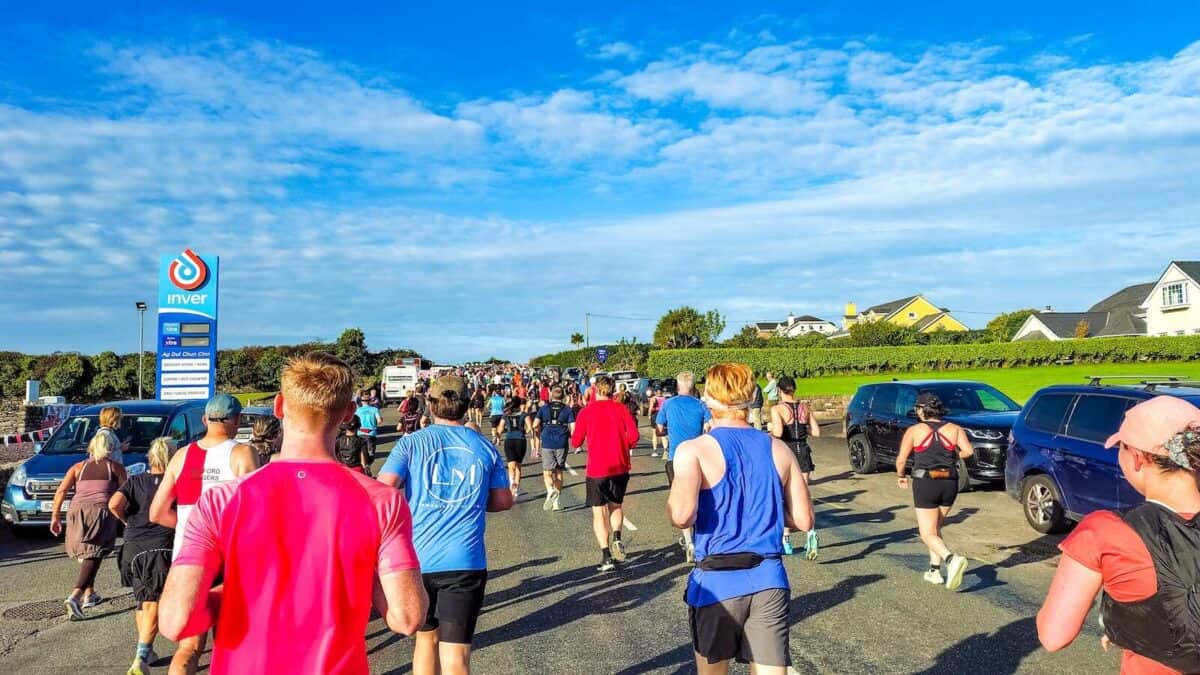
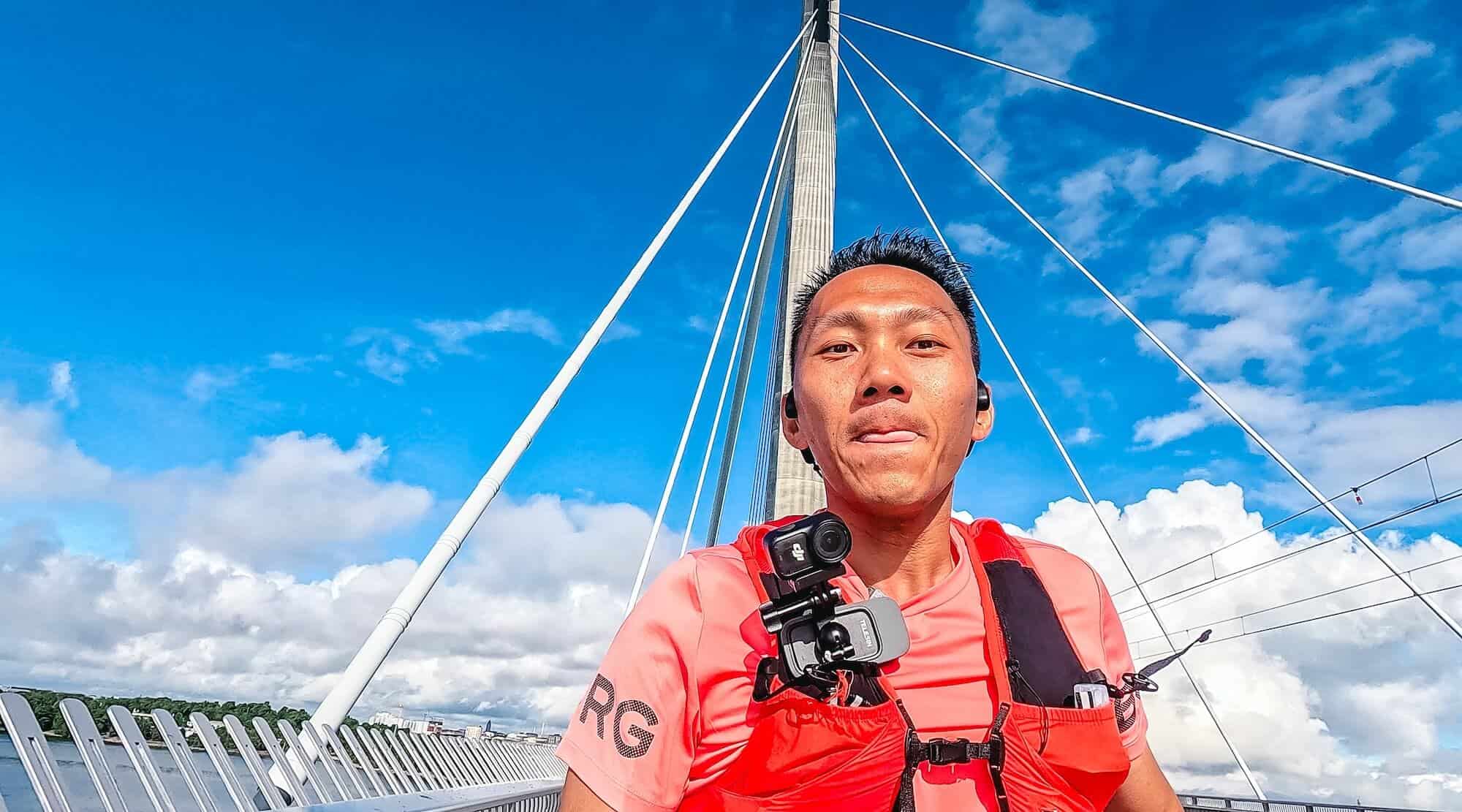
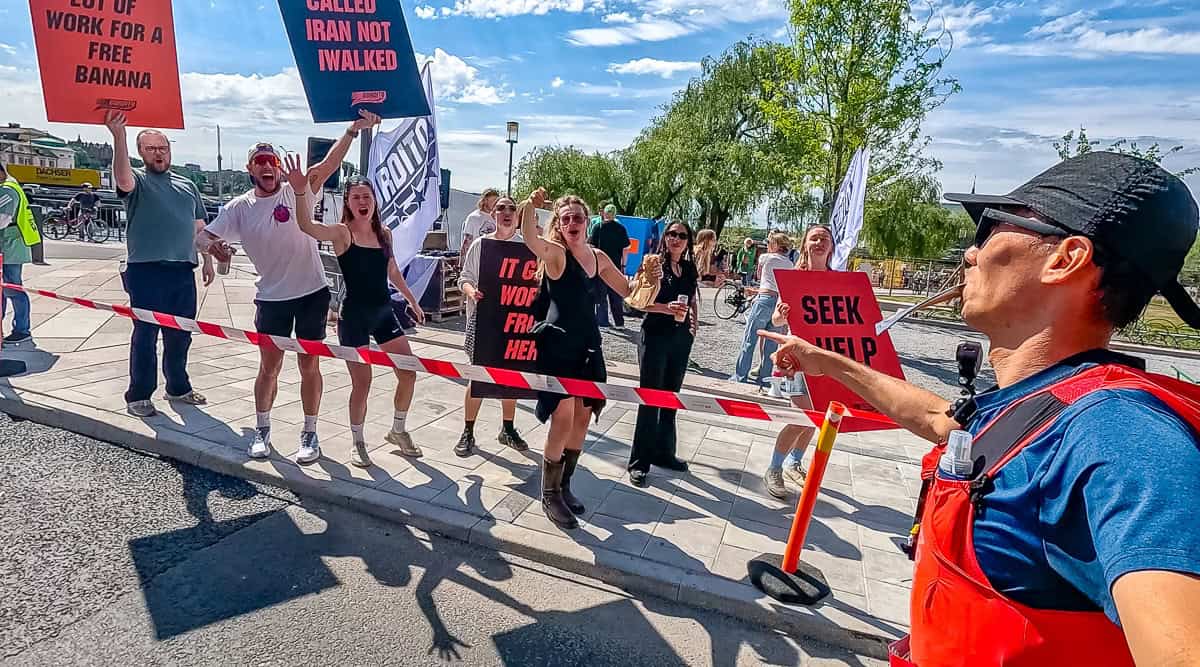
After walking much of the final 10 kilometers to protect a painful knee, I entered Stockholm Olympic Stadium at full speed and completed my third marathon in three weeks in just under six hours.

Stockholm was an obvious marathon destination for the project.

I had wanted to visit the Swedish capital for years, and the marathon offered a straightforward way to add Sweden to my attempt to run 100 marathons and ultras across 100 countries.

By the time I secured a place, however, the race had also become the final part of a larger challenge.

I would begin with Copenhagen, run Riga seven days later, and finish with Stockholm at the end of the month.

Three marathons in three weeks.

The Stockholm course created the most uncertainty of the three. It was known for its rolling terrain, and the 6.5-hour cutoff was longer than at many European city marathons.

My legs felt normal after two weeks of recovery, but I had already learned that feeling fine while walking around a city did not reveal how much fatigue remained after two marathons.

Stockholm would provide that answer.

stockholm-marathon

A busier side of Sweden

I had visited Gothenburg earlier in the trip, but Stockholm felt immediately different.

Gothenburg had seemed quieter and more relaxed. Stockholm had the energy expected of a capital, with busier streets, more tourists, and far more happening around the city center.

At times, parts of central Stockholm almost felt like a much smaller Nordic version of New York. There were tall buildings, heavy pedestrian traffic, shopping streets, and a pace that felt more metropolitan than I had imagined.

The waterfront softened that intensity.

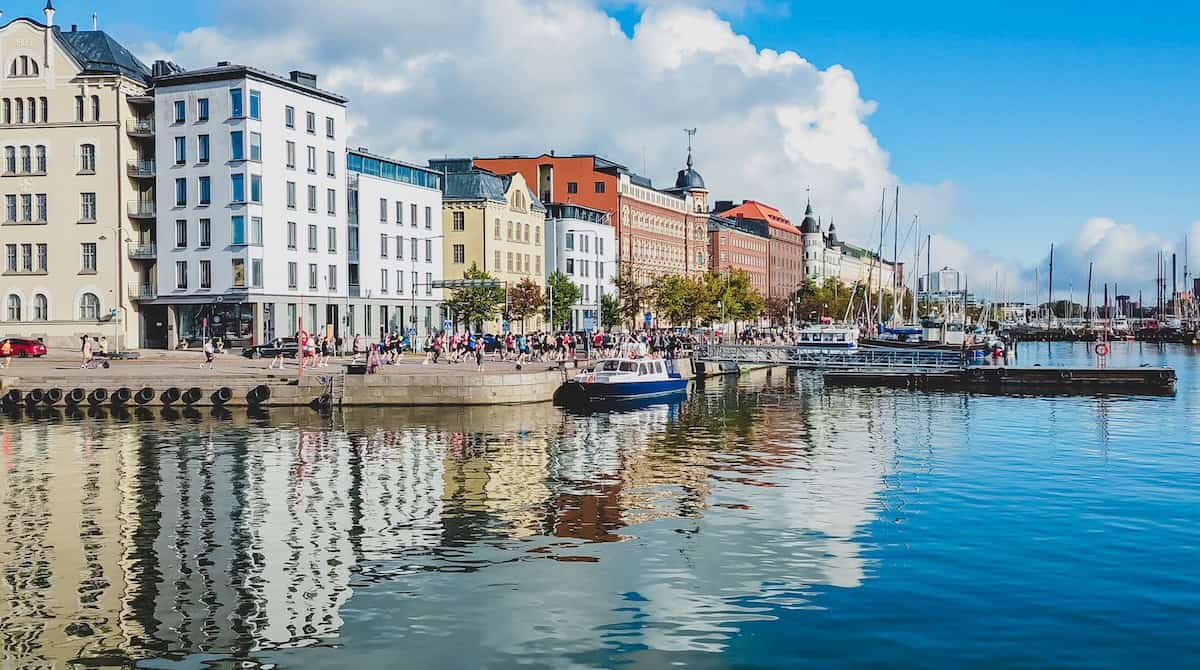
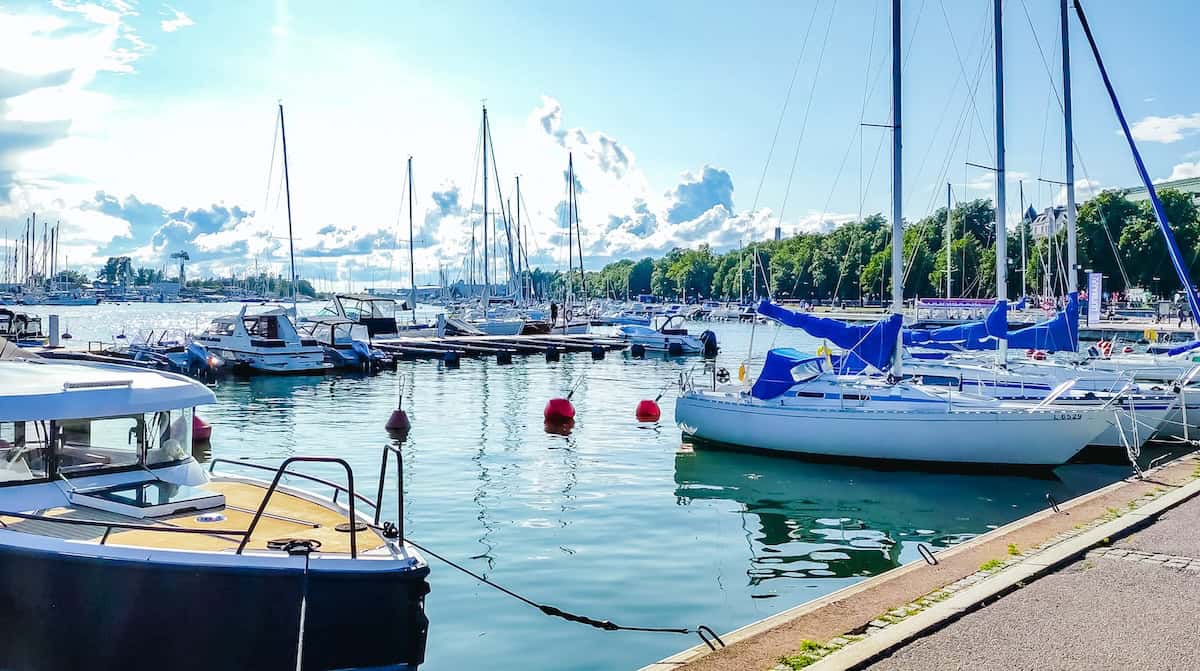
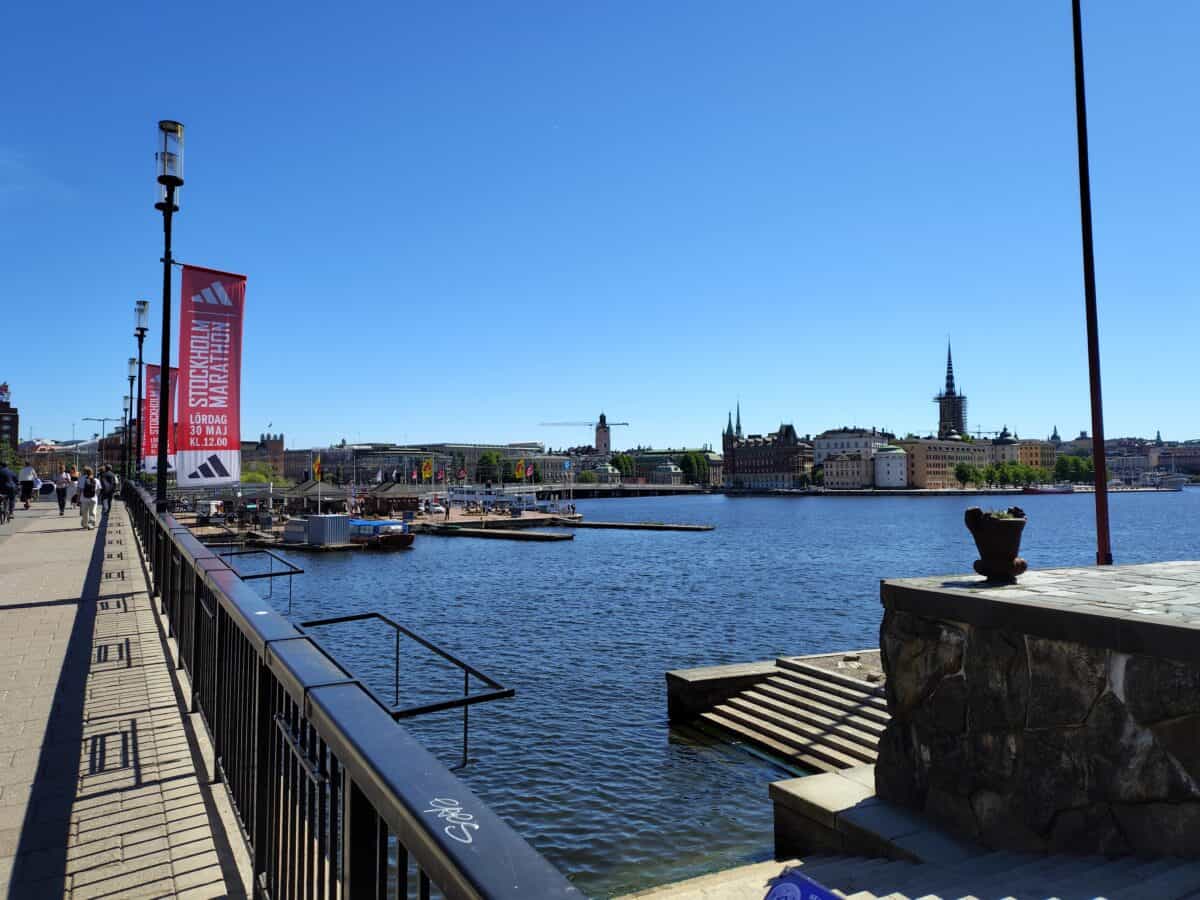
Stockholm is surrounded by water, and it was easy to find both lively promenades and quieter places where I could sit away from the crowds. I particularly enjoyed the areas near the water around the center, where city architecture opened into broad views across the islands.

The cafe culture was another part of Sweden I had looked forward to experiencing. Good weather brought people outside, and it was easy to understand the appeal of spending an afternoon over coffee and pastries.

swedish-meatballs
fish-soup-stockholm

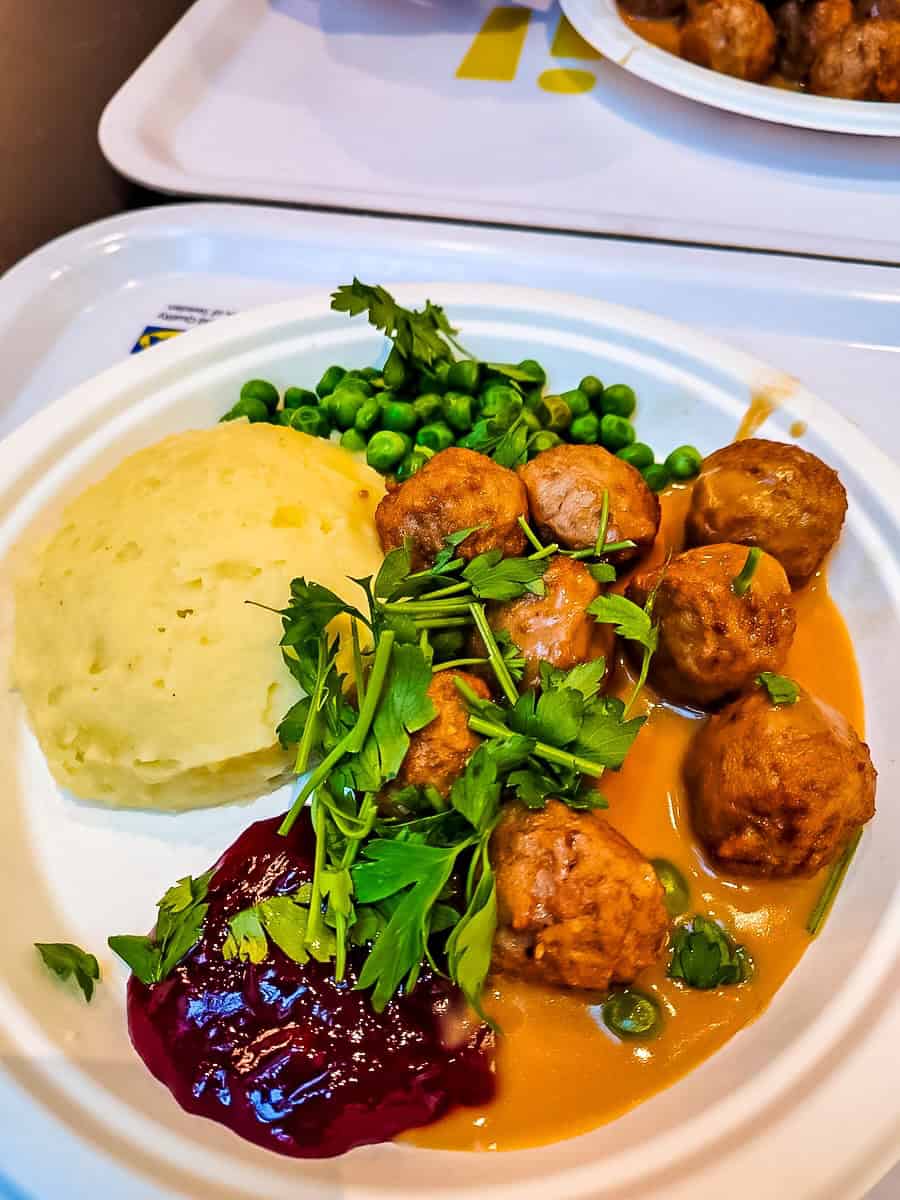
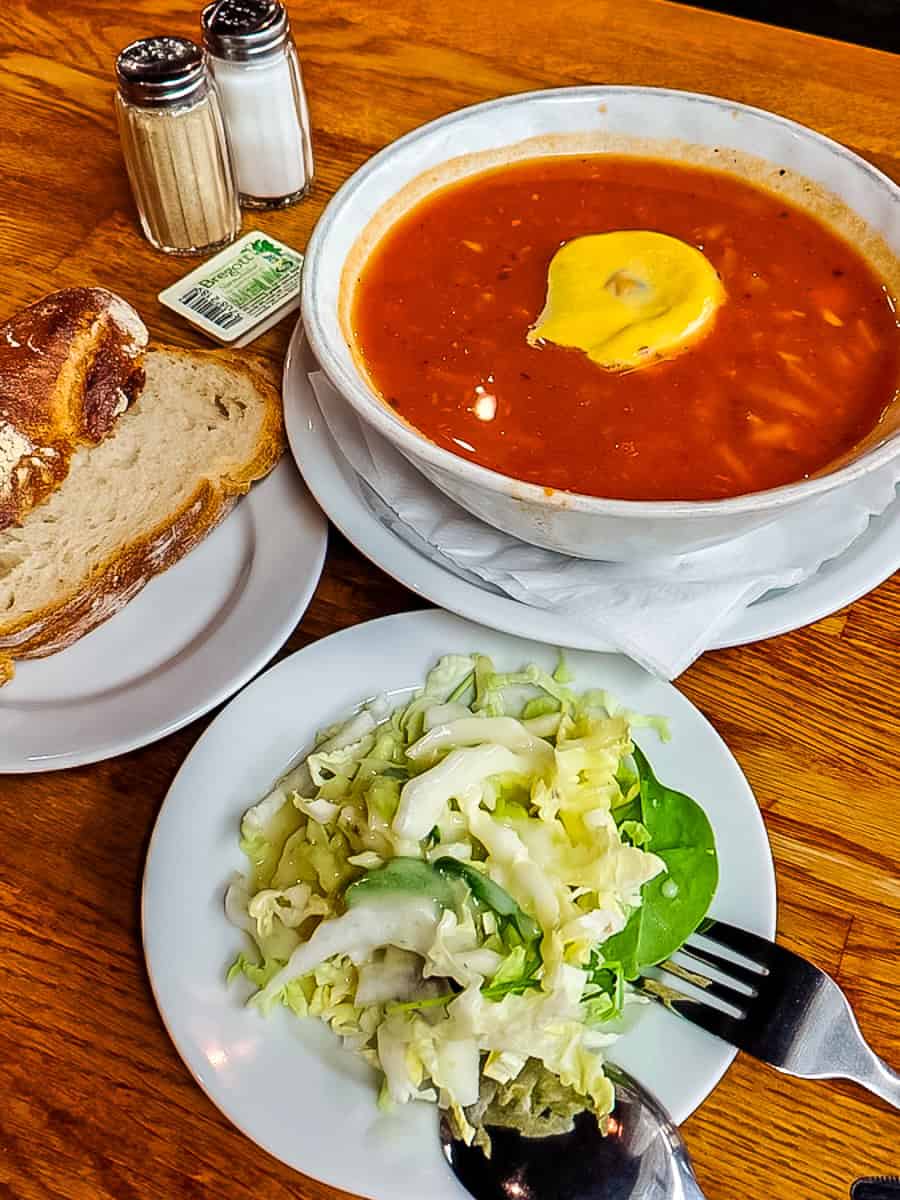
I also allowed myself to eat out more than I had in some earlier destinations, trying fish soup, visiting cafes, and making the obligatory trip to IKEA for Swedish meatballs with a friend.

I only stayed briefly after the marathon, but the city clearly warranted more time than I gave it.

An expo that felt like a major event

The marathon expo was one of the most experiential I had encountered.

Rather than entering a room, collecting a bib, and leaving, you get to move through a longer sequence of registration areas, the Adidas store, exhibitors, product samples, and recovery experiences.

Some exhibitors felt more sales-focused than I was used to, but there was also considerably more to try.

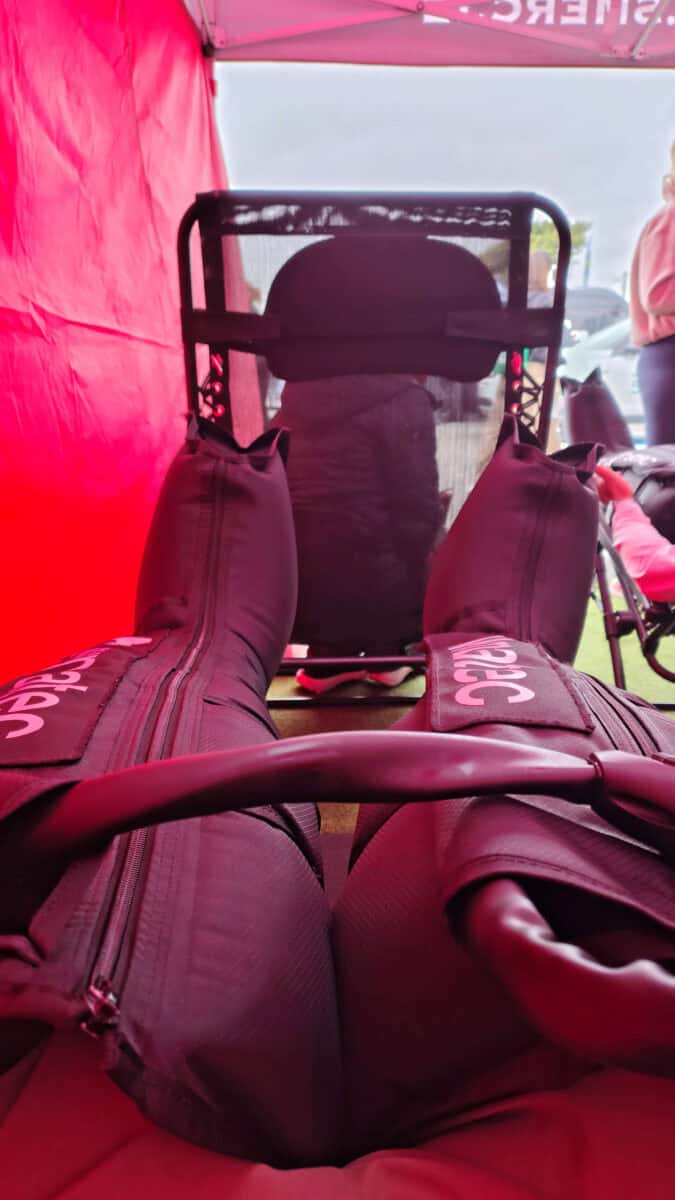
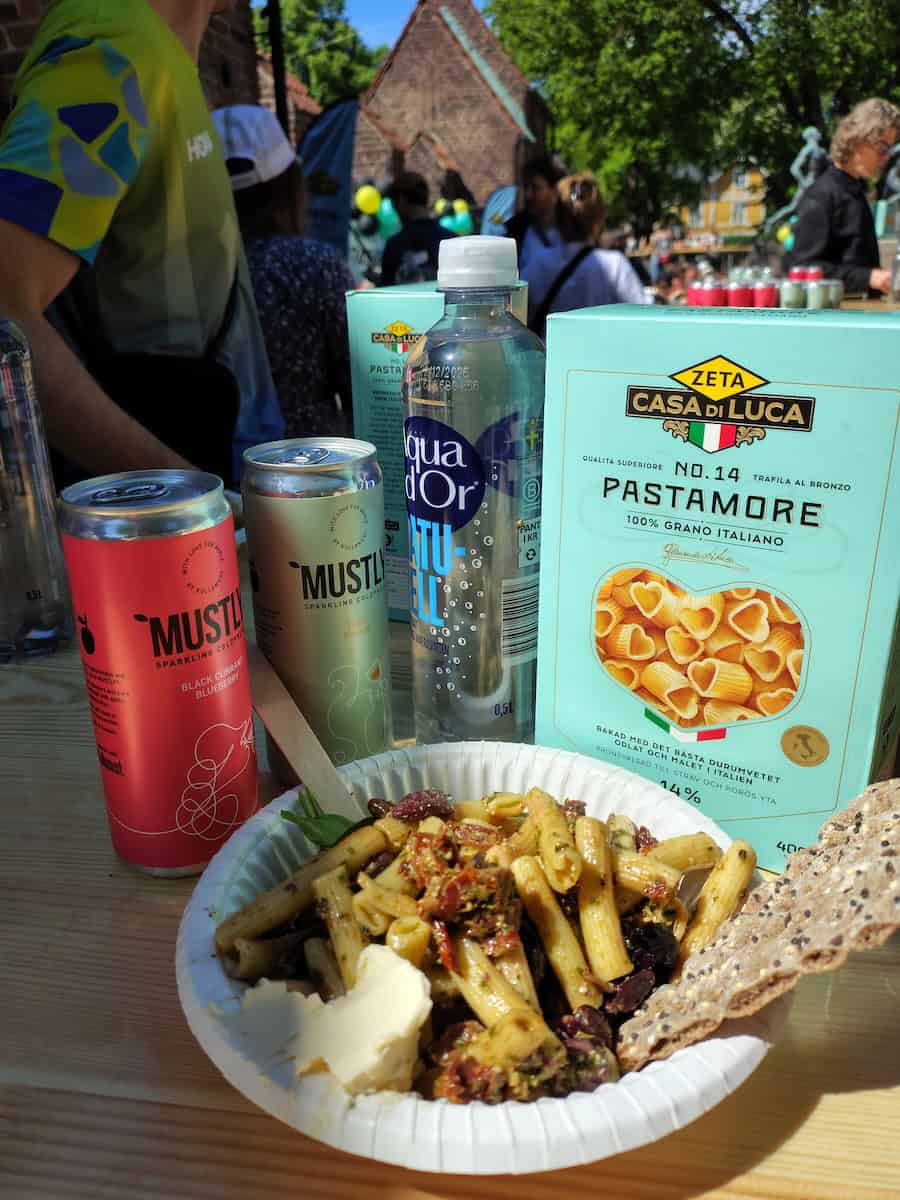
I tested massage equipment, sampled products, and joined the pasta party with a friend I had first met during the Copenhagen Marathon weekend.

The pasta party added a more social side to an otherwise commercial expo. Runners sat together before the race, ate, collected drinks, and talked about their plans for the following day.

stockholm-marathon-pasta-party

The latest start of the three

After Riga’s 7 a.m. start, Stockholm provided the opposite extreme.

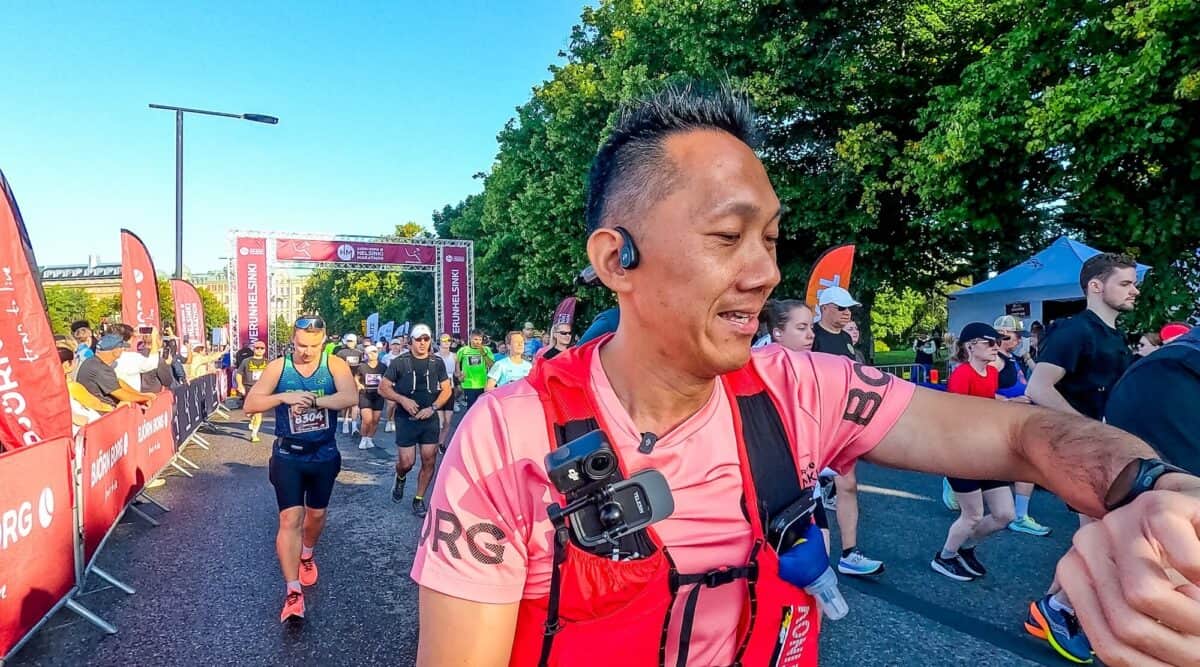
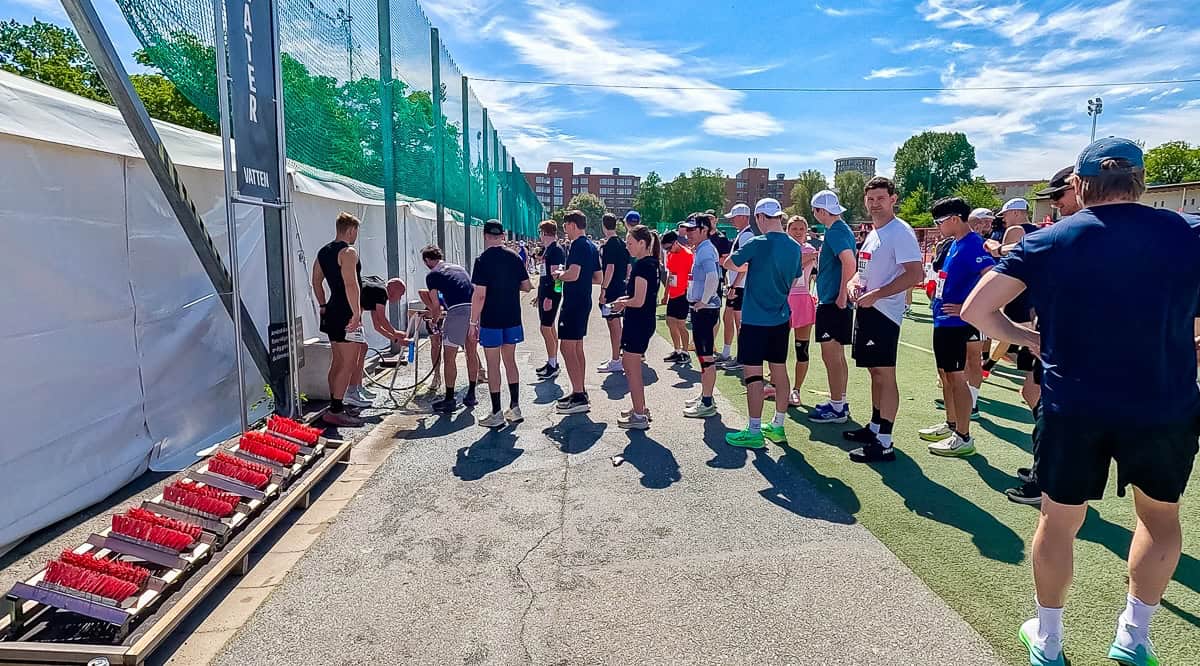
The first waves began at noon outside Stockholm Olympic Stadium.

That made race morning far more relaxed. I did not need to wake before sunrise or rush toward the start while still half-asleep.

The disadvantage was obvious as soon as I arrived.

It was already warm.

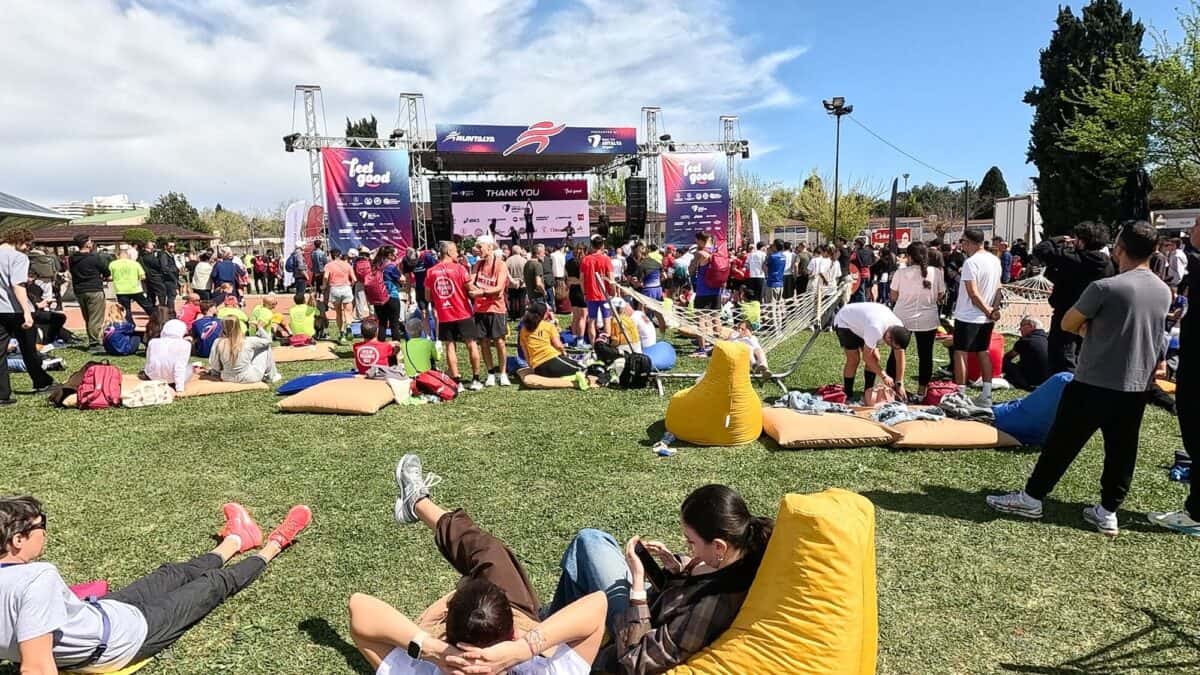
Runners stood in shaded areas, poured water over their heads, and soaked their hats before the race had even begun. I was more accustomed to heat than many European runners, but I still knew it would add difficulty to an already demanding course.

marathon-starting-area

The most conservative strategy yet

I approached Stockholm more cautiously than Copenhagen or Riga.

The goal was not only to complete the third marathon. I was also due to run my first trail half marathon two weeks later, so causing unnecessary damage at Stockholm would affect the next part of the project.

I used another planned run-walk strategy, but this time I also adjusted for the terrain.

Whenever possible, I walked the climbs and ran the descents. Uphill running demanded more effort, while the downhills offered opportunities to gain distance with less cardiovascular strain.

The early course did not initially feel too difficult. Some of the opening terrain was favorable, and my legs seemed capable of handling the effort.

stockholm-marathon-scenic-course

But rolling courses create fatigue gradually.

Each individual climb may not feel significant. Over 42.2 kilometers, however, the repeated changes in elevation begin affecting muscles differently from a flat road.

Stockholm eventually exposed the accumulated fatigue that had survived Copenhagen, Riga, and the recovery between them.

Running through the Swedish capital

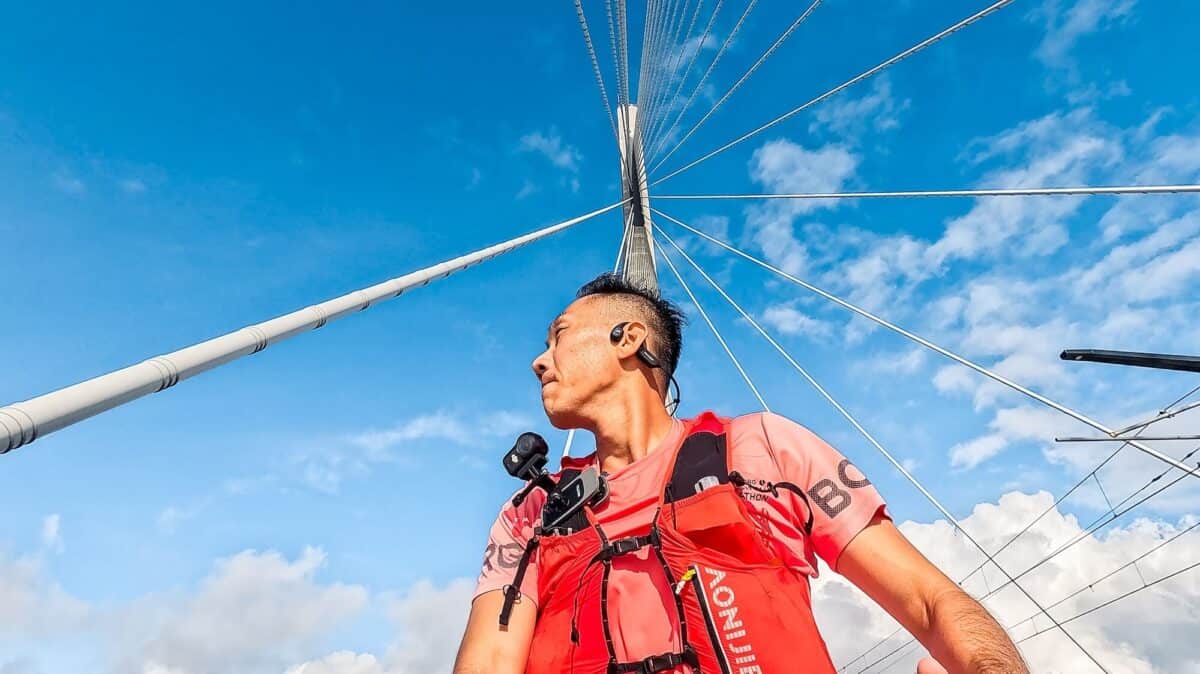
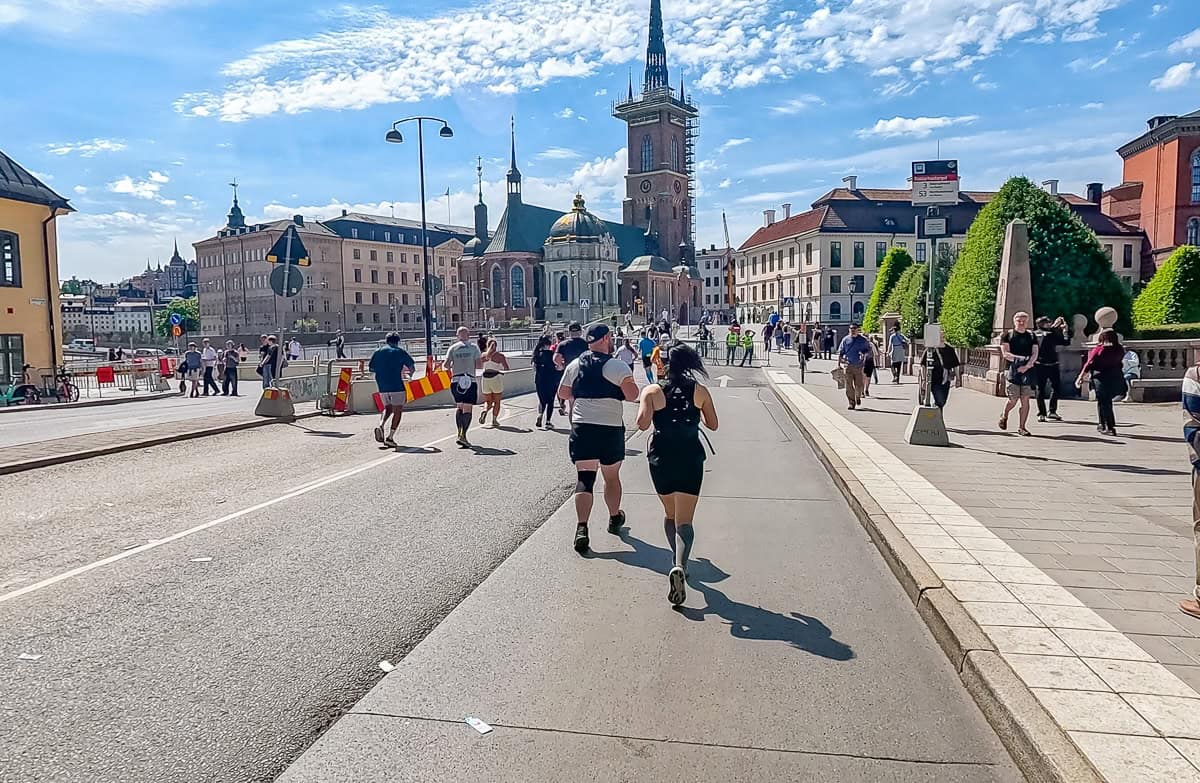
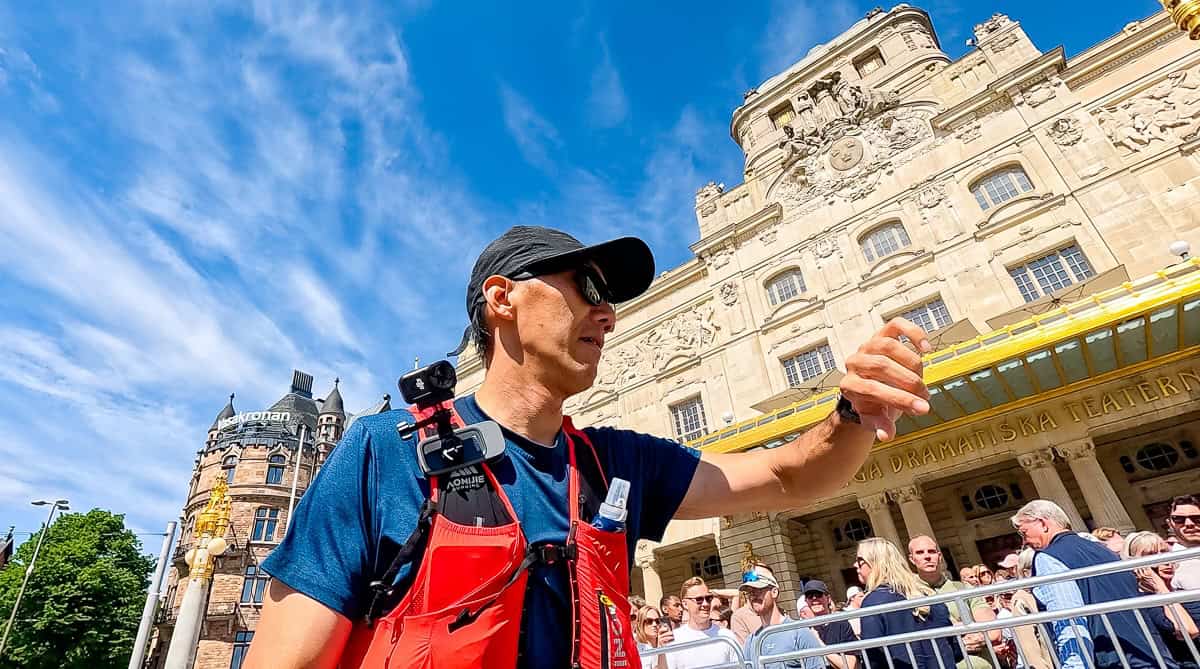
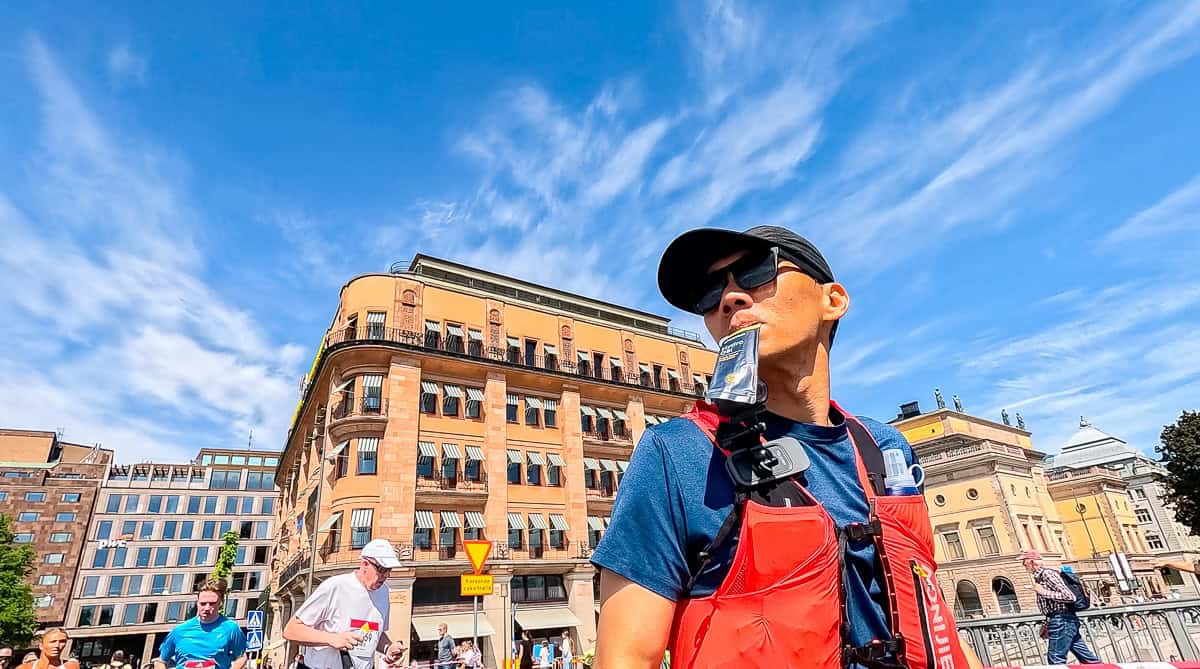
The course moved through Stockholm’s central districts, repeatedly returning toward its islands, waterfronts, and Old Town.

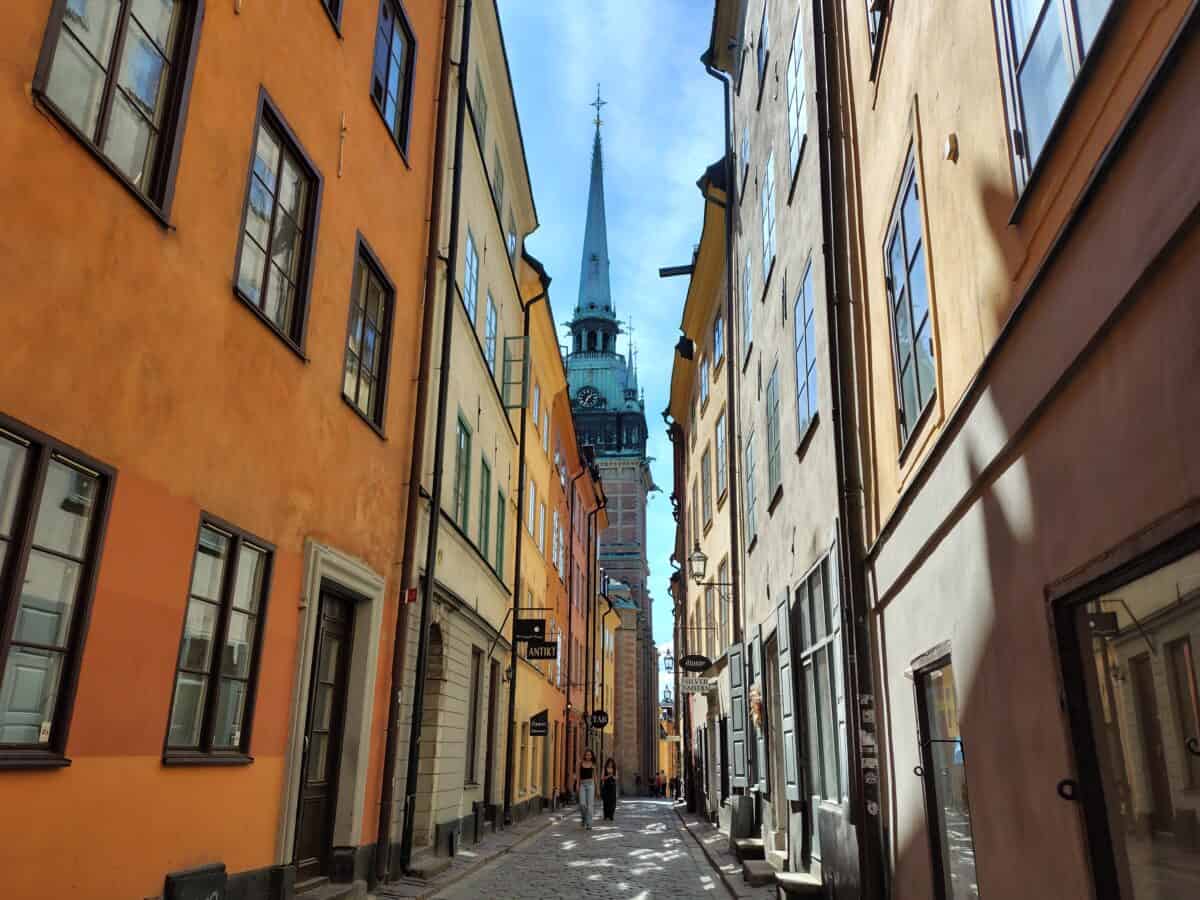
Gamla Stan was the most memorable part for me.

The medieval buildings and central streets looked distinctive even through the barriers and race-day crowds. Tourists were already filling the area, so the course often felt lively even when not everyone had specifically arrived to support the marathon.

Some might not like returning to similar central sections more than once, but the repetition did not bother me.

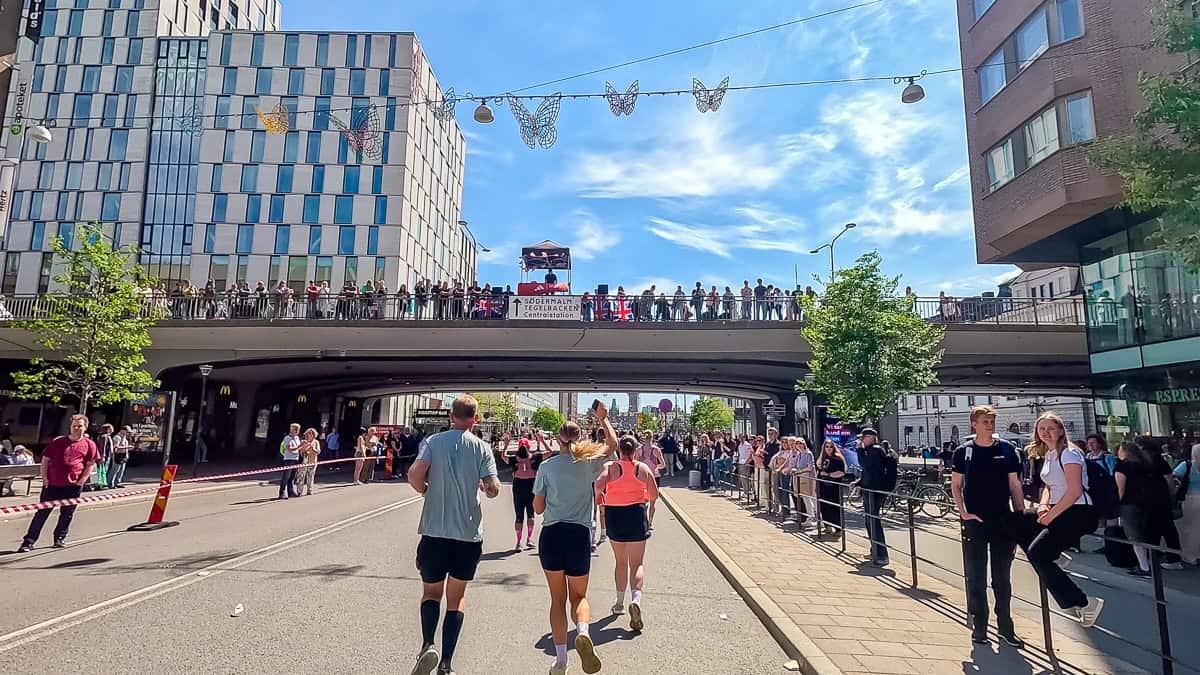
cheering-crowd

I was visiting Stockholm for the first time. Seeing those areas again was still more interesting than spending long stretches on anonymous roads outside the center.

The crowd support felt different from Copenhagen. There were plenty of people around the busiest areas, but spectators seemed more likely to be waiting for specific friends or family members.

Even so, I rarely felt alone.

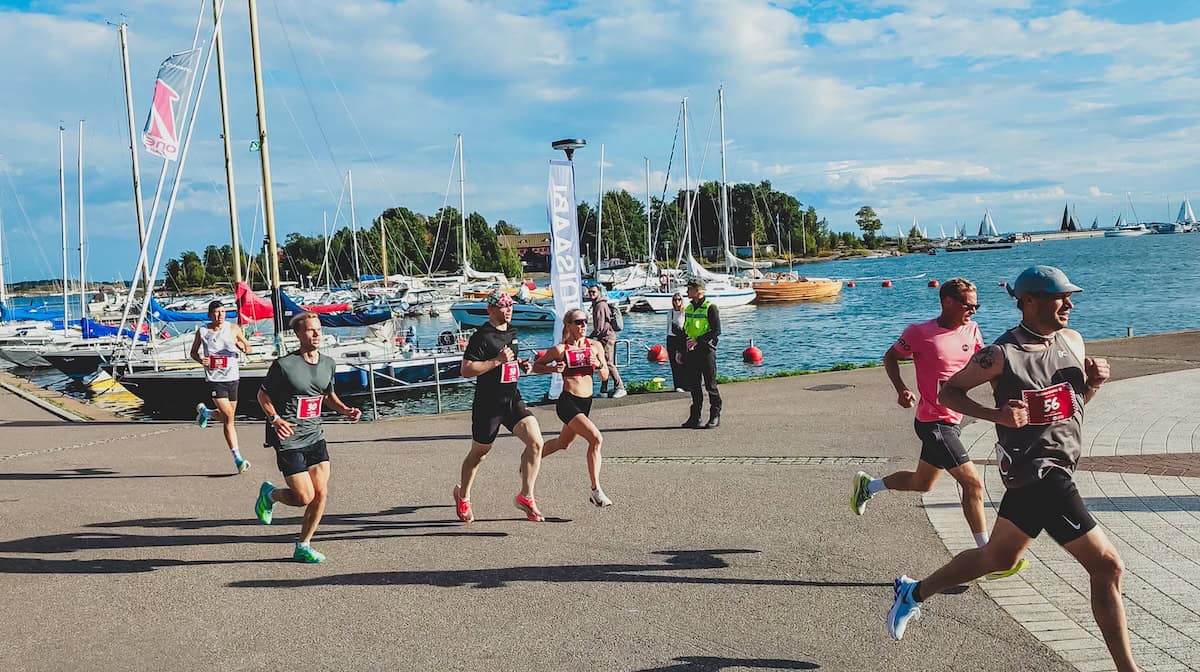
There were runners around me throughout the course, including many who were also walking the steeper sections or struggling with the heat.

Stockholm was clearly not an easy marathon.

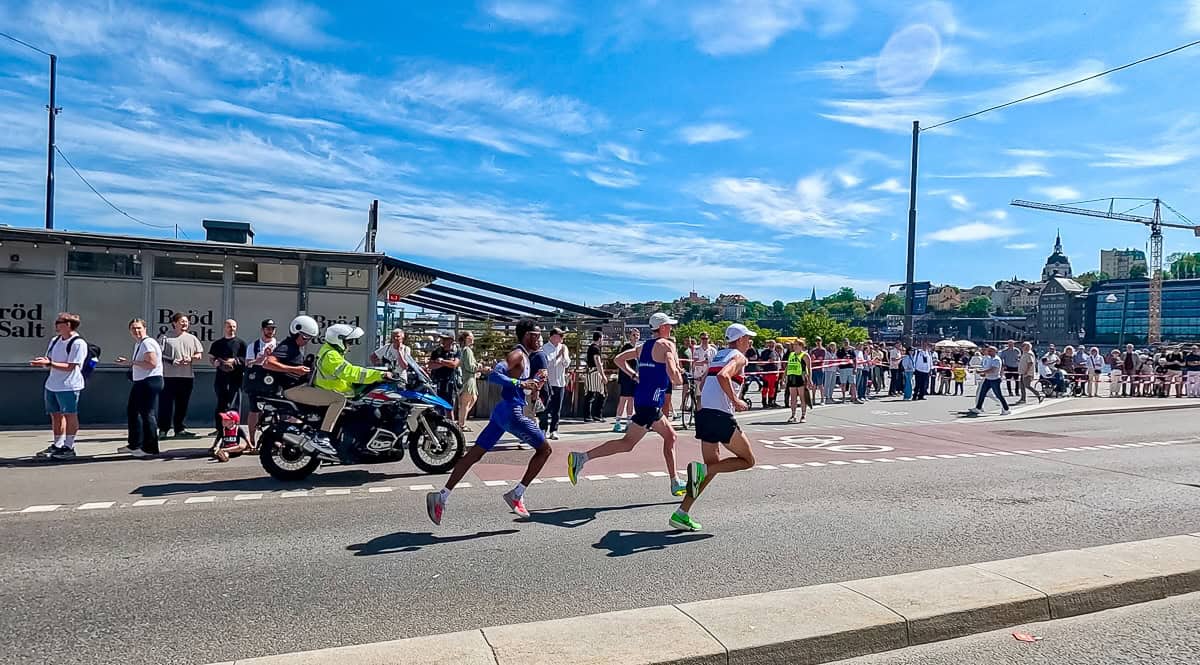
front runners passing by

A marathon aid station menu

Stockholm also offered the most varied course support I had encountered.

Beyond water and standard sports nutrition, different stations provided items such as cola, coffee, broth, bananas, salted pickles, gels, and electrolytes.

The options made the marathon feel less repetitive and gave runners different ways to manage energy, salt, and fatigue.

There were also sprinklers that became increasingly valuable during the warm afternoon.

The heat was affecting people around me. Some runners leaned against barriers or stopped beside the course, while others abandoned running and walked the climbs.

I continued conservatively, but the rolling terrain was gradually taking its toll.

When running became the problem

Around 30 kilometers, I began noticing a sharper issue around my right knee or tendon area.

stockholm-city-center

This was not simply general tiredness.

Walking remained manageable, but running triggered the discomfort and brought warnings that the surrounding muscles might begin cramping.

I slowed down and tested the difference.

After walking for a while, I attempted to run again. The pain returned almost immediately.

That told me the problem was not cardiovascular effort or overall exhaustion. I could still walk quickly without much difficulty, but the movement involved in running was irritating something different.

By roughly 35 kilometers, the decision became clear.

Continuing to force the run offered very little benefit and could turn a manageable warning into an injury.

So I began walking.

Calculating my way to the finish

The final walking section never felt particularly lonely or endless.

Plenty of other participants remained around me, and many were also alternating between walking and running as the hills and heat accumulated.

As I progressed, I repeatedly calculated the remaining distance and required speed. The official limit was 6.5 hours, and the numbers showed that I could walk the rest of the route and still finish safely.

Once I knew that, the pressure changed.

I was no longer wondering whether I could complete three marathons in three weeks. Unless the knee deteriorated dramatically, the challenge was going to be finished.

The only sensible decision was to protect it.

I continued power walking toward the stadium, occasionally testing whether running had become possible again. Each attempt produced the same answer. 

One last target

beautiful race course

With around one kilometer remaining, I realized something else.

Although the official cutoff was 6.5 hours, six hours remained the standard marathon benchmark in my head.

It was going to be challenging, but close enough to make it possible.

The first attempt at running did not feel good. My knee was still uncomfortable, and after walking for so long, returning to a running stride felt awkward.

For a moment, it seemed pointless.

Then, with 400 or 500 meters left, I committed fully.

I focused on driving my arms backward and allowing the faster arm movement to pull my legs into a quicker rhythm.

Suddenly, I was sprinting.

Most runners around me were completing the final meters carefully after nearly six hours on the course. I began passing them outside the stadium while holding a GoPro and running as though I had only just started.

One runner looked across in disbelief as I went past.

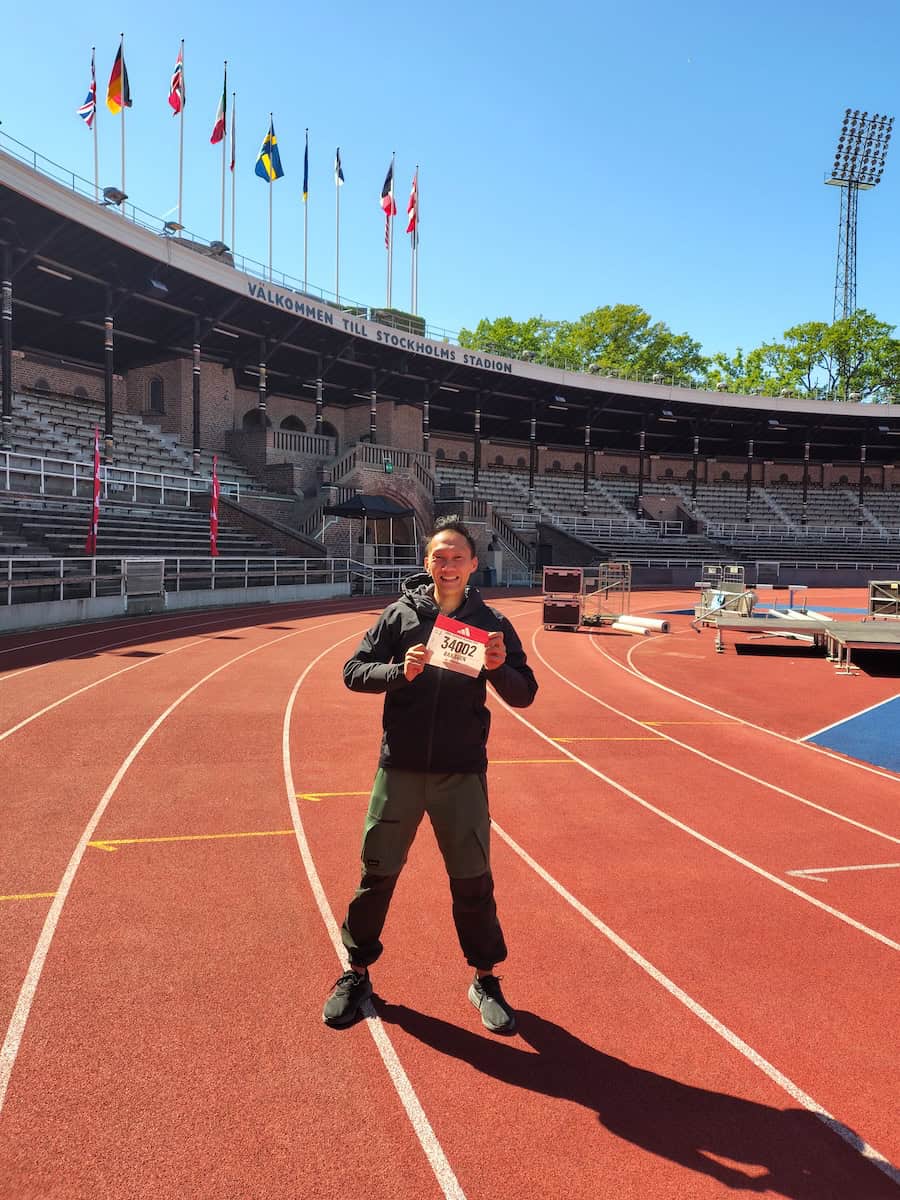
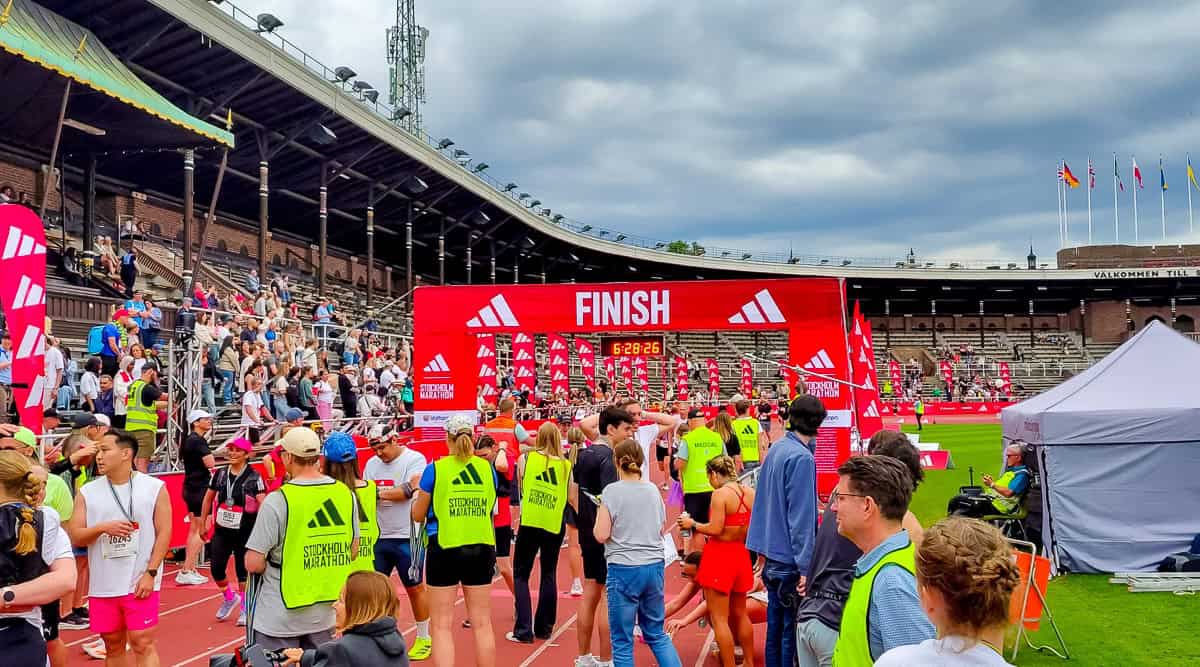
Then I turned into the Stockholm Olympic Stadium.

Finishing inside Olympic history

The final stretch covered part of the stadium track which made it feel different from a normal road finish.

Looking from the stands, most runners were entering the stadium slowly and using whatever energy they had left.

Then one person appeared sprinting with a camera.

marathon-finishing-line

I continued around the track and crossed the line in just under six hours.

The result was not a personal best, but that was never the objective.

I had completed three marathons in three weeks.

More importantly, I had done it without turning a painful final section into an injury that prevented me from walking afterward.

Once the sprint ended, the knee did not become a serious problem. Walking still felt normal, and I would eventually even  make the journey back to my accommodation on foot.

A finish area worth staying for

Stockholm provided one of the most generous post-race experiences of the five marathons I had completed.

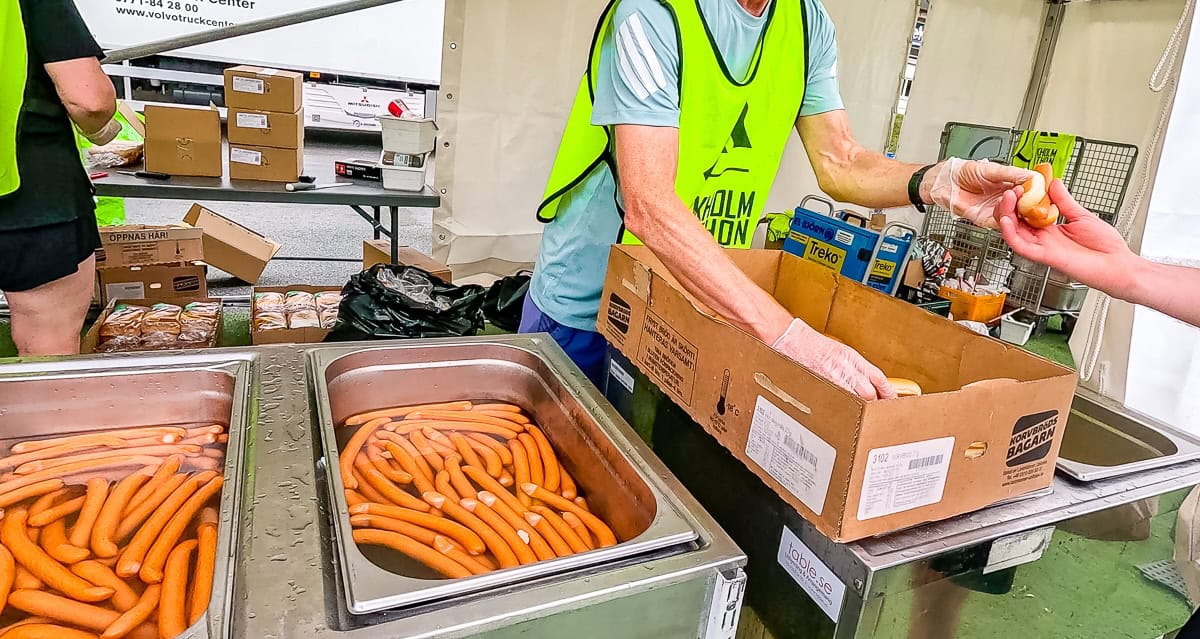
The finisher package included the event shirt and a variety of snacks and recovery products. Around the stadium, runners could also find hot dogs, coffee, beer, protein drinks, and other refreshments.

hotdogs-finish-area

Showers were available for those who wanted them.

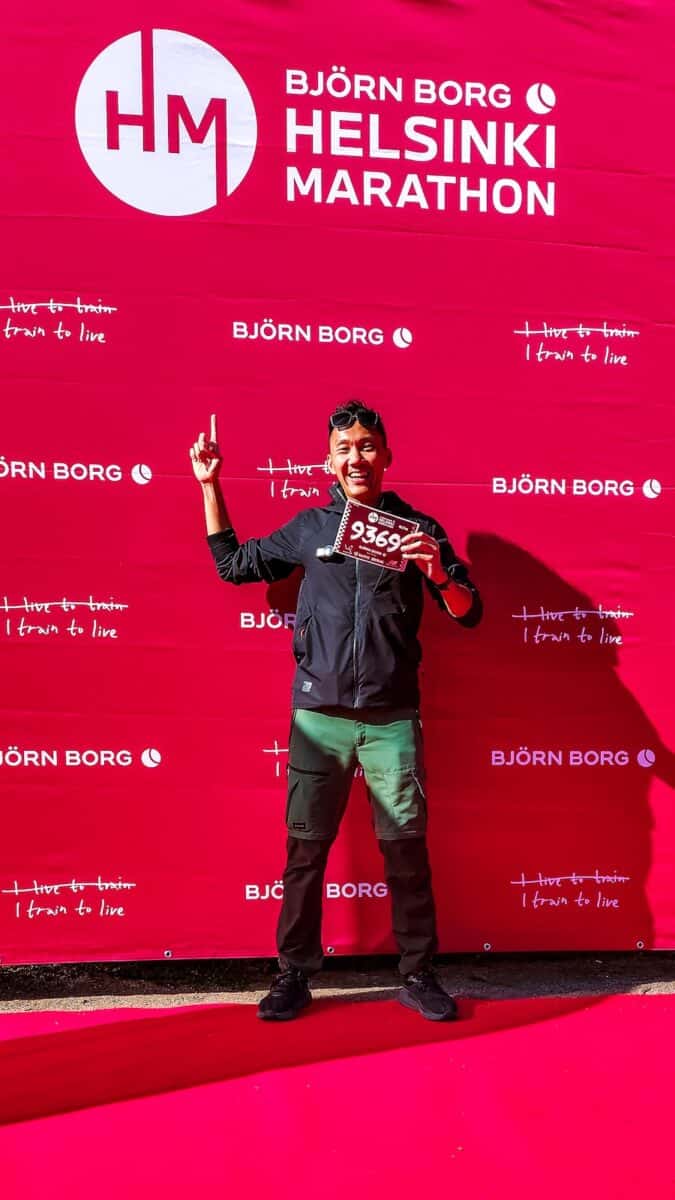
There was also an official photo area where runners could display their bib and finishing time. Volunteers were available to help, which made the experience easier for anyone who had traveled alone.

I stayed long enough to eat, take photos, and absorb the end of the event before most people began leaving.

Then I walked back through Stockholm with the medal.

Physically, I felt surprisingly normal.

The achievement that arrived quietly

Completing three marathons in three weeks did not produce the enormous emotional release I might have expected.

I was happy and proud, but I had already known for several kilometers that I was going to finish. The calculations had removed most of the suspense before I reached the stadium.

In some ways, securing the Stockholm entry and realizing the three-race challenge could actually happen had felt more emotionally charged than completing it.

The finish confirmed something I had already accepted while walking through the final part of the course.

marathon-race-course

I had done it.

The experience did not make stacking marathons feel easy or automatically healthy.

During those weeks, I ran less outside the races because nearly every day became focused on recovery. I also ate considerably more to ensure that I was not under-fueled for the next marathon.

That meant the block did not necessarily leave me leaner or feeling conventionally fitter. It exposed the difference between completing endurance events and following a balanced training routine.

As a relatively inexperienced marathon runner, I had deliberately chosen to over-recover rather than risk doing too little.

With more experience, I would eventually learn to manage that balance more precisely.

Who should consider Stockholm Marathon?

stockholm-old-town

Stockholm suits runners looking for a large capital-city marathon with a genuine event atmosphere.

The expo, pasta party, large international field, varied aid stations, course entertainment, and stadium finish make the weekend feel bigger than an ordinary road race.

The course also provides a broad introduction to Stockholm. It passes waterfronts, bridges, central districts, and Gamla Stan, allowing runners to see several sides of the city within one event.

But it is not the easiest choice for a first marathon.

The rolling terrain places more demand on the legs than a flat course, while the midday start can expose runners to warmer conditions than they might expect in Sweden.

The 6.5-hour cutoff provides useful breathing room, and slower runners should still have plenty of company. Even late in the race, I was surrounded by others managing the same hills and heat.

For runners who want an entirely flat personal-best course, Stockholm may not be the obvious choice.

For those who want a challenging city marathon with strong organization, Nordic running culture, and a distinctive stadium finish, it offers a much richer experience.

The city itself deserves more than a short race weekend. I only had around one full day afterward to explore Gamla Stan, visit cafes, eat with a friend, and spend more time beside the water.

There was clearly much more left to see.

The end of one challenge, not the project

Stockholm completed the three-marathon block, but it was never going to be the final race.

Two weeks later, I was already scheduled to run my first trail half marathon.

That shaped the decisions I made during the final kilometers. Finishing slightly faster was not worth damaging the knee and losing what came next.

For most of the closing section, restraint was the correct decision.

Then the Olympic Stadium came into view, sub-six became possible, and restraint temporarily disappeared.

Perhaps that was the most appropriate way to finish three marathons in three weeks.

I spent most of the race protecting the larger project.

Then I sprinted the final few hundred meters as though this finish line were the only one that mattered.

The Riga Marathon Showed Me More Than the Old Town

Seven days after Copenhagen, Riga became my first back-to-back marathon weekend. The strategy was not executed perfectly, but the race introduced me to a greener, livelier side of Latvia than I had expected.

Riga was one of the earliest marathons I added to the project.

Latvia was a country I had never visited, and the race gave me a reason to experience another European capital that I might not otherwise have prioritized.

By the time I arrived, however, Riga had become more than another destination.

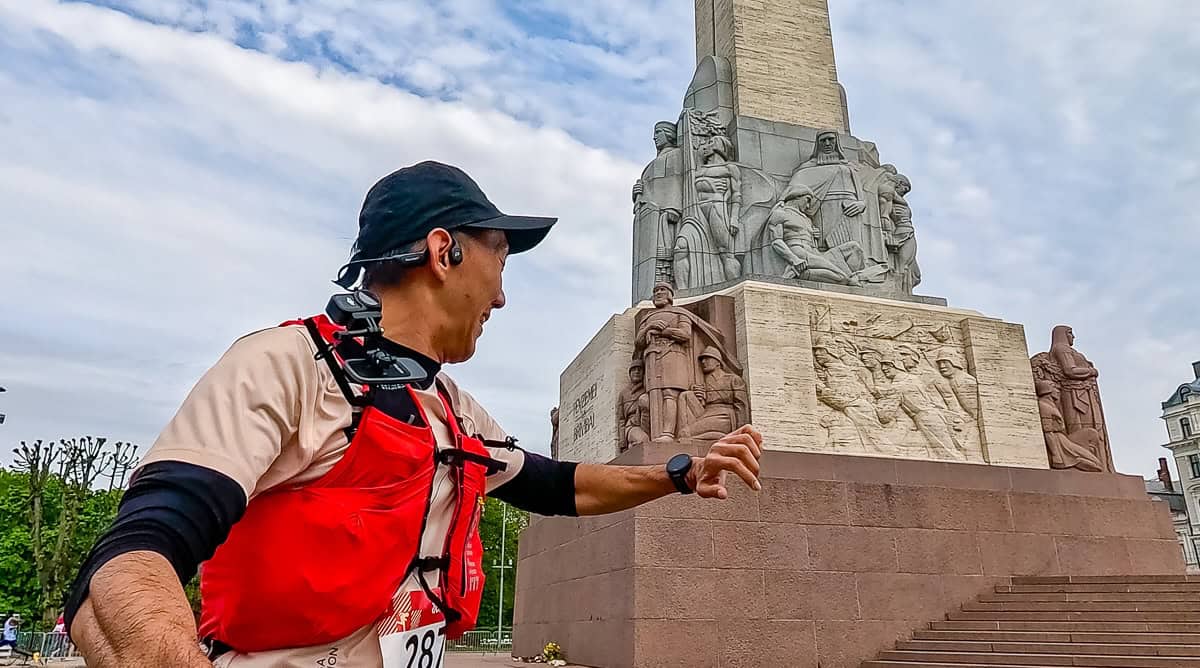
starting-line-riga

I had completed the Copenhagen Marathon only seven days earlier. Riga was now the middle race in my attempt to complete three marathons in three weeks, with Stockholm still to come at the end of the month.

My body felt generally fine after Copenhagen, but Riga would be my first experience of running full marathons on consecutive weekends.

The goal was simple: finish, minimize unnecessary damage, and repeat the conservative run-walk approach that had worked one week earlier.

Riga would show me that even a good strategy can fail when it becomes too complicated to follow.

A greener capital than I expected

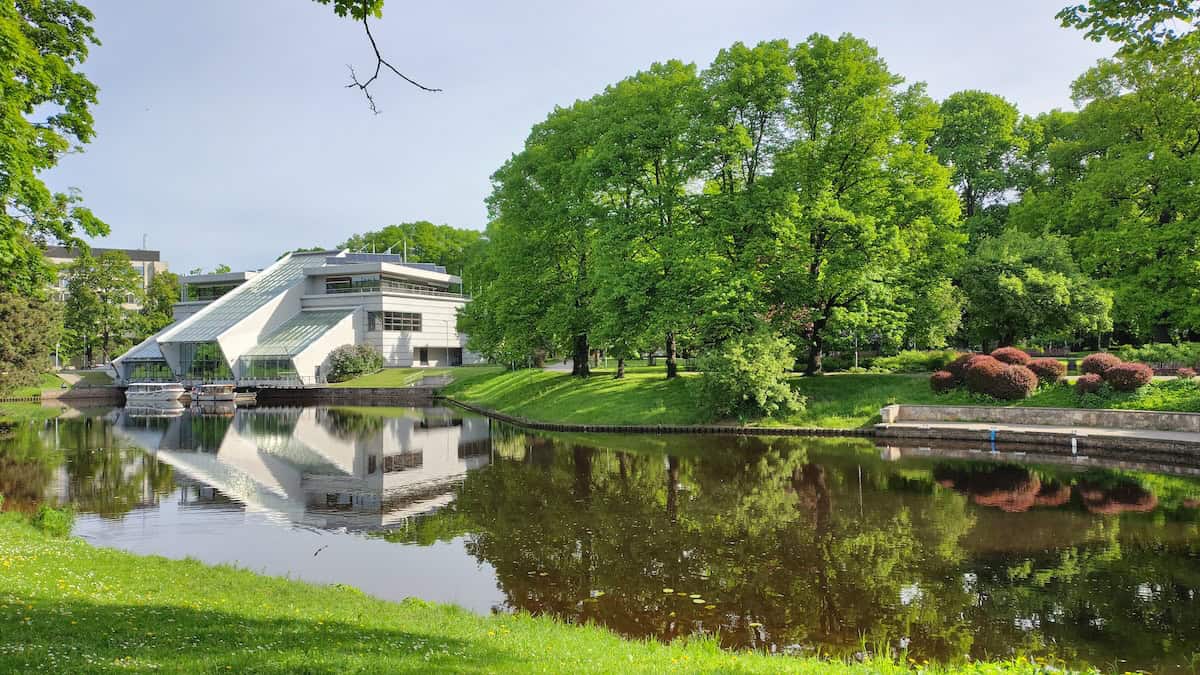
I was staying close to one of Riga’s large central parks, with a canal running through it.

On warmer days, locals sat or lay on the grass, while some sunbathed beside the water. It was a surprisingly relaxed scene for somewhere so close to the middle of the city.

parks-in-riga

Greenery is one of the quickest ways for a destination to win me over, and Riga had far more of it than I expected.

The city felt spacious, with large parks, broad streets, and open views across the Daugava River. Even around the center, it rarely felt overcrowded.

It was also an easy place to slow down between races. I could sit in the parks, walk beside the water, work from cafes, and recover without feeling that I needed to complete an aggressive sightseeing itinerary.

That combination of liveliness and space became one of the things I appreciated most about Riga.

Finding the local running community

The marathon weekend began for me at the expo, which was held inside a sports and events venue within walking distance of where I was staying.

riga-run-club-shakeout-run

Bib collection was busy when I arrived, but the process moved normally, and the expo had everything I needed before the race. I also used the opportunity to restock gels and other essentials.

More importantly, Copenhagen had encouraged me to look beyond the official race schedule and search for a local social run.

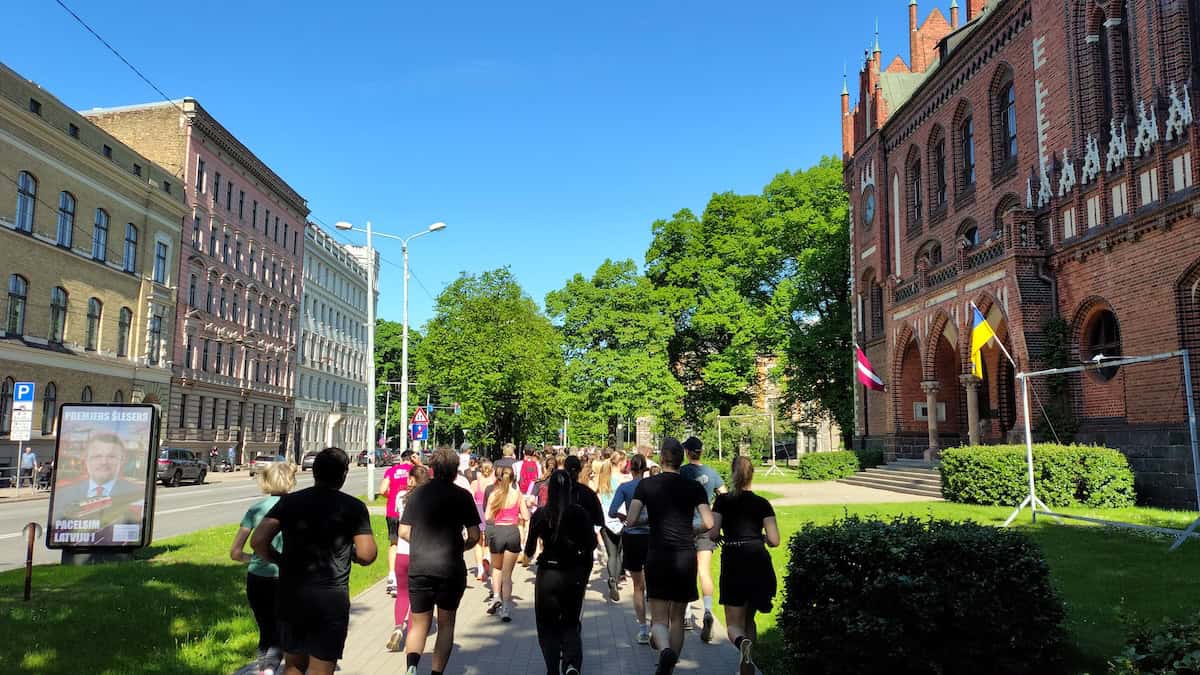
I found a shakeout run with Riga Run Club, which appeared to be part of the club’s regular schedule but naturally attracted visiting marathon participants that weekend.

The group was large, social, and noticeably young. Local runners mixed easily with visitors, and the run gave me an introduction to parts of central Riga before ending at a coffee shop.

Because I stayed in the city after the marathon, I later joined the club’s run again.

That became one of the more meaningful parts of the trip. The marathon brought me to Riga, but the local running community helped make the city feel less temporary.

An early start beside the river

riga-marathon-starting-line.jpg

The marathon began at 7 a.m., the earliest start time I had encountered so far.

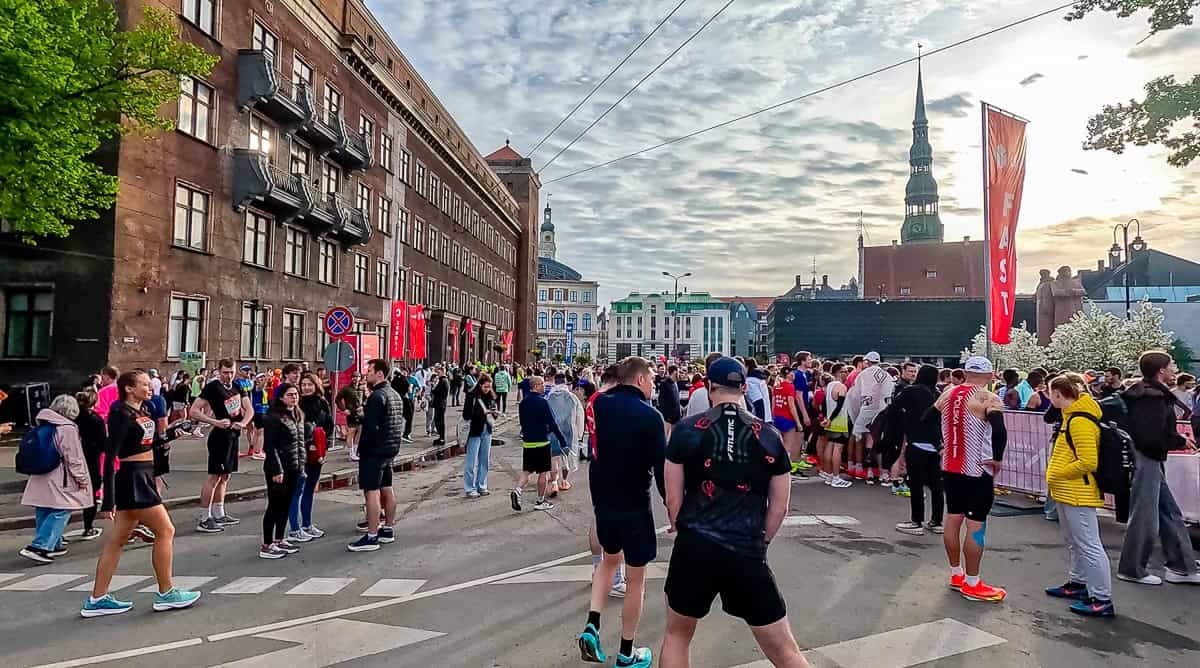
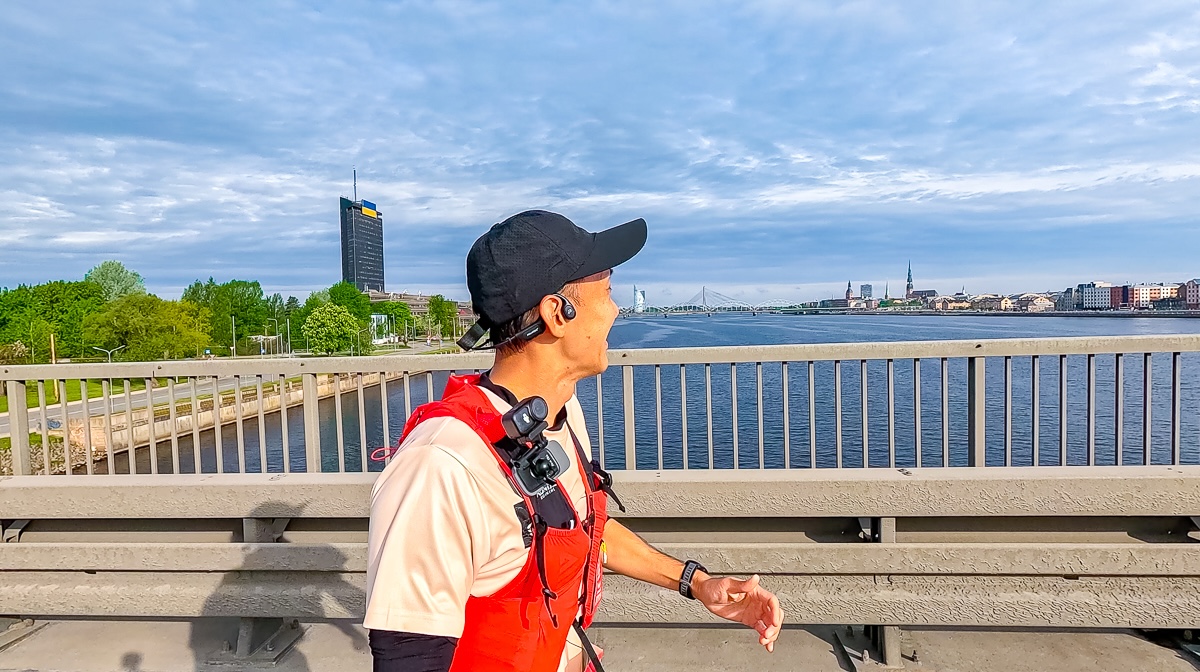
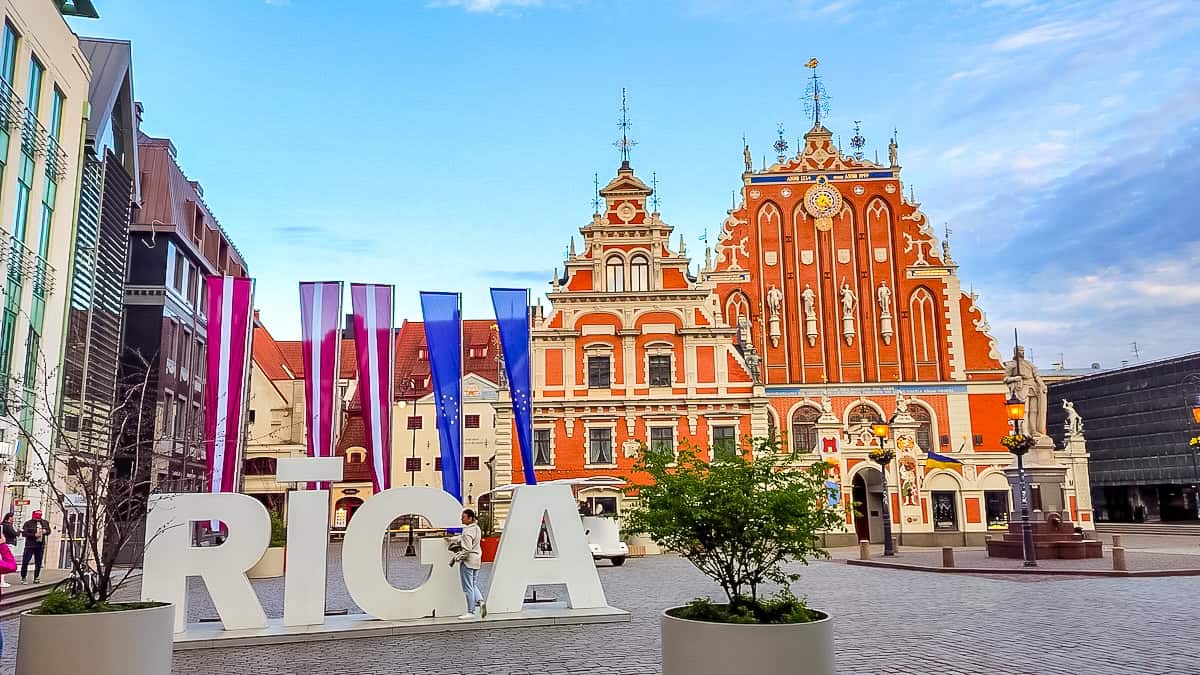
I walked to the starting area beside the Daugava River and Riga’s Old Town while my legs still felt tight and heavy.

That was not especially reassuring one week after another marathon, but the stiffness disappeared fairly quickly once the race began and my body warmed up.

The riverfront setting made an immediate impression.

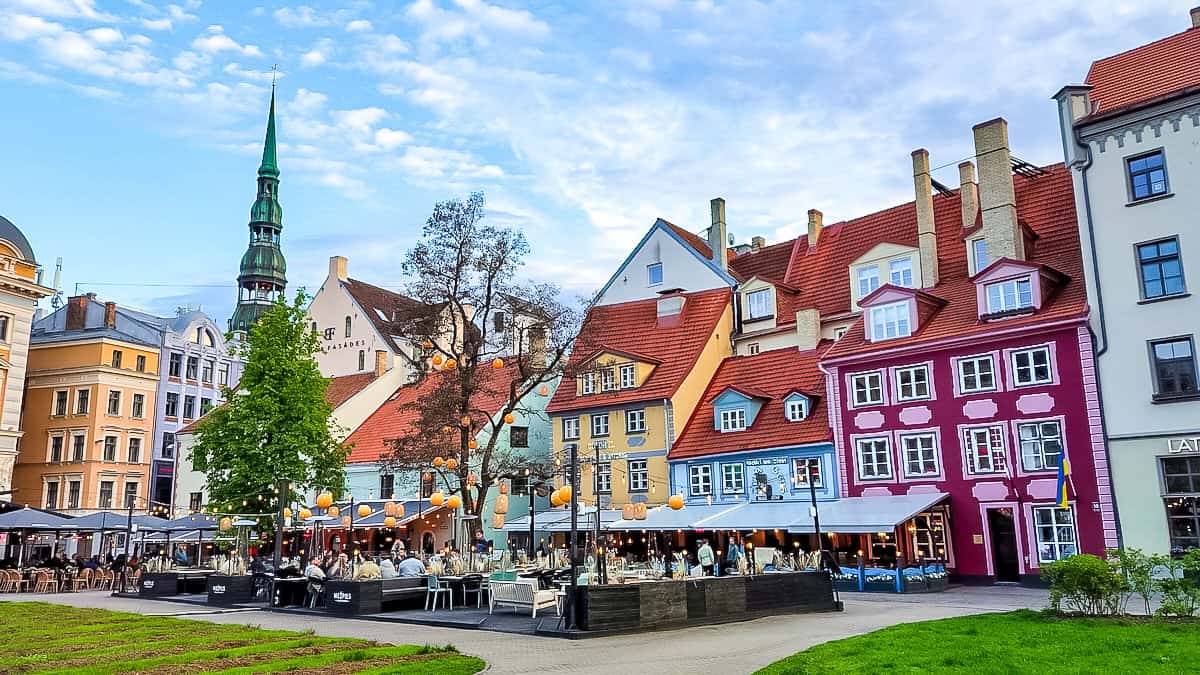
Runners warmed up beside the water, the Old Town stood behind the starting area, and the broad views across the river gave the event a much larger sense of scale than I had expected.

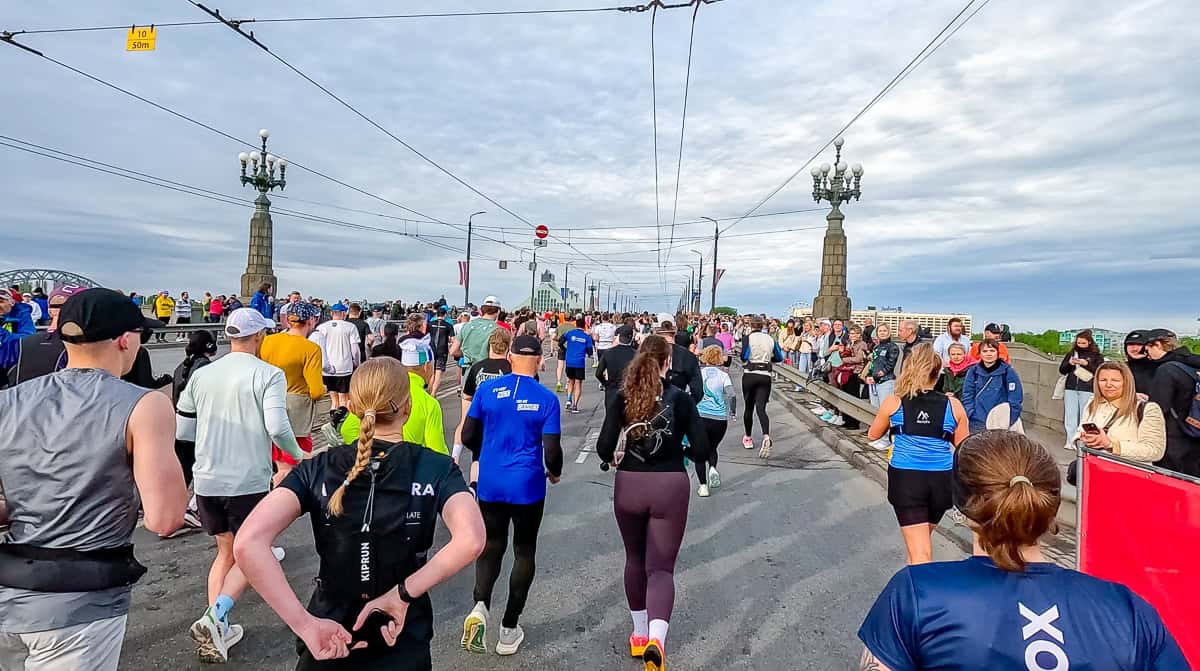
The course began with a bridge crossing and continued through a mixture of waterfronts, urban neighborhoods, central streets, and green park areas.

Riga did not rely on one single type of scenery. The route constantly shifted between different parts of the city.

A simple idea made too complicated

I planned to use the same general approach that had worked in Copenhagen: controlled running, planned walking, and enough restraint to preserve myself for the final marathon in Stockholm.

starting-riga-marathon

The problem was that the Riga version of the strategy was more complicated.

Instead of following one rhythm that was easy to remember, I had different timings and adjustments depending on how the race developed.

That became difficult once I was also filming, taking in the surroundings, speaking to other runners, and reacting to the atmosphere.

At several points, I lost track of whether I was supposed to be running or walking. I would restart the timing mentally, follow it briefly, and then become distracted again.

The strategy was still conservative in principle, but the execution became increasingly improvised.

That was the main lesson Riga gave me.

A race plan is only useful when it remains simple enough to follow during the race itself.

Scenery over constant spectators

scenic-race-course-riga

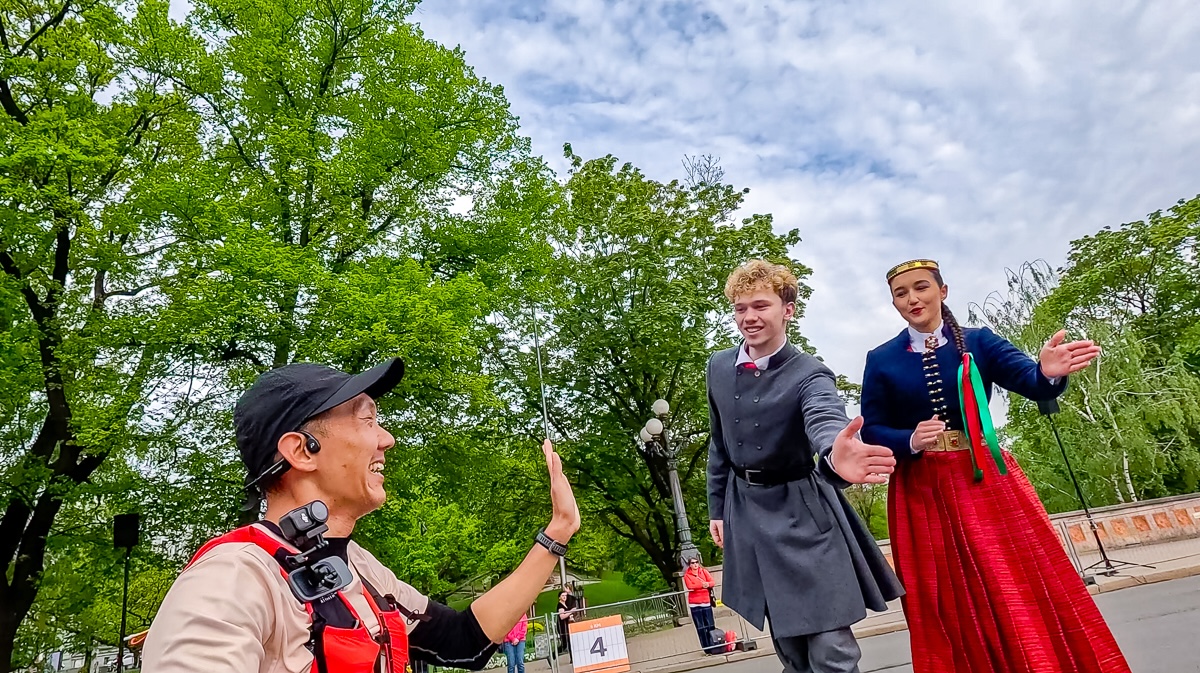
Riga’s crowd support was concentrated around the Old Town, city center, and major event areas.

Those sections felt energetic, with music, cheering, and spectators close to the route.

Outside the center, however, long stretches became much quieter.

That did not bother me. I run alone regularly, and I do not need spectators along every kilometer. The quieter sections also made it easier to settle into my own rhythm.

What carried the course instead was the scenery.

There were repeated views across the river, long bridge crossings, green parks, and quieter neighborhoods that most short-term visitors may never see.

Even when I could not identify every landmark in the distance, the combination of landscape and varied architecture kept the route interesting.

The marathon offered a broader impression of Riga than I would have gained by remaining only in the Old Town.

When the plan began to slip

riga-marathon-old-town-cheering.jpg

The strongest spectator areas formed some of my most iconic memories from the race, but also created one of the main problems.

Whenever I entered a crowded section, I naturally began running faster. Part of that came from the energy around me, and part came from trying to capture better footage.

I had also gained confidence from finishing Copenhagen in good condition and began wondering whether Riga might go even better.

That confidence made it easier to move away from the conservative plan.

Around the middle of the race, fatigue began arriving earlier than it had the previous weekend. The inconsistent walk breaks and faster sections were starting to add up.

At one aid station, I stopped to use the toilet. When I came out, there were no other runners in sight. For a moment, I wondered whether I had somehow become the last participant in the marathon.

There was simply a large gap between groups, but the uncertainty affected my pacing. I increased the effort because I did not want to fall too far behind, even though I had no reliable sense of where I actually stood.

It became another example of how easily a race strategy can be disrupted by what is happening around you.

Managing rather than racing

By the second half, I knew the race was not unfolding as cleanly as Copenhagen.

I felt more tired, and there were occasional warning signs that cramping could become a concern.

I never seriously believed I would not finish, but I also knew that becoming complacent could create a problem very quickly.

So I adjusted.

chatting-with-other-runners.jpg

During the final ten kilometers, I moved between easy running, walking, filming, and chatting with other runners.

In one of the quieter sections, I met a man pushing a wheelchair participant through the marathon. I spoke to them briefly about what had inspired them to take part.

Seeing someone complete a marathon while helping another person experience it was a reminder that not every meaningful performance is measured by pace.

By then, I had accepted that Riga would not be another perfectly executed race.

The objective was to keep moving, manage the warning signs, and finish without turning a difficult section into a serious physical problem.

A finish that remained energetic

medals-for-all-races

The race returned toward the Old Town and riverfront for the final kilometers.

This was where Riga Marathon’s multi-distance format became particularly valuable.

At many marathons, the finish area begins quieting down by the time later runners arrive. The main groups have already finished, spectators start leaving, and parts of the race village may be winding down.

Riga felt different because shorter races were still taking place.

Near the end of my marathon, the course merged with faster runners from another distance. Some of the leading 10K competitors came through at speed while marathoners around me were approaching the end of a much longer day.

It created an unusual contrast.

riga-marathon-medal

A power zone near the finish had people dancing, jumping, and cheering. Some of that energy may have been directed toward the faster runners, but everyone arriving through the area benefited from it.

The waterfront remained active because some participants were finishing while others were arriving for their own races.

For a later marathon finisher, that made a significant difference.

I did not return to an emptying event. I arrived while the wider running festival was still fully alive.

Tired, but still able to enjoy the finish

I crossed the line proud and relieved. The strategy had been messy, but I had completed my first back-to-back marathon weekends.

I could still walk around, stand, talk, and take in the atmosphere rather than immediately needing to collapse somewhere.

The finish area offered a generous selection of snacks, drinks, and refreshments. I collected my medal, took photos, and continued speaking to runners I had seen along the route.

Riga beyond race weekend

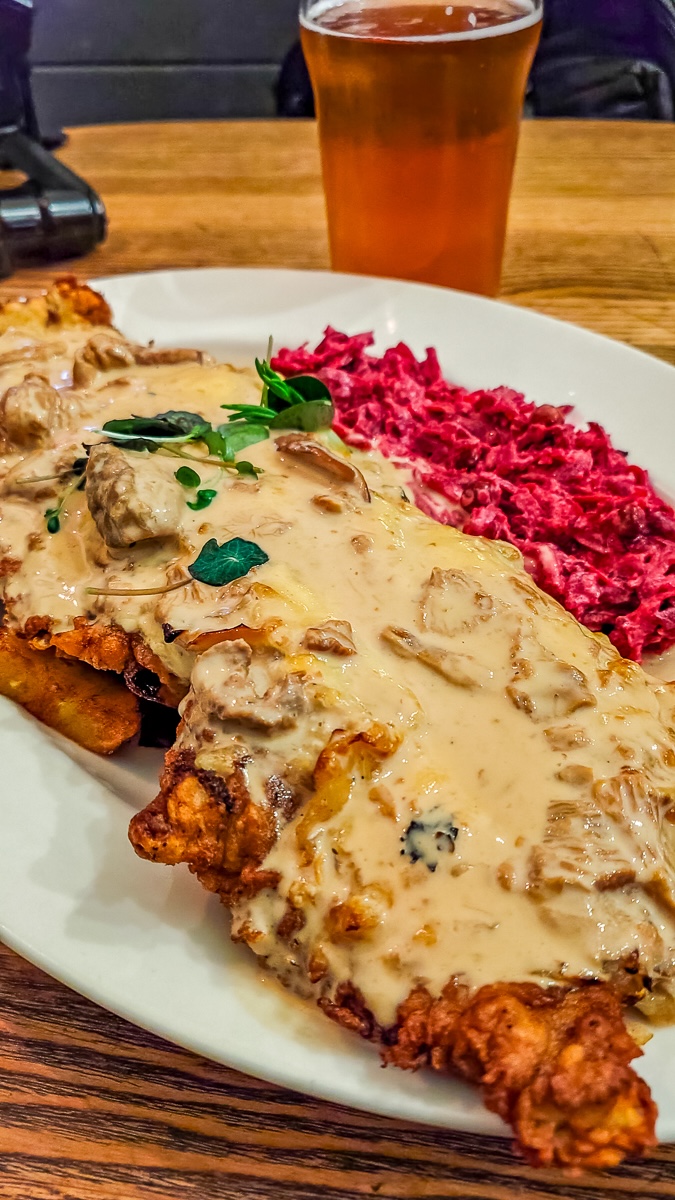
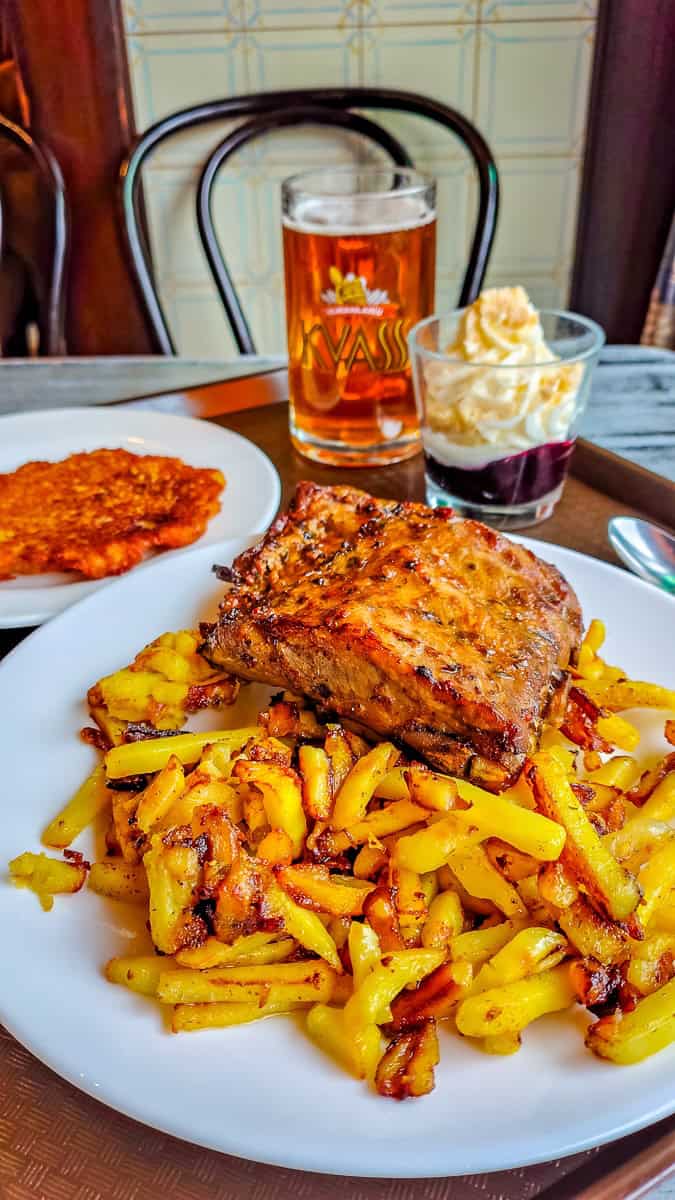
Staying in Riga after the marathon allowed me to experience the city at a slower pace, and dig into some hearty Latvian food.

schnitzel-at-medevial-bar
latvian-food

The Old Town was particularly enjoyable in good weather, with outdoor seating, cafes, and live music creating a lively atmosphere without making the city feel overwhelming.

The parks and waterfront remained my favorite parts.

Riga felt relaxed but not sleepy. Young people filled coffee shops, families used the parks, and people sat outside enjoying the weather.

I also took a half-day trip to Jurmala, the seaside destination outside the city. Someone who enjoys beaches could easily spend a full day there, making Riga a useful base for combining a city trip with time by the coast.

It was easy to imagine staying longer than a standard race weekend.

Who should consider Riga Marathon?

running-through-city-center

Riga Marathon suits runners who enjoy scenic variety and do not require continuous crowd support.

The loudest sections are concentrated around the Old Town, city center, and finish area. Other portions of the course can become very quiet.

For some runners, that may be a drawback.

For others, the changing scenery will be enough. The course offers river views, bridge crossings, parks, neighborhoods, and a medieval center within a single marathon.

The event also works particularly well for runners who want to turn the race into a longer city break.

Riga is a capital city with enough food, culture, cafes, public spaces, and nearby excursions to justify staying beyond the weekend. At the same time, it remains manageable enough that the trip does not need to feel rushed.

Latvia is a major travel hub in the Baltics, and you can find affordable flights with airBaltic.

The multi-distance schedule is another major strength. It keeps the event area active for longer and creates a better atmosphere for participants finishing toward the back of the marathon field.

The lesson Riga left me with

Riga did not prove that I could repeat Copenhagen perfectly.

It taught me something more useful.

A good race strategy must remain simple enough to survive filming, crowds, conversations, toilet stops, and the unpredictable rhythm of the race itself.

The marathon also showed me a side of Riga I had not expected.

It was greener, more spacious, and more lively than I had imagined, with a race route that connected its parks, bridges, riverfront, neighborhoods, and Old Town.

For a few hours, the waterfront became the center of the city’s running community.

Then the barriers disappeared, the music stopped, and the streets returned to normal.

I completed the middle race of three marathons in three weeks, but Riga left me with more than another finish.

It gave me a destination I would happily return to and a race lesson I would carry into everything that came next.

The Copenhagen Marathon Showed Me How Social Race Travel Could Be

As the first race in a three-marathons-in-three-weeks challenge, Copenhagen gave me a strategy that worked and a race weekend that rarely felt solitary.

Before the Copenhagen Marathon, my first two races in the project had not really gone according to plan.

I had started too quickly in Antalya and struggled with cramps. Two weeks later in Krakow, I thought I had recovered, only to feel tired much earlier than expected and develop knee pain later in the race.

Copenhagen was next.

It was my first visit to Denmark and the first marathon in a block of three races across three weeks. Riga would follow seven days later, with Stockholm at the end of the month.

This meant Copenhagen was not simply another race. It was the start of my first attempt to complete three marathons in three weeks.

But I was still wondering whether I had properly understood what went wrong in the previous two.

Copenhagen became the race where I finally stopped treating “start slowly” as a general suggestion and turned it into an actual plan.

It was also the first marathon where that plan worked.

A city already filled with runners

I had never visited Denmark before, and Copenhagen was one of the races I most wanted to reach healthy enough to complete.

That created some pressure, but the atmosphere around the city made it difficult to spend too much time worrying.

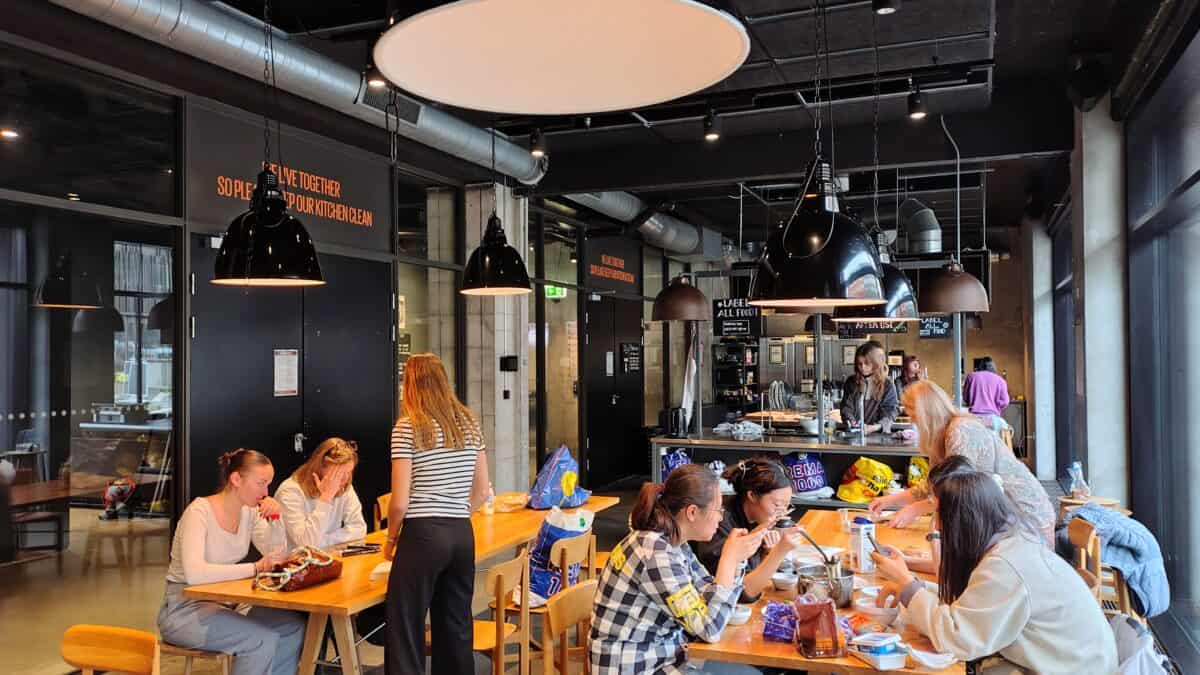
I stayed at Steel House Copenhagen, a large hostel in a central location near the train station and within walking distance of the marathon expo. It also happened to be full of runners.

There were people traveling with run clubs, groups of friends preparing together, and solo runners discussing their race plans in the shared kitchen. Conversations about pacing, shoes, previous marathons, and recovery seemed to start naturally.

It was there that I met several runners I still keep in casual contact with. Many of them were very generous with their time and knowledge, which helped me immensely as a new marathon runner.

When the marathon feels bigger than race day

The social side of Copenhagen extended well beyond the hostel.

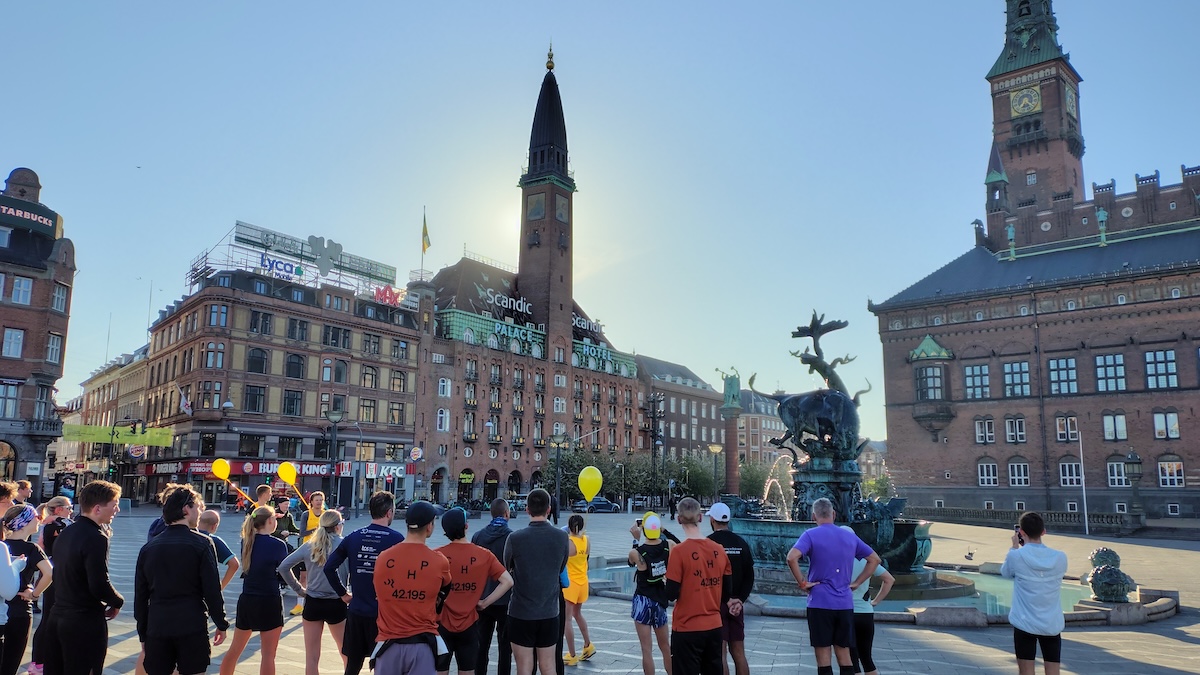
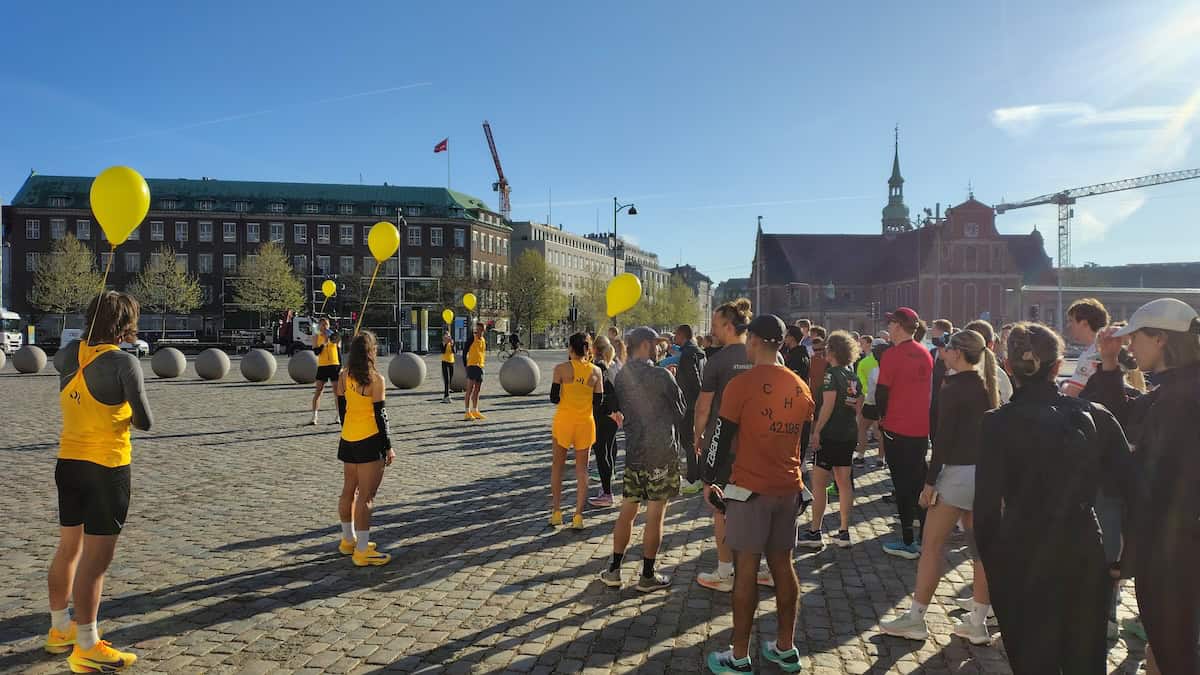
shakeout-run-warmup

Before the marathon, I joined a shakeout run around the lakes near the city center. Several other running groups were using the same area, including clubs that had traveled from elsewhere in Europe.

At one point, a large group ran past on the sandy path and kicked up a cloud of dust behind them.

That remains one of my clearest memories from Copenhagen.

For those few days, it felt as though the entire area around the lakes had been taken over by runners. There were groups moving in different directions, people wearing club shirts, and strangers starting conversations because everyone was there for the same reason.

My version of Copenhagen was completely shaped by the race.

During the shakeout run, we visited several landmarks around the city center. I also met another runner who I still stay in touch with via Strava.

That experience changed how I approached future race weekends. By the time I traveled to Riga, I was actively looking for shakeout runs and other activities rather than treating them as optional extras.

Copenhagen beyond the marathon

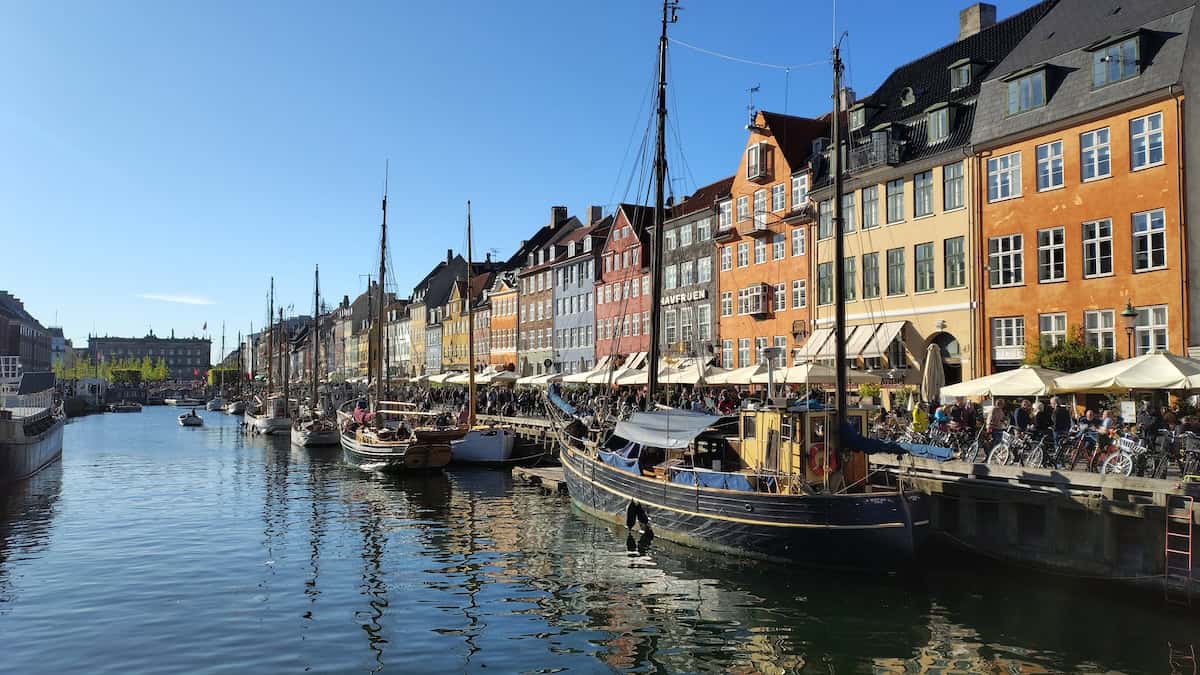
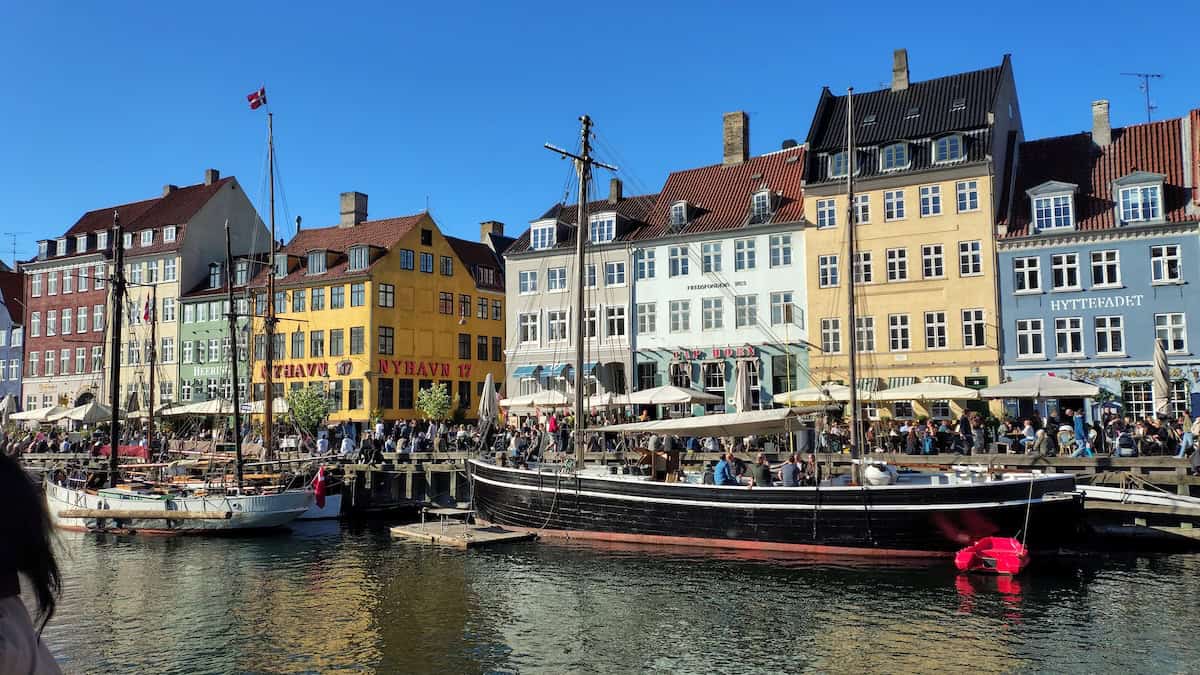
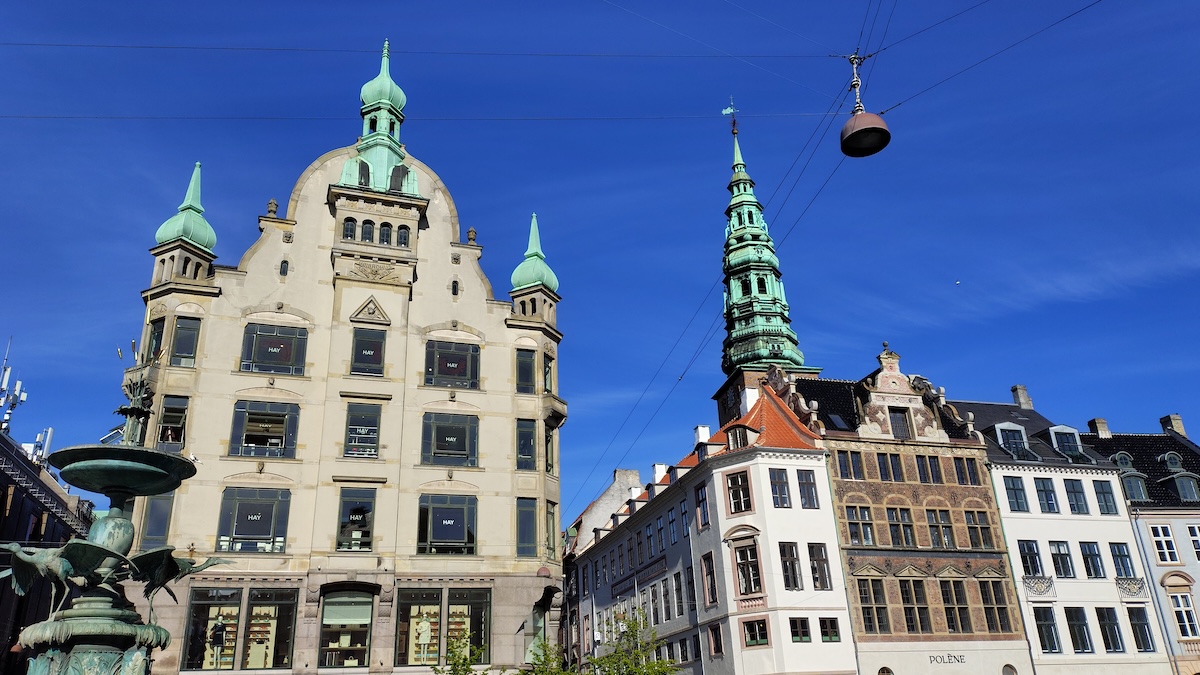
My first impression of Copenhagen matched much of its reputation. People were sitting by the water, relaxing in the parks, and simply enjoying the public spaces.

copenhagen-local-life

The city felt organized, clean, and built around movement. Cycling was not simply recreational. It was part of everyday life, with separate lanes, its own traffic patterns, and enough cyclists that I quickly learned to check for bikes even when there were no cars coming.

The canal cruise worked especially well for me before the marathon. I could see more of Copenhagen without spending hours walking around and tiring my legs. I also enjoyed how easy it was to slow down by the lakes, parks, and waterfront. When the weather was good, I did not feel pressured to keep sightseeing. I could simply sit by the water and watch the city around me.

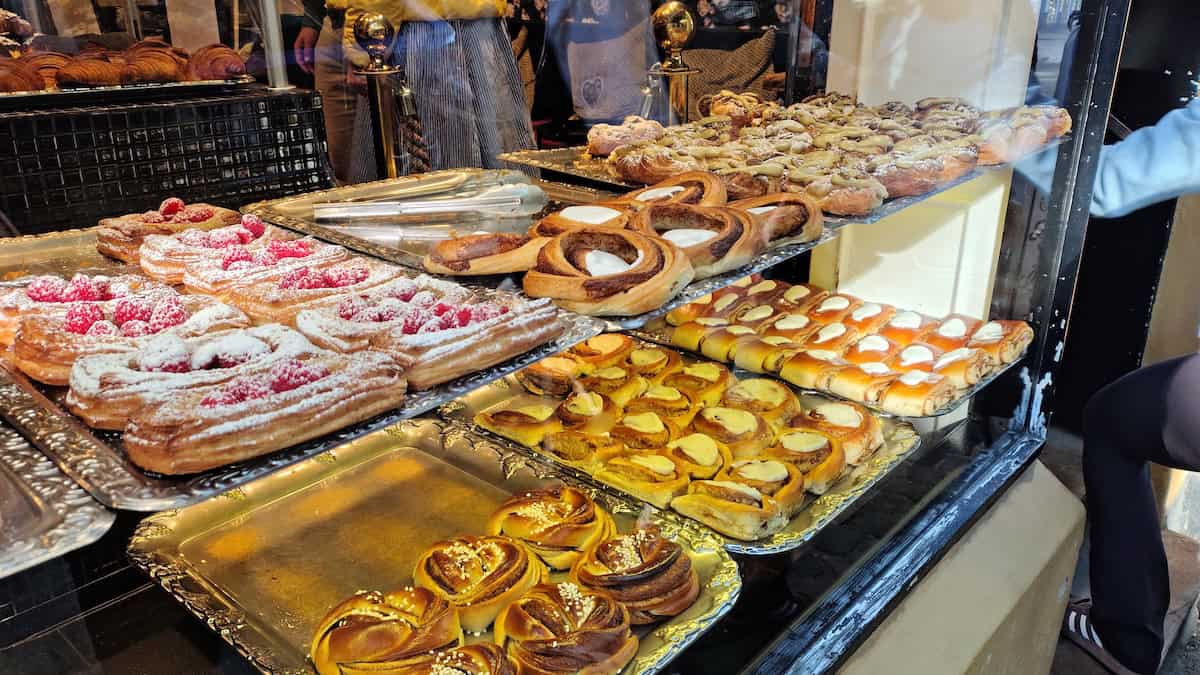
Copenhagen can get expensive if you eat out for every meal, so I bought groceries and prepared most of my own food. I would recommend staying somewhere with a kitchen if you want to keep costs down and manage your own carb-loading meals. I saved most of my spending for coffee and pastries with runners I met.

danish-pastries

Finally arriving with a real plan

For Copenhagen, I created a much more detailed race strategy than I had for Antalya or Krakow.

The main change was using planned walking from the start. I also had different pace options depending on how my body felt as the race progressed.

In the previous marathons, walking had only begun after something had already gone wrong. In Copenhagen, walking was part of the plan before I felt tired.

The goal was not to run every possible kilometer. It was to finish in a condition that would allow me to run Riga one week later.

This race stack also made me plan my strategy and fueling more carefully. I carried what I needed, took energy earlier, and avoided waiting until I felt hungry or depleted.

A city that knows how to support a marathon

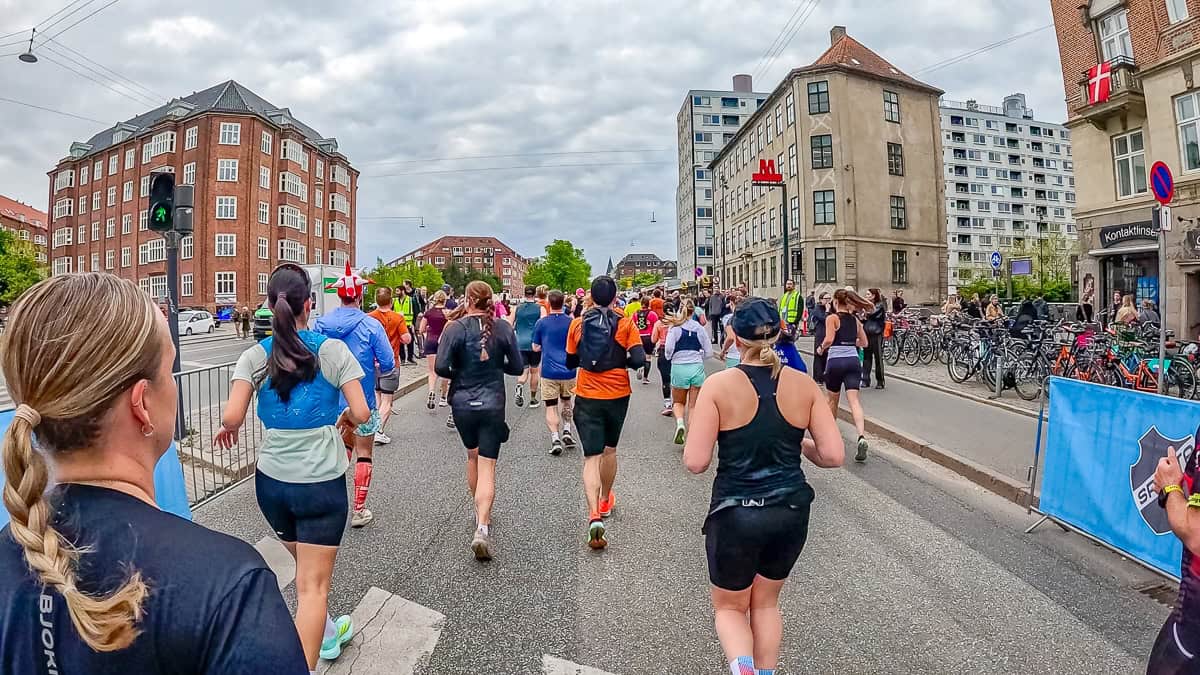
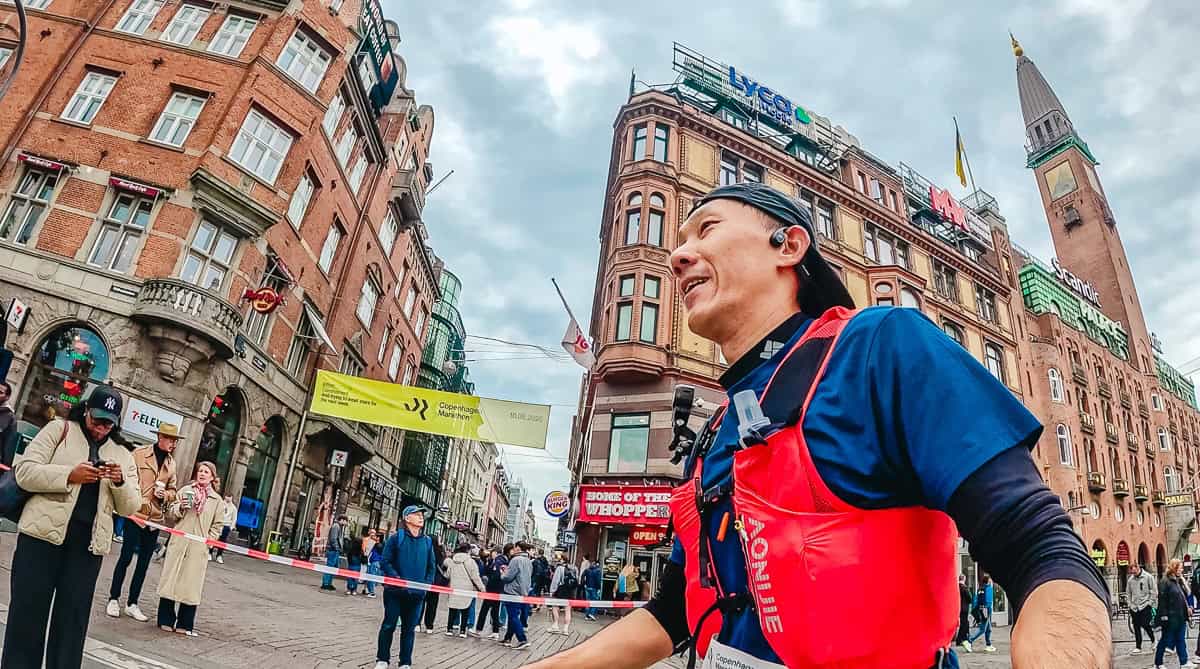
Copenhagen had the strongest overall crowd support of the races I had completed at that point.

There were quieter sections, but whenever I passed a busier area, the support felt open and generous. Spectators read names from race bibs and cheered runners they did not know. Hearing strangers call my name made the race feel much more personal.

The course moved through different neighborhoods, crossed bridges, and passed lakes and parks. Even when I was not running past a famous landmark, I still felt that I was moving through a city shaped by cycling, running, and outdoor life.

race-route

The areas around the lakes were especially energetic. The music, color, and crowds there gave me some of the closest moments yet to what I imagined a major marathon might feel like.

I also appreciated the practical side of the support. There were enough aid stations that I never worried about reaching the next one. One surprisingly useful detail was the number of standing urinals available for male runners. I ended up using them frequently because I could stop without waiting in a long toilet line. It is not the most glamorous part of a marathon, but it made the race noticeably easier to manage.

The moment the strategy proved itself

The opening half felt controlled.

I was running slower than I had in the previous marathons, taking scheduled walking breaks, and not allowing the excitement of the crowd to pull me too far away from the plan.

The real proof came later.

Around 25 to 27 kilometers, I began noticing runners ahead of me slowing down.

race-course

I was still following the same basic rhythm I had used from the beginning.

Gradually, I started passing people.

It was a completely different experience from Krakow, where I had already entered survival mode by the later stages. In Copenhagen, I still felt capable of running rather than simply trying to protect a painful knee or prevent a cramp.

At one point after 35 kilometers, the sky looked as though it might open into heavier rain. So I increased the pace.

I began overtaking even more runners, which surprised me because I had never previously reached this stage of a marathon with that much speed available.

When the light drizzle cleared, I returned to a comfortable pace.

I knew I would finish, I was not chasing a personal best, and Riga mattered more than cutting a few minutes from the Copenhagen result.

That decision summed up what had changed.

In Antalya and Krakow, slowing down happened because my body forced me to. In Copenhagen, slowing down was a choice made while I still felt capable of doing more.

My best-executed marathon so far

copenhagen-marathon-review-experience

Copenhagen was not my fastest marathon, but it was the best one I had executed.

The clearest sign that the strategy had worked came afterward.

I could walk down the stairs normally.

After the damage I felt following Antalya and Krakow, that seemed almost as important as the medal.

Who should consider the Copenhagen Marathon?

Of the races I had completed at that point, Copenhagen was probably the easiest for me to recommend to almost anyone.

I got the atmosphere of a large international marathon without feeling overwhelmed by it. The field was big, but the expo, starting area, bag drop, and finish all felt manageable. I never felt that I was spending too much mental energy working out where to go or what to do.

The city was also easy for me to navigate. Staying centrally meant I could move between the expo, race activities, tourist areas, and public transportation without building complicated travel plans around the weekend.

I also think Copenhagen works particularly well if you want the marathon to be part of a city break. I saw enough of the city to feel that the trip was worthwhile, but I did not need to exhaust myself with a packed sightseeing schedule.

What I valued most, though, was the full weekend around the race.

The shakeout runs, international clubs, hostel conversations, spectators cheering runners by name, and small touches at the finish made the experience feel social from beginning to end.

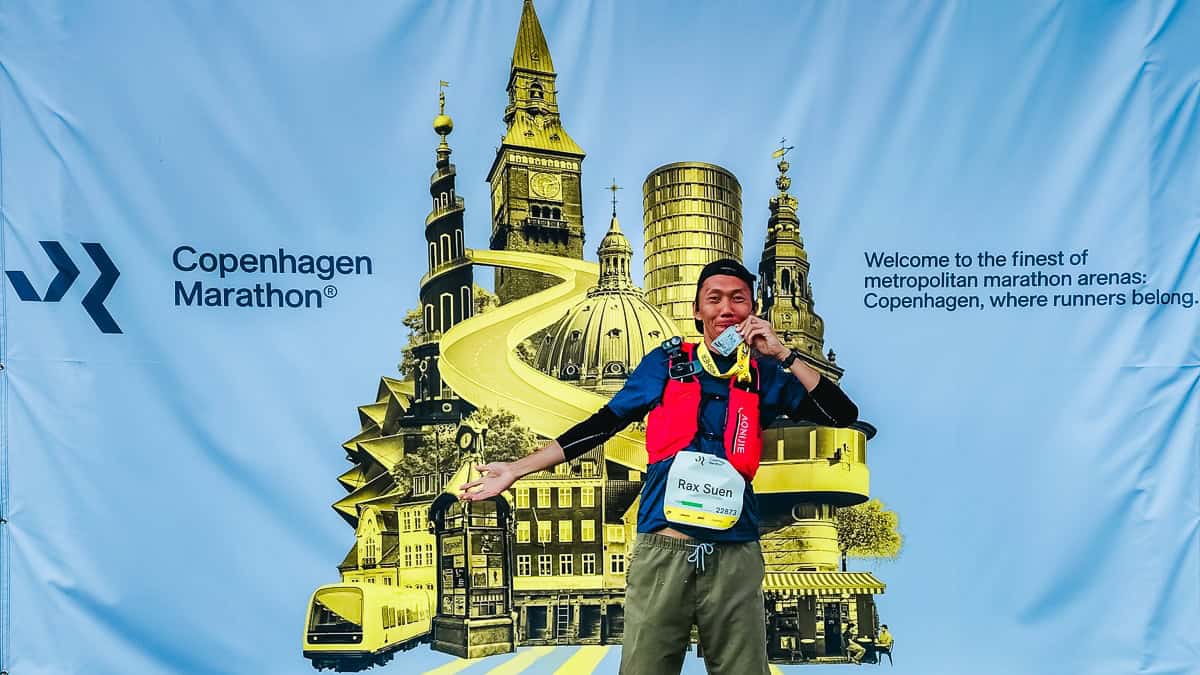
Even at the finisher photo walls, volunteers were there to help runners take pictures. As someone racing alone, I appreciated not having to search for a stranger and ask them to use my phone.

I arrived in Copenhagen alone, but I rarely felt alone during the weekend.

For me, Copenhagen proved that planned walking could leave me stronger at the end of a marathon rather than simply helping me survive it. It also showed me that traveling alone for a race did not have to mean experiencing the weekend alone.

Copenhagen was where the three-marathon challenge began. More importantly, it was where that challenge finally started to feel possible.

The Krakow Marathon Was My First Lesson in Stacking Races

With a start and finish in Krakow’s Main Market Square, a route that mixes historic landmarks with everyday city life, and one of the best destination experiences around it, the Cracovia Marathon is an easy race to recommend.

I first spent an extended period in Krakow in 2018.

For around a month, I stayed in Kazimierz, bought groceries, took boxing classes, worked from cafes, and got to know the city beyond its main tourist sights. Krakow became one of those places I remembered not through a single landmark, but through the routines I had built there.

Eight years later, I returned to run the Cracovia Marathon.

Krakow Marathon starts and finishes in the old town

It was my third marathon overall and the second in a project to run 100 marathons and ultras across 100 countries. It was also only two weeks after the Antalya Marathon, making it my first real attempt at stacking races close together.

I chose Krakow because I already knew the city was worth returning to. This time, I wanted to find out what it would feel like to run through it.

Returning to a familiar city from a different side

This time, I stayed north of the Old Town instead of in Kazimierz.

That small change made Krakow feel surprisingly different. During my earlier stay, most of my daily life had been south of the Old Town, around Kazimierz, the river, and the streets leading toward Wawel Castle. From the north, I found more residential areas, a large park I had never visited, and parts of the city I had little reason to explore before.

The Krakow I remembered was still there, but it had also changed.

I remembered Kazimierz for its smaller, rustic cafes, often filled with old furniture, antiques, and decor that made the neighborhood feel tied to the past. Some were still around. Others had closed, while newer and more modern cafes had appeared across the city.

Krakow still had the charm that made me like it in 2018, but it no longer felt frozen in that memory.

That mix of old and new would also become one of the strengths of the marathon.

Starting in the heart of Krakow

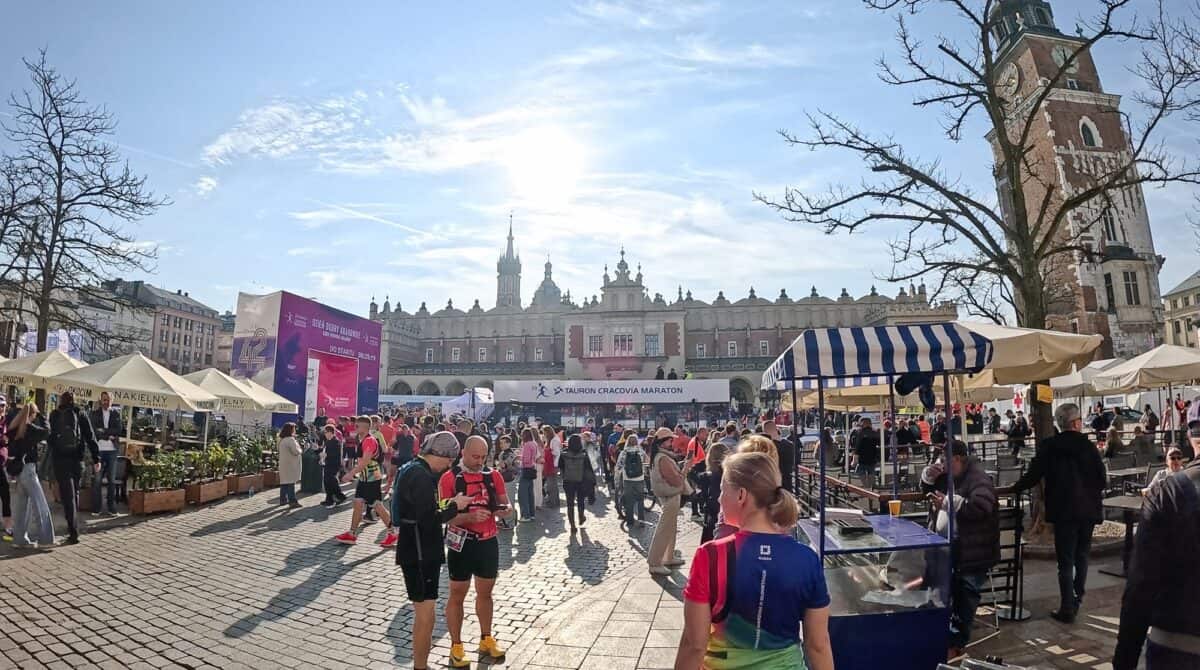
The Cracovia Marathon felt much bigger than my previous race from the moment I arrived at the start.

The marathon begins and ends in Krakow’s Main Market Square, in the center of its Old Town. The course then passes through several districts, including sections along the Vistula Boulevards, before returning to the square.

The starting waves stretched from the main square toward the edge of the Old Town. I had placed myself in the final group because I wanted to run conservatively, only to realize that I had walked too far into the center and needed to make my way back toward my starting position.

The event was large enough to create real energy without feeling impossible to navigate.

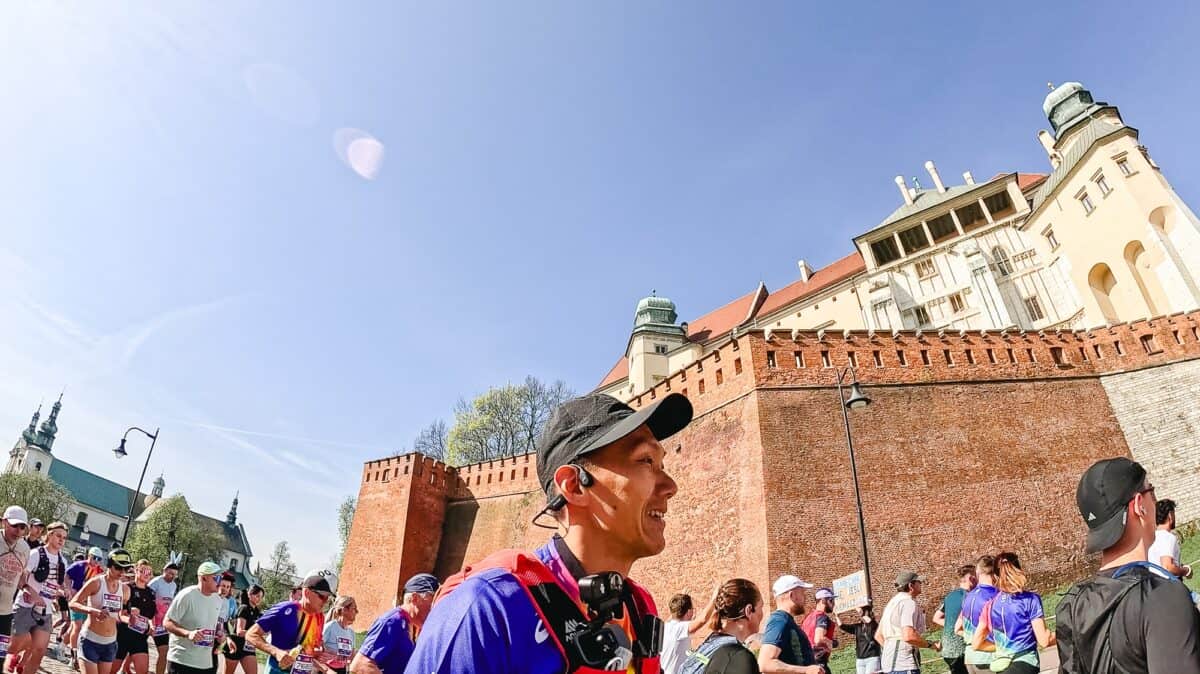
The opening section was crowded and exciting. We ran through the Old Town and around the Wawel area, surrounded by the parts of Krakow most visitors would recognize.

The weather was cooler than I was used to, so I started with a base layer beneath the event shirt. As the day warmed up, I eventually stopped to remove it.

If you are traveling from somewhere warmer, a light layer that you can easily remove or carry may be useful. Spring conditions can change quite a bit over the course of the race.

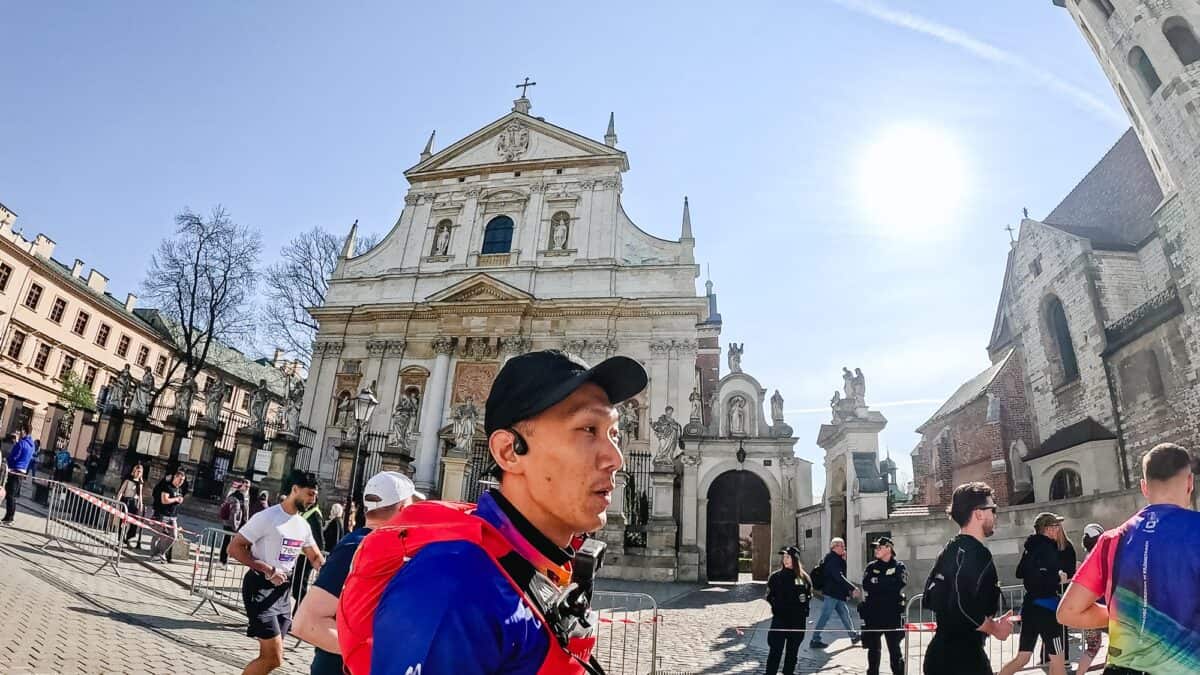
The route passes through some of the key historic sites

A route through more than the tourist center

The most memorable parts of the course were around the Old Town, Wawel Castle, and the river.

These areas had the strongest support, but they were also naturally busy. Locals were enjoying the weekend, tourists had gathered around the historic center, and people were sitting in parks or along the river.

Running beside the Vistula felt especially connected to everyday life in the city. People were sitting on the grass, visiting cafes, walking, and spending time by the water.

The route also went much farther into Krakow than the places I had known from my earlier stay.

There were residential sections, deeper park areas, and parts of the modern city where the crowds became thinner. They were not as scenic as the center, but they showed me areas I would never have visited on my own.

That is one of the things I enjoy about city marathons. A normal trip tends to keep you around the same central districts. A marathon shows you how those places connect to the wider city.

Krakow gave me the famous version of the city, but it also expanded the map I already had in my head.

When feeling recovered was not enough

I arrived in Krakow believing I had recovered from Antalya.

My knees were still slightly sore, but nothing felt serious enough to suggest that I should not run. I had avoided hard training between the races and felt normal in daily life.

I also thought I understood what had gone wrong in Antalya.

This time, I started at the slower pace I had originally planned. I carried water, prepared electrolytes, and began eating much earlier. During the opening kilometers, I was taking gummies and treating the race almost like a moving picnic.

Then, around 12 to 15 kilometers, the pace began to feel harder than it should have.

That distance was usually routine for me. During training, I regularly ran more than 20 kilometers, so struggling this early was the first warning that this was not simply another pacing problem.

I slowed down and began stretching at aid stations. Later in the race, I felt a sharp pain in my problematic left knee, which is always an “uh-oh” signal for me.

From there, the marathon became a careful cycle of walking, testing a short run, and stopping again whenever the pain returned.

My breathing was still fine. The problem was entirely in my legs.

Krakow was where I learned that feeling recovered in daily life and being ready to run another marathon are not always the same thing.

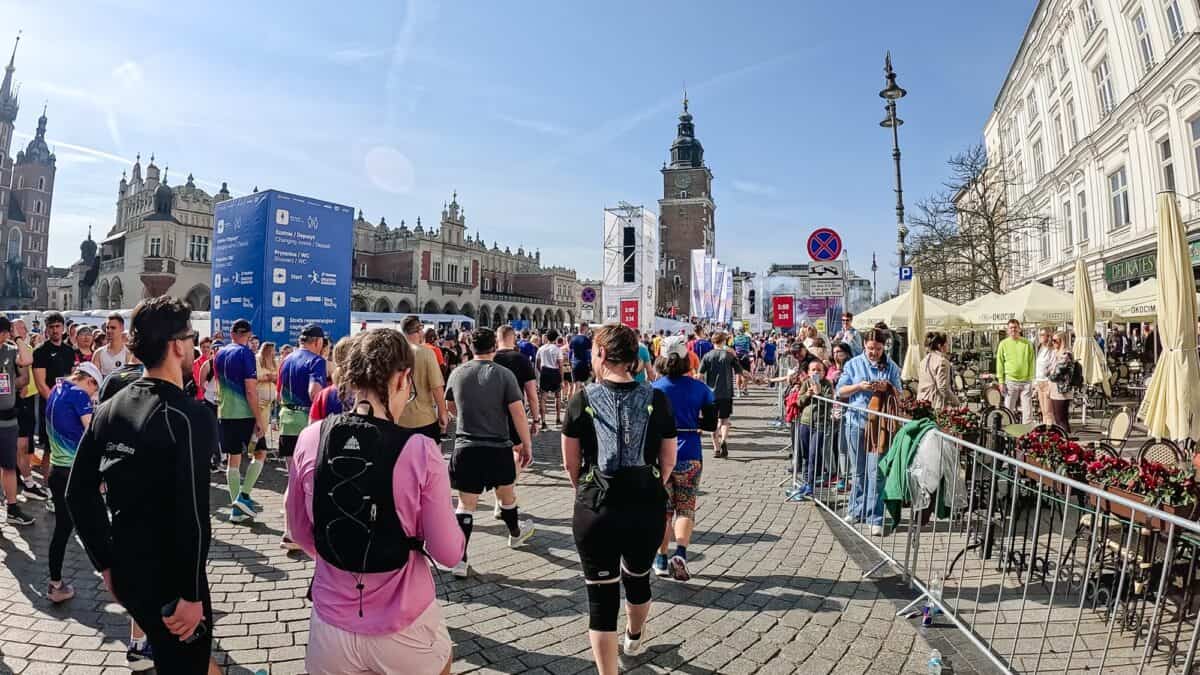
The energy at the start and finish is just awesome

What runners farther back should know

The Cracovia Marathon felt well supported overall.

Aid stations offered water, isotonic drinks, fruit, sugar, and candies. I also remember energy gels and fruit bars being available at limited points.

However, if you expect to finish farther back, I would not rely on gels still being available when you arrive. Carry your own fuel if it is important to your race plan.

The six-hour time limit gave me enough room to manage the knee pain and continue through a mix of running and walking.

Even so, this was the first marathon where I genuinely questioned whether I would finish.

As the remaining distance became shorter, I kept recalculating the pace I needed to stay inside the cutoff. Eventually, I knew I could make it, even if I had to walk much of the way.

Knowing which finish line matters

The final section brought us back toward the Old Town, where the crowd became louder again. Other runners were pushing through the last few hundred meters, while spectators encouraged anyone still walking to run.

At that point, I was considering a third marathon the following weekend.

It was never confirmed then, but the possibility was real enough that I did not want to turn the knee pain into something worse just to produce a stronger-looking finish.

One runner who had already completed the marathon stood near the course with his medal around his neck, urging everyone forward.

When we made eye contact, he shouted at me to run.

I smiled and nodded, but kept walking.

He looked disappointed.

His intention was positive. From his point of view, I was close to the finish and should use whatever energy I had left. What he could not know was that my goal was not only to finish Krakow. I was also trying to protect what might come next.

Other people can encourage you, advise you, or question what you are doing. But they rarely know the full goal you are working toward.

For most runners around me, the Main Market Square was the final finish line. For me, it was one checkpoint in a much longer project.

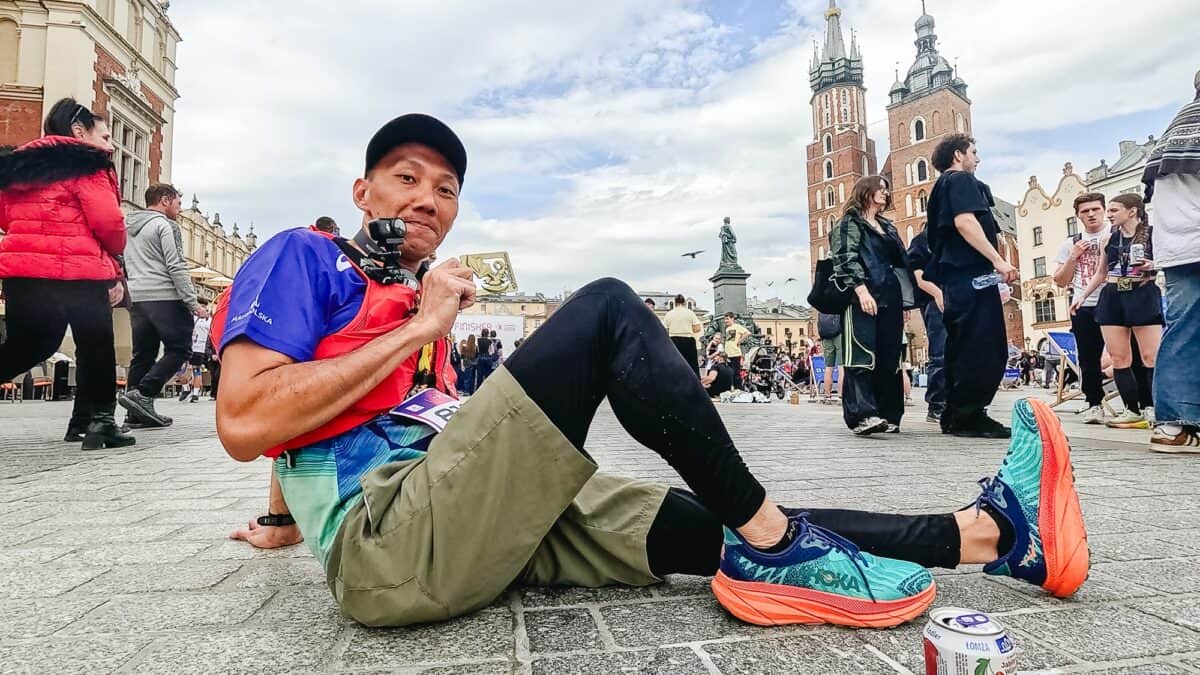
Everyone hanging and relaxing in the old town square after finishing

One of the best finishes for a city marathon

The course returned to the Main Market Square, giving the event a finish that felt every bit as atmospheric as the start.

I was especially happy to receive the medal.

The design featured the Wawel Dragon, one of Krakow’s best-known legends. It remains my favorite medal from the races I have completed so far. What made it special was not simply the gold design, but that it clearly belonged to Krakow.

After finishing, I collected a warm meal and drinks, then found a place to sit on the ground in the Old Town. Proper warm food after several hours on the course is always a big plus, especially when recovery is already on your mind.

I could see the church, runners were still finishing nearby, and the square remained filled with the atmosphere of the event.

Krakow is worth more than a race weekend

Krakow is one of the easiest cities in Europe to recommend as a travel destination.

If you stay near the Old Town, you will be close to the start, finish, historic streets, restaurants, and much of the city’s atmosphere. Kazimierz remains my favorite area because of its cafes, older buildings, and character, although staying north of the center was convenient for the expo and showed me a different side of the city.

The expo was outside the Old Town, so how convenient it feels will depend on where you stay. For me, it was around a 10-minute walk. From Kazimierz, it would have required a longer trip, but it was still easy enough to reach.

Race morning was straightforward, although I would arrive early if you need to use the toilets, check a bag, or find a specific starting wave. With several thousand runners gathering around the historic center, queues and walking distances can be longer than expected.

Krakow also deserves far more than two days.

The Old Town, Kazimierz, Wawel Castle, river areas, cafes, and museums could easily fill several days. Auschwitz-Birkenau and the Wieliczka Salt Mine are also common day trips from the city.

I would allow around five days if you want to run the marathon without squeezing the destination into a rushed weekend.

Some of the most majestic landmarks you get to see in Krakow

The race that changed the rest of my season

The third April marathon never happened because the remaining race options did not come together in time.

But Krakow still changed how I approached everything that followed.

My next confirmed block involved three marathons in three weeks. After what happened in Poland, I began looking more seriously at planned run-walk strategies. My idea of a conservative pace became slower, and recovery between races became more important than the finishing time of any single marathon.

I also began eating more after races because I would rather slightly overdo recovery than arrive at the next start underfueled.

Despite having to enter a bit of survival mode, Krakow did not leave me thinking mainly about pain.

What I remember is returning to a city I already loved, receiving one of my favorite medals, and understanding that a series of marathons has to be approached differently from one isolated race.

The Cracovia Marathon deserves more international attention for simpler reasons too. It starts and finishes in one of Europe’s most beautiful historic squares, follows a varied route through the city, and offers the atmosphere of a large race without the scale of a major.

If you have never visited Krakow, combining the city with the marathon feels like an easy decision.

And if you already know it, running through Krakow may show you that there is still more of the city left to discover.

The Antalya Marathon Was Where It All Began

Runtalya combines a scenic coastal course with the relaxed atmosphere of a smaller race, in a city where the marathon can easily become part of a longer Mediterranean trip.

When international runners think about racing in Türkiye, Antalya is probably not the first destination that comes to mind.

Istanbul has the spectacle of a marathon that crosses between continents. Cappadocia has its dramatic landscape and established trail races. Antalya, meanwhile, is more commonly associated with resorts, beaches, and summer holidays.

That was part of why I chose Runtalya as my first marathon in 14 years, and as the opening race in a new project to do 100 marathons across 100 countries. Even though I ran it while dealing with a foot injury, I came away thinking that the event deserves far more attention from anyone looking for a destination race.

The course is scenic without being especially difficult, the event is easy to navigate without feeling too small, and Antalya is one of those cities where recovering after a marathon can be as simple as finding a cafe beside the coast and chilling there for the afternoon.

It is not a race that tries to match the scale or spectacle of a major. What it offers is something quieter.

A different way to experience Antalya

Before arriving, I had imagined Antalya as something closer to a conventional resort city. The coastline and harbor certainly delivered the Mediterranean views I expected, but the city itself felt much more varied.

Beyond the old town and waterfront, there were ordinary apartment blocks, busy roads, local restaurants, independent cafes, and neighborhoods that felt distinctly Turkish rather than designed only for visitors.

The marathon lets you experience both sides of the city.

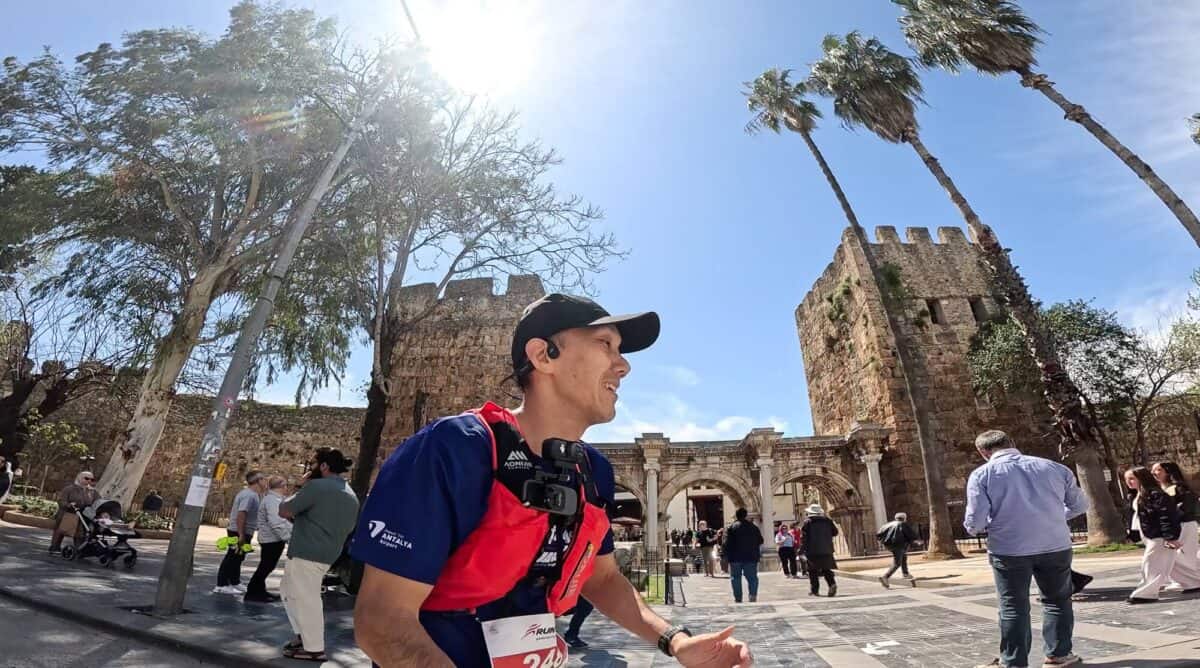
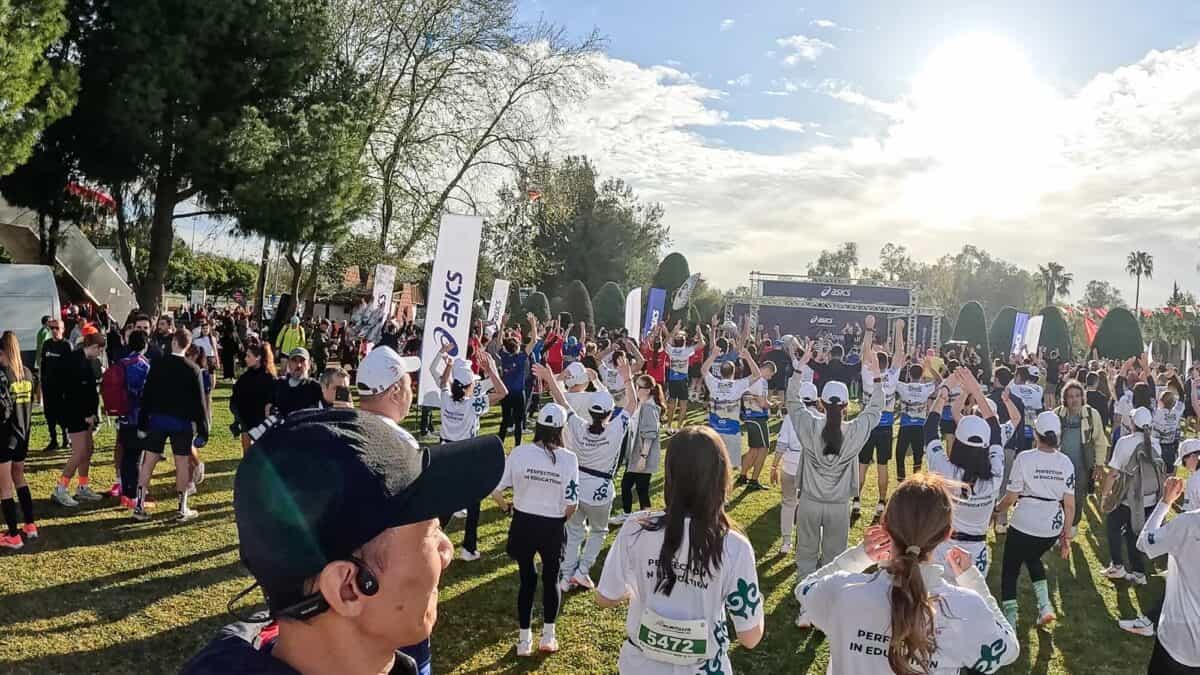
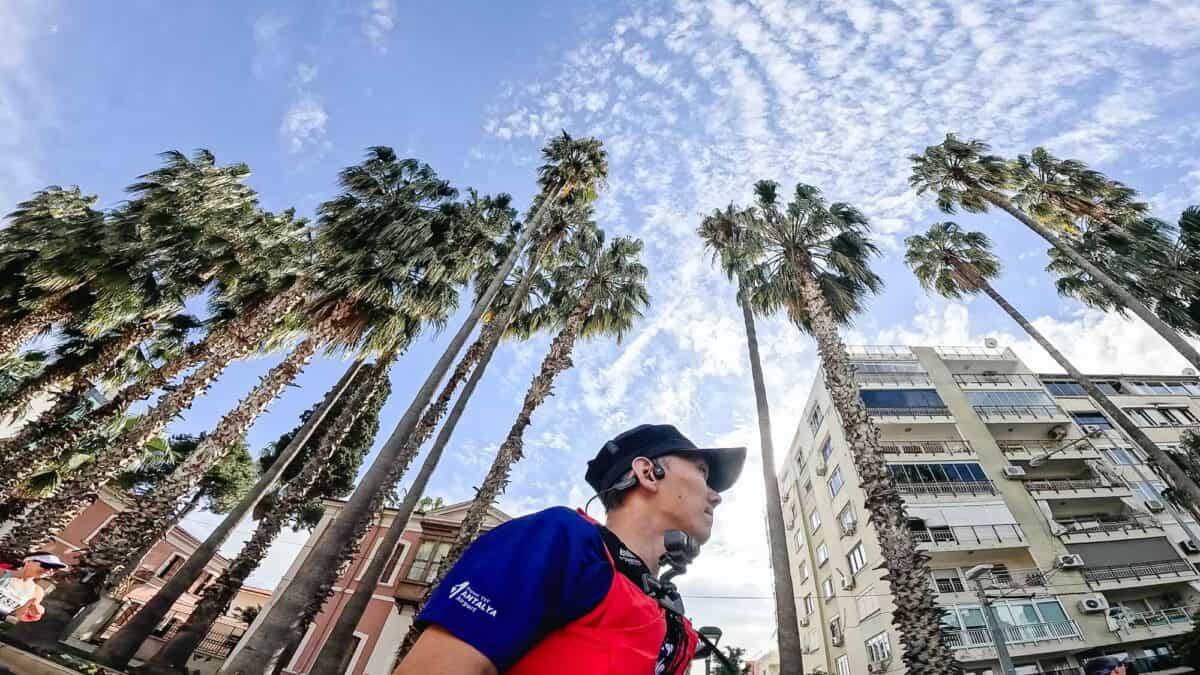
The opening kilometers have the liveliest atmosphere, with runners from several distances sharing the broad roads through central Antalya. There is music around the start, palm-lined avenues, city landmarks, and the excitement of everyone starting together.

Once the runners doing the shorter distances loop back, the full marathon changes.

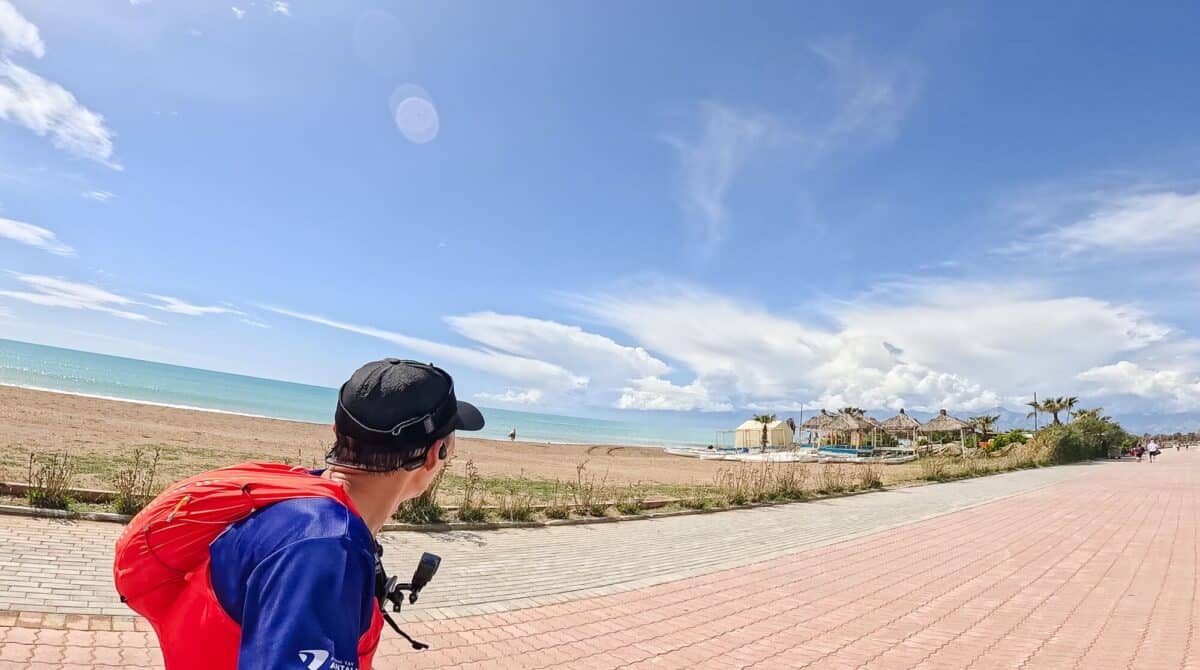
The field becomes smaller, the road opens up, and the route moves through parks and coastal stretches with increasingly clear views of the Mediterranean. There are portions near the turnaround that are less picturesque, but overall, the course offers more visual variety than many urban road marathons.

What stayed with me most, though, was how different the same route felt several hours later.

The parks had been quiet when I passed through them in the morning. On the return, families had arrived, children were playing, and the coastal cafes and public spaces had filled with people enjoying the weekend.

You may be retracing some of the same roads, but the city does not stay the same. You get to watch Antalya come to life while running through it.

I travel partly because I enjoy seeing how ordinary life unfolds in different places. For me, that was more interesting than simply passing one famous landmark after another.

Smaller than a major, but not without atmosphere

Runtalya is not a marathon with crowds lining every part of the course.

Support is strongest near the start, around the city center, and in the busier public areas. The volunteers remain encouraging throughout, but once the different race distances separate, some parts of the full marathon become noticeably quiet.

If you depend on spectators to carry you through the difficult sections, this may be the event’s main limitation.

For me, it was simply part of the race.

I usually train alone, so I did not mind the quieter sections. The smaller field gave me more space to notice the surroundings, talk to other runners, and settle into the experience without constantly navigating around people.

The race also felt more social than intensely competitive. During the opening section, I ran for several kilometers with another international runner I had only just met. Later, runners traveling in opposite directions encouraged one another as we passed.

One of my favorite moments came close to the city center, when a young boy saw me on the course and began running beside me. I held out my fist, and despite the crowd, he reached forward to bump it before returning to his family, visibly delighted.

It lasted only a few seconds, but it summed up something I liked about the event. The race felt connected to the city around it rather than completely separated from everyday life.

An approachable course that still requires respect

The Runtalya course is mostly flat and runnable, with broad roads and only one slope that stood out to me as particularly significant.

This makes it a realistic option if you are a slower runner, planning your first international marathon, or simply want a scenic road race without too many difficult climbs.

Ironically, the foot I had been worried about caused no problems during the race. My own marathon became difficult for reasons that had less to do with the course and more to do with how I ran it.

I started faster than planned. The pace felt comfortable because it was similar to what I might run during an ordinary training session, but a speed that feels easy for 10 or 15 kilometers can still be too aggressive for a marathon.

By the middle of the race, I was feeling warning signs in my calves and quadriceps and had begun alternating between running and walking. Aerobically, I still felt capable. It was my muscles that had started to fail.

That was one of my first real marathon lessons. Feeling comfortable early does not mean the pace will remain comfortable for the full distance.

I also underestimated how much fuel I would need.

The aid stations during my edition were frequent, which made the route feel well supported. Water and fruit were readily available, but electrolyte drinks were not, and gels appeared at fewer stations than I had expected.

Because I assumed I could rely on what was available along the course, I carried less fuel than I would now.

This does not mean the race lacked support. The frequent aid stations were one of its strengths. But you should check exactly what will be available and carry your own gels, electrolytes, or salt products if they are an important part of your plan.

Even while struggling, I never felt that the course itself was beyond my ability to finish. The regular stations made it easier to slow down, work out what I needed, and continue.

An event that feels thoughtfully put together

One of the most positive surprises came after the finish.

The organizers had set up a massage area, which I initially assumed would offer a quick and fairly casual treatment. Instead, the intern helping me asked questions, checked where my leg was tight, and spent much longer working on it than I had expected.

She only managed to complete one leg before the team had to pause, but the difference between the treated and untreated sides was immediately noticeable.

It was a small part of the overall event, but it left a strong impression.

Along with the medal, race shirt, proper backpack, and frequent aid stations, the massage area made the race feel like very good value. Runtalya may be smaller than many better-known European events, but it did not feel basic or carelessly organized.

Bib collection was straightforward, information was available in English, and you could reach the race village from central Antalya using public transportation or a taxi.

Antalya is also easier to reach internationally than you may expect. If you are traveling from farther away, you can connect through Istanbul. Because Antalya is already a major holiday destination, there are also seasonal and direct flights from several European cities.

A city that makes the whole race trip easy

Antalya works particularly well as a marathon destination because you do not need to plan an exhausting itinerary around the race.

If you stay near the historic center and harbor, you are close to restaurants, old streets, and city life. If you stay farther west along the coast, you are nearer to the race village, parks, beaches, and waterfront cafes.

Both areas work. I would simply recommend staying reasonably close to the coast.

Definitely try to arrive at least one or two full days before the marathon. That gives you enough time to collect your bib, figure out where everything is, and enjoy part of the city without spending the day before the race walking too much.

After finishing, Antalya becomes even easier to enjoy.

You can recover beside the water, eat Turkish food, explore the harbor at a relaxed pace, or spend an afternoon in one of the coastal parks. I remained in the city for almost two weeks, and the coastline worked just as well for working remotely and recovering as it did for sightseeing.

I find the city to be less resort-like than its international reputation might suggest, but it still has everything that makes a coastal destination appealing. You can experience local life while still having easy access to beaches, cafes, parks, and Mediterranean views.

Who should consider Runtalya?

Runtalya makes the most sense if you want the marathon to be part of a wider trip.

It is a particularly good fit if you are traveling alone, expect to finish farther back in the field, prefer a smaller event, or want a more affordable coastal alternative to Europe’s larger marathon cities.

It may not be the right race if your ideal marathon depends on constant entertainment and huge spectator crowds. The full-marathon field becomes small, and some quiet stretches are part of the experience.

A well-prepared runner could potentially achieve a fast time on the mostly approachable course, but that is not the main reason I would recommend Antalya.

The real appeal is the full experience: coastal scenery, simple logistics, regular aid stations, a relaxed field, and a city that is easy to enjoy before and after the race.

The race showed me parts of Antalya I had not yet explored and gave me the chance to interact with other runners and locals. Those small moments made the city more memorable than ordinary sightseeing would have.

Antalya may not be the most obvious name on the marathon calendar. But after running Runtalya, I think the marathon itself is a good reason to go.
New Orleans Plantation Tours: History, Highlights, and Booking Advice

Beyond the jazz-filled streets, you can discover a deeper layer of the city’s past with New Orleans plantation tours, where history unfolds along the Mississippi River. These iconic estates offer a powerful look at the region’s complex heritage that blends grand architecture, Creole culture, and honest storytelling that sheds light to Louisiana’s past.

Plantation tours vary widely in tone and focus. So, with smart booking advice, you can find an experience that’s meaningful, memorable, and well worth adding to your New Orleans itinerary.

Best New Orleans Plantation Tour [🏅Top Pick]

Swamp Boat Ride and Oak Alley Plantation Tour from New Orleans

Photo Credit: Gray Line New Orleans

🌟 4.8/5 stars (+3,200 reviews) | ⏳ Tour Duration: 7.5 Hours | 🏡 BOOK NOW

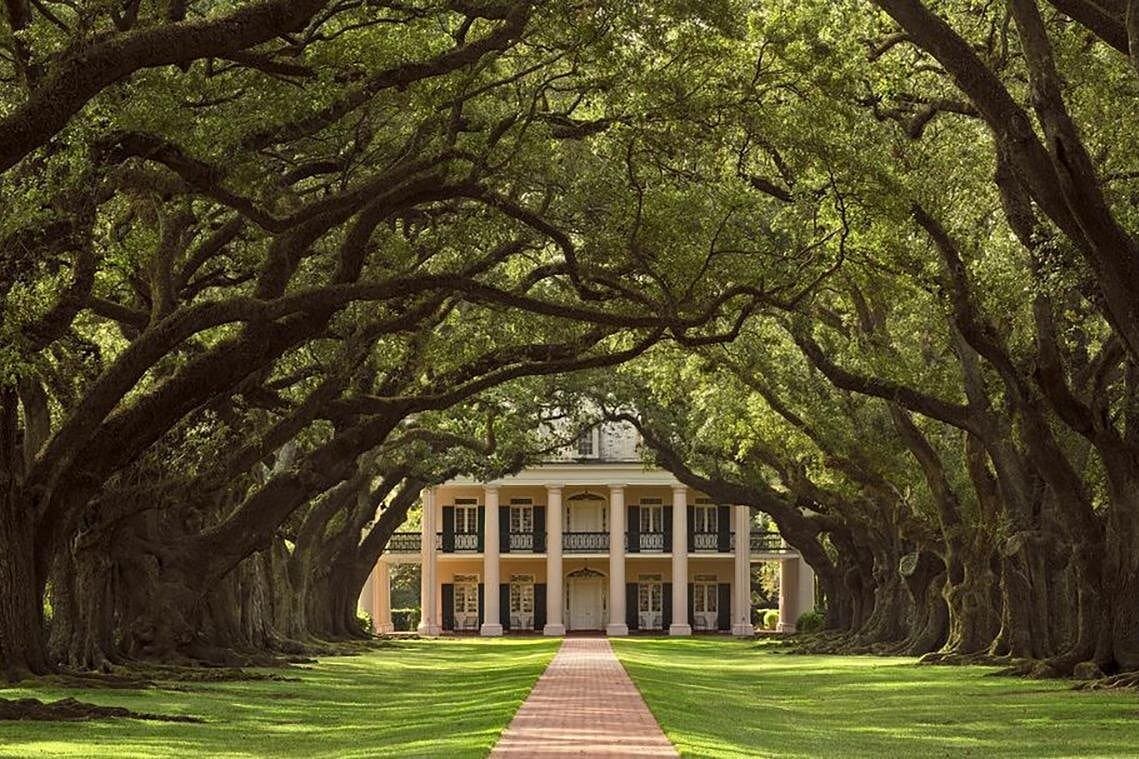
This full-day combo tour highlights one of Louisiana’s most iconic historic sites, with Oak Alley Plantation taking the center stage. I find it convenient that you can depart from New Orleans in a comfortable, air-conditioned coach, and travel along scenic waterways to this legendary estate.

A guided tour of the home renowned for its dramatic avenue of 28 towering live oak trees and its beautifully preserved antebellum mansion, bringing 19th-century plantation life into focus. Afterwards, you can enjoy time to explore the grounds at your own pace and take photos beneath the oak canopy.

The experience is rounded out with a narrated swamp boat ride through nearby wetlands, creating a well-balanced day blending history, scenery, and local insight.

“Amazing tour guide in the bus trip to the plantation. Great tour at the plantation, lots of time to wander around the property and eat before leaving for the swamp tour. The swamp boat ride was great! Highly recommend this tour.”

Shannan (More Reviews)

👍 Highlights Of The Swamp Boat Ride and Oak Alley Plantation Tour from New Orleans:

  • Tour the iconic Oak Alley Plantation, known for its grand mansion and legendary avenue of live oak trees.
  • Learn about antebellum life and the plantation’s complex history through guided storytelling.
  • Travel in comfort from New Orleans with round-trip transportation and narrated coach ride.
  • Complete the day with a scenic swamp boat ride featuring local wildlife and natural landscapes.

Oak Alley Plantation and Its Famous Oak Avenue

Oak Alley Plantation Tour with Transportation from New Orleans

Photo Credit: Gray Line New Orleans

🌟 4.3/5 stars (+1,700 reviews) | ⏳ Tour Duration: 5.5 Hours | 🏡 BOOK NOW

If you want to explore one of Louisiana’s most photographed plantations without committing to a full-day excursion, then you should consider booking this half-day tour. It even includes a round-trip transportation from New Orleans that makes the experience convenient and effortless.

At Oak Alley Plantation, you’ll have time to stroll beneath the iconic oak trees, tour the historic mansion, and visit exhibits that thoughtfully present plantation life from multiple perspectives. This is a great option for travelers wanting a fulfilling tour but have a limited time.

“This is a great history lesson. For those who travel to more than one antebellum plantation, it is fascinating to see how different each one is and how uniquely each one was run. They also have a nice gift shop.”

Pam (More Reviews)


Oak Alley Plantation and Large Airboat Swamp Tour from New Orleans

Photo Credit: Louisiana Tour company

🌟 4.7/5 stars (+700 reviews) | ⏳ Tour Duration: 8 Hours | 🏡 BOOK NOW

For travelers seeking both history and adventure, this full-day combo tour offers two classic Louisiana experiences in one outing. You’d first get a hotel pickup in New Orleans and enjoy a scenic drive along the Great River Road before arriving at Oak Alley Plantation

The main highlight for me is that you’d get to tour the elegant 1837 Greek Revival mansion with a costumed guide, stroll beneath centuries-old oak trees, and explore the grounds, blacksmith shop, and exhibits at your own pace. There’s also lunch available for purchase on-site.

Since this is a combo tour, you’d head to the swamp for a thrilling airboat ride through Louisiana’s wetlands after exploring the plantation. With these activities, I’d say that booking this tour is definitely worth it.

“Loved that we were picked up at our hotel so we could just enjoy the ride. Beautiful Plantation ! A must see.”

 Nancy (More Reviews)


Oak Alley Plantation and Swamp Boat Tour from New Orleans

Photo Credit: Louisiana Tour company

🌟 4.4/5 stars (+370 reviews) | ⏳ Tour Duration: 8 Hours | 🏡 BOOK NOW

Have a relaxed, in-depth look at Oak Alley Plantation paired with a comfortable introduction to Louisiana’s wetlands in this cultural tour with round-trip transportation from New Orleans included.

You’d get to experience the home to a stately Greek Revival mansion dating back to 1837 by following guides dressed in period costume while learning about plantation life at its height. There’s also a free time that I think you’d like as it allows visitors to explore the place, browse the antique equipment, and visit the shops and restaurant on-site.

The plantation visit emphasizes architectural beauty, daily life, and the historical context of the era, making it an ideal option for travelers who want a thoughtful, immersive experience without a rushed pace.

“The plantation was beautiful. The tour guides knew their history very well and gave us a wonderful understanding of the life and history of the people who lived and worked there.”

Susan (More Reviews)


Tips when Having an Oak Alley Plantation Tour

  • Wear comfortable walking shoes, as you’ll cover gravel paths and oak-shaded walkways throughout the property.
  • Bring water and sun protection, especially in warmer months, even though many areas are shaded.
  • Reserve your tour in advance, especially during spring and fall, as Oak Alley is one of Louisiana’s most popular plantations and tours often sell out on peak travel dates.
  • Take advantage of on-site lunch options if time allows, particularly on combo tours with limited breaks.
  • Plan a few extra minutes for photos and quiet reflection along the oak avenue, which is often a highlight of the visit.

Highlighting Enslaved Stories at Whitney Plantation

Whitney Plantation Tour with Transportation from New Orleans

Photo Credit: Gray Line New Orleans

🌟 4.6/5 stars (+1,300 reviews) | ⏳ Tour Duration: 5 Hours | 🏡 BOOK NOW

Nothing beats having a tour at your own pace, especially on a meaningful journey from New Orleans to the Whitney Plantation Museum. You’ll travel along the Mississippi River and River Road, passing storied plantations before arriving at this National Historic Landmark, where first-person narratives recorded by the Federal Writers’ Project reveal the harsh realities of enslavement in Louisiana

I find it convenient that this activity includes round-trip transportation and pre-booked admission while being a self-led tour that allows for flexibility and comfort that you might not get when you’re with a group. Then, spend two hours among restored slave cabins, powerful memorials, and the Spanish Creole Big House.

After absorbing this essential history, return comfortably to the city, or upgrade your day with a 90-minute swamp tour for a deeper sense of the landscape.

“The Best Plantation Tour in New Orleans! Very informative and our tour guide Neja was totally amazing! Everything was as expected and on time.”

 Katina (More Reviews)


Whitney Plantation and Airboat Tour from New Orleans

Photo Credit: CRESCENT CITY TOURS & TRANSPORTATION

🌟 4.8/5 stars (+200 reviews) | ⏳ Tour Duration: 8 Hours | 🏡 BOOK NOW

This full-day tour from New Orleans offers a thoughtful, self-guided exploration of the Whitney Plantation, where audio guides and museum exhibits reveal Louisiana’s history of slavery through preserved Big House, memorials, and first-person narratives. 

When I walked through the restored slave cabins, the reality of life on the plantation became very tangible, which gave insight into the lives of enslaved people before. Then, there’s also a chance to get a glimpse of the Evergreen Plantation (known for Django Unchained) and Destrehan Plantation (site of the 1811 German Coast slave uprising) during the ride.

At the end of the visit, the tour includes a brief high-speed airboat ride through the surrounding swamps, offering a glimpse of Louisiana’s wetlands.

“The Whitney was an experience I won’t forget. Somber, yes. But the facts are told and we should be listening. Teach your children. Take them here. It was well worth the time.”

 Katrina (More Reviews)


Whitney Plantation Tour with New Orleans Hotel Pickup

Photo Credit: CRESCENT CITY TOURS & TRANSPORTATION

🌟 4.7/5 stars (+220 reviews) | ⏳ Tour Duration: 6.5 Hours | 🏡 BOOK NOW

I believe that this convenient tour that has a direct hotel pickup from New Orleans is ideal for travelers who want a stress-free experience. The journey takes you past the marshes of Lake Pontchartrain and along River Road. You’re accompanied by the live commentary from your driver that highlights the region’s history. There’s even chance to see filming locations for productions like Queen Sugar and 12 Years a Slave.

At Whitney Plantation, you can explore at your own pace while using an audio-guided tour to learn about the lives of enslaved and free people who lived on the estate. The personal stories shared in oral histories and memorials made the plantation’s history very tangible as you walk past the restored cabins. This reflective visit provides a perspective often missing from traditional tours, leaving a lasting impression long after you return to the city.

“Very sad but informative tour. Learned things i hadn’t known prior to my trip to new orleans. The exhaustive research shows in each exhibit.”

 Doreen (More Reviews)


Tips when Exploring Whitney Plantation

  • Book your tour ahead of time, as daily visitor numbers are limited year-round.
  • Use the self-guided audio tour to explore thoughtfully and pause when reflection feels necessary.
  • Move through the grounds slowly, allowing time to absorb emotionally powerful exhibits and memorials.
  • Comfortable walking shoes are essential due to gravel paths and outdoor areas.
  • Read exhibit plaques carefully, as many enslaved stories are shared through written narratives.

Laura Plantation and Creole Heritage

Laura Creole Plantation Guided Tour – New Orleans

Photo Credit: Laura Plantation

🌟 4.8/5 stars (+1,200 reviews) | ⏳ Tour Duration: 1 Hour | 🏡 BOOK NOW

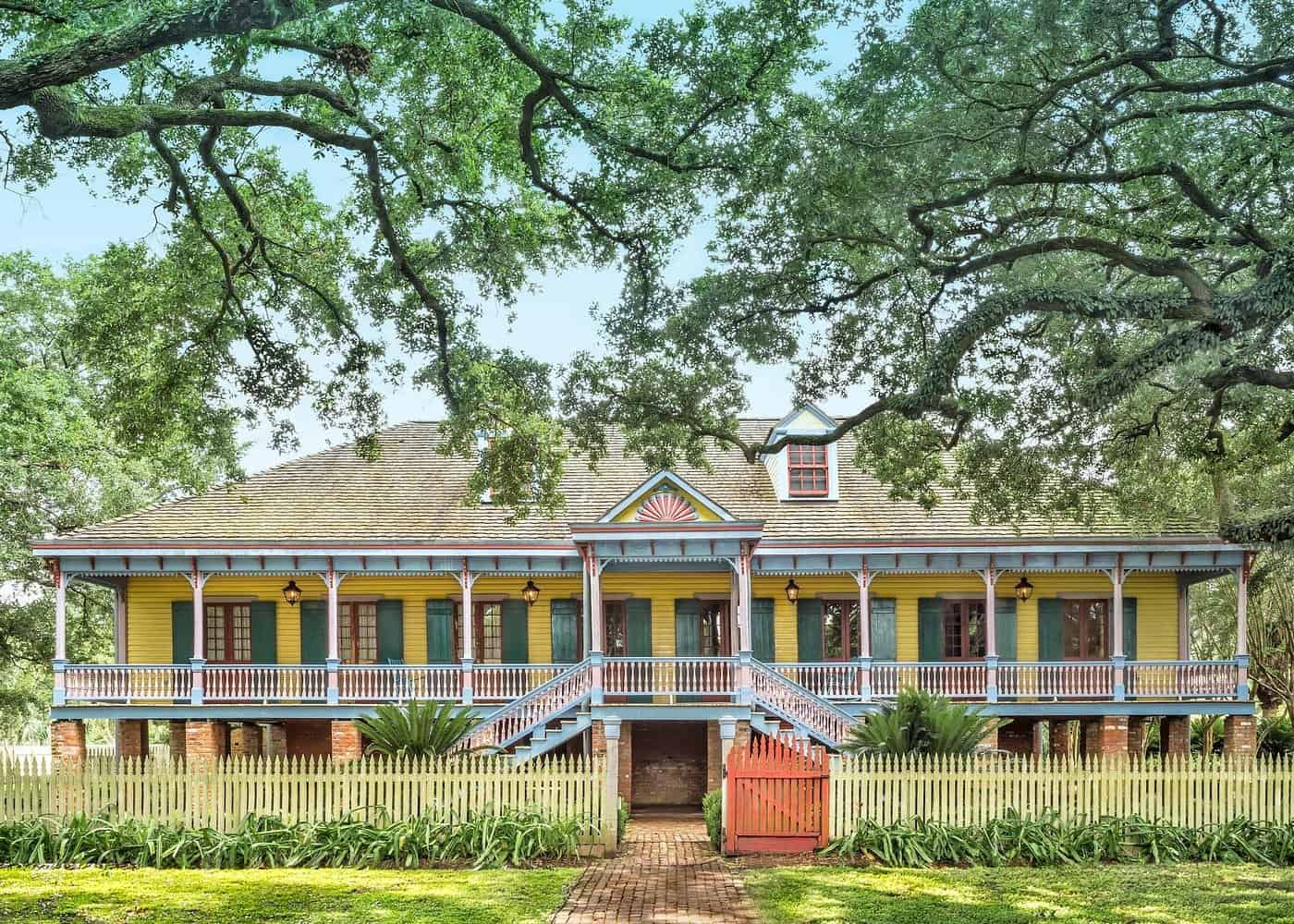
Laura Plantation offers a vivid look into Louisiana’s Creole heritage through a fully guided tour grounded in exceptional historical records. Located about an hour from New Orleans, the well-preserved estate traces four generations of the Duparc family and is listed on the National Register of Historic Places and the Louisiana African American Heritage Trail.

The furnished main house, original 1840s slave cabins, gardens, and sugar fields shows how the plantation owners and the enslaved people lived and worked there. Much of the interpretation draws from family memoirs and French archival documents, allowing guides to present an unusually detailed and personal historical narrative.

I noticed how the stories felt especially human because they came from firsthand accounts, and the complex history was explained well despite the short time. The tour is well-structured, culturally rich, and easy to fit into a limited itinerary.

“The tour provides an in depth look at the early Creole plantation life style. Our guide Amelia, is student of the period when the plantation was built and the following era.”

Richard (More Reviews)


Airboat and Plantations Tour with Gourmet Lunch from New Orleans

Photo Credit: Tours by Isabelle

🌟 4.7/5 stars (+1,200 reviews) | ⏳ Tour Duration: 9 Hours | 🏡 BOOK NOW

This deluxe full-day tour combines plantation history, regional culture, and outdoor adventure in a thoughtfully paced small-group experience. Beginning with hotel pickup in New Orleans, the day introduces travelers to Cajun and Creole heritage through guided visits, scenic drives, and immersive storytelling that connects land, people, and history.

Explore the manor house and original slave cabins on-site while learning personal stories of the families, free and enslaved, who lived there. For me, this tour highlights West African influences on Creole traditions, architecture, and individual daily lives, while giving documented family histories.

I like how your day wouldn’t end right away. The experience continues with a high-speed airboat ride through remote cypress swamps, followed by an elegant Cajun or Creole buffet lunch at Houmas House. There’s even a guided tour of Houmas House that traces more than 250 years of plantation history through preserved interiors and gardens. It was a pleasant surprise how smoothly the day balanced excitement, culture, and historical depth.

“Great experience! Isabelle was professional and a wealth of knowledge. Airboat was fun and learned a lot on plantation tours. Highly recommend.”

 Andrea (More Reviews)


Tips During a Laura Plantation Tour

  • Book your guided tour in advance, as Laura Plantation limits group sizes throughout the day.
  • Arrive early for your time slot, giving yourself time to check in and explore beforehand.
  • Listen closely to the guide’s storytelling, since much of the history comes from original family memoirs.
  • Wear comfortable shoes, as the tour includes walking through gardens, grounds, and slave cabins.
  • Ask questions during the tour, as guides are knowledgeable about Creole culture and plantation life.

Destrehan Plantation and Early Louisiana Life

Destrehan Plantation Tour 2026 – New Orleans

Photo Credit: Destrehan Plantation

🌟 4.8/5 stars (+490 reviews) | ⏳ Tour Duration: 45 Minutes | 🏡 BOOK NOW

Destrehan Plantation offers an intimate look at early Louisiana history at the oldest documented plantation home in the Lower Mississippi Valley. Located just minutes from New Orleans, it provides a quieter, easily accessible alternative to larger plantations while maintaining strong historical interpretation and depth.

I find it immersive that you’d be guided by costumed interpreters as you explore the restored main house and learn about the lives of people who lived on the plantation. The tour also emphasizes political, social, and economic history, including the 1811 Slave Revolt, through clear, well-organized exhibits.

After the guided tour, guests can explore original dependency buildings, view a folk-life demonstration, and walk the scenic grounds at their own pace. What surprised me was how uncrowded and reflective the experience felt, allowing for thoughtful engagement with Louisiana’s layered past.

“Very informative and interesting details about the home’s construction, maintenance, restoration. The overall history of the owners and historical events were insightful.”

Ingrid (More Reviews)


Airboat Swamp and Destrehan Plantation Tour from New Orleans

Photo Credit: Tours by Isabelle

🌟 4.8/5 stars (+250 reviews) | ⏳ Tour Duration: 5.5 Hours | 🏡 BOOK NOW

This small-group combo tour centers on a guided visit to Destrehan Plantation, the oldest documented plantation home in the Lower Mississippi Valley. You’d have a comfortable transport from New Orleans before arriving at the historic estate where costumed interpreters introduce the site’s antebellum architecture and its role in Louisiana’s early social and economic history.

The guided house tour focuses on the lives of those who lived and worked on the plantation, with special attention given to the 1811 Slave Revolt. I find it interesting how clearly the exhibits and storytelling connect individual experiences to larger historical events, making the visit informative without feeling rushed.

After the guided portion, guests have time to walk the oak-lined grounds and gardens at their own pace. What surprised me was how calm and reflective the plantation visit felt, before the itinerary concludes with a brief high-speed airboat ride through nearby bayous.

“Nice long fast airboat ride, lots of gators and then the sobering reality of a slave plantation explained in knowledgeable and enduring detail.”

Jonathan (More Reviews)


Book Ahead And Wear Comfy Shoes

Plantation tours is a convenient way to explore Louisiana’s rich and complex history. Walking through grand estates, gardens, and historic buildings, visitors encounter stories of Creole culture, antebellum life, and the experiences of enslaved people. The guided tours and exhibits make the history accessible, engaging, and memorable, while self-paced options allow for reflection and personal connection.

That is why it’s one of the most popular activities to do when visiting New Orleans.


PIN THESE NEW ORLEANS PLANTATION TOURS FOR LATER!

Ultimate Guide to the Best New Orleans River Cruises in 2026

Along the slow, storied curves of the Mississippi River, a cruise offers a front-row seat to the soul of the Crescent City. New Orleans’ deep-rooted river heritage and walkable waterfront makes it naturally designed for cruising, offering an easy yet immersive way to experience the area from a fresh perspective.

You’d find various options that captures a different side of the city’s charm, with classic paddlewheel steamboat trips and upbeat jazz sailings being some of the most popular activities. So to help you find the perfect pinch of magic in New Orleans river cruises, I personally curated a list of the best tours that will surely fit your plans.

Best New Orleans Cruise [🏅Top Pick]

New Orleans Steamboat Natchez Jazz Cruise

Photo Credit: Gray Line New Orleans

🌟 4.3/5 stars (+5,200 reviews) | ⏳ Tour Duration: 2 Hours | 🛳️ BOOK NOW

If you want a relaxed way to experience the Mississippi River without committing to a full evening, this daytime jazz cruise aboard the Steamboat Natchez might be the right activity for you. Since it focuses on the live music, river views, and classic steamboat charm in just a couple of hours, it makes it easy to fit into a busy sightseeing schedule.

The atmosphere outside is casual and welcoming, with plenty of open-deck space to enjoy the breeze and watch river traffic glide by. Then when you go inside, the jazz band provides an authentic soundtrack that feels distinctly New Orleans without overpowering the experience.

Whether you opt for light refreshments or simply enjoy the cruise itself, this simple, polished, and consistently enjoyable sailing works well for first-time visitors or anyone wanting a scenic break between city attractions.

“The was great music, and they even take requests. The food was also good, and the staff were friendly.”

 Deshun (More Reviews)

👍 Highlights Of The New Orleans Steamboat Natchez Jazz Cruise:

  • Authentic 2-hour paddlewheel cruise on the Mississippi River
  • Live New Orleans jazz performed onboard
  • Optional Creole-inspired buffet lunch (Mon–Sat)
  • Views of the skyline and Chalmette Battlefield
  • Wheelchair-accessible, family-friendly experience

Evening Jazz & Dinner Cruises

New Orleans Steamboat Natchez Jazz Cruise with Dinner Option

Photo Credit: Gray Line New Orleans

🌟 4.1/5 stars (+7,400 reviews) | ⏳ Tour Duration: 3 Hours | 🛳️ BOOK NOW

A classic dinner cruise aboard the Steamboat Natchez feels like stepping into a timeless New Orleans postcard. While in the water, you’d feel the evening unfolding into something special as you immerse yourself in the traditional paddlewheel boat right from the French Quarter and watch the city blend with the Mississippi at dusk.

Aside from the view, it amazes me how the live jazz that becomes the soundtrack of the evening is often performed by the Grammy-nominated Dukes of Dixieland. And if you upgraded your trip to include a Creole-inspired buffet, you’d be able to enjoy this music while savoring classic cuisine like chicken and sausage gumbo, crawfish étouffée, and New Orleans bread pudding.

Overall, this cruise brings together music, scenery, and local flavor in one easy package, making it ideal for travelers who want a polished, all-in-one river experience that captures the spirit of New Orleans.

“The food was excellent, the live music was enjoyable and the view was amazing. It was the first trip of this type for my grandson and I. He is 17 and really enjoyed it.

Christina (More Reviews)

👍 Highlights Of The Steamboat Natchez Jazz Cruise with Dinner Option:

  • Live jazz by the Grammy-nominated Dukes of Dixieland
  • Optional Creole-style buffet dinner with classic Louisiana dishes
  • Traditional paddlewheel steamboat on the Mississippi River
  • Sunset and nighttime views of the New Orleans shoreline
  • Enclosed climate-controlled areas plus open-air decks

Paddlewheeler Creole Queen Jazz Dinner Cruise in New Orleans

Photo Credit: New Orleans Paddlewheels Inc.

🌟 4.1/5 stars (+1,400 reviews) | ⏳ Tour Duration: 2.5 Hours | 🛳️ BOOK NOW

A lively, modern take on Mississippi River cruising that still honors classic New Orleans traditions is exactly what you get on this paddlewheeler tour. From the moment you board, live jazz fills the air throughout the cruise, which you can enjoy while taking in the open views and cool river breeze from the promenade deck. I find this New Orleans paddlewheeler cruise particularly fun for celebratory trips or social travelers who appreciate a bit more energy and atmosphere.

In addition, the optional dinner is served buffet-style and features satisfying Southern and Creole favorites that are easy to enjoy while moving around the boat. For example, dishes like jambalaya, red beans and rice, chicken and sausage gumbo, and white chocolate bread pudding are perfect to sample between songs. Meanwhile, the Victorian-style dining room and the cozy bar crafted from Louisiana cypress add an extra touch of historic character to the experience.

What stands out the most for me is how this cruise strikes a fun balance between live jazz music, Creole food, and scenic views, making it an excellent choice for a relaxed yet entertaining night on the river.

“What an awesome buffet! Although it was cold the jazz band was very entertaining. We celebrated a 60th and the band played happy birthday jazz style.”

 Michael (More Reviews)

👍 Highlights Of The Paddlewheeler Creole Queen Jazz Dinner Cruise in New Orleans:

  • Live jazz entertainment throughout the sunset cruise
  • Optional Creole buffet with classic Louisiana dishes
  • Two-hour Mississippi River sailing
  • Promenade deck with scenic river views
  • Stylish dining room and onboard cocktail bar

VIP Jazz Dinner Cruise with Private Tour and Open Bar Option

Photo Credit: Gray Line New Orleans

🌟 4.7/5 stars (+800 reviews) | Tour Duration: 3 Hours | 🛳️ BOOK NOW

Stepping aboard the Steamboat Natchez for this VIP jazz dinner cruise feels like being welcomed into a more intimate side of New Orleans river culture. I think the early boarding and reserved front-row seating instantly set it apart, especially with a complimentary Champagne cocktail in hand and the Dukes of Dixieland performing just feet away. The atmosphere feels celebratory but still refined, perfect for a special night out.

A Louisiana-style buffet filled with local favorites pairs beautifully with live jazz, while the optional open bar keeps things flowing at your own pace. The private guided tour of the vessel, including the engine room and paddlewheel, adds a behind-the-scenes element that makes the cruise feel truly exclusive.

As the boat glides along the Mississippi, the night wraps up with skyline views, smooth jazz, and memorable keepsakes like a souvenir photo and jazz CD. It’s a polished experience that blends music, dining, and discovery that for me is worth trying.

“VIP experience definitely enhanced the cruise. Our host Marlon was very attentive and knowledgeable tour of the boat with the captain was informative and the band was great.”

 Ethel (More Reviews)

👍 Highlights Of The VIP Jazz Dinner Cruise with Private Tour and Open Bar Option:

  • Early boarding with reserved front-row seating
  • Live jazz by the Grammy-nominated Dukes of Dixieland
  • Gourmet Louisiana-style buffet dinner
  • Private guided tour of the riverboat and engine room
  • Optional open bar plus commemorative gift bag

Daytime Jazz & Lunch Cruises

New Orleans: Creole Queen History Cruise with Optional Lunch

Photo Credit: Paddlewheeler Creole Queen

🌟 4.4/5 stars (+1,100 reviews) | ⏳ Tour Duration: 2.5 Hours | 🛳️ BOOK NOW

As the Creole Queen moves along the Mississippi, guided narration gradually brings Louisiana’s past into focus, covering everything from early river commerce to pivotal historical events. Because of this, having a history-focused cruise feels especially rewarding for travelers who enjoy deeper storytelling alongside scenic river views.

Additionally, the optional Creole and Cajun lunch adds a practical yet enjoyable touch, turning the cruise into a well-rounded midday experience. You can enjoy regional dishes while listening to commentary and watching the riverbanks unfold outside.

What I like most is the pacing as it never feels overloaded with information. The blend of education, scenery, and comfort makes this cruise a strong choice for history buffs and curious travelers alike.

“It was great. Very cool to ride on a Mississippi River boat. I liked the creole/cajun lunch option. Enjoyed our stop at the battlefield. It was a very enjoyable experience.”

 Jennifer (More Reviews)

👍 Highlights Of The Creole Queen History Cruise with Optional Lunch:

  • Relaxing narrated cruise down the Mississippi River with local historical storytelling
  • Visit the Chalmette Battlefield, site of the historic Battle of New Orleans
  • One-hour guided battlefield tour led by expert National Park Rangers
  • Learn about New Orleans landmarks, river lore, and rich cultural history
  • Enjoy Creole lunch options and New Orleans cocktails onboard the cruise

Paddlewheeler Creole Queen Historic Mississippi River Cruise

Photo Credit: New Orleans Paddlewheels Inc.

🌟 4.1/5 stars (+1,900 reviews) | ⏳ Tour Duration: 2.5 Hours | 🛳️ BOOK NOW

I think this cruise is a great way to connect New Orleans scenery with real history, especially if you enjoy learning as you travel. Sailing the Mississippi aboard the Paddlewheeler Creole Queen, I like how the onboard historian brings the river to life with stories about the city, Hurricane Katrina, and early river commerce.

For me, the highlight is the stop at Chalmette Battlefield, where you disembark for a guided walk through the site of the 1815 Battle of New Orleans. The pacing feels comfortable, with time to explore, listen, and then relax back on the boat.

Once underway again, I enjoy grabbing a drink from the cash bar and taking in the river views from the deck. I find this cruise ideal for curious travelers who want context, history, and a classic riverboat experience.

“The experience was amazing Its great if you love history the boat ride was great very smooth .. the plantation tour was great as well”

 Cikia (More Reviews)

👍 Highlights Of The Paddlewheeler Creole Queen Historic Mississippi River Cruise:

  • Paddlewheeler cruise on the Mississippi River
  • Live narration by an onboard historian
  • Guided stop at Chalmette Battlefield
  • Cash bar and food available for purchase
  • Multiple daily departure times

New Orleans City Tour and Steamboat Natchez Harbor Jazz Cruise

Photo Credit: Gray Line New Orleans

🌟 4.2/5 stars (+400 reviews) | ⏳ Tour Duration: 6.5 Hours | 🛳️ BOOK NOW

A smart way to visit New Orleans fully is by booking a combination tour that maximizes your time from both land and water in one seamless experience. The narrated motorcoach tour makes it easy to absorb the city’s story and information about the architecture, cemeteries, and streetcar routes as you pass through the French Quarter, Jackson Square, City Park, and the elegant Garden District.

I like how the pace shifts once you board the steamboat. The Mississippi River cruise feels calm and scenic, with live jazz, captain’s narration, and wide views of the Crescent City shoreline. Exploring the decks and historic engine room adds a classic touch.

For travelers short on time or visiting for the first time, this tour offers strong value. It removes the guesswork from planning while delivering a well-rounded snapshot of New Orleans’ culture, history, and riverfront charm.

“You not only get the experience of a land, city tour, but you also take a cruise down the Mississippi River. Did I say the price is reasonable!!”

 Cheryl (More Reviews)

👍 Highlights Of The New Orleans City Tour and Steamboat Natchez Harbor Jazz Cruise:

  • Narrated city coach tour covering major neighborhoods and historic landmarks
  • Visit Jackson Square, City Park, and St. Louis Cemetery No. 3
  • Two-hour Mississippi River cruise aboard Steamboat NATCHEZ or sister vessel
  • Live jazz music, steam calliope sounds, and captain’s river narration
  • Optional Creole lunch buffet with classic Louisiana comfort dishes

Jazz Brunch & Sunday River Leisure

Sunday Jazz Brunch Cruise in New Orleans

Photo Credit: Gray Line New Orleans

🌟 4.1/5 stars (+800 reviews) | ⏳ Tour Duration: 2 Hours | 🛳️ BOOK NOW

Sundays are made for slowing down, and this jazz brunch cruise captures that spirit beautifully on the Mississippi River. The atmosphere feels social and comfortable, with live jazz setting a mellow tone and the vintage details, especially the museum-quality engine decor sets a nostalgic tone as the boat glides along the river.

Brunch is generous and satisfying, featuring a classic Louisiana-style buffet with gumbo, shrimp and grits, cinnamon rolls, and more. The timing works nicely, leaving you plenty of day left to explore afterward.

What makes this cruise special is how effortlessly it blends food, music, and scenery. It feels local, welcoming, and easygoing—ideal for couples, solo travelers, or anyone wanting a laid-back Sunday experience that still feels distinctly New Orleans.

“Crew and staff very courteous and helpful, you must experience the brunch, food was plentiful and delicious, narration good, and the jazz was great!!!”

 Sherry (More Reviews)

👍 Highlights Of The Sunday Jazz Brunch Cruise in New Orleans:

  • Two-hour Sunday jazz cruise aboard a traditional paddle-wheel riverboat 
  • Live jazz trio entertainment throughout the scenic Mississippi River journey
  • Louisiana-style buffet brunch with classic local favorites, if option selected
  • Panoramic city skyline views from spacious outdoor decks and indoor cabins
  • Vintage riverboat features, including a museum-quality engine room to explore

New Orleans: Sunday Steamboat Jazz Cruise + Optional Brunch

Photo Credit: Gray Line New Orleans

🌟 4.3/5 stars (+400 reviews) | ⏳ Tour Duration: 2 Hours | 🛳️ BOOK NOW

I find there’s something timeless about gliding down the Mississippi River on a paddlewheeler while live jazz plays in the background. This Sunday cruise aboard the Riverboat City of New Orleans delivers that classic experience, blending smooth sounds from the Steamboat Stompers with sweeping views and lighthearted captain’s narration. For me, exploring all four decks (especially the open-air top deck) really brings the journey to life.

You can also keep things simple or opt for the Creole brunch buffet, freshly prepared onboard. The menu highlights comforting Louisiana favorites, paired with included coffee and iced tea, while cocktails are available for purchase at full-service bars on every deck.

What makes this cruise memorable is the easygoing pace and authentic atmosphere. It feels social yet relaxed, offering a polished way to enjoy New Orleans history, music, and scenery in one smooth outing.

“Brilliant trip. Food was amazing. Commentary was so interesting. Cocktails and entertainment first class.”

David (More Reviews)

👍 Highlights Of The New Orleans Sunday Steamboat Jazz Cruise + Optional Brunch:

  • Two-hour Mississippi River sightseeing cruise on an authentic paddlewheeler
  • Live New Orleans jazz by the Steamboat Stompers throughout the journey
  • Optional Creole brunch buffet prepared fresh onboard with local flavors
  • Live captain’s narration sharing stories of New Orleans history
  • Multiple indoor and outdoor decks with excellent photo opportunities

New Orleans: Creole Queen Weekend Morning Jazz Cruise

Photo Credit: Paddlewheeler Creole Queen

🌟 4.3/5 stars (+100 reviews) | ⏳ Tour Duration: 1 Hour 30 Minutes | 🛳️ BOOK NOW

Starting the day on the Mississippi river feels effortlessly New Orleans, and this weekend morning cruise captures that mood beautifully. It’s especially appealing for travelers who want a scenic experience without dedicating an entire afternoon or evening.

For me, the live jazz by the Muddy Mississippi Band is the highlight, especially with the chance to dance in the elegant dining hall. You can sip a classic New Orleans cocktail on the promenade deck, or keep it simple and just enjoy the breeze as the city glides by. If you add brunch, the Creole-inspired spread with gumbo, shrimp and grits, French toast, and bread pudding adds a comforting local touch.

Because it’s less crowded than later sailings, the atmosphere feels intimate and relaxed. So for a gentle introduction to river cruising or a pleasant start to your day, this morning jazz cruise offers excellent value and authentic New Orleans charm.

“Charming Crew was delightful Food was fantastic Drinks were intoxicating Fabulous way to spend an early afternoon”

Sarah (More Reviews)

👍 Highlights Of The New Orleans Creole Queen Weekend Morning Jazz Cruise:

  • Scenic Mississippi River cruise with skyline views
  • Live jazz by the Muddy Mississippi Band
  • Optional Creole-style weekend brunch
  • Paddlewheeler Creole Queen experience
  • Convenient Riverwalk/Canal Street dock departure

Jazz, Food, or Scenery: What Will You Sail For?

Choosing a New Orleans river cruise really comes down to what kind of memory you want to take home. If you love rhythm and atmosphere, the jazz cruises feel like the city itself humming along the Mississippi, turning every note into part of the scenery. For food lovers, the brunches and Creole dinners add a comforting, indulgent layer that I think perfectly matches the city’s soul, especially when paired with river breezes and skyline views. History fans may lean toward narrated sailings or combo tours, where stories of battles, neighborhoods, and river life add depth to every mile. So pick your vibe, grab a seat on deck, and let the Mississippi do the rest because in New Orleans, even the river knows how to steal the show.


PIN THESE NEW ORLEANS CRUISES FOR LATER!

The Best Ghost Tours in New Orleans

Widely known as one of the most haunted places in the United States, New Orleans is packed with ghost stories and centuries of spooky history. Its highly walkable neighborhoods make exploring the city effortless, particularly when it comes to discovering its otherworldly side. You’d never run out of ghost tours, historic cemeteries, and eerie sites to try, and what’s a better way to spend a night in NOLA than exploring this spine-chilling beauty? 

To make planning a little easier, I’ve compiled a list to help you find the right activity to fit your itinerary. Rest assured that you’ll find the perfect place to experience legendary spirits and unforgettable after-dark adventures here, so let’s begin exploring!

Best Ghost Tour in New Orleans [🏅Top Pick]

New Orleans Premier Ghost, Voodoo and Vampire Walking Tour

Photo Credit: Witches Brew Tours

🌟 4.5/5 stars (+12,600 reviews)|⏳Tour Duration: 1 Hour 45 Minutes| 👻 BOOK NOW

This walking tour feels like a great fit if you want to explore New Orleans after dark. From the start, it’s led by a knowledgeable local guide who takes you on an evening stroll through the French Quarter, passing eerie landmarks like Jackson Square and the LaLaurie Mansion. Along the way, you even stop by Lafitte’s Blacksmith Shop Bar to enjoy a drink while hearing pirate tales and local lore.

What really stands out to me, however, is how listening to chronicles about ghosts and early vampire lore kept me hooked the entire time. I also appreciate how the tour blends real history with chilling legends, giving each stop just the right amount of atmospheric appeal.

Additionally, the tour feels personal since group sizes are kept manageable, with options for even smaller groups. So, if you’re looking for an approachable way to uncover New Orleans’ darker past, this is one I’d confidently recommend.

This tour was informative and thrilling. Chocked full of history and lore. Would recommend doing it first on your trip. As it will cover some places you might want to go to.

Andre (More Reviews)

👍 Highlights Of The Ghost, Voodoo and Vampire Walking Tour in New Orleans:

  • Explore the French Quarter at night with a local guide who knows the city’s haunted paths
  • Hear captivating stories of voodoo, witchcraft, ghosts, and vampire legends
  • Pass iconic sites like the LaLaurie Mansion, Jackson Square, and the Pharmacy Museum
  • Visit legendary locations including Lafitte’s Blacksmith Shop Bar and Voodoo Authentica
  • Easy meeting point and group setting make the experience stress-free and immersive

Adults-Only New Orleans Ghost, Crime, Voodoo, and Vampire Tour

Photo Credit: Hottest Hell Tours – Adults Only

🌟  4.8/5 stars (+6,400 reviews) | Tour Duration: 1 Hour 45 Minutes | 👻 BOOK NOW

Do you want to satisfy your cravings for something darker and more intense than the average ghost walk? This adults-only tour delivers exactly that, since the guide doesn’t hold back in saying the most chilling true-crime stories and paranormal legends that feels like stepping into the city’s shadowy side.

You’ll wind through places like Congo Square, Bourbon Street, and past infamous sites such as the LaLaurie Mansion. I like how the tour reveals a perspective of New Orleans you wouldn’t stumble upon alone, especially with tales tied to voodoo, vampires, and real crimes. Plus, if you opt for the VIP experience, the Hellvision digital projections add an extra layer that makes the storytelling even more immersive.

I’d recommend this tour to anyone who prefers their history raw and their ghost stories unfiltered. It’s intense, memorable, and not for the faint of heart.

AMAZING! Loved our tour guide and his story telling skills. Made our first visit to NOLA unique and exciting. Cannot wait to come back again and do another one. Highly recommend

 Cameron (More Reviews)

👍 Highlights Of The  Adults-Only Ghost, Crime, Voodoo, and Vampire Tour:

  • Adults-only nighttime tour focused on true crime, voodoo, and paranormal lore
  • Explore haunted areas of the French Quarter after dark with a licensed guide
  • Optional VIP upgrade with Hellvision™ digital projections
  • Visit notorious sites like Congo Square and the LaLaurie Mansion
  • Wheelchair accessible and service animals are allowed

Adults Only Haunted Pub Crawl in New Orleans

Photo Credit: New Orleans Ghost Adventures

🌟 4.5/5 stars (+2,100 reviews) | Tour Duration: 2 Hours | 👻 BOOK NOW

If you want to see the haunted side of New Orleans while enjoying a few drinks, this evening adventure is a great pick. You’d first set the mood at Jackson Square before wandering through the French Quarter, hearing stories about pirates, haunted alleys, and spots where famous authors used to hang out. The vibe is lively, yet spooky, and the group setting makes it easy to meet other travelers while having a drink or two.

I think you’d enjoy stopping at bars with their own ghostly reputations, such as Lafitte’s Blacksmith Shop Bar, claimed to be the oldest in the country. By the time you reach May Baily’s Place, you’d enjoy the fun mix of nightlife and the eerie energy of the city around you.

It’s perfect for anyone looking for a night out with a spooky twist, where the combination of haunted stories and drinks keeps the energy high from start to finish.

Lot of fun learning about some of the haunted history of the French Quarter. John was a very good guide.

Gary (More Reviews)

👍 Highlights Of The Haunted Pub Crawl in New Orleans:

  • Enjoy drinks and nightlife with a lively group
  • Hear ghost stories while hopping from bar to bar
  • Stops include Lafitte’s Blacksmith Shop Bar and Lalaurie Mansion
  • Complimentary drink at the final bar

Cemetery Bus Tours

New Orleans Cemetery Bus Tour with Exclusive Cemetery Access

Photo Credit: New Orleans Ghost Adventures

🌟  4.7/5 stars (+1,600 reviews) | Tour Duration: 2 Hours| 👻 BOOK NOW

Seeing the cemeteries of New Orleans at night has a totally different vibe than during the day. Each cemetery has its own character, from their towering tombs to hidden corners that feel straight out of a story. And while you’re on the bus, the guide will point out haunted spots and share stories that will make you look twice at every shadow.

The best part is getting exclusive access to a private cemetery while the guide explains its history and spooky tales. You’d also get the chance to use EMF readers, which brings out a fun interactive touch, and listen to the on-board commentary that adds excitement throughout the ride.

It’s an ideal way to explore New Orleans’ eerie charm, and it shows a unique side of the city you might not experience from others.

“This was a fun adventure through graveyards where we learned interesting new things and my sister got a photo of a ghost! It was pretty cool and our guide Lauren was fun. I definitely recommend.”

Tamara (More Reviews)

👍 Highlights Of The Cemetery Bus Tour with Exclusive Access:

  • Exclusive nighttime access to a private cemetery
  • EMF readers are provided to spot ghosts
  • Drive-by views of iconic cemeteries and city landmarks
  • On-board commentary from a local guide
  • Details about unique above-ground burial traditions

New Orleans Dead of Night Ghosts and Cemetery Bus Tour

Photo Credit: Haunted History Tours

🌟  4.7/5 stars (+1,900 reviews) | Tour Duration: 2 Hours| 👻 BOOK NOW

If you’re someone who wants an easy way to experience the darker side of New Orleans without walking long blocks at night, this tour is well worth checking out. Instead, you’ll ride in a cool, quiet bus that drifts past gloomy streets while a knowledgeable guide shares spooky stories and local legends along the way.

Once you step into the cemeteries, the after-dark access immediately shifts the mood into something that feels rare and uncanny. At that point, the guide’s steady commentary and thoughtful pacing help create a fully immersive experience, allowing you to focus on the atmosphere rather than logistics.

As the tour continues, it moves between voodoo and ritual sites, historic burial grounds, and open park spaces that give you time to pause, take photos, and catch your breath throughout the spooky journey.

“Great ghost tour of New Orleans. Lots of history from a wonderful tour guide! Got to walk inside the cemetery which I wasn’t expecting. Overall great experience!!”

Tamara (More Reviews)

👍 Highlights Of The Dead of Night Ghosts and Cemetery Bus Tour:

  • Introduction to haunted burial grounds
  • Magnolia Bridge, a ritual site every St. John’s Eve
  • Access to St. Louis Cemetery No. 3
  • Cafe stop at the end for a quick bite

Cemetery and Ghost BYOB Bus Tour in New Orleans

Photo Credit: NOLA GhostRiders

🌟  4.5/5 stars (+2,600 reviews) | Tour Duration: 2 Hours| 👻 BOOK NOW

A BYOB cemetery bus tour is a smooth way to see New Orleans at night, and this one is perfect if you’re hoping to see the quieter side of town. And once the city noise dropped and you started nearing the shadowy cemetery? You’d surely feel the vibe shift inside your ride.

One of the best views for me are the above ground tombs with their unusual and elaborate structures looming as they sit close together. The guide is also amazing at linking the area with paranormal experiences. They would even give you tips on how to hunt, which would be put into use in the second cemetery where you can pick out tools to find ghosts before your tour ends.

“Guide was amazing and funny. A ghost hunter himself. Very informative and we had a great time. Two cemeteries and Cafe De Monde as well as A ghost meter to look for ghosts what fun!”

Leslie (More Reviews)

👍 Highlights Of The Cemetery and Ghost BYOB Bus Tour in New Orleans:

  • Led by experienced ghost hunter
  • Masonic Temple Cemetery, the city’s oldest and most haunted graveyards
  • Passing by one of the nation’s oldest urban parks

Other New Orleans Ghost Tours

New Orleans Adults-Only True Crime and Ghost Walking Tour

Photo Credit: Streets Of Sin True Crime, Dark History, and Haunted Tours of New Orleans

🌟 5/5 stars (+1,500 reviews) | Tour Duration: 2 Hours | 👻 BOOK NOW

Walking through New Orleans at night with its quieter streets give a more intimate vibe. I noticed how easy it was to follow along on foot, which is perfect if you want to absorb a place instead of rushing past it.

What truly sets this experience apart is how unapologetically eerie the French Quarter becomes right after nightfall, especially as you listen to tales about true crimes and ghosts. The guide shares the stories straight and uncensored while moving from stop-to-stop, a great fit if you enjoy something darker without filters.

“Great tour with lots of interesting and chilling facts, myths. and legends sprinkled with New Orleans dark history. Our knowledgeable and friendly tour guide Jamie gave it an extra special vibe.”

 Chris N (More Reviews)

👍 Highlights Of The Adults-Only True Crime and Ghost Walking Tour:

  • Focus on true crime and ghost tales
  • Inn on Ursulines, a site of a gruesome murder
  • Alleys where real bloody crimes happened
  • Famous landmarks such as St. Louis Cathedral and Supreme Court of Louisiana

Ghost and Vampire Walking Tour Of The French Quarter

Photo Credit: French Quarter Phantoms

🌟 4.7/5 stars (+2,300 reviews) | Tour Duration: 2.5 Hours | 😋 BOOK NOW

If you want a French Quarter focused tour at night that feels easy and social, then I think this activity is right down your alley.

As you move through local streets, you’d stop outside key spots while the guide shares creepy tales about the area. I found that staying outdoors works well if you like spooky themes without being overwhelmed, which is nice if you’ve had a long day exploring the other parts of the town. 

The comfortable pace ensures that there is time to look around and reset between stops. You wouldn’t even expect how quickly the time passed during the casual way of exploring the area while hearing stories you would miss on your own.

“I love the historical component to the buildings and stories. Although disturbing, it was ok for my 11 year old and she was entertained.”

Jennifer (More Reviews)

👍 Highlights Of The Ghost and Vampire Walking Tour Of The French Quarter:

  • Night walk through the French Quarter
  • Ghost and vampire themed stories
  • Learn about haunted locations from outside
  • Tour departure point is just a short walk away from most hotels

New Orleans Ghost Tour: Go Inside a Haunted Location

Photo Credit: New Orleans Ghost Adventures

🌟 4.6/5 stars (+1,100 reviews) | Tour Duration: 3 Hours | 👻 BOOK NOW

Evening tours hit different when you can actually step inside and get a closer look in a haunted place that scary stories are about. The tour would start off easy with passing by the French Quarter and walking through several hotspots like Jackson Square and St. Louis Cathedral. But once you go inside some of the buildings, you’d see how this one really stands out.

Being indoors changes the energy fast, and it gives a depth that I think is unique from the other tours. The historian guide would also uncover the chilling history of the lovely houses you’d see for a complete experience.

You can even get a glimpse of the Old Ursuline Convent Museum, the focal point of vampire folklore in New Orleans, at the end of your adventure, so this activity is definitely something worth checking out!

“Wonderful ghost tour with a very knowledgeable tour guide, Jenna. Entertaining and historical information and great locations. Glad we booked this tour!!!”

Heidi (More Reviews)

👍 Highlights Of The Ghost Tour in a Haunted Courtyard:

  • Evening ghost tour through central streets
  • Entry into the haunted courtyard of Place d’Armes Hotel
  • Led by a knowledgeable guide with live stories
  • Mix of walking and short indoor stops

Ready For A Haunted Time in New Orleans?

New Orleans is rich in eerie history and legends, making it easy to explore so many spine-chilling spots in a short time. You can move between ghost tales, vampire stories, and true crime without going far and spending long hours building your itinerary from scratch, giving you the perfect variety without overplanning.

Since there is a wide range of exciting tours in New Orleans, I hope this list helps you decide on what is the perfect activity for you. Once you do, prepare yourself for a hauntingly memorable experience into the shadows and let NOLA leave a chill on your spine that lingers long after the tour ends.


PIN THESE NEW ORLEANS GHOST TOURS FOR LATER!

10 Best New Orleans Tours That Travelers Will Enjoy

Ever wondered which New Orleans tours are actually worth your time? You’ve come to the right place! To help you skip a few steps of planning, I’ve rounded up the top tours that consistently get rave reviews and keep visitors talking long after their trip ends.

Each option on this list stands out for its knowledgeable guides, memorable experiences, and overall value. But if you’re still unsure where to stay, be sure to check out my guide on the best neighborhoods in New Orleans to choose the perfect home base. Once you’re settled, these are the activities worth booking to make the most of your time in the Big Easy. Ready to explore?

Food Tours Worth Taking in New Orleans

There’s no better way to immerse yourself with the place you’re visiting than having a taste of their local cuisine, and NOLA delivers that experience like no other. These food tours pair iconic dishes with rich history and insider stories, making them a must for anyone who wants to truly savor the city.

New Orleans Food and History Walking Tour

Photo Credit: Doctor Gumbo Tours

🌟 4.9/5 stars (+1,500 reviews) | ⏳ Tour Duration: 3 Hours | 😋 BOOK NOW

Do you want the perfect introduction to the city’s legendary cuisine and cultural roots? This food and history walking tour will have you sampling classic dishes like gumbo, po-boys, and regional specialties.

It is led by a knowledgeable local guide that will take you to a stroll through historic neighborhoods while listening to stories of immigration, Creole traditions, and the culinary influences that shaped New Orleans’ food scene. Aside from trying out delicious foods, you’d even get to stop by local markets and artisanal shops throughout your tour.

I’d say that this is ideal for first-time visitors and food lovers alike since this tour blends flavor, storytelling, and local insight into one satisfying experience.

“Nice selection of restaurants with informative explanations about the food culture in NOLA. Beth was personable, attentive and funny host!”

Billie (More Reviews)

👍 Highlights Of The New Orleans Food and History Walking Tour:

  • Sample iconic Creole dishes like gumbo, po’boys, and pralines.
  • Explore the French Quarter with a knowledgeable local guide.
  • Visit hidden foodie spots, including hot sauce and praline shops.
  • Learn the history and stories behind New Orleans’ culinary traditions.

New Orleans Food Walking Tour of the French Quarter with Small-Group Option

Photo Credit: Destination Kitchen

🌟 4.8/5 stars (+5,900 reviews) | ⏳ Tour Duration: 3 Hours | 😋 BOOK NOW

This French Quarter food tour offers a flavorful deep dive into New Orleans’ most iconic neighborhood, with the added bonus of a small-group option for a more personal experience. 

Over three hours, you’ll visit several locally loved spots to sample gumbo, alligator sausages, and jambalaya to name a few. I find it entertaining how, between bites, your guide shares engaging stories about the Quarter’s history, architecture, and vibrant food culture.

There’s also an added variety in the tour that you might appreciate since the stops may include art galleries or cooking schools, not just restaurants alone. With manageable group sizes and generous tastings, this tour is a hit with travelers who want authentic flavors without the crowds.

“Our group of 12 walked to 4 restaurants sampling oysters, boudin, gumbo, and muffaletta. We also visited an art gallery and cooking school to sample pralines. Our guide was knowledgeable about the food and city. Great experience for older teens to older adults.”

Carrie (More Reviews)

👍 Highlights Of The New Orleans Food Walking Tour of the French Quarter:

  • Try classic New Orleans dishes like gumbo, jambalaya, and po’boys.
  • Taste authentic foods from top French Quarter restaurants and specialty spots.
  • See iconic landmarks like Café du Monde along the way.
  • Upgrade to a small-group experience for a more intimate adventure.

Ghost Tours Travelers Can’t Stop Talking About

Some cities have history, but New Orleans has stories that linger long after the sun goes down. From shadowy alleyways to centuries-old buildings, these ghost tours dive into the city’s most chilling legends and haunted past. Equal parts spooky and fascinating, these are the spooky tours that travelers can’t stop talking about.

Adults-Only New Orleans Ghost, Crime, Voodoo, and Vampire Tour

Photo Credit: Hottest Hell Tours – Adults Only

🌟 4.8/5 stars (+6,400 reviews) | ⏳ Tour Duration: 1.5 Hours | 👻 BOOK NOW

Designed exclusively for adults, this ghost tour explores New Orleans’ darkest and most fascinating legends after nightfall. The guide dives into true crime stories, voodoo traditions, vampire lore, and documented hauntings as you walk through eerie streets and historic locations, which I find fascinating.

The storytelling is bold, detailed, and unapologetically gritty, making it ideal for travelers who want more than lighthearted ghost tales. Stops often include infamous buildings tied to real events, adding authenticity to the experience.

I definitely recommend this tour for that perfect blend of spooky and educational, where its depth, atmosphere, and captivating guides will bring the city’s shadowy past vividly to life.

“TOur vampire/ghost tour was great! We really enjoyed our guide Elaine’s knowledge on a variety of subjects, and the sights were uniquely New Orleans! Would definitely recommend!”

Isaac (More Reviews)

👍 Highlights Of The Adults-Only New Orleans Ghost, Crime, Voodoo, and Vampire Tour:

  • Discover New Orleans’ haunted history with chilling true-crime and voodoo stories.
  • Explore the French Quarter after dark for a spine-tingling experience.
  • Visit notorious haunted sites, including the Lalaurie Mansion and Lafitte’s Blacksmith Shop.
  • Upgrade to the VIP tour for immersive Hellvision digital projections.
  • Experience the city’s supernatural legends and eerie tales you won’t find on your own.

New Orleans Premier Ghost, Voodoo and Vampire Walking Tour

Photo Credit: Witches Brew Tours

🌟 4.5/5 stars (+12,600 reviews) | ⏳ Tour Duration: 1.5 Hours | 👻 BOOK NOW

Would you like to have that feeling of ease from joining one of the city’s most popular ghost tours? Because I do! And this walking experience gives just that while delivering a fast-paced and entertaining evening that blends haunted history, voodoo practices, and vampire legends.

The guides are known for their energetic storytelling and their willingness to share raw, lesser-known details of New Orleans’ darker past. For me, the highlight is visiting the haunted buildings, hearing chilling firsthand accounts, and discovering how folklore and real history intertwine in the French Quarter.

While undeniably spooky, the tour balances scares with humor and cultural insight, making it welcoming even for first-time ghost tour guests. It’s a memorable way to experience the city after dark.

“Juju was a fun and genuine guide who gave us the raw details of local haunted and horror stories. We’ve learned some details about the dark past of New Orleans and origin stories of ageless noble vampires.”

 Brandon (More Reviews)

👍 Highlights Of The New Orleans Premier Ghost, Voodoo and Vampire Walking Tour:

  • Explore the French Quarter at night with tales of ghosts, witches, and vampires.
  • Visit eerie landmarks like the LaLaurie Mansion and Lafitte’s Blacksmith Shop Bar.
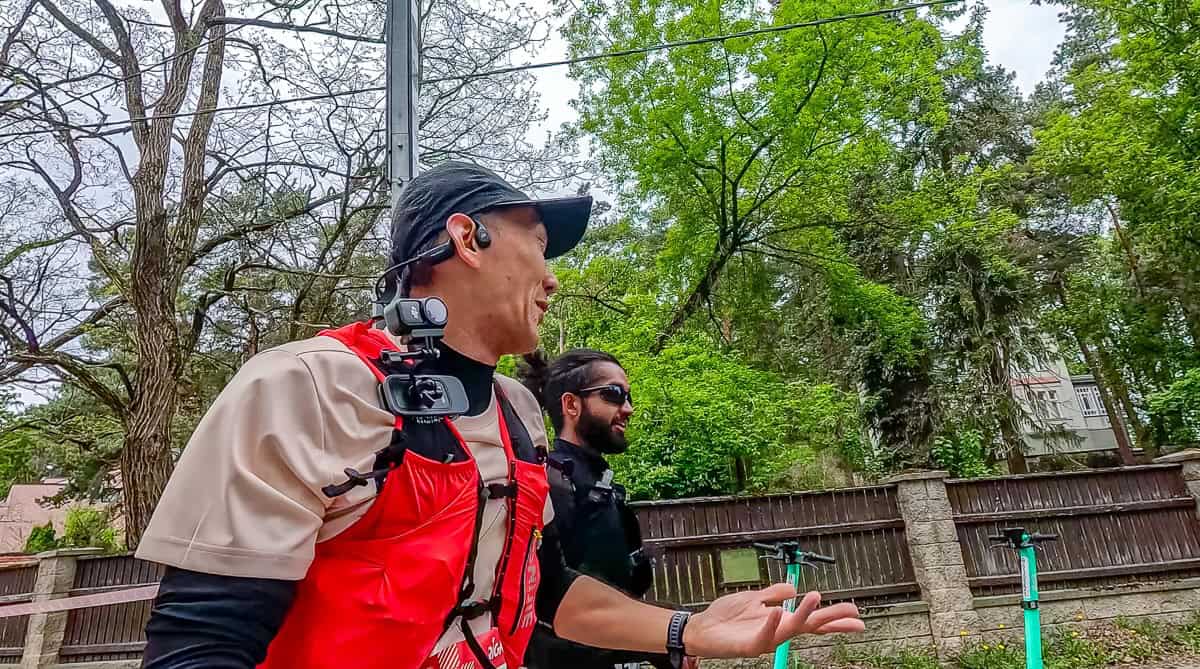
  • Hear chilling stories about voodoo, witchcraft, and New Orleans’ haunted past.
  • Learn about historic sites like the New Orleans Pharmacy Museum and Jackson Square.

Swamp Tours That Show You the Real Bayou

Venture beyond the city streets and step into the wild heart of Louisiana on a swamp tour. Glide through moss-draped cypress trees, spot unique wildlife, and discover the hidden waterways that make the bayou so magical. These tours give travelers an up-close look at the real Louisiana landscape that few get to see.
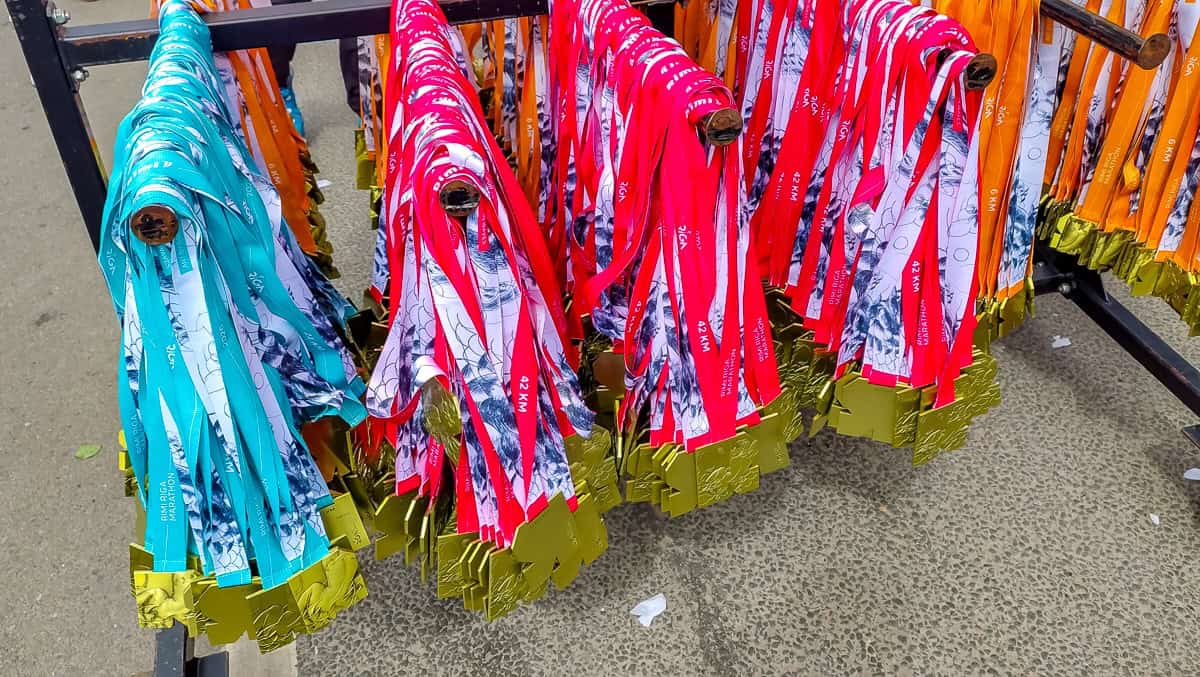
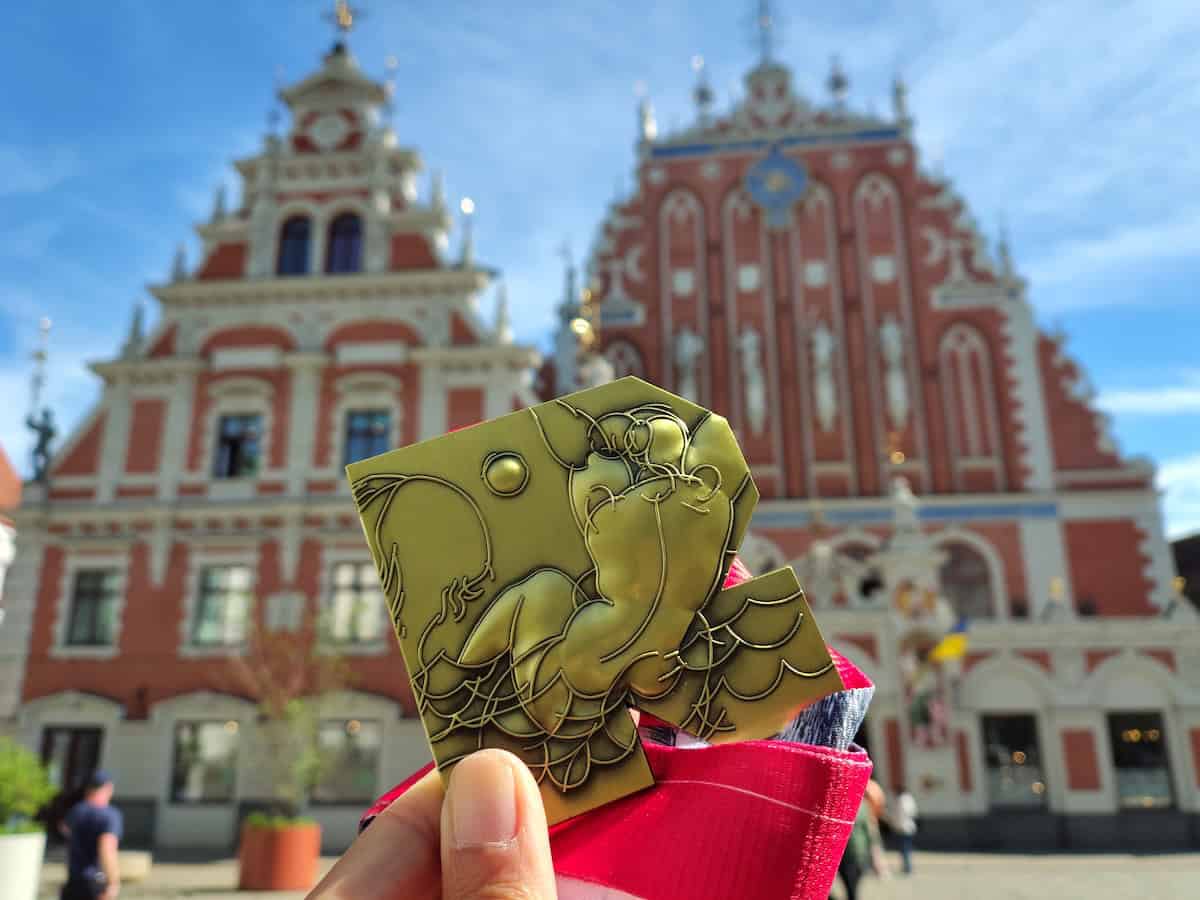
New Orleans Swamp and Bayou Boat Tour with Transportation

Photo Credit: Cajun Encounters Tour Co.

🌟 4.9/5 stars (+5,300 reviews)| Tour Duration: 5 Hours | 🍃 BOOK NOW

It’s such an effortless escape when your swamp and bayou tour includes a round-trip transportation from New Orleans. Once on the water, you’ll cruise through serene wetlands filled with cypress trees, Spanish moss, and abundant wildlife.

I appreciate how knowledgeable the captains are as they point out alligators, birds, and other native animals while explaining how Cajun communities live in harmony with the swamp. The ride is also suitable for all-ages, so if you’re planning a family trip then you should consider this for your itinerary.

With plenty of wildlife sightings and scenic photo opportunities, this tour offers a well-rounded introduction to Louisiana’s natural beauty without the hassle of arranging your own transport.

“This tour was absolutely fantastic! We saw an incredible variety of wildlife -plenty of alligators, tons of birds, a heap of possums, and even some boars. It was such a memorable experience, and I’d recommend it to anyone visiting New Orleans!”

Melissa (More Reviews)

👍 Highlights Of The Swamp and Bayou Boat Ride with Round-Trip Transport:

  • Explore one of Louisiana’s last protected wetlands on a 2-hour boat tour.
  • Spot wildlife including alligators, wild boar, snakes, and a variety of birds.
  • Learn about Cajun culture and the swamp’s unique ecosystem from a local guide.
  • Visit an authentic Cajun village accessible only by boat.
  • Enjoy round-trip transportation from New Orleans and scenic views along the way.

New Orleans Swamp Tour Boat Adventure

Photo Credit: Louisiana Tour company

🌟 4.8/5 stars (+1,800 reviews) | Tour Duration: 1.5 Hours | 🍃 BOOK NOW

Short on time but still want a thrilling bayou experience? This swamp boat adventure delivers big excitement in just an hour and a half. Led by expert captains who know the waterways inside and out, the tour takes you deep into alligator territory while sharing fascinating facts about swamp ecosystems.

It amazes me that you’d get to see gators up close, along with birds, turtles, and other wildlife native to southern Louisiana. The smaller tour format also keeps things engaging and interactive, with plenty of opportunities for questions and photos. It’s a fun, efficient way to experience the swamp without committing to a full-day excursion.

“Great tour – swamp was beautiful and we saw a ton of alligators and wildlife. Captain was very comfortable with the gators – fed them marshmallows :)”

 Heather (More Reviews)

👍 Highlights Of The New Orleans Swamp Tour Boat Adventure:

  • Cruise through the Barataria Swamps and explore Louisiana’s unique wetlands.
  • Spot wildlife such as alligators, snakes, and turtles along the way.
  • Pass by cultural landmarks including a Cajun cemetery, Indian burial mound, and fishing village.
  • Learn about the region’s nature and history from a professional local guide.
  • Relax in a comfortable swamp tour boat with cushioned seats and panoramic views.

Plantation Tours That Bring History to Life

Step back in time on a plantation tour that brings the history of Louisiana to life. Explore grand antebellum homes, lush gardens, and historic grounds while learning the stories of the people who lived and worked there. These tours give travelers a deeper understanding of the region’s past in a way that’s both engaging and unforgettable.

Swamp Boat Ride and Oak Alley Plantation Tour from New Orleans

Photo Credit: Gray Line New Orleans

🌟 4.8/5 stars (+3,200 reviews) | Tour Duration: 7.5 Hours | 🏡 BOOK NOW

Combo tours are especially convenient for travelers who want to see more in one day without worrying about logistics, and in this experience, the plantation visit is the clear highlight since you’d get to spend around two hours in the location.

The full-day itinerary centers on a guided tour of Oak Alley Plantation, renowned for its breathtaking oak-lined avenue and well-preserved antebellum architecture. I like how there’s meaningful time to explore the grounds and learn about the plantation’s complex history and legacy before having a look at Louisiana’s natural environment and local wildlife.

With transportation handled from start to finish, the tour is smooth and stress-free, making it an easy and enriching way to experience one of the region’s most iconic plantations.

“Highly recommend this perfect combo your while visiting NOLA! Bus ride was quick, easy and entertaining. Plantation tour was very interesting (be sure to get a mint julep), swamp tour was the absolute best!!”

Jennifer (More Reviews)

👍 Highlights Of The Swamp Boat Ride and Oak Alley Plantation Tour from New Orleans:

  • Tour historic Oak Alley or Destrehan Plantation and learn about antebellum life.
  • Walk beneath the famous alley of 28 majestic oak trees at Oak Alley Plantation.
  • Glide through Manchac Swamp on a boat ride while spotting alligators, raccoons, and native birds.
  • Hear fascinating stories about Louisiana’s history, culture, and wetland preservation from a local guide.
  • Enjoy round-trip transportation from New Orleans in a comfortable air-conditioned coach.

Whitney Plantation Tour with Transportation from New Orleans

Photo Credit: Gray Line New Orleans

🌟 4.6/5 stars (+1,300 reviews) | ⏳ Tour Duration: 5 Hours | 🏡 BOOK NOW

For travelers seeking a deeper understanding of the region’s past, this Whitney Plantation tour stands out as one of the most impactful and thought-provoking excursions available. I appreciate that the stories center around those who lived and labored on the grounds through memorials, exhibits, and preserved structures.

It provides a powerful and educational experience focused on the history of enslaved people in Louisiana so you could get meaningful context and historical depth that makes this tour both sobering and enlightening.

There’s even an included transportation from New Orleans, an added bonus that allows visitors to fully focus on the experience without any worries.

“Awesome trip! Educational and historical. Convenient and easy! Definitely recommend this trip if you want to learn about the slave experience”

Marthie (More Reviews)

👍 Highlights Of The Whitney Plantation Tour with Transportation from New Orleans:

  • Explore the Whitney Plantation Museum and learn about the history of slavery in Louisiana.
  • See original and restored slave cabins and the historic Big House with Spanish Creole architecture.
  • Tour the grounds at your own pace with an audio guide via the Whitney Plantation app.
  • Gain insight into the lives of enslaved people through first-person narratives and museum exhibits.
  • Round-trip transportation from New Orleans is included for a hassle-free visit.

River Cruises for a Different View of New Orleans

See New Orleans from a whole new perspective on a river cruise along the Mississippi. Drift past iconic landmarks, enjoy scenic views of the city skyline, and soak in the rhythm of the river while learning about the city’s history and culture. These cruises offer a relaxing and memorable way to experience the Big Easy.

Paddlewheeler Creole Queen Historic Mississippi River Cruise

Photo Credit: New Orleans Paddlewheels Inc.

🌟 4.4/5 stars (+1,900 reviews) | ⏳ Tour Duration: 2.5 Hours | 🛳️ BOOK NOW

Step aboard the Creole Queen for a classic paddlewheeler cruise along the Mississippi River for a relaxing experience that offers panoramic views of New Orleans’ skyline. The onboard guide shares stories about the river’s role in shaping the city as you pass historic neighborhoods and industrial ports, gaining a new perspective on life along the Mississippi.

Throughout the ride, you’d have spacious decks that allow plenty of room to move around, take photos, or simply enjoy the breeze. With its laid-back pace and informative narration, the Creole Queen cruise is ideal for travelers looking to unwind while still learning about New Orleans’ history.

“This was a great tour with an informative guide and enjoyable ride on a paddle wheel boat. It is a fitting way to see the area near New Orleans!”

Melonie (More Reviews)

👍 Highlights Of The Paddlewheeler Creole Queen Historic Mississippi River Cruise:

  • Sail the Mississippi River aboard a classic Paddlewheeler and enjoy scenic city views.
  • Learn about local history, including the Battle of New Orleans, from an onboard historian.
  • Disembark for a guided tour of Chalmette Battlefield and its historic landmarks.
  • Relax on board with food and drinks available for purchase at the cash bar.
  • Multiple departure times throughout the day make it easy to fit into your schedule.

New Orleans Steamboat Natchez Jazz Cruise

Photo Credit: Gray Line New Orleans

🌟 4.3/5 stars (+5,200 reviews) | ⏳ Tour Duration: 2 Hours | 🛳️ BOOK NOW

I think if you want to fully immerse yourself in New Orleans’ classic steamboat culture, the Steamboat Natchez jazz cruise is one of the most iconic ways to do it. It is the last authentic steam-powered sternwheeler operating in the Crescent City, offering a rare opportunity to experience the Mississippi River like travelers did generations ago.

Guests could take in the sweeping river views while live traditional jazz by local musicians creates a lively yet relaxed atmosphere. I also noticed how the optional lunch, featuring a hearty Creole-inspired menu, added to the experience without feeling rushed.

Overall, it offers a timeless, easygoing way to experience New Orleans’ music, culture, and hospitality from the water.

“Loading a large crowd was quick and seating for lunch was great. Food was a fixed menu and tasty. Seconds were offered. The cruise was very nice and very informative. We would recommend this cruisE.”

Dolores (More Reviews)

👍 Highlights Of The New Orleans Steamboat Natchez Jazz Cruise:

  • Sail the Mississippi River aboard a classic Paddlewheeler and enjoy scenic city views.
  • Learn about local history, including the Battle of New Orleans, from an onboard historian.
  • Disembark for a guided tour of Chalmette Battlefield and its historic landmarks.
  • Relax on board with food and drinks available for purchase at the cash bar.
  • Multiple departure times throughout the day make it easy to fit into your schedule.

Endless Ways to Experience the Big Easy

From unforgettable meals and haunted legends to swamp adventures and river cruises, New Orleans offers tours that bring every side of the city to life. No matter your interests— food, history, nature, or nightlife— there’s an experience waiting to match your travel style. Booking the right tour doesn’t just fill your itinerary; it deepens your connection to the city and the stories that define it.

PS. If your itinerary is looking a bit empty, I prepared a list of famous historical sites and landmarks in NOLA that you can check out to spice your trip up a bit.


PIN THESE NEW ORLEANS TOURS FOR LATER!

10 Best Swamp Tours in New Orleans

NOLA knows how to steal the spotlight even beyond the brass bands and beignets. One minute you’re wandering the French Quarter, then you’re gliding past cypress trees and scanning the water for alligators the next. That easy switch from city buzz to untamed nature is what makes swamp tours in New Orleans so irresistible.

To ease things up a bit, I curated these activities packed in wildlife and serious “only in Louisiana” moments without complicated logistics that fits your travel style. So, consider this your cue to step off the sidewalk and into the swamp— trust me, the moss has stories to tell.

Best Swamp Tours in New Orleans [🏅Top Pick]

New Orleans Swamp and Bayou Boat Tour with Transportation

Photo Credit: Cajun Encounters Tour Co.

🌟 4.9/5 stars (+5,300 reviews) | ⏳ Tour Duration: 5 Hours | 🍃 BOOK NOW

This classic swamp and bayou tour is ideal if you want a seamless, no-stress escape from the city where you don’t need to think about the transportation at all.

I appreciate how you’re whisked straight into Louisiana’s wetlands, where shaded waterways and moss-draped trees set the scene. The boat ride itself is relaxed, so it’s a great choice if you’re a first-time visitors or anyone who prefers comfort over speed. You can also expect plenty of wildlife sightings, engaging narration from knowledgeable local guides, and just the right balance of nature and storytelling.

Overall, I think this one is an easy, well-rounded introduction to the bayou that gives the perfect experience of the swamp without any worries.

“This tour was absolutely fantastic! We saw an incredible variety of wildlife -plenty of alligators, tons of birds, a heap of possums, and even some boars. It was such a memorable experience, and I’d recommend it to anyone visiting New Orleans!”

 Melissa (More Reviews)

👍 Highlights Of The Swamp and Bayou Boat Tour with Transportation:

  • Guided swamp boat tour through classic Louisiana bayous
  • Frequent sightings of alligators, wild boar, snakes, and more
  • Round-trip transportation from New Orleans included
  • Covered boat for shade and comfort
  • Sight a Cajun village only accessible from the water

Jean Lafitte National Historical Park and Preserve

New Orleans: High Speed 16 Passenger Airboat Ride

Photo Credit: Louisiana Tour Company

🌟 4.8/5 stars (+2,300 reviews) |⏳ Tour Duration: 4 Hours | 🍃 BOOK NOW

A mix of energy, excitement, and memorable encounters is what you’d get in this high-speed airboat tour. The larger airboat feels surprisingly stable as it races across open water, then slows down for wildlife viewing and photo stops.

The guides being natural entertainers, sharing facts about the ecosystem while keeping the mood upbeat. A major highlight that I think you’d especially enjoy is the chance to see (and sometimes hold) a baby alligator, adding an interactive and uniquely Louisiana twist to the adventure.

So if you want a tour that combines thrills with hands-on moments and strong crowd appeal, this one consistently delivers.

“The adventure was awesome. Birds, alligators and skillful driving made for a trip highlight. Holding Louie (baby alligator) just sealed the deal. Highly recommend.”

 Dave (More Reviews)

👍 Highlights Of The High Speed 16 Passenger Airboat Ride:

  • High-speed airboat with smooth, stable handling
  • Close encounters with alligators and wetland wildlife
  • Opportunity to hold a baby alligator
  • Learn about the ways-of-life of Cajuns in the wetland

New Orleans Airboat Ride

Photo Credit: Airboat Adventures

🌟 4.7/5 stars (+4,800 reviews) |⏳ Tour Duration: 2-4 Hours | 🍃 BOOK NOW

If you’re short on time but big on thrills, this airboat ride delivers fast-paced fun. From the start, you’ll skim across marshes and narrow channels, gaining access to areas that traditional boats simply can’t reach.

What stands out to me, however, is the guides’ entertaining commentary, which blends safety tips, humor, and local insight, especially when sharing stories about Jean Lafitte National Historical Park and Preserve. As a result, the experience feels exciting without ever becoming rushed or overwhelming.

Overall, this is a solid option for adventurous travelers who want expert guidance while experiencing the Louisiana swamp in just a few hours.

“The guide was very informative and personable and able to spot all the gators from a distance. Really enjoyed it!!

Teresa (More Reviews)

👍 Highlights Of The Airboat Ride Tour in New Orleans:

  • Fast-paced airboat ride across marshes and narrow channels
  • Excellent chances to spot alligators and native birds
  • Optional handy hotel pickup and drop-off
  • Reaches swamp areas inaccessible by standard boats
  • Short duration fits easily into city itineraries

Guided Boat Tour of New Orleans Bayou

Photo Credit: Adventures of Jean Lafitte

🌟 4.6/5 stars (+1,400 reviews) |⏳ Tour Duration: 1.5 Hours | 🍃 BOOK NOW

For travelers who prefer a calmer, more relaxed experience, this guided bayou boat tour is the one for you. It is a great choice if you’re more interested in soaking in the scenery than speeding through it, allowing you to take in the scenery, snap photos, and truly observe wildlife behavior.

Because the pace is slower than airboat tours, it’s especially appealing to families, couples, and anyone hesitant about high-speed rides. I also love how you’d get the chance to feed the wildlife with some sweet treats, and that you can even meet Sugar, the albino alligator on the tour.

If you want a calm but fun introduction to the bayou, this tour strikes a really nice balance that will fit your plans.

“The boat tour was great, very knowledgeable guide. We stopped to feed marshmallows to a gator! Big boat tour is nice if you’re scared of airboats like my woman! We both enjoyed the experience.”

Deedric (More Reviews)

👍 Highlights Of The Guided Boat Tour of New Orleans Bayou:

  • Slow-paced cruise through peaceful swamp waterways
  • Large, stable boat—great for families
  • Chance to feed animals with marshmallows
  • Sugar, the albino alligator

Barataria Preserve

Large Airboat Swamp Tour with Transportation from New Orleans

Photo Credit: Louisiana Tour Company

🌟 4.9/5 stars (+1,700 reviews) | ⏳ Tour Duration: 4 Hours | 🍃 BOOK NOW

This large airboat tour pairs the convenience of hotel pickup with the thrill of exploring Louisiana’s wetlands by powerful airboat. From the moment you hop on the ride, the experience feels seamless and well-organized, allowing you to focus on the scenery instead of logistics.

I didn’t expect how, once on the water, the airboat moves quickly through open marshes while still slowing down for close-up wildlife encounters. Moreover, the guides are a standout feature, offering engaging narration and impressive knowledge of the area and many even easily spot alligators and other wildlife animals, which adds a memorable element.

Ultimately, this tour strikes an excellent balance between speed, comfort, and education. It’s an ideal choice if you want a comprehensive swamp adventure without planning the details yourself.

“Driver is super knowledgeable and interactive. He knew where they like to hang out and quite familiar with the main alligators. He even had a baby alligator we all got to hold.”

Heather (More Reviews)

👍 Highlights Of The Large Airboat Swamp Tour with Transportation from New Orleans:

  • Round-trip New Orleans transportation
  • Flora and fauna facts from your guide
  • Close-up encounters with the wildlife
  • High-speed bursts and gentle cruising through Barataria Preserve

Small-Group Airboat Swamp Tour with Downtown New Orleans Pickup

Photo Credit: Louisiana Tour Company

🌟 4.9/5 stars (+1,600 reviews) | ⏳ Tour Duration: 4 Hours | 🍃 BOOK NOW

This small-group airboat tour is perfect if you want a more personal swamp experience without sacrificing excitement. With downtown New Orleans pickup included, everything feels easy from the start, especially if you prefer not to rent a car or navigate on your own. For me, the fewer passengers also means less waiting and a more relaxed and personal overall vibe, which I think some might also appreciate.

Once on the water, the airboat delivers controlled bursts of speed mixed with slower moments for wildlife viewing. I like how the smaller group size makes it easier to spot alligators, birds, as well as other animals without competing for views or photos.

Stories, local history, and ecological insights feel conversational rather than scripted, making this tour a great fit for families, couples, or small groups wanting a stand out guide interaction.

“Great experience with the family! Enjoyed the wildlife history and fun facts all sprinkled in. Definitely recommend the excursion!”

Kyle (More Reviews)

👍 Highlights Of The Small-Group Airboat Swamp Tour with Downtown Pickup:

  • Small group size for better views
  • Convenient downtown New Orleans pickup
  • Amazing flora and fauna knowledge
  • Interactive storytelling and local history
  • Ideal for families and couples

New Orleans Swamp Tour Boat Adventure – Louisiana

Photo Credit: Louisiana Tour Company

🌟 4.8/5 stars (+1,800 reviews) | ⏳ Tour Duration: 2 Hours | 🍃 BOOK NOW

This swamp boat adventure blends scenic cruising with plenty of personality, making it an enjoyable and easygoing choice. From the start, the captains bring humor and local charm into the experience, turning the ride into something that feels both entertaining and authentic. It’s welcoming even if this is your first time exploring a swamp.

You’d have the time to watch alligators resting along the banks and birds overhead since the ride moves at a steady pace through winding waterways. I also like how you’d even pass by a traditional Indian burial ground and a fishing village while you’re on your tour.

If you’re working with a tight schedule but still want a memorable bayou experience, this tour delivers a fun, relaxed atmosphere packed into a manageable timeframe.

“This was amazing!! The captain was entertaining, knowledgeable and very had a great sense of humor. We saw lots of alligators and the weather was perfect.”

Tiffani (More Reviews)

👍 Highlights Of The New Orleans Swamp Tour Boat Adventure:

  • Cruise past Cajun cemetery and ancient fishing village
  • Barataria Swamps’ scenery and wildlife
  • Comfortable swamp boat
  • Easy-to-fit tour length

Manchac Swamp

Swamp Boat Ride and Oak Alley Plantation Tour from New Orleans

Photo Credit: Gray Line New Orleans

🌟 4.8/5 stars (+3,200 reviews) | ⏳ Tour Duration: 8 Hours | 🍃 BOOK NOW

This full-day tour is perfect if you want to combine Louisiana’s natural landscapes with its deep-rooted history. The day begins with a Manchac Swamp boat ride, where you’ll glide through atmospheric bayous while spotting wildlife like alligators, birds, and raccoons in their natural habitat.

Later, the visit to Oak Alley Plantation adds a cultural and historical layer, with guided explanations and time to explore the iconic oak-lined grounds. I think you’d like the transition between nature and history that feels smooth and natural in just a single activity.

Despite covering a lot in one day, the pacing works well. So if you want variety without planning multiple tours, I recommend this experience since it offers strong value and balance that I personally enjoyed.

“The trip and guides were wonderful. all was explained thoroughly. the magnificent southern oak trees were mesmerizing. the swamp was fascinating – alligatores, hogs, graveyards, teepees, racoons and an opposum!”

 Marjorie (More Reviews)

👍 Highlights Of The Swamp Boat Ride and Oak Alley Plantation Tour:

  • Open-sided, covered boat ride with wildlife sightings
  • Guided visit to Oak Alley Plantation
  • Cultural and historical storytelling for history buffs
  • Pass by Lake Pontchartrain and I-10 Bonnet Carré Spillway Bridge

Unique Swamp Tours

New Orleans Zipline Swamp Tour

Photo Credit: Zip NOLA

🌟 5/5 stars (+900 reviews) | ⏳ Tour Duration: 1 Hour | 🍃 BOOK NOW

If you’re looking for a completely different perspective on New Orleans swamps, this zipline tour might be right up your alley. Instead of traveling through the swamp by boat, you’ll soar above it, gliding from platform to platform over alligator habitats and dense marshland.

The experience is fast-paced and thrilling, but what surprised me most is how scenic it feels. There are elevated views that will give you a unique look at the swamp’s layout, wildlife areas, and natural patterns.

Guides keep the energy high while maintaining a strong focus on safety, helping first-timers feel comfortable quickly. So don’t hesitate to book this activity for something bold, memorable, and unlike traditional swamp tours.

“Super fun zip line experience. Literally ziplining over gators lol. Guides were super friendly and fun. Lots of laughs and screams. Highly recommended”

 Cristiano (More Reviews)

👍 Highlights Of The New Orleans Zipline Swamp Tour:

  • Zipline directly over alligator habitats
  • Aerial views of Louisiana wetlands
  • Safety-focused, high-energy guides
  • Short but adrenaline-packed

Choosing the Best Swamp Tour from New Orleans

Swamp tours in New Orleans’ is a great gateway to vital Southern wetlands rich with alligators, diverse wildlife, rare plant life, and deep-rooted Cajun and Creole culture. From high-speed airboat rides to calm, narrated bayou cruises, and even unexpected adventures like ziplining, these ecosystems offer experiences that go far beyond the city’s music and cuisine.

Before you go, don’t hesitate to check out some of the best things to do in New Orleans that will add an unforgettable, authentic layer to your journey. You can also take a peek at these lists of romantic and family-friendly activities perfectly suited to your plans.


PIN THESE NEW ORLEANS SWAMP TOURS FOR LATER!