This is not the kind of travel post I usually write, as I like to focus more on travel information that helps you guys. However, I decided that this is an experience worth sharing. And there is an important lesson in it. I have shared it with some travelers verbally, so why not put it into written form.
We all know shit can happen during travel. To travel is to embrace uncertainty. And I mean travel, travel. Not go to Paris with a planned 3 days itinerary kind of vacation travel. Although sometimes bad things can happen even then as well. Then you are either not street smart enough or downright unlucky.
All long-term travelers have their share of bad luck. This is a story of how I lost my laptop, electronic devices, and cash after my room was broken into. The story, however, is not the main point. The main point is…. near the end of the post 😉
The story begins…
This story is set in the ancient city of Cusco. Perched in the Andes high lands, Cusco is a popular tourist destination and said to be the 2nd oldest city in South America. Its most famous attraction? The world-renowned ruins of Manchu Picchu. I had just finished my 4-day Classic Inca Trail hike and decided to stick around for a while.
Peru is a paradise for hikers. However, I was getting a little tired of trekking after doing hikes in Huaraz and also Ecuador. Having booked my Inca Trail expedition 5 months in advance while I was still in Europe, I had to keep up a certain travel pace to get to Cusco in time. If you guys don’t know me yet, I prefer to keep my itinerary flexible. But the Inca Trail is so popular; you just have to book it way in advance.
A cozy family-run hostel, equipped with fast wifi and interesting travelers, beckoned me to stay on for a while. I would end up sticking around for a month, with my departure triggered by the need to find a new laptop.
Although I typically hang out in the common area, I got myself a private room in the hostel in anticipation that I would stay for a while. I also decided to hit up a local gym. After all, it is not every day that I get to work out at a high altitude. It’s a naturally challenging environment for physical activities. Maybe I can reap double the benefits for the same effort; who knows.
(P.S. You should definitely acclimatize first before doing any intense physical activities)
The day of the break-in
On the fateful day of the incident, I went about my usual routine. After a fulfilling hostel breakfast, I hung around the common area to clear some emails and then headed to the gym. It was a walking distance away so I only carried my phone, and a small wallet storing a card and some Soles (Peruvian Currency).
After a great workout that triggered a hunger pang, I was really looking forward to going back to Netflix and chill (literally, not the slang for you-know-what) over a satisfying meal. The local market is my go-to place for a cheap and satisfying meal. Plenty of options await as a range of vendors try to tempt you with their local specialities. I grabbed a lunch “para llevar” (take out) and headed back to the hostel.
When I got to my room, I routinely tried to use my key to open the door. However, there was an instinctive feeling that something was wrong with the way the door “unlocked.” I went searching for the laptop that I casually hid under my blanket but couldn’t find it. There was a brief moment of disbelief when I tried looking in other places to see if I had remembered it wrongly and placed it somewhere else.
Looking around, I discovered my whole bag of electronics had disappeared, and the foreign currencies in my wallet were missing. I came to the realization that someone had broken into the room and stole the valuables.
Travel Mindset and Mentality
This is the main point.
Once upon a time, Rax would have been pissed, stressed, and gone around cursing. However, at that moment, I would turn out to be relatively calm and practical. I just accepted what had happened and decided on the next steps to fix the situation.
After enquiring with other guests in the common area and the hostel owners, we figured out the potential culprit (another dodgy guest from Lima who had fled by then) and concluded it was unlikely to get him.
It was annoying having to sort out the administrative issues and all the inconvenience of getting new equipment. However, that was just that and what had to be done. I was consciously aware throughout the time that I didn’t have the unhelpful, negative emotions that I fully expect my younger self to have. I wasn’t even angry with the culprit because raging at some random guy wouldn’t help the situation anyway.
It also helped to be grateful in the little things and channel in positive thoughts:
The culprit had not taken my passport
I still had my credit cards in the wallet (except for one that I stashed with my electronics bag, which he took). I assumed he was more of a traditional thief rather than a data thief. In some sense, I am more concerned about the misuse of data on my laptop, hard disk, etc, than the devices themselves.
With the items that I still have, I wasn’t rendered totally helpless and was equipped enough to continue my travels.
I had backed up all my photos/videos to the cloud, so I still had them even though my hard disk containing all of that was taken.
Being consciously aware of your emotions is a constant practice, and traveling definitely provides a good training environment. It doesn’t need to be in such a dire scenario and can simply be in daily activities, such as practicing patience when queueing. Being aware of negative emotions surfacing is the first step towards clearing your mind for actions that matter.
To travel is to embrace uncertainty. A clear mind works way better in adapting and resolving problems than one clouded by negativity.
Practical Travel Tips
Apart from the main point about mentality, here are also some practical travel tips to know.
Get Travel Insurance
Insurance is the kind of thing you get but hope not to use. However, unfortunate incidents like this is why you get Travel Insurance. The Travel Insurance covered part of my loss, , although not all of it, since I was on a cheaper plan that did not cover cash loss/theft. It’s always good to keep some form of receipt for any valuable items you are bringing around your travels (e.g. laptop, camera etc)
For nomads wandering souls who don’t know which part of the world they’ll show up in next month, check out SafetyWing. They have the flexibility to purchase online anytime, anywhere, for any desired period and location.
Backup your photos, videos, documents to the cloud
I cannot stress this enough. If you don’t want to lose your precious travel photos and videos due to theft or other unfortunate incidents, back them up to the cloud. I bring a hard drive to store my photos/videos and also put a copy in the cloud drive. I use dropbox for this.
Remember to also keep a copy of your important documents. I have a copy of my passport, encrypted on the cloud, and I also carry a hard photocopy of it.
Stash your cash/credit cards in different places
I keep my debit/credit cards separately in 4 different places and my cash in 2-3. This is so you don’t lose everything in one shot if you get robbed or have your room broken into like me. Always keep some in convenient places for your daily use, and stash some in unassuming places. I have one in my underwear and socks pouch (Shhh….). Just make sure you store them carefully, so they don’t bend and break during travel.
If you use a Macbook, beware of potential inconvenience
If you use a MacBook like me, note that it is not cheap or easy to get a replacement in South America. The MacBooks in the official retail stores are way more expensive than in most other continents, AND they come with a Spanish keyboard layout.
I ended up purchasing a new one from a contact who imports Apple products from the United States. This was also through a recommendation by a Peruvian friend that I met in Cusco. I still ended up paying significantly higher than what I could have gotten back home, but at least the keyboard layout is what I am used to.
Matt Kepnes runs the award-winning travel site nomadicmatt.com, which helps people travel the world on a budget. He’s the author of the NYT best-seller How to Travel the World on $50 a Day and the travel memoir Ten Years a Nomad. His writings and advice have been featured on CNN and the BBC and in the New York Times, The Guardian, Lifehacker, Budget Travel, Time, and countless other publications. You can follow him on Instagram at @nomadicmatt. When he’s not on the road, he lives in Austin.
Many people think of traveling the world but are hesitant about it. What drove you to quit your job and travel the world instead?
Originally, I started traveling sort of by accident. I was working in hospital administration and had a two-weeks holiday I needed to use.
I booked a tour to Costa Rica and ended up having an amazing time. That trip opened up a whole new world for me. For my next trip, I went further afield and visited Thailand with a friend. Thailand travel was a bit more challenging since we went by ourselves but it was there that I met “backpackers” for the first time.
While in Chiang Mai, we met some backpackers who were traveling the world full time. I didn’t even know that was something you could do! By the time I got back to the US, I had decided I wanted to do what they were doing: I wanted to travel the world.
So, I quit my job to take a gap year that never ended!
You started as a budget traveler, has your travel style changed since you are older now, and run a successful business that can be operated from anywhere?
Generally speaking, my travel style hasn’t changed much. I still backpack and I still travel on a budget. Here and there I’ll stay in hotels instead of hostels since I have lots of free points from travel hacking, but I still mostly prefer hostels, though I now book private rooms instead of dorms. Since my blog is about budget travel, it wouldn’t really fit if I suddenly only stayed in four-star hotels!
The best travel credit cards offer all kinds of perks like lounge access, free flight upgrades and free hotel stays. So, I’ll take advantage of those when I can but budget travel is still the core of how I explore.
That said, I do need to do more research when I travel since I write about saving money in each destination. That means talking to locals, visiting the tourism office, and comparing prices everywhere I go. I take a lot of notes and photographs of prices for blog posts, but otherwise, I still travel the way I used to. The only real change is that I tend to splurge on meals more often since I’m not working on a limited budget but I’d rather street food than a four-star meal any day!
Our perspectives change as we age, but also when we gain new experiences. How has travel changed your perspectives?
Travel never fails to remind me that we are all more alike than we think. Regardless of language or culture, people are people. We all want to be happy and loved and enjoy our life with friends and family.
The majority of people out there are good, decent people who are willing to help you if you need it. Travel is a constant reminder of that.
What is the best and worst experience you have had throughout all your travels?
I can’t say there is just one single “best experience” as I’ve had so many amazing experiences over the years, but one of my favorite memories was when I spent a month on Ko Lipe. It was a quiet island where I met some amazing travelers. We just chilled out for an entire month, enjoying the slow pace of island life. It was incredible.
As for my worst, well, I’d have to say getting stabbed in Colombia takes the cake. Which is a shame because it’s such a beautiful country and I really enjoyed my time there!
What are your best travel tips for new solo travelers?
1. Start travel hacking right away. You can earn free flights and free hotel stays relatively easily — saving you a ton of money in the process.
2. Embrace the sharing economy. Airbnb, Couchsurfing, BlaBlaCar, EatWith — these platforms can connect you directly with locals, who have all kinds of insider tips and advice. Ditch the guidebook and go straight to the source. You’ll have deeper travel experiences and learn way more.
3. Take a free walking tour on arrival. Most cities offer free walking tours. They’re a great budget-friendly way to see the main sights, meet other travelers, and talk with an expert local guide who can answer your questions. Just make sure to tip your guide!
4. Visit the local tourism office. These offices have the most up-to-date information on discounts and deals, making them an amazing resource for finding out the best ways to save during your trip.
Matt in Hawaii
How do you balance between work and travel?
I don’t! I learned a long time ago that balancing long-term travel and working full time is a hassle — so I stopped.
These days, I usually don’t do much work when I’m abroad. I’ll do emails and maybe a bit of writing but that’s it. I save everything else for when I’m at home. That way, when I’m abroad I can focus on the experience itself, which then gives me better content for when I get home and start writing.
I’ve found that to be a much better system than trying to juggle both at the same time.
How has the travel blogging industry changed since you started and what will you do differently if you are starting today?
When I first started blogging, there wasn’t a “blogging industry.” There were a handful of blogs and only a handful of travel blogs. That was it. It was the wild west of blogging, which means you could get away with writing anything you wanted. You didn’t need to worry about SEO; you just had to write and share and be genuine.
However, there were virtually no resources out there for support so if you didn’t have the technical skills it could be a huge hassle (I broke my website numerous times).
These days, pretty much everything has changed. There are more blogs, lots of competition, tons of ways to monetize, and every niche imaginable is covered. There is a low bar to entry which means we have more diverse and interesting voices in the business now as well. Starting a blog has never been easier.
What do you think the biggest challenges are for new travel bloggers?
As in any industry, standing out can be a challenge. It requires planning, consistency, the ability to learn new skills, and a narrow niche.
But that has almost always been the case. There may be a lot of travel blogs, but there are not a lot of amazing travel blogs. There is always room for more amazing, talented creators so aim high. Don’t just settle for being another average blog — learn the skills you need to stand out and get noticed. Go narrow and deep with your niche so you can really highlight your expertise. There is plenty of room in the industry for more creators. You just have to find ways to really add value to your audience.
Nomadic Matt is still linked strongly to you as a person. How do you maintain your personal brand and remain authentic after growing from an individual operation to a team?
While I do have a small team helping me behind the scenes, at the end of the day, it’s still me writing the blog posts and newsletters. It’s still me posting on social media. While I have help with editing, scheduling events, and the tech side of things, I’m still involved in the day-to-day operations of everything and all the tips and advice are still based off my own travel experiences. I also don’t do any sponsored content, which keeps the blog firmly rooted in my own experiences and opinions.
You have tried branching into certain extension areas that did not work out ultimately, could you share more about them and the lessons learnt.
Years ago, I tried to sell t-shirts. There seemed to be a lot of demand but when I followed through it turned out there wasn’t as much demand as I thought. I ended up having boxes of shirts in my office for years to come.
I also created a budgeting app to help travelers stay on budget while abroad. It had a successful Kickstarter campaign and, while the app was well received, it turned out it costs a ton of money to keep an app updated. I ended up losing money and shutting the app down.
While these failures were frustrating and disheartening, they were also great teachers. They taught me about the importance of planning and research, about connecting directly with my audience to learn what they are willing to buy — and what they aren’t. Since those failures, I’ve made sure to survey my audience every year to learn what problems they have and where I can help. That way, any financial decisions I make are based on hard data. So far, it seems to be working!
What is your vision for the Nomadic Matt brand?
Before COVID, the team and I were transitioning to a more community-based platform. We were hosting in-person travel events all around the world as a way to connect travelers offline and build a close-knit community.
When COVID hit, we moved those events online. Over the past year, we’ve been hosting several events each week as part of The Nomadic Network. We also launched a Patreon community where members can get all kinds of awesome perks like exclusive photos and stories, free books and guides, and more.
The future of Nomadic Matt is community. Without them, I wouldn’t be where I am today so I want to do whatever I can to connect people and help them make their travel dreams a reality. If COVID has taught us anything, it’s that community matters more than ever. We’re embracing that fact as we move forward.
Traveling to Antarctica has been on my list ever since I heard it is possible to visit Antarctica. The Antarctica cruise is hands down one of the most memorable experiences I’ve had and certainly bucket list-worthy.
The mysterious, icy world of Antarctica is both calming and impressive at first sight. Its silent beauty occasionally broken by sounds of wildlife and glaciers breaking off. Yet, the sight of massive glaciers and naturally craved icescapes took my breath away as I marveled at the grandeur of mother nature.
Can you even go to Antarctica? One of my friends asked, when I recounted why I’ve been “missing-in-action” for more than 2 weeks.
How to go to Antarctica?
You can get to Antarctica by taking a charter flight or an expedition cruise ship via the Drake Passage. Flights mostly depart from Punta Arenas, in Chile, and is approximately a 3-hour flight journey. Charter flights to Antarctica come at a premium price and are only available during the high summer season (Dec – Feb).
A cruise ship is the most popular way to travel to Antarctica and follows the route of early explorers. A trip to Antarctica is not completed without surviving the Drake Passage 😉 Despite being quite a rough crossing, you get to see wildlife along the way. It takes around two days at sea to make the 1,000km crossing to get to Antarctica.
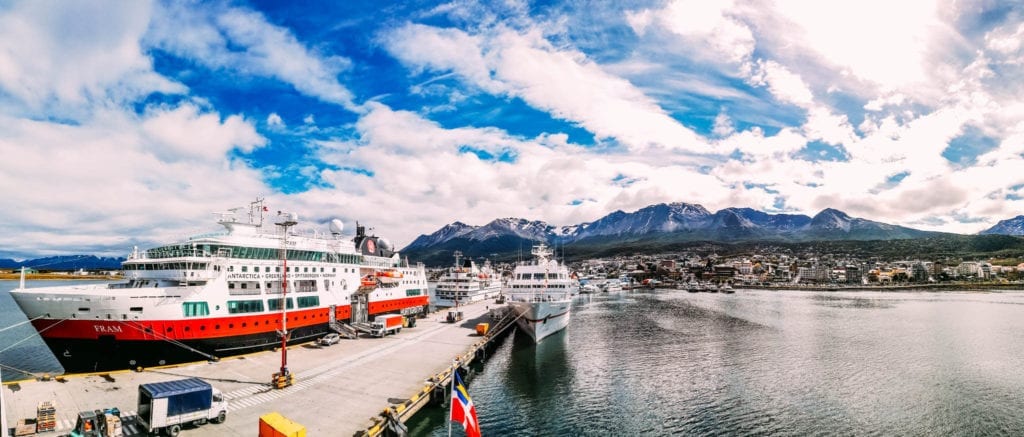
Expedition Cruise to Antarctica at Ushuaia Port
Where do you find an Antarctica expedition cruise?
Ushuaia, Argentina, is the most popular port of departure to visit Antarctica because it is at the world’s southernmost tip. The majority of the cruises depart from this touristic town. There are a variety of Antarctica cruise options and itineraries for your selection.
Getting to Ushuaia is relatively easy. Most travelers head to Buenos Aires, Capital, or Punta Arenas first and catch a flight to Ushuaia. These are two cities that have good flight connections. You can even take a bus to Ushuaia from Punta Arenas.
Since many people have asked me about this Antarctic adventure and how they can go about doing it. I have decided to put down some useful information to help you plan your travels to Antarctica. There will also be a collation of photos and some notes on my own journey.
Antarctica Expedition General Brief
Here is a brief summary of my trip to Antarctica just to give you some context. I ended up going with a 16-day expedition in March that starts from Ushuaia, sails to Antarctica, then to South Georgia, and back to Ushuaia. The expedition team was Albatros Expedition, onboard the ship Ocean Atlantic.
The Ocean Atlantic has a capacity of 199 passengers (excluding staff). We were below full capacity since it was already the end of the season. In fact, this was the last trip to Antarctica for this ship for that season. Most of us last-minute travelers are in a duo-shared cabin, but I was lucky enough to get a cabin to myself since it was not full capacity.
The cruise was a Chinese Charter. I have noticed these charters often have lower prices. What’s a Chinese Charter? All activities and lectures are actually in English but with Chinese translation. The expedition team and crew members are international, coming from different parts of the world. It’s a Chinese charter because the bulk of the cruise passengers consisted of 3 Chinese Tour Groups. The rest were international travelers who bought last-minute ticket deals.
Is this a good thing, you ask? I thought the small international group was the perfect size because it’s small enough for us to form a close connection. Much better than trying to talk to 200 different people. Since most of the passengers were Chinese, we also had both International and Asian cuisines during meals.
Furthermore, since I speak/understand Mandarin, there was no problem interacting with everyone.
How to get a last minute deal for Antarctica Cruise?
For many travelers, one of the main concerns of going for Antarctica cruises is the cost. Traveling to Antarctica is not cheap. The best way to get a “budget” trip to Antarctica is to find last minute deals! Most of the international travelers on the cruise were on last minute deal tickets. I have been keeping track of these deals many months before departure. However, some of my fellow last-minute ticket holders even got them right in Ushuaia without actually having planned for it.
When you have flexibility, you can take advantage of it. That has always been the rule in traveling 😉
Don’t want to risk being too last minute? Fortunately, you don’t have to. You can email some of the travel agencies to put you on the Antarctica Cruise deals email newsletter. They will send you the availability of last-minute cruise deals with the pricing and routes periodically. Two agencies I contacted are Freestyle Adventures, and Antarctica Travels.
Feel free to tell them you heard about them from Rax. We are not affiliated, they are just well-rated, and I had good communications from them.
I ended up purchasing through Freestyle Adventures, because they offered a payment method that incurred lower fees from my home bank. I noticed most of the individual travelers booked from either agency. A group of us bumped into each other again when returning borrowed gears at the office.
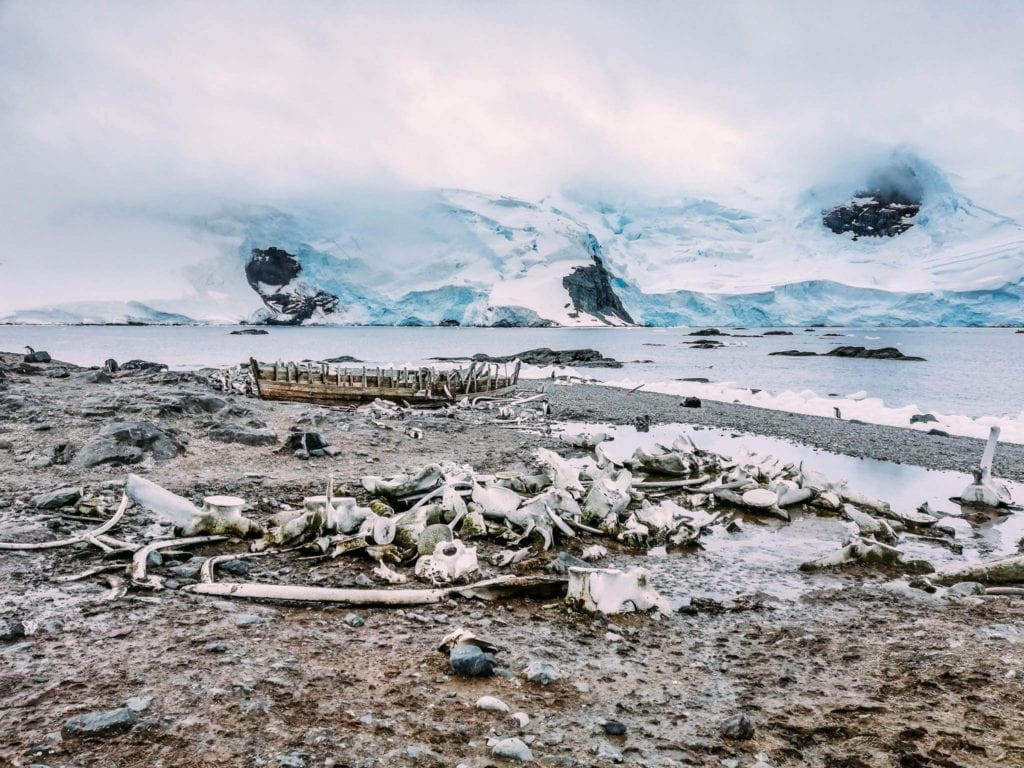
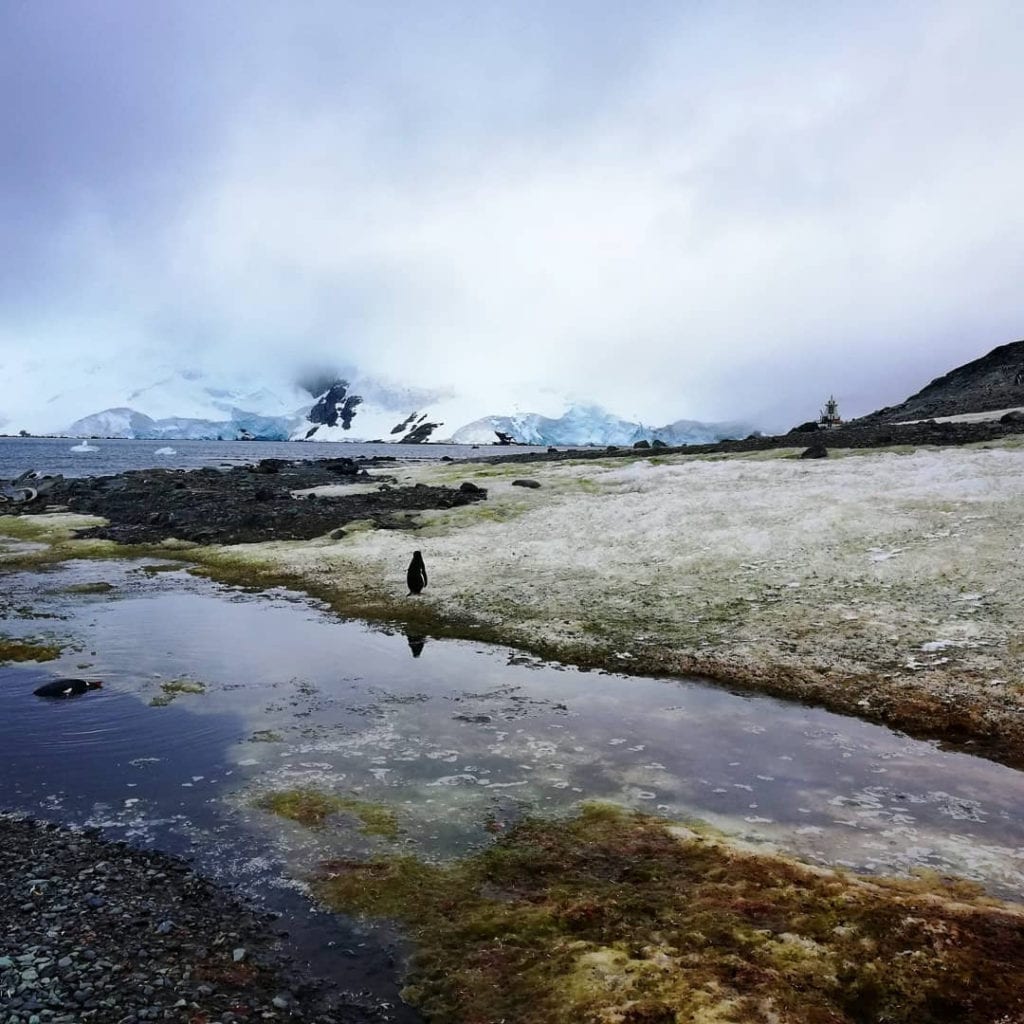
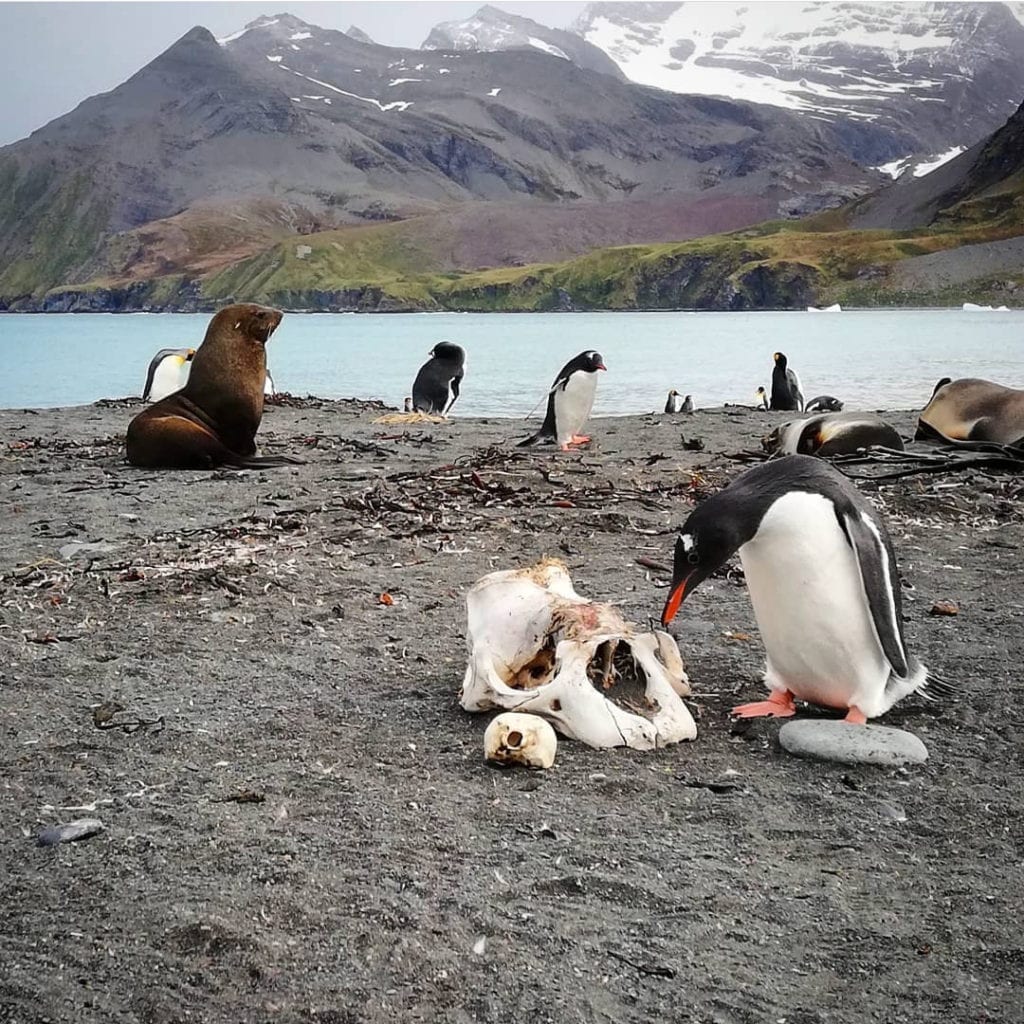
Historical whale bones are now part of the habitat
When is the best time to visit Antarctica?
The Antarctica season typically ranges from October to March. In my opinion, there is no specific best time to travel to Antarctica. Come on, it’s Antarctica! However, you see differing scenery and animal behavior during various parts of the season.
I’m going to just copy and paste this information that the awesome people at FreeStyle Adventures provided:
October –November (late spring, early summer) This is the most pristine and adventurous time to visit Antarctica. The White continent is undisturbed by earlier travelers, snow is deep, and ice is just starting to melt. Temperatures may be colder during these trips, but this offers breathtaking icebergs, pristine icescapes, and incredible scenery. Wildlife is not as plentiful as later in the season, but it is penguin mating season, and you will see penguins busy at work building nests.
December – February (high summer) Days are very long (up to 20 hours of sunlight a day), allowing you to explore Antarctica later into the evening. Wildlife is plentiful and very active – penguin chicks start to hatch, and in later January-February, baby penguins are a highlight. These trips sell out early and must be booked in advance to guarantee space.
Fly cruises that operate in and out of Punta Arenas, Chile, run during this part of the season (early Dec – Feb)
Mid-February – March (later summer) Late summer is the best part of the season for whale watching. A lot of ice and snow has melted, revealing different landscapes than earlier in the season and allowing ships to enter areas that were inaccessible due to ice or to travel farther south.
How much do Antarctica cruises cost?
As a last-minute deal, I paid US$6,999 for the 16 days itinerary to Antarctica and South Georgia. The cheapest deal I have received for a classic 10/11 day cruise to Antarctica is US$4,999. However, this is just to satisfy your curiosity to know the price but not a good reference. Prices are increasing every year. I remember reading that it was US$2,999 for a classic trip a few years ago before my own trip. That’s one reason I always say if you are planning to visit Antarctica at least once in your lifetime, do it sooner rather than later because it gets more expensive.
Just get looped into the last-minute deal newsletters and check the prices when you plan to go.
Important things to take note of when booking Antarctica Cruises
The price and route were most important for me during booking. I didn’t really care about the ship or brands etc. Some cruises like Quark Express are known more for being party cruises etc., and those were not a priority for me. The whole expedition was fantastic anyway.
I feel that the nitty-gritty stuff probably would not matter much. You are almost guaranteed to meet amazing people and be wow-ed. This is, after all, a trip to Antarctica!
However, you should definitely take note of a couple of items before booking.
First, note that there are packages on board huge cruise ships which are usually cheaper. These big cruise ships do not do landings; this means you only sail around Antarctica on the cruise ship and never get to set foot on the land of Antarctica. Make sure to check what a particular cruise is offering and if they ever do any landings. And you definitely want to do landings, because… come on.. why would you go all the way there and not set foot on Antarctica. Can you even claim you have been to Antarctica without setting foot on it!?
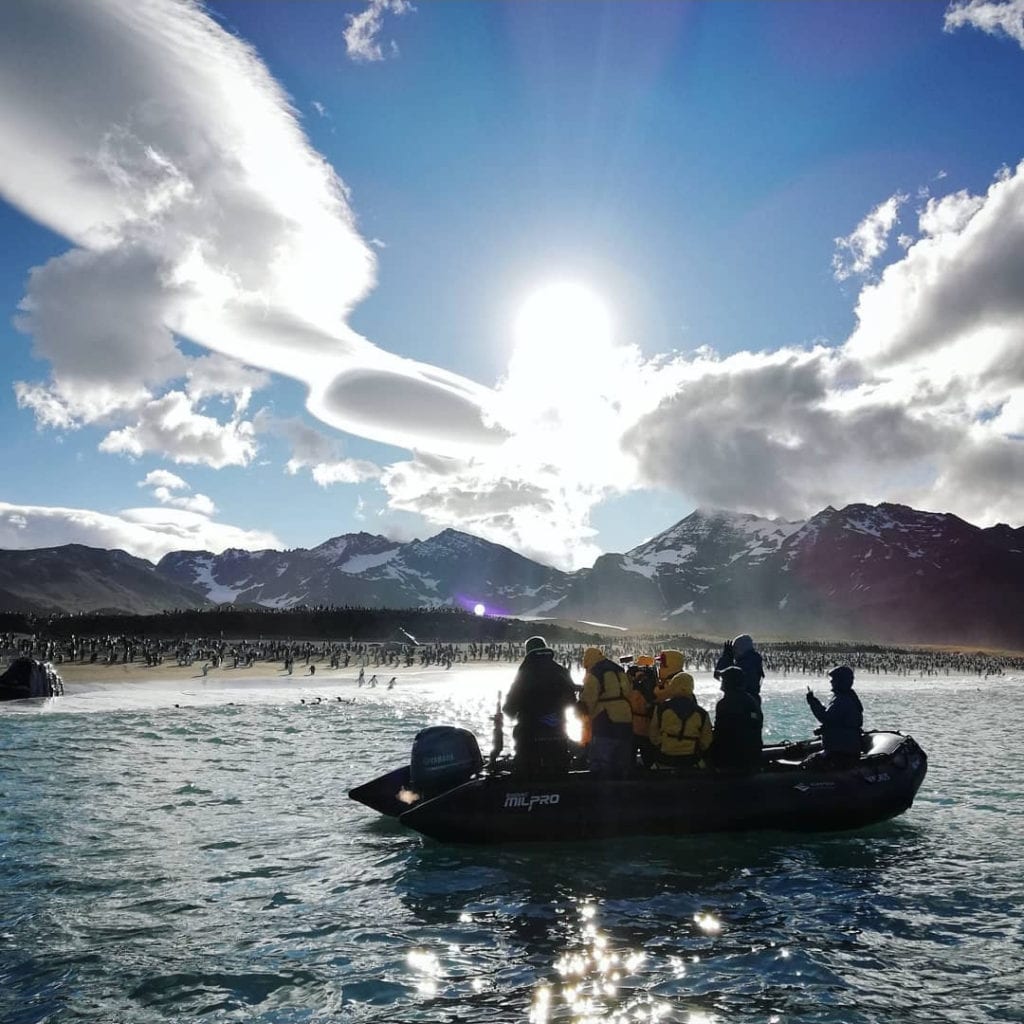
Secondly, only 100 people are allowed to make landings at any one time. Our ship had a capacity of 199 passengers. We were divided into 2 groups, taking turns to make landings on each site. While one group explores the land, the other group will cruise around in a zodiac boat. And then we will switch. You can imagine that if your ship has too many passengers, then landings might be tricky, or you might not get to disembark on all sites. Do check what the landing arrangement is like.
Special Things to do in Antarctica
This is another thing you might want to consider, but I don’t think it is very critical. Some expedition comes with extra activities. These can include kayaking, paddleboarding, or camping overnight on Antarctica. I did kayaking at an additional cost. We also had the polar plunge, where you get to jump into the freezing cold ocean.
If there are particular activities you want to do, check if the expedition offers that. However, if you’re looking at last-minute deals, it is not always easy to find something that matches your criteria.
How many days is the Antarctica Trip?
The classic trip is usually 10 or 11 days depending on the route and landings. However, some cruises go to more locations, and these will stretch over more days. The longest itinerary I have seen is around 21 days.
What are these other locations?
Two common locations outside of Antarctica covered by the Antarctica cruises are South Georgia and the Falkland Islands.
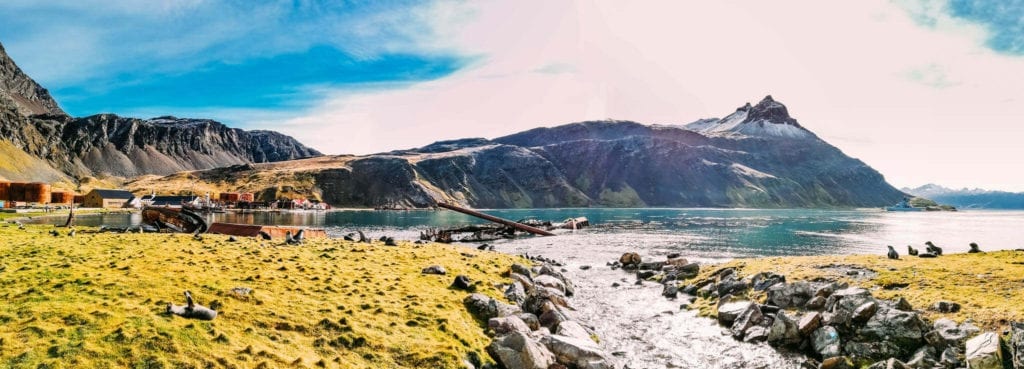
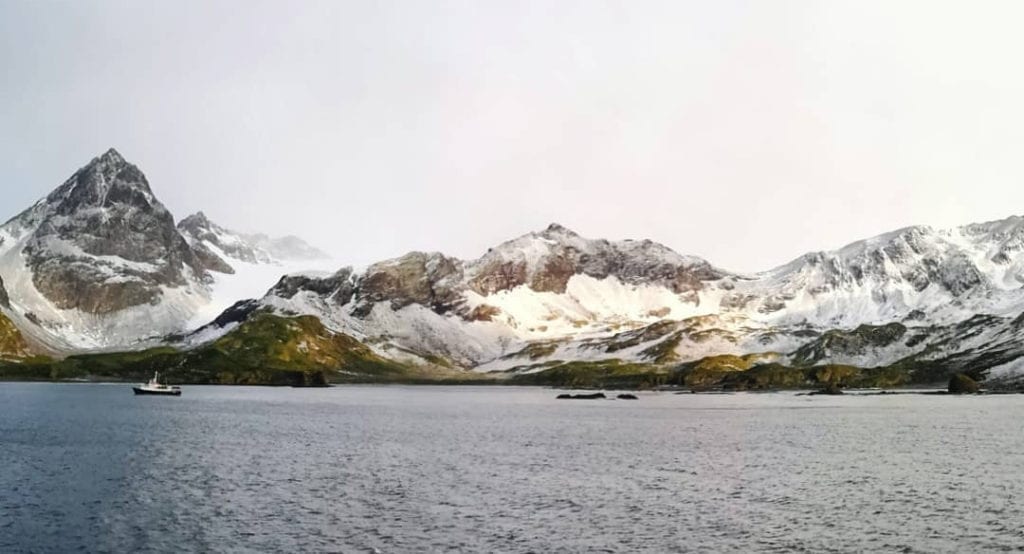
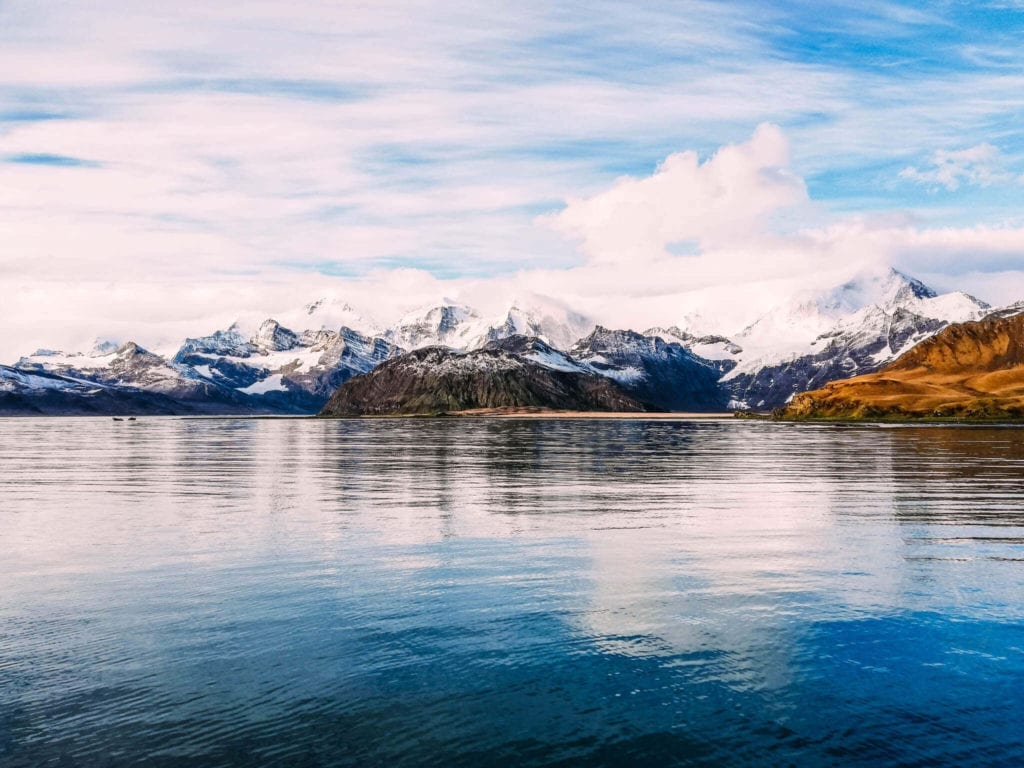
Grytviken in South Georgia is one of the most scenic destinations
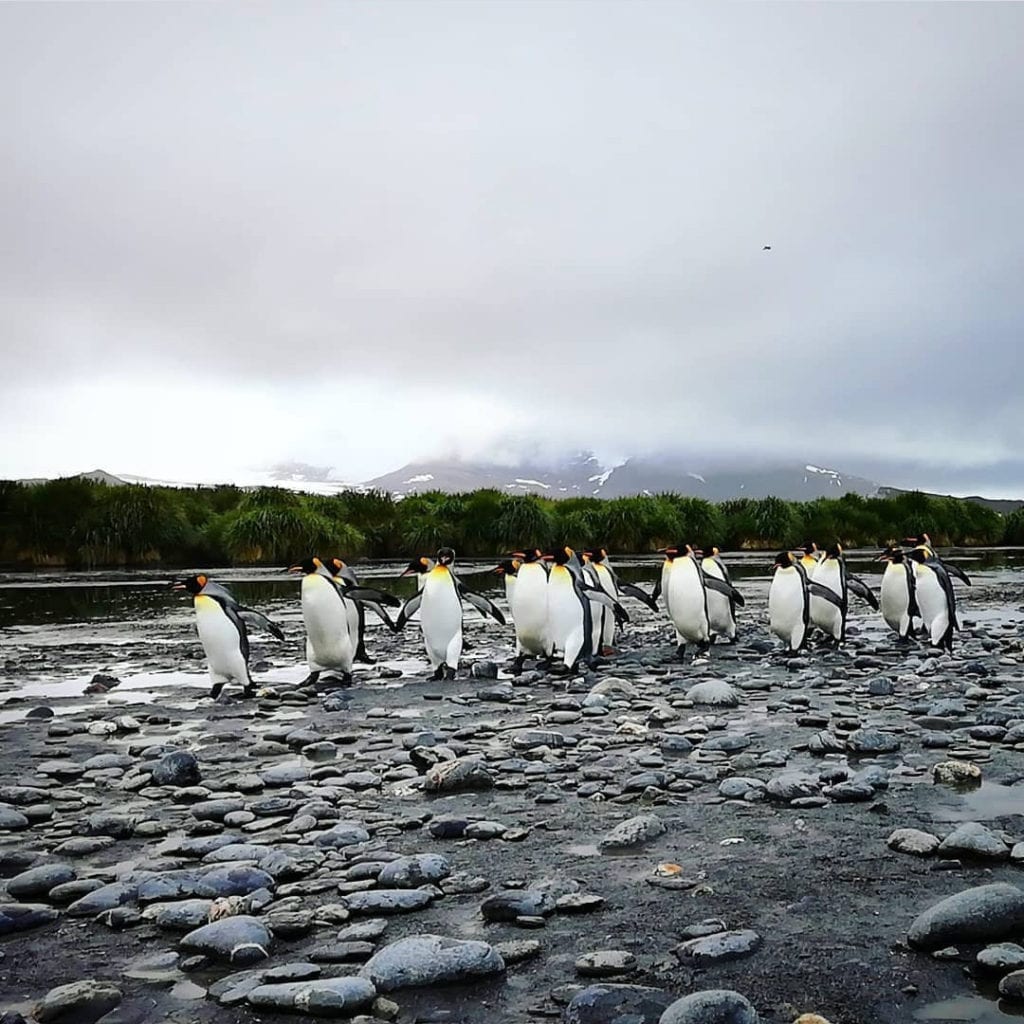
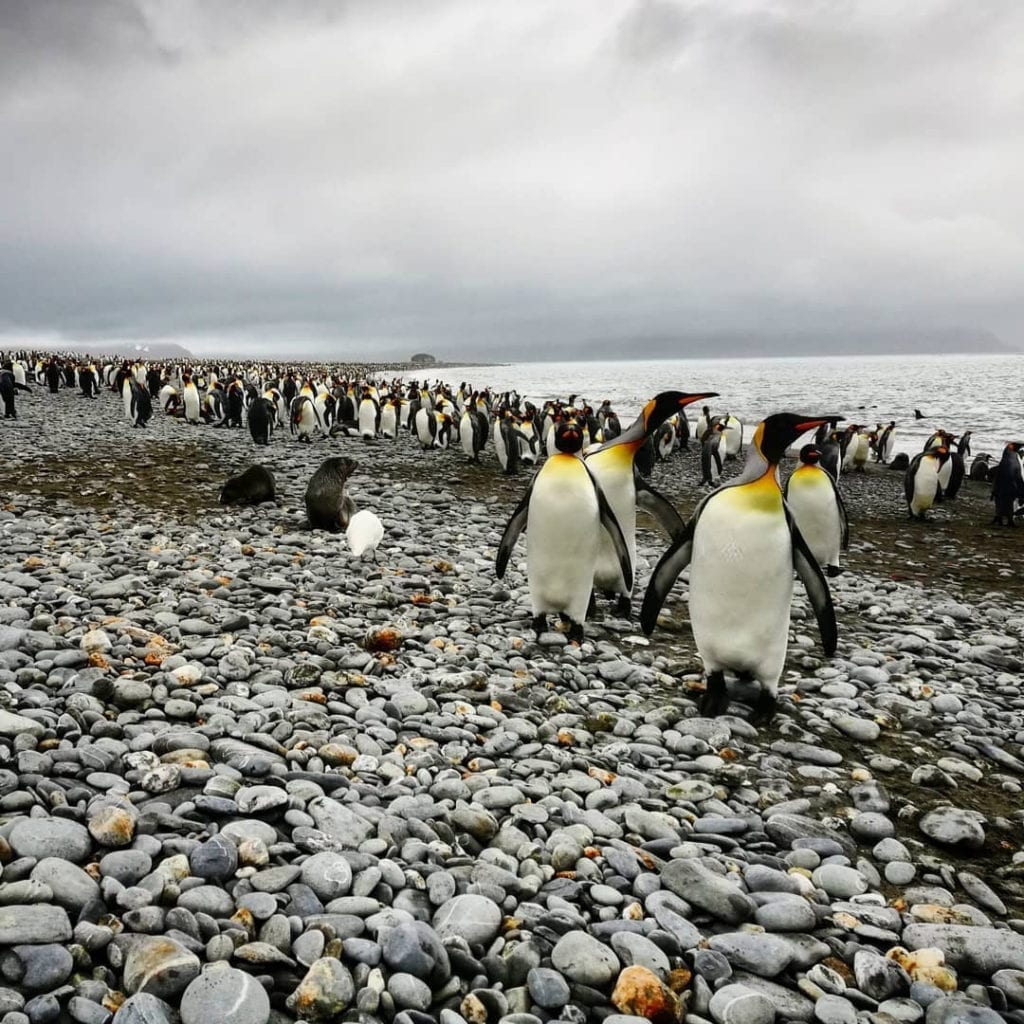
I have not been to the Falklands Islands, so I can’t comment on that. However, I strongly recommend doing South Georgia, especially if you are a wildlife lover. At our first briefing, the expedition leader told us the itinerary gets better as the trip progresses. He wasn’t lying. Antarctica was really remarkable, with the majestic landscape and breathtaking glaciers. There were some wildlife sightings in the early days, but South Georgia was where we really saw heaps of wildlife. These were large penguin and seal colonies.
I think all of us on the trip would agree that South Georgia was truly worth it.
What to pack for Antarctica? My Antarctica Packing List
Looking at the Eskimos on TV wrapped in thick Antarctic clothing (Isn’t this what we all imagine when we think about Antarctica?), you might think it is a huge hassle. Packing for Antarctica is actually not as daunting as you might think.
It is pretty similar to packing for winter travel. Layering is important. If you are missing anything, you will likely be able to rent them in Ushuaia. Furthermore, some agencies will loan you some items like waterproof pants or gloves for free, so check with your agency on that.
Antarctic boots (welly boots with warm interior) are provided by the cruise, and you will use that for all landings. We were also given a warm parka with a waterproof shell during the cruise.
I had all my travel gear with me since I travel extensively, but here is a packing list for Antarctica with items that I would recommend having.
Pair of Gloves. Consider getting a touch screen pair if you are going to use your phone as your camera because you will be taking a lot of photos.
Waterproof pants and additional warm jacket for layering, if needed
Day-to-day jacket when on board ship. (I now use the Transcendr Hoody from KÜHL that is fashionable and functional for both daily use and working out.)
Parka with Waterproof shell (We were given these by the expedition team)
Dri-fit T-shirts and pants (Comfort wear while on the cruise)
For the fun people: If you have space, consider bringing a penguin onesie for photos
Other questions about Traveling to Antarctica
Here are other details that you might be interested in. I am just answering them based on my own experience, and most of these will likely vary depending on your cruise.
Do I need insurance to travel to Antarctica?
Yes, you need to have insurance coverage for Antarctica. This is applicable regardless of which Antarctica cruise trip you take. The travel agency will check for that during your booking.
The cruise cabin and ship comes with power outlets. You will be able to charge all your electronics. Just remember to bring a travel adaptor in case the plugs are different. I also recommend that you have a power bank just in case.
Is there WiFi on the Antarctica Cruise?
There is an option to purchase WiFi for an expensive cost on our cruise. I wouldn’t really count on it being high-speed internet. AND, why would you go to Antarctica to stick your face in the phone? This is the perfect time to really get in touch with nature and people. Don’t worry, you can survive without internet for a few days.
Would I get seasick on the trip to Antarctica?
This is different for everyone, but the Drake Passage is the roughest portion of the journey. Most people experienced seasickness to a certain extent. There were vomit bags available like every 10 steps through the ship. In our case, the cruise provided seasickness pills daily, which you can request from the service counter if needed. I took 1 tablet daily, half in the morning and then half after lunch, when sailing through the Drake Passage. You don’t want to take too much because the pill does make you sleepy.
How is the food situation? Do I need to bring food?
I actually brought dried snacks along but had no use for them at all. We had 3 buffet-style meals every day and tea in midday. There was also a small pantry with coffee, tea, and cookies available all day. Never hungry is an understatement; I was constantly bloated from all the delicious food. However, I am sure the meal plans vary across cruises.
What about Laundry?
Laundry service comes with a cost and this probably applies to all cruises. It is not cheap. However, it is also not really necessary since you don’t perspire much due to the cold. I mainly do quick wash of my underwear while showering. (This is why I am a fan of the Uniqlo AIRism boxers, easy to wash and dry)
Cameras and Photography for a visit to Antarctica
If you can, bring your best gear as traveling to Antarctica might be a once in a lifetime chance. A good portion of the other travelers had huge lenses and DSLR cameras. You can get excellent wildlife and close up shots with more professional gear. I mainly used my phone and GoPro. Not optimal but it’s not all bad.
Drone flying is not allowed.
I stress again: Make sure you have a plan to protect your expensive gear from water as the weather and ocean can change while you are out exploring.
What are the animals in Antarctica and South Georgia?
You might be wondering what wildlife or animals would you get to see in Antarctica. This is a list of animal sightings (Antarctica and South Georgia) during our expedition. There are definitely some others that we did not see.
If you are wondering where are the polar bears, sorry to disappoint. Polar bears are only in the North Pole, so the Arctic is where you need to go to potentially catch a glimpse of those majestic bears. Conversely, there are no penguins in the Arctic.
What is your Antarctica trip itinerary like?
I am just going to share the itinerary of my visit to Antarctica here for reference. Again, this does change according to your cruise.
Day 12 -15: Sailing back to Ushuaia. Arrived at night.
Day 16: Disembark
More details in the photo journal below.
What are things to do on the Antarctica cruise? Is there a lot of free time?
There were interesting activities during sailing days. We had lectures about wildlife and historical expeditions. There were also activities and classes like painting, dumpling making, dance, stretching exercises, etc. These activities were all optional in participation. Our ship also had a gym and a lounge with board games. Never really had a dull moment.
Traveling to Antarctica
Here are some photos and small journal notes I made for throughout the Antarctica trip about each landing.
Great Wall Station
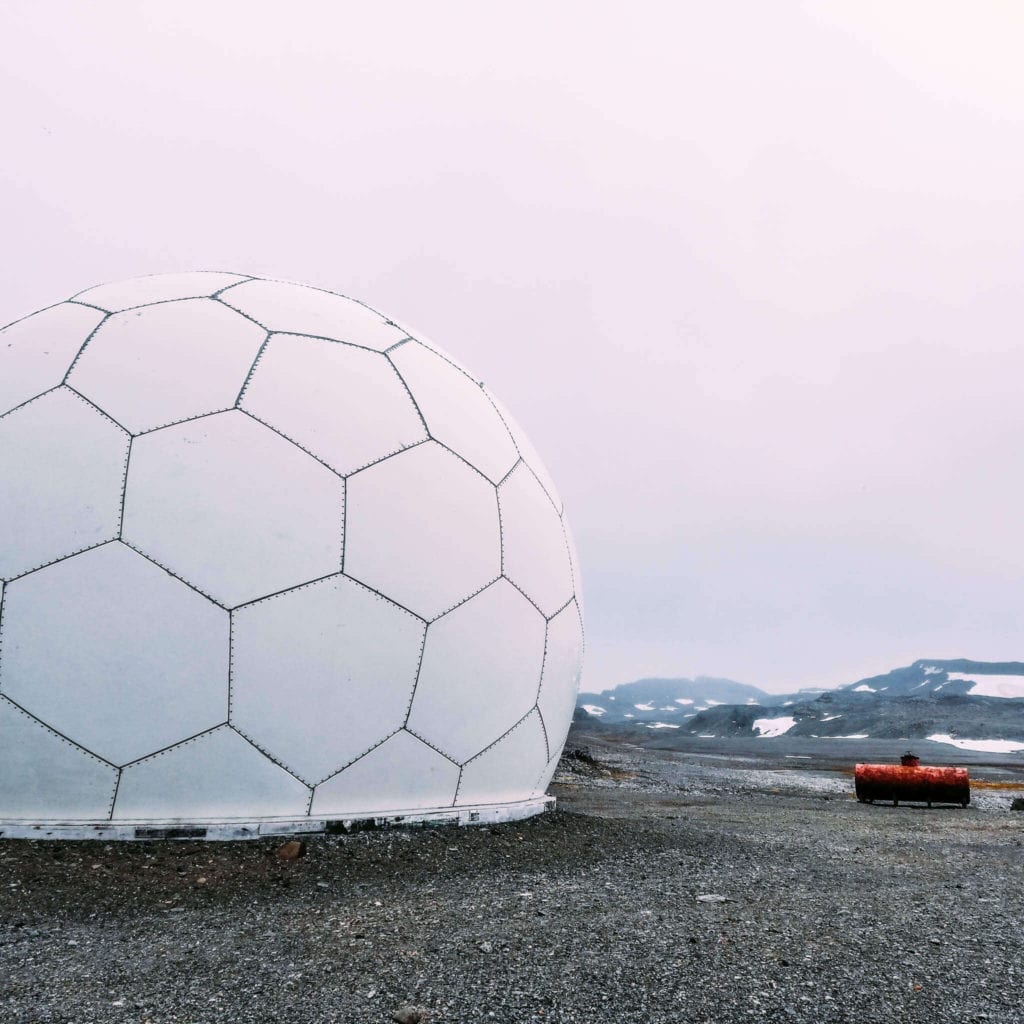
62° 13’345 S / 058° 55’887 W Didn’t take many photos at this location. This was our very first disembarkation after crossing the rough drake passage. We were excited simply at the prospect of setting foot on land after swaying on the ship for a few days and overcoming seasickness. Great Wall Station is the research base station for China, and thus, the visit was a big deal for some of our Chinese companions. It was interesting to see some of the modern-day research after learning about historical expeditions in the lectures.
Curious looking dome at the Great Wall Station
Spotting penguins on our first zodiac cruise
Hydruga Rocks
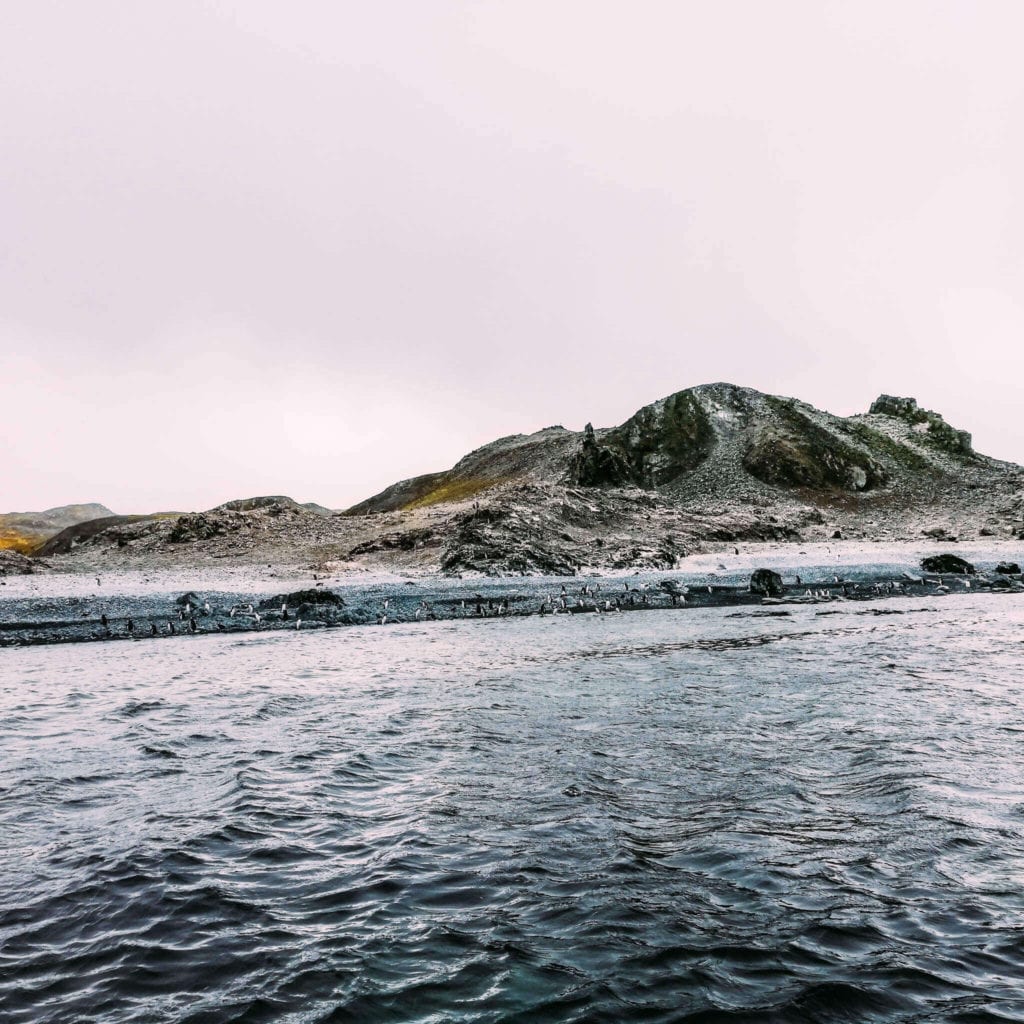
64° 08’822 S / 061° 36’582 W This felt like the first official landing for most of us as we are finally going to see some wildlife. The weather was not particularly favorable; We were lucky to be the first group to head out as the weather deteriorated over time and restricted the 2nd group from landing.
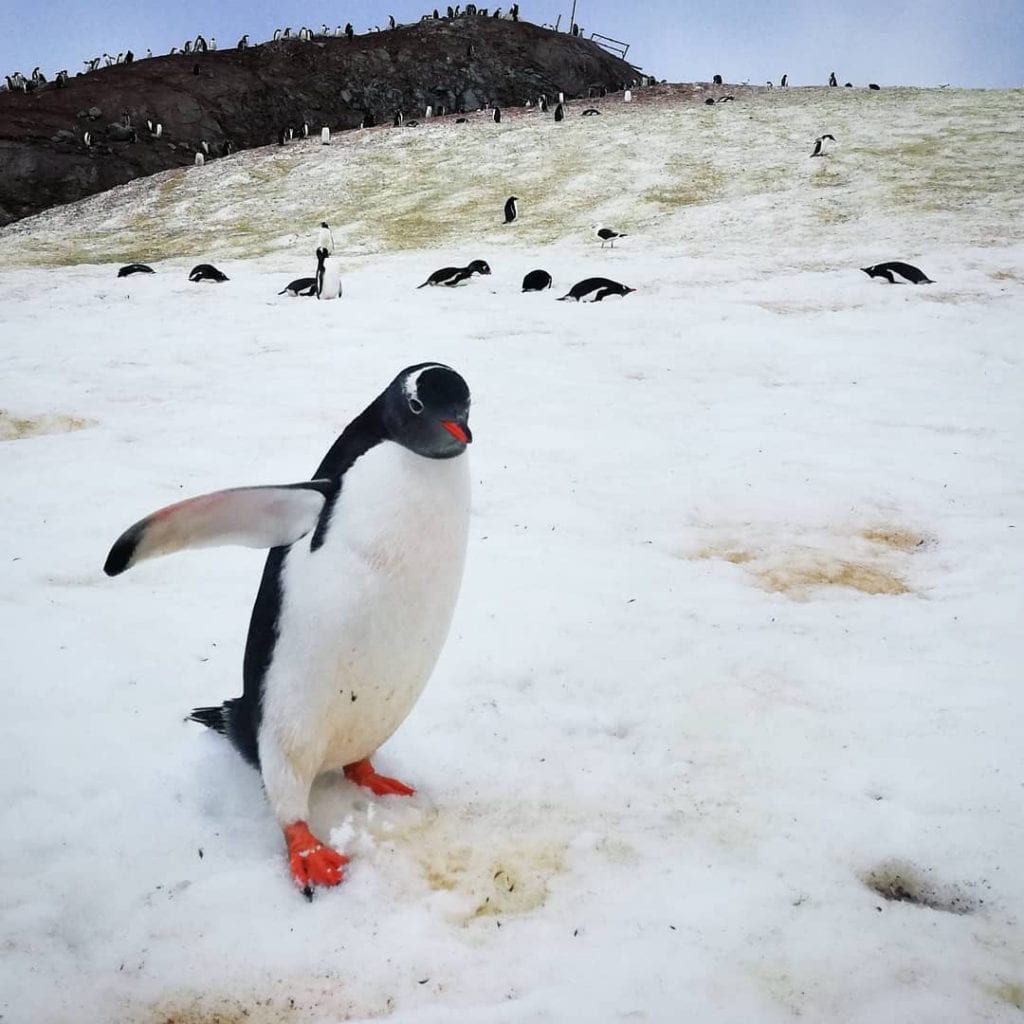
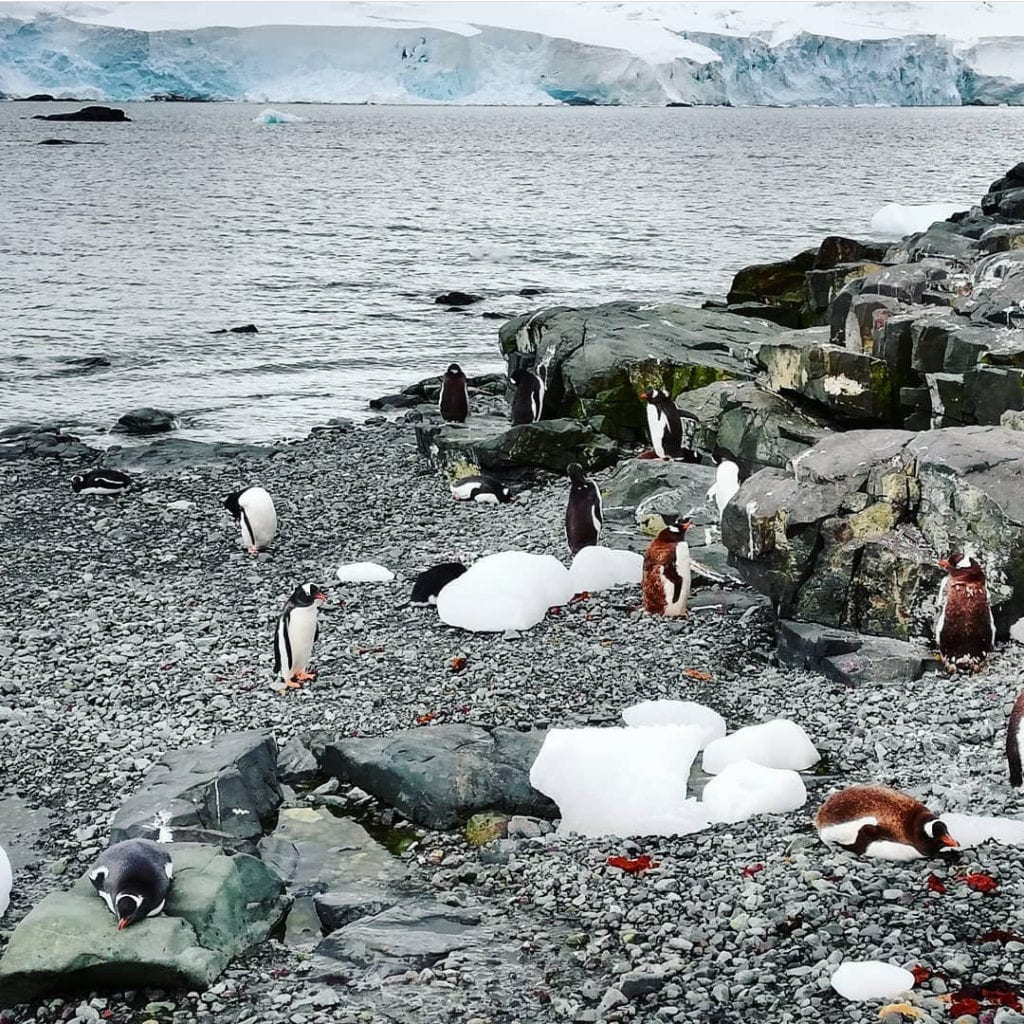
It was our first close sighting of Gentoo Penguins as we trotted around the area. These are actually relatively small clusters compared to what we will see down the journey, but I remember the excitement then, being one of our first landings. Many of them were still molting and thus stood silently facing the rocks; that seemingly miserable behavior happened to fit in well with the weather as it got more windy, snowy, and wet.
One of the main highlights was the bumpy ride back to the ship as the Zodiac bashed through the rough waves and weather under the driver’s firm control. We were all wet, but no one could deny the adventure. What a welcome from Antarctica!
First signs of glacier blocks
Penguins standing against the rock and molting in the wind
Portal Point
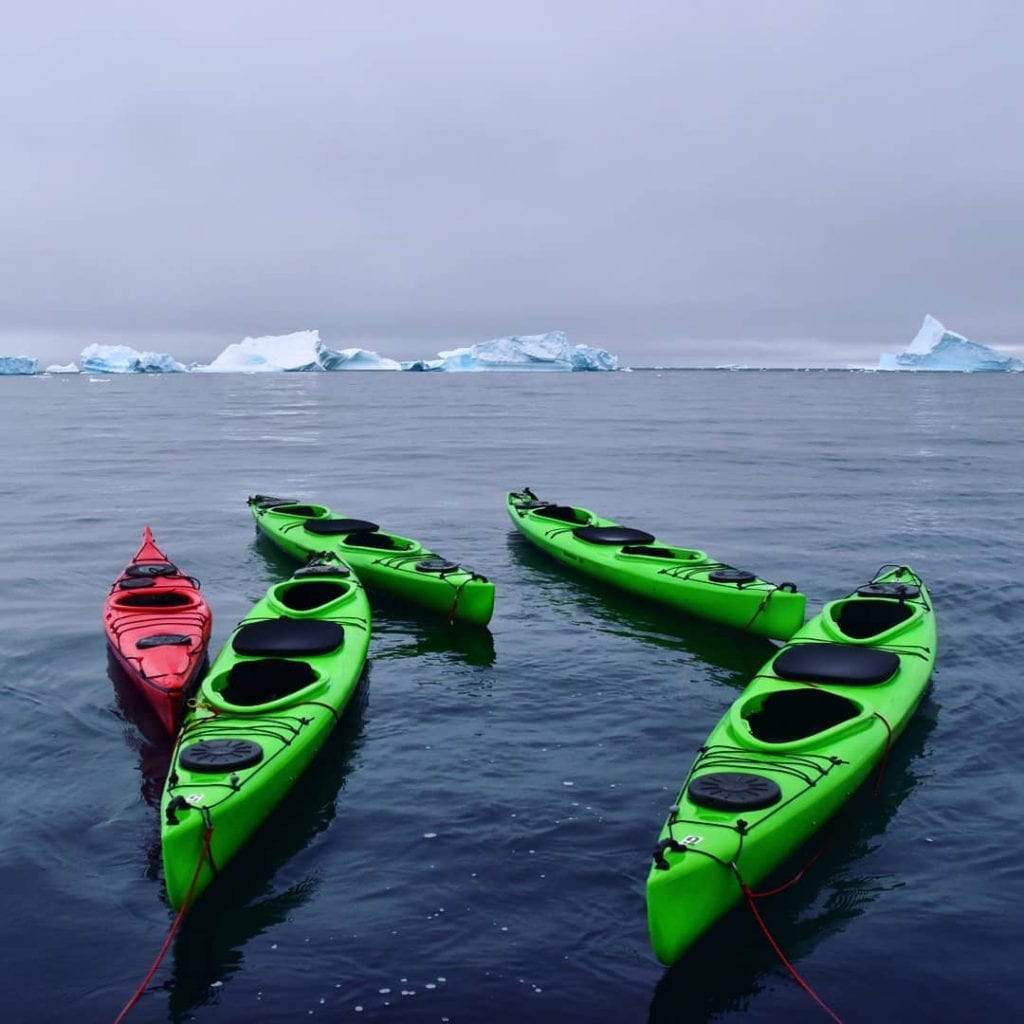
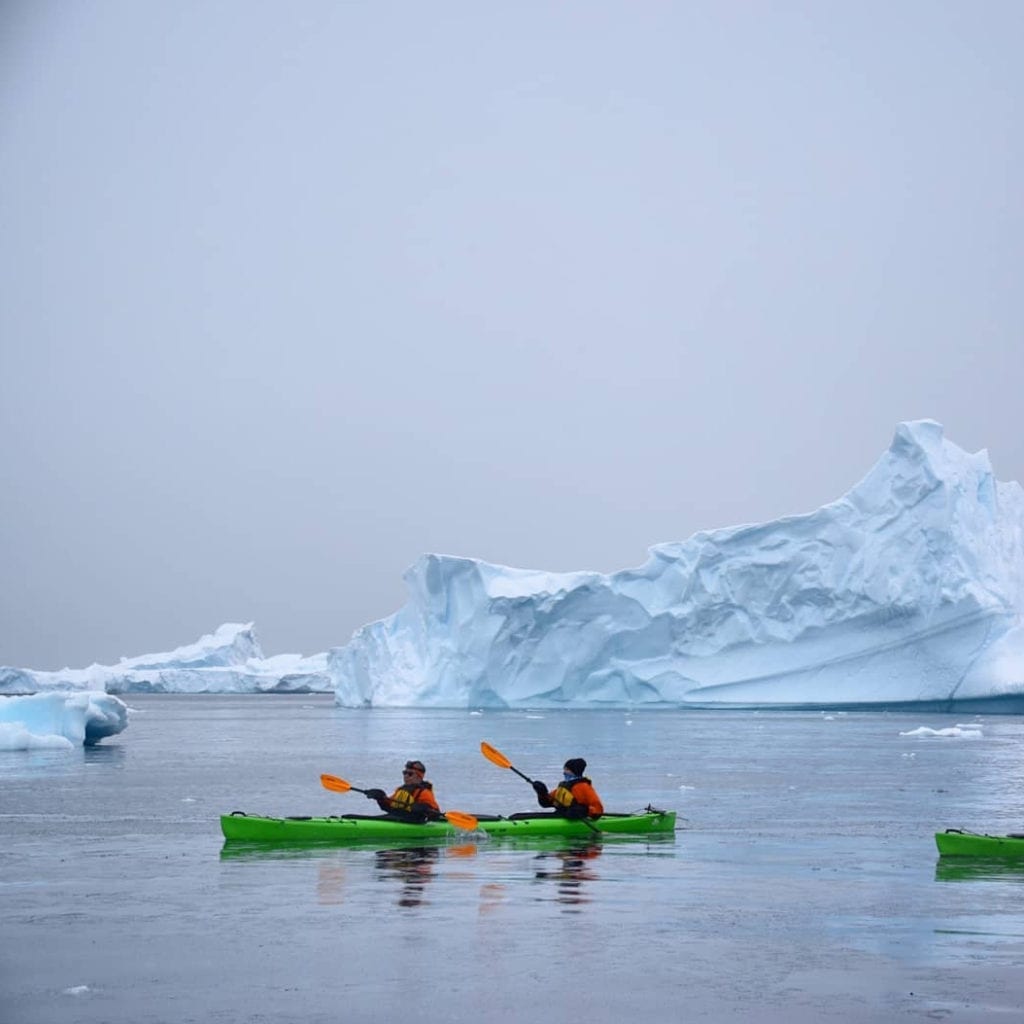
64° 30’628 S / 061° 45’264 W Kayaking in Antarctica – A team of 8! Kayaking was an extra chargeable activity that you can opt-in for. I was initially concerned about safety as it has been quite a long time since I last kayaked, and this was in open, freezing waters with potentially quick changing weather conditions. Capsizing would not be fun. Nonetheless, we psycho-ed each other into going for it anyway! Fortunately, the water was relatively calm, with some light snow, setting the stage for an incredible experience.
The tranquility of the environment, surrounded by icebergs and amazing landscape, was calming to the mind as we kayaked around the open waters. We managed to see a couple of seals up close with this quieter mode of approach compared to the zodiacs. With some luck, we also got to see some crumbling blocks fall off a giant iceberg, the rumble breaking the silence in the air.
Portal point was more of a landscape viewpoint rather than for wildlife. We got on land after the kayaking session for some exploration. We were wading and crawling around in our wet suits that were not ideal for walking on snow/ice. It was a memorable experience nonetheless.
Preparing for the adventure in Antarctica
A silent method to navigate the waters of Antarctica
Cierra Cove
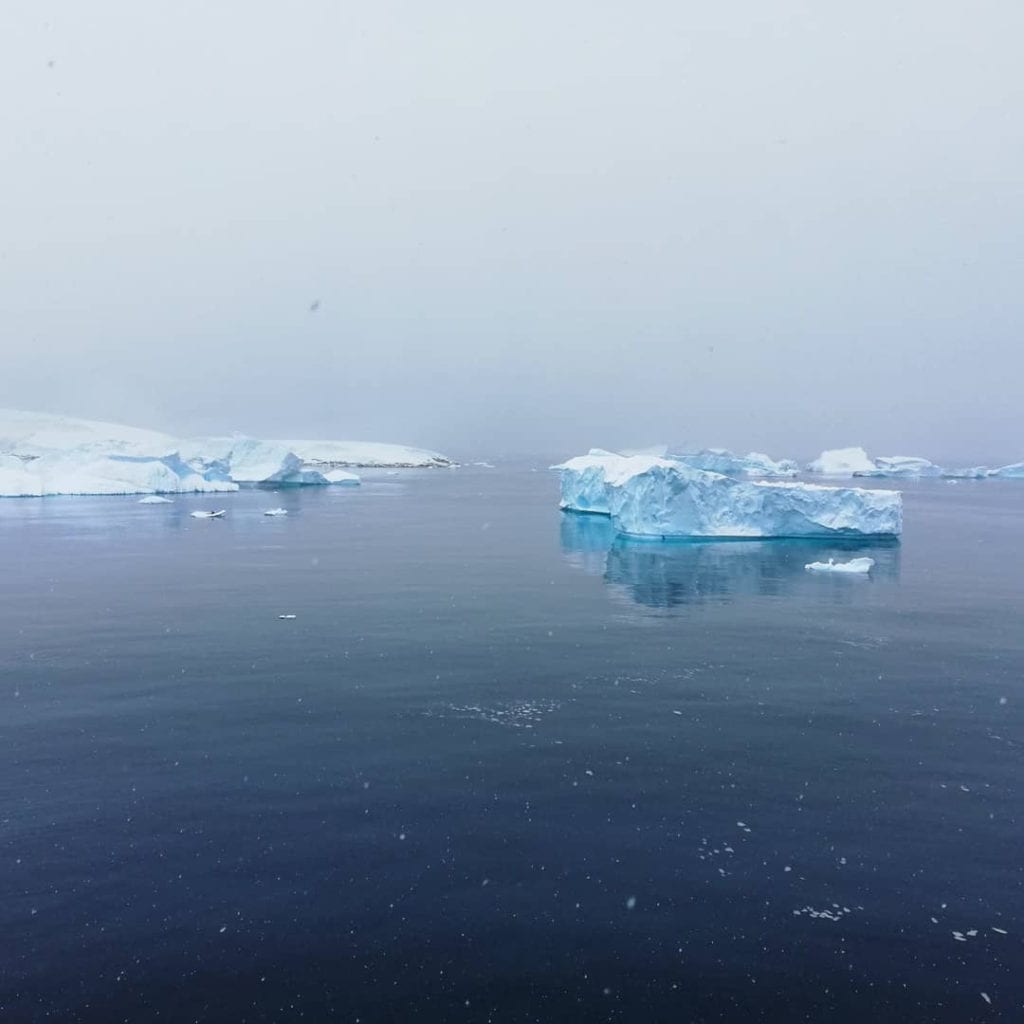
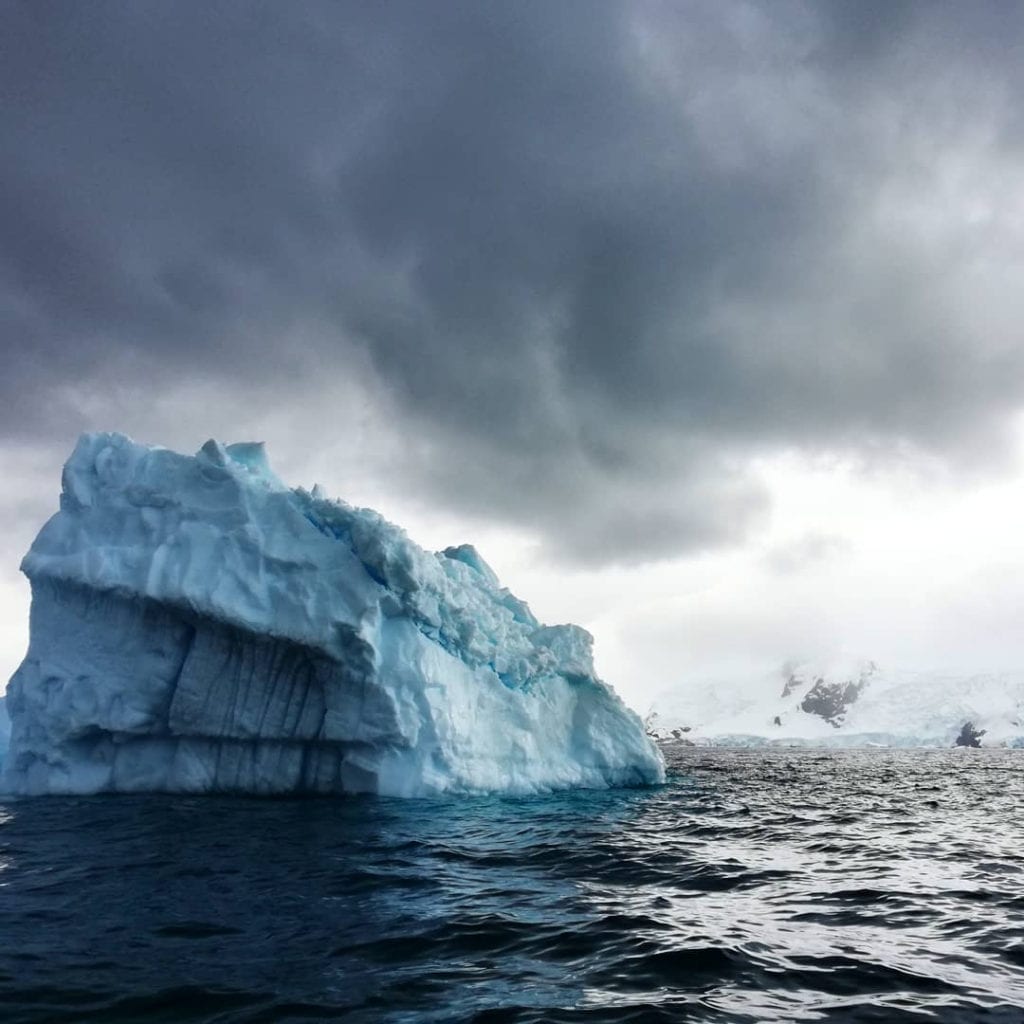
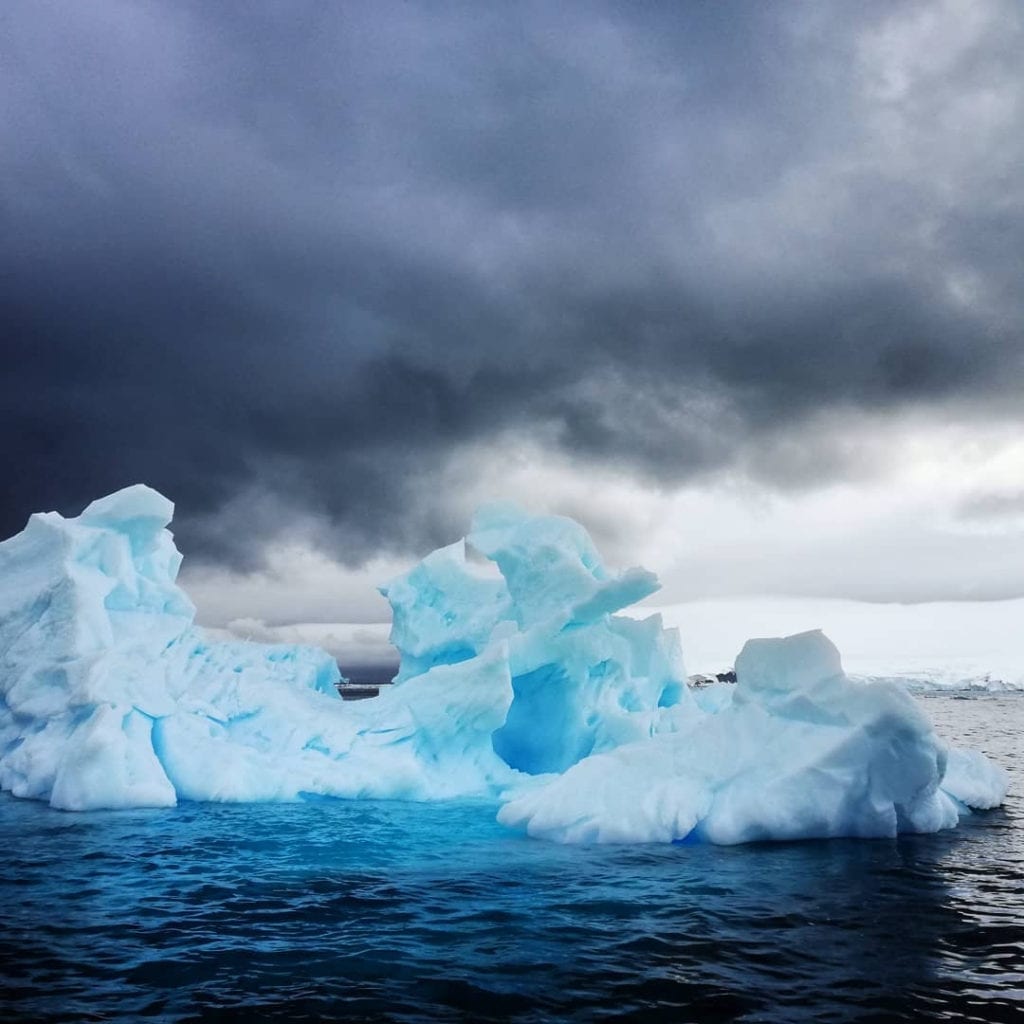
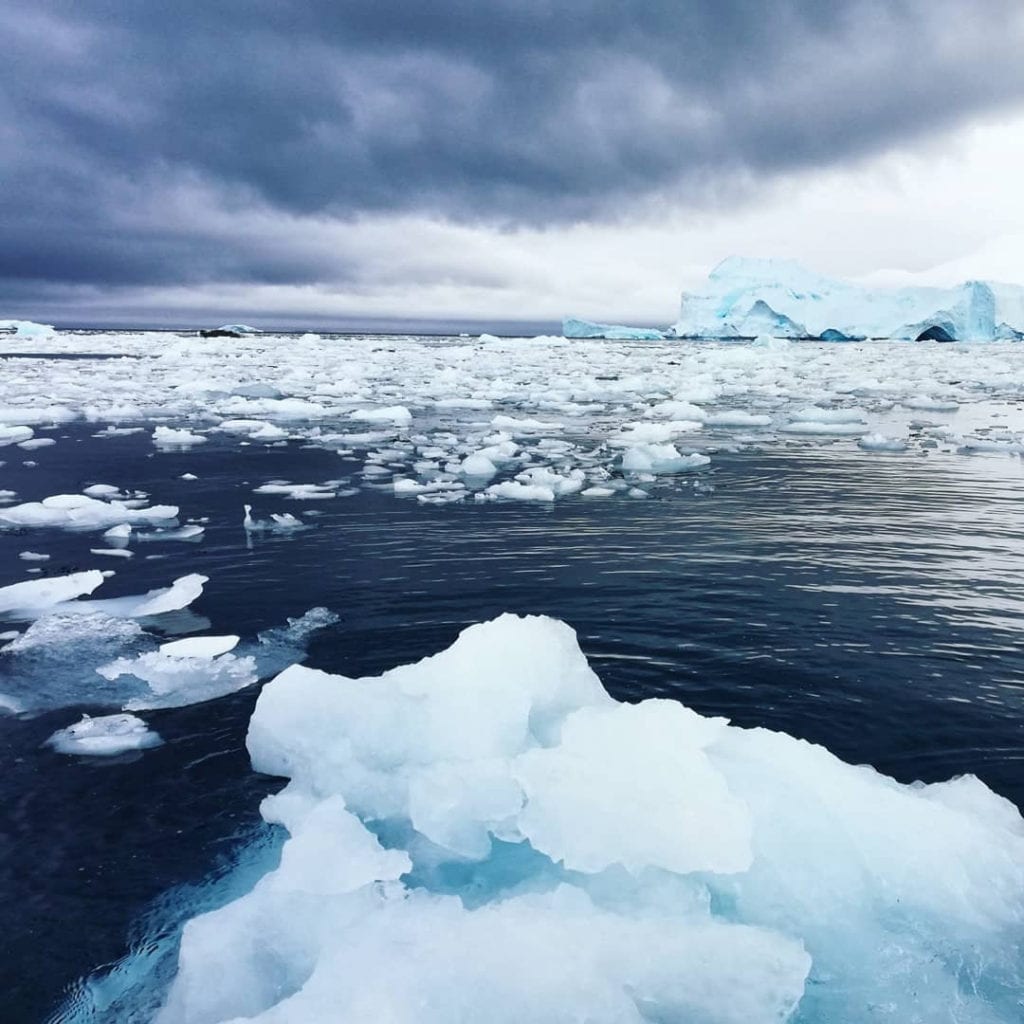
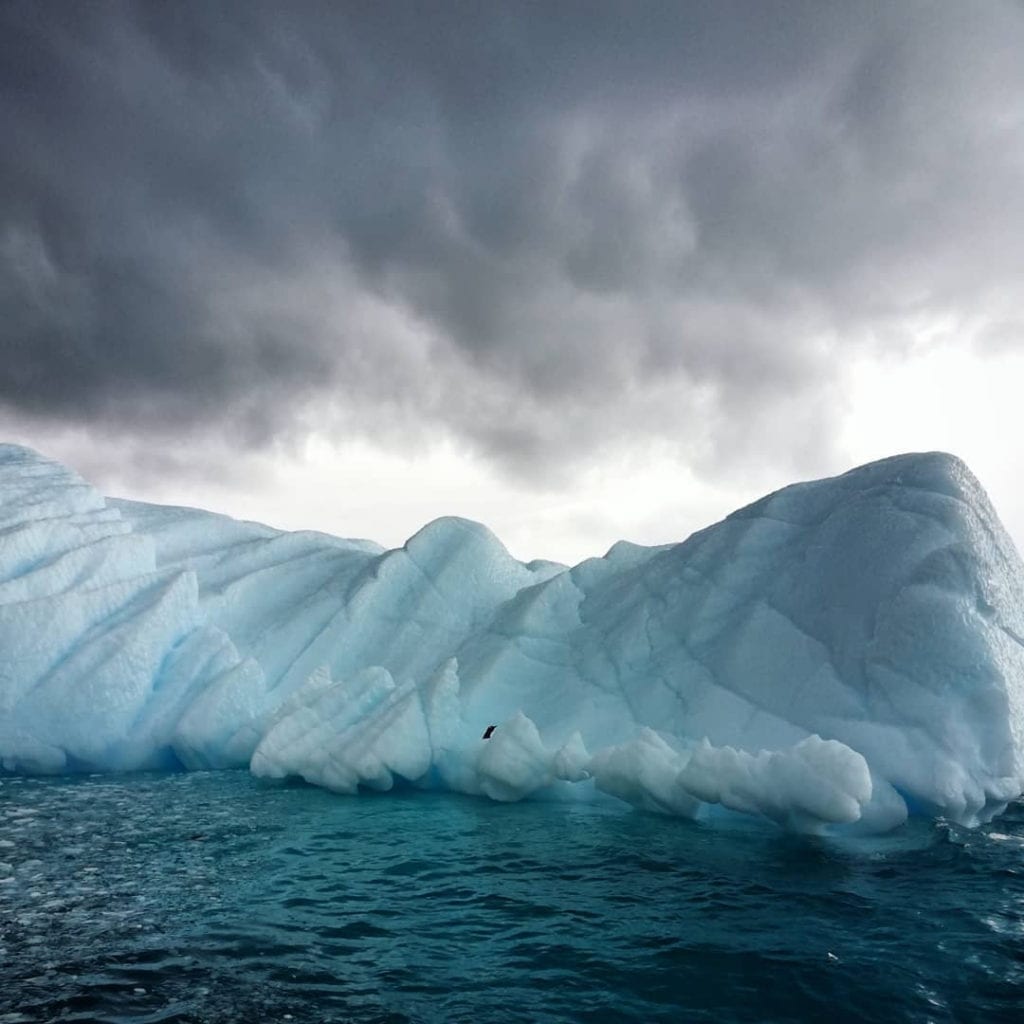
64° 09’112 S / 064° 54’239 W There was no landing made on Cierra Cove, and we did an extended period of Zodiac cruising instead. The main thing that defined this area for me was these gigantic blocks of ice. Each majestic and captivating in its own right, as every single one is uniquely shaped by nature. The landscape here was terrific and with the half gloomy weather, it gave off a drastic end of the world vibe. We also managed some wildlife sightings, spotting some penguins hiding amongst the big white clusters. Perhaps the most significant one being a close sighting of whales as some zodiacs circled around at a safe distance to observe their behavior.
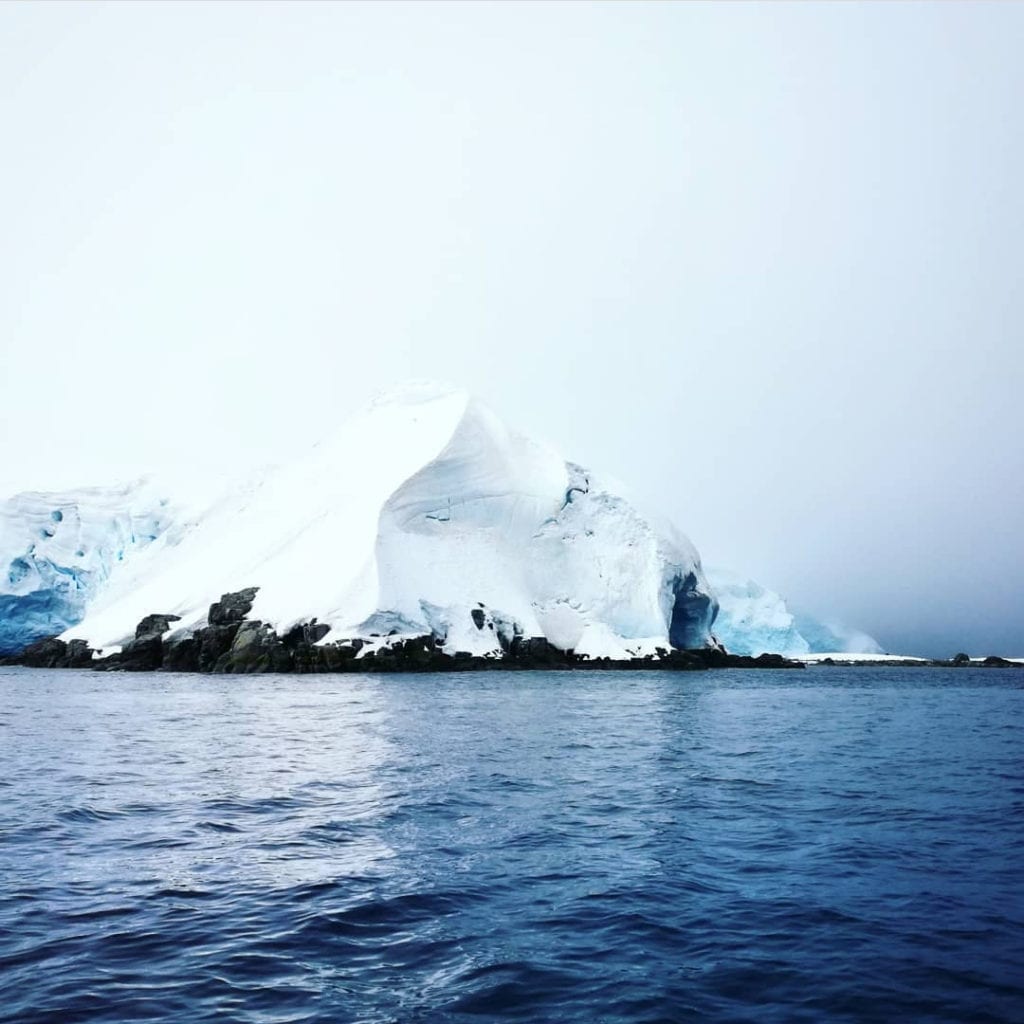
It is like a glacier sculpture galleryNaturally crafted into amazing shapes
Navigating through the icescapes skillfullyPenguin hiding in the ice block. Can you spot it?
Mikkelson Harbor
63° 54’235 S / 060° 46’646 W Mikkelson Harbor was a small anchoring bay used by sealing and whaling vessels in the past. We had pretty decent weather here, and this is by far the closest we have seen of the penguins. Some of our paths crossed as a few waddled adorably across a temporary walking path that we kept to. It was to minimize our disturbance to the natural inhabitants, always giving the “locals” the right of way. There is a decent colony of penguins here, way smaller than what we were about to see subsequently, but one of the largest we have seen in our landings so far.
Some Penguins are not shy to approach humansA large penguin colony at Mikkelson Harbor
Managed to get some good shots even if phone cameraSurrounded by great views all around
Cooper Bay
54° 47’303 S / 035° 48’262 W After another few days at sea, we arrived at South Georgia, a feast for the eyes with amazing landscapes and large wildlife colonies. In contrast to Antarctica’s icescape, we are now seeing a mixture of snow mountains and greenery (perhaps the most prominent being tussock grass, which provides an excellent habitat for seabirds).
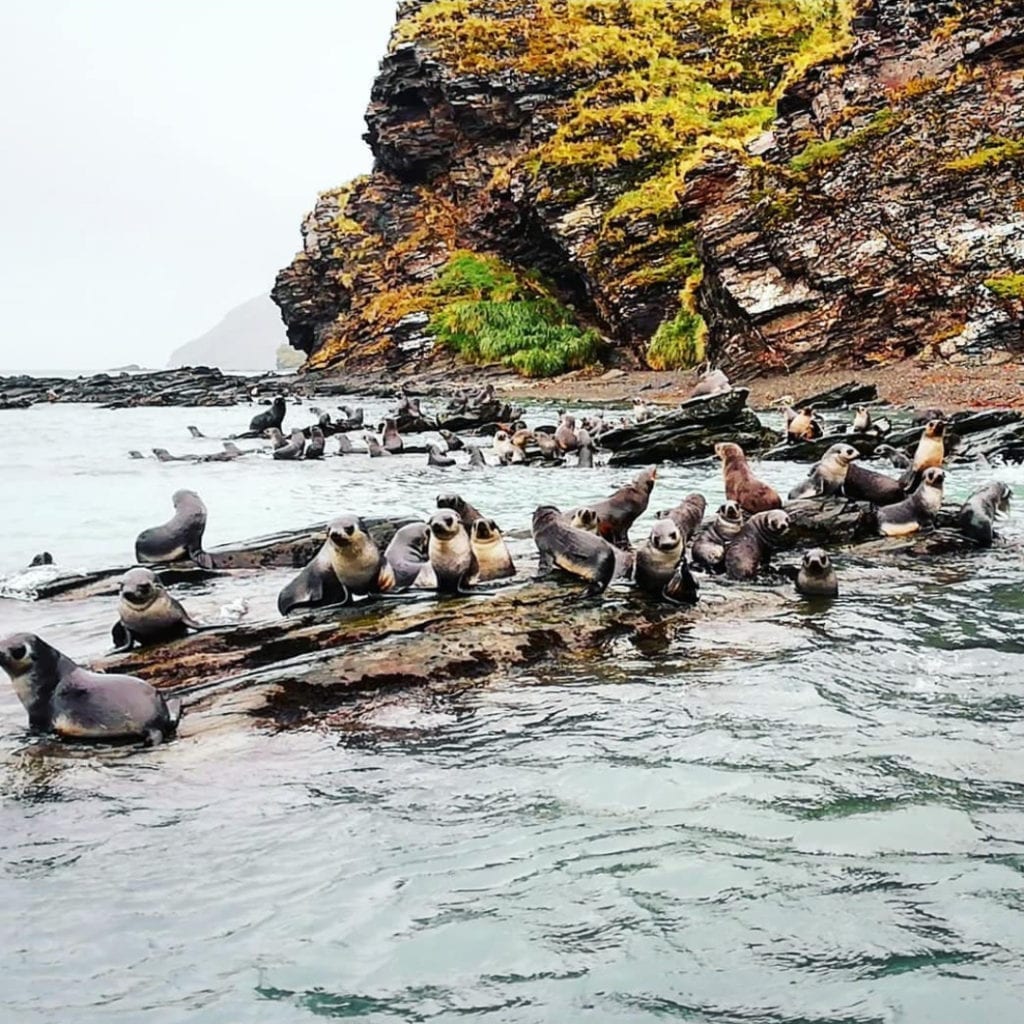
Cooper Island gets it name from one of James Cook’s Lieutenant and is a protected area for wildlife. We did not make a landing here and had a zodiac cruise around the island to get our first welcome look at South Georgia. Groups of penguins and fur seals line the shores, with hundreds more playing in the water. While Antarctica is defined by the impressive icescapes, one of the most captivating factors for South Georgia is undoubtedly the abundance of wildlife.
Throughout the journey, we will continue to add to our collection of sightings, including various species of petrels, albatrosses, penguins, seals, and whales.
A change in landscape with greenery
Gold Harbour
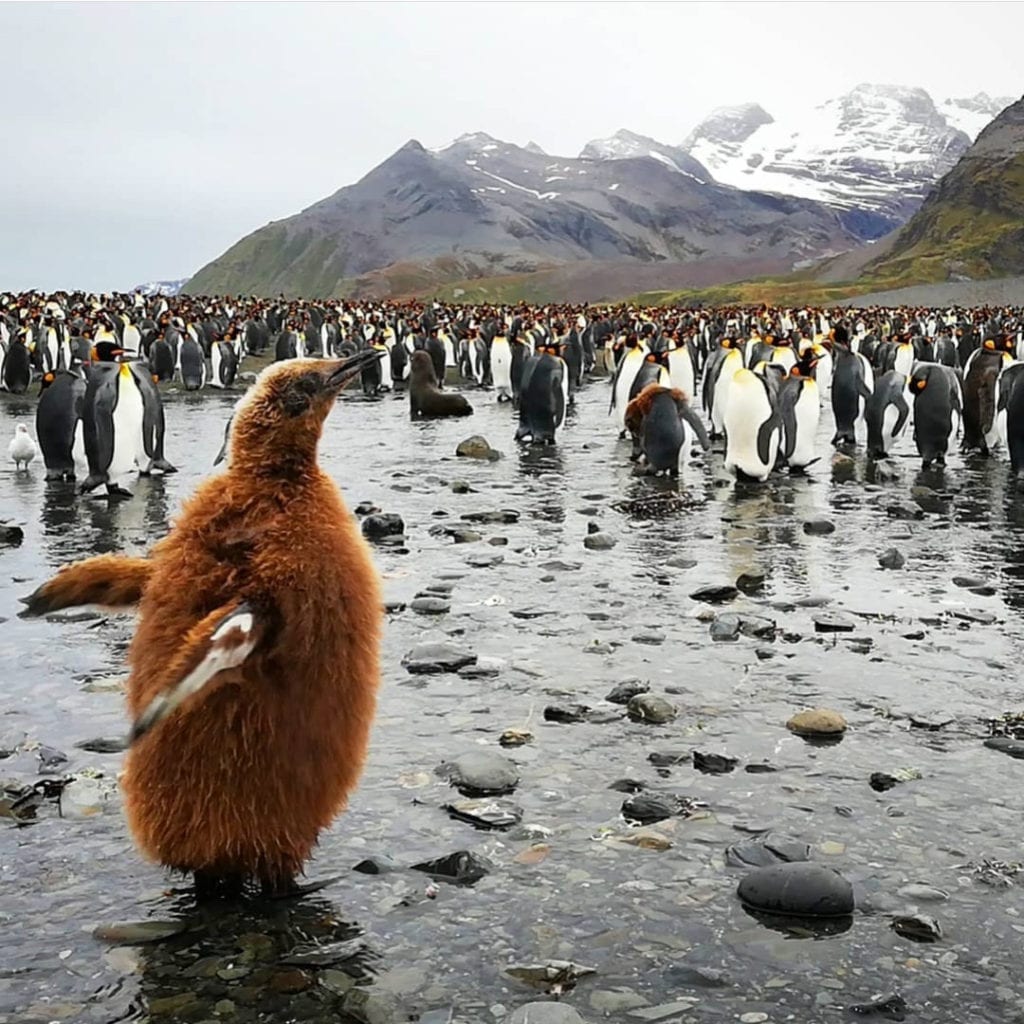
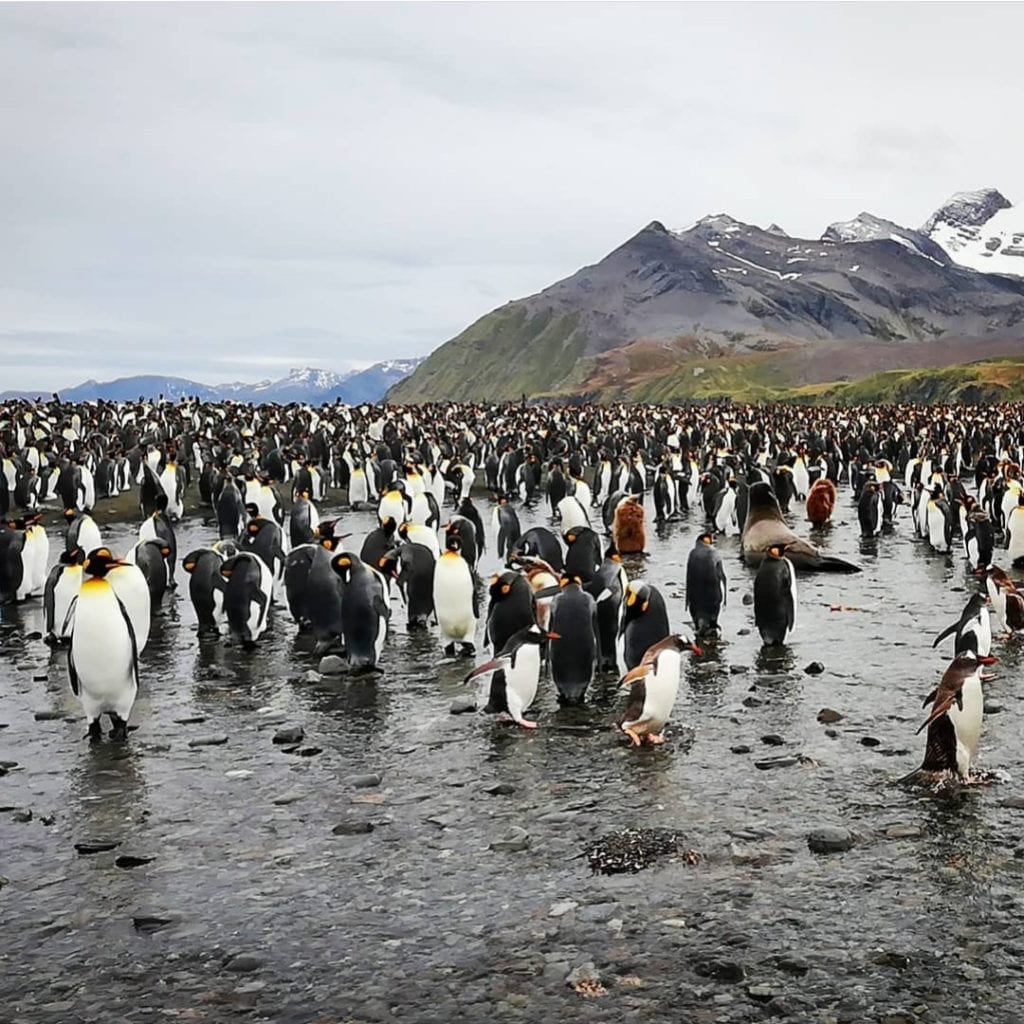
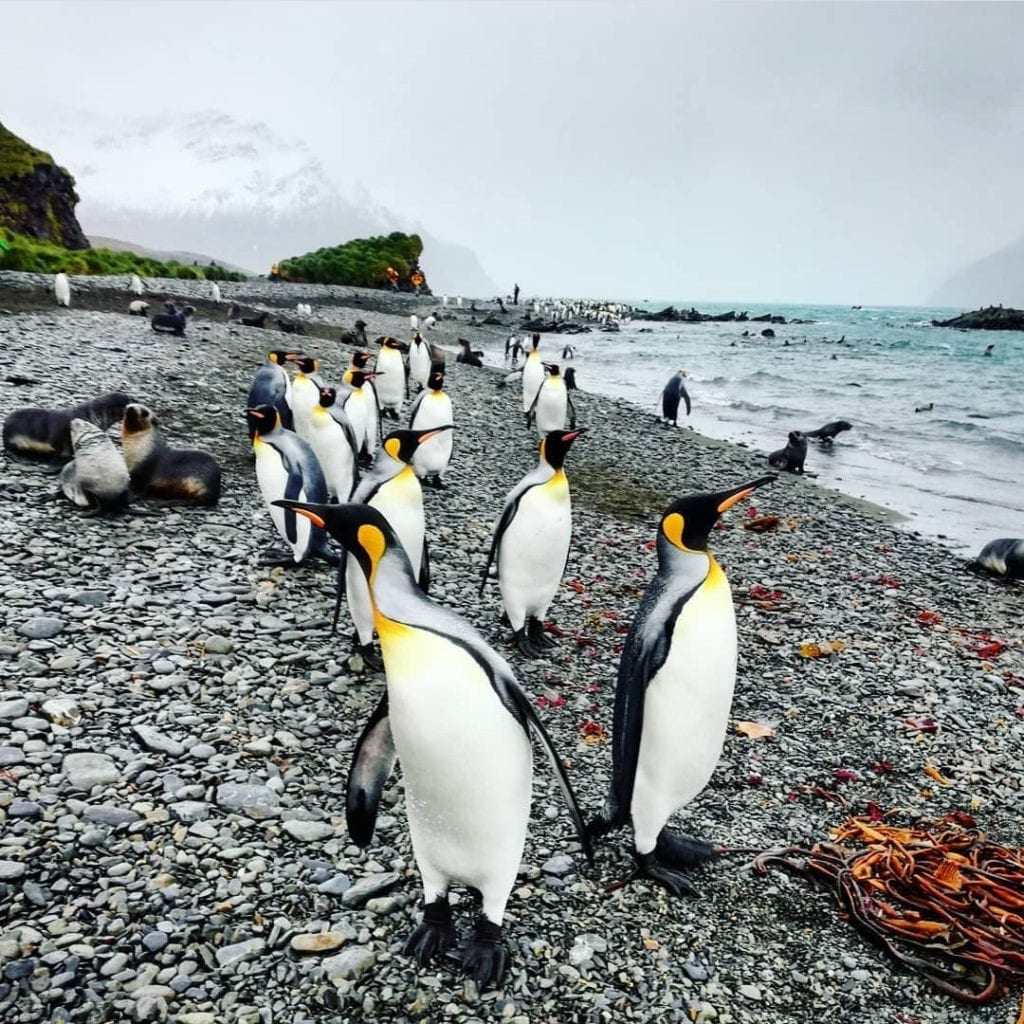
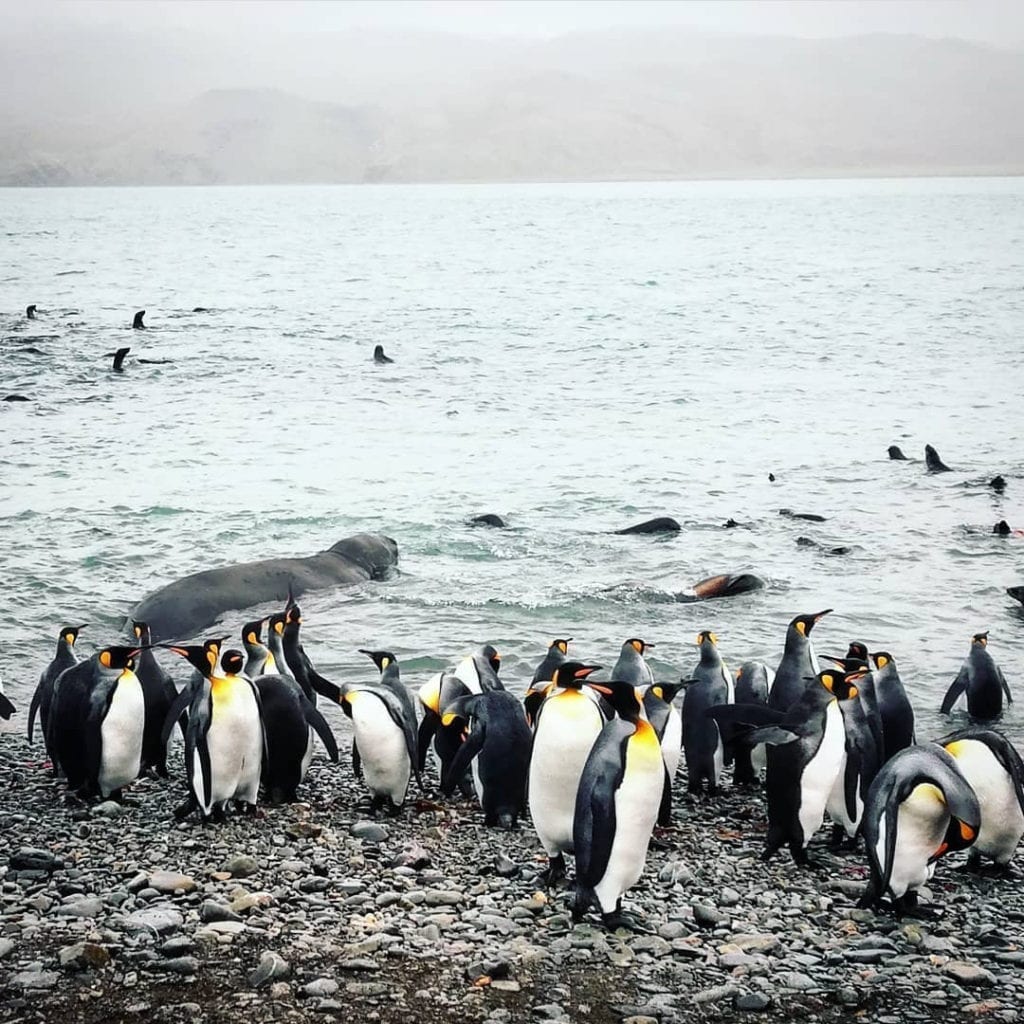
54° 37’531 S / 035° 56’140 W The journey gets better at Gold Harbour, where we had our first landing in South Georgia. During both the zodiac cruising and landing, we got a close look at fur seals and elephant seals, as well as large colonies of king and gentoo penguins. While the elephant seals were busy sleeping, most of the other animals were relatively active. Playful fur seals went around charging at everything, humans, birds, each other… The molting baby penguins and fur seals certainly pulled a lot of heartstrings that day.
This baby penguin stole the hearts of manyHuge penguin colony covering the whole beach
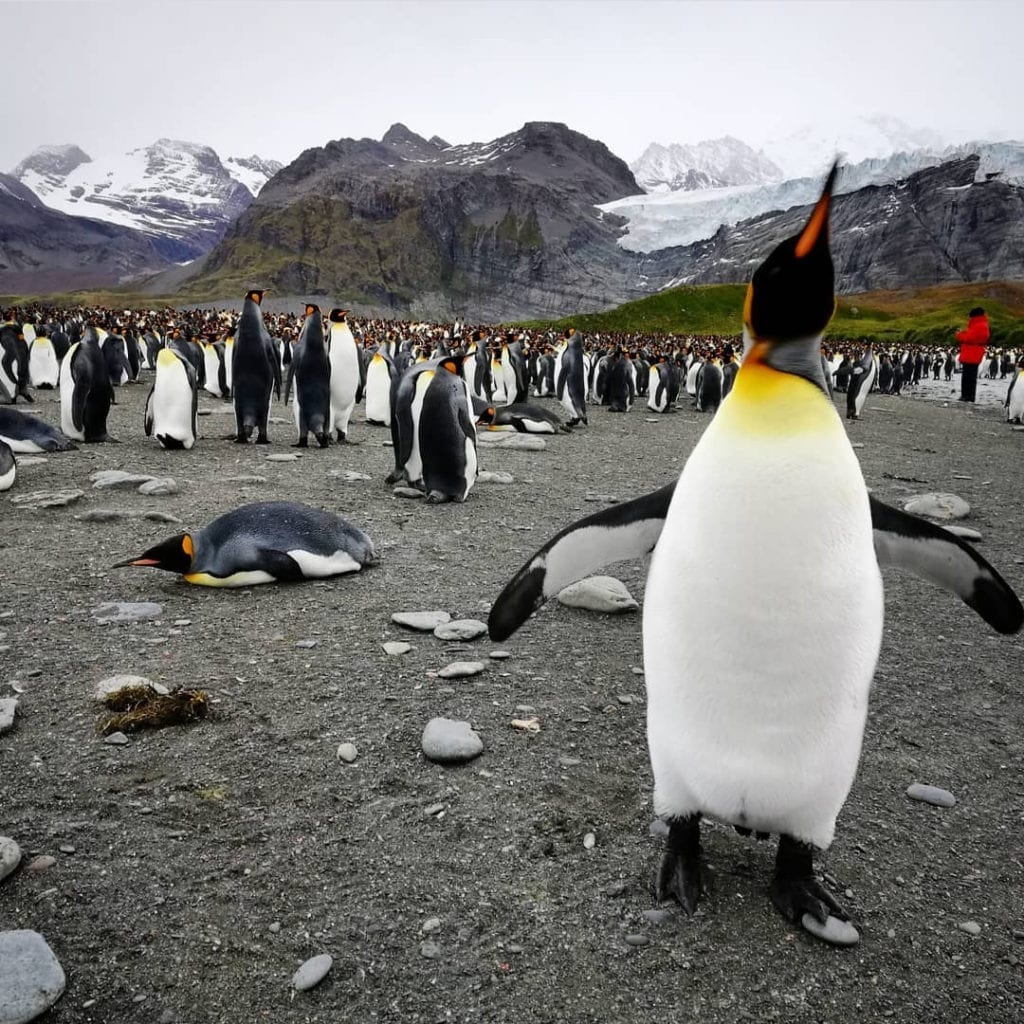
Different species coexisting together in peaceMajestic King Penguins in South Georgia!!
Grytviken
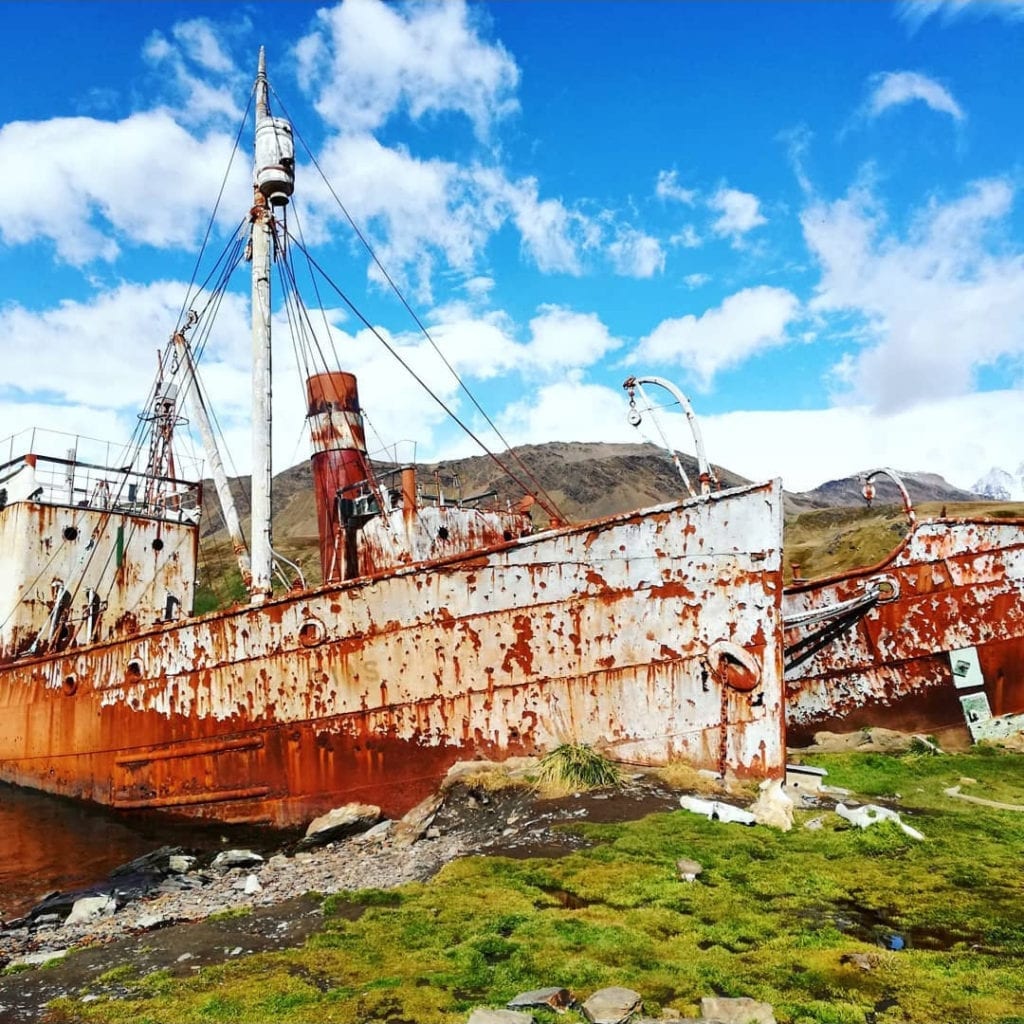
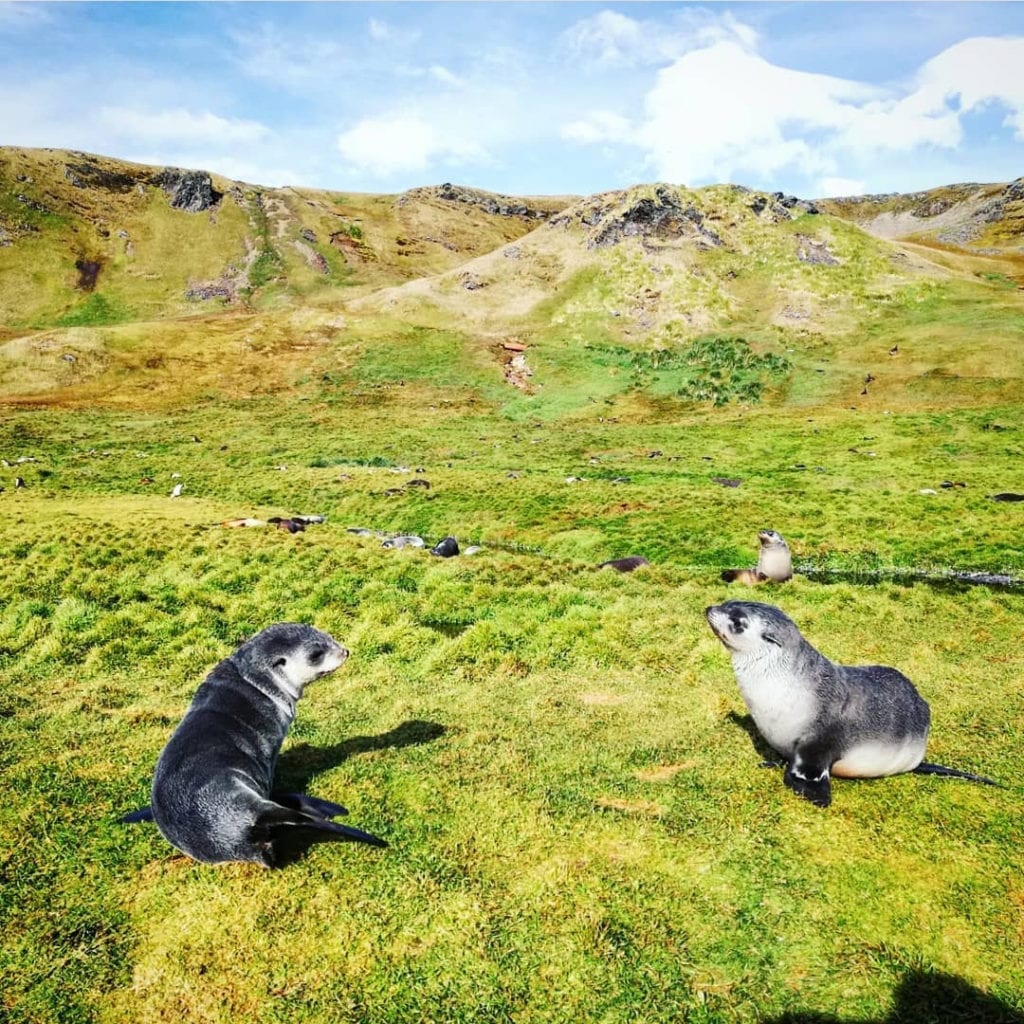
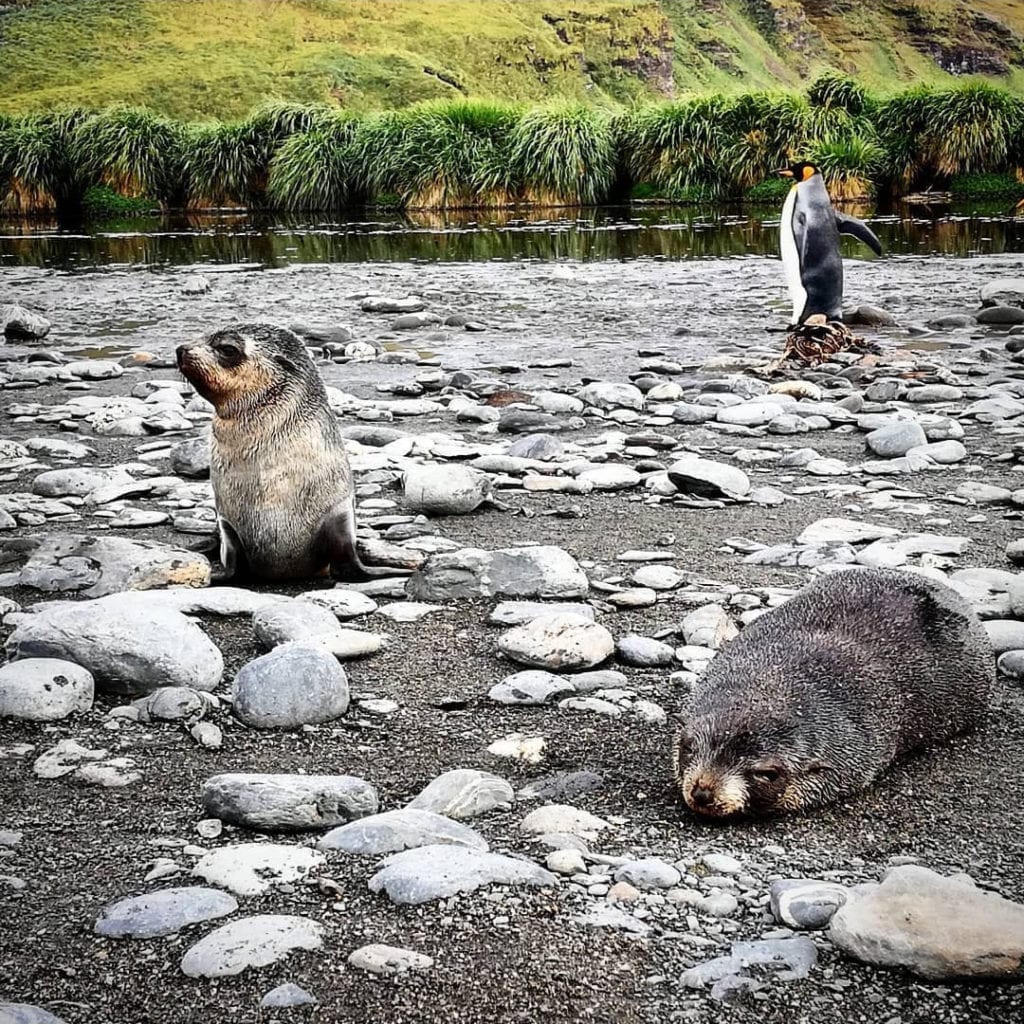
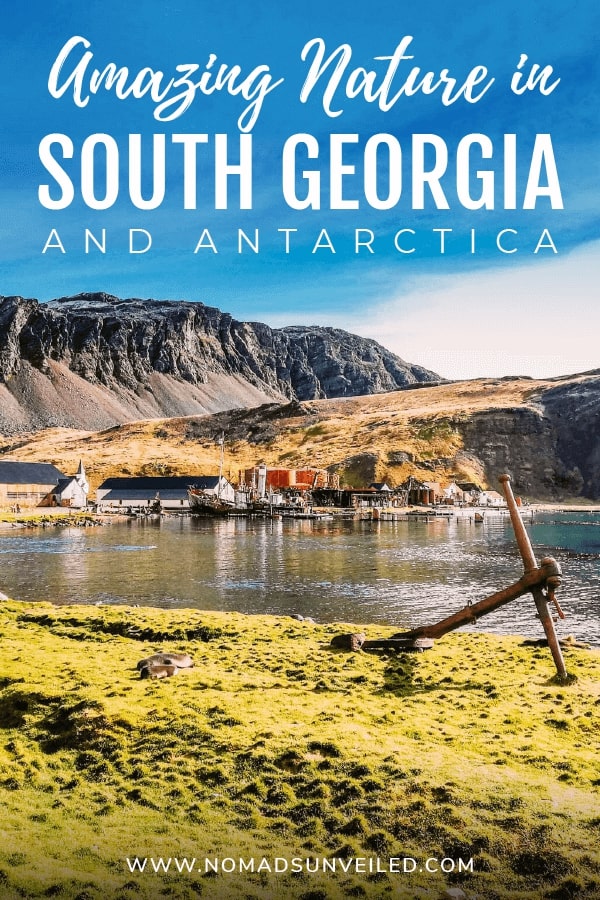
54° 17’285 S / 036° 28’805 W Amazing, amazing weather at Grytviken! I remember waking in the morning to the stunning scenery. Exiting to the ship’s deck, the fresh air and panoramic view of the landscape was pretty overwhelming. Grytviken used to be a whaling station where they processed whales they caught. Some remains of the processing stations still stand. Today, Grytviken mainly houses a museum and a graveyard, the final resting place of explorers Ernest Shackleton and Frank Wild. Tons of fur seals were just lazing under the sun, swimming, and playing around.
Waking up to an impressive view from the deck
Old ships and parts of station still remains
Fur seals playing in the sun
St Andrews Bay
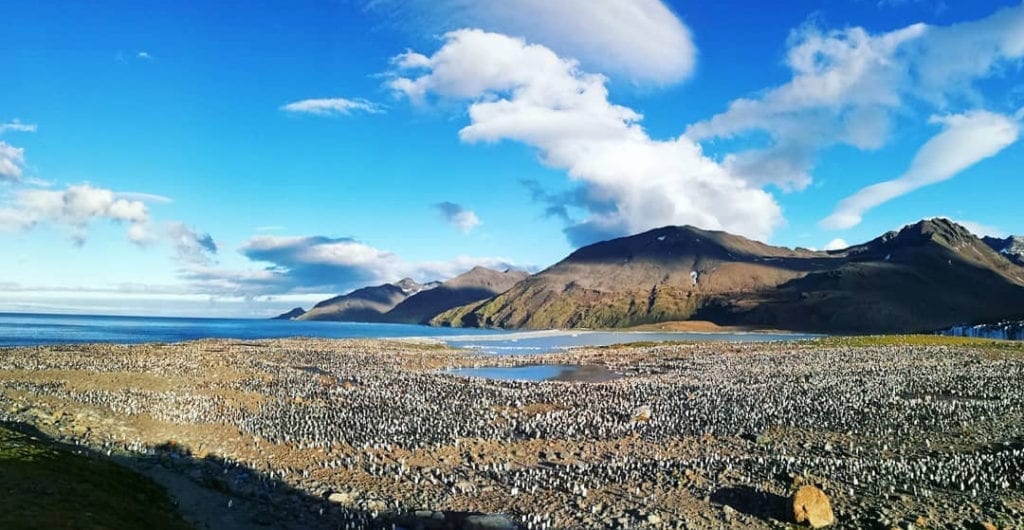
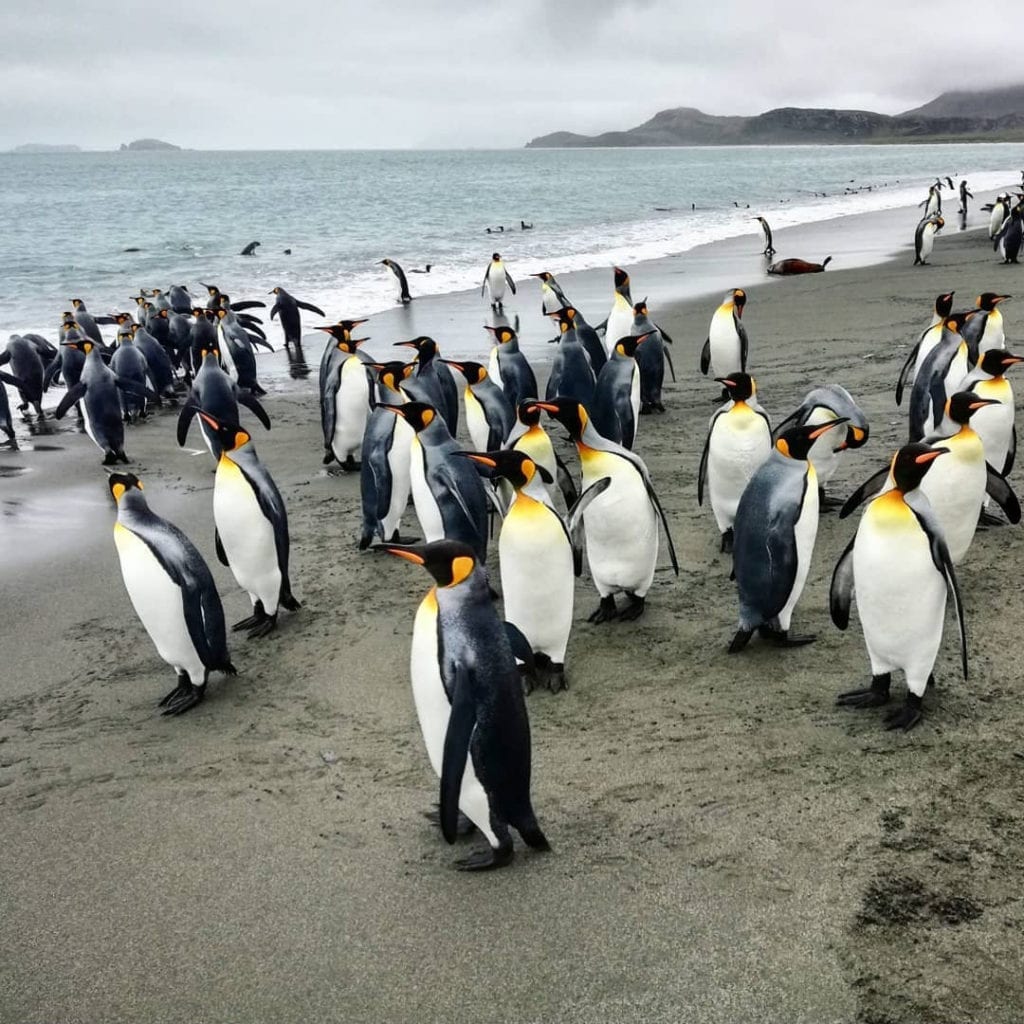
54° 26’554 S / 036° 10’465 W Moving on to St Andrew’s Bay in the afternoon, it was a sight to behold as we saw our largest colony of penguins yet. We managed to catch some lovely landscape and wildlife activities while on the Zodiac.
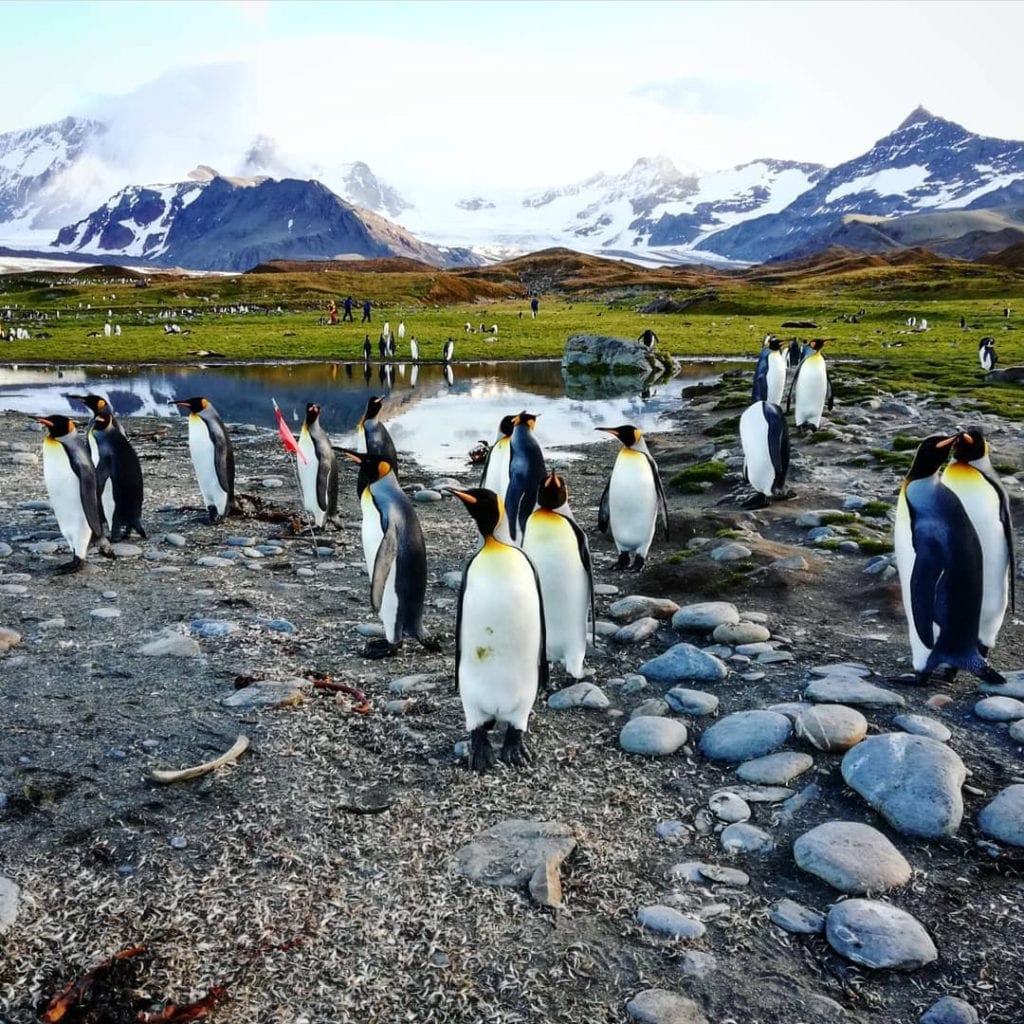
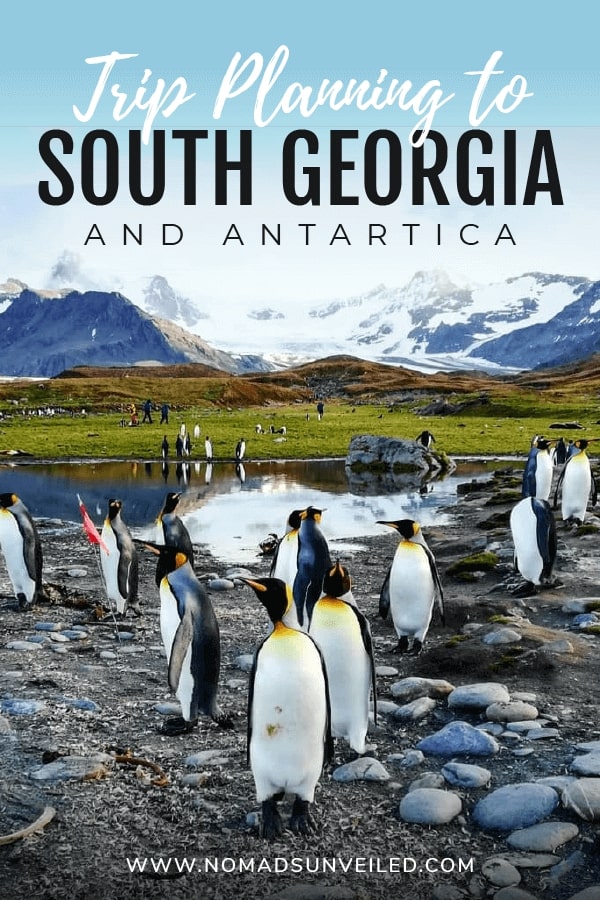
Upon landing, we followed a path from the shore through the grassland. Groups of king penguins greeted us along the way as we finally ended up at a vantage point overseeing a massive spread of king penguins. The incredible scene that unraveled before us was probably the most memorable moment of South Georgia for me.
Breath taking view of the penguin colony from high ground. All the spots are penguins.
You can see penguins lining up the whole coast even while Zodiac cruising
Penguins all along the way as we explore deeper
Fortuna Bay
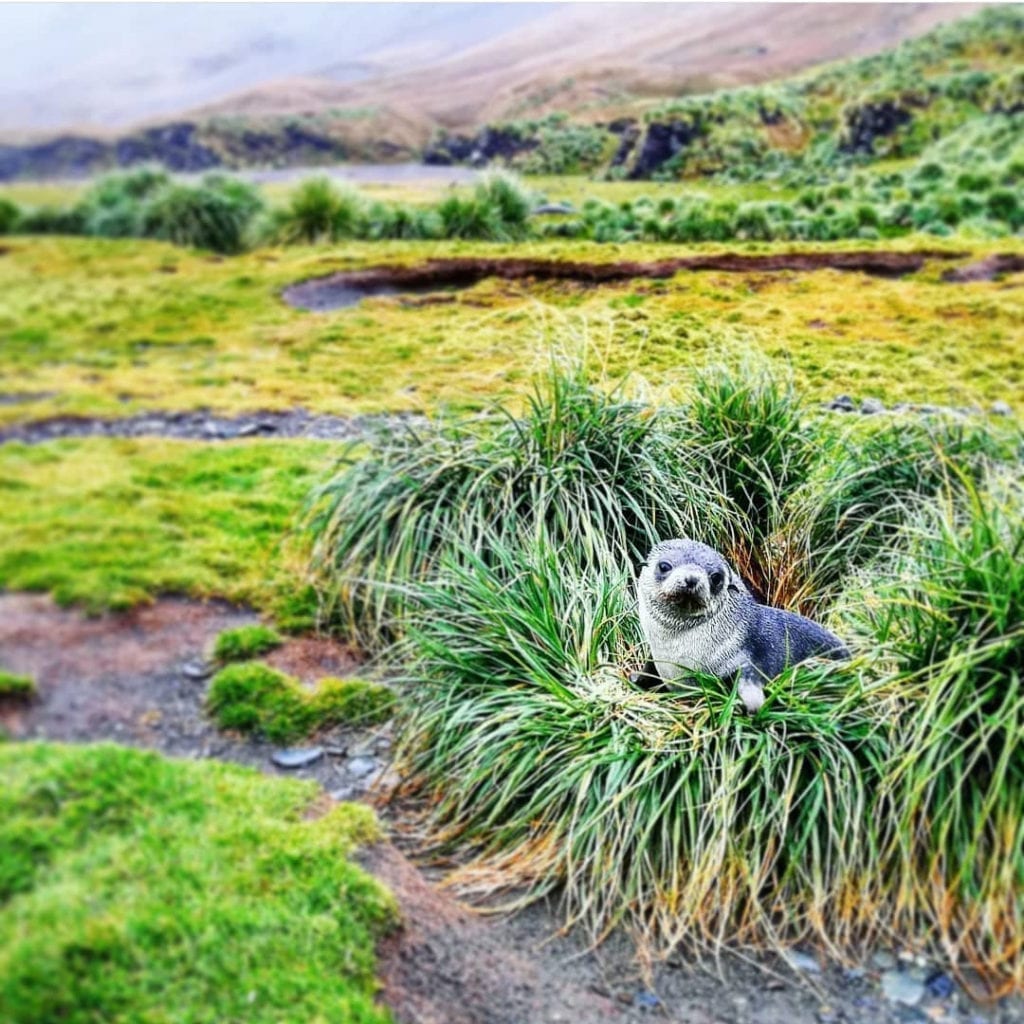
54° 07’939 S / 036° 49’521 W Our last day of landings – The foggy weather wasn’t as great compared to the day before, but it was still good enough for us to head out. We got an eye feast of wildlife as clusters of penguins and seals continue about their daily activities. We also managed to finally catch some action from an elephant seal bobbing its way to the ocean.
Not getting bored of the penguins galoreFur Seal resting in Tussock grass as if it’s a nest
Lots of fur seals playing in the waterElephant seal waddled into the sea
Salisbury Plain
54° 031’17 S / 037° 19’415 W Salisbury plain was our final landing, and also where we saw our largest penguin colony stretching from the shores up into the hills. Penguins were streaming in line by line from somewhere to the large colony. Fur seals were playing on the coasts and in the water, penguins wadding around, gathering as if they were having a meeting. (King penguins in their black/white furs, standing straight and in big clusters, always felt to me like business executives in blazers walking around Wall Street). This is actually becoming a very familiar scene, yet one that continues to captivate our eyes and hearts.
Fur seals just chilling outKing penguins bidding farewell as we board the Zodiac
Penguins walking back to their colony in an orderly fashionAbundance of wildlife in South Georgia
A trip to Antarctica soon!
Despite having visited many impressive places, traveling to Antarctica is definitely one for the books. An Antarctica cruise expedition is one of the best ways to make the trip. I highly recommend visiting as soon as you can because prices will continue to get more expensive.
If you are planning a trip to Antarctica, here are travel guides to Ushuaia and Buenos Aires that will come in handy.
When it comes to trekking in Peru, many will often think of Cusco and the famous Inca Trails leading to Machu Picchu. While there are many great trails around Cusco, there are also other destinations in Peru with much to offer when it comes to hiking. One excellent trekking destination in Peru is Huaraz.
If you are traveling from the North of Peru down, Huaraz is a great stop to get yourself more acclimated before getting to higher altitudes places like Cusco for trekking. Huaraz is a key part of my acclimatization strategy.
Huaraz has some well-rated multi-day hikes, with the famous ones being Santa Cruz and Huayhuash. Unfortunately, I was on a tight schedule to get down to Cusco for my Inca Trail Hike (pre-booked five months ago). Therefore, I did not manage to do either of the treks due to time constraints. The weather was also not great when I was there in October, which is just before the rainy season.
Huaraz Laguna Wilcacocha Hike
Nonetheless, there are many great day hikes to enjoy Peruvian nature. Most of these hikes are situated in the Huascaran National Park. I was fortunate to get relatively good weather for most of the day treks I did.
Here are four that I went on and another good option that I did not manage to visit within the limited time I had.
Laguna Wilcacocha (12220ft)
I did the Laguna Wilcachocha hike right after an overnight bus from into Trujilo. It is simple to get to as you can grab a collective yourself. You will ultimately end up at a breathtaking lookout point over the mountains and a lake that glitters under an intense sun.
In the early morning of arriving in Huaraz, I threw left my backpack in the hostel, grabbed some breakfast, and went straight for this trek. The early start was a great decision as I managed to have the peak area to myself (and dog) before seeing more hikers when I descended. The weather also changed turned bad later in the day.
Laguna Wilcacocha Lake
My Hiking Buddy that accompanied me for the hike
Terrain: Dirt/Mud path with rocks
Terrain Difficulty: Easy. The greatest challenge is the altitude since it is the first hike upon arriving in Huaraz.
Scenery: Andes Villages, Grassland, Snowcap mountains, and lake at the top. The bonus of meeting villagers along the way and see how they go about their daily life.
How to get to Laguna Wilcachocha
Flag down a collectivo at the main street of Jiron 28 de Julio and Av. Confraternidad Internacional Oeste. Double-check with your hostel as routes might change. The express way goes straight to the starting point, which is just some construction sheds on the side of the road.
The Beauty of Pastoruri Glacier
Pastoruri Glacier (Classic Tour) (16,256ft)
Pastoruri Glacier is another glacier that is receding quickly due to climate change and might not be around for long. This is actually a very short trek, but I wanted to visit the glacier, and my purpose here was to test my body reaction at higher altitudes and cold temperatures.
It turned out to be a freezing trip due to the snowy/rainy weather. I put on my raincoat for extra cover, but the snow flew mercilessly into my face. It was hard to stay dry, and I had to keep my head down mostly. Nonetheless, I made good time on the ascend and had quite a bit of time at the glacier. We were lucky that the weather cleared for a bit to reveal the glacier in all its glory before snowing heavily again. I descended quickly to keep my gear as dry as possible.
Terrain: Stone pavement
Terrain Difficulty: Easy short hike, option to take a horse. The main challenge was the natural elements. The location is at a high altitude, and since we didn’t have the best luck with the weather, it was very cold and snowing heavily.
Scenery: Snow mountains and lakes. The main sight is the diminishing glacier that will cease to exist in a few more years.
Raining and Snowing at the same time
How to get to Pastoruri Glacier
Recommended to book a tour with an agency or at your accommodation. The tour will usually include a visit to the world’s largest bromeliad (plants), the Puya Raimondi, and the springs of Pumapampa. Undrinkable carbonated water where the colors change visually depending on the angle you view it from. There will likely be a stop in the middle of the journey for a snack/meal.
There is also a more challenging day trek to Rurec Glacier. Further acclimatization is recommended before embarking on this trek.
Huaraz Laguna 69 Trek
Laguna 69 (12600ft – 15000ft)
Laguna 69 is the most popular day hike in the area, and for a good reason. The view of the turquoise lake on a good weather day is breathtaking. I would argue it is comparable to some sceneries I’ve seen in Patagonia.
You really want to try and get good weather for this hike; otherwise, you might not even be able to see across the lake. I rearranged my itinerary and delayed the hike for one day based on the weather forecast. That really paid off as we had much better luck with the weather and scenery.
Huffing and puffing my way up, I managed to clock good timing for the ascend. I started with 4 layers and kept stripping down to just 1 within 30 minutes.
I had decided to put in more effort for this hike as I wanted to have as much time at the lake as possible to await good weather. Although it turned out, we were pretty lucky with it. Had almost 2 hours at the lake, having lunch and hanging with other hikers before heading down.
Terrain: Dirt, mud path, rocks, streams, fields
Terrain Difficulty: Moderate. Nothing too tricky with the tracks in general, apart from avoiding mud, poo, and getting shoes wet. 2 slopes were particularly testing on stamina with the altitude. The final 1km of the ascend is the most challenging and felt like the first 3 km combined, but push on as it is the last leg.
Scenery: The turquoise laguna 69 with a snowy mountain backdrop. On a clear weather day, you will even be able to see the mountain’s snow peak. There are also great views along the way, including waterfalls, lakes, snow cap mountains, and animals.
How to get to Laguna 69
Recommended to book a tour with an agency or at your accommodation. The tour, which is technically just the transport, usually also stops by Llanganuco Lagoon for some photos before arriving at the starting point to trek Laguna 69.
Laguna 69
Lake Paron Vista Point
Lake Paron (13632ft)
Laguna Parón is the largest lake in the Cordillera Blanca. It is possible to do Lake Paron as a longer hike, starting from the base. However, the only company that offers that required a minimum of 10 participants; and there wasn’t sufficient demand when I was there.
As such, I went with a classic tour instead. The classic Lake Paron trip drives directly to the lake and involves a 20mins hike up to Mirador. Since I was anticipating good weather from the forecast, can’t say we were lucky with it.
There was some sun, but it was also quite foggy and slight drizzle during the climb. Despite there weather looking better during transport up and down the lake, we could not see the glacier peaks really well.
Lake Paron is located pretty far from Huaraz and will take you a full day trip. Considering the long travel duration from Huaraz, I would encourage doing the longer hike if possible to make it more worthwhile.
Terrain & Difficulty: The longer hike involves a more direct upward route cutting through forestation, while the vehicle takes a windy road up. Considering the terrain up to Mirador, which is just a jumbled mess of rocks, terrain difficulty is moderate, especially if the rocks are wet from the rain.
Scenery: Lake Paron, mountain peaks, and waterfall.
How to get to Lake Paron
There are many tour agency that offers trips to Lake Paron. You might even be able to book it with your hostel as they partner with agencies.
On a clear day you can see very far
Laguna Churup (15091ft)
Laguna Churup is another popular half day trek for most hikers. Some call it a preparation hike for the longer Laguna 69. The trail starts at 3800m and ascends to the beautiful Lake Churup. You also have the option to go further to its smaller, sister lake – Laguna Churupita.
One advantage of this trek is that it is considerably near Huaraz, and you can do it yourself without having to go on a guided tour. This can be a half-day trip if you can make the collectivo back in the early afternoon.
This trek involves sections that require you to work with ropes. There is a mandatory short section, and a longer and tougher one, which you can avoid by taking an alternative route. This could be fun to some and a put off for others; just choose the path that suits you best.
How to get to Laguna Churup:
Take a collectivo from Avenida Agustin Gamarra and Avenue Antonio Raymondi. Find one that heads to Pitec
The collectivo driver usually waits for hikers back at the starting point at 1pm (double-check with him as this might change). If you miss the return timing, you would have to walk back to Lapu town, about 45mins – 1hour away, and get another collectivo to Huaraz.
There are many great and popular destinations in Peru. However, Huaraz offers a paradise for avid hikers and should not be overlooked if that is your cup of tea.
This is a two or maybe three-part series (because I have not decided yet) of tips to build relationships and meet people while on the road. Digital Nomads’ flexibility to travel around the world also creates one of their most significant challenges. The difficulty in building relationships (both romantic and otherwise) while moving around has been a common issue for digital nomads.
This first part will touch on how to meet people or fellow digital nomads while you are traveling.
Using social platforms to find or host events
The most common and recommended way to meet people is to attend events! The most common and international platforms for these are meetup.com, Facebook groups and Couchsurfing for travelers.
Some events where you might find international and local crowds are activities/talks held by coworking spaces, language exchanges, and travel groups.
Consider organizing your own event and see if anyone is interested in taking part! The key to action here is to know that you don’t necessarily have to organize something grand. It can simply be inviting people to try out a new restaurant together, cowork at a café, or even visit a nearby town/place of attraction outside the city together (Bonus: you might even be able to share transport cost!). These are simple stuff whereby you will probably even do it alone and are just extending the invitation for others to join you.
Find interest groups and events
Look for more than nomad or expat groups. Find interest groups.
A common piece of advice to find digital nomads in a specific city is to search for nomads groups. These are already common in popular nomad hubs, but I expect more to pop up as the nomad community spreads.
However, I recommend expanding the search scope. When searching for Facebook groups, don’t just go look for expats, nomads, or backpackers. I find the best experience is to be able to meet both locals and foreigners. Search instead for interest groups locally. These groups often consist of both expats and locals.
In some of my favorite nomad destinations like Buenos Aires and Budapest, I have found foodie groups where I have met friends I’m still in contact with today. Great food needs great company. There are also sports groups in some cities where are great for active nomads. If you have other keen interests like music etc., try searching for interest groups within the town.
You are more likely to repeatedly attend group events that cater to your interest. Since it consists more of locals and expats, there is also a higher chance of meeting the same people again. Purely travel-related groups can get a bit dull after a while. A good portion of attendees also tend to be passing travelers, so you see new faces vs. meeting the same people. This is great if you want to meet many new acquaintances but less ideal if you want to build a friendship.
Join Group Classes/Activities
If you are staying for a while, consider taking some classes in your area of interest. This method is exponentially more effective when applied to activities that are already inherently community-driven.
For example, rather than working out by yourself at the gym, try going for Crossfit classes instead. Crossfit has a community element that makes it welcoming for newcomers, even if you are there for just a day. This makes it much easier for you to make new friends. Try attending classes at regular timing if you can, so you meet the same people. That’s another way you can build a stronger connection.
This can be applied to different interest classes, like cooking or sports. Essentially, the more interaction between participants, the better the chances of getting to know others. Worst case scenario, you will get to know the teacher/instructor while enjoying what you like and building your skills.
Join classes and activities
Frequent the same work locations
Coworking spaces and cafes are the 2 regular work locations for digital nomads. It is common to go back to the same coworking spaces since weekly or monthly passes are usually more worthwhile than daily/hourly passes. Coworking spaces are a great way to find working buddies or meet other locals or expats. Just make sure to check the ambiance beforehand. Some coworking spaces prioritize interactions, while others prioritize silence for work concentration. If you are looking to meet people, try to go for those that hold events frequently. Some coworking spaces also offer a trial for a few hours; you can take advantage of those. If you can, visit and get a feel of the place first. Don’t just sign up for a long term plan hastily.
When you frequent the same café for your caffeine dosage, magic happens. The staff who sees you regularly will start talking to you or remembering your preferences. This is particularly so if you choose to stick around and work in the café. This is a great way to interact and meet with locals. What beats a nice morning café? One that comes with a friendly morning greeting.
Just make sure the café is welcoming to people sticking around, and be considerate in NOT occupying the tables for work during peak periods when seats are scarce. Nomad responsibly :p
Switch up your accommodation options
I like to mix around my selections of accommodation options when I travel. For places where I am visiting for a short period, I like to stay in hostels. I still see myself as a backpacker more than a digital nomad. I love the energy from young travelers. This is especially great for places where you are hoping to find someone else to enjoy with. Hostels are great places to socialize and find travel buddies.
Sometimes, I would rent a private room on Airbnb if I like a local touch. It is often great to get to know local people who can share their stories and give you tips about the local area. This option is excellent for midterm from a few weeks to a month. This is also for places where I think it’s too expensive to have an apartment by myself (if so, I usually won’t stay for more than a month anyway). Sometimes the host will bring you out with his/her local friends, which is awesome.
Coliving spaces haven’t really been my accommodation of choice, mainly because I don’t use coworking spaces regularly. I prefer cafes myself but like to go to coworking occasionally and participate in events there. As such, I feel the extra cost of coliving spaces (which include the coworking area fee) might not be as worthwhile. However, having visited my fair share of coliving + coworking spaces, I can see that this is definitely a great place to hang out with other expats or digital nomads. You instantly find your groove to it. Coliving.com is a great space to start your search and see what’s available out there.
For long term stays, apartments will usually be more choice. You don’t get much interaction here within your living space and are limited to speaking to your neighbors if they are friendly enough. Don’t always count on it, though. You might also have luck finding apartments in a cluster house where you still get your privacy, but all the apartments are in a single compound. In that case, you may hang out with your housemates regularly.
Meet people at coworking spaces or cafes
Visit places with strong nomad or expat communities
The destination also determines how easy it is to find a like-minded community. A thriving expat and nomad community is a strong pillar towards a city becoming a nomad hub. An active nomad community makes the scene more vibrant, and you see more events happening.
Nomad hubs are definitely great cities to start with for first-time nomads who are nervous about the journey. They are also good bases to stick around when you start to feel mentally drained from being on the road. A community that appreciates your thoughts always help. There is this article where I have read about only long term travelers understand long term travelers.
There are increasingly companies organizing Nomad Trips. These adventures can range from 2 week stays in a particular spot to month-long cruises to year-long trips moving from one city to another. The details and itinerary defer, but the underlying idea is simple. It is to get a group of digital nomads who will hang out together for a period of time. The organizer will handle logistical stuff like accommodation, transport, plan activities, etc. These trips often combine travel and networking, allowing nomads to tap on each others’ company and business expertise.
These trips come at a price, but some have found the experience to be really worthwhile. One thing for sure, great friendships have been formed on such adventures. Some of the companies in this space are WifiTribe, Nomad Cruise, and The Nomad Escape, each offering pretty different itinerary styles.
There are no strangers, only friends you haven’t yet met
An unforgettable part of travel is always the people you meet along the way. While there are spontaneous ways to meet people during short trips/vacations, building relationships as a digital nomad where travel is a constant state is a further extension of that.
In the next part, let’s look into how to maintain relationships while on the road.
A common challenge faced by many digital nomads is the issue of productivity. Being remote workers, we need a good level of self-discipline and motivation to be highly productive. Throw in the constant temptation of traveling and changing environments; it can be even more challenging to sit our ass quietly down and get to work.
However, making the best use of our time at work also means more time for exploration and leisure activities. That said, how can we be more productive as digital nomads?”
Here are some productivity tips that can help keep efficiency high. I practice some of them regularly and am still struggling to adopt others.
Productivity Tips for Digital Nomads
Travel Slow
This is probably the most important macro factor. It is difficult to hit a high level of productivity if you are always moving around. There are too many logistical issues to consider when traveling to new places, such as accommodation, transport, places to visit, and the list goes on. Moving too quickly means you have less time to explore a destination. This further forces you to make the best use of the limited time in checking out the place instead. The draw of exploring a new destination is just too high.
On the other hand, slow travel means you are not at the mercy of time. You can spread out your time exploring places and have sufficient time for work. It also provides an opportunity to build a routine and avoid having to adapt to a new environment constantly.
We only have that much decision making prowess in one day. If we keep spending them on daily minor stuff, we have less energy to focus on important work decisions. (This is why Steve Jobs and Mark Zuckerberg wear the same stuff every day, so they don’t spend precious brain juice on the “nitty-gritty” in life).
Travel journeys can also be good time for productive work
Segment on-the-go tasks
Commuting can sometimes be very time-consuming. We can better utilize the time during long bus rides or flights for productive work. I like to segment out tasks that I can perform offline and fit them into these long travel journeys. Sometimes I download all the materials I need beforehand and work on my laptop while traveling.
Some trains, particularly in Europe, also has WiFi access. It might make sense to go with a company that provides that even if it is more expensive. If you do connect to public WiFi, remember to use a VPN, particularly when working with important data.
However, I always keep a pen and notebook in my backpack, which I use to draft or plan when using the computer isn’t convenient. This productivity tip has given me a significant amount of quality work time because there is not much distraction while stuck on the bus or flight.
Know where you are most productive
Be self-aware and understand what your best work environment is. Some people work well in extreme quietness while others like having background noise. It explains why some people complain about coworking spaces being too noisy, while others complain about it not being social enough.
Sometimes, your optimal environment can even vary across different tasks due to the nature of work. For example, I need way more concentration when I am writing than when I am doing design.
One of the key benefits of a digital nomad is the flexibility to choose where to work from, so why not take full advantage of this. I am personally way more productive in cafes where there is background music, yet not directly blasting into my ears.
Figure out what kind of work environment works best for you and strive to either get an accommodation that can provide a similar environment. Alternatively, check out coworking spaces and cafes that suit your taste.
Figure out when and where are you most productive
Know when you are most productive
It is not just where but also when. Some people are more productive in the morning, while others are night owls. A good understanding of when your creative juices flow is crucial to planning your schedule.
The easy tasks are always more tempting to start with first, but it is essential to understand which items are critical to your business/work. You want to cater to work on those tasks when your brain is at its optimal performance level.
You can also use this as an anchor to planning your social/leisure activities or travels. Try to reserve the productive time for work and enjoy while you know productivity would be low anyway. That helps to keep your nomad and work-life balance in check.
Build a routine
I have not deployed this method much in the work domain, but more for fitness personally. However, I have met many nomads that have found it useful in their work. Creating some form of small routine in our primarily ever-changing life helps get them into the work mode. It encourages discipline to focus on work during specific hours every day as the body clock adjusts to the routine.
The routine can be simple: wake up, meditate, get coffee, work for 3 hours, etc. It also eliminates redundancy in decision making throughout the day since there is a “fixed” schedule. I do notice that not having a routine can be damaging. Some days I spend too much time deciding if I should go out or when I should eat, which is an utter waste of time.
Start your day strong
That said, I like to start my mornings strong. It used to mean squeezing in my workouts at the gym before the day begins (until covid hit).
Starting the day with an accomplishment sets my mind up for better mental choices for the day. I tend to eat healthier and be more motivated to make the days as productive as possible. It is a positive propagating effect that cascades down to different aspects of your life.
The positive attitude gives me better focus on my work, and I’m pretty sure that boost of adrenaline in the morning plays a part as well.
Consider having a strong morning routine to start your day
Batch process similar tasks
This approach is one of the most important things that I am working on as I take on more projects and businesses. Batch processing tasks means performing tasks of a similar nature together at one go.
When you repeatedly perform the same task, you get into a flow, which makes the execution much faster. It is much more efficient than jumping from one task to another. For example, I will segment a block of time to work solely on writing drafts and another block to process all my photos across different articles. This is more productive than jumping from writing to processing five photos, and then creating social media assets all within the same time block.
Determine which of your regular tasks are similar and can be performed together for higher productivity.
Avoid Multi-Tasking
In a close similarity to the previous tip of not jumping from one task to another, multi-tasking is another productivity killer. It is especially so if your other tasks are not work-related. Our brains are meant to focus on one task at a time, and distractions like social media or tv can totally throw your concentration off.
One of the reasons I am more productive in cafes is that I don’t have as much distraction. I am guilty of playing Netflix or YouTube videos when working. While I can get away with it for some of my tasks, it is certainly not helpful for others. I can never get any writing done with the television raving on.
Focus only on one or similar nature tasks each time
Get sufficient sleep and find your best sleep pattern
The amount of sleep and rest your body gets directly impact how efficient your mind can function. Ever sat in front of your laptop for a few hours and realized you didn’t get much done? Having a well-rested mind makes you more productive, and you find yourself taking less time to get things done. It is not just about getting enough hours of sleep but also the time you go to bed.
Personally, I noticed that when I sleep after 3 am, my next day is almost a goner. Not the hungover type of gone, but my brain simply doesn’t function as effectively. Despite catching 8 hours or even 10 hours of sleep, my mind will not hit the optimal level of productivity (oh well, age catches up with everyone). If I sleep early before midnight, there is a good chance my mind functions better even with just 6 hours of sleep. This means an extra 2 hours each day.
Everyone has different preferences and patterns, which is partly influenced by how you grew up as well. Some people are used to taking afternoon naps and power naps throughout the day, while others function well with a long night rest. Therefore, find your pattern to see what works best for you.
Managing your sleep patterns can sometimes be hard to follow, especially when you are traveling around. However, it is good to know it so you can adjust whenever possible.
A good way to start testing this out is simple to listen to your body. From there, you can shift your sleep time accordingly to see how your body reacts.
Find your optimal rest time and sleep pattern
The Pomodoro Technique
Pomodoro Technique is one of the most popular time management systems for all workers. This technique follows the approach of focusing on one task for 25 minutes and then taking a 5-minute break. Each break allows you time to relax and refocus for the next interval. You can choose to take a 20-30 minutes rest after 4 Pomodoros.
This method breaks your workday down to productive short sprints where you devote all your focus to the task at hand. It aims to create a sense of urgency, help avoid distraction, and increase productivity. Keeping an intense focus on work is certainly more manageable in short intervals than a consecutive long period.
There are times when I feel bad just because I didn’t get anything done on a particular day, and this is one area that I have to improve on
Productivity tips can be useful, but even nomad entrepreneurs have off days when work is simply not productive. Don’t be too hard on yourself when this happens. Life doesn’t always have to be in constant acceleration.
I find turning to gratitude helps. Appreciate how lucky we are to be able to lead a nomadic lifestyle. Then make use of the various mental and practical work approaches above to maximize your time when your mind is ready to go!
Ushuaia, commonly marketed as El Fin del Mundo (End of the World), used to be the Southernmost city in the world. It actually isn’t any more after Puerto Williams in Chile has taken over. Nevertheless, it doesn’t change the fact that there are many exciting things to do in Ushuaia.
Ushuaia sits alongside El Chalten and Perito Moreno Glacier as some of the top destinations in Argentina’s Patagonia region.
This quaint little city is certainly one place that has somehow grown on me. I cannot really put the finger on it, but I look forward to visiting again as it gives me a different impression each time I have returned.
Things to do in Ushuaia
There is a good selection of activities to do in Ushuaia, both in the city and the surrounding nature. Here are some of the popular things to do in Ushuaia, even I have yet to try most of them.
Antarctica
If you don’t already know, Ushuaia is the gateway to Antarctica! (And yes, you can visit Antarctica). Here you can find cruises and ships sailing to the mysterious and majestic ice world. My advice for Antarctica has always been that if you ever plan to go in your lifetime, go now! This is because prices for Antarctica trips have been increasing over the years, and I can only imagine it will only get more popular.
Are you worried about the cost? There is no doubt it is expensive compared to many other travel activities, but it is worth every penny. There are ways to get it at a lower price than what the rich people pay. Here are my tips to planning and booking an Antarctica and South Georgia expedition.
This is hands down the highlight. If you are heading to Antarctica, there might be a few paid activities you want to skip in this list since you are likely to experience something similar in your Antarctica adventure.
Icescape in Antarctica
See penguins at Isla Martillo
Visiting a penguin colony is one of the main goals for many visitors to Patagonia. In Ushuaia, the place to do this is Martillo island. The island is home to a colony of Magellanic and Gentoo penguins. These penguins are used to human visitors, and you can walk amongst them. This is a typical tour activity, so you can find agencies offering this boat trip in Ushuaia. If you are going to Antarctica, you will already be seeing penguins, so you might not want to take another tour for this.
Estancia Harberton
Commonly combined with the Isla Martillo tour is a visit to Estancia Harberton. Founded in 1886, this ranch is the oldest in the region and is still functioning today. The ranch is family-owned and stretches across 50,000 acres. There is a restaurant with a great view of the Beagle Chanel where you can try some traditional food and a teahouse for homemade pastries. Apart from a day visit, the ranch also has accommodation options if you wish to stay the night.
Estancia Harberton is 64 km (40miles) outside of Ushuaia and you can get there by bus or car. However, most people choose to go with the boat, combining a tour to Isla Martillo or Isla de Los Lobos to watch the sea lions.
Lago Esmeraldo – Photo Credit: AllTrails
Lago Esmeraldo
You can get to this magnificent turquoise lake via a 2-hour trek from Ushuaia. This makes for a great half-day activity to indulge in some of the city’s surrounding nature. The trail to the lake has clear markings, and the trek is not challenging. You can certainly do it yourself. Bring along some food and drinks to enjoy by the lake.
Glacier Martial
Glacier Martial is another nice hike that you can take close to Ushuaia. The Glacier stands at 1,050 meters above sea level and is an important freshwater source for Ushuaia. The trek is of moderate difficulty as there are some steep parts. It is approximately a 3 hours round trip hike starting from the start of the trail. You can get to the trailhead via taxi, or a 40 minutes walk from Ushuaia.
This trek brings you through river streams and the forest to the Glacier. During the hike, you can get good views of the city and the Beagle channel. There is also a tea house at the trailhead where you can grab something before or after the hike.
Tierra del Fuego National Park
Since you are in the Tierra del Fuego region, you should definitely not miss the Tierra del Fuego national park. The national park is a paradise for outdoor enthusiasts. There are many hiking trails for both single day or multi-day treks. Some of the routes are an easy trek yet still incredibly scenic. This makes it great for both adventurous travelers and families just looking for a fun day out.
If water sport is your thing, you can also kayak around the lakes.
There is an entrance fee to the national park, which you will need to pay at the visitor’s center. You can get there via taxi or with one of the remis (shuttles) from the station at Avenida Maipu and Juana Genoveva Fadul Sur (It is just a car park with many shuttle vans and a small wooden cabin for tickets.). A more luxurious way of getting there will be via the Tren del Fin del Mundo.
Wildlife and Lakes in the National Park
Tren del fin de mundo
If you are into trains, then the Tren del fin del Mundo or “Train at the End of the World” is an appealing option to get to the Tierra del Fuego national park. This southernmost stream train was initially used to transport timber to Ushuaia prison but has now been converted into a tourist attraction. There are different cabins of varying classes and prices for your selection.
The train comes with a bilingual guide as well, so you will be able to take in beautiful views of the landscape with some historical knowledge along the way. There are only a few departures per day, so you should check the schedule on the website.
The End of the World Train Station is located about 8km outside of Ushuaia. You can get there by taxi or one of the remis at the station in Ushuaia. From the train station, it is an hour train ride to the national park or 1h 45minutes for a round trip. The entrance ticket to the National park is not included in the train ticket price.
There are discount prices available for argentine retirees and disabled.
Boat Trip through the Beagle Chanel (end-of-world lighthouse)
Sailing the Beagle Channel is one of the most popular activities in Ushuaia. It is a great way to see some wildlife and enjoy the Patagonian landscape. There are many boat tours available with different vessels for your picking. Most boat tours will take you to the prominent sights around Ushuaia. This will include Isla de Lobos and Isla de Pajaros, where you can observe sea lions and birds in the natural habitat. You will also see the southernmost lighthouse, Faro Les Eclaireurs, with its signature red and light stripes.
There are also longer cruise trips that go around Cape Horn and Glacier Alley if you are looking to sail further. An Antarctica cruise will already bring you through the Beagle Chanel, though not necessarily to the specific attraction points.
Visit the maritime museum and jail
For something light to do within the city, the maritime museum is an intriguing place to visit. The building used to be the Ushuaia prison in the early days. That said, a portion of the original jail is left intact, which you can visit. In addition, the museum visit also includes sections on Marine Art and Antarctica. There is a wealth of nautical and historical knowledge about the region in this collection of museums. That makes it quite a bang-for-buck attraction.
Wintertime: Siberian Huskies
Winter is quite harsh in Ushuaia as the temperature can fall below zero, but it also brings along an amazing snowscape. There are some great activities to do during wintertime as well.
One of the most exciting places to visit in Ushuaia during the winter will be Valle de Lobos or The Valley of Wolves. The valley is about 18km outside Ushuaia city. This is where you can find adorable yet strong Siberian Huskies and Alaskan Malamutes.
Here you can explore the Lenga forest and incredible landscape via an exciting sleigh ride, specially powered by these tough dogs. The experience is designed for people of all ages and can be a great family activity.
Skiing
Skiing is the perfect winter sport, and Ushuaia certainly offers that. There are a few ski resorts in the area, with the most famous being Cerro Castor. First opened in 1999, the popular resort has grown from 3 chairlifts and 15 tracks to now a whooping 28 trails catering to different skill levels. Cerro Castor is located 16 miles (26km) outside of Ushuaia and has several gastronomy options. It is a great place to visit and soak in the view even if you are not skiing.
Places to eat in Ushuaia
Being part of Patagonia, Ushuaia is not a cheap location compared to the rest of Argentina. This is also quite a touristic city because of the immense landscape. There are a couple of restaurants I enjoyed here.
Marcopolo Freelife: You can find this café nestled within the Hotel Cap Polonio. It is known to have the fastest wifi around. There are also good tables with power sockets, so you will find many travelers here uploading their photos, planning their next destination, etc. The food and drinks here are pretty decent as well.
El Viejo Marino: Although many things are expensive here, seafood can be a real steal. At El Viego Marino, you can find fresh and delicious king crab. You can have them fresh or choose from a selection of delicious dishes. There are other seafood dishes on the menu too. Unsurprisingly, this restaurant is extremely popular. I recommend you get to the restaurant slightly before the opening hour to avoid the queue.
Feast for the eyes and stomach
Gelido: If you are looking for something more affordable, Gelido is a fast food place with great burgers. To be honest, most people probably just see it as a fast-food joint, but the burgers are tasty there, and it’s a great meal without breaking the bank.
Paso Garibaldi: This is another popular restaurant where you can get seafood and other Argentine dishes. Prices are on the higher end, but the food is excellent, and the restaurant has a cozy vibe. Go early to get seats as it can sometimes be filled.
Where to stay in Ushuaia
Being a tourist town, Ushuaia isn’t exactly the cheapest destination. Most tour groups will stay in one of the hotels in the city. There are also many friendly hostels available for backpackers.
Hostel prices ain’t that low in this area, especially during peak season. If you are a group, consider renting an apartment. It might be more worthwhile. There are a bunch on B&B, guesthouses and apartments catering to different preferences.
You can also find options on Airbnb here! These are great choices to check out if you want something better than hostels but cheaper than hotels.
Staying in the city center gives you quick access to the amenities, however if you want to be closer to nature, you can also find options in the outskirts.
How to get into and out of Ushuaia
Cruises are one way to get into Ushuaia, making cruise passengers one of the city’s main visitor groups. For travelers already in the Patagonia region, the typical tourist destination preceding or after Ushuaia is Punta Arenas in Chile. You can find buses running between these two cities periodically, and frequency is lower during off-peak seasons.
Arguably the most popular way of getting into Ushuaia is by flight from Buenos Aires. There are frequent flights from the Argentina capital to the southernmost Argentine city. The Malvinas Argentinas International Airport is about 4km from the city center. The easiest way to get to the city center is via a quick 10 minutes cab ride.
If you are exchanging nature for the city life of Buenos Aires, remember to check out our Buenos Aires Travel Guide for tips and tricks to navigating the capital.
Trips from Ushuaia
I have already mentioned Antarctica, which comes as a high personal recommendation. Some of the activities above also warrant a good day trip outside the city. Now here is another location that deserves a special mention – Puerto Williams.
Puerto Williams is now the actual southernmost city in the world after evolving from a settlement into a city status.
How to get to Puerto Williams
You can get Puerto Williams via one of the boats at the docks. There are many boat company booths there where you can get a ticket (1-way or 2-way). They do not need to be on the same day if you want to stay for longer. A two-way ticket costs around US$120.
Puerto Williams is a tranquil and charming town located in Chile. Not many tourists visit this place yet, but it is becoming popular as a quick stop for cruises. Infrastructure is still pretty basic, but I expect this to change in the next few years. This is still an undiscovered gem that has lots to offer.
Hiking Dientes del Navarino
Our primary purpose for arriving in Puerto Williams is to hike the Dientes del Navarino (what we term as the southernmost trek in the world). It is a multi-day hike in a pristine natural landscape. This is a great and challenging hike, and you won’t find many hikers here yet. Here is my experience and tips to tackling the Dientes del Navarino.
If you want to experience Puerto Williams and its surrounding nature before it becomes crowded with hoards of tourists, I encourage you to visit as soon as you can! I will put up more information on this, join the email list to receive updates whenever I put up new posts.
With a limited amount of time and money in a new destination, there is often a dilemma in choosing what to see. For the frequent traveler, tourist and city passes can be a great time and cost savers, particularly at crowded tourist destinations.
They enable you to skip the line at popular attractions, enjoy free or discounted admission to different museums and tourist attractions. Most of them include free use of public transport and the hop-on-hop-off buses.
Tourism organizations came up with to make things easier and cheaper for their visitors and also promote their lesser-known heritage. Here are some of the best tourist and city passes in popular destinations around Europe.
Amsterdam City Passes
The sin city of Europe is one of the most popular travel destinations. From it’s charming canal rings to the exotic red light district, Amsterdam has a lot to of attractions and activities to offer. It is certainly one of the best cities to take advantage of the tourist passes available. There are three different cards for your selection.
iAmsterdam Card. Gives you free admission to 60 museums, attractions, public transport system and a free canal cruise. Also provides discounts in sights outside city center, as well as selected restaurants and cafes. Duration option from 1-4 days.
Amsterdam City Pass. Entry to over 30 top Amsterdam attractions including fast track admission to popular sites. Access to hop-on-hop-off bus and boat. Available in 1,2,3,5 day durations.
Holland Pass. Holland pass comes in 3 different packages, each including a different number of gold/silver tickets. These tickets can be exchanged for entry tickets to museums and attractions based on their tier. It gives you flexibility to mix and match among the large selection of sites based on your preference.
Barcelona is, without a doubt, one of the most popular tourist destinations in Spain and Europe. Popularity often implies high prices, so you’ll be happy to know that Barcelona has four different city passes.
Barcelona Card. It cost 45€ for three days, and 61€ for five days. Cards for children are about half of that price. For that price, you get free public transport, free admittance to 25 famous tourist attractions, and a discount from 1€ up to 50% in many other museums, guided tours, and shops.
Barcelona Card Express. This is basically the old 48-hour Barcelona Card but renamed. It costs 20€, but it only enables you to use public transport for free and get discounts at more than 100 tourist attractions. You don’t get free admittance.
Hola BCN Public Transport Card. It gives you free and unlimited access to the Barcelona public transportation network. The prices start from 16,3€ for a two-day card and go up to 38 for a five-day one.
Barcelona VIP Club Card. It costs 27€, and it will enable you entrance to Barcelona’s best clubs and bars while avoiding waiting lines and entrance fees.
The capital of Germany lures tourists with its artistic, underground vibe. With great food, art and nightlife scene, it’s one of the favorite tourist destinations of young and old. If you are interested to see as much of the city as you can, these city passes will come in handy:
Berlin WelcomeCard. It enables tourists to get 25% to 50% discounts in museums and shops and free public transport use for the card’s duration. The two-day card costs 23€, and a five-day card is 49€. If you want a card that includes Potsdam, it will cost you an additional 5€.
Berlin WelcomeCard all-inclusive. With this card, you are entitled to all the discounts and free admittance to 29 tourist attractions. Of course, free transport is included. The prices start at 69€.
Brussels City Passes
The administrative center of the EU has much to offer to tourists. Incredible architecture, food, and art bring in visitors from all over the world. They can enjoy all that this city offers much cheaper if they use the Brussels Card.
Brussels Card. It enables free access to 44 museums and tourist attractions and discounts in many more tourist spots and shops. The 24-hour card costs 28€, the 48-hour card is 36€, and the 72-hour card costs 44€.
Brussels card + public transport. As the name says, this card is the same as the first, but public transport is included. The prices range from 35€ for a one-day ticket up to 62€ for a three-day ticket.
Brussels Card + Hop on Hop off. You can visit all the famous tourist spots and use Hop on Hop off buses.
Denmark’s capital boasts wonderful architecture and culture. Like any country with a high standard of living, it can be expensive for visitors from other countries. Luckily, there is a Copenhagen Card.
Copenhagen Card. It enables you free admission to 73 tourist attractions and museums. The validity period can be from 24 to 120 hours, and the prices are 56€ and 124€, respectively.
Dublin is the capital of Ireland and a historical and commercial center. Many IT giants have their headquarters here. It can be crowded sometimes, but it doesn’t diminish its charm in any way. To make things easier and cheaper for tourists, they have a Dublin Pass.
Dublin Pass. You get free entry to more than 30 of Dublin’s most popular attractions, a free Hop On Hop Off bus tour, and many discounts. You can choose a one-day to five-day validity card, and it will set you back from 69€ to 109€.
Edinburgh is a city in the United Kingdom and the capital of Scotland. The abundance of castles makes this city look like a fairy tale; even the main street is named Prince’s Street. Edinburgh is a city of rich history and preserved architecture, but it also is known for its numerous bars, clubs, and live concerts. A great way to save money and time is to get a city pass.
Edinburgh City Pass. Valid for one, two, or three days. The pass includes transfer with Edinburgh Trams, free entry to 23 attractions, and Edinburgh Guide with a map.
French Riviera City Pass
The French Riviera is known for its beautiful sunny beaches and charming cities such as Nice, Cannes, Saint Tropez, Monaco… This region in the south of France abounds in a pleasant climate and rich artistic heritage. Picturesque old villages, museums, and monuments aplenty. The city pass helps you discover the main tourist sights and activities on the French Riviera and provides huge savings on your holiday budget.
French Riviera pass. The choice of activities with this card is exceptional. Over 24 museums, unlimited access to double-decker, and besides cultural and historical sights, you can also use these cards to visit some wine cellar. The price of a city pass depends on the number of days you want to use it, there are options of 1, 2 or 3 days.
The capital of Finland, Helsinki is located in the south of the country. Helsinki is a modern city and a significant European tourist destination, known for its stunning landscapes and beautiful architecture.
The Helsinki Card. This card offers a package that allows visitors to save some money. Available in 1, 2, and 3-day durations includes free entry to over 25 top attractions and museums, as well as a City Sightseeing Hop On Hop Off Bus Tour, unlimited journeys on public transport, a lot of discounts, and free Guidebook. Price for this card is from 44€ to 82€, depending on the type of card, with or without transportation.
The sunny capital of Europe, with an average temperature of 17 degrees, this Portuguese city offers a rich cultural heritage, delicious cuisine, and beautiful beaches just half an hour from the city center. If you decide to purchase the city pass, you can enjoy a hassle-free city trip and save some time and money.
Lisboa Card. This card is issued with 24h, 48h, and 72 hours duration. Its validity begins after the first use. The benefits that you get with this card are numerous. Unlimited free travel by bus, metro, tram, and elevators, free travel by train to Sintra and Cascais, best museums and attractions free of charge. A 24-hour card will cost you 20€, while a 72-hour version will set you back 42€.
England’s capital attracts tourists from all over the world with its fantastic architecture and culture. It’s also one of the most important financial centers in the world, and is an expensive destination. Luckily, there are tourist passes, and even though they seem pricier than in other cities, you can save some costs by using them.
The London Pass. It gives you free entry to 80 popular attractions and guided tours. Prices start from 80€+ for a one-day pass and go up to 250€ for a ten-day card. Public transportation is not included in the price.
Oyster Travelcard. This card enables you to use all forms of public transport in London, and the prices start from 12€ for a 24-hour duration and go up to 60€ for a ten-day duration card.
Luxembourg City Pass
Luxembourg has twice been declared as the capital of European culture, and The Old Town of Luxembourg is on the UNESCO World Heritage List. The city itself is a major cultural attraction – medieval fortifications, traditional architecture, and impressive churches are just a small part of the Luxembourg experience.
Luxembourgcard. You can buy this card for 3 days maximum; it can be an individual or family. With this card, you have free admission to more than 60 museums and tourist attractions and a visitors’ booklet identifying the most attractive sites to visit. Also, you will have the right to use trains and buses free of charge. Depending on the duration, the price is from 13€ to 28€.
Madrid City Pass
Madrid is a modern metropolis and the capital of Spain. This city offers a real taste of Spain. With so many things to experience, it can also confuse visitors about what to see. The city pass makes it easier to organize exploring the city.
Madrid City Pass. This card offers free transfer from the airport, hop-on/hop-off city bus tour, many discounts for Madrid museums and sights, as well as priority access with no queueing to the Prado Museum and the Real Madrid Stadium Tour.
iVenture Madrid Unlimited Attractions Pass. 7 day pass that saves you up to 50% on over 20 top Madrid attractions, day tours and dining establishments. Also includes skip the line entry at popular attractions.
Milan City Passes
Milan is one of the most popular destinations for a city break. As a financial and fashion hub, Milan is high up there as one of Italy’s most expensive cities. Luckily, Milan city pass makes things easier for visitors. There are 3 variations of city passes to choose from.
The Milan Pass + Hop On Hop Off ticket. It enables you free access to 11 museums and six guided tours. It also includes unlimited use of HoHo buses. The prices start at 79€ for a two-day pass.
Oslo is the capital of Norway and one of the most expensive destinations in Europe. This city is the cultural, scientific, and administrative center of Norway. Oslo is full of forests, lakes, hiking trails, but at the top of the list of popular tourist destinations are certainly museums that are more than worth visiting.
Oslo Pass. This card saves you time and money while you explore this beautiful city. With this card, you will have free entrance to more than 30 museums and attractions, free public transport, and discounts on sightseeing, restaurants, and services. You can have this pass in paper or digital form. Available in validity periods of 24, 48, and 72 hours. . The 24-hour card costs 42€, the 48-hour card is 62€, and the 72-hour card costs 78€.
The city most famous for romance, wine, cuisine, architecture, culture… the list is very long. As are the waiting lines at many tourist attractions in the city. These city passes may help because it enables you to skip the lines.
The Paris Pass. You will get free access to more than 60 tourist attractions and discounts in many more. Free use of the public transport in zones I to III is also included in the price that starts from 132€ for a two-day card.
Paris Museum Pass. Enjoy free access to more than 60 museums and memorials in and near Paris. Prices start at 57€ for a two-day pass.
Rome City Pass
Rome, the capital of Italy, is a city engulfed in history. The “Eternal City” with glorious monuments is the most visited destination in Europe. Impressive historical monuments and archaeological sites, a city with over 900 churches, a lovely atmosphere, and excellent cuisine. Small enough to walk around and big enough to see something new every day. To make things easier for visitors, the city travel organization offers a city card with the most popular attractions.
OMNIA Vatican Card and Roma Pass. The Roma pass and Vatican Card combo. Give you free entry to 2 out of 5 top attractions in Rome plus discounts at a further 30 top sights and entry to all top sites in Vatican. Also includes access to public transport and hop-on-hop-off bus. Fast track entrance to popular attractions like Vatican Museums, Sistine Chapel and St. Peter’s Basilica.
Roma pass. Free use of the city’s public transport, discount and special prices for events, exhibitions, and tourist services, free access to toilets services of P.Stop network and 2 visits museums included. The price of the card for 72 hours is 52€.
Stockholm, the capital of the Kingdom of Sweden, was built on 14 islands.
The Old Town of Stockholm dates back to the 13th century and is included in the Guinness Book of Records because it represents one of the world’s oldest untouched city cores. Beautiful nature and historical stories in the land of the Vikings are awaiting your visit. With a Stockholm card, you can enjoy all that this city offers, but much cheaper.
Stockholm Pass. The Stockholm card covers almost everything that the average tourist wants to see.Free entry to over 60 of Stockholm’s most popular museums and other attractions. Free bus tour and boat tours of Stockholm city, islands, and canals and free guidebook to help you for easier organization. With this card, you can choose how many days you need (between 1 and 5)
Estonia’s capital has one of the best-preserved old towns in Europe with ancient walls, paved alleys, and numerous towers. The harmonious combination of medieval and modern architecture gives a unique charm to this city.
Tallinn Card. Discounts to sightseeing tours, activities, shops, restaurants, free travel with public transport, and free access to over 40 museums and attractions. The Tallinn Card is available in two versions: Tallinn Card and Tallinn Card PLUS (which includes free City Tour hop on hop off buses). It is possible to choose a suitable duration for the card for 24 hours, 48 hours, or 72 hours. The price is from 28€ to 72€, depends on the package we choose.
Vienna City Pass
The capital of Austria is most famous for its fantastic architecture, waltzes, and its cultural heritage. Vienna is welcoming the visitors with the Vienna City Card. It’s customizable so that you can get the most of your visit.
Vienna City Card. The Vienna City Card gives you free use of transportation in Vienna, discounts in over 210 museums, attractions, theaters, shops and restaurants. It is available in different time duration options between 1-3 days.
Vienna City Pass. Get free admission and fast track entry to over 60 of Vienna’s top attractions, as well as unlimited rides on hop-on hop-off bus routes. It also comes with discounts at exclusive partner companies. Comes in duration options of 1,2,3 or 6 days.
Vienna Flexi Pass. Choose free entry to 3, 4 or 5 sights/ activities among 30 top attractions. You also get skip-the-line entry to selected attractions and a free shuttle bus trip to the McArthur Glen Designer Outlet Center Parndorf.
Zurich welcomes many visitors each year, and they are not just bankers and people interested in chocolate and watches. If you plan on visiting some of the many tourist attractions, then the Zurich Card will come in handy.
Zurich Card. The Zurich card provides free use of transportation in Zurich, free admittance into many tourist attractions and discounts at over 40 museums, shops, and restaurants, etc. It is available in 24-hour and 72-hour options.
Europe has a lot to offer but it can also get expensive depending on where you travel. Always check if there is a city pass at your destination to help you save time and cost!
Being a frequent traveler and citizen of the world, there are many tools and platforms that can make the digital nomad lifestyle more convenient. Here are some of the main platforms that will be useful in your journey, they are popular among travelers, digital nomads and hustlers. I use most of them myself!
Do note that some of the links here are affiliate links. If you make a purchase through these links, I may receive a commission at no extra cost to you. By using these links, you help to keep this site running and continue the production of more useful information
Travel Resources:
Insurance
SafetyWing has a combination of health and travel insurance. I use it as extra protection, in addition to my home insurance when I deem necessary.
Established insurance provider which I turn to for extended coverage when engaging in special or more risky activities that are not covered in general insurance.
Wise is good not just for personal usage but also for business. You can get open foregin bank accounts and also have a multi currency e-wallet. Exchange rate is good and you might be able to get a card depending on your country.
Revolut has a multi currency e-wallet and card for spending. Exchange rate is good and you get a limited amount of free ATM withdrawals depending on your tier.
Established provider for sending money to yourself or others overseas. Mainly used this in Argentina when the exchange rate is much better than other channels.
Digital nomads are a growing community of remote workers who also travels around the world. As more people contemplate the idea of leading a digital nomad lifestyle, the question of “how to become a digital nomad” is surfacing more regularly in online groups for digital nomads or remote workers.
A common answer you will find amongst these Q&A threads is the clarification that digital nomadism is a lifestyle and not an occupation. Since digital nomad is a lifestyle, it varies across people, and there is no one specific way to become a digital nomad.
Nonetheless, there are some areas that you should take into account which would help make the transition smoother. Here are some tips for becoming a digital nomad.
How To Make Money As A Digital Nomad?
The question of ‘how do I become a digital nomad?’ often boils down to ‘how do I make money on the road’ for most people. While there are many considerations in becoming a digital nomad, this is probably the most practical and unforgiving one.
In some sense, digital = make money online, nomad = travel around the world.
There have been suggestions that the mental approach of thinking, “How do I become a digital nomad?” is not a good starting point. Instead, it might be better to think in terms of “How do I make sustainable income remotely?” The digital nomad lifestyle then becomes an option upon achieving that.
After all digital nomads = work + travel. Remote work is a cornerstone of becoming a digital nomad. Travel is quite straightforward; you buy a ticket and fly out. On the other hand, building a successful career or business on the road is not as simple. It can even be tougher than building a career back home. However, if you are not earning sustainably while on the road, you are simply a long term traveler burning through your savings.
Jobs for Digital Nomads
The good news is that there are many ways to make money as a digital nomad. Some of the common occupations are:
Here is a list of popular jobs for digital nomads and the platforms to find remote jobs and freelancing projects. Remote working has really taken a significant step forward amidst the covid pandemic. I am pretty sure the range of jobs that can be done remotely will continue to grow.
Finances For Digital Nomads
In the same realm, finance is also an essential element in life. This applies to everyone, not just for digital nomads. Nonetheless, banking for digital nomads tends to be slightly more complicated due to having to handle multiple currencies and payment channels.
Personal finance for digital nomads and travelers
Traveling around the world also means having to deal with various currencies. The idea is to save as much from currency conversions and transaction fees as possible. This means figuring out the best credit card or channels for you to get the best exchange and cash withdrawal rates. Different countries and banks will have varying options, so look out for what cards are available to you.
Business Finances for remote workers and entrepreneurs
On the business front, digital nomads must figure out how to receive and disburse payments to different stakeholders. If you are a freelancer or entrepreneur, you might have clients and employees from all over the world. In essence, you need to figure out the best way to perform transactions with the least fees and allow you access to the global market where relevant
Recommendations
Here are some international fintech companies or e-wallet options you should definitely consider:
Wise
Wise (formerly Transferwise) has worked best for me with great exchange rates and low fees. You can set up a foreign bank account, making it the ideal choice to convert and send funds across different platforms. With that, it also has a multi-currency e-wallet. Depending on your country, you might even have the option of getting a debit card for spending.
Revolut
Revolut provides a multi-currency e-wallet for you to hold multiple currencies. The exchange rate is also excellent here, compared to the usual bank cards. You also get a limited amount of free overseas ATM withdrawal, depending on your plan. It comes with a debit card for spending and cash withdrawal. You can top up the account anytime by hooking it up to a bank account or another bank card.
Western Union
Western Union (WU) is the more “old school” method of sending money to someone or yourself in a different currency. This is an established method but not too convenient since the money needs to be picked up in a physical location. I mainly used WU in Argentina, where they offer a much better exchange rate than any other channels. This is due to a rare case where there are two exchange rates in the Argentine market. If you are visiting Argentina and want to know more, read the guide here.
Paypal and Payoneer
These are the familiar powerhouses that have been around before most of the new fintech companies came into the scene. The main advantage of these platforms is the commonality of it. Since they have been around for a long time, they also have better international coverage. This makes them the easy, standard way to transact with other parties and platforms. However, the exchange rates on these platforms are comparatively bad as that is where the platform makes some cut of their revenue. Nonetheless, they are definitely good to have for all purposes.
Other popular options that are limited to specific nationalities are N26, Azimo, Chase Sapphire Reserve Card
Insurance For Digital Nomads
Everyone wants to go have fun and assume things will just be great. However, accidents happen, and unfortunate things that are out of your control can take place. The key here is to make sure you are protected.
Figure out the level of coverage and protection that you need. This varies across individuals depending on your needs, lifestyle, and whether you have dependents. Everyone has their own combination that suits them.
I know this is the boring, practical stuff that no one wants to deal with, but make no mistake, it is necessary. I have had the bad experience of having my room in Peru broken into and lost a bunch of important stuff in the process. Luckily, my insurance covered part of the loss.
Two popular insurance providers among the nomad community are Safetywing and WorldNomads. They allow you to buy insurance coverage from anywhere in the world at any time. Simply purchase for any period necessary. There is no duration limit or criteria on where you must start or end your trip, like traditional travel insurance. I use WorldNomads for travel insurance and SafetyWing for extra health insurance when needed.
I have also used IMG Global for broader travel insurance coverage when I do more adventurous activities like traveling to Antarctica. Cigna Global is another option for international health insurance if you are looking to get a more established company.
Internet For Digital Nomads
Digital Nomads are suckers for fast and stable Internet. After all, that is what makes the lifestyle possible. Many traveling mates often wonder why I am always talking about Internet speed.
Many travelers will feel that the lack of Internet forces them to be disconnected, enabling them to enjoy the moment. However, I often find the opposite scenario to be true. Having a reliable internet connection gives me peace of mind because I know I can handle work duties anytime. I can stay for as long as I need/want and enjoy the place without much planning. I don’t have to limit myself to specific days worrying that I have to get to another place with stable Internet for work.
Important: I always get my Airbnb host to run an internet speed test where possible to get an accurate idea of the internet speed. For many countries, the internet plan does not equate to the actual internet speed. This means that when they sign up for a 100mbps plan, it doesn’t necessarily mean the Internet will be 100mbps for various reasons. Therefore, it is always safer to get them to run a speed test for you where possible.
For hostels, I tend to rely more on user reviews/ratings. There is a specific WiFi category in the ratings for booking.com, which is useful. However, it is never the best reference since most travelers don’t require high-speed Internet for work. Nonetheless, I rarely go for any hostels below an 8.0 rating unless the place is really great for other reasons (or WiFi just sucks in that particular area, which is common for some more remote towns.)
Mobile Internet for Digital Nomads
The cheapest way to get mobile Internet is usually to get a local SIM card in the country you are in. However, this might not be the most convenient option, particularly if you are just visiting for 1-2 days but still wants to be connected on the go.
For that, you can look at different international SIM options. Services like Skyroam (NOMADS code for 10% off) and SurfRoam provides you with an international SIM Card or a portable hotspot device where you can manage and activate your internet usage via a mobile app.
eSIM technology is also increasingly available; many carriers and international SIM providers like Airalo now offer this option. eSIM allows you to get mobile data internationally, even without a sim card.
These are all convenient and great options to have as a backup. In fact, such services are getting cheaper (already cheaper for some countries where local internet costs are high), and I foresee them to become my go-to internet option subsequently.
Where To Go For Digital Nomads
Now that you are ready to go, where do you go? Everyone has a different style of traveling and dream location. Go where your heart (and internet :p) follows! That is what worked for me.
However, I have noticed many queries on this topic, particularly for first-time nomads. If you are new to traveling solo or nervous about it, many find comfort in being around a community that resonates with them.
With the growth of the digital nomad movement, nomad hubs have sprouted across the globe. These are cities where many nomads gather because of various favorable factors. These can include low cost of living, proximity to beaches, flexible visa requirements, etc.
Here are the top digital nomad hubs in recent years. Nomad hubs usually have active nomad or expat communities and at least decent infrastructure catering to digital nomads. They can be good starting points before venturing to somewhere more remote.
Overcoming Loneliness
Despite all the fun moments you see nomads have on their social media, loneliness is a common issue for many digital nomads. This is particularly true for extroverts or nomads who hang out with friends regularly back home. Constantly being on the road or changing to new places makes it harder to build deep relationships, which is why many nomads might feel a loss of connection. Here are some tips to building relations and meeting people while on the road.
Regardless, a useful and straightforward way to start getting connected to the community is to join some nomad Facebook groups. Here are a few sizeable ones where you can get more insights.
Visas for Digital Nomads
Visas have always been a practical consideration for traveling. This becomes even more evident for long term stays or travels. Digital nomads tend to enter a country via the default tourist visa since it is most convenient. However, tourist visas usually stretch between 30-90 days in many countries.
This gave birth to the term “Visa Run,” where nomads go in and out of a country every few months to renew their tourist visas. If you like to stay in one place for an extended period without dealing with visa issues, here is a piece of great news for you!
With the covid pandemic, many countries have come up with new digital nomad visas or are in the process of doing so. They hope to attract long term visitors to their country to boost tourism. Here are countries that offer digital nomad visas or visas suitable for the digital nomad lifestyle.
Do take note that different countries have different requirements for their nomad visa (such as minimum income)
Finding Accommodations For Digital Nomads
Apartments or Private Rooms
Airbnb is my main go-to for finding accommodations when I’m staying for long. Particularly for more than 2 weeks in one place. Airbnb typically won’t have the best prices over local real estate groups or platforms. This is simply because of platform fees, and it is usually “made for foreigners.”, thus higher prices.
What makes Airbnb a good option is the extra layer of protection it provides when shit hits the fan. If the accommodation doesn’t turn out as expected, you can ask for refunds or get Airbnb’s help to resolve the issue.
I always use Airbnb first before arriving at a destination. Subsequently, once you have settled in and decide to stay longer, you can also negotiate a rental with your host offline. Alternatively, find new places on local rental platforms where you can check out the apartment before renting. I never recommend putting down a long term rent without even seeing the place.
Hostels and Hotels
Other platforms I regularly use for all sorts of accommodations, from hostels to hotels, are Agoda and Booking.com. They have a wide range of selection and good customer service.
Tip: If you are from a country where Shopback is present (e.g., Singapore, Malaysia, Australia, Taiwan, Philippines being some of them), great news! Shopback gives you an additional cashback rebate over your purchases on Booking.com and Agoda (it’s usually 6% and goes up to 12% on some promotional periods). I have accumulated a lot of savings through Shopback. If you are not a user yet, sign up here to get a S$5 sign up bonus. For other countries, you might want to explore cashback/rebate platforms in your country.
Hostelworld is the platform that I commonly use for finding hostels. They usually have more hostel options since that is what the platform focuses on. You can compare the prices between the platforms to see what works best for you.
Coliving
Coliving options are getting increasingly popular, particularly with the growth of digital nomad communities. I foresee more of these popping up as they are a pillar in building a nomad hub ecosystem. Coliving accommodations often combine living and co-working spaces to form a cohesive living area. One of the main objectives is to create a like-minded community. Coliving.com is a useful platform to start your search for coliving spaces.
Other Logistics for Digital Nomads
Reduce Location And Physical Dependence
As much as possible, try to make all your accounts such as banking, telecom accounts, etc. to be accessible remotely. You don’t want to be halfway around the world and then realized you have to handle paperwork back home. There are bound to some processes that are still old school and can only be done offline, but make sure you at least have access to the accounts you need regularly.
Packing Light
As much as people travel differently, we also pack differently. The main idea here is just not to overpack. There are actually many things that we can always find somewhere else. If you’re a first-time nomad and tend to overpack for travels in general, try to scrutinize your packing list multiple times. I like to keep myself within 2 bags (one large backpack and one day pack). Despite packing minimally, I noticed I still have things that I barely use in my backpack.
You will be surprised how you can live well with just what is in your backpack. Today’s society is just filled with clutter from consumerism.
Try to prioritize things that you really need but hard to find or are much more expensive elsewhere. Your travel lifestyle will affect your packing list. If you are anticipating many outdoor activities, you might want to pack a tent and sleeping bag. Whereas renting these gears on occasional trips might make more sense for a nomad who is usually in cities.
Cloud Storage
It goes without saying that having cloud storage to access your information from anywhere is essential for a remote nomad. Make sure you back up important things to your cloud, including your travel photos and videos. My hard disk was one of the items stolen from me, so boy was I glad that I had backed up my travel photos to the cloud.
You also want to store a copy of your passport and important documents encrypted online just in case you lose the original copies while traveling. I also keep a hardcopy photocopy of my travel documents.
Virtual Private Network (VPN)
VPNs provide better security when using public WiFi and give you access to common websites you use where they might be banned in some countries (e.g., in China, you are not able to access a lot of websites unless you have a VPN). Find out more about benefits of VPNs for travel, but NordVPN is a popular option that we use.
For other resources for your travels and digital nomad journey, check out the nomad resource list, where you can also get discounts, promotions for some of them.