Home Blog Page 97

10 Famous Statues And Monuments In Newcastle, UK

Newcastle Upon Tyne is rich in interesting history and culture, which is depicted through a range of famous Newcastle monuments and statues around the city.

Since it was founded by the Romans, Newcastle has undergone a major transformation. From its significance as a working-class mining city to its major ship-building industry during the Industrial Revolution, Newcastle is one of the most fascinating cities in the UK.

There are so many cool landmarks in Newcastle, but here are 10 of the best statues and monuments to visit.

The Most Famous Newcastle Statues

The Angel Of The North

One of the most recognizable Newcastle monuments is undoubtedly the Angel of the North. Despite being synonymous with Newcastle, this statue actually stands just outside the city, on the outskirts of Gateshead.

A relatively recent addition to the North East, the Angel of the North was only constructed in 1998. The statue stands on a former coal mine site and serves as a memory to the coal miners, plus a symbol of the move from the industrial age to the information age.

It’s the biggest angel statue in the world, with a wingspan of 54 meters and a height of 20 meters. This vast statue can be seen from the East Coast Main Line railway and the A1 motorway. It’s made of steel and has a unique intentionally rusty appearance.

Monuments In Newcastle: War Memorials

The South African War Memorial

There are several war memorial monuments in Newcastle. The oldest and biggest is the South African War Memorial, which was built outside the Haymarket in 1908. The memorial commemorates the 370 soldiers from the county of Northumbria, who died in the South African War between 1899 and 1902.

The 24-meter-tall bronze statue depicts Nike, the winged Greek goddess of victory. In a nod to the region, she faces North-East. A plaque on the memorial lists the names of the 370 soldiers from Northumberland and Durham Imperial Yeomanry.

The Response 1914 Renwick War Memorial

The Response 1914 Renwick War Memorial is one of the most detailed Newcastle statues and was unveiled in 1923. It stands outside the Church of St Thomas the Martyr and is officially dedicated to the Northumberland Fusiliers who died fighting in World War I.

It depicts the Fusiliers waving goodbye to their loved ones as they set off to war. Every year on Remembrance Sunday, poppies are laid at the foot of the statue in memory of the fallen soldiers. St George is depicted on the back of the statue.

This vast statue is 14-meters-wide and eight meters tall. The Grade I listed memorial is constructed from Portland stone, granite, and bronze.

Religious And Cultural Monuments In Newcastle

The Chinese Arch

Newcastle has a notable Chinese community, and its Chinatown area on the West side is a must-visit when you’re in the city. One of the most iconic Newcastle Statues in Chinatown is the Chinese Arch, on St Andrew’s Street.

It was built by Shanghainese builders in 2004 and stands at 11-meters-tall. The beautiful arch is an architectural gem in the city’s skyline, constructed in stone and wood, and decorated with ornate paintings and intricate mosaic tiles.

On either side of the arch are traditional stone Chinese guardian lions, to protect the people of Newcastle and bring them good luck.

River God Tyne

The River God Tyne statue climbs the side of the Newcastle Civic Center. It was unveiled in 1968 and is 4.8-meters-tall. A notable feature of this bronze statue is the water that once trickled down the River God’s arm and corroded the metal, turning the statue green.

Newcastle was developed from a Roman settlement and in Roman times, it was believed that every river had a god, or spirit, who protected the local area. The River Tyne is a large river running through Newcastle, hence the name River God Tyne.

Wesley Memorial Fountain

The Wesley Memorial Fountain in Wesley Square is a tribute to John Wesley, a street preacher credited as the founder of Methodism in Newcastle. It sits in the spot where his first sermon was held and was built in 1891 to mark the centenary of his death.

The fountain is designed around a pink granite obelisk on a grey marble pedestal. At the base are two drinking troughs and a lion’s head, although the water supply was cut off many years ago.

This Quayside fountain is another of the Grade II listed statues in Newcastle.

packing-list-travel-europe

Statues In Newcastle of People

The George Stephenson Monument

George Stephenson was a pioneer in developing the modern railway system in the UK. The engineer designed the first-ever passenger railway line connecting two cities – Liverpool and Manchester.

Stephenson was born and raised in Northumbria and his monument stands at the junction between Neville Street and Westgate Road in the city. The bronze statue was first unveiled in 1862 and is Grade II Listed.

It’s one of the more unique Newcastle statues because it depicts the same person at different times of his life. As well as the main statue on top of a large stone plinth, there are four more statues of Stephenson on the bottom corners of the plinth. They show him as a miner, a railway engineer, a bridge builder, and a blacksmith.

The William Coulson Monument

William Coulson was an active animal welfare campaigner throughout his life. He was born in 1841 near Newcastle. He chaired the first-ever public meeting of the Humanitarian League and advocated against animal cruelty at a time when animal welfare wasn’t considered an issue by the public.

Coulson died in 1911 and a statue in his memory was unveiled in 1914. Its unique design depicts Coulson on top of a drinking trough for animals.

The bronze monument is Grade II listed, like many statues in Newcastle. It was originally displayed in the Haymarket, before being moved to the junction of City Road and Horatio Road, overlooking the River Tyne.

Grey’s Monument

One of the most prominent monuments in Newcastle is Grey’s Monument, which stands right in the heart of the city center and towers over Newcastle. The monument was built in 1839, in commemoration of the Prime Minister at the time, Charles Grey.

Grey was celebrated for passing the 1832 Great Reform Act, which was popular for expanding the right to vote. The stone monument depicts him standing atop a Roman Doric-style column, reaching 41-meters-high in total. The viewing platform at the top offers fantastic views across Newcastle.

Other Famous Monuments In Newcastle

The Swirle Pavilion Golden Globe

Shipping and ship-building were some of North East’s most important industries in the 19th Century and are reflected in many of the Newcastle monuments.

The Swirl Pavilion is an art installation on the banks of the River Tyne in Newcastle. It pays homage to the European ports that Newcastle traded with during the industrial revolution. Some of these include Hamburg, Rotterdam, Copenhagen, and Antwerp, alongside several UK cities.

This monument was designed in 1998 as part of the Art on the Riverside Project. The pavilion is recognizable for its futuristic Golden Globe – one of the most beautiful statues in Newcastle.

Travel Insurance

Discovering Famous Newcastle Monuments

These are just 10 of the famous statues and monuments in Newcastle. Of course, there are many more monuments in Newcastle and the best way to appreciate them is to visit this vibrant city and explore its monuments for yourself.

From war memorials and monuments commemorating inventors to modern art installations, the many Newcastle statues offer a fascinating and moving tribute to its history.


PIN THESE MONUMENTS IN NEWCASTLE FOR LATER!

10 Egyptian Monuments and Buildings of Egypt to Visit

Egypt is one of the oldest documented countries in the world, which means it’s full of fascinating Egyptian monuments and Egyptian landmarks. The food in Egypt also draws from a long history of culture. This exciting country is one of the most interesting places to visit if you’re a history lover and want to explore the many unique buildings of Egypt.

Egyptian Monuments Of Pharaohs

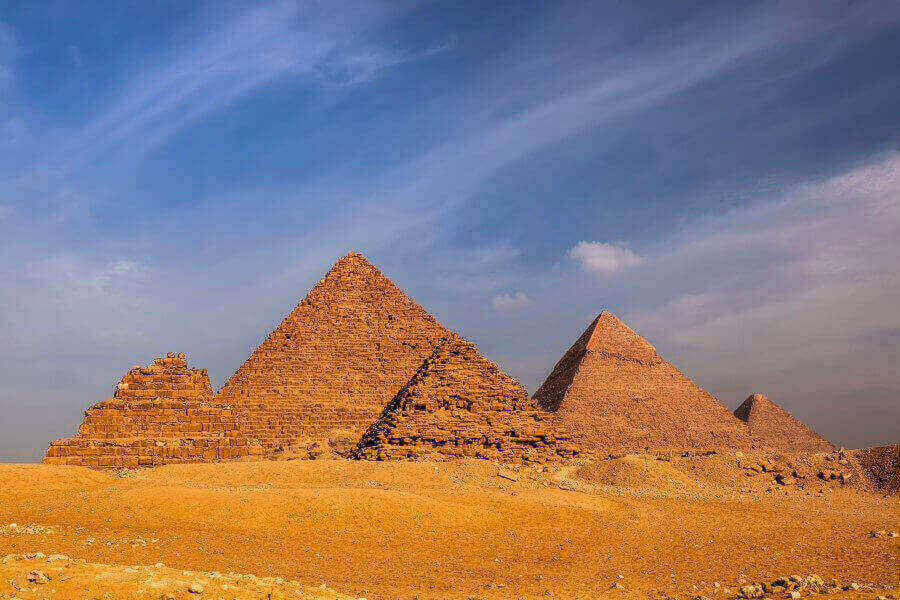
The Great Pyramids of Giza

great-pyramids-of-giza

The most famous monuments in Egypt are, of course, the ancient pyramids. 38 pyramids have been identified in Egypt, as well as a further 80 in Sudan, which was once part of the country.

The pyramids are giant burial chambers built from limestone, some over 100 meters tall. Some of the pyramids have been destroyed by the harsh desert conditions, but there are many which have successfully preserved mummies and artifacts for thousands of years.

The biggest and most famous pyramids can be found in the city of Giza. The biggest is The Great Pyramid, which is 138.5 meters tall. The pyramids are easily accessible from the city and well worth a visit, you need to see them in person to truly appreciate these magnificent structures.

The Valley of the Kings

valley-of-the-kings

One of Luxor’s most famous Egyptian monuments is the Valley of the Kings, to the West of the Nile. During the New Kingdom from 1550 – 1069 BC, pharaohs were buried in the valley, at the foot of the Al Qurn mountain. There are currently 63 tombs and burial chambers at the Valley of the Kings.

Sadly, the site has been looted and battered by the weather over the centuries. Yet, it’s open to the public and the tourist center makes an interesting visit to learn more about Egypt’s ancient rulers.

The wives of the pharaohs were buried separately, in the Valley of the Queens. Both valleys are UNESCO World Heritage Sites.

Tutankhamun’s Tomb

Pharaohs were monarchs in Ancient Egypt – they owned the land, created laws, and oversaw religion.  The most famous Pharaoh of Egypt was Tutankhamun, also known as King Tut. Tutankhamun ruled from 1332 until 1323 BC, despite being a child.

Tutankhamun’s tomb was discovered in the Valley of the Kings by Howard Carter in 1922. The tomb was almost fully intact and included many of King Tut’s personal treasures. His jewelry, furniture, and clothing are available to view in the Egyptian Museum in Cairo.

However, King Tut’s tomb remains in its original place and is open to the public. The Pharaoh’s mummy is still there to see over 3,000 years after he was buried, making it one of the most famous Egyptian monuments.

The Great Sphinx

the-great-sphinx

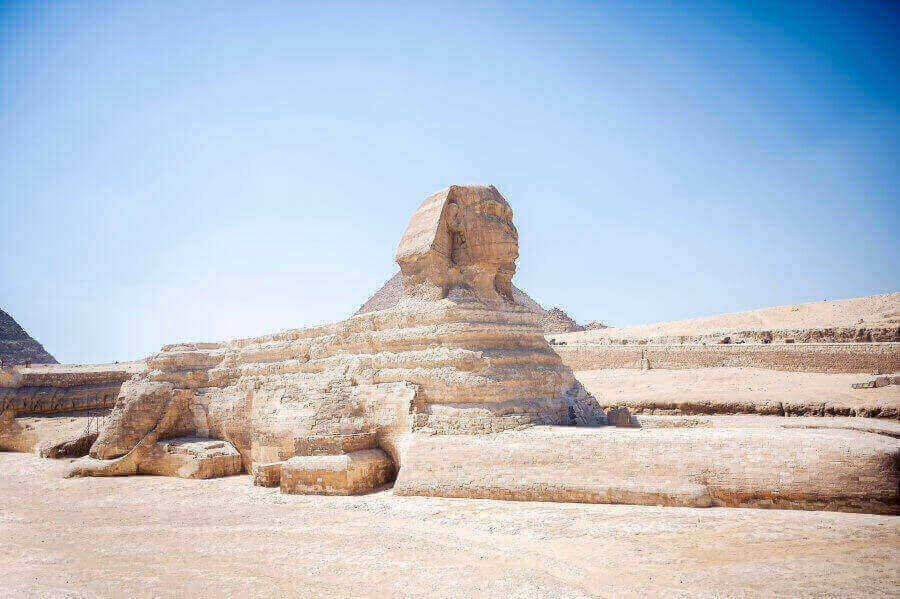
Another one of the unique symbols and things that Egypt is famous for is The Great Sphinx.

It is an iconic Egyptian monument and is instantly recognizable around the world. The Sphinx can be found in Giza, close to the Great Pyramid. This ancient statue dates to approximately 2558-2532 BC.

The vast limestone stature has the body of a lion and the head of a human, its face represents Khafre, a Pharoah of the 4th Dynasty. Sadly, its nose was broken off and stolen thousands of years ago. The sphinx faces exactly East and is 20 meters tall and 73 meters long.

Buildings Of Egypt: Temples

Mortuary Temple of Hatshepsut

mortuary-temple-of-hatshepsut

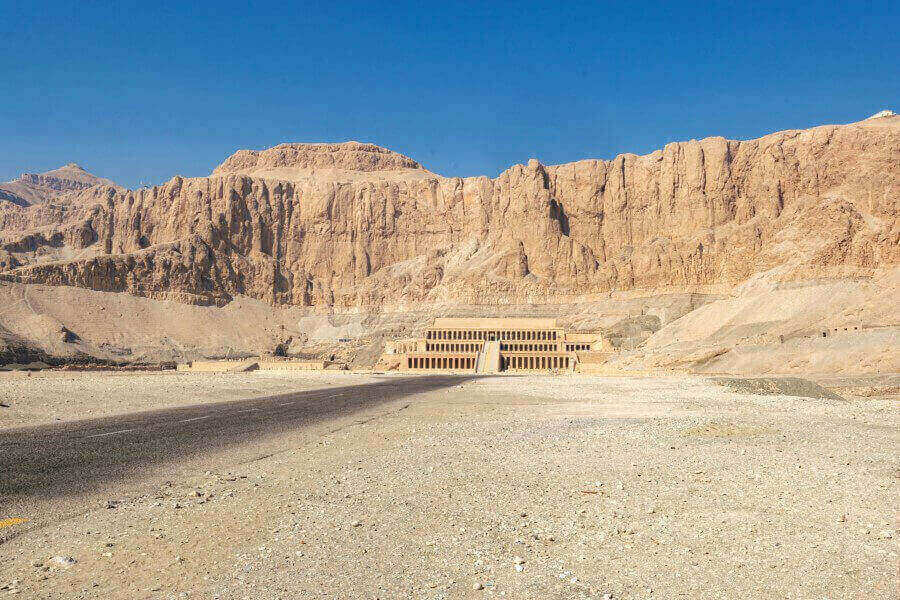
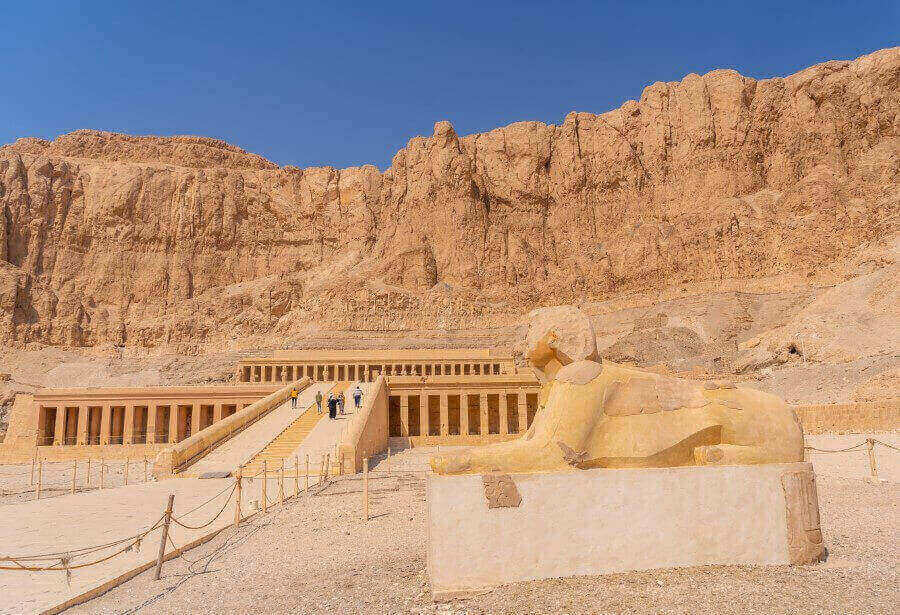
This holy temple near Luxor city was built for the Pharaoh Hatshepsut during the 18th Dynasty. It’s one of the most recognizable buildings of Egypt because of its three large terraces with vast columns which are built into the cliffs of Deir el-Bahari.

The limestone and granite temple has been well-preserved for thousands of years. It is 273.5 meters long and 24.5 meters tall.

The temple has several areas of interest to visit, including the Main Sanctuary of Amen-Re, shrines to Anubis and Hathor, and a 0.62-kilometer causeway that leads to the valley temple. Hatshepsut died in 1458 BC, and her tomb is nearby inside the El Qurn pyramid.

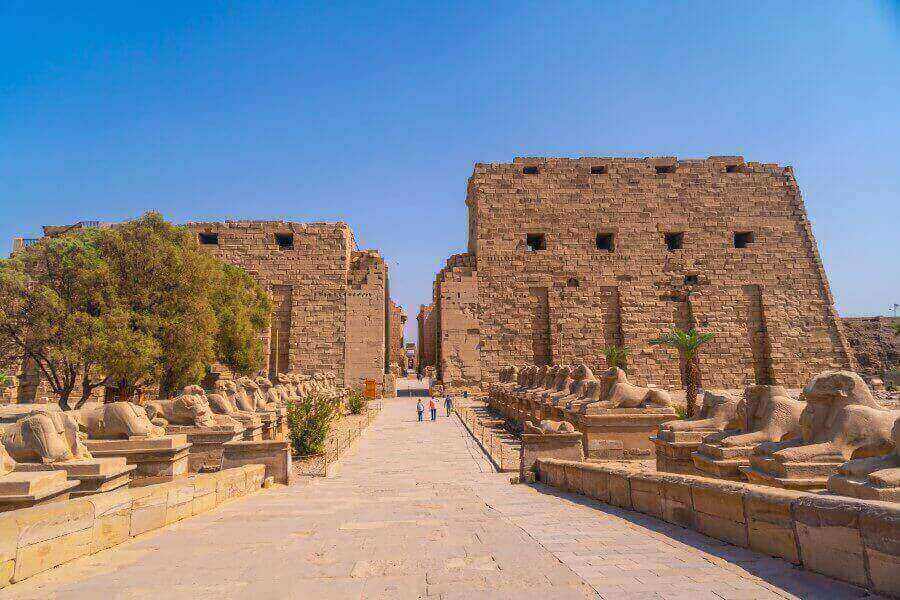
The Karnak Temple Complex

karnak-temple-complex

The impressive ancient village of Karnak dates to the New Kingdom era of Egypt. The temple complex consists of the remains of many ancient temples, chapels, and buildings of Egypt, and was once a significant place of worship.

Karnak is a designated UNESCO World Heritage Site and visiting feels like you’re stepping back in time. The Karnak Open Air Museum displays reconstructions showing what the original buildings of Egypt would’ve looked like in their former glory.

After the ancient Pyramids of Giza, the buildings at the Karnak Temple Complex are the second most visited monuments in Egypt. The modern town of El-Karnak sits 2.5 kilometers North of Luxor and is named in tribute to the ancient village.

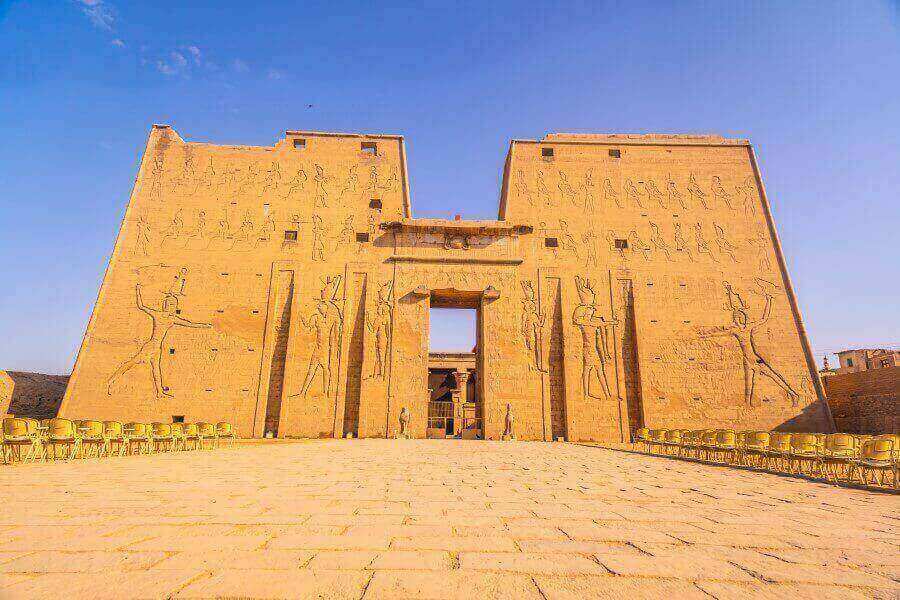
The Temple of Edfu

temple-of-edfu

Another of the most impressive Egyptian monuments is the Temple of Edfu, on the banks of the Nile in the city of Edfu. This shrine to the chief god, Horus, is one of the most well-preserved buildings of Egypt. It was built in 237 BC, during the Ptolemaic Kingdom period. This was one of the most prosperous economic times in Egypt, which is reflected in the size and grandeur of the building.

This temple is notable because of the many inscriptions on its walls, which have been translated by the Edfu-Profect and tell stories from the Hellenistic period. When the Roman Empire banned all worship other than Christianity in 391, the temple fell into disuse.

The Ruins of Memphis

Memphis was once the capital of ancient Egypt. It now lies in ruins, which include some of the most famous monuments in Egypt. The vast site is home to many important temples, statues, and palaces. The ruins are close to the town Mit Rahina, on the outskirts of Greater Cairo.

Memphis was founded by King Menes during the Old Kingdom of Egypt and was once the most important trading area in the country, due to its location at the mouth of the River Nile.

The downfall of Memphis in the 7th Century AD was mostly caused by its economic downturn when the city of Alexandria overtook it in significance. Since 1979, the area has been a preserved UNESCO World Heritage Site and is open to the public.

Other Egyptian Monuments And Buildings Of Egypt

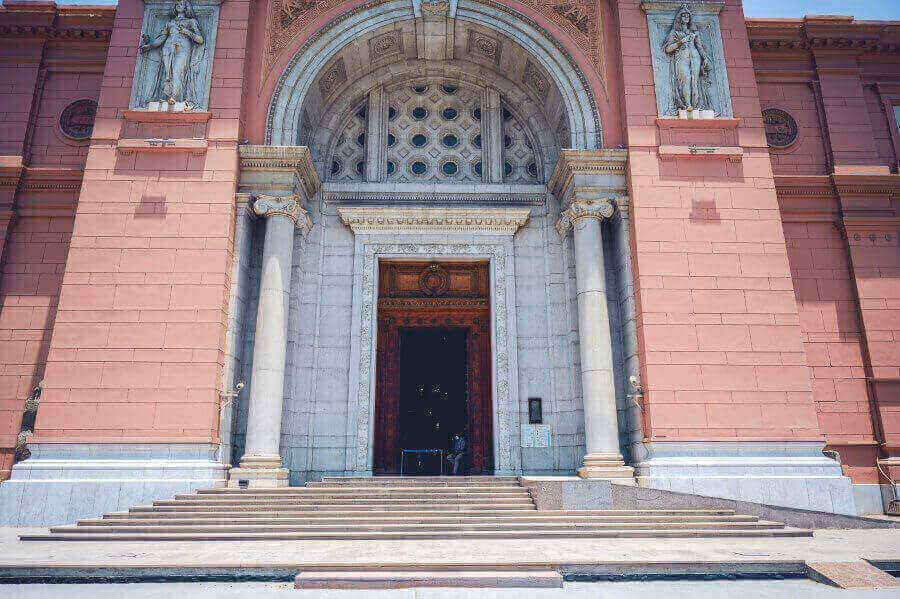
The Egyptian Museum

the-egyptian-museum

The best place to view many Egyptian monuments at once is the Egyptian Museum, in Giza. It opened in 1901 and is the Middle East’s oldest archaeological museum. It displays over 120,000 items discovered from Ancient Egyptian times, dating from the Predynastic Period to the Greco-Roman Era.

Some of the most exciting Egyptian monuments in the museum are the statues of King Tutankhamun, King Akhenaten, and several mummies. The museum also has an interesting range of sarcophagi, boats, furniture, and coins.

It’s open daily to the public and is an essential part of any trip to Egypt. If you only visit one museum during your trip, this is by far the best place to learn about the country’s long and varied history.

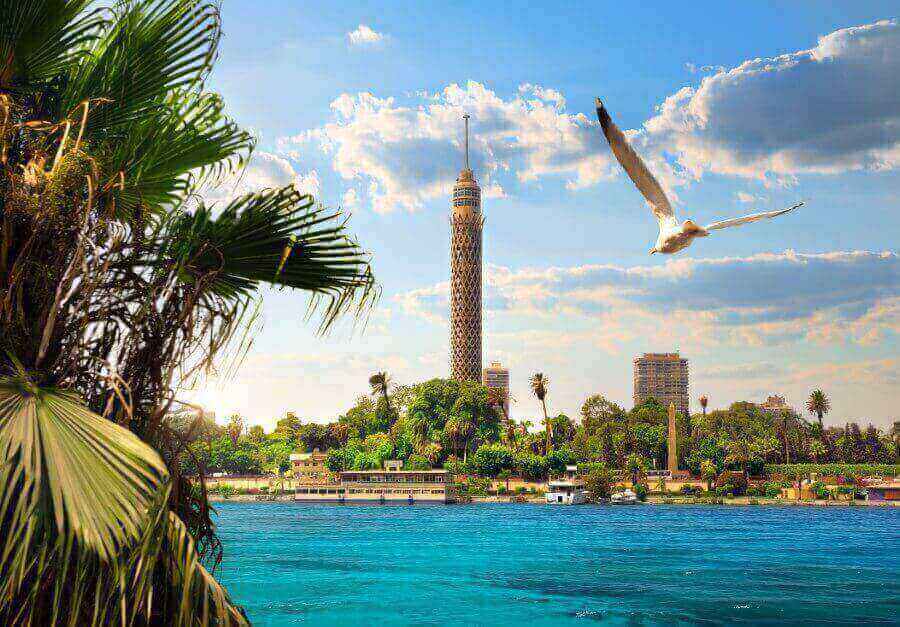
Cairo Tower

cairo-tower

The Cairo Tower is the tallest building in North Africa, making it one of the most famous modern monuments in Egypt. This free-standing structure measures 187 meters tall and was built in 1961. It’s one of Cairo’s most well-known Egyptian buildings and can be seen from all over the city.

It can be found in the Gezira Island district on the banks of the River Nile. The tower is open to the public and has an observation deck and a revolving restaurant at the top, so you can admire the incredible city skyline from above.

Construction of the tower was funded by a gift from the USA CIA to Gamal Abdel Nasser, an Egyptian politician. The financial bribe was intended to persuade Nasser to stop supporting controversial African independence movements, but he instead rebelled and spent the money on building the giant tower.

Travel Insurance

Exploring Egyptian Monuments And Buildings Of Egypt

These are just 10 of the most interesting and important Egyptian monuments and buildings of Egypt. The best way to find out more about these fascinating structures, as well as the many other incredible Egyptian landmarks, is to book a trip and explore the country yourself.

There are so many ancient ruins, extravagant temples, iconic statues, and informative museums to enjoy during your visit that make Egypt one of the most popular tourist destinations in the world. Don’t forget to try some of the delicious Egyptian sweets and desserts on your trip.


PIN THESE EGYPTIAN MONUMENTS FOR LATER!

30 Egyptian Landmarks In Egypt To Visit

Egypt is a fascinating country that is full of interesting landmarks that tell the story of its long history. From natural Egyptian landmarks that have been standing for thousands of years, to newly built architectural marvels, Egypt has plenty of amazing sights to see.

Here are 30 of the most interesting landmarks in Egypt to choose from on your next vacation to Africa.

Most Famous Landmark In Egypt

The Great Pyramids of Giza

great-pyramids-of-giza

The most famous Egyptian landmarks are, of course, the ancient pyramids. 38 pyramids have been identified in Egypt, as well as a further 80 in Sudan, which was once part of the country.

The pyramids are giant burial chambers built from limestone, some over 100 meters tall. Some of the pyramids have been destroyed by the harsh desert conditions, but there are many which have successfully preserved mummies and artifacts for thousands of years.

The biggest and most famous pyramids can be found in the city of Giza. They’re easily accessible and well worth a visit, you need to see them in person to truly appreciate these magnificent structures.

The size of it in real life makes you wonder how in the world these impressive Egyptian monuments were built in ancient times.

Cairo, Egypt Landmarks

Tahrir Square

Tahrir Square is also called Martyr Square because it has frequently been the location of public protests and political demonstrations. The large public square is at the center of Cairo’s urban area.

This famous Egyptian landmark is the place where the Egyptian Revolution started in 1919. In 2011, history repeated itself and the square hosted protests leading to the President, Hosni Mubarak, resigning.

Other significant events have been the Egyptian Bread Riots in 1977 and protests against the Iraq War in 2003. There’s a Metro stop at the square so visiting this important Egyptian landmark is easy. This is one place to feel the pulse of the city.

The Cairo Opera House

The Cairo Opera House opened in 1988 and is funded by a gift from Japan to Egypt. If you’re hoping to enjoy a show during your visit to Egypt, the downtown area of the city is the place to be.

Don’t be put off by the name if you’re not an opera fan, the venue also hosts orchestras, choirs, ballet, theatre shows, a library, a museum, and an art gallery. There’s also an open-air theatre on the grounds.

Bab Zuweila

Bab Zuweilai is one of the remaining gates at the entrance to the Old City of Cairo. It dates to the 11th Century and was built into a wall surrounding Cairo, to protect the city.

When you visit, a steep flight of stairs leads up to its two tours, which would’ve been used to spot enemies approaching the city. There’s also a platform, formerly used for the executions of criminals and traitors.

The top of the tower offers beautiful views across the Old City. Bab Zuweila is just one of many magnificent architectural Egyptian landmarks.

Cairo Citadel

cairo-citadel

In the heart of Cairo lies a medieval fort, built by Salah ad-Din. From the 13th Century until the 19th Century, it served as the base of the Egyptian government. Therefore, the structure has witness the city evolve over time and reflects many historic facts about Cairo.

Cairo citadel was built on the Mokattam hills in central Cairo, enabling its occupiers to see any enemies approaching. The large site is well-preserved and includes several mosques and museums. It has been a designated UNESCO World Heritage Site since 1976 and is one of the coolest Egyptian famous landmarks.

The Cave Church

Also known as St. Simon Monastery, The Cave Church is the biggest in the Middle East. The church is in the Zabbaleen area of Cairo. Zabbaleen translates to “garbage city” because it was home to a huge population of garbage collectors, who were forced out of other areas of Cairo and came together to create their own community in the 1970s.

Most people were of the Coptic faith and created their own church, under the cliffs of the Mokattam Mountain. This unique church is now a famous landmark in Egypt. Its rocky ceilings and intricate cliff-face carvings are fascinating.

Alexandria, Egypt Landmarks

The Bibliothecha Alexandrina

The Bibliotecha Alexandrina is a recreation of the ancient Library of Alexandria, which was destroyed in antiquity. The project to build the new library began in 1986 and was heavily supported by UNESCO. It sits on the coast, overlooking the Mediterranean Sea in Alexandria city.

This is one of the largest libraries in Egypt with over eight million books. The building also houses museums, art galleries, and a planetarium so you can immerse yourself even further in Alexandria’s city. The Bibliotecha is regarded as a site of scientific and cultural excellence.

Citadel of Qaitbay

The Citadel of Qaitbay is an incredible fortress in Alexandria which dates to the 15th Century. It has been repaired multiple times over the centuries since and is almost fully intact, making it a fascinating Egyptian landmark to explore.

The Citadel is one of the most impressive architectural structures in the city. It enjoys beautiful views across the Eastern Harbour of the Port of Alexandria. Guided tours are available and are the perfect way to learn more about Alexandria’s interesting history.

The Royal Jewelry Museum

Despite its name, the Royal Jewelry Museum is home to far more than just jewelry. It displays a large collection of jewels, art, statues, paintings, and other items from the 19th Century Muhammed Ali Dynasty.

The Muhammad Ali dynasty ruled Egypt from 1805 until 1952 when they were overthrown by the Egyptian Revolution. Muhammed Ali was a military commander and founded modern Egypt.

The museum first opened in Alexandria in 1986 and is based in the 1919 former palace of Princess Fatma Al-Zahraa. The building itself is a work of art and its walls and ceilings are extravagantly decorated.

Alexandria Port

alexandria-port

Egypt’s main port is Alexandria. It includes two harbors: the West, which is used by container ships, and the East, which is popular with fishing boats and swimmers.

The West port handles over half of the country’s international imports and exports. The East port offers beautiful views across the harbor and has plenty of fantastic seafood restaurants to enjoy. You can take the opportunity to also try some local and traditional Egyptian food.

Alexandria Port is one of the world’s oldest, built in 1900BC. Without surprise, this is not just one of the most prominent but also economically important landmarks in Egypt. The Alexandria Shipyard was built by the Soviet Union in 1960, before being taken over by the Ministry of Defense in 2004.

Montazah Palace and Gardens

Head to East Alexandria to explore the beautiful gardens of Montazah Palace. This famous landmark in Egypt dates to the 1890s and was built by Khedive Abbas Hilmi.

The palace itself isn’t open to the public but the gardens are a lovely spot to take a quick break from busy city life. Enjoy a picnic on its pristine lawns or take a stroll through the landscaped gardens and palm-tree-lined walkways.

Giza, Egypt Landmarks

Giza Zoological Garden

giza-zoological-garden

The Giza Zoo covers 80 acres of green space in the city center. It opened in 1891 as a private collection and has since grown to house around 6,000 animals. If you are bringing kids, this will be a fascinating landmark in Egypt to visit for them.

Here, you’ll find a variety of endangered and rare species, including California sea lions, Scimitar-horned oryxes, black bears, Egyptian cobras, and Egyptian tortoises. The zoo is large, so dedicate a full day of your trip to spend here.

The Egyptian Museum

the-egyptian-museum

We have all heard our fair share of stories about ancient Egypt; this is where it comes to life, where myths are debunked and new stories told.

One of the things Egypt is famous for is the Egyptian Museum in Giza. Since 1901, the museum has displayed one of the most extensive and fascinating collections of artifacts and mummies found from Ancient Egyptian times.

There are 120,000 pieces on display, and even more in storage which are regularly rotated. If you only visit one museum during your trip to Egypt, this is by far the best place to learn about the country’s long and varied history.

Cairo University

Despite its name, the main campus of Cairo University is across the Nile, in Giza. It has a reputation as the top university in Egypt and is the second oldest, after Al Azhar University. It’s now an iconic Egyptian landmark on the city’s skyline. The university was established in 1908, although the Giza campus wasn’t built until 1929.

The university is ranked 392nd in the world by USNWR. It has produced two Nobel Peace Prize laureates: Mohamed ElBaradei, a diplomat, and Yasser Arafat, a former President of the Palestinian National Authority.

Luxor, Egypt Landmarks

The Karnak Temple Complex

karnak-temple-complex

The ancient village of Karnak dates to the New Kingdom era of Egypt. It consists of the remains of many ancient temples, chapels, and buildings, and was once a significant place of worship.

Karnak is a designated UNESCO World Heritage Site and visiting feels like you’re stepping back in time. The Karnak Open Air Museum displays reconstructions showing what the original buildings would’ve looked like.

The modern town of El-Karnak sits 2.5 kilometers North of Luxor and is named in tribute to the ancient village.

The Mummification Museum

mummification-museum-egypt

There are many fascinating museums in Egypt, but if you’re especially interested in mummies, you’ll love the Mummification Museum in Luxor city center. This museum opened in 1997 and is one of Egypt’s most visited.

In Ancient Egyptian times, dead bodies were embalmed and wrapped in layers of cloth and resin to preserve them for the afterlife. The technique was very effective and there are many mummies still intact that are available to view up close in the museum. You’ll also get to see mummified animals!

Avenue of the Sphinxes

avenue-of-the-sphinxes

The Avenue of the Sphinxes is a famous walkway stretching 2.7 kilometers from Luxor Temple to Karnak Temple, in Luxor city. It only opened to the public in 2021 but was part of ancient Thebes and displays over 1,000 incredible statues, mostly sphinxes. It is the product of over 70 years of archaeological work.

Valley of the Kings

valley-of-the-kings

One of Luxor’s most famous Egyptian landmarks is the Valley of the Kings, to the West of the Nile. During the New Kingdom from 1550 – 1069 BC, pharaohs were buried in the valley, at the foot of the Al Qurn mountain. There are currently 63 tombs and burial chambers at the Valley of the Kings.

Sadly, the site has been looted and battered by the weather over the centuries. Yet, it’s open to the public and the tourist center makes an interesting visit to learn more about Egypt’s ancient rulers.

Other Famous Landmarks In Egypt

Hurghada Grand Aquarium

hurghada-grand-aquarium

In the Red Sea Governorate, a three-hour drive from Luxor, is one of the biggest aquariums in Africa. The Hurghada Grand Aquarium is one of the newest Egypt landmarks, opened in 2015, but nonetheless is hugely popular with tourists.

It contains 900,000 gallons of water and 1200 animals from across 100 species. Some of the most exciting exhibits are the shark tunnel, whale fossils, stingrays, and green sea turtles. When you visit, you’ll find many native species to Africa that you won’t see in the USA or Europe.

Muizz Street

Muizz Street is one of the busiest streets in Cairo, inside the walls of the ancient city. The street is almost as old as the city itself, dating to the 10th Century. The street stretches from the North gate to the South gate, which guards either side of the city.

Here, you’ll find an abundance of traditional street markets, called souqs, selling a variety of traditional Egyptian clothes, local delicacies, and souvenirs. This symbolic street is also home to many significant monuments and is ideal for sightseeing.

Deir el-Medina

Deir el-Medina is an ancient village on the banks of the River Nile. It was once the home of workers who built the sacred tombs at the Valley of the Kings and the Valley of the Queens. The settlement was originally named Set Maat, which means “Place of Truth”. It dates to the 18th Dynasty in 1550-1080 BCE.

This Egyptian landmark is of particular interest because the lives of its community members were documented in detail for a period of around 400 years.

Bernard Bruyère conducted an excavation project of the site from 1922 to 1951 and found that everything from living conditions to social interactions had been documented thoroughly. Records of transactions, ancient texts, and many objects have been found at the site.

Elephantine

elephantine-egypt

Elephantine is a small island on the River Nile, close to Aswan city in the East of Egypt. It stretches just 1,200 meters by 400 meters and is named because it’s shaped like an elephant’s tusk. Elephantine is thousands of years old; the first recorded mention of the island was a fort that stood on it in around 1600 BC.

The island contains important archaeological sites which are protected UNESCO World Heritage Sites. The most notable area of this historic landmark is the ancient ruin of the Temple of Khnum. It’s also home to the fascinating Aswan Museum.

Kitchener’s Island & Aswan Botanical Garden

El Nabatat Island, also nicknamed Kitchener’s Island after its former owner Lord Kitchener, is a tiny island in the River Nile. It’s just 1 kilometer long and half a kilometer wide, but a lot of natural beauty is packed into this small area. The island is home entirely to the Aswan Botanical Garden.

The area is home to exotic plants, palm tree-lined walkways, and beautifully landscaped gardens. It’s also used for botanical research.

To visit this peaceful natural Egyptian landmark, you’ll need to take a short boat ride over from the city of Aswan. It’s a lovely place to spend a few hours unwinding from the bustling cities of Egypt.

Natural Landmarks In Egypt

The River Nile

river-nile

The River Nile is one of the most famous rivers in the world, known for being the second longest. Only the Amazon River is longer, by just 105 kilometers. The Nile begins in Lake Victoria, which spans Uganda, Kenya, and Tanzania. It flows through eleven countries before joining the Mediterranean Sea off the coast of Egypt.

The river has been one of the most important landmarks in Egypt for thousands of years, with most of the country’s settlements based along its banks. It remains the main water source in Egypt.

A river cruise is hands down the best way to explore the wonders of the Nile.

The Red Sea

the-red-sea

The Red Sea flows mostly along the border between Egypt and Saudi Arabia. Its name derives from beautiful red plants which are native to its shallow shores – trichodesmium erythraeum. The Red Sea is 2250 kilometers long and 335 kilometers at its widest point.

The deepest point reaches 3040 meters from the surface and is full of over 1,000 species of diverse and interesting marine creatures. The Red Sea is famously extremely salty which makes it easy to float in.

It has been one of the most significant natural landmarks in Egypt for many years and is a major trade route for cargo ships.

Nabq Protected Area

The Nabq nature reserve was established in 1992 to create a safe environment for local wildlife and marine creatures. It is mostly left to grow and thrive naturally to allow biological diversity. It covers an area of 600 square kilometers on the South Sinai Peninsula.

The area is naturally beautiful and has some of the most vibrant coral reefs in the Red Sea. It’s also home to a variety of mangroves and endangered species, providing them with a vital natural habitat.

It’s a popular Egypt landmark with tourists due to its breathtaking natural scenery and is a lovely spot to try camel rides or enjoy traditional Egyptian meals.

Elphinstone Reef

elphinstone-reef

One of the most beautiful Egyptian landmarks in the Red Sea is Elphinstone Reef. Take a 30-kilometer boat trip off the coast of Marsa Alam in the South-East of Egypt for a stunning dive down into the vibrant coral reef. The reef is notable for its soft coral species. If you’re lucky, you could spot an Oceanic whitetip shark or a Hawksbill turtle!

Colored Canyon

The Colored Canyon is a striking natural rock formation in the desert on the Sinai Peninsula. Its name comes from its many vibrant multicolored layers of stones.

This unbelievable natural wonder reflects the desert sunset, with bright oranges, reds, pinks, and purples. It stretches almost 800 meters across and 30 meters deep. Hike through the narrow, twisting tunnels or scramble up the cliff face for a beautiful adventure.

A great natural landmark in Egypt to visit for nature lovers and trekking enthusiasts.

The White Desert

the-white-desert

The White Desert is a protected national park, near Qsar El Farafra. The area is a total of 3,010 square kilometers. The park is famous for its huge chalk rock formations, hence its name. They occur naturally because of the strong winds in the area, which cause sand to erode rocks.

Several endangered and rare species can be found at the park, including Rhim gazelle, jackals, and sand foxes.

Valley of the Whales

Wādī al-Ḥītān, which translates to Valley of the Whales, is a significant paleontological landmark in the Faiyum Governate, in Northern Egypt. It is a designated UNESCO World Heritage Site that’s famous for having an abundance of well-preserved whale fossils. The fossils belong to an extinct ancient ancestor of modern whales, the archaeoceti.

The most fascinating part of this protected Egyptian landmark is that it shows whales were once land mammals, before evolving into ocean dwellers. The biggest whale skeleton in the valley is 21 meters long!

Travel Insurance

Discovering Famous Landmarks In Egypt

The ancient country of Egypt is one of the most exciting places in the world to visit. It has so much fascinating history, kept alive for thousands of years thanks to its amazing Egyptian landmarks.

From the ancient pyramids to the River Nile, there are so many beautiful sights to see.

These are just a handful of the many famous landmarks in Egypt. The best way to find out more about Egypt’s incredible history is to visit and explore for yourself where you’ll be sure to discover many more Egyptian landmarks.


PIN THESE EGYPTIAN LANDMARKS FOR LATER!

10 Monuments And Statues In Dublin

Known for its art and culture, rich music, and literary history, Dublin is one of few cities to retain much of its heritage. With several monuments in Dublin dating as far back as the Neolithic times, the Irish capital is viewed as many as a source of historical data. 

When visiting the popular tourist destination, be sure to visit some of the famous monuments and statues in Dublin, that have survived decades and centuries in Ireland.

Famous Statues In Dublin

Molly Malone Dublin

Dublin’s unofficial anthem (the Molly Malone Song), tells the tale of a charismatic figure, Molly Malone. During the 1988 Dublin Millennium celebrations, a bronze statue was constructed in honor of Molly Malone. Though whether this individual existed or is nothing more than just an old wives’ tale told to children that stuck longer than necessary, we will never know.

According to the tale; Molly Malone was a young and very beautiful fishmonger who sold her goods on a cart as everyone did in her time. She fell ill, and passed away from a fever. Taking on a tragic theme, she never found rest in death and proceeded to haunt the city of Dublin.

Discoveries over the years at an international level have gathered plausible proof that the iconic individual Molly Malone did exist. 

While she was indeed a fishmonger, it is believed she had a second job; sharing her bed with men at noon. To capture this the 20th-century Irish sculptor Jeanne Rynhart, depicted her in traditional, yet revealing 17th-century attire making the figure another one of Dublin monuments.

Oscar Wilde Statue

famous-oscar-wilde-statue

Oscar Fingal O’Flahertie Wills Wilde was born on the 16th of October 1854. He is known as a popular Irish poet and playwright in the late 19th century.

Oscar had earned international recognition for his epigrams and plays, and his fame soon soared with him being in one of the first-ever celebrity trials.

Unfortunately, he was incarcerated on claims of homosexuality and sodomy in 1895. His already fragile health began to deteriorate rapidly under the hard labor he was subjected to. The two years of imprisonment contributed to his death on the 30th of November 1900 at the age of just 46.

Regardless of his steep turn in the later years of his life, Oscar Wilde is undoubtedly one of Ireland’s world-renowned poets and playwrights. Known for his flair, charisma, and overall dandy behavior, a collection of 3 statues in Dublin was designed by sculptor Danny Osborne in honor of the Irish poet.

READ MORE: INTERESTING AND FUN FACTS ABOUT DUBLIN, IRELAND

Famine Memorial

The memorial is an assembly of statues accurately sculpted to depict the severe dearth and inadequacy of the 1800s which drastically reduced the Ireland populace.

The Sculpture depicts 6 lifesized figures emaciated with hunger and disease, wearing rags and clutching feebly to their few properties and children.

Designed by Rowan Gillespie in 1997, a similar artwork was released in 2007. Both art pieces show natives leaving an impoverished and diseased Ireland for a foreign land. 

packing-list-travel-europe

Famous Monuments In Dublin

Wellington Monument Dublin

The imposing 203 ft structure situated at the southeast of Phoenix Park, is one of the largest obelisks in the continent of Europe. Built entirely of granite over 44 years(1817-1861) the structure is a dedication to Arthur Wellesley, the 1st Duke of Wellington.

The Dublin monument commemorates the victory at the 1815 Battle of Waterloo against the French alongside the English. The impressive structure is designed by famous architect and sculptor Robert Smirke.

The full monument supposedly included a statue of Wellington on horseback. However, a lack of funding not only delayed the completion of the Obelisk but also meant that plans for the statue had to be scrapped.

The Spire of Dublin

Also known as the Monument of Light (An Tur  Solais), the spire is one of many monuments in Dublin to stand at outrageous heights. The visually striking, pin-like monument is made entirely of stainless steel and stands at a height of 390 ft!

This work of marvel made of steel is one of the many fascinating monuments in Dublin and Ireland. The impressive structure was in construction from early 2002 till 21st January 2003, you will find it on the former Nelson’s Pillar.

Engineer Arup and architect Ian Ritchie worked tirelessly to build what they described as an “Elegant and Dynamic art that bridges technology and simplicity”, this would later go on to stand out as one of Dublin’s Monuments.

The Casino of Marino

Casino at Marino is a pleasure house built by architect Chambers for James Caufield, the initial Earl of Charlemont. The 1775 Neoclassical structure is among the few historic buildings in Dublin still in use.

It was a wonder of its time and still is today. Made entirely of Portland Stone, the building features 16 rooms and 3 stories. Despite always being occupied with his duties as Earl in England, James Caufield was known to have appreciated the Casino.

Many buildings and structures were built for the Earl during his lifetime, the most notable of them all being the actual Marino house. Sadly it was demolished in 1920.

The Casino of Marino is the only surviving work of the talented architect Sir William Chambers. The rest, numerous as they were, have either been destroyed by time, war, or natural disaster or fell to irreparable damage due to poor maintenance.

Newgrange

Dublin monuments are known to impress, but this does take the crust of the cake. Stretching back centuries to the old stone age, the Newgrange is one of the oldest monuments in the world.

Since its construction in Neolithic times by ancient resident farmers who lived in what is now known as Dublin, Ireland. This monument is surrounded in a 279 ft diameter by large stones called kerbstones.

Most of these stones have megalithic art and images inscribed on them by the farmers. The Newgrange predates world-famous monuments like the Great Pyramids of Giza and Stonehenge. The monument is situated in the Boyne valley of Ireland. It is open to visitors and a popular trip from Dublin.

More than just another landmark in Ireland, the Newgrange is a national treasure of Ireland and the Irish people.

Fusilier’s Arch

This tribute is a war memorial and monument in Dublin. It was built in 1907 in honor of licensed and unlicensed officers, and members of the Royal Dublin infantry who perished in the Anglo-Boer war.

It might not be as imposing as some of the impressive Dublin landmarks, nor as story-rich as some statues in Dublin, but it is extremely meaningful.

The memorial is an intricately placed archway, deliberately positioned in such a fashion to stand out as a unique structure in honor of fallen heroes. Not all heroes wear capes, but the officers and members of the Royal Fusiliers certainly were.

Albert Memorial Clock

More accurately called the Albert Clock, this monumental clock was constructed in 1869. Known as one of Ireland’s proud monuments, it has a history attached to it.

In 1865, a competition was held for the rights to the design of a monument for Prince Albert. The original winner was passed over for the second runner-up. The people of Ireland revolted against this injustice, and the rights were later passed back to the rightful owner. It was, however, without the needed funding.

Constructing the sandstone memorial cost about £2,500 ( equivalent to £196,000 as of 2011). In a display of camaraderie, the funds were raised by the public and the monument was erected within 4 years.

Built with a blend of Gothic French and Italian style architecture, the Albert clock stands 113 ft tall and is a significant symbol of the Irish people’s unity.

Daniel O’Connell

O’Connell street was named in honor of Daniel O’Connell. He was born on August 1775 and died on May 15th, 1847. O’Connell was tagged The Liberator because of his works and activities. 

Unlike other prominent figures, he wasn’t given a statue or monument in Dublin. Instead, a street was dedicated to him and his name was externalized there. 

O’Connell was a renowned political leader and an activist who shook Ireland. During his stay in power, he helped secure catholic independence in 1829 for even the destitutes in Ireland. This feat as well as the many other humanistic and reform pursuits he pioneered, gave him the identity of “The Liberator”.

Travel Insurance

Discovering Famous Monuments And Statues in Dublin

Art, culture, music, and values, all change with time and quickly turn into relics of the past. These fragments of years and centuries past remind us of an era that once existed long before our time.

Remnants exist from an era of dead and forgotten, making these ancient cultures interesting and educational. Keeping her culture and traditions alive till the modern era, Dublin continues to draw plenty of visitors.

The Irish capital is teeming with excitement and history, as every monument and statue in Dublin has a tale, history, or legend to them. From prehistoric monuments to interesting landmarks, there are plenty of things to do in Dublin.


PIN THESE MONUMENTS AND STATUES IN DUBLIN FOR LATER!

20 Famous Landmarks In Dublin, Ireland

Every year, millions of tourists visit Ireland to see the famous landmarks in Dublin. The capital city of Ireland is home to a lot of historical and modern-day monuments and landmarks.

The country and city are associated with one of the oldest monuments in the world: The Newgrange (which predates the Pyramid of Giza). The city offers various options that keep visitors entertained and enlightened. Combine the attractions with the city’s energy, and you might feel overwhelmed.

Here are some of the famous landmarks in Dublin you should consider checking out to learn more about the city’s rich culture and history.

Most Famous Landmark In Dublin

Guinness Storehouse 

Ireland is known as “The Drinker’s Paradise” and for good reason too. It inhabits one of the most popular stouts in the world. The Guinness Storehouse is undoubtedly one of the most famous landmarks in Dublin.

A visit to this iconic building is one of the most popular things to do in Dublin. Both drinkers and non-drinkers can have fun on the tour. You’ll discover the story of Guinness, enjoy good Irish food, and perhaps, do some product tasting. All these and an impressive 360-degree view of Dublin await you at the Guinness Storehouse.

The storehouse has received over 20 million visitors since its opening in 2000. Also, worth noting, the late Queen Elizabeth II and Prince Philip made an official visit to the Storehouse, back in 2011 when in Ireland.

> Check Tickets To Guinness Storehouse

Natural Landmarks Around Dublin

Cliffs Of Moher

famous-cliffs-of-moher

The 14-kilometer cliffs are steeped in Irish legends, myths, and history. It is arguably the most famous attraction and landmark in Ireland.

Stories of witches, corpse-eating eels, mystical cities, mermaids, and the sorts, surround the narrative of the cliffs. These myths have added to the overall mystique of the serene cliffs overlooking the sea.

The Cliff’s fame eventually shot through the roofs when famous movies like Harry Potter and the Half-Blood Prince, The Princess Bride, The Yank, Into the West, The Mackintosh man, and many more, featured the Cliffs of Moher.

The exposure has helped in attracting more people to the already famous Cliffs. It came as no surprise to people residing close to the stunning cliffs who are well aware of its beauty.

Giant’s Causeway

ireland-giant's-causeway

Truly a marvel to behold, the Giant’s Causeway is proof that goodness and beauty can come from an undesirable event.

The Causeway is an area of land by the sea covered by at least 40,000 interlocking basalt columns. These columns as intricately designed and patterned without human hands. They are the result of an underwater volcanic eruption that settled volcanic sediments by the sea bank. 

Being one of the natural tourist sites, the Giant’s Causeway was declared a World Heritage Site by UNESCO in 1987. Most of the landmarks in Dublin are steeped in legend, and so is the Giant Causeway.

According to the legend surrounding the Causeway; The great Irish and Scottish giants Fion MacCumhaill and Benandonorr were to battle. Fion built the Causeway so they could meet and duel. From here on, the legend breaks into two versions. With one saying Fion won the contest and the other saying Benandonorr fled back to Scotland under the assumption his opponent was a giant among giants.

Dark Hedges

dark-hedges-in-dublin

The Dark Hedges features an array of beech trees along the Bregagh road and is a well-known landmark in Dublin. Famous for obvious reasons, the Dark Hedge is an intimidating mystique blend of nature and wonder.

The Dark Hedge shares similar popularity to the Cliffs of Moher. It has been featured in popular movies, including the famous Game of Thrones due to its eerily look. This boost in exposure resulted in higher tourism to Ireland with a focus on the Dark Hedges.

Originally built in the late 18th century in 1775 by James Stuart. 150 beech trees were planted along the entrance to this estate to create an imposing approach.

The Dark Hedges is one of many famous Dublin landmarks. Although, it is one of the few that is still appreciated, even after 200years old. 

River Liffey (Irish Sea)

popular-river-liffey

This river powers dams for three ESB hydroelectric power stations located along the river. For generations, the river has been a medium for trade.

From the era of the Vikings till the modern day, River Liffey has helped Ireland and her people tremendously. A whopping 60% of the river’s flow is extracted, treated, and sold for drinking and industrial supply. 

The River Liffey is one of the most essential and useful landmarks in Dublin. Not only does it act as a tourist attraction center, but it is also responsible for supplying water to Dublin. Previously, it was an active channel for trade between countries. Being 132km in length, it flows through Wicklow, Kildare, and Dublin.

The name Liffey was originally given to the plain of the river. However, Liffey was eventually associated with the river. Since its century-old flow, River Liffey has witnessed the transition of many notable noblemen.

Howth Coastal

beautiful-howth-coastal

Much like the Newgrange, the Howth has settled since prehistoric times and is featured deeply in Irish mythology and culture. What was once a small trading village in the 14th century, has grown to be an important Dublin center.

The Howth has also been used as a setting in famous movies like; The last of the High Kings, Boy Eats Girl, Love, Rosie, and Sing street.

Known for its natural quiet atmosphere, the Howth is an escape option if you want respite from the hustle and bustle of Dublin. Promising true Irish hospitality, the Howth maintains its aura of calm and serenity.

packing-list-travel-europe

Historic Landmarks In Dublin

Glasnevin Cemetery

Not everyone perceives a cemetery as a prominent spot. Regardless, the Glasnevin cemetery is a famous landmark in Dublin.

In addition to being the resting grounds of legendary Liberator, Daniel O’Connell, the history of the cemetery is well worth its weight.

Irish Catholics had no place to bury their dead before the opening of this cemetery. The Penal laws of the 18th century also forbade the performance of catholic burial rites. After an outcry from Catholics and protestant Irish folk, Daniel O’Connell fought for a place where all Irish could lay their dead.

Finally, in the revocation of the Penal Law, the Glasnevin Cemetery was constructed. The tower at the center of the cemetery stands above the final resting place of Irish hero and Liberator Daniel O’Connell.

City Hall

Built between 1769 and 1779, the Dublin City Hall first served as a financial centre. Originally called the Royal Exchange, City Hall was a great meeting place for business owners and investors. In 1851, it was finally bought by Dublin corporation and renamed City Hall. 

Not many buildings in Dublin stand tall and proud like the City Hall. As a beautiful display of Georgian Architecture, the city hall holds historic value in Dublin. Despite being over 100years in age, the Dublin landmark is still functional and hosts the monthly meeting of the Dublin City Council, on the first Monday of every month.

Newgrange

Among all landmarks in Dublin, the Newgrange is one of the oldest monuments in the world. Dublin monuments are known for their background stories, but this takes the crust of the cake.

The Newgrange is not one of many famous statues in Dublin. Rather, it is a 5,200-year-old stone age structure built-in Neolithic times. Ancient stone age farmers (who lived in present day Dublin, Ireland) were the pioneers of this landmark. 

This monument is surrounded in a 279ft diameter by large stones called kerbstones. Most of these stones have megalithic art and images inscribed on them by these stone age farmers.

The Newgrange predates world-famous monuments like the Great Pyramids of Giza and Stonehenge. Located in the Boyne valley in Ireland’s ancient east, the Newgrange is open to visitors.

More than just another Monument in Dublin, the Newgrange is a national treasure of Ireland.

> Check Day Tours To Newgrange

Titanic Belfast

There is no shortage of dark history in gory details for your education and amazement. An epitome of such scenarios is the history of the Titanic.

One of three ships to be built by Harland and Wolff in Belfast Ireland. This Dublin landmark doesn’t just narrate but attempts to replicate the Titanic experience in detail from the first-hand report of survivors. If you are a fan of the classic movie, this should be a must-visit on your itinerary.

Loughcrew Cairns

Another Neolithic landmark like the Newgrange, the Loughcrew Cairn was built sometime around the 4th millennium BC. It was decorated with megalithic art by people of the stone age era.

Designed for ceremonial and ritualistic purposes, burying the dead, and official meetings, the Cairn was a sacred ground. With a history of over 3000 BC, the Cairn is one of the oldest landmarks in Ireland.

Hell Fire Club

Montpelier Hill is a 383 meters hill in Dublin. There lies a ruined building, one of the first of its kind to be built by freemasons in Ireland. The building, nicknamed Hell Fire club was constructed around 1725 by William Conolly.

The building was built using Neolithic stones found in a Cairn close to the summit of the hill. A fire that destroyed most of the building, coupled with wild behavior and strange occurrences in the vicinity led to its name; The Hell Fire Club.

Montpelier Hill is a popular area for locals and visitors to immerse in nature within the city and go for some short hikes.

Famous Dublin Landmarks (Squares and Avenues)

Merrion Square

dublin-merrion-square

Merrion Square park was initially a garden laid out in 1752 by Viscount Fitzwilliam. Home to the Oscar Wilde Monument, the Merrion Park is innately maintained as a dual monumental landmark. The park itself is a beautiful Georgian garden, designed and kept in the Georgian style of its era. It is one of the aesthetic landmarks in Dublin.

Ha’Penny Bridge

famous-ha'penny-bridge

Also known as the Penny Ha’Penny bridge, and finally the Liffey Bridge. This bridge is another famous landmark in Dublin. It is a pedestrian-only bridge across the river Liffey, built in the 19th century by John Windsor. Made entirely of Cast Iron, wood, and cement, the bridge has lasted the better part of two centuries and still functions well today.

O’Connell Bridge

Built in honor of Irish hero, Daniel O’Connell The Liberator,  this 50m bridge cuts across the River Liffey and joins O’Connell street to D’Olier Street, Westmoreland Street, and the south quays.

To signify the strength and solidarity of what The Liberator did for the Irish in his time, James Gandon, a site designer, made use of only stone, Granite and Portland stones to be precise.

Temple Bar

Whiskies! The Temple Bar is one attraction lovers of whisky would not want to miss. Since its establishment in 1840, this bar has offered over 450 different and quite rare whiskies to all who ventured in.

Temple Bar typically also refers to the whole district on the south bank of the River Liffey. It is filled with restaurants, pubs, and clubs, making it the main drinking district of the city. Many Dublin foodie tours also visit the area.

This district and other similar attractions, such as the Guinness storehouse and whiskey distilleries are why Ireland is often seen as the drinker’s paradise.

If you are into nightlife or any sort of alcohol tasting, make sure you visit this exciting landmark in Dublin before leaving the city. Of course, you can also just come to enjoy the pulse of the city without drinking.

Daniel O’Connell Street

O’Connell Street in Dublin was named in honor of Daniel O’Connell. Daniel O’Connell was born on August 1775 and died on May 15th, 1847.

Hailed as The Liberator, he is not immortalized as a statue nor, does he have an obelisk in his honor. Rather, a street and bridge were named in honor of him. He was a world-acknowledged political leader and a force to reckon with. 

O’Connell served as the Lord Mayor of Dublin from 1841-1842, and then Member of Parliament for Cork Country from 15th July 1841 – 1847 until he died at 71 years. During his stay in power, he helped secure catholic emancipation in 1829 for even the poorest in Ireland. 

This feat as well as his many liberal and reform pursuits gave him the name, “The Liberato”. Of all Dublin Landmarks, O’Connell street is one etched in the daily lives of Individuals walking on its roads.

Famous Landmarks of Dublin – Museums

Dublinia

The Dublinia museum is also known as the Living History of Vikings and Medieval Dublin. The Museum is well organized with medieval artifacts and texts, from the entrance. The experience is breathtaking, as tourists are introduced to medieval fashion, sounds, tastes, smells, and weapons.

This culmination of history in such detail creates a sense of belonging to medieval Dublin. Hence, the museum is termed a living history. Located at the center of the city, this important Dublin landmark is home to several items, artifacts and human remains all dating back to the 18th century.

GAA Museum

One of a kind in its value, the GAA museum is a sports museum. Ireland’s athletic records are proudly displayed here. Athletic feats of Irish citizens are recorded and brought to life in this state-of-the-art, modern-day museum.

Jeanie Johnston Tall Ship

Sadly the original Jeanie Johnston ship is no longer fit to sail. The ship on display is a replica of the original Jeanie Johnston. You can take a 50-minutes guided tour of a 177-year-old wood-style ship, and listen to one of Ireland’s dark histories of a period of death and disease. 

The Great Famine is an unforgettable part of Ireland’s history where the population was halved by hunger, death, and disease. Many Irish people fled to a foreign land with their little belongings and their starving children. Aboard the Jeanie Johnston, they dreamed of greener pastures and a better life.

Travel Insurance

Discovering Famous Landmarks In Dublin

There are myriads of famous landmarks littering the streets of Dublin. The city is replete with a rich history and culture, which makes it the ideal destination for tourists and history buffs alike.

With so many places to see and things to do, it can be quite overwhelming trying to decide where to start. These are just some of the famous landmarks in Dublin to consider visiting on your trip.

Ireland and her people (The Irish) are known to have succeeded in keeping and preserving their culture. With most of the world’s history lost, the city of Dublin is also home to several monuments that draw a large amout of tourists each year.


PIN THESE LANDMARKS IN DUBLIN FOR LATER!

20 Best Things To Do In Bordeaux, France

Bordeaux rhymes with wine in France, but this wine capital has more to offer visitors than a few delicious sips. There are plenty of things to do in Bordeaux that will transport you through history up to the present. You will experience vibrant and buzzing streets full of unmissable restaurants, bars, and bakeries to explore.

It is a compact city where history can be found at every corner. With monuments and distinctive architecture, the city has earned its place as a designated Unesco world heritage site. If you want to discover the city’s unmissable places and activities, we’ve got you covered. Here are some of the best things to do in Bordeaux – some of which are local secrets!

Bordeaux Card – City Pass 

There are many things to do in Bordeaux, and one of the most cost-efficient ways to maximize the number of experiences is via its city pass.

The Bordeaux Metropole City Pass offers free access to a large variety of famous monuments and cultural attractions in Bordeaux. It also includes discounts for specific experiences and unlimited free public transportation within the city. So if you’re planning on visiting many Bordeaux must-see sights, this is an excellent option to consider.

Most Popular Thing To Do In Bordeaux

Explore the World’s Biggest Wine Museum at La Cité Du Vin 

La Cité du Vin tops the list of the best places to visit in Bordeaux. It is ranked among the world’s best museums for valid reasons: it is the only facility to offer an all-encompassing approach to the world of wine.

Here, you’ll learn of the cultural heritage and the civilization impacts of the wine industry throughout history, as well as discover a variety of wine types and vineyards. Get your ticket in advance as it can get crowded during tourist seasons.

Check out The Spaceship sculpture in the Bassin à Flot facing this Bordeaux must-see. This public artwork is a site to behold as it comically seems to emerge from the depths of the surrounding waters.

And before you leave, try to stick around near the Jacques Chaban-Delmas lifting bridge until a boat passes. It is the tallest lifting bridge in Europe and is a notable modern architectural feat.

>Check Fast-Entry Tickets To La Cité du Vin

Most Obvious Thing To Do In Bordeaux

Take Part in a Bordeaux Wine Tour

bordeaux-wine-tour

When people ask themselves, ‘What to do in Bordeaux?’ the obvious answer is wine tasting. While the city is home to various establishments offering different tastes and variety, nothing will come close to an actual wine tour

Whether you’re a beginner or a connoisseur, there are diverse possibilities for wine tastings and tours in Bordeaux. They cater to various price point, wine type, or chateaux size. Most of these tours will take you to the St Emilion vineyard region on a half or full-day tour.

If you are of legal age to drink, this should be one of the top things to do in Bordeaux.

Local Things To Do In Bordeaux

 Plan a Picnic at the Jardin Public

The city is home to many public parks, the most famous of which is the Jardin Public. This area is often designated as the city’s green lung, constituting 11 hectares of 18th-century buildings, grass, flowers, and trees.

If you’re wondering what to do in Bordeaux on a relaxing day, consider joining locals on this park’s soft grass and bring a picnic basket. You will also find many of Bordeaux’s must-see attractions onsite: a library, a museum of natural history, a botanical garden, a bar-restaurant (L’Orangerie), and many attractions and playgrounds for children.

Eat Your Way Through Marché Des Capucins, Marché Des Quais and Les Halles De Bacalan

If you want to eat your way through Bordeaux the way the locals do, we recommend checking out one of the city’s many markets, where you’ll find a sea of caterers, bakers, oyster growers, wine merchants, and fishmongers.

The largest and most famous market in Bordeaux is Marché des Capucins. But, if you’re looking for an open-air market with a festive atmosphere, head over to Marché des Quais. Alternatively, we recommend checking out Les Halles de Bacalan, famous for its fresh oysters and wine specialists.

These markets are the best places to visit in Bordeaux for those with a penchant for good food. You can sink your teeth into plenty of local produces and traditional French food.

Taste Bordeaux’s Canelés and Dunes Blanches 

famous-bordeaux-foods

Canelés are said to have originated in Bordeaux between the 15th and 18th centuries. Today, the pastry is one of the city’s emblems. These caramelized confections come in various flavors, but the most popular ones are vanilla and rum with a soft custard center.

There are several bakeries offering them near many places to visit in Bordeaux. However, check out those from Canelés Baillardran or La Toque Cuivrée if you get the chance.

While Canelés are famous, another delicious concoction that shouldn’t be missed in Bordeaux is the Dunes Blanches. This is a choux pastry typically filled with a mixture of regular and whipped cream dusted with powdered and crystal sugar.

These pastries were created by pastry chef Pascal Luca in 2007 and have taken the city by storm ever since. We recommend eating them from the source at the ‘Chez Pascal Dunes Blanches’ bakery, a Bordeaux must-see (and taste!) establishment.

These pastries are great options for breakfast in France as well.

packing-list-travel-europe

Best Indoor Things To Do In Bordeaux 

Take a History Tour at the Musée d’Aquitaine

Lovers of history looking for what to do in Bordeaux should not miss the chance to visit the Aquitaine museum, which traces the history of Bordeaux and its surrounding Aquitaine region from prehistoric to contemporary times. Its collection includes more than 70,000 objects, from sculptures and paintings to artifacts and models of all kinds.

Stare in Awe at the Digital Artworks of the Bassins De Lumières

The Bassins de Lumières is one of the largest digital art centers in the world. It is located on a former Nazi submarine base in a space that could fill nearly 240 Olympic swimming pools.

This art center is one of the best places to visit in Bordeaux and presents immersive digital exhibitions from various artists. Its french name translates to ‘pond of light,’ and the experience is as mesmerizing as its sounds.

Get your Adrenaline Pumping at the Ice Karting Rink

If you find yourself in Bordeaux during the months of September to May, we recommend heading over to the Patinoire Mérideck.

The ice skating rink turns into an ice-karting race track every Wednesday, on which real-life Mario karts are added with studded tires, and people of all ages enjoy a 7-minute thrilling race around the course. This is one of the best things to do in Bordeaux with teenagers.

Forget About Wine at the Moon Harbour Distillery

famous-moon-harbour-distillery

What to do in Bordeaux if wine isn’t your thing or you end up yearning for a different taste? Check out the Moon Harbour Distillery: the first to produce 100% Bordeaux whiskey.

This distillery produces whiskies and gin in a German-built bunker that dates back to World War II and sits on the banks of the Garonne. Since this is still Bordeaux, and the art of winemaking is never far, there is one particularity that you’ll find here: the whiskeys are aged in barrels of great wines.

Outdoor Things To Do In Bordeaux 

Stroll Through Rue Sainte-Catherine

Sainte-Catherine is Europe’s longest pedestrian shopping street and is referred to as the spine of the city, connecting many of the best places to visit in Bordeaux.

The northern end of this street is home to major French brands and chains like Galeries Lafayette, while the southern end houses restaurants, cafes, and other shops. Here, shopping truly is a sport as the street stretches over more than a kilometer.

Splash Around the World’s Largest Reflecting Pool at Place De La Bourse

world's-largest-reflecting-pool

Place de La Bourse was built in 1720 by Jacques Gabriel, Louis XV’s favorite architect. Today this three-centuries-old city symbol beautifully contrasts with one of Bordeaux’s most popular attractions, which is less than 20 years old: The Water Mirroir.

This contemporary UNESCO World Heritage Site has become one of the best places to visit in Bordeaux and is the largest reflecting pool in the world.

Children like to splash around it since it’s only 2cm deep. And teenagers and adults alike appreciate the mesmerizing effects of mirror and fog: it alternates between ‘filling’ (3mins), ‘mirror effect’ (15min), ‘emptying’ (5mins), and ‘fog’(3min) from 10 am to 10 pm every day. The water play is stopped in winter to avoid frost problems.

Inspect La Grosse Cloche

grosse-cloche-in-bordeaux

The Grosse Cloche is one of the rare 15th-century buildings of the city, reminiscent of Bordeaux’s medieval period. Back then, the bell would signal harvest time or alert residents of danger from fire or attacks.

Today, the bell is only rung six times a year (New Year’s Day, January 1, Labor day, May 1; Victory in Europe, May 8, Bastille Day, July 14, Liberation of Bordeaux, August 28 and on the Armistice of November 11) and the first Sunday of each month at noon.

This iconic Bordeaux must see landmark is featured on the city’s coat of arms, and its roof is topped by a golden lion: a  reminder of Bordeaux’s occupation by Britain.

If you climb the tower and observe its 8.6-ton bell, you’ll come close to the following Latin inscription engraved in its interior face: ‘My blows mark time, I sing for happy events, and weep for the dead”. Strangely enough, the gate of this monument also served as a prison for young offenders.

Enter Medieval Bordeaux Through Porte Cailhau

popular-porte-cailhau

Porte Cailhau serves as the main entrance into the medieval city and is one of the best places to visit in Bordeaux. This monument was built in 1494 to commemorate the victory of King Charles VIII of France during the Battle of Fornovo (Italy). It is said that this military campaign in Italy gave the French a taste for Renaissance Architecture and that Porte Cailhau resembles a miniature renaissance chateau.

Combining defensive and decorated elements of the period, this elegant structure with gothic archways offers a high panoramic view of the river and is one of Bordeaux’s most popular attractions.

Cheap and Free Things To Do In Bordeaux

Take a Stroll Through Roman Ruins at Palais Gallien

The remains of Palais Gallien’s amphitheater are the oldest Gallo-Roman ruins in Bordeaux. While you won’t hear the cheers of an energetic crowd and the shouts of gladiators fighting lions, the relics of this impressive structure evoke a fascinating history.

It was built during the 3rd century AD when Bordeaux was known as Burdigala and served as the capital of Roman Aquitaine. The ruins are surrounded by 18th-century houses, creating a charming contrasting effect that makes them popular with visitors looking for unique things to do in Bordeaux. 

Explore the Various Facades of the Bordeaux Cathedral (Cathedrale Saint-Andre)

beautiful-bordeaux-cathedral

The Cathedral of Saint-André, or ‘Bordeaux Cathedral,’ was erected in 1096 and consecrated by Pope Urban II. But not much has survived of its original edifice due to a tumultuous history of fires and partial destruction.

Louis VII and Louis XIII both got married in it, and the cathedral also served as fodder storage during the French revolution. Although the building consists of walls and structures that belong to various different eras, it has managed to preserve a splendid interior and design and is one of the top places to visit in Bordeaux.

Make sure to climb the bell tower if you get the chance: the views from the top are worth it!

People Watch at Esplanade Des Quinconces and Place De La Victoire

Esplanade des Quinconces is one of Europe’s largest squares and a bustling spot in Bordeaux. It covers an area of 12-hectare which used to house a now destroyed medieval castle. The site serves as a venue for diverse events such as fairs, sporting competitions, art exhibitions, and circuses.

There, you’ll find large statues of Montaigne and Montesquieu that commemorate the famous philosophers whose lives are intricately linked to the city.

Place de la Victoire is another famous city square in Bordeaux. This one provides a more intimate atmosphere as it is frequented by students from the nearby University of Bordeaux, who spend their afternoons at its many cafe terraces. You’ll find a large red marble column in its middle, which is another Bordeaux must see designed to honor winemaking. 

Cycle Along the Quays of Bordeaux

Bordeaux is a flat city, and this, combined with its many cycling paths, has made it one of the best cities in the world for bike riding. In particular, cycling tours are a great way to discover many of the architectural and historical items on this list.

But if you’re looking for what to do in Bordeaux that could be more casual, we recommend renting a bike to ride along the Quays. The waterfront contains all of Bordeaux’s postcard views, from the 18th-century facades to Pont de Pierre and Place de La Bourse.

Best Things To Do In Bordeaux At Night

Take a Boat Ride on the Garonne

The large Garonne River crosses Bordeaux and separates the city into two opposite stretches of riverside streets full of historical buildings and modern installations. Taking a boat ride is a fun way to discover it, especially at night when the town twinkles its thousand lights.

Tour companies offer different experiences, most of which involve treating yourself to a glass of wine as your eyes take in the sights of the best places to visit in Bordeaux.

>Check River Cruise On The Garonne

Watch a Film in a Church at Cinéma Utopia

Architecture meets Film at the Utopia movie theatre. This independent cinema has a particularity: it is housed inside a 15th-century church. If this wasn’t enough to pique your curiosity, the church was bought by Charles Teyssonneau in 1863, who turned it into a vegetable and sardines canning plant.

Today, the establishment is no longer a place of religious devotion or sardine consumption, but watching a movie in such a place of history possesses a particularity of its own – making it one of the most unique things to do in Bordeaux.

Delight Your Senses at the Grand Théâtre De Bordeaux

bordeaux-architectural-masterpiece

Inaugurated in 1780, the Grand-Théâtre de Bordeaux is an 18th-century architectural masterpiece and is regarded as one of the most beautiful theatres in the world. Its grand staircase even inspired the design of one of the Paris Opera.

Today, the Bordeaux National Opera still puts in lyrical and choreographic performances from many famous and talented artists. The best way to fully take in the grandeur of this Bordeaux must see establishment is to enjoy a performance within its walls.

Travel Insurance

Where To Stay In Bordeaux

Bordeaux is the capital of Nouvelle-Aquitaine, the largest administrative region in France. Consequently, you’ll find various accommodations there, each within the range of different budget options.

Whether you’re a backpacker or a luxury traveler, the city offers a wide range of fantastic hotels and hostels. Many of them are centrally located next to the main places to visit in Bordeaux.

Budget Accommodation In Bordeaux

Central Hostel: This hostel is located in the center of Bordeaux, giving travelers the perfect starting point to begin their journey. Its modern and clean interior contrasts with the historic buildings surrounding it.

On-site, you’ll find a restaurant, bar, and rooftop area. This accommodation is known for its laid-back and cheerful atmosphere.

JOST: This hostel is known for providing luxury-level comfort at affordable prices. The amenities are tailored to your needs: ultra-soft mattresses, personal plugs and lamps, curtains for privacy, and secured lockers.

You’ll also find a restaurant providing delicious food and a shared kitchen area; but our favorite part is probably their rooftop swimming pool – you won’t run out of things to do in Bordeaux here!

Mid Range Accommodation In Bordeaux

Hôtel Singulier Bordeaux: Located in travelers’ favorite and most accessible part of Bordeaux, this hotel features a distinctive interior decor with inviting green colors and modern accents.

Guests enjoy the highly personalized attention they are given by the concierge and staff. There are also breathtaking panoramas from the rooftop.

L’Apparthôtel Particulier Bordeaux: Located in a 19th-century building, this is a hotel that blends in with the essence and charm of the city. Its location is central: a short walk away from many of the best things to do in Bordeaux.

Guests enjoy the ambiance and intimate setting with its limestone facades and the design of its interior courtyard.

Luxury Accommodation In Bordeaux

Yndo Hôtel: Composed of tastefully curated interiors and individually decorated rooms, this is a hotel whose outward charm and elegance demonstrate its white glove service. I

t is set in a 19th-century mansion in Bordeaux’s historic center and a short walk away from the Saint-André Cathedral and various popular points of interest. Guests enjoy strolling through its fragrant garden and relaxing on its shaded terrace.

Hôtel Cardinal Bordeaux Centre: Known for offering a discreet and luxurious service, this hotel is located in an elegant area of the city center, near many top things to do in Bordeaux.

Staff offer daily personal touches during your stay and will make your time in the city as convenient as possible.

Discovering Things To Do In Bordeaux

There are many things to do in Bordeaux. Historical sights and architectural monuments will transport you to different time points in the city’s history. And the multitude of confections and delicacies will reward your stomach, palate, and spirit. The best things to do in Bordeaux offer visitors distinctive ways to see the city, be sure to factor in enough time to truly experience the city.


PIN THESE BEST THINGS TO DO IN BORDEAUX FOR LATER

15 Famous Monuments And Landmarks In Ottawa

Ottawa is the capital of Canada, although many tend to mistake Toronto for the title. That said, you can imagine that are plenty of important landmarks in Ottawa. While it might not be as well known as other cities, it is still a very popular destination. There are many interesting things to do in Ottawa that are often overlooked.

The monuments in Ottawa are especially interesting, as they commemorate all sorts of wonderful people and events. This includes war heroes, veterans, and musicians. The surrounding natural landmarks of Ottawa are also worth visiting, such as the Rideau River.

Visiting Ottawa Landmarks- Useful City Passes 

When visiting Ottawa landmarks, there are some useful passes to consider to make your visit easier to plan.

Most Famous Landmark In Ottawa

famous-landmark-rideau-canal-in-ottawa

Rideau Canal

The Rideau Canal is a 202km expanse of water that connects two of the most important geographical features in Ontario together. These are the Saint Lawrence River and Lake Ontario.

This is not only one of the most significant natural landmarks in Ottawa, but also historical, as it has been open for centuries. You can find several exciting activities along the canal.

One of the most peaceful things to do is the boat tour, which takes you along the water and allows you to take in the beautiful scenery. The Merrickville Ruins are another fun activity to consider, featuring a historic wooden mill you can walk through.

> Check Cruise In Rideau Canal

Religious Landmarks In Ottawa

Notre Dame Basilica

The Notre Dame Basilica is the oldest Church in the city and one of the most prominent landmarks in Ottawa. The monumental cathedral was built in 1846, making it both a historic and religious site.

If you are interested in art, you should consider taking a trip to Sussex Drive where it is located. The architecture is a gothic revival, famous for its spires and pointed arches. The inside is just as remarkable, with stained glass windows and towering columns.

ottawa-notre-dame

Natural Landmarks In Ottawa

Dows Lake Pavilion

Dows Lake is a pavilion and marina. It is located on another famous Ottawa Landmark, the Rideau Canal. This is the ideal place to enjoy a relaxing day, as there are many leisurely activities to partake in. The main activity to do here is strolling down the marina alongside the boats on the lake, indulging in the view.

Similarly, you could sit at one of the many restaurants and cafes and enjoy a light snack or meal with friends and family. If you are feeling confident, you could also rent a canoe or kayak.

majors-hill-park-landmark-in-ottawa
Photo credit: marcbruxelle/Depositphotos.com

Major’s Hill Park

Major’s Hill Park is a charming botanical garden, offering great views of the major landmarks in Ottawa. From here, you can see the Parliament Hill buildings, which tower over the large park. There are also views of the Rideau Canal and other interesting natural features.

One of the biggest advantages is the location because it is surrounded by noteworthy sites you may also want to visit. This includes the National Art Gallery of Canada and the Peacekeeping monument.  

Historical Landmarks In Ottawa

parliament-hill-a-famous-landmark

Parliament Hill

Parliament Hill is the term referring to a set of buildings erected in the mid to late 1800s. Although there are several interesting activities inside, the main reason it is so popular is the architecture.

Like many other Ottawa landmarks, the buildings are styled in a gothic revival design. The buildings are tall and unique, therefore this is one of those must-see sites in Ottawa!

Aside from the architecture, you should also consider booking a guided tour of the grounds. This way, you can learn about the members of parliament and procedures occurring in the different rooms, and ask relevant questions. This is one of the most famous landmarks in Canada.

Royal Canadian Mint

Royal Canadian Mint, founded in 1908, produces and distributes collector coins worldwide. There are tours available to guide you around the corporation and learn about the history of the products they sell. On display are hundreds of old coins, and the entire procedure is explained!

Additionally, there is a gift shop where you can explore a vast range of coins and make some investments if you so choose.  

ottawa-famous-royal-canadian-mint-landamrk
Photo credit: truthfunctional/Depositphotos.com

Famous Landmarks in Ottawa – Squares and Avenues

College Square

College Square is a shopping complex in Nepean. Whilst the majority of landmarks in Ottawa are both captivating and informative, ensure you leave a day free to spend at the mall. After all, vacations are for relaxing!

Stores include clothes, shoes, cosmetics, salons, and even a movie theatre if you have the time. In addition, there are fast-food dining areas and restaurants to satisfy your tastebuds.

Famous Landmarks In Ottawa- Museums And Galleries

National Gallery of Canada

The National Gallery of Canada is one of the best creative landmarks in Ottawa. It is an art gallery filled with both significant and underrated artworks. At any time, the gallery may display over one thousand pieces!

The pieces are not limited to Canada but are collected on a global scale. There are photographs, paintings, and sculptures dating as early as the 1800s. Famous pieces include The Pioneer Mill by Homer Watson and O Canada by Joyce Wieland.

national-gallery-of-canada-ottawa-landmark
The National Gallery of Canada

Canadian Museum of Nature

The Canadian Museum of Nature is an experience enjoyed by all generations. The museum is open every day except for Tuesdays. There are many permanent exhibitions held here. One of the most interesting includes the Pacific Gallery Tank, where you can see a variety of marine life and learn facts about their existence.

There are also special temporary events that rotate periodically; so if you have visited before, it can still be worth going again. Previous popular temporary exhibitions include Planet Ice, which features the significance of a cool environment.

Famous Landmarks In Ottawa- Buildings

peace-tower-monument-in-ottawa

Peace Tower

The Peace Tower is located in one of the most prominent landmarks in Ottawa, the Parliament Buildings. More specifically, it is found in the Centre Block. The tower consists of a 98-meter structure with a clock and bell, made of silver and copper.

Unfortunately, the original tower named the Victoria Tower burned down and was replaced with the modernized existing structure. There are hundreds of carving on the tower, including gargoyles and friezes. If you visit, you may even catch the flag being changed, which happens daily!

Lord Elgin Hotel

The Lord Elgin Hotel is one of the most elegant landmarks in Ottawa. Even if you do not decide to stay here, it is worth visiting simply for taking photos. The hotel itself is older and well-established; in fact, it was once used to accommodate World War 2 soldiers.

Nevertheless, the building is now modernized and luxurious. If you find yourself on the Rideau Canal, Parliament Buildings, or National Art Gallery, you should consider exploring the Lord Elgin Hotel too.

Famous Monuments In Ottawa

famous-landmarks-in-ottawa

National War Memorial (The Response)

The National War Memorial, otherwise known as The Response, is a large arch serving as a memorial for the soldiers of World War One. In addition, it has been used to recognize soldiers who fought in a series of wars after this.

The arch itself is made of granite and has bronze sculptures on the plaque. At the top of the arch are two angel-like figures. The sculpting of this monument alone makes it one of the most significant monuments in Ottawa.

If you can keen to learn more about the war and military history, check out the Canadian War Museum in the city.

Tomb of the Unknown Soldier

The Tomb of the Unknown Solider is a monument placed in front of the National War Memorial mentioned above. As its name suggests, it is a symbol for all of the unidentified soldiers who fought in the wars and were never given credit.

Every day, there is a ceremony for changing the guards of the memorial, which you should consider catching. This is a somber yet triumphant Ottawa monument, and a space for reflection.

Oscar Peterson Statue

The Oscar Peterson Statue is erected in honor of esteemed pianist Oscar Peterson. It was designed by Ruth Abernethy recently in 2010 making it one of the newer monuments in Ottawa.

Peterson was captivated by jazz and wrote many famous songs like Blue Etude and Hymn to Freedom. His cheerful nature is reflected by the statue, which features him sitting behind a piano. When passing by the National War Memorial, be sure to visit this unique site.

National Holocaust Memorial

The National Holocaust Memorial is one of the most heart-warming and uniquely-designed landmarks in Ottawa. It consists of six triangular segments which form a star from a bird’s eye view. This is symbolic of the yellow star which was used to identify Jewish members of society during the Holocaust.

In addition, there are informative panels to educate on the hopeless, woeful events which took place. At night there are illuminations, lighting up the area for a rather enchanting vibe.

Travel Insurance

Discovering Famous Landmarks In Ottawa

There is a range of noteworthy landmarks in Ottawa waiting for you to explore. The most popular include Rideau Canal, Parliament Hill, and the Peace Tower. Take some time to also visit some of the meaningful Ottawa monuments because they hold sentimental value to the city’s history while offering stunning views.


VISITING LANDMARKS IN OTTAWA? PIN IT FOR LATER!

15 Famous Landmarks In Edmonton, Canada To Visit

Edmonton is the capital city of Alberta in Canada. There are many interesting landmarks in Edmonton, but the most famous are those which hold both history and beauty. The city is celebrated largely for its nature, such as Fort Edmonton Park and Elk Island National Park.

Additionally, Edmonton landmarks are renowned because they not only showcase the attractions of the city but also encourage education on their heritage. You will find that the engaging museums and galleries in Edmonton demonstrate this.

Most Famous Landmark In Edmonton

Fort Edmonton Park

Fort Edmonton Park is a family-friendly and adventurous hotspot to visit with your loved ones. It is one of the Edmonton landmarks which is enjoyed by both locals and visitors.

The park is separated into five segments: the indigenous era, the 1846 fur trading era, the 1885 settlement era, the 1905 municipal era, and the 1920 metropolitan era. This way, you can explore and discover interesting facts about the history of Canada in an interactive, fun way.

Whilst it is educational to hear about the different perspectives, experiences, and cultures, there are also entertaining attractions for the little ones. This includes rides like the Ferris wheel and train ride.  

known-fort-edmonton-landmark
Historic hardware store at Fort Edmonton Park

Religious Landmarks In Edmonton 

St Josaphat Cathedral

St Josaphat is a Ukrainian Cathedral. Construction started in the early 1900s and was completed decades later. It has since been a major landmark in Edmonton.

The exterior is a scenic mixture of red brick and stone, complete with seven unique tall domes which can be seen from the surroundings. Similarly, the interior is filled with rich murals and paintings.

When you are done exploring the cathedral, there are several modern Edmonton landmarks nearby, including a theatre and shopping mall.

Natural Landmarks In Edmonton

Elk Island National Park

Elk Island National Park is the ideal place to go on a romantic stroll or take your children to exhaust some energy. The best landmarks in Edmonton are those where you can connect with nature, which you can easily spend all day doing here.

Bison, elk, beavers, and bears are just an excerpt of the wildlife here, in addition to greenery and fish. There are also hiking trails, ice skating, and canoes if you are interested in sporting activities.

famous-elk-island-national-park-landmark-in-edmonton

Keillor Point

Keillor Point, also known as the End of The World, is an observation point on Saskatchewan Drive. Essentially, it is a viewing area where you can see multiple Edmonton landmarks and sites.

A landslide took place here in 2002, destroying a majority of the road. What’s left behind are lots of rubble and a few pillars. Nowadays, the area is safe as there are plenty of precautions taken, but daredevils still yearn to visit. The view is spectacular, overlooking the River Valley.

READ MORE:
10 BEST BEACHES IN EDMONTON, ALBERTA TO VISIT
15 BEST BEACHES IN ALBERTA TO VISIT

Historic Landmarks In Edmonton 

Alberta Legislation Building

The Alberta Legislation Building is a monumental building built over one century ago. It is designed in a Beaux-Arts style. This is demonstrated by the six main columns, balustrades, and cornices.

Additionally, it is home to several monuments in Edmonton. These include the Lois Home Memorial Garden and the Crowfoot Memorial. If you have time, you should consider taking the informative tour, whereby you can explore the building with a trained guide.

alberta-legislation-building-landmark-in-edmonton

Rutherford House

The Rutherford House is a provincial historical house and museum. It is located at the University of Alberta. This Edmonton landmark is named after Alexander Rutherford, who was the first-ever premier of Alberta. He lived in this house for 30 years with his wife whilst governing the province.

As he studied law, there is also a scholarship in his name at the university. The Rutherford House is a great place to learn about the history of the house and its significance. There is also a gift shop and restaurant.

Famous Landmarks in Edmonton – Squares and Avenues 

Whyte Avenue

Whyte Avenue, known amongst the locals as 82 Avenue, is a large busy street in Strathcona. It is surrounded by Edmonton landmarks such as the Strathcona flea markets, the University of Edmonton, and more. If you are interested in shopping, this is the ideal hotspot.

The street is home to many different stores, from large chains to independently-owned businesses, so there are interests for everyone. This area is especially recommended if you are visiting with friends, as there are several contemporary nightclubs and bars.

Manchester Square

Manchester Square on 107 Avenue is one of the best landmarks in Edmonton to stroll around and lose yourself in. Whether you are looking to shop or simply wander, the large complex will leave you satisfied.

There are charming attractions such as a promenade, fountains, and more. Stores here are diverse and managed by friendly keepers, so you can enjoy browsing the businesses here. There are also a handful of local cafes and restaurants to consume a hearty meal after a long day of shopping!

Famous Landmarks In Edmonton – Museums And Galleries

landmark-in-edmonton-art-gallery-of-alberta

Art Gallery of Alberta

The Art Gallery of Alberta is a museum with a distinct collection of art pieces. The gallery is well-established and has been around since 1924. Since then, thousands of pieces have been attained.

Despite this, the art on display here is a mixture of historical pieces and modern works. As a result, it is so popular with all generations.

Famous artists include Allen Ball and Marlene Creates. In addition to this, the gallery organized various events throughout the year. There are various talks, live performances, and temporary exhibitions depending on the themes at the time.

TELUS World of Science

TELUS World of Science is a science center helping to both educate and inspire children. With this being said, adults also find the activities interesting!

The complex hosts a variety of programs from South Pacific Adventures to the Mysteries of China. Like many landmarks in Edmonton, they aim to inform whilst encouraging fun during the exhibits.

The exhibits are not limited to science, yet also include history, geography, anthropology, and social studies. Furthermore, they range in difficulty levels. This means that there is an opportunity for everyone, of all ages, to learn.

landmark-in-edmonton-telus-world-of-science
Photo credit: sainaniritu/Depositphotos.com

Royal Alberta Museum

The Royal Alberta Museum is a history museum. It is one of the biggest museums in Canada and is open from Wednesday to Sunday. The main reason the Royal Alberta Museum is one of the most popular landmarks in Edmonton is because of the diverse and enthralling collections on display.

If you are interested in biology, the botany and zoology exhibits may appeal to you best. On the other hand, indigenous studies or government history may be more exciting for history geeks. Either way, there is an exhibition for everyone to enjoy!

Famous Buildings In Edmonton

commonwealth-stadium-famous-landmark-in-edmonton

Commonwealth Stadium

The Commonwealth Stadium is a huge multi-purpose stadium. This is one of the most famous landmarks in Edmonton as it is home to the Edmonton Elks. Professional football is a popular sport here and treasured by the locals, so it is worth considering visiting.

In addition to this, there are various concerts and sporting events such as rugby and soccer. As the seating capacity is over 56,000, it is especially enjoyable if you are visiting with friends or family. There are food and drinks available at the venue.

Edmonton City Hall

Edmonton City Hall is a pivotal element of the landmarks in Edmonton. This is because it is historic, communal, and has an excellent design. Because of this, it stands out from other buildings and is worth visiting.

The main structure making it unique is the tall, glass pyramids projecting from the top of the hall, and the pillars in front of the entrance. The venue hosts a variety of events regularly, ranging from concerts to temporary displays.

edmonton-city-hall-canada

Famous Monuments In Edmonton

Giant Baseball Bat

The Giant Baseball Bat on 118 Avenue is a 15-meter-tall aluminum baseball bat of monumental size. Until 2014, it was the biggest baseball bat statue in Canada, until it was overtaken by a newer bat in the Baseball Hall of Fame.

The sculpture is symbolic of the long history of baseball in Edmonton, which they are proud of. Examples include the Edmonton Trappers, who no longer play, and the Edmonton Prospects.

Ksan Totem Pole

The Ksan Totem Pole is one of the most important monuments in Edmonton. It is located in front of the Royal Alberta Museum and stands 11 meters high.

The striking monument consists of a symbolic carving that shows appreciation to the indigenous people of Skeena, British Columbia. It is made of red cedar wood, and prints carving of different animals such as a human and a beaver.

Travel Insurance

Discovering Famous Landmarks In Edmonton

The landmarks in Edmonton are diverse and offer plenty of opportunities to explore the city area. Some may prefer natural spots such as the Elk Island National Park, while others favor shopping on Whyte Avenue. Either way, there is a range of experiences for you to partake in based on your preferences.


VISITING LANDMARKS IN EDMONTON? PIN IT FOR LATER!

30 Traditional Armenian Food And Cuisine You Have To Try

Armenia is a diverse and interesting country. It has seen so much history throughout its life, and that history has forged a culinary tradition that is unique in the area. Armenian Food is show-stoppingly rich and diverse, much like the greater culture here. There are so many surprises to discover in the mountainous country, but the best surprises are on the table.

What Is Special About Armenian Food

Armenian cuisine is richly diasporic. Armenia has seen many migrations and rulers over the centuries and they have all left their marks on the food culture in Armenia.

Some of the most beloved dishes in Armenia are not originally from here but they have been adopted and embraced as part of the local culture. There is vast diversity and something for every palate to enjoy with Armenian foods.

Traditional Armenian cuisine centers around one all-powerful element, Armenian bread. Bread baking is part of the culture in Armenia and they do it exceptionally well.

Grains are not just used in breads here, though, they are a common thread throughout Armenian food. The spices and use of herbs in Armenian are expertly handled to create masterful Armenian dishes that have a full depth of flavor.

Most Famous Armenian Food

Lavash (Armenian Flatbread)

famous-armenian-flatbread

Lavash is the cornerstone of all Armenian cuisine. This Armenian flatbread is so paramount to the culture here that it is listed as an item on the UNESCO Representative List of the Intangible Cultural Heritage of Humanity.

This ancient Armenian bread is leavened using a starter so it has tons of rich sour flavor. The process of rolling and stretching this dough is an art form all of its own! The bakers bake this Armenian bread in classic clay ovens.

Lavash has a wonderfully yeasty and sour flavor. The dough bakes into a tasty, bubbly flatbread that is perfect for picking up dips and sauces. Lavash is a very thin Armenian bread so it is meant to be enjoyed fresh, otherwise, it will dry out quickly.

This Armenian food is served with every meal and used in place of utensils to pick up hearty dips, meats, and veggies. Therefore, you will definitely get your chance to try it. Lavash pairs well with just about everything and is a true bite of Armenian cuisine!

Traditional Armenian Food

Ghapama (Stuffed Pumpkin)

armenia-stuffed-pumpkin

This traditional Armenian food is a real taste of the sweet life. This theatrical Armenian food is so over-the-top. It consists of a whole pumpkin or squash filled with a blend of hearty rice and dried fruits.

Dried fruits are a staple of Armenian cuisine and in this pumpkin dish, they create a perfectly sweet balance. This dish is a holiday or special occasion favorite.

Armenian Kebab (Meat Skewer)

popular-meat-skewer

Lamb is a common feature in Armenian foods and no Armenian version of lamb is as well known as the Armenian kebab. Kebabs are a delicious way to grill meat. This is a classic tradition in Armenian cuisine and no trip to Armenia would be complete without sampling an Armenian kebab.

Ground lamb (or sometimes beef) is marinated in oil and spices, shaped into kofta-style pieces, then skewered and grilled. The wonderfully grilled meat is enjoyed with other great Armenian foods like lavash or rice pilaf.

Soorj (Armenian Coffee)

aromatic-armenian-coffee

While it may not technically be an Armenian food, Armenian coffee is essential to the lifestyle here and absolutely delicious. This amazingly flavorful way to prepare coffee makes their caffeine boost stand out.

For Armenian coffee, the beans are ground to powder so fine it is gritless, like confectioner’s sugar. This superfine coffee is boiled with water and served hot. It’s a deliciously smooth cup that pairs so well with all the excellent Armenian desserts, bread and pastry you will find here.

Khash (Meat Broth)

armenian-meat-broth

This is a waste-free Armenian food. Khash is a broth-like soup made from boiled sheep parts including harder-to-use parts like the head, feet, or stomach. It is a sure way to utilize everything the animal offers to avoid waste.

This classic Armenian food is rich in salty and meaty flavors. What may be surprising to Americans is that this unctuous soup is commonly eaten for breakfast. It is warming and full of plenty of protein to start your day the Armenian way!

Matsun

matsun-in-armenia

This Armenian food has been beloved for centuries. Matsun is a yogurt-like dairy product that has been made in Armenia since the 14th century. It is typically made from cow’s milk, but sometimes goat and buffalo milk are used, as well.

Dairy is exposed to cultures similar to yogurt production. Matsun has a tangy and toothsome taste. It makes a great addition to Armenian breakfast or a light snack.

Armenian Food: Breads And Pastries

Gata (Sweet Pastry)

armenian-sweet-pastry

Gata is a diverse group of Armenian pastries. It is made in many different ways by different bakers but some elements remain the same across the board.

Gata is a layered and enriched pastry with a lot in common with the French croissant. The pastry is commonly filled, and that is where the variations start popping up. This sweet Armenian snack can have fillings that range from butter and sugar to nuts and fruits.

No matter what interpretation of Gata you find, you are sure to be impressed with the layered and sweet flavors of this classic Armenian dish!

Boereg (Filled Pastry)

tasty-filled-pastry

There are few things as delightful in this life as boereg. It is a classic Armenian pastry with delectable flavors that cannot be resisted. This Armenian food starts with wonderfully light puff pastry, it is then filled with creamy cheeses, like goat and feta, and herbs.

The beautiful puff pastry is folded into a nice pocket and baked to a perfect golden crisp. This delicious Armenian dish is perfect for snacking, the only downside is knowing when to stop with these scrumptious Armenian snacks!

Matnakash (Leavened Bread)

Bread baking is a way of life in Armenia. The bakers here have ancient secrets that make Armenian bread so outstanding. One perfect example of Armenian bread is matnakash.

This is an oval loaf of bread with distinctive grooves down the center or finger pulls. Those grooves are a signature of this classic Armenian food. The bread is typically leavened in the “old dough” or sourdough method, so there is plenty of rich yeasted flavor in this loaf.

Matnakash is great for enjoying with stews, dips, or all on its own.

Zhingyalov Hats (Stuffed Flatbread)

delicious-stuffed-flatbread

This delectable flatbread is a local favorite for Armenian snacks. Zhingyalov hats are unleavened Armenian bread. It is cooked flatbread style on a griddle so the exterior gets a nice crunch. What makes this Armenian food so special is what is on the inside.

This delicious flatbread is stuffed with incredible flavors. The filling for zhingyalov hats typically consists of freshly diced herbs like spinach, chickweed, and more are blended into an herbaceous filling. These breads make the perfect grab-and-go snack in Armenia.

Lahmacun (Armenian Flatbread Pizza)

popular-flatbread-pizza

Lahmacun is another type of Armenian bread. This savory dish is made from a delicious Armenian flatbread that is covered in a tasty mix of ground meat and spices. Typically the spice blend includes red peppers, herbs, and onions. It has a delicious mix of flavors that makes the perfect Armenian snack.

Some may call this the Armenian version of pizza, but there is one large distinction between the two dishes, cheese. Lahmacun has amazingly full flavor from the meat, vegetables, herbs, and spices, but no cheese. Enjoy this flavorful Armenian food on the go thanks to its perfectly grabbable nature.

FLAVORS AROUND THE WORLD

Armenian Food For Lunch

Basturma (Cured Meat)

famous-cured-meat

Basturma is the perfect Armenian food to try for lunch. This delectable Armenian food is a local favorite to fill flatbreads or eat on its own.

Basturma is an air-dried meat that’s been produced in Armenia for centuries. Heavily spiced beef is cured by hanging it in the open air. The meat can get a bit of garlic aroma, but don’t let that deter you from this rich Armenian dish.

Basturma has a savory meaty flavor with plenty of tanginess and spice from the curing process. It is the perfect thing to eat with lavash for a true Armenian meal.

Itch/Eech (Armenian Bulgur Salad)

armenia-famous-eech

No Armenian food tour is complete without Eech. This is a signature Armenian dish and it’s beloved for its versatility. Eech makes a great side dish or stand-alone vegetarian meal.

Eech is a flavorful mixture of cracked wheat (bulger), tomatoes, and herbs. It can be enjoyed warm or cold, with Armenian bread or its own. The flavor of eech is complex with notes of earthiness from the grains and brightness from the tomatoes and herbs. This irresistible Armenian dish is perfect for a light lunch or as a side to a big Armenian feast!

Vospov Kofte (Red Lentil Patty)

lentil-patty-dish

One of the best things about Armenian cuisine is the wide range of options. No matter what your diet is, there is something indulgent here for you, and vospov kofte is the perfect Armenian dish for vegetarians.

This dish is made up of satisfying patties made from cooked red lentils, cracked wheat, herbs, and spices. The lentil mixture is squeezed into its signature oblong shape and served with salad, pilaf, or eech. It is a wonderfully interesting Armenian food!

Kololik (Meatball Soup)

armenian-meatball-soup

Winters in Armenia can be tough, especially higher up in the Caucasus Mountains, so locals need food that will keep them warm. Kololik is just the thing to chase away the cold. This comforting Armenian food is a uniquely local take on meatball soup.

The meatballs are made with an Armenian staple, lamb, and often incorporate cracked wheat. The perfectly spiced balls of meat are then served in a rich and unctuous broth that coats the tongue in so much satisfaction. This soup usually comes with Armenian bread.

Armenian Food: Snacks and Sides

Topik (Chickpea Snack)

street-food-topik

Topik is another vegetarian wonder in Armenian cuisine. This is sort of the Armenian take on veggie meatballs, and you will not be able to get enough of them!

Topik is an excellent mix of chickpeas, potatoes, herbs, spices, and sometimes dried fruit. The chickpea mixture enrobes a tasty tahini center that works in conjunction with the other ingredients to make this dish hummus-like in flavor, but much more complex and irresistible.

Topik can be found as Armenian street food or served as an appetizer to a rich Armenian dinner.

Sujuk (Cured Sausage)

savory-cured-sausage

Meat needs to last in the cold climate of Armenia, so classic cooks developed clever ways to preserve their meat. One cured meat that has stood the test of time is the Armenian sujuk. It is a savory and interesting example of all the rich flavors there are to find in Armenian cuisine.

Sujuk is a heavily spiced beef sausage that is cured in a humidity-controlled environment and the final product is rich and garlicky cured beef sausage. It is perfect on lavash or on its own!

Cig Kofte (Seasoned Meat Tartare)

meat-tartare-in-armenia

One can’t-miss Armenian street food is cig kofte. It is a flavorful snack or lunch that has irresistibly Armenian flavors. It is made from extremely prime ground beef.

The meat is cut with bulger, tomatoes, and spices and shaped into the signature oblong kofte look. It is served uncooked, but thanks to the freshness and high quality of the meat this Armenian food is safe for healthy adults to enjoy.

Rice Pilaf

rice-pilaf-dish

No Armenian table is complete without a dish of rice pilaf. This wonderful grain side is the perfect flavor companion to the rich meats and Armenian cheeses loved by locals. Pilaf is a combination of rice, pasta, herbs, and spices; some variations may include the Armenian cuisine staple, bulger.

The rice and pasta are toasted with herbs and spices and cooked in a flavorful broth that imbues the rice with so much depth. This dish is commonly paired with meat and lavash to make a well-rounded Armenian meal.

Chechil (Armenian String Cheese)

armenian-string-cheese

The cold climate in Armenia has inspired some truly delectable food innovations, like chechil. This is a local favorite for a quick Armenian snack. Chechil is a brined Armenian cheese made in the string cheese style. This complex Armenian cheese has notes of smoke, brine, and sweetness.

Chechil is world renowned for pairing well with beer. With or without a pint this one tasty Armenian food you will not be able to stop snacking on!

Armenian Food: Dinner

Harissa (Meat Porridge)

delicious-meat-porridge

Harissa is a local favorite for chasing away the cold. This comforting Armenian food is made from wheat and meat that are stewed together into a rich meaty porridge. Many versions of this Armenian favorite use chicken as the meat, but lamb and beef are both common variations. This sumptuous porridge is served with lavash for scooping up every last tasty bite of harissa.

Manti (Dumplings)

armenian-cuisine-manti

Manti’s origins may not be fully Armenian but this delicious food has become synonymous with Armenian cuisine. Manti are traditional dumplings filled with beef or lamb and plenty of herbs and seasonings. They are usually served in a meaty and tomatoey broth that backs in so much umami flavor your tastebuds will go wild. This simple yet satisfying Armenian food is pure comfort and eating it will warm your soul!

Kchuch (Claypot Stew)

traditional-claypot-stew

Visiting Armenia during the colder months can be bracing, luckily there are so many warm Armenian foods to brighten things up. This warming Armenian dish gets its name from its cooking vessel, the kchuch or clay pot.

It is a traditional stew made from lamb, or sometimes beef, and vegetables. Potatoes, peppers, tomatoes, eggplants, and more are all simmered in this hearty stew, alongside the meat. It is served in the kchuch.

Local Armenian wine and herbs are sprinkled over the top of the stew to make a luxurious and satisfying garnish. This comforting Armenian food is perfect with lavash and a bowl of eech.

Tjvjik (Fried Beef Liver and Onions)

tjvjik-in-armenia

Some of the best dishes the world has to offer are born out of a desire not to waste, and tjvjik is one sensational example. This is simple Armenian food but with loads of local flair.

Tjvjik is made from fried liver and onions. Other local favorite vegetables are sometimes added, like tomatoes and peppers. The whole dish is fried to bring out the rich fatty flavor of the liver and the sweetness of the onion.

The final dish is so packed with meaty savor you will want to eat it all the time! This rich Armenian dish goes well with pilaf, eech, and lavash.

Fasulya (Bean and Meat Stew)

armenian-cuisine-fasulya

This is another imported dish that has found its way into the heart of Armenian cuisine. This dish has many different variations but at its core, it is a stew of beans and meat. Many Armenian interpretations include lamb or beef as the meat and chickpeas, white beans, or green beans as the bean element.

The stew includes some Armenian cuisine staples like tomatoes and bright local herbs. It is a comforting Armenian food that welcomes you into the diverse world of Armenian eating! Try dipping some lavash in this tasty stew for a traditional Armenian dish.

Discovering Traditional Armenian Foods

To visit Armenia you need to pack your appetite. The cuisine here is bold and enchanting. Armenian food is unique in the region for its embrace of herbs and spices and mastery of the art of bread. From rich meats to bountiful veggies there is something here for everyone. Come hungry and ready for some tasty surprises, because the food in Armenia is anything but boring!


PIN THESE ARMENIAN FOOD FOR LATER!

20 Popular Armenian Desserts And Sweets

Armenia is such a unique country. The culture here is a medley of rich traditions and sweet celebrations. When this cold and mountainous nation needs a pick-me-up they turn to delicious Armenian desserts.

Sweet treats are a big part of Armenian food. Bakers in Armenia are some of the best in the world and their take on sweets is sensational. Be sure to bring your sweet tooth when visiting to discover all the exceptional Armenian desserts.

What Is Special About Armenian Desserts

Armenian desserts are so harmonious. Every element is in perfect balance. From grain to butter to fruit to nuts, everything there is to love about the sweet life can be found on the dessert menu in Armenia.

Armenian pastry is world-renowned for its flakey and buttery richness, but the pastry is far from all they have to offer.

Armenian sweets use warm spices, creamy dairy, and earthy nuts to build mouthwatering flavor. A common thread in Armenian desserts is dried fruit. The locals love eating dried fruits. 

Most Famous Armenian Dessert

Pakhlava (Armenian Baklava)

delicious-armenian-pakhlava

Many Armenian dishes have an international influence and this icon is no exception. Pakhlava is the Armenian interpretation of the Greek classic baklava.

This sweet treat is a testament to the diverse nature of Armenian desserts. When Armenians taste something great, they put their own twist on it.

Pakhlava is an Armenian pastry made from layers of phyllo sheets filled with buttery cinnamon and nuts. The flaky pastry layers are sliced into rectangles or triangles and then soaked in sweet syrup.

The soaking syrup is what sets pakhlava apart from baklava; the syrup for pakhlava uses the warm flavor of cloves to bring out the best in this Armenian dessert. Pair this treat with a cup of coffee for the true Armenian dessert experience.

Traditional Armenian Desserts

Soorj (Armenian Coffee)

aromatic-armenian-coffee

No Armenian dessert is complete without a cup of Armenian coffee. While coffee may not be considered a dessert on its own, locals love to enjoy Armenian cakes and pastries with coffee.

Your cup of joe here is no average drink, though, it is truly elevated. The beans are made into a powder that is so fine it does not need to be strained out before drinking.

The powder is boiled with a touch of sugar in a traditional Armenian coffee pot and served hot. One sip and you will understand why it is so special.

Gatnabour (Rice Pudding)

creamy-rice-pudding

Creamy, luscious, and perfectly spice gatnabour is the perfect Armenian dessert for rice lovers. Gatnabour is Armenian rice pudding with such a dreamy flavor you will start to crave this treat.

This Armenian dessert is made in a similar way to other cultures’ rice puddings but the flavor sets it apart. Short-grain rice, milk, and cinnamon make up the signature base on gatnabour. Variations include the addition of rose water and often dried fruits. This Armenian dessert is sure to strike a warm note with your taste buds!

Popoques (Walnut Cookies)

tasty-walnut-cookies

This whimsical Armenian sweet is a mind-bending tasty treat. Popoques are tiny walnut-shaped cookies with a sensational sweet filling.

The shape of these cookies is so spot on one might mistake these for a fresh nut. However, when you crack into this Armenian dessert you will not find walnuts, but rather a sweet caramel filling. It is an unexpected and delicious surprise that you will not be able to stop eating!

Zadigi Kahke (Easter Cookie)

armenia-easter-cookie

Christian roots run deep in Armenian. Nearly all of the current residents cite practicing Christianity and Armenia has one of the first established branches of the Christian church. Easter is a huge celebration here and Armenian desserts are in on the celebration.

Zadigi kahke is the traditional Armenian Easter cookie. They are made with a farina dough that is seasoned with warm spices, like nutmeg and cinnamon. The cookies are often decorated with sesame and cumin seeds. These cookies are the perfect balance of sweet and spiced with a celebratory appearance.

Anoush Abour (Christmas Pudding)

This Armenian dessert is the image of abundance. Anoush Abour is a Christmastime treat with so many notes of true Armenian flavors.

This delicious treat is composed of a sweet soup with grains, barley, nuts, and fruits. It is a hearty and colorful dish that satisfies the sweet tooth without too much excess sugar. This bountiful Armenian sweet dish can be seen nationwide around the Christmas holiday season.

Armenian Cakes

Mikado Cake (Custard Cake)

creamy-custard-cake

If you are familiar with tres leches cake, these decadent Armenian cakes may feel familiar. Mikado cake is a lush and creamy custard cake. What makes this cake so special is the layers of wafer-thin cake.

The cake is made almost like an Armenian flatbread, extra thin, then layered with over-the-top delicious cream filling. It is a truly luxurious Armenian dessert.

Meshgengouz Gargantag (Nutmeg Cake)

Few flavors are as warm and welcoming as earthy nutmeg and this classic Armenian dessert is a celebration of that flavor. These gorgeous Armenian cakes can be found in bakeries nationwide. They have a satisfying dense yet moist texture and the addictive flavor of sweetened nutmeg. Pair a slice of this complex cake with Armenian coffee.

Trchni Kat Tort (Bird’s Milk Cake)

bird's-milk-cake

This Armenian treat is for real chocolate lovers. It is a show-stopping dessert that has been imported to Armenia and they have perfected its chocolatey flavors. This is a beautiful layered cake made with rich and sumptuous ingredients. These Armenian cakes are made with a soft chocolate sponge with layers of custard filling and a decadent ganache topping.

Beeshee (Armenian Donut or Zeppole)

armenian-dessert-zeppole

This irresistible Armenian dessert is the perfect balance of crunchy and soft. Beeshee is sort of like an Armenian donut. The dough is a yeasted sweet dough that is dropped into a fryer and cooked to crispy perfection.

These poppable Armenian sweets can be eaten for breakfast like donuts or later in the day. No matter when you choose to enjoy this treat, have it with a cup of coffee to eat like a local.

Armenian Pastries

Nazook (Sour Cream Pastry)

This Armenian pastry is a local favorite. It looks a little like a rugelach but it is a taste all of its own. The amazing pastry is made from flaky layers of sour cream pastry folded with butter. The finished dough is rolled with a sweet walnut filling and then baked into golden bites of deliciousness. Nazook is easily one of the most beloved Armenian desserts.

Ponchik (Armenian Filled Donut)

ponchik-in-armenia

Bakeries throughout Armenia serve this decadent treat. Ponchik is a filled donut-like Armenian dessert. Unlike beeshee, ponchik is made from a slightly sturdier dough that can hold a filling. The sweet yeasted dough is fried and then filled.

Typical fillings include sweet custard and rose-infused jam. This Armenian sweet is just lip-smackingly delicious!

Kadayif (Shredded Phyllo Dough Treat)

popular-dessert-kadayif

Kadayif is a common dessert in many middle eastern countries. It uses an Armenian cooking staple, phyllo dough, to craft the most irresistible dessert. This Armenian pastry is crafted in a similar fashion to pakhlava.

Shredded phyllo dough is tossed with butter and pressed in a sheet pan to make a cake-like layer. Walnuts are tossed over the phyllo then the shreds are soaked, like pakhlava, in a sweet syrup. The final flavor is so rich and syrupy that you will want another bite of this rich Armenian dessert.

Gata (Buttery Pastry)

delicious-buttery-pastry

Gata and nazook are cousins, but gata is the original Armenian pastry. This delicious Armenian dessert is made from layers of buttery pastry. The pastry is filled with a mixture of butter, sugar, and warm spices and rolled.

What differentiates this Armenian sweet from its cousin nazook is the dough for nazook typically uses additional sour cream and is filled with nuts. Gata is the more simple, yet sensationally tasty variation of this Armenian dessert.

Choereg (Sweet Bread)

armenian-sweet-bread

In this predominantly Christian country, Easter celebrations are over-the-top and no Easter is complete without this Armenian dessert.

Choereg is a bright and sweet Armenian Easter bread. It is made from a rich yeasted dough that often incorporates mahleb or rose water. The dough is beautifully braided and dotted with sesame and cumin seeds. This celebratory bread is a sweet Armenian dessert classic.

Armenian Sweets And Candy

T’tu Lavash (Fruit Leather)

sweet-fruit-leather

Armenian locals love to eat dried fruit and the best way to get it is as t’tu lavash or fruit leather. These strips of dried fruit may not be what you picture when you think of fruit leather, but this Armenian sweet takes it to another level.

The strips are supersized, sun-dried, and full of fruity flavor. A common flavor for this Armenian dessert is the local apricot, which is known for its bright color and licorice flavor notes.

Matzoon Cookies (Yogurt Cookies)

traditional-yogurt-cookies

Matzoon is a traditional Armenian form of yogurt. This yogurt-like dairy has a mildly tart taste that works very well in cookies. Matzoon cookies use this dairy to make a tangy, crumbly, and delicious Armenian sweet.

These are more-or-less simple sugar cookies with the addition of the tart matzoon. This Armenian sweet is perfect for an afternoon coffee.

Kourabia (Shortbread Cookie)

armenian-shortbread-cookies

This Armenian sweet will comfort your heart in cold local weather. Kourabia is a traditional Armenian shortbread cookie that simply melts away when you eat it. The dough is a traditional shortbread dough but seasoned with earthy and sweet almonds.

These cookies are wonderfully short and easy to eat by the dozen! Pair these sweet Armenian desserts with a cup of local coffee. You will feel the cold melt away just like these cookies!

Pryaniki (Honey Spice Cookie)

This local favorite has Russian origins but Armenians make them all their own. These cookies are buttery spice cookies that use the sweetness of honey to add brightness and flavor.

The spicy flavor in this Armenian dessert comes from a mix of anise, allspice, and nutmeg. It is a warm blend that makes you feel at home. The finished cookies are glazed to perfection and are often served with Armenian coffee or hot tea.

Shakarshee (Armenian Sugar Cookie)

Shakarshee is a walnut-infused sugar cookie. Everyone loves the bite of a sugar cookie! This simple Armenian dessert is locally loved for its sweet and nutty flavor. The dough is short and buttery with just the right level of sweetness.

The cookies are finished with a beautiful whole walnut for an excellently nutty presentation. This Armenian sweet is perfect for an afternoon snack with hot coffee.

Discovering Traditional Armenian Desserts

Every day in Armenia is a treat. There is so much to see and experience but the local adventure is not complete without sampling Armenian desserts.

Armenian sweets have so much balance and complexity you will find it hard to put them down. After a long day enjoying the mountainous scenery and the famous landmarks in Armenia, grab a cup of coffee and prepare yourself for a buffet of amazing Armenian desserts!


PIN THESE ARMENIAN DESSERTS FOR LATER!