After walking much of the final 10 kilometers to protect a painful knee, I entered Stockholm Olympic Stadium at full speed and completed my third marathon in three weeks in just under six hours.
Stockholm was an obvious marathon destination for the project.
I had wanted to visit the Swedish capital for years, and the marathon offered a straightforward way to add Sweden to my attempt to run 100 marathons and ultras across 100 countries.
By the time I secured a place, however, the race had also become the final part of a larger challenge.
I would begin with Copenhagen, run Riga seven days later, and finish with Stockholm at the end of the month.
Three marathons in three weeks.
The Stockholm race course created the most uncertainty of the three. It was known for its rolling terrain, and the 6.5-hour cutoff was longer than at many European city marathons.
My legs felt normal after two weeks of recovery, but I had already learned that feeling fine while walking around a city did not reveal how much fatigue remained after two marathons.
Stockholm would provide that answer.
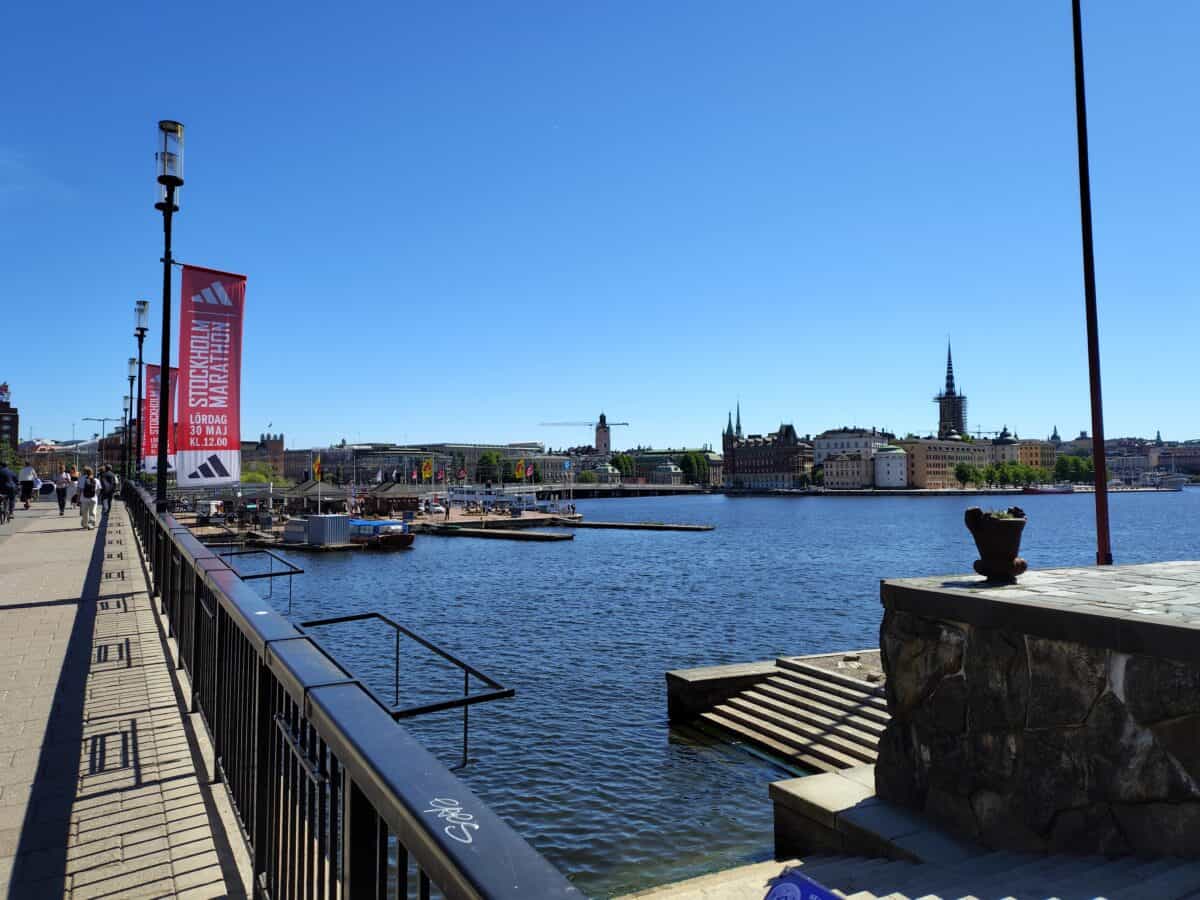
A busier side of Sweden
I had visited Gothenburg earlier in the trip, but Stockholm felt immediately different.
Gothenburg had seemed quieter and more relaxed. Stockholm had the energy expected of a capital, with busier streets, more tourists, and far more happening around the city center.
At times, parts of central Stockholm almost felt like a much smaller Nordic version of New York. There were tall buildings, heavy pedestrian traffic, shopping streets, and a pace that felt more metropolitan than I had imagined.
The waterfront softened that intensity.
Stockholm is surrounded by water, and it was easy to find both lively promenades and quieter places where I could sit away from the crowds. I particularly enjoyed the areas near the water around the center, where city architecture opened into broad views across the islands.
The cafe culture was another part of Sweden I had looked forward to experiencing. Good weather brought people outside, and it was easy to understand the appeal of spending an afternoon over coffee and pastries.
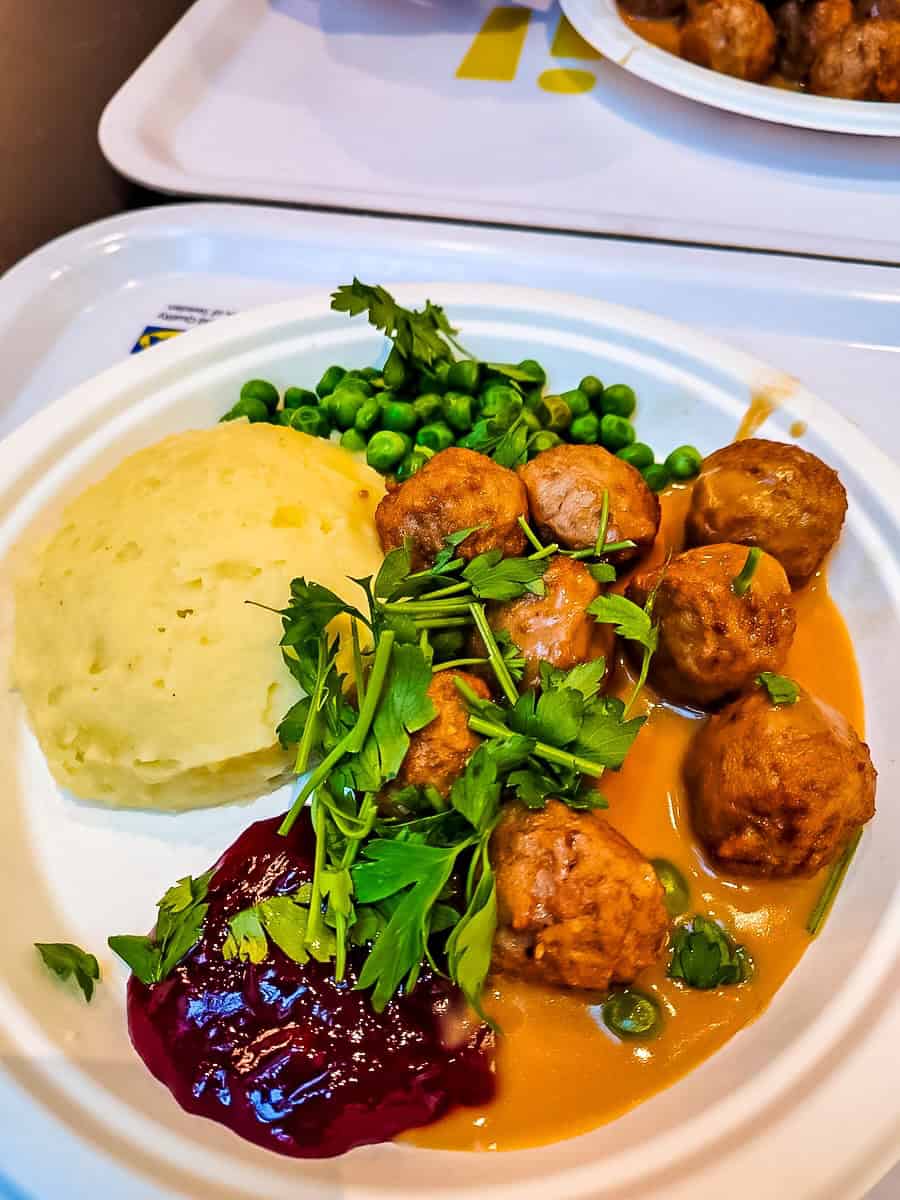
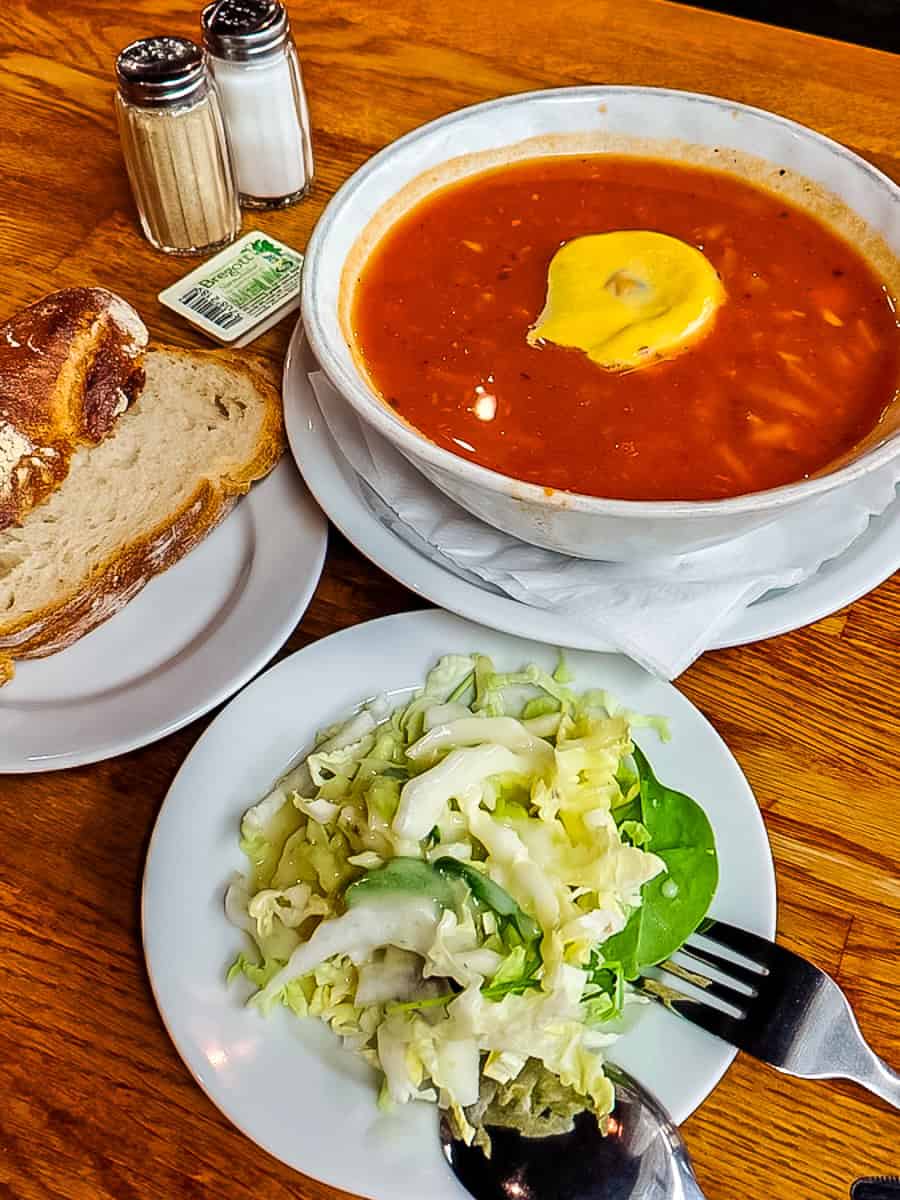
I also allowed myself to eat out more than I had in some earlier destinations, trying fish soup, visiting cafes, and making the obligatory trip to IKEA for Swedish meatballs with a friend.
I only stayed briefly after the marathon, but the city clearly warranted more time than I gave it.
An expo that felt like a major event
The marathon expo was one of the most experiential I had encountered.
Rather than entering a room, collecting a bib, and leaving, you get to move through a longer sequence of registration areas, the Adidas store, exhibitors, product samples, and recovery experiences.
Some exhibitors felt more sales-focused than I was used to, but there was also considerably more to try.
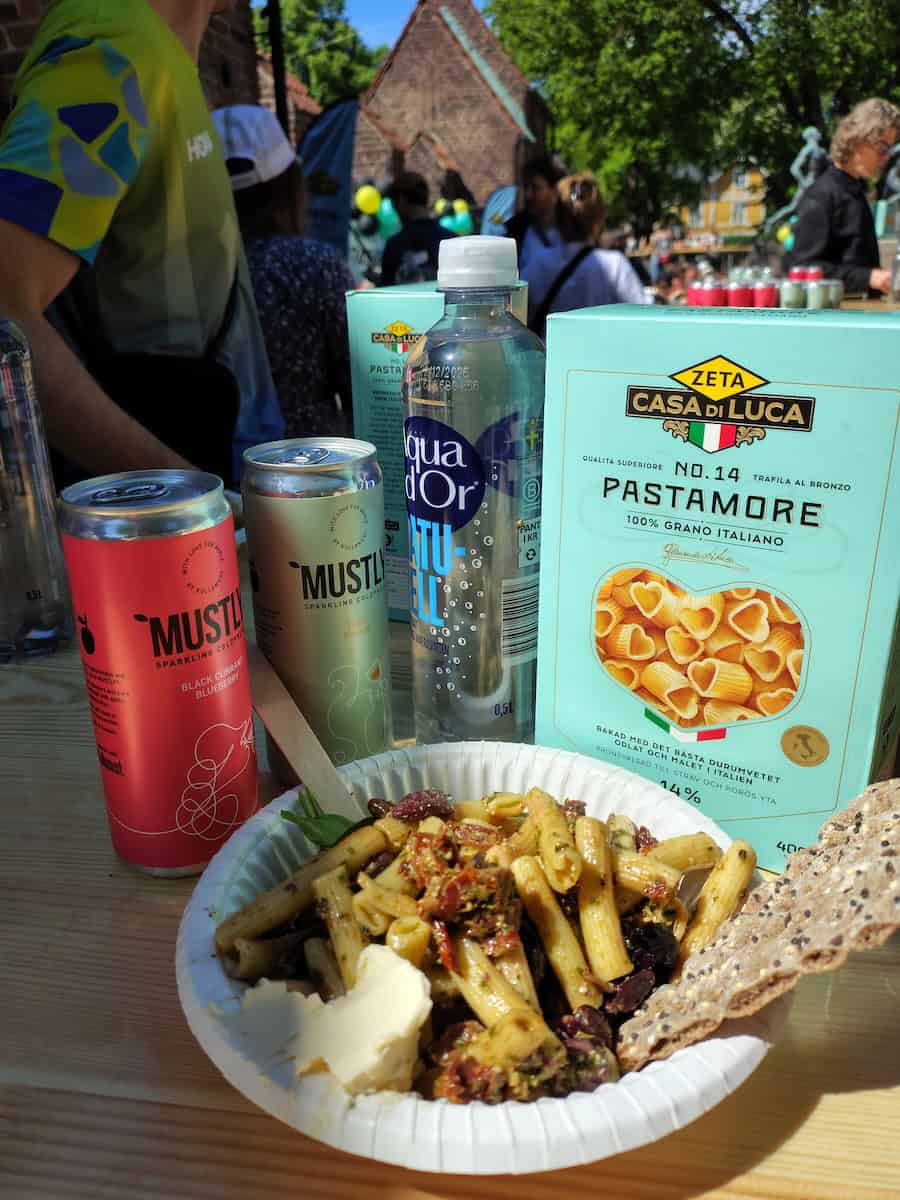
I tested massage equipment, sampled products, and joined the pasta party with a friend I had first met during the Copenhagen Marathon weekend.
The pasta party added a more social side to an otherwise commercial expo. Runners sat together before the race, ate, collected drinks, and talked about their plans for the following day.
The latest start of the three
After Riga’s 7 a.m. start, Stockholm provided the opposite extreme.
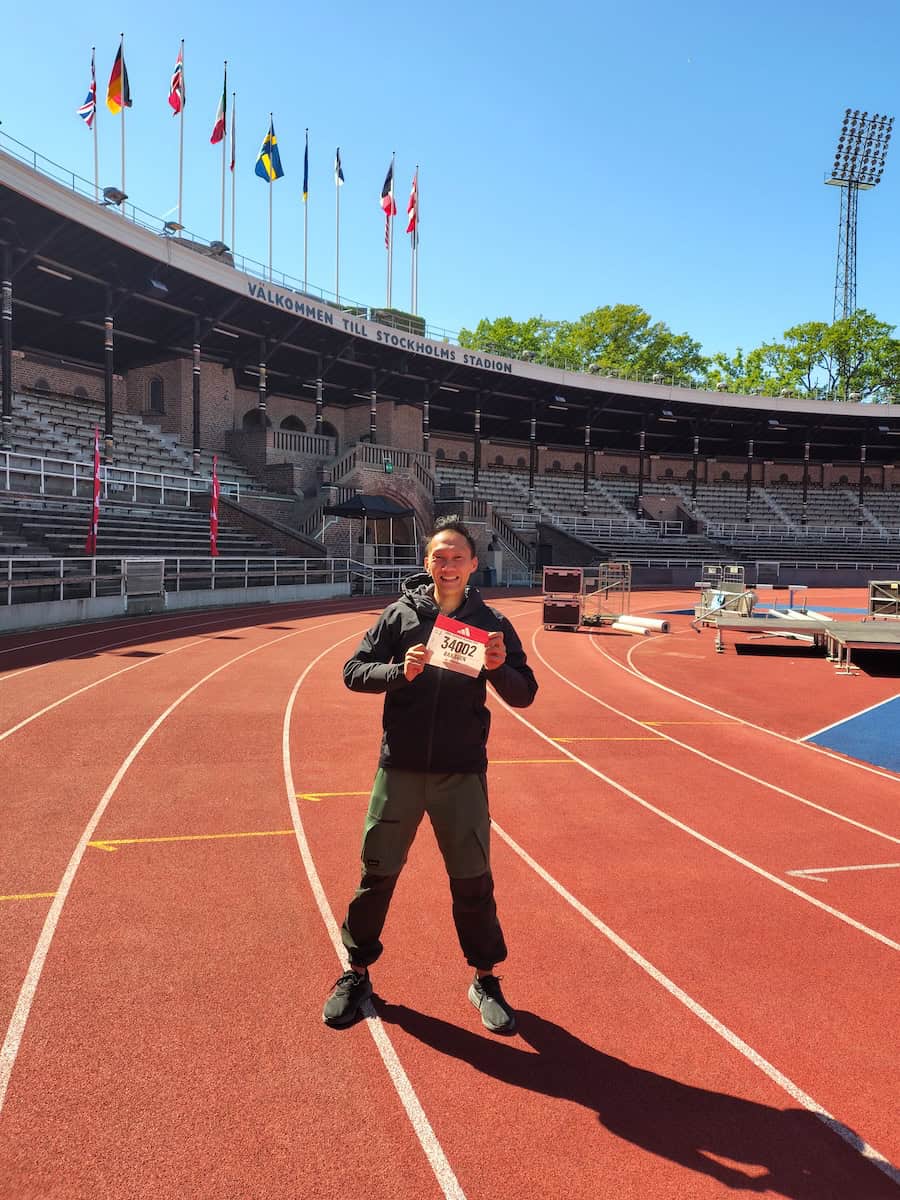
The first waves began at noon outside Stockholm Olympic Stadium.
That made race morning far more relaxed. I did not need to wake before sunrise or rush toward the start while still half-asleep.
The disadvantage was obvious as soon as I arrived.
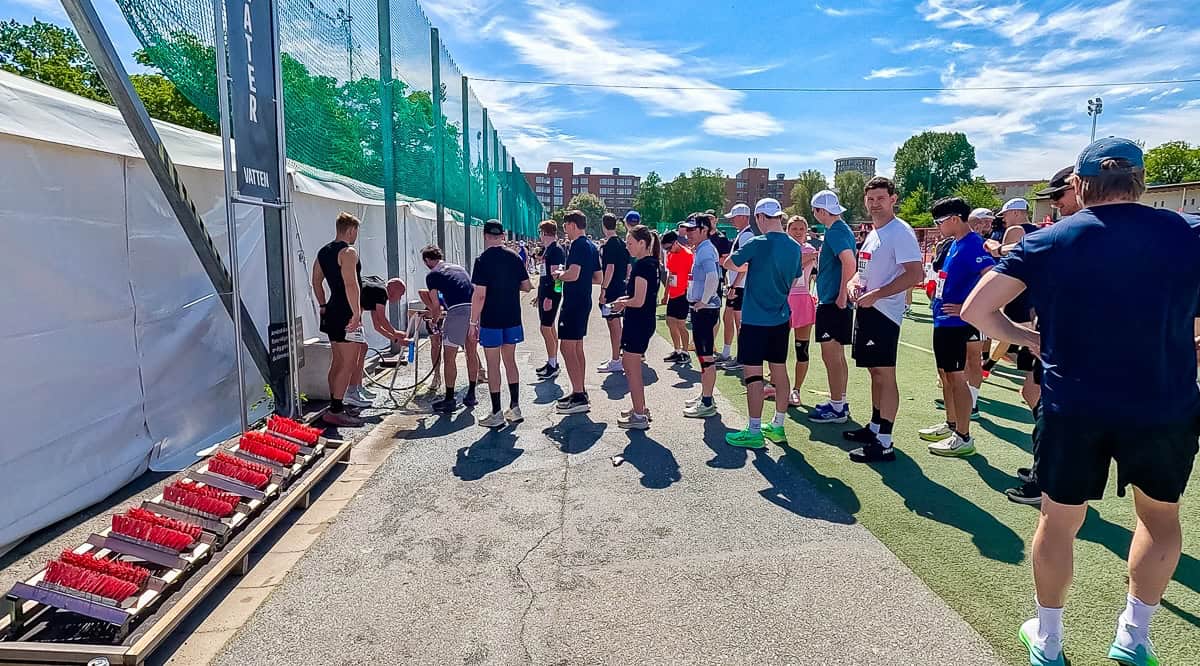
It was already warm.
Runners stood in shaded areas, poured water over their heads, and soaked their hats before the race had even begun. I was more accustomed to heat than many European runners, but I still knew it would add difficulty to an already demanding course.
The most conservative strategy yet
I approached Stockholm more cautiously than Copenhagen or Riga.
The goal was not only to complete the third marathon. I was also due to run my first trail half marathon two weeks later, so causing unnecessary damage at Stockholm would affect the next part of the project.
I used another planned run-walk strategy, but this time I also adjusted for the terrain.
Whenever possible, I walked the climbs and ran the descents. Uphill running demanded more effort, while the downhills offered opportunities to gain distance with less cardiovascular strain.
The early course did not initially feel too difficult. Some of the opening terrain was favorable, and my legs seemed capable of handling the effort.
But rolling courses create fatigue gradually.
Each individual climb may not feel significant. Over 42.2 kilometers, however, the repeated changes in elevation begin affecting muscles differently from a flat road.
Stockholm eventually exposed the accumulated fatigue that had survived Copenhagen, Riga, and the recovery between them.
Running through the Swedish capital
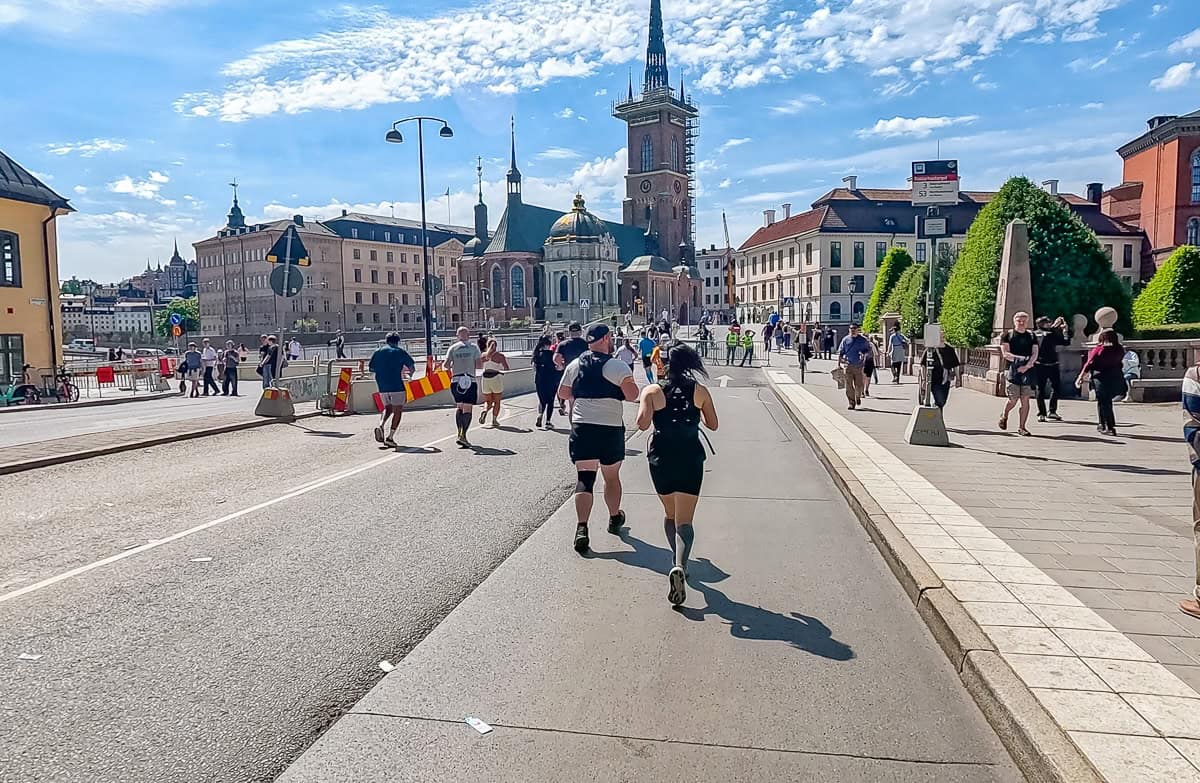
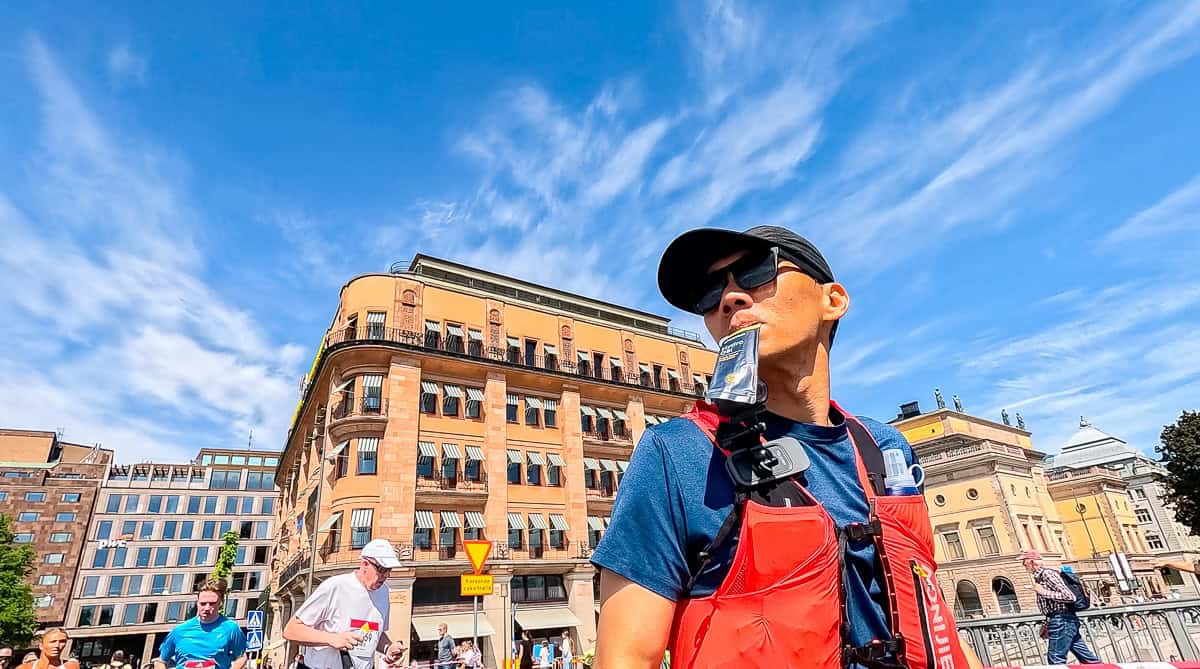
The course moved through Stockholm’s central districts, repeatedly returning toward its islands, waterfronts, and Old Town.
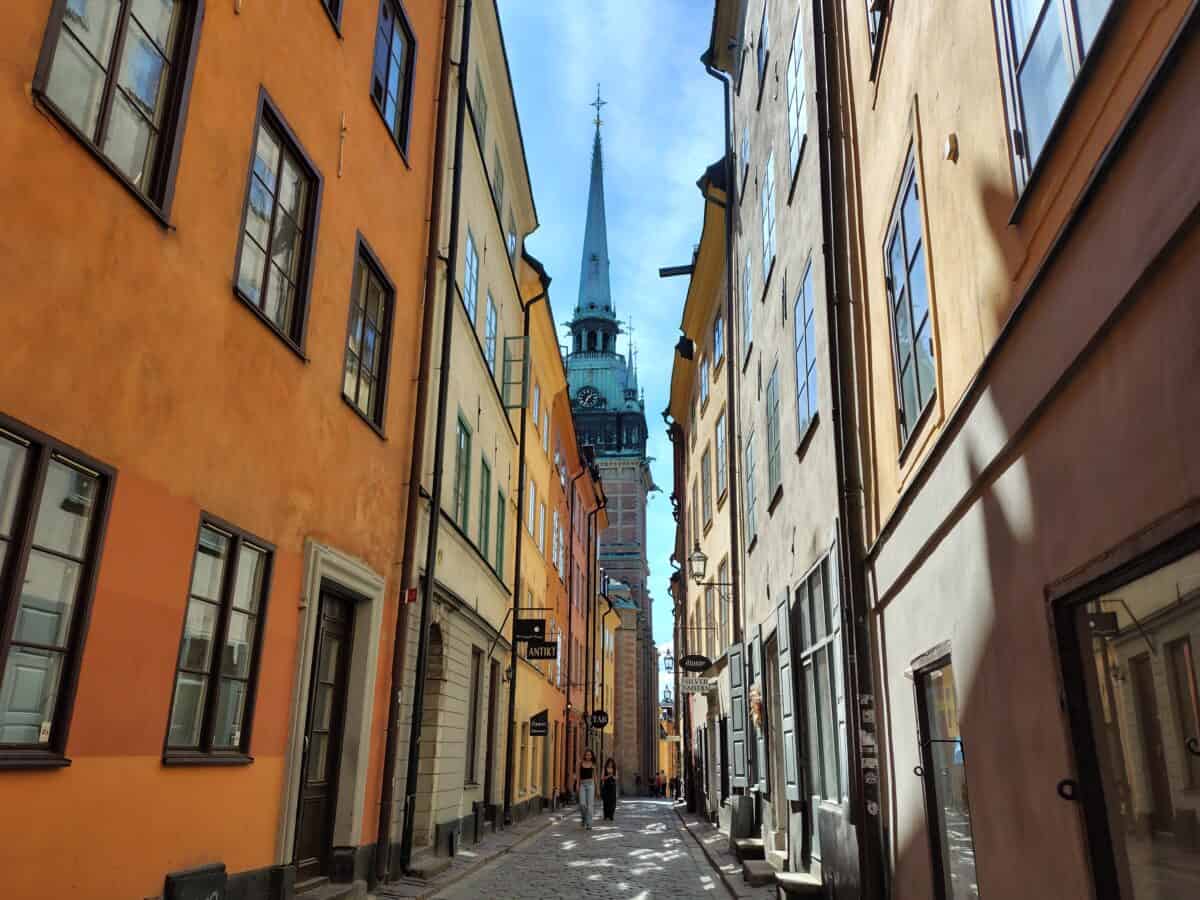
Gamla Stan was the most memorable part for me.
The medieval buildings and central streets looked distinctive even through the barriers and race-day crowds. Tourists were already filling the area, so the course often felt lively even when not everyone had specifically arrived to support the marathon.
Some might not like returning to similar central sections more than once, but the repetition did not bother me.
I was visiting Stockholm for the first time. Seeing those areas again was still more interesting than spending long stretches on anonymous roads outside the center.
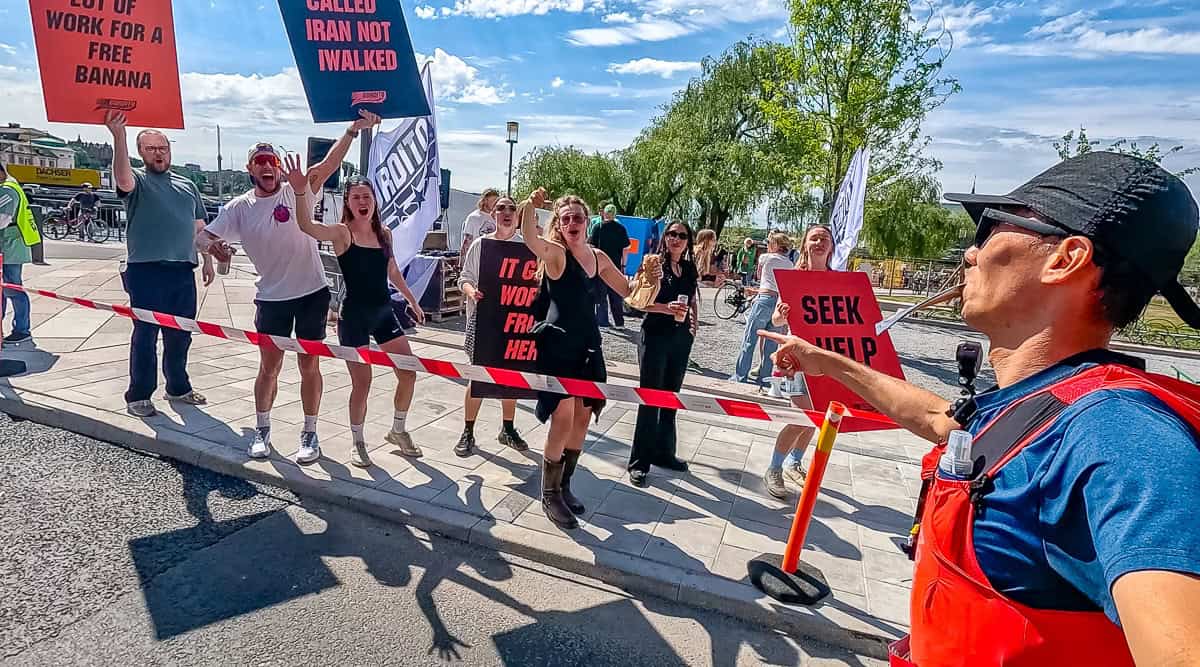
The crowd support felt different from Copenhagen. There were plenty of people around the busiest areas, but spectators seemed more likely to be waiting for specific friends or family members.
Even so, I rarely felt alone.
There were runners around me throughout the course, including many who were also walking the steeper sections or struggling with the heat.
Stockholm was clearly not an easy marathon.
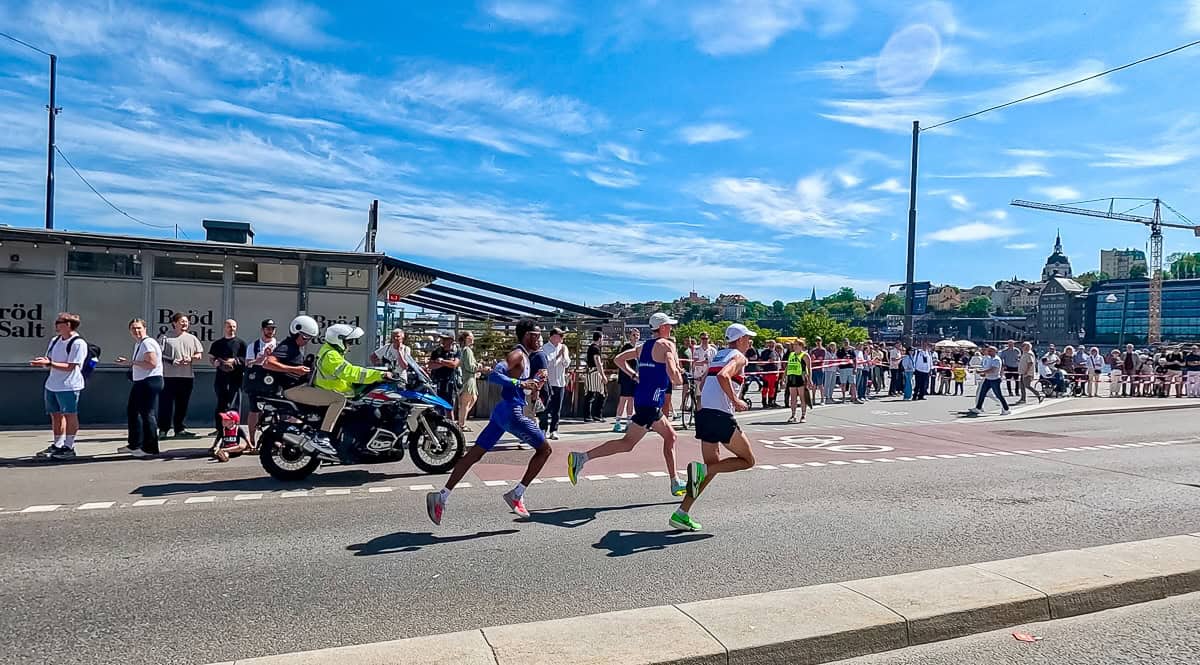
A marathon aid station menu
Stockholm also offered the most varied course support I had encountered.
Beyond water and standard sports nutrition, different stations provided items such as cola, coffee, broth, bananas, salted pickles, gels, and electrolytes.
The options made the marathon feel less repetitive and gave runners different ways to manage energy, salt, and fatigue.
There were also sprinklers that became increasingly valuable during the warm afternoon.
The heat was affecting people around me. Some runners leaned against barriers or stopped beside the course, while others abandoned running and walked the climbs.
I continued conservatively, but the rolling terrain was gradually taking its toll.
When running became the problem
Around 30 kilometers, I began noticing a sharper issue around my right knee or tendon area.
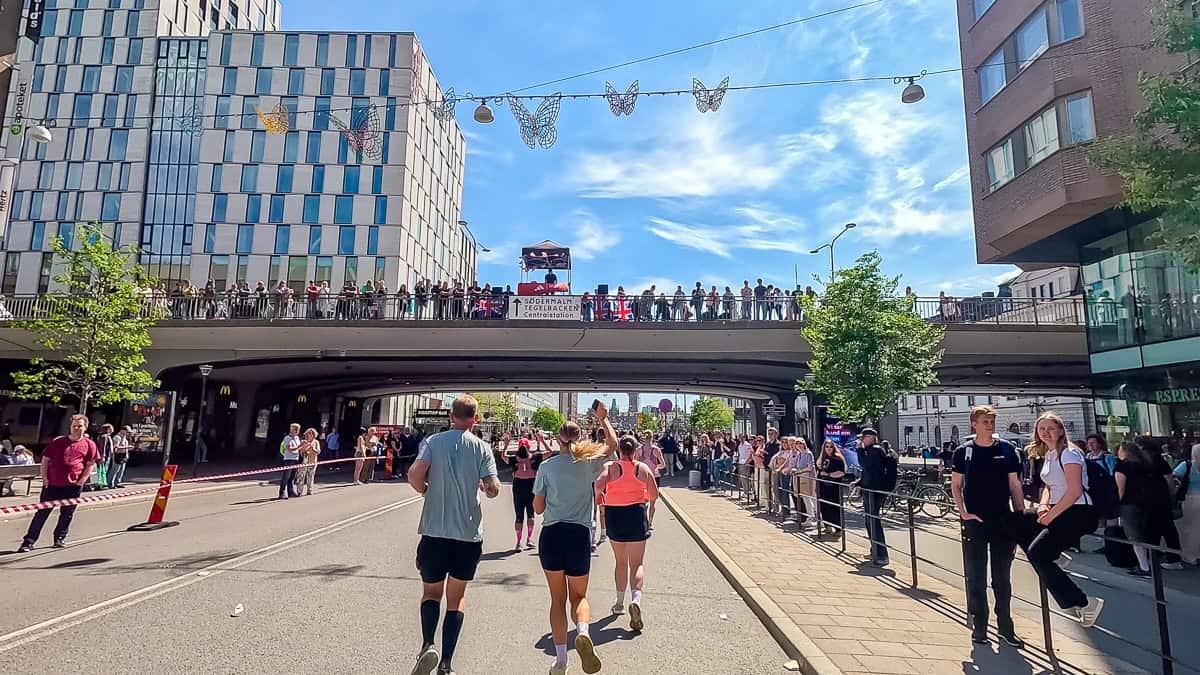
This was not simply general tiredness.
Walking remained manageable, but running triggered the discomfort and brought warnings that the surrounding muscles might begin cramping.
I slowed down and tested the difference.
After walking for a while, I attempted to run again. The pain returned almost immediately.
That told me the problem was not cardiovascular effort or overall exhaustion. I could still walk quickly without much difficulty, but the movement involved in running was irritating something different.
By roughly 35 kilometers, the decision became clear.
Continuing to force the run offered very little benefit and could turn a manageable warning into an injury.
So I began walking.
Calculating my way to the finish
The final walking section never felt particularly lonely or endless.
Plenty of other participants remained around me, and many were also alternating between walking and running as the hills and heat accumulated.
As I progressed, I repeatedly calculated the remaining distance and required speed. The official limit was 6.5 hours, and the numbers showed that I could walk the rest of the route and still finish safely.
Once I knew that, the pressure changed.
I was no longer wondering whether I could complete three marathons in three weeks. Unless the knee deteriorated dramatically, the challenge was going to be finished.
The only sensible decision was to protect it.
I continued power walking toward the stadium, occasionally testing whether running had become possible again. Each attempt produced the same answer.
One last target
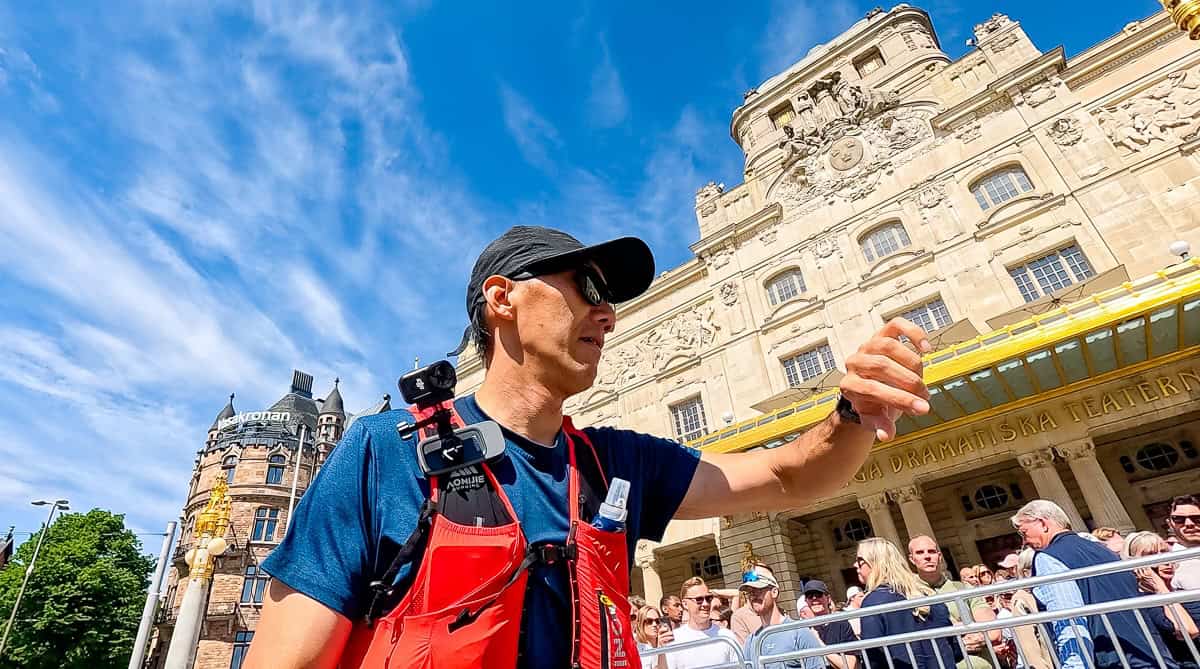
With around one kilometer remaining, I realized something else.
Although the official cutoff was 6.5 hours, six hours remained the standard marathon benchmark in my head.
It was going to be challenging, but close enough to make it possible.
The first attempt at running did not feel good. My knee was still uncomfortable, and after walking for so long, returning to a running stride felt awkward.
For a moment, it seemed pointless.
Then, with 400 or 500 meters left, I committed fully.
I focused on driving my arms backward and allowing the faster arm movement to pull my legs into a quicker rhythm.
Suddenly, I was sprinting.
Most runners around me were completing the final meters carefully after nearly six hours on the course. I began passing them outside the stadium while holding a GoPro and running as though I had only just started.
One runner looked across in disbelief as I went past.
Then I turned into the Stockholm Olympic Stadium.
Finishing inside Olympic history
The final stretch covered part of the stadium track which made it feel different from a normal road finish.
Looking from the stands, most runners were entering the stadium slowly and using whatever energy they had left.
Then one person appeared sprinting with a camera.
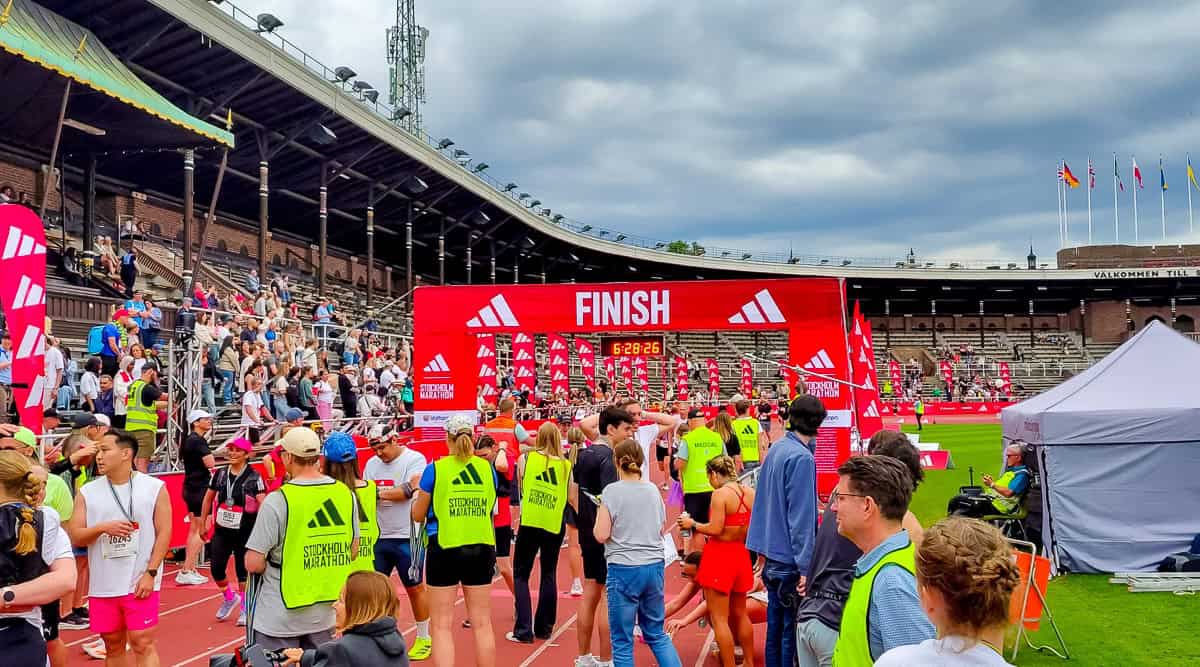
I continued around the track and crossed the line in just under six hours.
The result was not a personal best, but that was never the objective.
I had completed three marathons in three weeks.
More importantly, I had done it without turning a painful final section into an injury that prevented me from walking afterward.
Once the sprint ended, the knee did not become a serious problem. Walking still felt normal, and I would eventually even make the journey back to my accommodation on foot.
A finish area worth staying for
Stockholm provided one of the most generous post-race experiences of the five marathons I had completed.
The finisher package included the event shirt and a variety of snacks and recovery products. Around the stadium, runners could also find hot dogs, coffee, beer, protein drinks, and other refreshments.
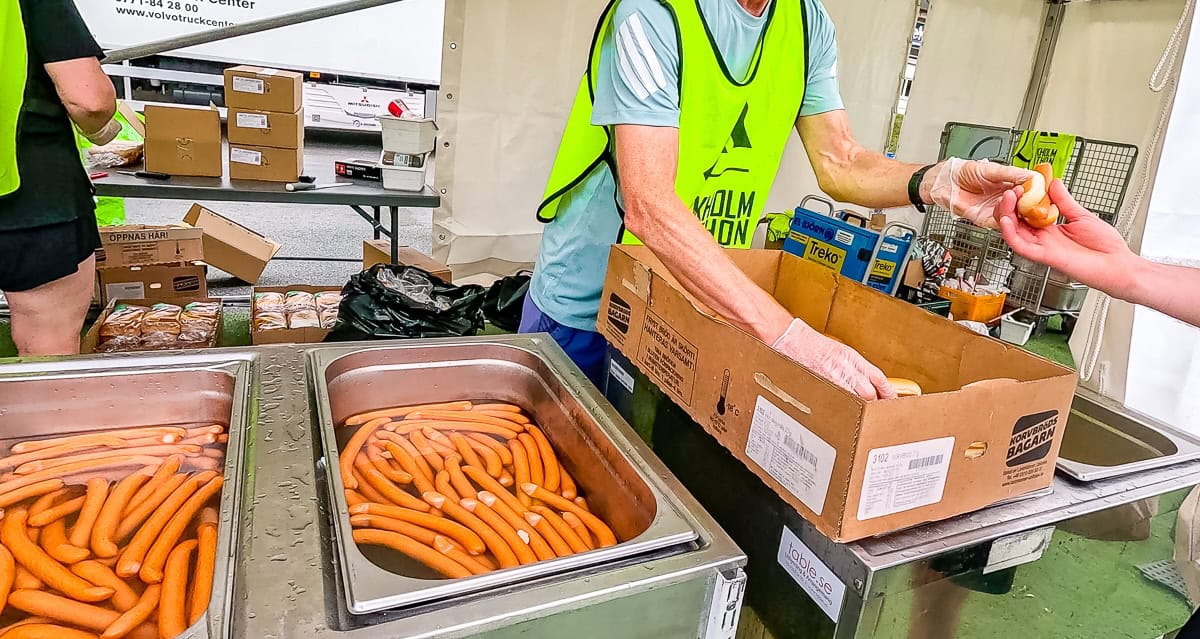
Showers were available for those who wanted them.
There was also an official photo area where runners could display their bib and finishing time. Volunteers were available to help, which made the experience easier for anyone who had traveled alone.
I stayed long enough to eat, take photos, and absorb the end of the event before most people began leaving.
Then I walked back through Stockholm with the medal.
Physically, I felt surprisingly normal.
The achievement that arrived quietly
Completing three marathons in three weeks did not produce the enormous emotional release I might have expected.
I was happy and proud, but I had already known for several kilometers that I was going to finish. The calculations had removed most of the suspense before I reached the stadium.
In some ways, securing the Stockholm entry and realizing the three-race challenge could actually happen had felt more emotionally charged than completing it.
The finish confirmed something I had already accepted while walking through the final part of the course.
I had done it.
The experience did not make stacking marathons feel easy or automatically healthy.
During those weeks, I ran less outside the races because nearly every day became focused on recovery. I also ate considerably more to ensure that I was not under-fueled for the next marathon.
That meant the block did not necessarily leave me leaner or feeling conventionally fitter. It exposed the difference between completing endurance events and following a balanced training routine.
As a relatively inexperienced marathon runner, I had deliberately chosen to over-recover rather than risk doing too little.
With more experience, I would eventually learn to manage that balance more precisely.
Who should consider Stockholm Marathon?
Stockholm suits runners looking for a large capital-city marathon with a genuine event atmosphere.
The expo, pasta party, large international field, varied aid stations, course entertainment, and stadium finish make the weekend feel bigger than an ordinary road race.
The course also provides a broad introduction to Stockholm. It passes waterfronts, bridges, central districts, and Gamla Stan, allowing runners to see several sides of the city within one event.
But it is not the easiest choice for a first marathon.
The rolling terrain places more demand on the legs than a flat course, while the midday start can expose runners to warmer conditions than they might expect in Sweden.
The 6.5-hour cutoff provides useful breathing room, and slower runners should still have plenty of company. Even late in the race, I was surrounded by others managing the same hills and heat.
For runners who want an entirely flat personal-best course, Stockholm may not be the obvious choice.
For those who want a challenging city marathon with strong organization, Nordic running culture, and a distinctive stadium finish, it offers a much richer experience.
The city itself deserves more than a short race weekend. I only had around one full day afterward to explore Gamla Stan, visit cafes, eat with a friend, and spend more time beside the water.
There was clearly much more left to see.
The end of one challenge, not the project
Stockholm completed the three-marathon block, but it was never going to be the final race.
Two weeks later, I was already scheduled to run my first trail half marathon.
That shaped the decisions I made during the final kilometers. Finishing slightly faster was not worth damaging the knee and losing what came next.
For most of the closing section, restraint was the correct decision.
Then the Olympic Stadium came into view, sub-six became possible, and restraint temporarily disappeared.
Perhaps that was the most appropriate way to finish three marathons in three weeks.
I spent most of the race protecting the larger project.
Then I sprinted the final few hundred meters as though this finish line were the only one that mattered.


