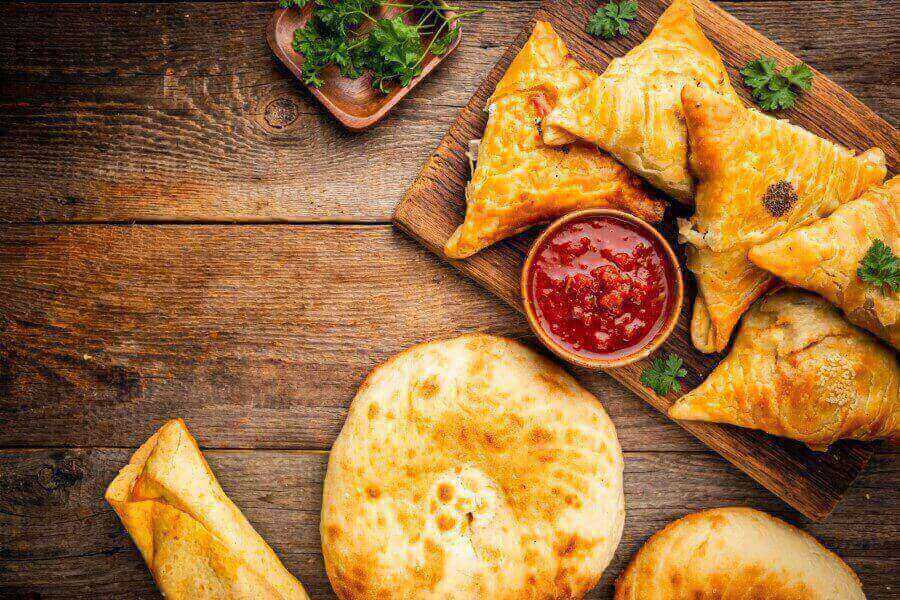
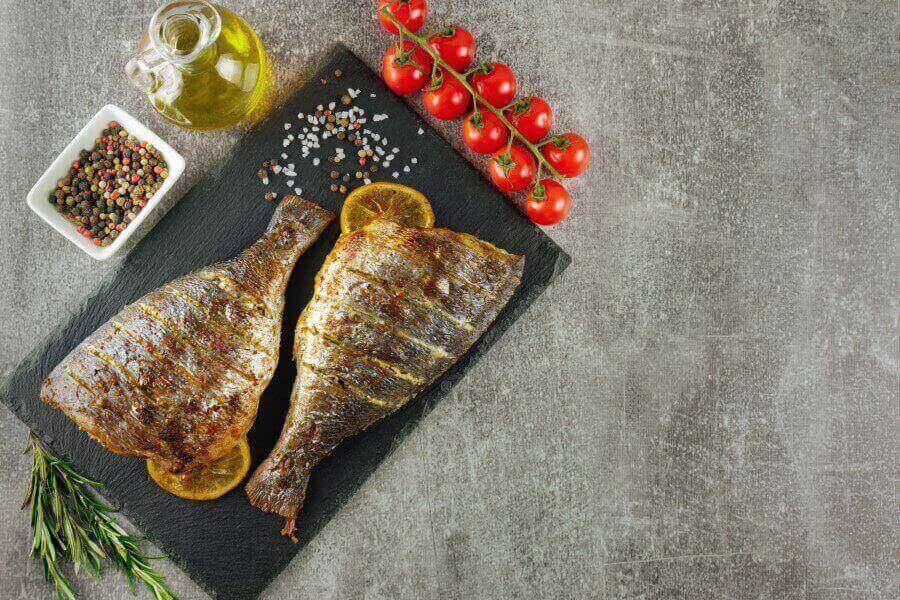
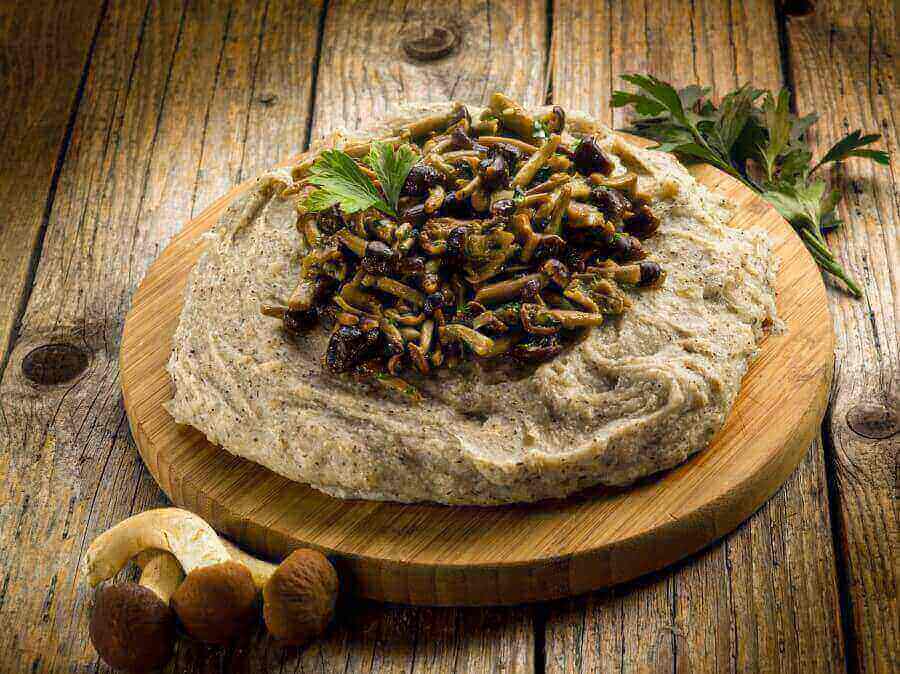
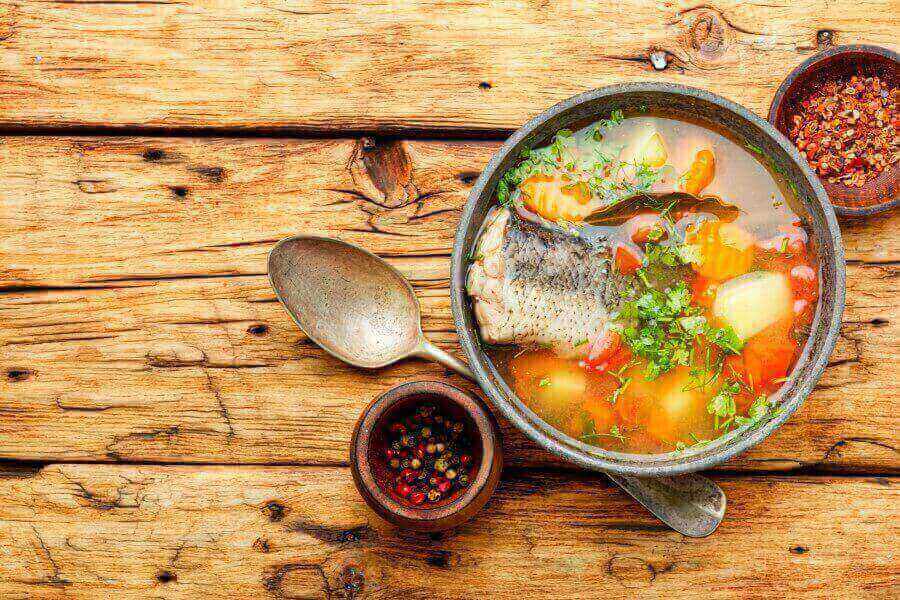
Niger is a country in West Africa with inclusive traditions and rich history. The food from Niger usually goes under the radar, but the country offers some culinary gems that will leave you hungry for more. y.
What Is Special About Niger Food?
As one of the few French colonized countries in West Africa, traditional food in Niger has always been partly influenced by the French. Many of the country’s foods are locally sourced and distinct compared to many cuisines on the African continent. Condiments like ginger, garlic, and turmeric are staple ingredients in Niger food. Here are some amazing dishes to keep a look out for if you are visiting.
National Dish Of Niger
Djerma
Djerma is one of the few meat-based delicacies in the country. This stew has chicken as its base ingredient and is often considered the Niger national dish.
It’s similar to the popular spicy meat and fish-based dish in West Africa known as pepper soup. This traditional Niger food is prepared by cooking chicken with other ingredients and condiments like bouillon cubes, thyme, curry, garlic, onions and peanut butter.
This flavorful dish is usually enjoyed during lunchtime and is often served with rice. For a stronger taste, mustard sauce can be used as well. However, it is not a necessity and based on preference.
Traditional Soups, Sauces And Stews
Palm Nut Soup
This traditional food from Niger is popular across West Africa. It is believed to have originated in Nigeria, where it is known as Banga soup. As a close neighbor, it comes as no surprise that this soup has also become prominent in Niger. Palm-nut soup is made from palm fruit extract cooked with spinach and smoked fish, among other ingredients. It has a nutty flavor and is often paired with main dishes like white rice and swallow food like tuwo and fufu. If you ever travel to Niger, make sure you don’t miss trying this delicious dish.
Dounguouri Soko (Bean Stew)
This traditional Niger food is the country’s version of the French cassoulet. The biggest difference is this version doesn’t include any spices. Dounguouri Soko was heavily inspired by French colonists and is regularly consumed by locals today.
This stew is made with white beans and lamb as the main ingredients. Other ingredients like tomatoes, pepper, and garlic are added to boost the flavor and creaminess. For a better experience, the food is served with mayonnaise.
Popular Cereal-Based Food In Niger
Jollof Rice
Jollof rice is a West African dish believed to have originated from Senegal. Today, it has grown to become one of the most popular foods in Niger and many other African countries.
This delicacy is friendly to several dietary restrictions due to its simplicity. Usually, it is a one-pot cooked meal made with long-grain rice and sauce made from tomatoes, pepper, and onions. Although some add spices like ginger and garlic, curry and thyme are the main staple spices.
The cooking method for this dish differs across the continent. However, the basic ingredients remain the same. Thanks to its versatility, you can add meat, meat stock, or other vegetables to suit your preferences.
Dambou
This is a traditional food from Niger originating in the Southwestern region. It is believed that the native people of Zarma and Songhai were the first to bring this dish to life.
Dambou is made from various cereals like rice, millet, wheat semolina, corn couscous, and moringa leaves. It has a similar appearance to the popular couscous in the Maghreb region of North Africa.
The cereal is steamed for about half an hour before adding other ingredients like steamed moringa leaves, onions, salt, chili, and oil. Moringa salad, fish, and other meat can also be served as a side to this dish.
This is one of the most healthy and flavorful foods from Niger. Typically, dambou is a special occasion meal, but you can get it from most neighborhood restaurants in the country.
Fonio
The origin of this Niger food is unknown, as it’s popular all over West Africa. Fonio, also known as hungry rice or acha, is a cereal-based food. It has a very hard texture and is often soaked in boiling water overnight to soften before it is cooked.
Although it has a similar appearance to couscous, they are not the same. Fonio has a nutty flavor and is a naturally gluten-free food. This dish has a unique taste, and it’s often served with couscous to complement it.
Meat-Based Niger Food
Camel Meat
One interesting fact about Niger is that it ranks as one of the countries with the highest number of camels in the world. Camels are significant to the Nigeriens as they serve as a means of transportation as well as a source of milk and meat.
Locals use camel meat to make different foods like camel burgers, camel curry, and camel karahi, among other dishes. Compared to other meat, camel meat is lean; hence, it is usually consumed medium-rare. If you travel to Niger, you should definitely sink your teeth into a camel burger.
Goat Meat Curry
While there are many vegetarian dishes, Nigeriens still love their meat. Goat curry is a common example among the traditional food from Niger.
This dish is made with goat meat and goat stock, and it’s a favorite meal for families during festive occasions. Beyond the meat, vegetables like spinach and carrots can be added to the curry. It’s great for serving with rice, boiled potatoes, or yams.
Other Popular Traditional Food In Niger
Farin Masa
Farin masa is a special dish enjoyed mostly in the Hausa and Ful communities in West Africa. It originated in the country and has spread across the African continent.
Masa is a leavened dough fried mostly in a local clay-style skillet pan designed for masa. This food from Niger is made with flour, yeast, eggs, sugar, salt and water. After frying, it is sprinkled with sugar for extra sweetness.
Some enjoy their masa with a mix of local spices called “yaji,” while some enjoy with popular Niger stews. Many Nigeriens consider this an evening snack and it is not often consumed as a main dish. This snack is fluffy and spongy on the inside while crispy on the outside.
Boiled Yams
Boiled yams are one of the most consumed traditional Niger foods. Yams are popular in the tropical regions of Niger and, as such, are some of the most common crops in the country.
This is one of the simplest dishes from Niger. All you need to do is peel the yam, slice it, and boil it, and you are good to go.
Boiled yams are tender and have a slightly sweet taste. They make an excellent side dish.
The culinary culture in Niger is a blend of history and flavor wrapped into foods that soothe the soul. If you are an adventurous foodie, then there are some interesting finds on offer here.
Although colonized by the French, food from Niger has stayed true to its roots and created some amazing dishes other African countries have adopted. With dishes like masa, camel burger, and fonio, you are in for a treat.
Whenever we think about tourism in India, Goa is one name that instantly comes to mind. Goa is famous for its beaches, making it an ideal location for a quick getaway. People travel there from all over the world because of its sunny weather and beautiful beaches.
Additionally, Goa is known for its entertainment alternatives, including nightlife and parties, which can add to your vacation experience.
What Goa Is Famous For?
Goa is famous for its pristine beaches that line the Arabian Sea, drawing sun-seekers and water enthusiasts alike. These golden shores, such as Baga, Palolem, and Anjuna, offer a serene escape for relaxation or a playground for thrilling water sports like parasailing and jet-skiing.
Beyond the beaches, Goa is known for its vibrant nightlife that pulses with energy in beachside shacks, clubs, and music festivals, making it a global hotspot for partygoers.
History, Culture, And Traditions Goa Is Famous For
Carnivals
Goa is famous for its vibrant and lively Carnivals that will captivate you with their energy and color. These celebrations have become a hallmark of Goan culture, offering a unique and exhilarating experience.
What makes the Goan Carnivals special is the opportunity they offer you to immerse yourself in the local culture. As you join the festivities, you’ll find yourself dancing alongside locals in elaborate costumes, savoring famous food in Goa, and enjoying the rhythmic beats of traditional music.
These Carnivals are not just about the celebration, but also about preserving the rich heritage of Goa. They give you a glimpse into the vibrant spirit of the Goan people and their love for life.
When you visit Goa, make sure to time your trip to coincide with Carnival. The celebrations typically begin in mid-February and run into March.
Festive Atmosphere
The festive atmosphere in Goa is a remarkable and cherished aspect of its culture and identity.
One of the most notable festivals Goa is famous for is Shigmo, the Goan version of Holi. Shigmo is a Hindu spring festival celebrated with grand processions, folk dances, and vibrant displays of artistry. It’s a time when communities come together to celebrate the arrival of spring and showcase their traditional customs.
In addition to these major festivals, Goa hosts a variety of religious and cultural celebrations throughout the year, such as Diwali, Christmas, Ganesh Chaturthi, and the Feast of St. Francis Xavier. These events infuse the state with a sense of togetherness, where you can immerse yourself in the local culture, witness age-old traditions of Goa, and partake in the joyous festivities.
The festive spirit in Goa is not limited to religious events alone. The state’s lively nightlife, beach parties, and music festivals contribute to its year-round festive aura. Whether you’re savoring traditional sweets during Diwali or dancing to electronic beats at a beachside party, Goa’s festive atmosphere welcomes you to be a part of its dynamic celebrations throughout the year.
Casinos
The allure of the casinos famous in Goa stems from the unique blend of beachside leisure and thrilling gaming experiences. Perched on the Mandovi River, these floating gaming havens provide a memorable backdrop for your nights of entertainment.
What sets Goa’s casinos apart is the variety of gaming options available. From classic card games like poker and blackjack to the ever-popular slot machines, these establishments cater to seasoned gamblers and those looking to try their luck for the first time. You can enjoy the games at your own pace, soaking in the ambiance and sipping on a refreshing cocktail.
Beyond gaming, the casinos in Goa are popular for their opulent settings and world-class hospitality. Lavish interiors, live music performances, and gourmet dining options ensure that your experience transcends mere gambling in favor of a luxurious getaway. It’s not just about the cards and chips; it’s about the all-encompassing experience they provide.
Nightlife
As the sun dips below the horizon, Goa transforms into a realm of stunning nightlife that captivates visitors, offering a world of night-time adventures.
This magnetic allure of Goa’s nightlife can be attributed to its diverse and dynamic offerings. Goa is famous for how it seamlessly blends the vibrant party scene with the serenity of its beaches unlike anywhere else in the world. When the night falls, beach shacks along the coast come alive with the soothing rhythm of live music and the tantalizing aroma of freshly grilled seafood.
One of the reasons Goa is famous for its nightlife is its iconic beach parties. Whether you find yourself at Anjuna, Baga, or Vagator, you’ll be immersed in an atmosphere of sheer euphoria. Fire dancers, electrifying DJ sets, and the soft glow of bonfires create an enchanting ambiance, inviting you to dance the night away beneath the stars.
Portuguese Influence
In the sunny state of Goa, the Portuguese influence stands as a testament to a bygone era, enriching your visit with a unique blend of history, culture, and architecture. This enduring connection to Portugal is rooted in the region’s colonial past. Goa was under Portuguese rule for over four centuries, leaving an indelible mark on its identity.
The stunning architecture that dots the Goan landscape is the most prominent symbol of this influence. From the intricately designed famous churches in Goa to charming old houses, you’ll find a visual feast that transports you back in time.
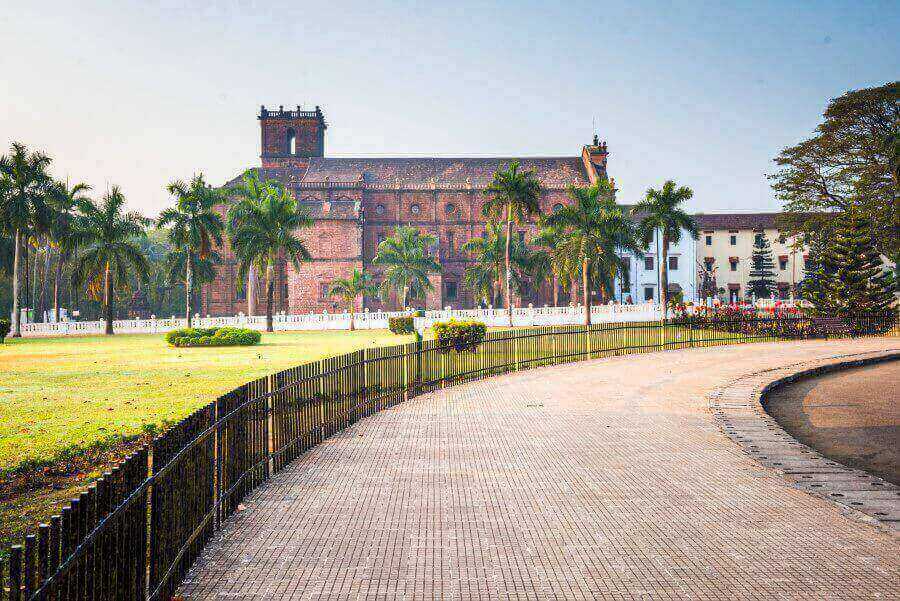
One of the most iconic examples of Portuguese influence is the Basilica of Bom Jesus, a UNESCO World Heritage Site. Its Baroque architecture, adorned with elegant sculptures and artwork, is a mesmerizing testament to the intertwining of cultures, making it one of the most famous places in Goa. Inside, you’ll discover the mortal remains of St. Francis Xavier, a revered figure for both the Goans and the Portuguese.
Trance Parties
Amidst the palm-fringed beaches and vibrant culture, Goa is famous for its electrifying trance parties. They offer you an opportunity to dance the night away in a high-energy atmosphere.
We can trace back the popularity of trance parties in Goa to the 1960s when the hippie movement discovered the state’s serene beauty and embraced its laid-back lifestyle. Over the decades, this evolved into a unique party scene that draws enthusiasts from around the world.
One key factor that makes Goa the epicenter of trance music is its idyllic open-air party venues. Surrounded by lush nature and the gentle sound of waves on the famous beaches of Goa, these gatherings offer an immersive experience that transcends traditional clubbing. The music, pulsating with hypnotic beats and melodic rhythms, takes you on a transformative journey, allowing you to lose yourself in the moment.
Cities And Travel Destinations Goa Is Famous For
Panaji
Nestled along the scenic banks of the Mandovi River, Panaji, the charming state capital of Goa, beckons you with its unique blend of old-world charm and modern vitality.
Panaji’s distinctiveness begins with its architectural character. Strolling through the city’s streets, you’ll encounter a captivating fusion of Indian and Portuguese influences.
Colorful colonial-era buildings, with their ornate balconies and shuttered windows, create a picturesque atmosphere reminiscent of Europe. This architectural legacy tells the story of Goa’s rich history and its enduring connection to Portugal.
The heart of Panaji is the historic district of Fontainhas, where narrow winding lanes lead you past quaint houses painted in vibrant hues. This area offers you an immersive cultural experience. It allows you to interact with friendly locals, savor famous food in Goa, and appreciate the artistry in the street murals.
Ponda
Located inland amid Goa’s lush greenery, Ponda is famous in Goa for offering a unique blend of cultural heritage and natural beauty.
Ponda’s fame is deeply rooted in its role as the cultural heartland of Goa. This town is often referred to as the “Temple Town” due to its abundance of beautifully preserved Hindu temples. These temples’ rich history and architecture showcase the state’s spiritual traditions and ancient artistry.
One of the most notable temples in Ponda is the Shri Mangesh Temple, dedicated to Lord Shiva. Its graceful white spires and intricate carvings provide a serene backdrop for spiritual exploration. Visiting these temples offers you a glimpse into Goa’s religious heritage and provides a sense of peace and reflection.
Grand Island
Grand Island is one of the famous places of Goa, cherished for its secluded charm and captivating natural beauty.
It is one of the well-known facts of India that the Island is a haven for snorkelers and scuba divers, inviting you to explore the vibrant coral reefs beneath the surface. As you venture into the clear azure waters, you’ll discover a mesmerizing world teeming with colorful fish and other marine life.
The underwater adventure here is unparalleled, offering both experienced divers and beginners an opportunity to witness Goa’s rich marine biodiversity up close.
But it’s not just about what lies beneath the waves. Grand Island also boasts some of the pristine beaches Goa is famous for, with soft, powdery sands that are perfect for a leisurely day by the sea. You can bask in the warm Goan sun, take in the breathtaking coastal views, and enjoy a peaceful picnic on the shore.
Mandovi River Cruise
Another famous thing in Goa is the delightful Mandovi River Cruise, which offers you a unique perspective on the state’s beauty and culture.
The fame of the Mandovi River Cruise stems from its enchanting ambiance. As you board one of the beautifully adorned boats, you’ll be greeted by the soothing sounds of traditional Goan and Portuguese music.
These cruises often take place during the evening, allowing you to witness stunning sunsets that cast a golden glow over the river’s tranquil waters. As you cruise along the Mandovi, you’ll pass by charming villages, mangrove forests, and lush green hills that form a serene backdrop to your voyage. The experience offers you a chance to appreciate the natural beauty that is so famous in Goa from different vantage points.
Shiva Valley
Shiva Valley stands out as a legendary destination in the vibrant realm of Goa’s nightlife, celebrated for its eclectic fusion of music, spirituality, and partying.
What is special about Shiva Valley is its iconic status as a beachside party haven where you can lose yourself in a unique and unforgettable experience.
Shiva Valley’s fame is firmly rooted in its captivating beach parties. Located on the stunning Anjuna Beach, it has been a gathering point for both locals and travelers seeking a night of electrifying music and dance.
The party culture here is deeply influenced by Goa’s free-spirited atmosphere and the legacy of the hippie movement.
Tito’s Street
If you are looking to take part in the vibrant nightlife and bustling atmosphere Goa is famous for, look no further than Tito’s Street.
One of the key highlights of Tito’s Street is its iconic nightclub, Tito’s. This establishment has been a fixture famous in Goa’s nightlife for decades and has played host to some of the world’s most renowned DJs and performers. It’s a place where you can dance the night away to a diverse range of music, from electronic beats to Bollywood hits.
What sets Tito’s Street apart is its diversity. It caters to a wide range of tastes and preferences, ensuring that you find something that suits your mood. Tito’s Street has everything, whether you want to groove to international tunes, enjoy live bands, or simply unwind with a cocktail by the beach.
Landmarks And Architecture Goa Is Famous For
Mollem National Park
Mollem National Park is a natural haven famous in India for its pristine landscapes, diverse ecosystems, and immersive wildlife experiences.
The park is a sanctuary for numerous plant species, some of which are rare and endemic to the Western Ghats. As you traverse its winding trails and dense forests, you’ll be surrounded by a tapestry of vibrant colors and fragrant blooms, making it a paradise for nature enthusiasts and photographers.
Mollem National Park also offers captivating wildlife encounters. The park is home to a variety of animal species, including the elusive Bengal tigers, leopards, and several species of deer. Jeep safaris through the park’s wilderness allow you to spot these magnificent creatures in their natural habitat.
Fort Aguada
Fort Aguada is a historical landmark in Goa famous for its enduring legacy, commanding views, and a glimpse into the state’s colonial history.
Built in the early 17th century by the Portuguese, the fort served as a defensive bastion, guarding against potential invasions by sea. Its strategic location atop a hill and proximity to the Arabian Sea made it a crucial stronghold during colonial times.
One of the key attractions of Fort Aguada is its iconic lighthouse. This towering structure not only guides ships safely along the coast but also offers visitors an opportunity to ascend to the top and enjoy breathtaking panoramic views of the Arabian Sea and the surrounding coastline.
Our Lady Of Immaculate Conception Church
Our Lady of Immaculate Conception Church is a cherished symbol of Goa’s spiritual heritage and architectural splendor.
This famous church of Goa is a place of devotion and reflection for the local Catholic community. The interior is adorned with ornate altars, intricate woodwork, and beautiful frescoes depicting scenes from Jesus Christ’s life. It offers you a chance to witness the rich spiritual traditions of Goa and the enduring faith of its people.
One of the church’s highlights is its magnificent bell tower, which houses the second-largest bell in Goa. The resonant chime of this historic bell adds to the ambiance, and it’s a delightful experience to hear it ring.
Beyond its religious significance, the church’s hilltop location provides panoramic views of Panaji and the Mandovi River. It’s an ideal spot for photography and for taking in the serene beauty of the capital city from a different perspective.
Mahadev Temple
In the serene countryside of Goa, the Mahadev Temple stands as a cherished spiritual sanctuary. This ancient temple, dedicated to Lord Shiva, is a testament to Goa’s spiritual heritage. It stands as an architectural gem with its intricate carvings, traditional Goan temple architecture, and vibrant colors.
What sets this temple apart is its serene location amidst lush greenery. Surrounded by the tranquility of nature, it offers a peaceful retreat from the bustling tourist areas of Goa. The temple’s serene atmosphere invites you to engage in moments of reflection and meditation, making it a perfect place for spiritual seekers and those looking for a calm escape.
The temple complex is a place of reverence and devotion for the local Hindu community. The rituals and ceremonies that take place here provide you with an opportunity to participate in the spiritual traditions of Goa. It’s also a chance to immerse yourself in the rhythms of daily temple life.
Mangeshi Temple
Mangeshi Temple holds a special place as a center of worship, famous in Goa for its spiritual significance, architectural grandeur, and tranquil surroundings.
This ancient temple is dedicated to Lord Mangesh, an incarnation of Lord Shiva. Its architecture blends the traditional Goan temple style with Portuguese influences, resulting in a unique and captivating structure.
The rituals and ceremonies at the Mangeshi Temple allow you to witness and participate in Goa’s vibrant spiritual traditions. The melodious chants, the wafting fragrance of incense, and the colorful offerings create an atmosphere of devotion and reverence.
Furthermore, the temple complex often hosts cultural events and festivals celebrating the Hindu calendar. These festivities provide you with a glimpse into the vibrant and joyous traditions of Goa, with colorful processions, music, dance performances, and traditional rituals that can add a lively dimension to your visit.
Goa State Museum
In the heart of Goa, the Goa State Museum stands as one of the historic landmarks in India. It is popular for its diverse exhibits, educational value, and insight into the state’s rich heritage.
It serves as a guardian of the heritage and traditions of Goa, preserving many artifacts, artworks, and archaeological finds spanning different epochs. The museum’s collections provide a chronological journey through Goa’s history, from ancient times to the colonial era and beyond.
The museum’s exhibits encompass sculptures, paintings, manuscripts, and artifacts that showcase the influences of various civilizations that have left their mark on Goa, including Hindu, Muslim, and Portuguese cultures.
Dudhsagar Falls
Within the lush greenery of Goa’s hinterlands, Dudhsagar Falls is a natural wonder that unveils one of the intriguing facts about Goa – the presence of a mesmerizing waterfall within its serene landscapes.
Dudhsagar Falls is famous in Goa for its breathtaking beauty and the immersive experiences it offers, enhancing the enchantment of this coastal state.
One fascinating way to experience Dudhsagar Falls is by trekking through its pristine surroundings. This adventure allows you to immerse yourself in Goa’s rich biodiversity, navigate through dense forests, and traverse picturesque landscapes. Along the way, you’ll encounter local flora and fauna, adding to the magic of the journey.
For those who prefer a more relaxed exploration, you can reach Dudhsagar Falls by taking a scenic train ride.
Food Goa Is Famous For
Fish Curry
Fish curry, apopular Indian street food, finds a special place in the bustling streets of Goa, where the catch of the day is transformed into a flavorsome feast.
This famous dish in Goa typically consists of fresh fish, often pomfret, kingfish, or mackerel, simmered in a fragrant and spicy coconut-based curry.
The curry gets its characteristic tanginess from using ingredients like tamarind or kokum, commonly found in Goan cuisine. Goans season it with a blend of aromatic spices creating a harmonious balance of flavors.
Goa Sausage
Goa sausage, locally referred to as chorizo, is a culinary gem that reflects the vibrant food culture of Goa. This sausage is a specialty in Goa, made with a distinctive blend of flavors, combining influences from Portuguese and Indian cuisines.
It typically features a mix of coarsely ground pork, vinegar, red chilies, garlic, and an assortment of spices. The key to its unique taste lies in the careful aging and fermentation process, allowing the flavors to intensify over time.
In Goan cuisine, chorizo is a versatile ingredient that adds depth and spiciness to a variety of dishes. One of the most famous preparations is Goan Chorizo Pulao, where the sausage is sautéed with rice and vegetables to create a flavorful one-pot meal.
Rava Fish
Rava-fried fish is indeed a popular and delectable part of Indian cuisine, particularly cherished in this coastal paradise. This famous dish in Goa showcases the perfect fusion of flavors and textures, making it a must-try for seafood enthusiasts.
To prepare rava-fried fish, fresh fish fillets are first marinated in a mixture of spices and herbs. The fish is then coated in a layer of semolina (rava) mixed with additional spices, which gives it a delightful crispy texture when fried.
It’s commonly accompanied by tangy and spicy Goan sauces or chutneys that complement the fish’s savory and slightly spicy taste.
Chicken Cafreal
Chicken cafreal is a delectable dish that’s a must-try for food enthusiasts visiting Goa. It is a flavorful and aromatic dish popular for its unique preparation and distinctive taste.
The dish features tender chicken marinated in a vibrant green masala made from aromatic spices Goa is famous for. These marinated chicken pieces are then pan-fried or grilled to perfection, resulting in a dish bursting with flavor. The green masala infuses the chicken with a delightful taste and lends it a vibrant, appealing color.
Goans often serve it with traditional accompaniments like poi or steamed rice, making it a wholesome and satisfying meal.
Samarachi Kodi
Samarachi kodi is a specialty of Goa that captures the essence of this coastal region’s vibrant cuisine. It’s a traditional Goan dish that showcases the state’s love for seafood and rich, aromatic spices.
Samarachi kodi is essentially a Goan fish curry prepared with a base of coconut and a blend of spices. The key ingredient here is the “Samar” fish, which is often referred to as mackerel. This fish is famous in Goa for its robust flavor and is a popular choice in Goan cuisine.
To create samarachi kodi, the fish is simmered in a luscious gravy made from freshly grated coconut, tamarind, and an array of spices like turmeric, red chilies, and coriander. People typically serve it with steamed rice, creating a hearty and filling meal.
Sannas
Sannas is a delightful and unique dish that’s famous in Goa. It’s a type of steamed rice cake that reflects the diverse culinary influences of this coastal state.
Goans prepare these spongy sweet cakes with rice and coconut milk, which gives them a soft and fluffy texture.
What makes sannas particularly interesting is their connection to Goan history and culture. The dish is believed to have been inspired by Portuguese cuisine, as the Portuguese introduced bread-making techniques to Goa during their colonial rule. Sannas are reminiscent of Portuguese bread, but they’ve evolved into a sweet treat in Goan cuisine.
Goans serve Sannas as accompaniment to savory curries providing a perfect contrast with their mild sweetness.
Discovering More Things Goa Is Famous For
There are many picturesque villages, vibrant festivals, and architectural marvels Goa is famous for. The country’s amazing natural beauty, including its breathtaking beaches, lakes, national parks, and diverse flora and fauna, is one of its most distinctive characteristics.
There are so many cultural delights in Goa that we hardly even scratched the surface. You can be sure that when you explore the region yourself, you’ll find many more amazing things that Goa is famous for!
Puerto Rican desserts and food are a captivating blend of indigenous, Spanish, African, and Taino influences, tracing back to centuries of cultural fusion.
The island’s history of trade and colonization has infused its cuisine with a rich mixture of flavors. Indigenous ingredients like cassava, yams, and plantains intermingle with Spanish spices, African techniques, and a touch of modern innovation.
What Makes Traditional Puerto Rican Desserts Unique?
Traditional Puerto Rican foodis deeply embedded in the cultural heritage of the island. Stretching back from the origins of the Taino people to the era of Spanish conquests, each layer of influence has intricately created a culinary legacy that is distinctly Puerto Rican.
From the enchanting appetizers in Puerto Rico to amazing stews and entrees, this country’s culinary heritage is celebrated in every bite. As the sun dips below the horizon, it’s even hard to ignore the allure of common street food in Puerto Rico.
Puerto Rican desserts have always held a special place on the island. Loved for their nostalgia and warmth, these desserts have graced the tables of celebrations for generations.
With the different influences throughout history, the diverse desserts in Puerto Rico offer a sensory adventure where the aromas of sizzling delicacies entice. The vibrant atmosphere, delicious food, rich culture, and beautiful landscape envelop you in a spirited embrace that Puerto Rico is famous for.
Famous Puerto Rican Cakes And Flans
Tres Leches Cake (Traditional Milk Cake)
Tres leches cake is the crown jewel of Puerto Rican desserts and traditional milk-based delights. Crafting this masterpiece begins with a sponge cake. Once baked to perfection, this Puerto Rican cake is pierced all over, eagerly awaiting its transformation.
Enter the trio of milk: sweetened condensed milk, evaporated milk, and heavy cream. Poured in a cascade of velvety indulgence, they infuse the cake with an unparalleled moistness that’s nothing short of enchanting.
As the cake rests and absorbs the milky elixir, it transforms into a heavenly dessert. The final touch, a billowing cloud of whipped cream adorned with fruits or a drizzle of caramel, makes this Puerto Rican dessert a real masterpiece.
Tres leches cake invites you on a delectable journey of milk-soaked nostalgia, making each bite a symphony of flavors and textures – a testament to the artistry of Puerto Rican desserts.
Quesillo (Puerto Rican Flan)
If you’re looking to experience the ultimate Puerto Rican dessert, you can’t go wrong with the elegance of quesillo, renowned as the “Puerto Rican flan.” The name is derived from the word “queso,” which means cheese, and offers a tantalizing preview of the velvety creaminess that awaits within.
Each spoonful of this Puerto Rican cake unveils a silken custard base that effortlessly melts on the tongue, accompanied by a caramel syrup that adds a touch of golden sweetness. But quesillo’s enchantment doesn’t end there – it thrives on innovative variations.
From the timeless classic adorned with a subtle veil of caramel to the audacious versions that are infused with tropical guava or pineapple, every bite tells a tale of ingenuity and heritage.
Brazo Gitano (Roll Cake Filled With Guava Paste)
Brazo Gitano, a culinary gem among Puerto Rican desserts, is a sweet spiral that combines delicate flavors with artful presentation. This roll cake, with origins intertwined in Puerto Rico’s vibrant culinary history, is a celebration of the evolving skill and taste you can find on the island.
Crafting Brazo Gitano is a meticulous dance of technique and passion. A light, airy sponge cake becomes the canvas for a filling of velvety guava paste. As the cake is rolled, it encases the sweet guava core in a seamless embrace.
The result is a Puerto Rican cake that tantalizes both the eyes and the taste buds. With each slice, the layers unveil themselves like chapters in a story, telling tales of tradition and innovation.
Bienmesabe (Sponge Cake Soaked In Coconut Milk)
Bienmesabe is one of the most delicious and loved Puerto Rican desserts. Originating from the heart of the Caribbean, this dessert speaks of tradition and innovation, creating a sensory experience that lingers on the taste buds.
A tender sponge cake is infused with the richness of coconut milk. As the cake absorbs the coconut elixir, it becomes a masterpiece, each bite a revelation of moistness and flavor.
The result is a Puerto Rican cake with a harmonious blend of sweet and creamy flavors. Bienmesabe invites you to indulge in a slice of Puerto Rican culture.
Piña Colada Cake (Pineapple And Coconut-Infused Cake)
Piña colada cake, a tropical delight among Puerto Rican desserts, weaves together the essence of pineapple and coconut into a confectionary delight that transports your palate to sun-soaked shores. This cake, inspired by the beloved cocktail, offers a slice of paradise in each bite.
This Puerto Rican cake is surprisingly simple, highlighting the island’s love for sweetness and tropical flavors. The cake is moist and fragrant, perfectly capturing the allure of the pineapple and coconut.
With every mouthful, the sweetness of pineapple harmonizes with the richness of coconut, creating a taste that resonates with relaxation and indulgence.
Flancocho (Fusion Of Flan And Cake)
If you enjoy both the soft curdy texture of flan and the satisfying sturdiness of flour cakes, this is going to blow your mind.
Flancocho, a harmonious fusion of Puerto Rican flan and cake, stands as a testament to the creative spirit of Puerto Rican desserts. Born from the rich culinary traditions of this nation, flancocho seamlessly marries two beloved treats into a single indulgence.
Crafting flancocho is a delicate dance of technique and imagination. A velvety layer of flan, with its silky custard and caramel magic, joins forces with a layer of soft cake. Baked together, they intertwine to form a dessert that’s as captivating as it is delectable.
With each forkful of lancocho, you experience the best of both worlds – the creamy embrace of flan and the comforting familiarity of cake.
Most Popular Puerto Rican Cookies
Mantecaditos (Traditional Butter Cookies)
Mantecaditos, one of the most popular Puerto Rican desserts, holds a beloved place in the hearts of locals across this nation. With origins that span across various corners of the world, these dainty treats embody a universal love for buttery goodness.
These Puerto Rican cookies have several recipes passed down through generations. Flour, butter, and sugar are the common elements combined to create the delicate dough, expertly molded into intricate shapes that turn basic ingredients into edible art.
As they gently transform into a golden hue within the oven, the tantalizing aroma of butter fills the air, evoking memories of grandmothers’ kitchens and festive gatherings.
Once cooled, these cookies crumble tenderly on the tongue, releasing their rich, buttery essence. Whether enjoyed with a cup of afternoon tea or a sip of coffee, mantecaditos offer a timeless indulgence, bringing a touch of sweetness to life’s everyday moments and an embodiment of the artistry within Puerto Rican desserts.
Polvorones De Almendra (Almond-Flavored Shortbread Cookies)
Polvorones de almendra are exquisite almond-flavored shortbread cookies that balance simplicity and luxury. These Puerto Rican desserts, made with basic ingredients, offer a glimpse into the heart of Puerto Rico’s sweet traditions.
Crafting polvorones de almendra is a timeless tradition in many households. Ground almonds are mixed into the dough, infusing it with a subtle nuttiness that dances on the palate.
These Puerto Rican cookies are then shaped, baked to a tender crumble, and dusted with powdered sugar, transforming them into edible gems that glisten in the sunlight.
Cocada (Sweet Coconut And Sugar Bars)
Cocada, the embodiment of sweetness within Puerto Rican desserts, is a treasure trove of coconut and sugar crafted into irresistible bars. Rooted in tradition and embracing innovation, these cookies highlight the use of simple ingredients to create delicious desserts.
These Puerto Rican cookies use grated coconut and sugar to form a luscious mixture that’s carefully cooked to perfection. The result is a confection that boasts a delicate balance of sweetness and richness.
If you’re looking for something both simple and delicious, you can’t go wrong with this traditional coconut treat!
Polvorones (Crumbly Shortbread Cookies)
Polvorones, a crumbly shortbread cookie adored by locals, tell a story of simplicity and satisfaction. These Puerto Rican desserts are known for their melt-in-your-mouth texture.
Crafting these Puerto Rican cookies is an art of precision and patience. Basic ingredients like flour, sugar, and butter meld together to form a dough that’s gently shaped and baked to a golden hue. As they cool, these cookies transform into a delicate treat that crumbles at the smallest touch.
Each bite of polvorones is a tender, buttery embrace that’s tinged with the sweet fragrance of vanilla. These cookies evoke a sense of nostalgia and comfort for the locals, offering a taste of home and tradition famous in Puerto Rican desserts with every delightful nibble.
Besitos De Coco (Coconut Macaroons)
Besitos de coco, or delicate coconut macaroons, stand as cherished Puerto Rican desserts that make every bite a delightful experience. These treats, simple yet sublime, encapsulate the art of turning basic ingredients into edible poetry.
Whisked egg whites are gently mixed into grated coconut and sugar, forming a cloud-like mixture that’s tenderly folded together. With each spoonful dropped onto baking sheets, the macaroons take shape, waiting for the oven’s warmth to weave its magic.
As they emerge golden and fragrant, the result is a captivating blend of sweetness and crunchy, chewy textures. Crispy on the outside, and soft within, each bite is a celebration of the sweet taste of coconut.
Besitos de coco celebrates the heart and soul of Puerto Rican desserts, transporting you to a tropical paradise. With their pure and honest flavors, these coconut macaroons capture the very essence of the island.
Puerto Rican Merengue
Merengues are like a cloud of sweetness. These airy treats are created from the simplest of ingredients: egg whites and sugar.
Crafting these Puerto Rican sweets is a dance of technique and precision. Egg whites are whipped, forming billowing peaks that promise a melt-in-the-mouth experience. Sugar joins the dance – delicately folded in to give the merengues their signature sweetness.
As the merengue bakes to a delicate crispness, it transforms into a sugary masterpiece that shatters upon contact. Each bite carries a touch of the nostalgia and artistry of Puerto Rican desserts.
The Most Famous Traditional Puerto Rican Candy
Dulce De Papaya (Traditional Papaya Dessert)
Dulce de papaya embodies the heart of Puerto Rican desserts by transforming papaya into a sweet sensation that dances on the palate. This sweet treat fuses the island’s natural bounty of papaya with the magic of slow cooking to create a delicacy that’s both familiar and extraordinary.
Making this traditional Puerto Rican candy is an art that requires patience and skill. Ripe papaya is gently simmered with sugar and fragrant spices, coaxing out the fruit’s natural sweetness. As the mixture thickens and transforms, the aroma that fills the air is out-of-this-world.
The result is a dessert that combines the rich essence of papaya with a luscious syrup. Dulce de papaya captures the spirit of Puerto Rican desserts, embracing the island’s bounty of food and heritage.
Casquitos De Guayaba (Candied Guava Shells)
Casquitos de guayaba offer a taste of tropical paradise with each candied guava shell. This Puerto Rican dessert was born from the island’s abundant guava harvest. It celebrates the art of preserving nature’s bounty while elevating it to a luxurious treat.
To make this delightful traditional Puerto Rican candy, guava is carefully peeled and cut into slices that are bathed in a syrupy combination of sugar and spice. Slowly simmered, the guava takes on a translucent beauty that mirrors the island’s crystal-clear waters.
The guava’s natural tang is enhanced by the syrup, creating a symphony that plays on the palate, inviting you to savor the vibrancy of Puerto Rican flavors.
Dulce De Lechosa (Candied Green Papaya Strips)
Dulce de lechosa, a jewel among Puerto Rican desserts with its candied green papaya strips, transforms humble fruit into an exquisite indulgence. Bathed in a sugary syrup infused with spices, the papaya undergoes a slow transformation, taking on the sweetness while retaining a gentle hint of its natural freshness.
Each bite of this traditional Puerto Rican candy offers a symphony of textures and tastes – a delicate balance between the fruit’s subtle tang and the luxurious embrace of sugar.
The Very Best Traditional Puerto Rican Puddings
Arroz Con Dulce (Puerto Rican Rice Pudding)
In the realm of Puerto Rican desserts, arroz con dulce, also known as Puerto Rican rice pudding, stands tall as a culinary masterpiece that combines the wholesome essence of rice with the decadence of coconut milk and a medley of warm spices.
The rice is infused with the aromatic flavors of cinnamon, cloves, and the creaminess of coconut, creating a delightful fusion that’s best described as comforting and divine. A finishing touch of cinnamon or a whisper of nutmeg sprinkled on top adds a final flourish.
Whether savored on a sun-drenched afternoon or presented as the grand finale to a festive meal, Puerto Rican rice pudding serves as a bridge between generations and cultures. It’s a sweet and profound reminder that even the simplest of ingredients possess the power to weave the most heartwarming stories.
Budín De Pan (Puerto Rican Bread Pudding)
Budín de pan is also known as Puerto Rican bread pudding. This humble Puerto Rican dessert, born from resourcefulness and a desire to reduce waste, perfectly embodies the art of transforming simple ingredients into something delightful.
Puerto Rican bread pudding transforms day-old bread into a velvety masterpiece. Softened bread is soaked in a creamy mixture of milk, eggs, and spices, becoming a canvas for the flavors to meld.
A delicate balance of sweetness and warmth is the result, with hints of cinnamon and vanilla. Baking to golden perfection, the dish emerges with a caramelized crown that adds a delightful crunch.
Whether enjoyed warm or cool, the tender interior and the crispy edges make each bite a delectable experience. Much like a cherished family recipe passed down through generations, budín de pan is a connection to the tradition of Puerto Rican desserts and the island’s rich culinary roots
Tembleque (Creamy Coconut Pudding)
Tembleque translates to “wobbly” in Spanish. This creamy coconut pudding invites you to savor its delicate texture and heavenly flavors.
Crafted from simple yet harmonious ingredients – coconut milk, sugar, and cornstarch – Tembleque is a dessert fit for royalty. This Puerto Rican dessert has origins rooted in Taino and Spanish influences.
Passed down through generations, it’s a link to the past and a connection to the people who have savored its comforting embrace for many decades. The timeless significance of dishes through history is one of the interesting facts about Puerto Ricoand its signature cuisines.
Majarete (Cornstarch And Coconut Dessert)
Majarete, a combination of cornstarch and coconut, dances on the taste buds like a tropical serenade. Hailing from the sun-kissed Caribbean, this dish weaves together humble ingredients to create a beautiful and humble Puerto Rican dessert.
Crafting majarete is a delicate process that begins with simmering coconut milk and milk. Gradually, fine cornstarch joins the mix, uniting the ingredients into a velvety concoction as it thickens. The mixture is then poured into bowls and allowed to set into a thick pudding.
With each spoonful, majarete envelops you in a celebration of Caribbean flavors that resonate with the rhythm of the island and its love for Puerto Rican desserts.
Other Traditional Puerto Rican Desserts
Quesito (Flaky Pastry Wrapped Around Sweet Cream Cheese)
In the enchanting world of Puerto Rican desserts, the quesito is a famous choice of Puerto Rican pastries that skillfully combines flakiness and creaminess in every delightful bite. This culinary masterpiece showcases the island’s finesse, expertly enveloping sweet cream cheese within layers of golden-brown pastry.
Translating to “little cheese,” its exterior has a tantalizing crispiness that gives way to a velvety cream cheese filling within. Each mouthwatering pastry is a delightful combination of the buttery crunch and the indulgent sweetness of the filling.
These Puerto Rican pastries evoke both nostalgia and innovation. Its classic rendition captures local hearts with its timeless simplicity, while modern variations might infuse tropical guava or vibrant fruit flavors. Quesitos are also a popular option for breakfast in Puerto Rico.
Ensalada De Frutas (Fresh Fruit Salad)
Ensalada de frutas is a beloved expression of Puerto Rican desserts that celebrates the bountiful harvest of the island.
Ripe mangoes, succulent papayas, juicy pineapples, and more are diced and combined to make this salad, creating a kaleidoscope of flavors and textures that mirror the diversity of Puerto Rico itself.
A drizzle of citrus juice or a sprinkle of grated coconut adds a touch of magic to this medley, enhancing the natural sweetness of the fruits. Ensalada de frutas embodies the heart of Puerto Rican desserts, offering a refreshing escape that not only nourishes the body but also celebrates the beauty of nature’s bounty.
Pitorro-Infused Desserts (Desserts With Puerto Rican Moonshine)
Pitorro-infused desserts, a captivating chapter in the Puerto Rican dessert scene, tantalize with the bold essence of the island’s beloved moonshine. This infusion of culture and craft takes traditional treats to new heights, creating an unforgettable fusion of flavors.
Crafting pitorro-infused desserts requires a masterful touch. From flan to Puerto Rican cakes, these confections are imbued with the distinctive warmth of pitorro, lending a unique depth to their sweetness. The moonshine’s robust character combines with the dessert’s natural sweetness, creating a symphony that explodes on the taste buds.
Piragua De Crema (Traditional Puerto Rican Ice Cream)
Piragua de crema, a star in the constellation of Puerto Rican desserts, is a treat that captures the essence of island life in a single sweet creation. This whimsical delight, a fusion of shaved ice and creamy flavors, epitomizes the vibrant spirit of Puerto Rico.
Shaved ice forms the backdrop, a canvas for a swirl of luscious cream that cascades like a river of goodness. With every scoop, you’re immersed in the joyful atmosphere of Puerto Rican streets where these treats are crafted and savored.
The cream, kissed by vanilla or other delectable flavors, infuses each icy bite and makes a perfect treat while walking the beautiful beaches of Puerto Rico.
Sweet Plantains
Sweet plantains, a beloved cornerstone of Puerto Rican desserts, showcase the art of transforming a humble fruit into a delectable masterpiece. These golden treasures, born from the heart of the Caribbean, marry the island’s rich culinary heritage with the natural sweetness of ripe plantains.
Crafting sweet plantains is a skillful dance of timing and technique. Ripe plantains are sliced and delicately fried until they caramelize to a rich, golden hue. The result is a medley of flavors – sweetness with a hint of earthiness – enveloped in a crisp, caramelized exterior.
These Puerto Rican sweets offer a balance of flavors that resonate with both locals and visitors alike.
Limber De Coco (Frozen Coconut Treat)
Limber de coco, a frozen coconut delight, is an ode to the artistry of Puerto Rican desserts. Originating in the vibrant world of Caribbean cuisine, this frozen treat takes coconut to new heights of refreshment.
Crafting limber de coco is a labor of love that begins with blending freshly grated coconut and coconut milk. A touch of sweetness in the form of condensed milk joins the ensemble, harmonizing the flavors into a luscious mixture.
The mixture is then poured into petite molds, awaiting their transformation within the freezer. Time weaves its magic, solidifying these Puerto Rican sweets into a velvety texture that melts on the tongue like a tropical daydream.
Desserts In Puerto Rico: A Taste Of Heart And Heritage
In the end, Puerto Rican cuisine isn’t just about the ingredients — it’s about the journey. Whether you are savoring the rich stews in Puerto Rico or flavorful Puerto Rican snacks, these tasty treats transport you to the heart of the island, invoking a sense of home and belonging that only the most authentic cuisine can provide.
With each bite of these delicious Puerto Rican desserts, you are savoring the story of Puerto Rico itself.
Bahrain is a tiny island located in the Persian Gulf. While the country often escapes the radar of most travelers, it has a lot to offer. There are not only many exceptional landmarks, but it also has a vast variety of outstanding Bahrain food.
A fun fact about Bahrain to know for foodies is that the kingdom hosts an annual Bahrain Food Festival to celebrate the culinary wonders of this state. It is usually held around March and April.
Although most dishes are inspired by other cuisines, local spices, and cooking techniques bring a new color to every dish. The food festival also features musical and dance performances and other entertainment activities.
What Is Special About Bahrain Food?
Bahrain is an important hub of emerging food trends with a mix of lovely and lively cultures. Every Bahrain dish has a unique flavor, but they all represent the enriched heritage of this country. Furthermore, you can see the prominent impact of many neighboring countries on Bahraini cuisine.
Arabian tea, rice dishes, and meat are commonly consumed in the country. In addition, Bahrain is known for its islands and a long coastline, lending to an abundance of seafood.
As such, you will find that Bahrain food is both a mix of cultural and historical influences, as well as their geographical surroundings.
Most Famous Bahrain Food
Machboos (Spiced Chicken And Rice)
Machboos, also known as Majboos, is the pride of Bahraini cuisine. It is an incredible rice dish packed with various Arabic flavors. The divine taste and remarkable popularity make it Bahrain’s national dish.
This Bahrain food can be made using chicken or lamb meat. It is seasoned with spices and unique ingredients like baharat and loomi. The spicy baharat gives the dish a burst of flavors ready to explode in your mouth with the perfect hint of loomi.
Machboos is served along with a chili sauce called daqoos. The rice is also topped with a mixture of rose water and saffron before serving.
Bahrain Food – Traditional Rice Dishes
Mumawwash (Rice With Lentils And Shrimp)
Mumawwash is Bahrain food similar to machboos. , and both dishes are equally appreciated by the locals. Like machboos, this dish is also made of rice, loomi, and baharat.
Mumawwash features shrimp, mung beans, black-eyed peas and lentils. First, the shrimp are cooked and added with beans, baharat, and loomi. Finally, rice is added and boiled with any other ingredients of preference.
You most commonly this traditional Bahrain food if you visit the country during Muharram. It is a cultural practice to make mumawwash in big batches for the month. The locals often distribute this rice dish freely among their relatives, friends, and visitors.
Biryani (Spicy Rice With Meat)
Biryani is one of the most popular dishes in the Kingdom of Bahrain and reportedly has up to 50 varieties. That said, it is a common delicacy you will find in many Arab countries.
Biryani is essentially a superb combination of rice, meat, and spices. Mutton biryani is the most popular variation, followed by chicken and beef. The unique aroma with balanced spices makes biryani the best food in Bahrain.
This fragrant meat and rice dish is in high demand during special occasions like Eid or religious holidays. Furthermore, it is affordable and tasty, making this Bahrain food the first choice of many travelers. It is also a very filling dish, so you can be sure you won’t go hungry.
Masli (Rice And Meat Dish)
Masli originated in the Indian sub-continent and is a beloved food in Bahrain. It is a rice dish that can be made with different kinds of meat.
This traditional Bahraini food is prepared in one pot, which is filled with rice, meat, and spices. Meat used for masli can be shrimp, fish, or chicken. It is seasoned with local spices to give it its unique taste.
The final form of this Bahrain food is similar to biryani, but it has a different flavor. As it is a popular street food, you can try it from food stalls or local eateries.
Muhammar (Sweet Rice With Grilled Fish)
Muhammar is a famous Bahrain food consisting of sweet rice and fish. This divine food was invented by pearl divers who sweetened rice with date syrup to use it as an energy booster.
Modern recipes sometimes substitute date syrup with honey or caramelized sugar syrup. The rice can be steamed or fried in butter for a crusty base. Spices such as cardamom, saffron, and cloves are also added for flavoring.
No matter how strange it sounds, this sweet rice is served with grilled or fried fish drizzled with lemon juice. Rocket salad is often served as a side dish to this meal. All these food items give sharp but delicious contrasting flavors to this traditional food in Bahrain.
For special occasions, roasted lamb legs are sometimes served with sweet rice instead of fish. As meat lovers, we prefer the mutton variation; but hey, you got to try the traditional grilled fish version too!
Al Mudalal (Herb Rice With Meat)
Al mudalal is another delicious addition to Bahraini cuisine. It is a rice dish filled with herbs and meat chunks. The meat can be fish, shrimp, or chicken.
We already have a long list of Bahrain rice dishes, but this one is worth adding. What makes al mudalal different is a special kind of butter, which is only prepared for this dish. The butter is mixed with soft cheese and sour cream, added to the rice along with any other ingredients, and cooked well.
The special butter is what gives this Bahrain food its unique taste. It has a soul-satisfying taste with a refreshing touch of herbs.
Quzi (Lamb Over Rice)
Quzi is one of the most consumed Bahrain dishes for good reason. It is a roasted lamb dish that also consists of eggs, rice, meat, and some spices. The lamb is marinated with the spices and herbs and then roasted or fried.
Doesn’t that already sound awesome? But after cooking, it is served with incredibly fragrant saffron or plain white rice that makes for the perfect complement, and raw onions.
Quzi is also garnished with raisins, almonds, angel hair, and some vegetables. The dish is inspired by Iraqi quzi, but the use of local spices makes the Bahraini version very different.
Traditional Porridge, Soup And Sauce In Bahrain Food
Harees (Meat Porridge)
Harees is a well-known dish of the Middle East and is enjoyed in almost all Arab countries. It is usually prepared specially for Ashura and Ramadan.
In Bahrain, harees is made with boiled or coarsely ground wheat, meat, and flavorful seasoning. The consistency of this Bahrain food is similar to a porridge or a gruel.
Don’t be surprised if you see harees on the appetizer menu, because it is a popular starter in Bahrain. Once only available as a home-cooked meal, it is now served in restaurants across the country.
Tharid (Bread Soup)
Tharid is easily the most consumed Bahrain food. It is known to be the favorite dish of Muhammad (P.B.U.H.) and is another delicacy that is specially made for Ramadan.
Tharid is the Arabian version of Levantine fatteh. It is simply a bread soup, containing bread soaked with vegetable and meat broth or stew. The bread used for tharid is regag, which is a thin unleavened bread with a light texture,
Mehyawa (Fish Sauce)
Mehyawa is one of the beloved traditional Bahraini foods that can seem like an acquired taste for the uninitiated. It is a Persian-inspired fish sauce made with a unique method.
Some might find it weird, but many travelers still recommend this unusual fish sauce with local Bahrain food. If you are from Asia, this probably wouldn’t taste too unfamiliar as many countries in South East Asia also have similar sauces.
The mehyawa sauce is made with fermented anchovies mixed with coriander, cumin, anise, and other spices. The mixture is blended well to prepare a flavourful sauce to drizzle over your meals.
This fish sauce has a pleasing tangy flavor to it. Many local bakeries in Bahrain serve it with freshly baked bread.
Common Bread In Bahraini Cuisine
Khobez Jebn (Traditional Bahraini Bread)
For some simple yet tasty Bahrain food at a reasonable price, khobez jebn is a great option. This traditional Bahraini bread is something that you can enjoy with every meal.
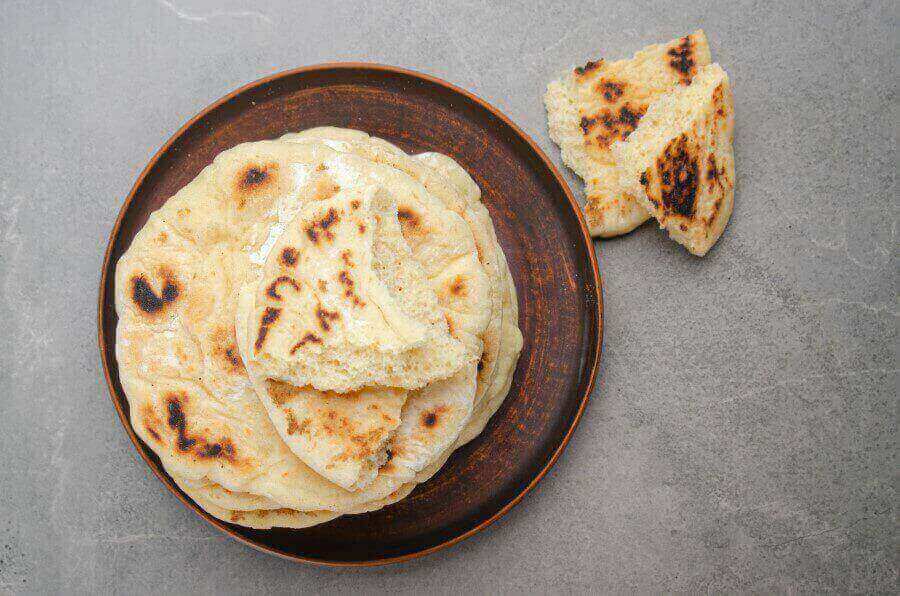
Khobez jebn is a fresh flatbread smeared with cheese. The bread is usually given a pocket-like shape and then baked in clay ovens. It has a fluffy texture that feels super soft on the palate.
These yeasted flatbreads are the pride of Bahrain bakers. You can get them fresh from any local bakery during the daytime.
Zenjabari (Fried Sweet Bread)
If you crave some sweet fried Bahraini food, zenjabari is the best option to start your day with. It is fried bread made with yeast, flour, and black sesame seeds.
An interesting point of this Bahrain food is that it has many variations. Some bakeries serve it sprinkled with powdered sugar, while others stuff it with cheese. Sometimes, a hot sauce is also mixed with the cheese to give it a spicy touch.
The only “problem” with zenjabari is that it is not very easily found throughout the country. There are only a few shops that make this bread throughout the Kingdom of Bahrain, so hop on the opportunity if you ever come across it. Qambar Sweetshop in Muharraq is one of the best places to try this bread.
Snacks And Street Food In Bahrain
Samboosa (Stuffed Puff Pastry)
The samboosa is Bahrain’s take on the popular South Asian samosa. It is a thinly-layered dough pastry filled with a variety of ingredients. The best part is the different choice of fillings that give it a new flavor every time you eat it.
In Bahrain, this snack is typically stuffed with boiled potatoes, greens, and spices. It might also include cheese, meat, or pizza-style filling. The stuffed dough is wrapped in an iconic triangular shape and fried until it gets a crunchy golden brown exterior.
You can get this Bahrain food from almost any cafe, street food stall, or chai karak shop. It is served throughout the day during every season. The locals usually enjoy this snack wrapped in fresh chapati bread topped with hot sauce for breakfast or a midday snack.
Kabeb Bahraini (Vegetarian Kebab)
Kabeb Bahraini is another scrumptious Bahraini food. Unlike your typical kebab, this is a purely vegetarian dish, perfect for all you veggie lovers out there.
This Bahrain food is made with a delicious mixture of chickpea flour, garam masala, eggs chopped tomatoes, and onions. The mixture is shaped into mini flat buns and then fried. The best part is the sweet and tangy tamarind sauce served with these delicious kebabs.
This flavorful Bahrain food is usually served as an appetizer. Similar to other fried Bahrain dishes, it is more popular during Ramadan for Iftar. But you can easily find it anytime throughout the year.
Falafel (Fried Fritters)
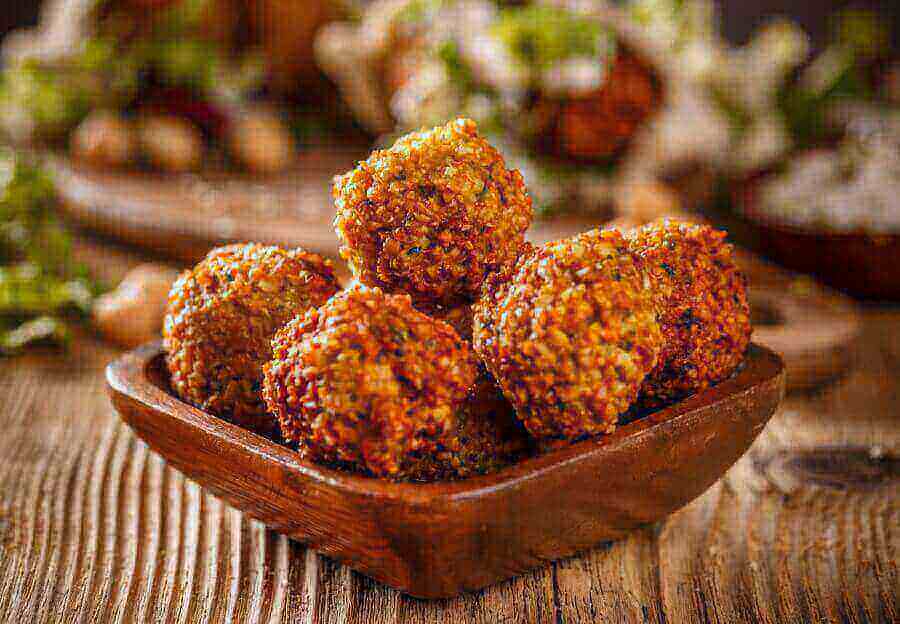
Falafels are crispy and flavorful deep-fried fritters. They are not only a traditional food in Bahrain but also adored in other parts of the Middle East.
Falafels are made of legumes, beans, spices, and herbs. Legumes, mostly fava-beans, are soaked in water, ground up, and mixed evenly with other ingredients to form a paste-like mixture. The paste is then given a round ball shape and fried until golden brown.
In Bahrain, falafels are often served with hummus or shawarma. If you want to taste the best falafels in Bahrain, you should visit Falafel Gaza in Gudaibiya. Their freshly made, crunchy falafels alone are worth a visit to this area.
Desserts And Sweet Bahrain Food
Luqaimat (Sweet Dough Dumplings)
Luqaimat is a bite-size sweet dumpling in Bahraini cuisine. They are super delicious and very light on the stomach. Because of their small size, you can eat a lot of luqaimat in a single serving.
These Bahrain sweets are made with flour, yeast, sugar, saffron and cardamom. The dough is rolled into small balls and fried in simmering oil. The exterior gets a crunchy texture from frying.
In Bahrain, these cute dough balls are served with sweet syrup. You might find some luqaimat stuffed with Nutella, lotus, or pistachio sauce. Although this Bahrain food is more common during Ramadan, you can get it anytime.
Balaleet (Sweet Vermicelli And Egg)
If you are craving sweet and savory food at the same time, this dish is made for you. Balaleet is a breakfast food in Bahrain which is also made during the celebration of Eid. It consists of a savory egg omelet and sweet vermicelli pasta.
The pasta is sweetened with sugar, saffron, rose water, and cardamom. The scrambled or fried egg is added to give a savory hint to the balaleet. This dish is dominated by the saffron flavor, which makes it more delectable.
You can eat this Bahrain food in almost any local restaurant or cafe. It is a perfect protein breakfast in Bahrain that keeps you full until you grab your next meal.
Khabees (Sweet Pudding)
Khabees have been a traditional Bahrain food for centuries. Locals usually start their day with this deliciously sweet breakfast. It is also a popular dessert for special occasions.
This classic Bahrain food is made from flour, honey, cardamom, saffron, and rose water. The flour is toasted until golden brown and then cooked in a sugary syrup. This porridge-like base is topped with chopped nuts and dried fruits to give it a final touch.
Some places in Bahrain garnish it with grafted coconut and raisins to enhance its taste. The variety of nuts gives a roasted flavor to this dish. As it is one of the oldest foods of Arab civilization, it could hint at what ancient Arabs liked to eat.
Ghuraiba (Butter Cookies)
Ghuraiba or ghraybeh are Lebanese shortbread cookies. They are celebration cookies in Bahrain and a popular confectionery around the Middle East. In Bahrain, people start their Eid holidays with these wonderful cookies.
Ghuraiba lacks the typical crunch of cookies and instead is quite delicate and soft. These Bahrain sweets have a slightly sweet flavor enhanced by the distinctive taste and fragrance of clarified butter.
Khanfaroosh (Cardamom And Saffron Cakes)
Khanfaroosh is a classic Bahrain food. It is a perfect cross between fried kebabs and dumplings. Although khanfaroosh is fried, it is healthier than most snacks in Bahraini cuisine.
The dough for khanfaroosh is made with sugar, flour, yeast, and eggs. When you take your first bite, you will taste a cross between a soft, fluffy, spongy cake and a doughnut infused with saffron and cardamom. It can also be stuffed with dates, muraba, or sugar to give an unforgettable flavor and aroma.
Khanfaroosh is usually served during family and friends gatherings and other celebratory occasions. If you want a perfect companion for your coffee or tea, these Bahrain sweets will not disappoint.
Zalabiyeh (Fried Doughnuts)
Zalabiyeh is a sweet Middle Eastern snack with an adorable shape and taste. It is usually given a round or funnel shape like a small ball or donut. This Bahrain food is enjoyed hot and usually served for parties.
Zalabiyeh is prepared by deep-frying a thick batter. The semi-liquid batter is put into a piping bag and poured in hot oil in circular shapes or round balls. After frying, it is dipped in rose-flavored sugary syrup for sweetness and a mild aroma.
This famous Bahrain food goes well with a variety of other foods. You can enjoy it with nuts, warm milk, and thick cream.
Beverages And Drinks With Bahrain Food
Qahwa (Arabic Coffee)
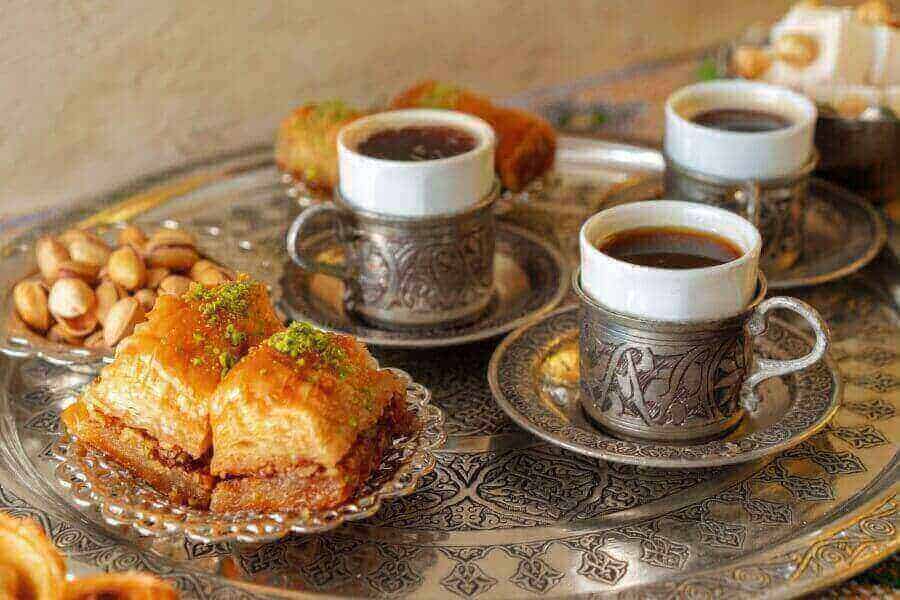
Qahwa is a traditional Arabic coffee that is most popular in Arab countries. Just like any Arab country, a typical day in Bahrain starts with a cup of hot qahwa in special cups called dallah. Dallah are small cups without handles, also known as piyala in the sub-continent.
Qahwa consists of roasted coffee beans or dried tea leaves. The coffee beans or tea leaves are boiled with water and then strained to make a steaming hot, earthy, and nutty-flavored drink. Adding cardamom and saffron gives a citrusy and herbal note to qahwa.
In Bahrain, qahwa holds cultural significance and is often offered with dates and other Bahrain dishes to guests and visitors. You will also see hosts serving qahwa in most social gatherings like weddings or Iftar dinners during Ramadan.
Laban (Buttermilk)
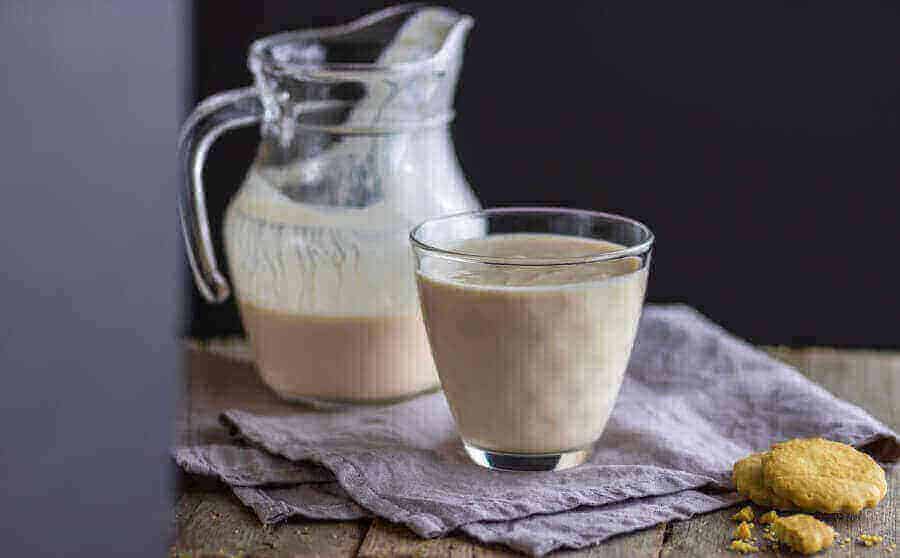
Laban is a healthy and delicious beverage in Bahraini cuisine. It has a sour and tangy flavor that pairs perfectly with many Bahrain dishes.
This drink is prepared from pure cow or goat milk. The milk goes through churning and other processes to make a nutritious and cholesterol-free buttermilk. It is also a protein-booster drink that helps you keep active and fresh throughout the day.
Locals usually enjoy laban with traditional Bahraini food and also use it to make various meals, soups, and sauces. It is a popular addition to street food in Bahrain, so you can easily get it from local sellers, beverage shops, and markets.
Sharbat Zafran (Saffron Juice)
Sharbat Zafran is an iconic Bahrain drink with a refreshing character. It is a Persian-inspired drink that has become the favorite beverage of Bahrainians in no time.
This juvenile drink is sweet with a dominant flavor of saffron. It is always served chilled and can be enjoyed with almost every Bahrain food. The locals believe that despite being a flavourful drink, it holds many health benefits and works great to relieve depression.
Arak (Traditional Alcoholic Beverage)
Bahrain’s food is not the only charm of this country. Its outstanding traditional beverages are also worth tasting. Arak, a pure wine-based spirit from Bahrain, is one such beverage.
This is a white translucent alcohol drink loved by millions throughout the world. The drink is made from a wonderful combination of aniseed and grapes. It delivers a powerful essence with a subtle aniseed flavor.
The flavourful beverage gives a calming effect after an adventurous trip. It’s an excellent evening drink to refresh you after visiting the famous landmarks in Bahrain.
Once, Bahrain was known to be the center of the Dilmun civilization. Its geographical position has brought many food cultures together to create the unique flavors Bahrain food is known for today.
The most prominent influences on Bahrain food are Persian, Sumerian, Babylonian, Portuguese, and Arab, ensuring that travelers will have no shortage of flavor combos to try!
Luxembourg is a small European country that often goes under the radar. But here’s an interesting fact about Luxembourg you probably don’t know: it is the second richest country in the world. The luxury nation is surrounded by countries like Germany, France, and Belgium, and it is mostly known for its Ardennes Forest and nature park, but there are many traditional foods in Luxembourg waiting to be explored.
What Is Special About Foods In Luxembourg?
Although many countries with great pedigree surround Luxembourg, the country has stayed true to its culinary heritage, and many foods in Luxembourg have not experienced heavy influences from neighboring countries.
However, there are plenty of restaurants in Luxembourg serving international dishes that you can also explore.
One thing about Luxembourg foods is that they are heavily meat-based. As such, vegetarians may feel left out when it comes to the traditional dishes, but there are still plenty of options available.
National Dish Of Luxembourg
Kuddelfleck
Kuddelfleck is considered the national food of Luxembourg. This traditional Luxembourg dish is made of fried tripe.
Tripe is essentially the lining of an animal’s stomach, and this particular dish is made from cow tripe. The tripe is covered in breadcrumbs before deep-frying to make it crispy. Kuddelfleck is golden-brown and usually served with potatoes in tomato sauce or red wine to create an artistic delicacy.
Meat And Fish-Based Foods In Luxembourg
Traipen
As opposed to the traditional pudding traipen, the version that originated in Luxembourg is more of a sausage. This Luxembourg food is made from pork combined with other meats, animal blood, and offal, or the parts of an animal generally considered unacceptable to eat because of religious beliefs or preferences.
With the addition of cabbage, carrots, and local Luxembourgish spices, traipen is more than your regular sausage. It is usually enjoyed paired with potatoes and bread, among other foods. You can also enjoy this Luxembourgish food as a standalone dish.
Judd Mat Gaardebounen
This is another meat-based food in Luxembourg cuisine. Judd mat gaardebounen consists of pork necks and beans that create a delicious meal. Laced with vegetables and spices, the pork is cooked to be so tender that it melts in your mouth.
As with other Luxembourg foods, judd mat gaardebounen is cooked with red wine in addition to herbs and vegetables. The pork is served with creamy sauce, beans, and potatoes.
To enjoy this dish at its best, try it during the early summer periods, as that’s when broad beans are fresh and in season.
Wainzoossiss Mat Moschterzooss
Wainzoossiss Mat Moschterzooss is a traditional Luxembourgish food that originated in the country. It is a sausage made from grilled pork cooked in mustard wine sauce.
Wainzoossiss is typically served with mashed potatoes and vegetables. It is a versatile food that can be molded to form meatballs and served with risotto. You can find this dish in restaurants all across the country.
Feierstengszalot
Feierstengszalot is a beef-based salad that is served cold. Eggs, onions, gherkins, and capers often accompany this traditional Luxembourgish food.
Typically, feierstengszalot comes with a vinaigrette or a creamy sauce, and it is one of the best meals you can savor to unwind after a long day. This dish is also a good way to convert leftover meat at dinner into another tasty meal.
Friture De La Moselle (Fried Fish)
Friture de la Moselle is a traditional food in Luxembourg. This dish is primarily prepared with a small variety of freshwater fish.
The fish is marinated in local spices and seasonings before soaking in lime juice. After a few minutes, the fish is battered and deep-fried in oil.
This crispy and delicious food is often artistically served with lemon wedges on the side. You can find Friture de la Moselle in any Luxembourg restaurant; enjoy it with red wine and fries.
Jambon d’Ardenne (Cured Ham)
Jambon d’Ardenne is a traditional Luxembourg food that originated in Belgium. This ham is a staple in Belgian cuisine and has also become one of the most popular foods in Luxembourg.
This cured ham is especially popular in the Wallonian region of the country. It is common during festivals and fairs, although you can get it all year round in many restaurants across the country.
The ham is preserved by salt-drying before allowing to rest for at least two weeks. It is then dipped into a brine to absorb flavors of traditional Luxembourgish spices (laurel, thyme, cloves, and juniper berries) to give the meal a unique taste.
Dumpling Dishes In Luxembourg Cuisine
Staerzelen (Buckwheat Dumplings)
Staerzelen are simple Luxembourg buckwheat dumplings. This dish is the true definition of simple as it’s made from flour, salt, water, and butter.
The dough is shaped into spoon-size pieces so they can be chewed easily. Typically, staerzelen are served warm and enjoyed with a glass of milk. Buckwheat grows well in the Osling region of Luxembourg, where this delicacy originated.
Letzeburger Kniddlelen (Luxembourg Dumplings)
This is another popular food in Luxembourg. The dough for these dumplings is boiled with creamy sauce and lardon (smoked bacon). It’s similar to staerzelen, except kniddlelen is made from flour, milk, eggs, and water.
The dough is cooked and allowed to rise to attain a puff-like appearance. You can enjoy these dumplings alone or with a bowl of soup, stew, or casserole. They are mostly paired with bacon, which is the best way to savor this delicious dish.
There are many variations across the country, but whichever you try, you are in for a treat. This food is often accompanied by a glass of wine and apple compote.
Soups And Stews In Luxembourg Food
Huesenziwwi (Jugged Hare)
Huesenziwwi is a traditional food in Luxembourgian cuisine consisting of pieces of hare meat cooked in a thick sauce. This unique sauce is made of hare or calf’s blood and red wine, garnished with onions, herbs, and veggies. The hare is usually marinated for at least 48 hours before cooking.
This flavorful dish originated in southern Luxembourg and has become a go-to stew option for many Luxembourgers. Locals enjoy it with cabbage, noodles, and wine. judd mat gaardebounen is mostly popular during the game season between October to December.
Bouneschlupp (Green Bean Soup)
This traditional Luxembourg food is a staple part of the country’s culinary culture. Made from green beans, onions, bacon, and potatoes, bouneschlupp doesn’t look tasty, but don’t be deceived; behind its appearance is a mouth-watering delicacy.
Due to its popularity, Bouneschlupp has become a staple dinner food in the country. There are several variations of recipes in different regions of the country depending on the availability of ingredients. However, the base ingredients (green beans, potatoes, bacon, and onions) typically remain the same.
Bouneschlupp originated in Luxembourg, but its influence has spread across Central Europe. That said, you can find different versions in many Central European countries. This soup is usually served with sausage and fresh parsley. It’s definitely a Luxembourgish food you should try.
Gromperenzopp (Luxembourg Potato Soup)
Gromperenzopp is a potato-based stew popular in Luxembourg’s northern and southern regions. This soup is made of potato, cream, and leeks garnished with spices like ginger and garlic. Black pepper is also often added to make it a bit spicy.
The egg is also a key ingredient of gromperenzopp, but the egg is used in an interesting way. The egg yolk is whisked until it creams and is added to the soup to cook together. This is another traditional dinner food in Luxembourg.
Snacks, Light Dishes, And Street Foods From Luxembourg
Gromperekichelcher (Potato Pancakes)
Gromperekichelcher is a popular street food in Luxembourg. This snack is loved nationwide and is commonplace during fairs and festivals in the country.
It wouldn’t be an overstatement to say gromperekichelcher is the national snack of Luxembourg, as the Luxembourgish National Day would not be complete without some of these delicious potato pancakes.
Gromperekichelcher is crispy and flavorful, with potato and flour as the base ingredients. It is garnished with smoky ham, garlic, onions, and parsley. This delish Luxembourg food is best enjoyed warm; it is often served with apple sauce dip and a glass of wine.
Verwurelter (Donuts)
Verwurelter is directly translated as “swirled or twisted”, and this traditional Luxembourgish food is synonymous with the country’s carnival season “Fuesent”. The tasty snack is common during the festival and can be found in stores and bakeries nationwide.
Made from flour, yeast, milk, sugar, and eggs, the dough is kneaded and formed into knots before deep-frying. You can enjoy verwurelter warm, topped with powdered sugar, and paired with a glass of juice or milk.
Bouchee A La Reine (Queen’s Morsel Or Filled Puff Pastry)
How often do you see a meal named after a royalty? Bouchée a la reine is a royal Luxembourg food named after the Queen of France. The fame of this food speaks for itself, as you can find it in almost every restaurant in the country.
This buttery puff pastry is stuffed with a mixture of minced chicken and mushrooms in a creamy sauce. There are many variations of this dish in the country. Some of the snacks use a traditional Luxembourg sauce, “veal.”
Grab a bite of bouchée a la reine and pair it with a salad and some fine wine. You can enjoy the mushroom and chicken version or explore other variations with different fillings.
Desserts, Pastries, And Sweet Foods Of Luxembourg
Quetschentaart (Plum Tart)
Quetschentaart is one of the most cherished desserts in Luxembourg. Made from plums, this tart is flavorful and tasteful. Although it can be considered a staple in Luxembourgish cuisine, it also tends to be seasonal.
This classic dish originated in the country and is a celebratory treat around late summer, in honor of the damson season. It’s mostly popular in bakeries during autumn as that is the season when the fruit is harvested.
The plums are stoned, put into sweet pastry dough, and then baked. After baking, questch (plums or damsons) are stylishly arranged on the tart to beautify it and then sprinkled with sugar. To make it moist and juicy, plum jam and a topping of cinnamon are added to the dessert.
There are different varieties of this food in Luxembourg (like quetschentaart crumble), and if you have a sweet tooth, you can sample all of them.
Appelklatzen (Apple Tart)
Appelklatzen is a soul-soothing Luxembourgish food to try on your trip to the country. Like many desserts in Luxembourg, appelklatzen is made from apples.
The apples are sliced and cooked with sugar, nutmeg, and cinnamon. Afterward, the apples are wrapped in a pastry and baked to assume a golden-brown color.
For the best experience, pair your apple tart with syrup with ice cream. One thing that makes Luxembourg fruit desserts sweeter is that most of the fruits are locally sourced from orchards in the southern region of Luxembourg.
Appelkuch (Dainty Apple Cake)
Luxembourg is famous for its fruit-based desserts, and the locals love apples most of all. Appelkuch is a traditional Luxembourgian dessert mostly associated with the Christmas season.
This apple delight is made from buttery dough and custard mixed to perfection. The mix is oven-baked to create a moist, fluffy, and delicious cake. It is topped with a touch of cinnamon and powdered sugar for the perfect visual and taste.
Waffelcher (Waffle Cones)
This is a typical Sunday treat in Luxembourg. Waffelcher, as the name sounds, is a kind of waffle. It invokes a certain nostalgia with many of the locals.
Waffelcher is crispy, crunchy, and wafer-thin, made with a special waffle iron different from the traditional one popular in Germany and Belgium. They are then wrapped around a wooden spoon to give them a cone shape.
You can find and enjoy this Luxembourg food in any region of the country. It is that classic!
Mummentaart
Mummentaart is a traditional, luxurious cinnamon-filled apple pie loved by locals for its flavor and tenderness. This dessert is made from a dough of flour, butter, salt, water, and quark. It has a filling of sliced sour apples sprinkled with sugar, raisins, and cinnamon.
Adults might associate this dessert with their childhood, but it has become a very rare food to find in bakeries across the country. Keep an eye out for it when you travel around, and hop on the opportunity if you find it.
Luxembourg foods are simple and tend to favor meat dishes. But regardless of your dietary preference, there is always something special to try. From hearty stews to apple pies, to dumplings and cakes, make sure you don’t forget to sample the local flavors as you tour the various landmarks in Luxembourg.
Oman is home to adobe fortresses, wadis 2,000 miles of fertile coastline, and much more. Despite being a small coastal country, its access to the ocean contributes to an abundance of resources, from trade routes to the incredible Oman foods on offer.
Although Oman is often known for its grand landmarks like the Sultan Qaboos Grand Mosque, Nizwa Fort, and Mutrah Souq, they are not the only things worth your attention. If you ask us, the traditional Omani food you can find in Muscat, Salalah, Nizwa, and other cities throughout the country are highlights you absolutely don’t want to miss!
What Is Special About Oman Food?
Oman food is all about blends of marinades, spices, and herbs. The food from Oman is usually influenced by Persian, Indian, North African, and Mediterranean cuisines. Lamb, chicken, camel, rice, bread, dates, tea, and seafood are the staples of this country’s cuisine.
The long coastline on the Arabian Sea provides Oman with all kinds of seafood. Where sharks are the biggest delicacy of Omani food, kingfish is the most consumed by the locals. That said, the natives also love their seafood porridge and soups.
While Oman foods are influenced by Middle Eastern cuisine, there is a slight difference in the use of spices and herbs. Traditional Omani dishes are usually seasoned with ginger, saffron, and nutmeg, and are less spicy than other Arab foods.
Most Famous Oman Food
Shuwa (Slow-Cooked Meat)
Due to its popularity among locals, Shuwa is considered the national food of Oman.
This traditional dish usually consists of lamb or goat meat, but you can find some variations with camel or beef. No matter which meat you choose, it is cooked with the same special recipe.
The meat is marinated, wrapped in banana leaves, and then placed in a sack made of tree leaves. The bag is tossed in an underground pit where the meat is cooked for 24 hours. The spicy, smoky, roasted meat is served on a white rice bed with tomato sauce, just like mandi.
As this Omani food requires a lot of time for preparation, it is only cooked for Eid. It is usually prepared on the first day of Eid and consumed on the second day with family and guests.
Popular Rice Dishes In Omani Food
Kabuli Rice (Chicken Rice)
Kabuli is a famous food of Oman, with many adaptations in different regions. You might know this dish as Afghani pulao which is popular in Afghanistan cuisine. It is one of the national foods of Oman and captures the hearts of both locals and tourists with its incredible taste.
Kabuli is similar to biryani, but it has some different ingredients and flavors. This Omani food consists of aromatic basmati rice, fresh meat, local ground spices, fried onions, and fresh herbs. Before serving, kabuli rice is garnished with sultanas, carrots, dates, chickpeas, and almonds, which give it a splendid appearance.
Just like shuwa, this traditional Oman food is consumed mostly during special occasions like weddings or Eid. It is usually served on a huge plate and meant to be shared with guests.
Chicken Biryani (Spicy Chicken Rice)
Biryani is known worldwide for its flavorful rice and tender pieces of meat. Aromatic basmati rice with fresh herbs and saffron gives it a sweet floral aroma. Traditional Omani chicken biryani is a localized take on Persian chicken biryani.
Just like any biryani, the main ingredients are basmati rice, chicken legs or breasts, spices, and herbs. While the use of spices and herbs is typical of Oman food, this one is not heavily spiced. Instead, it is served with cucumber, yogurt sauce, and slices of lemon and onions.
This traditional food in Oman is commonly eaten for lunch and dinner. It is available in many restaurants and local eateries throughout the country, so you won’t have trouble finding it. That said, you want to try the local haunts for the best biryanis on offer.
Majboos (Spiced Rice And Herb Chicken)
Majboos, also known as kabsa, is another rice and meat dish that originated in Yemen. It is incredibly popular and enjoyed throughout the Gulf States. Majboos means “to be engaged” so it is not surprising that this dish is usually served at weddings and engagements.
This divine dish is also inspired by traditional Indian and Persian biryanis. It consists of saffron and cardamom rice with spicy white or red meat.
In Oman, kabsa or majboos can be cooked with chicken, lamb, camel, fish, shrimp, truffles, or duck meat. The cooked meat is placed on the rice and served on a large plate. This food from Oman comes with so many options, making it a local favorite.
Majboos is meant to be shared with guests and eaten with bare hands. This tradition of eating together showcases the importance of social values for the Omani people.
Muthbe (Stone-Cooked Meat With Rice)
Muthbe is a meat dish that reflects the beautiful and unusual heritage of Oman cuisine. The word “Muthbe” is actually a technique that includes cooking meat on hot stones, and that is how this Oman food, rather uncreatively, gets its name. Nevertheless, the unique cooking method makes this a must-try when visiting the country.
For cooking, clean and flat river stones are selected and placed over a large fire. Once they get to the right temperature, the marinated meat is placed on them. The meat cooked with this ancient technique gets ready within a few minutes.
Omani people mostly use chicken or camel for muthbe. The meat is crispier on the outside and moist on the inside. It is served hot with a bowl of spicy rice, salad, and some sauces.
Typical Snacks And Street Food In Oman
Shawarma (Meat Wrap)
Originating in Turkey, shawarma is the most beloved street food in many Middle Eastern countries. It not only satisfies your hunger but also has the perfect flavor of sliced meat with soft pita bread.
In Oman, shawarma includes marinated lamb or chicken. The meat is roasted on a vertical skewer, and thin cooked layers are cut and spread on the bread. It is sometimes served with pickled vegetables, different sauces, or potato fries.
This Oman food is an easy snack and dinner to just grab and enjoy. Many street food stalls in Oman serve authentic shawarma. It’s one of those dishes that you can hardly go wrong with.
Mishkak (Skewered Grilled Meat)
Mishkak is the Omani version of barbecue. This skewered meat is a favorite street food for all ages. It consists of marinated chicken, beef, or mutton, which is skewered and grilled over hot coal.
The bite-sized chunks of meat are flavored with a combination of various aromatic spices and fresh herbs. The secret of this succulent Oman food is the long cooking time. Knowing the right time to remove skewers from the grill requires experience.
This Oman food is often enjoyed with chili or tamarind sauce and fresh salad. You should also try the mishkak sandwich, where the grilled meat is placed inside warm bread.
Mushaltat (Stuffed Puff Pastry)
A piping hot puff pastry, mushaltat is a delicacy in Oman cuisine. The soft bread is made of thin patties of flour dough which are stuffed with delicious filling and baked to perfection. The filling can be sweet or savory to suit your preferences.
These stuffed pastries have a layered and flaky texture, where the sweetness of bread pairs perfectly with a spicy filling. The sweet version of mushaltat has cream or cheese filling and is drizzled with sugar syrup or honey.
This traditional food in Oman is often prepared for weddings and offered as a gift to visitors and friends. You can buy it from popular bakeries and restaurants and enjoy it with your evening tea.
Chicken And Chips Samoon (Chicken And Chips Sandwich)
The Omani chicken and chips samoon is an inspiration to homemade sandwiches. As many people like to add crunchy potato chips to their homemade sandwiches, this might be a game changer for them.
This Oman food is prepared with flattened bread. Yogurt is spread evenly on the bread and topped with shredded shawarma chicken and famous Chips Oman. The bread is then rolled and tossed in a sandwich toaster where it is toasted to perfection.
Chips Oman are spicy and sour chips that give a tangy and crispy touch to this sandwich. While this traditional Omani food may not be strong enough to compete with fancy burgers or sandwiches, it is a great way to satisfy your evening cravings.
Samosa (Stuffed Puff Pastry)
Samosas are triangular-shaped little pockets stuffed with the deliciousness of spicy and savory veggies or meat. It is a common snack and street food that rules the Arab world. The versatility of samosas keeps them on the list of the top snacks in the Middle East.
In Oman cuisine, a typical samosa consists of small crunchy pastry pockets filled with seasoned lentils or shredded vegetables. It is among the rare vegetarian options in traditional food in Oman. The flaky outer covering combined with buttery-soft potatoes gives a burst of different flavors and textures.
Samosas are best enjoyed with Omani milk tea or coffee. You can easily find street food stalls selling these little triangular snacks with ketchup.
Shakshouka (Poached Eggs)
Originating in Ottoman North Africa, shakshouka is a popular food in Oman. The word “shakshouka” means a mixture, and this is a Maghrebi dish of poached eggs with a rich tomato sauce.
In Oman cuisine, the sauce is made of tomatoes, olive oil, peppers, onion, garlic, and local spices. This sauce is used as a base with eggs poached on top. There is no better way to enjoy the dish than dipping some freshly baked bread and scooping up a generous serving of the tasty sauce.
Shakshouka is a simple and healthy Oman food, usually eaten for breakfast or lunch. The dish is supposed to be moderately spicy, but you can always add more or less cayenne pepper as per your taste.
Traditional Seafood Dishes In Oman Food
Dry Shark Salad
When you are in Oman, you must try their shark dishes. While this is a rather unique food in many parts of the world, eating sharks in Oman is almost as common as eating bread. If you have never tried shark before, you should start with their dry shark salad. The dried shark is first rehydrated by boiling in salted water. The shark pieces are chopped and tossed with onions and sprinkled with fresh lemon juice.
This Oman food is always served cold and has a salty and sour flavor. Many restaurants in the coastal cities of Oman serve this refreshing and healthy salad.
Shark Stew With Rice
Shark stew with rice is one of the most tempting Omani foods. It is a regional specialty of Muskat.
Shark stew is prepared by slicing shark meat into cubes and seasoning with garlic paste, chili powder, and Omani spices. A sauce made with yogurt, tomato sauce, and lemon juice is also mixed with the shark cubes. The mixture is sautée until it gets the right color and consistency.
Once it is ready, cooked rice is tossed on the mixture and the pot is flipped on a flat dish. The final sight is of a beautiful meal of rice topped with sautéed shark meat. You can use your hands to dig into this unique combination of rice and shark.
Mashuai (Grilled Fish)
Oman is blessed with a long coastline and generous seafood from the Arabian Sea. Fish farming is so common in this state that fish has become one of the most popular Oman foods. Tourists from all around the world visit here to taste the delicious seafood.
Mashuai is among the favorite white meat dishes in this region. It consists of kingfish, which is abundant in the coastal waters of Oman. Like any grilled fish, it is marinated with oil, spices, and herbs, and roasted as a whole fish.
The smoking hot grilled fish showcases the excellence of foods from Oman. It is served piping hot over a bed of lemon-flavored rice with a savory lemon sauce.
Porridge And Soups In Oman Foods
Harees (Meat Porridge)
Harees is an ancient food dating back to the Armenian ages and documented in manuscripts dating all the way back to the tenth century. Talk about history and legends when it comes to food.
Throughout time, the diverse flavors of harees also spread in the Middle East and India. Today, it is a staple among Oman foods and is an especially common dish during Ramadan.
Many countries have created their own unique recipes and given local names to harees. In Oman, it is prepared with coarse ground wheat, meat, sheep tail fat, butter, and spices. All the ingredients are mixed and soaked in water to be left overnight.
Harees is like a meat porridge, served with chopped onions. You can find this traditional Oman food everywhere in the country.
Madrouba (Spicy Rice Porridge)
Interestingly, the word “madrouba” means beaten rice. The dish got its name from the beating technique with which this Oman food is prepared.
Madrouba portrays the originality of Omani cuisine. It is a spicy porridge with a creamy consistency that melts in your mouth like hummus. It includes cooked rice, chicken, and spices, which are mashed together for an extended period, giving it an extraordinary texture.
The final result is a golden porridge with aromatic and smoky spices and the zest of lime. Everything in madrouba blends so perfectly that it is very hard to guess the individual ingredients. It is always served hot instantly when it comes off the stove and is preferred with fresh lime.
Omani Paplou Soup (Fish Soup)
Omani paplou soup is a fish soup often enjoyed as a starter or an appetizer. Many restaurants in the coastal cities of Oman serve this incredible soup.
Paplou usually comes with tuna as the main ingredient, but sometimes tuna roe or shellfish can also be used. The key ingredient that gives the unique flavor to soup is dried limes, also used in many other Oman foods.
The soup has a tangy citrus flavor that balances its warmth. This traditional Omani food is garnished with lime wedges and cilantro; it is best paired with basmati rice for a fulfilling meal.
Tharid (Bread Soup)
Tharid is a bread soup that originated in several Arab countries. This soup holds religious value for the Muslims of Oman. It was the favorite dish of the Prophet Muhammad (P.B.U.H), so specifically consumed during Ramadan.
It is a nutritious Oman food, prepared with broth and unleavened or crumbled flatbread. The bread is stacked and moistened with the meat broth or stew. Another variation involves dipping the bread in the soup and eating it with meat.
Common Bread In Traditional Omani Food
Khubz Ragag (Omani Bread)
Middle Easterners love bread, so you will find many kinds of bread in Oman. The most popular and traditional Omani bread, locally known as hubz ragag, is a common accomplice to many Oman foods.
The base of this typical Omani food is water, flour, and salt. All the ingredients are kneaded into a thin and sticky batter. The batter is spread evenly over a hot metal pan or a skillet in a circular motion to create thin crepes.
The batter of this plain bread is so thin that it cooks within a few seconds. In some restaurants in Oman, khubz ragag also contains cheese, eggs, and mayonnaise. The bread is topped with eggs and cheese and folded to create a thin sandwich.
Abud (Bedouin Bread)
Abud is a traditional Bedouin bread with a unique baking technique. It is a simple unleavened bread that is hard on the outside and has a doughy texture on the inside.
Like any traditional bread, abud also includes flour, water, and salt. The flour is kneaded and flattened to give a disk-like shape to the bread.
The fun part is its cooking, where a hole is created in the ground and filled with burning coals. The bread is cooked directly on the hot coals and ashes, which gives it a bitter smoky flavor. It has a thick, chewy, and slightly crunchy texture.
Abud is usually served with meat stews for lunch or dinner. This traditional Oman food also makes a great mid-afternoon snack with hot coffee or tea.
Beverages And Drinks To Go With Omani Foods
Laban (Fermented Milk)
“Laban” means sour milk in Arabic and is very popular in all Gulf countries. It is a refreshing and cooling dairy beverage used for better digestion. Laban is also a typical drink in Oman and is served almost everywhere.
Omani Laban is prepared with buttermilk and yogurt. It is very light and has a sour and salty flavor to it. However, some may find it to be a rather acquired taste.
However, we find that this is one of those foods/beverages whereby the more you consume it, the more you will suddenly start to enjoy it. This yogurt drink is also commonly seasoned with mint, cumin, pistachios, or cardamom.
You can enjoy laban with any Oman food for breakfast, lunch, or dinner. Some people also like to cool off the summer heat with this delicious drink.
Omani Kahwa (Omani Coffee)
Whether you are a tourist or resident, you cannot experience the real taste of Oman food until you try kahwa. Kahwa is the essence of Omani hospitality and a part of every household in this country. It reflects the warm and welcoming traditional values of Oman.
Kahwa is an aromatic coffee prepared with saffron, sugar, and cardamom. This strong and sweet beverage is consumed regularly in Oman. It is part of the culture to offer small cups of kahwa with dates or halwa to visitors.
Karak Chai (Strong Milk Tea)
Omani milk tea, locally known as karak or karak chai, is an unofficial national drink of Oman. Many people of all ages start their day with strong milk tea.
Other than dried black tea leaves and evaporated milk, karak chai also includes ginger, cinnamon, cardamom, and clove. The sweetened condensed milk gives it a creamy richness.
This beverage usually has a stronger caramelized flavor than regular milk tea. You can enjoy it with most traditional Omani foods or snacks.
Oman Sweets And Desserts
Halwa (Omani Sweet Pudding)
When discussing the most popular Oman sweets, halwa has to rank high on the list. Halwa, which means “sweet” in Arabic, carries the crown as the national Omani dessert. It is a gelatinous and somewhat sticky pudding, made of eggs, dates, almonds, or semolina.
The base of this traditional pudding contains water, sugar, ghee, butter, and corn flour. The addition of rose water, saffron, and cardamom gives it a sweet aroma. The process of slow-cooking this Oman food takes a long time, but it can last for months without losing any flavor.
Halwa is very common at weddings, birthdays, and religious festivities. You will also love this Omani sweet with traditional kahwa (coffee).
Halawet Ahmad (Omani Noodle Dessert)
Halawet ahmad is a traditional Omani dessert that will captivate you. The ingredients of this dessert are simple, including condensed milk, sugar, roasted vermicelli, butter, and coconut. The combination of all these products results in remarkably sweet noodle balls.
All the ingredients are pressed by hand to form a nest-like or dome-like shape. They sometimes come in various colors and are sprinkled with pistachios and almonds.
Maho Halwa (Omani Toffee)
Maho halwa is one of the best Omani desserts. It is a delicacy of many regions of the Middle East.
The mouthwatering maho halwa look like brownies but they have a much lighter caramel color. This aromatic Omani sweet has a dominant flavor of saffron, cardamom, sweetened milk, and butter.
As an Omani tradition, Mahu halwa is served with Omani kahwa and is considered the hospitality symbol of the country.
Oman is a coastal country that offers a lot of experiences and traditional foods for travelers to try. The most notable facts about Oman are its surplus of seafood, dates, and meat due to its geographical position.
There is something about the mouthwatering Omani dishes that makes them impossible to resist. From rice dishes to seafood and desserts to street food, Oman cuisine has a lot to offer.
Located on the east coast of Australia, Sydney is the most populous city in the country. It’s also the first city in Australia that we visited, and that is probably the case for many travelers. With its stunning harbor, multicultural diversity, and surfing culture, Sydney is famous for many more things that make it such an exciting destination.
What Is Sydney Famous For?
Sydney is famous for its impressive skyline, pristine beaches, and Aboriginal heritage. This historically rich city is known for housing some of the most iconic landmarks in Australia like the Sydney Harbour Bridge and the Sydney Opera House.
Also known as the “Emerald City”, Sydney is a melting pot of cultures, a true testament to global unity. And for all you mermaids out there, the surfing here is top-notch. It’s not just a city, it’s an experience!
History, Culture, And Traditions Sydney Is Famous For
Dynamic and Multicultural Diversity
Sydney boasts an array of neighborhoods of different ethnicities, each with its own unique characteristics. These neighborhoods are a testament to Sydney’s multicultural diversity, which was facilitated by the immigration of people from European countries, Asia, Turkey, and Lebanon, among others, after the Second World War.
This assortment and unique blend of cultures have greatly influenced different parts of Sydney, including its culinary scene, language, and festivals.
Not only will you be able to savor different cuisines from various cultures and regions, but you will also have the opportunity to experience and partake in cultural festivals like the Lunar New Year Festival, Diwali Festival, Greek Festival, and others.
The linguistic diversity is also prominent, so if you pay attention (aka eavesdrop on others), you can hear a plethora of languages spoken besides English.
Stunning Beaches
Sydney is famous for housing some of the most stunning beaches in the world. These beaches are widely visited as they also offer several water sports and recreational activities.
There is a reason why Australians often have the reputation of being good swimmers and surfers (although our Australian friends often say that it is mainly only true for people from certain regions that have access to the coast).
From beaches with golden coastlines to beaches with sparkling turquoise waters, Sydney has a wide variety of beaches; fortunately, there are various tour guides you can find to explore these beaches.
Top on our list of must-visit beaches in Sydney is Bondi Beach, famous for its golden sands and consistent waves. Another popular beach is Manly Beach, which also features a pedestrian path dotted with shops, restaurants, and bars where you can shop or relax.
Apart from the water activities that take place on these beaches, you can also have picnics and BBQs, go on whale and dolphin watching tours, especially popular during migration season, attend beach parties, and much more.
Surfing Culture
A sport that is famous in Australia is surfing; and being the biggest city in the country, surfing culture in Sydney is certainly noteworthy. An undisputed fact about Sydney is its tag as one of the top surfing destinations in the world.
This is mainly due to the incredibly beautiful beaches like Manly Beach and Bondi Beach. You will find consistent waves suitable for surfers of all levels, from beginners to advanced riders.
The surf culture is also attributed to the presence of numerous surf schools, instructors, and skilled surfboard craftsmen. These schools also offer equipment rentals if you ever find yourself visiting without your surfboard, but itching to ride some waves.
Aboriginal Heritage
Sydney is known for its Aboriginal Heritage, which is an integral part of its cultural identity. This heritage can be traced to the Eora Nations, which consisted of different Aboriginal clans and were rumored to be the first occupants of what is now known as Sydney.
Sydney’s Aboriginal heritage is visible in areas and places like Ku-ring-gai Chase National Park, The Rocks, and the Royal National Park, which are adorned with ancient rock engravings and art created by Aboriginal peoples.
There are also Aboriginal cultural centers and museums, such as the Australian Museum and the Australian Museum of Contemporary Art, which showcase Aboriginal art, history, and artifacts. These institutions provide insights into the cultural heritage of Australia’s First Nations peoples.
Thriving Art Scene
Sydney is famous for its thriving art scene, boasting several art genres, including theater, performing arts, and music.
The city’s array of cultural institutions and museums like the Art Gallery of New South Wales, the Museum of Contemporary Art Australia, and the Australian Museum support its booming visual art scene. You can enjoy a plethora of visual arts, including paintings, sculptures, contemporary art, and Indigenous art.
Aside from this, Sydney’s streetscape also stands out with unique art features, encompassing colorful and thought-provoking street art.
If you’re an art lover or enthusiast, it’s best to plan your visits to coincide with when the city hosts some of its famous art festivals like Vivid Sydney, a world-famous festival of light, music, and ideas that transforms the city with stunning light installations and performances.
Harbor City
Sydney is often called the Harbor City because it has one of the most beautiful harbors in the world. Deservedly, this area is one of the most famous landmarks in Australia.
Another exciting feature about Sydney’s Harbor is how it is surrounded by some of the most distinctive attractions in Sydney like the Sydney Opera House and the Sydney Harbour Bridge.
Additionally, the harbor also boasts waterfront areas, such as Circular Quay, Darling Harbour, and Barangaroo, that offer a mix of dining, entertainment, shopping, and cultural experiences with stunning harbor views. Tours offering these experiences are also available for those who may want a more immersive and stress-free experience.
Districts And Areas Sydney Is Known For
The Rocks
Located at the southern end of the Sydney Harbour Bridge, The Rocks is one of the oldest neighborhoods in Sydney. It was the first site of settlement for the Europeans and thus is often regarded as the birthplace of Modern Sydney.
Its historical relevance can still be deduced from the colonial-era buildings and cobblestone streets that adorn its streets.
The district is surrounded by some of the prominent Sydney landmarks like the Sydney Opera House, the Museum of Contemporary Art (MCA), and The Susannah Place Museum, making it a must-visit destination in the city.
Aside from its cultural and historical features, the neighborhood is also known for its vibrant markets where you can shop for unique souvenirs and its vast dining options ranging from Australian foods to international dishes.
Short for Sydney Central Business District, this is a bustling neighborhood that offers a wide range of attractions and experiences for tourists.
The area is home to some of Australia’s must-see attractions, including the world-famous Sydney Opera House and the majestic Sydney Harbour Bridge. These architectural marvels provide perfect photo opportunities, and you simply cannot do without visiting them.
Furthermore, the CBD is situated right on the shores of Sydney Harbour and offers breathtaking views of the sparkling waters, sailing boats, and the Opera House. You can take leisurely strolls along Circular Quay or enjoy a thrilling jetboat ride for a unique perspective.
Food lovers and shoppers will also have a great time exploring the diverse culinary and shopping scene that has something for every palate.
Surry Hills
While Sydney CBD and The Rocks are often regarded as Sydney’s most famous historical neighborhoods, Surry Hills is known for being a trendy and lively district.
The area has a Bohemian vibe inspired by its tree-lined streets, street art, and a thriving café culture where you’ll find an abundance of cozy and hip coffee shops serving some of the best brews in Sydney.
The neighborhood is also a foodie’s and shopaholic’s paradise with a diverse range of restaurants and boutiques. Explore cuisines from around the world, from modern Australian to Thai, and Italian. Amongst its array of boutiques, you can shop for one-of-a-kind fashion, homewares, and artworks.
The area is often regarded as the creative and architectural hub of Sydney and is home to many artists, designers, and creatives as well as historic terraces and buildings.
Parramatta
Another district Sydney is known for is Parramatta. Parramatta is a diverse and dynamic destination that is not only culturally rich but also historically significant, as it was the second site of settlement for the Europeans.
The suburb is home to several historic sites and buildings, including Old Government House, a UNESCO World Heritage-listed site, and Elizabeth Farm, the oldest surviving European building in Australia.
Due to its location on the banks of the picturesque Parramatta River, Parramatta is also known for its riverside settings and offers scenic walking and cycling paths, as well as opportunities for picnics and water-based activities.
Landmarks And Architecture Sydney Is Known For
Blue Mountains
Even though the Blue Mountains are not exactly located in Sydney, they are still one of the must-visit destinations we advise tourists in Sydney to visit.
Fortunately, the mountains are a short drive from Sydney, and there are plenty of popular day tours offering different services you can join. It’s one of the most convenient ways to explore these natural wonders.
The mountains are a natural wonderland featuring the famous Three Sisters rock formation, which legends claim were three sisters that turned into pillars. The stunning landscapes, rugged cliffs, deep valleys, and the iconic blue haze that gave them their name.
Blue Mountains can be accessed by a scenic railway which is also one of the steepest in the world. The railway descends into the Jamison Valley, offering spectacular views of the surrounding landscape.
Additionally, the mountains are UNESCO World Heritage sites and are home to exceptional wildlife species found nowhere else on the planet.
Whether you’re an outdoor enthusiast, a history buff, or simply seeking tranquillity in nature, the Blue Mountains have you covered!
The Sydney Harbour Bridge is another must-visit landmark in Sydney. This iconic architectural masterpiece has an arched structure that dominates the Sydney skyline and adds to the city’s allure. There are several activities available for visitors.
You can start your exploration by taking a stroll across the bridge, where you’ll be treated to panoramic vistas of the Opera House, the harbor, and the city’s skyline.
You can also take your exploration a step further by climbing the heights of the bridge with BridgeClimb Sydney. This guided experience allows you to climb the arches and witness Sydney from a unique vantage point.
If you’d prefer a more leisurely exploration, you can go on a harbor cruise; most will provide you with a three-course meal. Experience the pure magic of the harbor while indulging in finger foods or sipping a cold glass of wine.
Sydney Opera House is often regarded as one of the most impressive architectural pieces of the modern world. The house boasts iconic sail-like shells that visitors have said seem to float on the waters of Sydney Harbour, creating a breathtaking visual spectacle that’s simply awe-inspiring.
The Opera House hosts a wide range of performances, including opera, ballet, symphony concerts, theater productions, and more. Attending a show here is not just entertainment; it’s a journey into the heart of the performing arts that you don’t want to miss.
To really appreciate the Opera House’s history and design, we recommend taking a guided tour where you’ll be able to hear fascinating stories and insights about this cultural icon.
Bondi Beach
Bondi Beach is not only one of the most famous beaches in Australia but also a key landmark Sydney is famous for. With its sprawling stretch of golden sand and turquoise waters, it isn’t hard to see why.
The soft sand of the beach invites you to lay out your beach towel, soak up the sun, and relax in style. You can also engage in different water-based activities such as surfing, snorkeling, and more.
After a fun-filled day at the beach, you can visit any of the trendy cafes and restaurants lining the beach. Enjoy some delicious cuisine while enjoying views of the beach and ocean. It is the perfect spot for a beachside brunch or sunset cocktails.
Sports Sydney Is Known For
Surfing
The beaches in Sydney have some unique features that make them ideal for surfing, hence the reason this sport is famous in Sydney. The beaches have stunning coastlines and diverse and friendly wave conditions.
The sport is widely popular in Sydney, and there are worldwide competitions that attract top surfers from all over the world.
Festivals that celebrate the sport’s culture and feature art, music, and film are also held in Sydney annually. These are great opportunities for enthusiasts to learn more about the sport and mingle with the community.
Rugby
Another sport that is famous in Sydney is Rugby. Not only does the city host Australia’s biggest sports league, the National Rugby League, but it also boasts prominent club teams including Randwick, Sydney University, and Eastern Suburbs.
Rugby in Sydney goes as far back as 2003 when the Stadium Australia served as one of the venues for the 2003 Rugby World Cup.
Aside from the male rugby teams, the growth of the female rugby team in Sydney is also remarkable and has seen professional women’s teams like the Sydney Roosters playing in the NRLW competition.
Sydney’s rugby legacy is characterized by passionate fans, competitive rivalries, and a strong representation of players in both national and international competitions, making it a must-visit city for all rugby fans.
Famous People From Sydney
Hugh Jackman
Hugh Jackman, popularly known for his role as Wolverine in the X-men series, can trace his acting career back to Sydney where reports have it that he honed his craft at the Western Australian Academy of Performing Arts (WAAPA) in Perth, Western Australia. Later, he returned to Sydney to make his professional acting debut in various theater productions.
Hugh Jackman has often demonstrated his love for his Sydney heritage by performing various times at the Sydney Opera House and supporting various causes and charities in Sydney.
The recipient of multiple awards, Hugh is a beloved figure in both Sydney and the world. He continues to be a proud ambassador for the city and an inspiration to aspiring artists from the region.
Exploring Other Things Sydney Is Known For
From its stunning landmarks to its captivating sports, these are simply a taste of what Sydney has to offer. As you explore its sun-soaked beaches and scale its iconic bridge, remember to take a moment to appreciate the city’s vibrant spirit and multicultural roots.
There are of course plenty more things Sydney is famous for, such as the Taronga Zoo and Royal Botanic Garden just waiting to impress curious and excited travelers like us when we visit the Harbour City.
From its magnificent cityscapes to its Renaissance art, beautiful gardens and parks, historic city center, and culinary delights, Florence is every traveler’s dream. As you make your way through the city, you will fall in love with the romantic ambiance and beauty all around you. Learn some unique facts about Florence before your Italian vacation so you can engross yourself in everything this city has to offer.
Historical Facts About Florence
Florence is deeply rooted in Italian history, leading to its rich heritage and culture. Here are some interesting facts about Florence that will help you understand the roots of this incredible city.
It’s Where The Italian Renaissance Was Born
Between the 14th and 17th centuries, Italy was going through a Renaissance period that originated in Florence. It marked a rebirth of the country’s political, cultural, artistic, and economic landscape.
The Renaissance began here and soon made its way to other cities and, eventually, all of Europe.
The Only Bridge To Survive In Florence During World War II Was Ponte Vecchio
The German Army had occupied the city during the war, but by the end of it, they were forced out by the Allies. During this time, they destroyed all the other bridges in Florence. However, locals claim that Hitler loved Ponte Vecchio and ordered the German Army not to destroy it.
The Black Death Plague Killed Half Of The People In The City
The 14th century was a harsh time for Italy. The Black Death caused many people to flee or die. It’s one of the most brutal historical facts about Florence, but between 60 and 80 people died each day.
Cultural Facts About Florence
From classical music to cultural events, Florence has a rich atmosphere. There are UNESCO sites, theatres, opera, and other great options to check out. Of course, don’t forget to try the gelato and explore the city’s cuisine through the exciting Florence food tours available.
Here are some fun Florence facts to know before visiting.
A Top UNESCO Site Is The Historic Center Of Florence
UNESCO named this a World Heritage Site in 1982. As you walk through the historic center, you will find exceptional historical treasures that make the city what it is.
Spend a day here, get your camera ready, and take a deep dive into the history of the city.
Gelato Was Invented In Florence
There’s still a lot of confusion regarding the creation of gelato, but locals swear it originates here.
According to their stories, it was a native, Bernardo Buontalenti, who served gelato to the Medici family. Since then, other cooks have spread this recipe to the rest of Italy.
The Wine Tours Are An Important Experience
Your trip is incomplete without booking one of the Florence wine tours. Visit the fabulous vineyards and try out some of the top-quality grapes and wines. There are many tours happening daily, so you’ll be able to find one that suits your itinerary best.
Simple Facts About Florence For Kids
If you plan on going to Florence with kids, here are some facts to amuse them and boost their knowledge:
A Local Invented Pinocchio
Your kids will probably be surprised to learn that Disney didn’t invent Pinocchio. It was actually a tale invented in Florence by Carlo Collodi. He was a carpenter and wrote the story in the late 19th century.
Julius Caesar Found Florence
It was in 59 BC when Julius Caesar found this city. He wanted it to be a settlement for the men fighting in battles. However, it soon grew into a big city, and Romans began calling it the Flourishing Town. Even now, it is referred to as Florentia.
Useful Florence Facts For Travelers
This Italian city is a haven for travelers. There’s so much to see and do in Florence that you will hardly find yourself bored. Create an itinerary to rope in some tourist and hidden gem experiences with these fun facts about Florence.
Around 15 Million Travelers Come Here
Between 10-16 million tourists visit Florence every year. The tourism industry is thriving and the number only keeps on increasing with time.
If you want to avoid the peak crowd, we recommend you visit during the shoulder or off-season. It’s a more relaxing time to enjoy Florence without all the rush.
This may be a morbid one, but it is also one of the more interesting facts about Florence. La Specola is the place you go to find taxidermy of alive and extinct species. You’ll also find wax models with exposed stomachs for those with curious minds to peek at their anatomy.
Tourists Love To Check Out Michelangelo’s Art In Galleries
The quintessential Florence experience will be incomplete without seeing the famous artworks this city has to offer. Renowned classics such as David by Michelangelo, Allegory of Spring by Botticelli, and so much more.
A few key attractions in Florence to check out these masterpieces are the Galleria dell’Accademia, Uffizi Gallery, and even Palazzo Vecchio.
The Florence Cathedral Has The Largest Brick Dome
Florence Cathedral is also known as the Duomo Cathedral, and it has inspired many artists and architects throughout its history.
At the time of its completion, and still to this day, it is the largest brick dome worldwide.
Visit this amazing landmark and fall in love with its beauty. It’s one of the most famous things in Florence for good reason.
Common Facts About Florence
These are fun little tidbits to know even if you don’t plan on visiting Florence in the near future. They will enhance your knowledge and serve as useful trivia.
It Is Among The Top Fashion Capitals
People automatically think of Milan when the word fashion comes to mind, but Florence is a close second. Many luxury brands were born here, including Gucci, Ferragamo, among others. Anyone who loves fashion will not leave Florence disappointed.
Many Buildings Were Destroyed In World War II
World War II was a difficult time for many cities, including Florence. A lot of buildings were destroyed, but the city has only come out stronger in the end. When you roam around today, you will find it hard to believe that most of it was in shambles at one point.
Salt Was Heavily Taxed
Some folks might find this hard to believe, but people could not afford salt a long time ago. Locals simply made bread without salt because of the heavy taxation. Even now, if you want to eat conventional Florence bread, it will not have salt in it.
Florence Cathedral Took 140 Years To Complete
Perhaps the most remarkable Florence fact of all. The construction of the cathedral began in the thirteenth century and ended in the late fourteenth century. Arnolfo di Cambio was the architect behind the cathedral. However, he did not live to see his creation completed.
Other Interesting Facts About Florence
Finally, here are some more tidbits to know about Florence and maybe even sway you to visit.
It Is Easy To Get Lost In The City
You’ll notice that a street in the city can have two unique names. For example, Via Camillo Cavour also goes by the name Via Martelli. The name changes as you cross the city to the north or south, so take note of that during your travels.
The Medici Family Was The Most Powerful Royal Family
The Medici Family ruled Florence for over three centuries. They were bankers and merchants who became one of the wealthiest families in Europe. Through their wealth, they expanded their influence from Florence to the rest of Europe.
There Used To Be Lions In Florence
Here’s an interesting Florence fact that might be rather surprising.
Did you know that there used to be real-life lions kept within the city? They have become a symbol of protection for the cathedral and city. These days, you can spot lion statues and paintings anywhere when you visit Florence.
There Is A Phenomenon Known As The Florence Syndrome
Beware of getting Florence Syndrome when you visit. As you look at all the masterpieces of art, you might have a fast heartbeat or feel faint from dizziness.
This might sound rather nonsensical but many people have claimed to experience this as they get overwhelmed with everything Florence has to offer.
Discovering More Fun Facts About Florence
Despite all the interesting facts about Florence, the best way to truly discover the city is still to visit it yourself. You won’t regret it!
In this charming Italian city, you’ll find luxury hotels, incredible art, endless museums, and some of the most delicious food around. Take time to soak in the beauty of Florence for a truly unforgettable trip.
Manila is the Philippines’ capital and most vibrant city. Consequently, there are many things Manila is known for that make it worth a visit. Amidst all that hectic city bustle, you will still find lots of unique local heritage, fun entertainment, and intriguing wonders.
What Is Manila Known For?
Manila is known for its strong connection to the nation’s Spanish colonial era, its beautiful historic architecture, and its dynamic culture. Despite being arguably the most modern Filipino city, one of the interesting facts about Manila is that it has the oldest district in the country.
That said, Manila is famous for the historic Intramuros district, Binondo, San Agustin Church, and diverse local cuisines. It is the hometown of many entertainment stars, who are well-known in the Philippines and the world.
Culture, History, And Traditions Manila Is Famous For
Spanish Colonial Influence
Manila has been impacted by various influences over the years, one of the visible ones is the imprint of Spanish rule. The Spanish colonization began in 1565, and from then until the Philippines’ independence, the Spanish established cultures, traditions, and architecture that have endured till now.
Today, Manila boasts several well-preserved buildings featuring a unique blend of Spanish and Filipino design elements. Some of these buildings include churches like San Agustin Church, which is a UNESCO Heritage Site.
The Spaniards are also credited for bringing Catholicism to Manila, which is the dominant religion in the city and the Philippines today. Spanish influence is also notable in the food culture, as they introduced some of the most beloved dishes Manila is known for having today.
Home Of The World’s Oldest Chinatown
Manila is famous for having the oldest Chinatown in the world. Better known as Binondo, the district was established in 1594 by the Spaniards for Catholic Chinese who converted to the religion after migrating.
Binondo has since transformed into one of the most iconic districts in the country, with a history that runs deep and a lively culture that has endured through centuries and continues to draw people from far and wide.
Over the years, Binondo’s influence has extended to other districts of Manila, including Quiapo, famous for the Quiapo Market, Santa Cruz, San Miguel, and Tondo.
Filipino Food Culture
Filipinos are known for their great love for food. But they are not just food enthusiasts; they are also adventurous with their cuisines. This is reflected in the range of exotic dishes available in the nation.
Manila happens to have one of the most vibrant food cultures in the Philippines. The city’s food scene offers an enticing array of dishes, from street food vendors dishing out skewers of isaw(grilled chicken or pork intestines) to trendy restaurants serving a rich fusion of Filipino and intercontinental dishes.
The best way to fully immerse yourself in Manila’s culinary scene is through an exciting food tour.
From the fresh food sold in Quiapo Market to the kitchen of Chinatown restaurants, the preparation, and the plating, you are taken on a sensory journey that reveals the city’s culinary heritage that started centuries ago.
Pagmamano
One of the first things you will observe in Manila is the show of humility and respect from the locals. It is something that has been instilled in them from infancy, and it’s not just within the city alone.
Strolling the streets, you will find residents addressing elders with catchphrases like “po” and “opo”, which are added to the last sentences of their speech. Visitors are also encouraged to greet elders in this manner, as this will help foster smooth communication and friendship with them.
Younger Filipinos are known for raising the back of the hands of their elders to their foreheads as a sign of respect. This culture is known as Pagmamano.
Areas And Districts Manila Is Known For
Intramuros
Intramuros, known as the ‘Walled City,’ is Manila’s oldest district and one of the most prominent historical sites in the Philippines. Enclosed by high, thick walls, the district dates back to the Spanish colonial era.
Inside, you are introduced to a treasure trove of historical architecture that has endured through centuries. From churches to forts, and museums, Intramuros features landmarks that narrate an aspect of the nation’s pre-colonial history.
Among the famous architecture in Intramuros are the ornate Manila Cathedral, Fort Santiago, and the artistic San Agustin Church. Visiting Intramuros is taking a step back to the Philippines’ bittersweet colonial past.
Makati, nestled within the heart of Metro Manila, is the financial and business epicenter of the city. The city is a testament to the country’s progress and modernity.
Approaching Makati, what drew our admiration immediately is its stunning skyline, adorned with skyscrapers that touch the heavens. These buildings house multinational corporations and financial institutions.
Beyond Makati’s business significance, it boasts a vibrant cultural scene. It is packed with luxurious shopping centers and art galleries. Its nightlife is a delightful mix of trendy bars, restaurants, and clubs.
This is a top destination for bar hopping, boasting a range of bars with expert mixologists that take you on a flavorful journey with uniquely mixed cocktails and drinks.
Chinatown
Chinatown, known as Binondo, is one of the world’s oldest Chinese communities and a popular destination in the Philippines. With its existence dating back to centuries ago, Chinatown has grown to become a sensory delight for visitors.
Binondo boasts one of the best culinary scenes Manila is famous for, offering a blend of delectable Chinese and Filipino street food. Its rich culinary heritage makes it a perfect destination for a fun walking food tour, which takes you on a sensory journey of sampling foods and knowing how they came to be.
In addition, Binondo is home to iconic landmarks, including the Minor Basilica and the National Shrine of Saint Lorenzo Ruiz.
The Chinese New Year is also a huge celebration in Binondo, featuring fireworks, festive dragon and lion dances, and delicious food. Together, they offer one of the most memorable nights you will ever experience.
Landmarks And Architecture Manila Is Famous For
San Agustin Church
Manila is known for having a UNESCO World Heritage Site, the San Agustin Church. This is one of the oldest stone churches in the Philippines.
Construction of the church building was completed in 1607. It is modeled with a baroque architectural style, featuring ornate façades, beautifully painted ceilings, and intricately carved details.
The church’s enduring thick walls have withstood earthquakes and typhoons to preserve its historical and architectural heritage through centuries.
You can explore the fascinating interior of the church, admiring the religious art and ancient woodwork. Take time to stroll in the elegant courtyard, where the spiritual atmosphere blends with nature to provoke contemplation and reflection in you.
The centuries-old San Agustin Church is a must-visit destination for history lovers, religious faithful, and architectural enthusiasts.
Rizal Park
Rizal Park, located near Manila Bay, is one of the iconic landmarks in the city. The park is named after Dr. Jose Rizal, a national hero who was martyred at this site in 1896. Since its dedication to Dr. Rizal, it has been a symbol of Filipino patriotism and pride.
Also known as Luneta Park, the green space features lots of attractions that draw visitors from far and wide. Its centerpiece is the Rizal Monument, a granite-built architectural gem that marks the spot where Rizal was executed. The monument is surrounded by stunning lush gardens, ornamental ponds, and other statues of Filipino heroes.
A visit to Rizal Park is a poignant journey back to the Philippines’ struggle for independence; learning about the selfless sacrifices of each statued hero in the fight for freedom.
Fort Santiago
Located in the Intramuros district, Fort Santiago is a historical landmark that holds a significant place in the annals of the Philippines’ history. The fortress dates back to the Spanish colonial era and played a pivotal role in shaping the course of the nation’s destiny.
The fortress served as a military stronghold, protecting Manila from foreign invasions. It is also renowned for housing the Rizal Shrine, where Dr. Jose Rizal was imprisoned before his execution.
Today, the site is a popular destination for walking tours, beckoning visitors to stroll its cobblestone paths and explore its well-preserved structures. You will find dungeons, bastions, and gateways, as well as tranquil lush gardens and courtyards.
Sports Manila Is Known For
Basketball
Basketball is the most prominent sport Manila is known for and a testament to the nation’s deep history and passion for the game.
From the amateur courts in the alleyways to the world-class arenas that host teams from professional leagues like the premier Philippine Basketball Association (PBA), the basketball culture is felt everywhere in the city. It also serves as a glue that brings communities together.
The city is home to one of the most iconic basketball venues, the Araneta Coliseum, referred to as the “Big Dome.”
Famous People From Manila
Lea Salonga
Lea Salonga is one of the most prominent Filipino stars in musical theater. Known for her exceptional talent and powerful voice, Lea Salonga has made indelible marks in the music and film industry.
The singer and actress from Ermita, Manila, gained international acclaim for her role as Kim in the musical “Miss Saigon”, for which she won a Tony Award in 1991.
She also became the first Asian actress to play the role of Les Miserables’ Eponine on Broadway. Le provided the voice for the title character of “Mulan” in the animation’s first and second installments, and that of Jasmine in 1992’s “Aladdin.”
Salonga’s achievements in the entertainment world are highly acknowledged and celebrated in the Philippines, hence her title “Pride of the Philippines.”
Manny Jacinto
Manny, born Manuel Luis Jacinto, is one of the biggest entertainment stars to hail from Manila in recent years. The actor, who left Manila for Canada when he was around the age of three, has become one of the most sought-after Philippine-born stars in Hollywood.
Jacinto has had an interesting run of careers that saw him switch from dancing to acting, which motivated him to move from Vancouver to Los Angeles in search of better opportunities.
After playing small roles in notable shows like Supernatural, The 100, and iZombie, Jacinto’s breakthrough television role came in 2016 when he was cast to play Jianyu Li/Jason Mendoza in NBC’s “The Good Place.”
He has gone on to appear in other notable shows and films, including 2022’s “Top Gun: Maverick.”
Bongbong Marcos
Bongbong Marcos is the current president of the Philippines. Born in Santa Mesa, Manila, he is the son of former Philippines president and dictator Ferdinand Marcos Sr.
Bongbong’s political career dates back to 1980 when he became the Vice Governor of Ilocos Norte, a province he later governed between 1998 and 2007. He went on to serve in the Philippines’ National Assembly.
Although Marcos’ political career has faced criticisms due to his family’s dark history of dictatorship, he has continued to make efforts to gain the faith of the people, and one of the milestones he has achieved in this regard is his election as president in 2022.
Famous Food From Manila
Adobo
Adobo is a famous Filipino food that features regularly on most tables in Manila. It is a simmered blend of meat(chicken, pork, beef) or vegetables with marinade vinegar, soy sauce, garlic, bay leaves, and black peppercorns.
The result of the slowly cooked meat is a savory and tangy dish that triggers every appetite in you, especially when it is served with white rice. Adobo is a reflection of Manila’s rich, bold flavors.
Sinigang
Sinigang, a vibrant combination of sourness and savory flavors, is one of the most unique cuisines Manila is famous for, embodying the Philippines’ rich and inventive culinary heritage.
The preparation of this comfort food involves souring meat or seafood in tamarind(a souring agent), and then mixing it with tomatoes, garlic, and onions. The dish comes in various forms but what is not lost is its distinct tartness and savory taste.
Discovering More Things Manila Is Famous For
This is just a whirlwind intro to Manila, filled with historical landmarks, legendary sports arenas, ancient heritage, and mouth-watering cuisines.
Manila is known for so many other amazing things, including the Manila Ocean Park, the Manila Bay, and the Manila Central Business District.
This is a city where past meets present, culture meets creativity, and flavors meet festivity. Manila will surprise you, engage you, and leave you wanting more.
Have you ever looked at a structure so rich in culture that you learned all about a place just from that one building? The famous monuments of Pakistan serve this exact purpose! You can visit the places and get to know the history surrounding them and what they represent.
The people of Pakistan have built some of the most awe-striking monuments to pay tribute to their important historical figures. Now, these places have become globally recognized tourist attractions.
Your trip to these special Pakistan monuments will be one to savor because while appreciating the architectural prowess, you’ll learn some interesting facts about Pakistan too!
Most Famous Monument Of Pakistan
Minar-e-Pakistan
Nothing screams Pakistan like this striking monument in Lahore. The Minar-e-Pakistan was once the tallest building in the country. It is perhaps the most symbolic monument of Pakistan, built as a tribute to the country’s foundation.
The structure is glamorous, and you can see hints of Mughal architecture superimposed on modern design.
The monument’s base is shaped like a five-pointed star representing the five pillars of the Lahore Resolution. This resolution laid the foundation for creating Pakistan as a separate nation.
On your trip to Minar-e-Pakistan, you can do much more than just admire the architecture and design. There are loads of exhibits and displays on the premises that will give you priceless information. Besides, the atmosphere of the place is super nice.
You can walk around the minaret and click memorable snaps. And if you’re adventurous, you can even climb to the very top of the Minar and get an unmatched view of Lahore!
Minar-e-Pakistan is a significant landmark that symbolizes Pakistan’s struggle for freedom and sovereignty, making it a must-visit destination.
Lahore, Pakistan Monuments
Sheesh Mahal
The name “Sheesh Mahal” literally means a castle built out of glass, and that’s enough to tell you how cool the place is! Sheesh Mahal is a splendid example of Mughal craftsmanship and design, just like other Pakistani historical places.
Featuring an incredibly genius design, the idea behind this glasswork is that the entire place gets lit up with just a candle or a ray of sunlight as the mirrors keep reflecting it. You can watch the ornate chambers where the walls are filled with eye-catching mirror mosaics.
The Mughal throne is also present in the central hall. And just by looking at it, you can picture how grand everything was back then!
Tomb Of Allama Iqbal
The Tomb of Allama Iqbal pays tribute to Iqbal, who you may know as the “Poet of the East”. The tomb’s architectural style blends Islamic, Mughal, and Moorish influences. It features a white marble structure with intricate calligraphy, tile work, and decorative elements.
As you might have guessed, the inside of the tomb is filled with Iqbal’s poetry and verses from the Holy Quran.
The peaceful atmosphere of the tomb and its surroundings provide an excellent place for reflection and meditation. You can also attend the functions happening here to learn more about Iqbal and some other amazing facts of Pakistan.
Tomb of Jahangir
Every Mughal emperor has left his mark on history, and this is Jahangir’s. He was one of the most prominent rulers of the seventeenth century, and this tomb depicts his grandeur.
This place is truly captivating, particularly if you’re interested in design and architecture. The design is perfectly symmetrical, and the facades’ decoration is breathtaking! Calligraphy and marblework add to the overall aura of the place.
You can also walk by the fountains and ponds in the garden surrounding the tomb. River Ravi is also visible from this significant monument of Pakistan.
Tomb Of Asif Khan
The Tomb of Asif Khan is the final resting place of Empress Nur Jahan’s brother, Asif Khan. This is one of those historical monuments in Pakistan that features an octagonal structure.
If you like marble work, you’ll appreciate the brilliant white marble dome of this tomb. Unlike other marble structures that turned pale from acid rain, the marble here is still as white as it used to be.
On your visit here, you can also walk outside the tomb and maybe even interact with animals roaming in the pathways and fountains surrounding the place.
Shahi Hammam
Shahi Hammam is a royal bathhouse built by Shah Jahan at the end of the 17th century. This monument of Pakistan gives you an insight into the Mughal culture, where communal bathing was a thing.
The place has several confined chambers and segregation between men and women. The fact that the Shahi Hammam is still so pristine shows you how well-built everything was during the Mughal era.
Apart from looking at these chambers, you can also dive deeper and appreciate the calligraphy and tile work that Pakistan is famous for.
Karachi, Pakistan Monuments
Quaid-e-Azam’s Mausoleum
This special place is one of the most visited spots in Karachi. It holds the final resting spot of Muhammad Ali Jinnah, also known as Quaid-e-Azam, who played a vital role in creating Pakistan.
The mausoleum is also a stunning example of modern Islamic architecture. It’s made of beautiful white marble and has a big dome in the middle and four smaller towers, representing the four provinces of Pakistan. Around the tomb, there’s a lovely garden that’s peaceful and great for a quiet walk.
Inside, you can learn about Quaid-e-Azam Jinnah’s life and see his personal things in a museum. It’s a place to remember and reflect on Pakistan’s history and its founder’s legacy. Don’t miss it if you’re into history and want to discover more about Pakistan’s past!
Frere Hall
Built in the 19th century, it was named after Sir Henry Bartle Frere, a famous British colonial leader.
You’ll find a well-kept library full of books, perfect for book lovers and researchers. The building itself is a work of art with beautiful arches, fancy balconies, and intricate windows.
Outside, there are lovely gardens where you can take peaceful walks, have picnics, and enjoy cultural events. Frere Hall is a hub for art exhibitions and literary festivals, making it a vibrant center of culture and learning in Karachi.
Nishan-e-Pakistan
Nishan-e-Pakistan in Clifton is like a treasure chest of Pakistan’s history, filled with monuments of Pakistan that tell incredible stories
As you step in, you’ll see tall, majestic monuments dedicated to the heroes of Pakistan. These imposing structures are like giant history books made of stone. They remind us of the amazing people and events that shaped Pakistan.
Don’t forget your camera; you’ll want to capture these historic moments!
The park surrounding these meaningful monuments is like a peaceful oasis. You can bring a picnic and enjoy some delicious food with your loved ones. There are benches where you can sit, relax, and soak in the peaceful vibes.
Islamabad, Pakistan Monuments
Faisal Mosque
The Faisal Mosque is not just big. It’s one of the biggest in the world and is known for its cool design.
This famous monument of Pakistan has a sloping roof plus four huge towers that are 260 feet tall. Inside, it can hold over 100,000 people! When you visit, you can see the beautiful prayer halls with fancy writing on the walls and nice chandeliers.
But that’s not all! The big courtyard has awesome views of Islamabad, which makes it a great spot for thinking and taking pictures.
Even if you’re not religious, you can still check it out. It’s open to everyone and a great place to learn about Islamic culture and architecture. Plus, the area around it is superb for casual walks.
Daman-e-Koh
At Daman-e-Koh, you’re up high here, about 700 meters above sea level! You can get here by driving or hiking, and both ways are awesome because you’ll see beautiful scenery and maybe even some wildlife.
Now, the best part – the view! From Daman-e-Koh, one of the most famous monuments in Pakistan, you can see all of Islamabad. It’s like a big, green city surrounded by the Margalla Hills. This is the place if you love nature, taking photos, or just having a nice day out with your family.
There’s a little café and shops here too, so you can relax and have some sweet treats while you enjoy the view. You can even bring your own food and have picnics in the gardens. And if you’re up for it, there are hiking trails to explore deeper into the Margalla Hills National Park.
Pakistan National Monument Museum
The Pakistan National Monument Museum in Islamabad is all about presenting Pakistan’s rich history and culture to visitors. It’s like a crash course to learn all about the country!
When you arrive at the place, you’ll see lots of cool stuff like old things, artwork, photos, and important papers. These things tell the story of Pakistan from way back in the past to today. You’ll learn about how Pakistan became a country, its art, and even its scientific achievements.
The museum doesn’t just have permanent stuff; it also changes things up with different exhibitions, talks, and educational programs. That means there’s always something interesting going on.
Other Famous Monuments Of Pakistan
Noor Mahal
The Noor Mahal Palace is a mix of Indo-Islamic and European architectural styles. The cool thing about Noor Mahal is that it used to be the royal family’s home, and they held fancy parties and events there.
The beautiful architecture with fancy domes, pretty balconies, and amazing marble work inside you see is breathtaking!
You can also take guided tours to learn about the palace’s history and the Nawabs who lived here. And don’t forget to explore the lovely gardens around the palace; they’re perfect for a peaceful walk or a picnic.
Uch Sharif
Uch Sharif was a big center for learning and culture during the old days. Many wise Sufi saints and scholars lived here.
There are special tombs and shrines of famous Sufi saints like Jalaluddin Surkh-Posh Bukhari and Bahawal Haleem. These places are like works of art with pretty designs and domes.
Walking around Uch Sharif, you’ll feel a peaceful and spiritual vibe. It’s a great place to pay respects to the Sufi saints and learn about their traditions. You can also explore the narrow streets and markets to experience the local culture and hospitality and visit other nearby landmarks in Pakistan.
Shah Jahan Mosque
Shah Jahan built the Shah Jahan Mosque in the 17th century, the same Mughal emperor who made the famous Taj Mahal in India. So, you know it’s going to be amazing.
Right off the bat, you’ll see the most beautiful architecture. With the fancy tiles, tall minarets, and a big dome, the mosque has a visually striking presence.
It’s like a mix of different styles from places like Persia, Central Asia, and India. Inside, you will also find cool paintings on the walls and a peaceful courtyard with a reflecting pool.
Kotla Nihang Khan
Way back in the 16th century, during the time of Sher Shah Suri, this spot was a strong fort. It wasn’t just any fort; it was a vital military post! As such, you can imagine there is quite a bit of history to learn about here.
You’ll see the old fort’s remains, like bits of walls and cool old-fashioned designs. There’s even a mosque here. Walking around, you’ll feel like you’ve stepped into the past, imagining what life was like for the folks who used to live here and protect this fort.
Bab-e-Mian Sahib
Bab-e-Mian Sahib was one of the main entrances to Lahore’s walled city. Now, when you visit this gate, you’ll be amazed by its stunning design. It’s like a mix of Mughal and Islamic styles, with fancy tile work, beautiful writing, and lovely decorations.
When you’re here, take a stroll around. You can snap awesome photos and admire all the pretty details. Plus, it’s a great starting point to explore the lively streets of the old city. You can check out local markets, try yummy traditional Pakistani food, and soak up the vibrant vibes of Lahore.
Natural Landmarks And Monuments Of Pakistan
Attabad Lake
The Attabad Lake came into existence courtesy of a landslide blocking the Hunza River about 13 years back. The water here is a stunning turquoise, and all around you, there are tall, majestic mountains that make this place look like a picture postcard. It’s so picturesque that it looks unreal!
In fact, you might even find it familiar if you have seen photos of Pakistan. This is one of those scenic perspectives that goes into travel promotional materials and videos. Got to take advantage of that crazy beautiful landscape.
You can also go boating here. Rent a local boat and sail across the lake while soaking in the breathtaking views. If you’re up for some adventure, the hills nearby are perfect for hiking, letting you explore more of this natural beauty.
Shandur Top
Also known as the “Roof of the World,” Shandur Top is culturally important because of the yearly Shandur Polo Festival. This festival is a big deal and draws people from all over Pakistan and beyond.
If you plan your visit in early July, you can be part of this festival! Imagine watching exciting polo matches played on the world’s highest polo ground, surrounded by jaw-dropping mountains.
But that’s not all, Shandur Top is a paradise for hikers and trekkers. You can explore the untouched wilderness, see amazing plants and animals, and enjoy the peaceful plateau scenery. Plus, the clear night skies are perfect for stargazing.
Makran Coast
Long ago, the Makran Coast was like a superhighway for trade and ships, kind of like the ancient Silk Road but on the sea. Lots of traders, explorers, and adventurers passed through here, making it a spot with loads of culture and history.
You’ll find stunning beaches, wild cliffs, and clear blue waters. It’s perfect for beachcombing, swimming, and snorkeling. And speaking of snorkeling, the coast is famous for its underwater world with colorful coral reefs and all kinds of sea creatures.
While you’re exploring, take some time to visit the local fishing villages, try fresh seafood, and learn about how folks have been living here for ages.
Discovering Famous Monuments Of Pakistan
Pakistan is famous for its unparalleled hospitality and delicious cuisine. However, you’ve seen that the architectural and historical relevance the country has is also notable!
When you’re visiting these famous monuments of Pakistan, make a point to ask questions about the places from the locals to learn some amazing facts that aren’t documented anywhere!
Try the local foods, interact with the locals, and take marvelous pictures for you to show everyone back home!