Home Blog Page 40

21 Famous And Traditional Madagascar Food You Have To Try

Madagascar is the biggest island on the African continent. Many know the country because Disney made it popular with the animated movie. However, beyond its beautiful scenery and landscapes, there are amazing foods in Madagascar you should try. 

What Is Special About Madagascar Food?

Because this country leans more on the Indian Ocean than on mainland Africa, its gastronomy has been hugely influenced by countries like France (their colonial masters), Arabia, India, and China. 

Ginger, garlic, chili, tomatoes, and onions are some of the staple ingredients in Madagascar cuisine. Also, being a tropical island country, there are exotic fruits and vegetables in Malagasy food. Rice is also commonly consumed on this island. 

National Dish Of Madagascar

Romazava (Meat And Veggie Stew)

tasty-romazava

As the national dish of Madagascar, this special indulgence was once a specialty reserved for rulers only. Fortunately, now everyone can enjoy this delicacy. 

Romazava is a traditional royal Madagascar food that serves as more of a stew. It comprises meat, different vegetables, ginger, onions, or garlic, which combine to give the dish a rather unique taste. Romazava is regularly enjoyed with vary maina (dried rice).

Traditional Madagascar Food – Main Dishes

Variety Of Rice

variety-of-rice

We know it sounds vague to say rice is the main food in Madagascar, but it has to be mentioned since people on this island eat rice at least three times a day. You can even say that rice is just slightly edged by romazava as the national dish of Madagascar, simply because it sounds rather uninteresting.

However, here is one interesting fact about Madagascar that you probably don’t know, the country ranks high as one of the biggest rice consumers in the world. They have different shades of white rice, red rice, and pink rice.

Malagasy people enjoy their rice with vegetable or meat dishes. People also eat their rice with tomatoes, carrots, and chili pepper. It’s easy to prepare rice as you only wash it with water and put it on fire to allow it to boil. The cook time determines the kind of rice you’d have. 

Overcooked rice is termed Vary sosoa (rice soup), while normal boiled rice is known as vary maina (dried rice). Usually, Malagasy people eat vary sosoa for breakfast or dinner while they enjoy vary maina for lunch. 

Vary Amin’anana (Rice And Green)

Vary amin’anana is a traditional food from Madagascar. Vary means “rice,” and anana means “green vegetables.” Vary amin’anana is a combo of rice with vegetables like collard green and other leafy greens like kale or Swiss chard.

The combination of these and other ingredients like onions, tomatoes, ginger, and oil make up this delicious Madagascar dish. 

You can prepare this special Madagascar food in two ways. Either cook the rice and vegetables in the same pot from scratch or mix your vegetables with precooked rice. Chicken, mini shrimps, or eggs are all common pairing options.

Tsaramaso (White Beans)

white-beans

Tsaramaso is a traditional Madagascar food made from white beans. It is prepared like cassoulet (slow-cooked stew from southern France). The dish is often served with zebu meat (cow meat) or pork. 

This is one of the very distinct foods in Madagascar cuisine. The beans are simmered with meat and tomato sauce for a long time which makes the dish creamy. The ingredients combine to give a rich burst of flavor that suits the palette superbly. Locals love to enjoy tsaramaso with rice. 

This Madagascar food is served in almost every restaurant across the country. And tsaramaso is considered the most consumed laoka (side dish) in Madagascar. 

Hen’omby Ritra (Malagasy Braised Beef)

delicious-braised-beef

This special Malagasy braised beef dish takes a high spot in Madagascar cuisine. Hen’omby rita is a simmered beef delicacy prepared with water and salt as the main seasoning. Other ingredients for this dish include onions, garlic, ginger, and oil.

The goal is to have the meat almost melt in your mouth. Hence this food is cooked over low heat for a long time until the core softens. With all that effort, this Madagascar food is cherished across the country. 

 Hen’omby rita also has a traditional significance as it is a staple in traditional and family festivals in Madagascar. 

Voanjobory (Bambara Pea)

bambara-pea

This is another typical Madagascar food enjoyed throughout the island. Bambara pea can be cooked alone or with other complementary food like shank, sausages, or pork meat. The pork meat version is called Voanjobory sy hena-kisoa.

Rice and tomato rougali (tomato stew) are common options to enjoy alongside bambara peas. Malagasy people really know how to prepare their Bambara pea to give it that African delight feel.

Other Famous Madagascar Food

Ron’akoho (Whole Chicken Broth)

whole-chicken-broth

Ron’akoho, also called akoho rony, is a special dish from Madagascar cuisine. This dish is made from akoho gasy (local Malagasy chicken). By now, you’d have realized ginger is a staple spice in Madagascar foods. 

Ron’akoho is easy to prepare. A whole chicken is cooked with crushed fresh ginger, vegetables, and salt for a couple of hours, and this dish is born. 

This dish is especially special because they specifically use akoho gasy (local chicken) from Madagascar to make this dish. This hyper-local key ingredient not only contributes to the rich flavor but also gives that signature Malagasy authenticity. 

Varenga (Crispy Shredded Beef)

crispy-shredded-beef

Meat lovers, this is one special Madagascar food you will enjoy. Varenga is a traditional meat-based dish that originated in the country.

This delectable dish is made of finely chopped meat pieces mixed with salt, garlic, ginger, and onions. It’s cooked until it delivers a crispy crunch in the mouth. Top it off with that special spice combination, and this becomes a well-crafted dish any foodie will enjoy. 

Be sure to give this a try! You can enjoy this dish served with rice and hot sauce to go with.

Ravitoto (Sweet Cassava Leaves Dish)

Ravitoto is a traditional Madagascar food made with sweet cassava leaves. These leaves are pounded with mortar and pestle; you can also use a blender. 

Garlic, onions, oil, meat, prawn, dried fish, and Malagasy local seasoning are other staple ingredients in this dish. Spoiler, ravitoto’s appearance may not look appealing. But make no mistake; it’s tastier than it looks. 

This is one of the most popular foods on the island. It’s delicious when you eat it with rice, and can even be addictive.  

Trondro Gasy (Fish Dish)

fish-dish

This is another delicious food in Madagascar. Trondro gasy is a fish-based dish that originated from the highlands of Madagascar. This Malagasy food contains tomatoes, onions, oil, pepper, salt, ginger, garlic, watercress, curry powder, and the key ingredient – tilapia fish.

This dish is well garnished and has an appealing appearance, but it doesn’t stop at just the visuals. Beyond its looks, it has a taste that soothes the soul. Trondro gasy goes well with white rice (vary maina), and you can also enjoy it with vegetables.

Lasary Voatabia (Tomato Onion Salad)

tomato-onion-salad

Lasary voatabia is a tomato and onion salad that has become a staple in Madagascar food. This delicacy originated from this island country and has become a tourist favorite. 

Lasary voatabia is made by combining chopped tomatoes, sliced onions, lime juice, ginger, black pepper, and hot sauce. After mixing all ingredients, put the mix in a fridge and allow it to chill. 

They usually garnish the dish with coriander before serving. Lasary voatabia is enjoyed more as a side dish or toppings for sandwiches. 

Madagascar Food – Snack, Light Dishes, And Street Food

Koba Ravina (Madagascar Rice Cake)

madagascar-rice-cake

Koba ravina is a delicious Madagascar rice cake. This tasty Malagasy dessert got its name from the dough and leaves in which it’s wrapped with. Koba means “dough,” and ravina means “leaves.”

Koba ravina is made with rice flour, bananas, and peanuts. The mixture is wrapped in banana leaves and cooked with patience. Its flavor is enhanced by adding vanilla (a natural resource of the country).

Another incredible fact about Madagascar is that the country is the world’s largest producer of natural vanilla. Malagasy people enjoy koba ravina either as a snack or a dessert.

Tekateka (Clams)

popular-tekateka

When you hear “tekateka”, what comes to mind first might be the different versions of music and dance videos on the internet. 

Sorry to disappoint music lovers, but the Malagasy version of tekateka is actually a sumptuous fresh clam food enjoyed mostly on beaches across Madagascar. 

This special Madagascar dish is enjoyed when eaten with vinaigrette sauce, which can be very spicy. Spoiler, it can be very addictive, but it’s worth the try. If you don’t like vinaigrette sauce, you can enjoy your clams with lime juice.

Mofo Gasy (Madagascar Pancakes)

madagascar-pancakes

This is a very popular street food in Madagascar. Mofo gasy is a bread made with a batter of sweetened rice flour. This batter is molded in circles before it is cooked over hot charcoal. 

Malagasy people enjoy mofo gasy with tea or coffee for breakfast. In coastal regions in Madagascar, they have a different version. They use coconut milk and call it okay.

Mofo Baolina (Ball Doughnut)

mofo-baolina

This is a popular snack among Madagascar foods. Mofo baolina is a deep-fried ball dough. It’s made from dough formed with flour, milk, yeast, sugar, and eggs. 

Malagasy people love fried foods, and if you are a fan too, Madagascar cuisine has got you covered. After frying, it takes on an appetizing, golden brown color. 

Crispy on the outside but tender and soft on the inside. You can enjoy mofo baolina with sugar sprinkles on it or with syrup. It’s a snack sold on the streets and a typical breakfast of the Malagasy people.

Soups In Madagascar Food 

Lasopy (Vegetable Puree Soup)

vegetable-puree-soup

Although Madagascar is not famous for its soups, lasopy is one hearty traditional soup you have to try. It is made with vegetables like turnips, potatoes, carrots, tomatoes, green beans, and onions.

Lasopy is believed to originate from western Africa, but that doesn’t stop it from being a Malagasy delicacy. Vegetables are a staple food in Madagascar, and it is the people’s love for veggies that birthed lasopy. This dish is made with vegetables like turnips, potatoes, carrots, tomatoes, green beans, and onions.

For flavor, the vegetables are allowed to cook in a pot with meat bones. Once it’s tender, local seasonings are added to give it that Malagasy taste. If you are a fan of vegetables, then this is a must-try food in Madagascar. 

Ranon’ampango (Gold Water)

Ranon’ampango is considered the poster boy of all beverages in Madagascar. This is a popular traditional Madagascar drink or soup, depending on how you see it. However, one thing is for sure, Malagasy people consider it a part of their cuisine. 

This innovative drink was born out of necessity. Access to drinking water in some regions of the country is a challenge for Malagasy people. Instead of quenching their thirst with water, many resorts to this beverage. 

This drink is made after cooking rice. Thin layers of burnt rice are left intentionally in the pot so that water can be heated in the same pot. It can be consumed either hot or cold. 

You can have golden or white raon’ampango, depending on how long the rice is cooked. This is an economical way of staying hydrated in Madagascar. 

Sweets, Desserts, And Pastries In Madagascar Food

Bonbon Coco (Coconut Bonbon)

traditional-bonbon-coco

This delicious candy is one of many Madagascar foods that originated in the country. It is a sweet loved by old and young alike.

Bonbon coco is made from grated coconut, water, sugar, and a pinch of salt. Some shops add vanilla for enhanced taste. The mixture is cooked over medium heat until it the water evaporates to create a thick and sticky candy.

The candy can be molded into any shape, but Malagasy people love their bonbon coco in balls. 

Bonbon Tamarind (Tamarind Sweet)

tamarind-sweet

One of the oldest Madagascar foods, Bonbon tamarind is a ball-shaped sweet made from tamarind. This is a product of the French colonial era of this island country. 

It’s safe to say bonbon tamarind has lasted the taste of time. You can also get this sweet in France and many Caribbean countries. Bonbon tamarinds are sharp and sour; it’s interesting how this sweet is made from only two ingredients tamarind and sugar.

You can find this sweet sold on the streets of Madagascar and packaged in malls. So you can even bring some home if you like it.

Koba Akondro (Malagasy Sweet)

Koba akondro is a special sweet in the country; many consider this the national dessert of Madagascar. Considering Madagascar is one of the biggest consumers of rice in the world, it’s no surprise many of their food is laced with rice in one form or another.

Koba akondro is a soft, steamed cake made from peanuts, bananas, honey, and corn flour. These ingredients are mixed well to form a batter wrapped in banana leaves. It is then steamed or boiled until it solidifies. 

When you visit any Malagasy homes, it’s probably the first food you’d be offered as it has become a part of the culture. It’s a welcome back home treat to take for friends and family. 

You can also find it everywhere, from street vendors to gas stations and marketplaces.

Godrogodro (Rice Flour Cake)

rice-flour-cake

Another sumptuous Malagasy dessert, Godrogodro is a special rice flour cake originating from the country. This cake has different variations, but it is typically made of rice flour, nutmeg, cinnamon, vanilla, coconut milk, oil, and sugar.

This dessert has an attractive appearance, and it’s also fluffy. It’s one of many Madagascar foods with a good blend of rich flavor and good taste. Godrogodro is best enjoyed with fruit juice or a warm cup of tea. 

Salady Voankazo (Malagasy Fruit Salad)

malagasy-fruit-salad

Salady voankanzo is a cherished food in Madagascar that taps into the blessings of the island. This fruit salad is a popular dessert and after-meal treat. There is no fixed fruit for this salad as it is season dependent. 

Bananas, pineapples, strawberries, and mangoes are some of the most common fruits used for this salad. The fruits are finely sliced and flavored with vanilla extract and simple sugar. If you love fruits like us, this is the way to go when cooling off on the beaches in Madagascar. 

Kida Amin’ny Voanio (Bananas In Coconut Milk)

bananas-in-coconut-milk

Kida amin’ny voanio is a special Madagascar dish made of bananas and coconut milk. This special dessert is well-loved in the count not only for its taste and flavor but also for its nutritional benefits.

The main ingredients of this dessert include coconut milk, green bananas or plantains, vanilla, brown sugar, cloves, salt, cardamom, and cinnamon. Bananas are chopped and cooked in coconut milk with spices and condiments to create this delish goodness. 

How often do you get a dessert that offers you the richness of coconut milk and the sumptuousness of bananas on the same plate? Kida amin’ny voanio is usually enjoyed as breakfast or a good laoka (side dish) for rice.

FLAVORS AROUND THE WORLD

Discovering Traditional Madagascar Food

Madagascar is a fascinating country to visit. Beyond amazing beaches and entertaining cultures, there are amazing foods deeply rooted in Madagascar cuisine. 

Although Malagasy people take their veggies seriously, you will find plenty of options if you’re a meat lover. When you think of Madagascar cuisine, there are limitless choices on offer.


PIN THESE MADAGASCAR FOOD FOR LATER!

15 Weird And Exotic Foods In The Philippines To Try [Local Guide]

The Philippines offer a culinary adventure where flavors and ingredients come together uniquely and unexpectedly. In addition to the traditional Filipino dishes, there are many exotic foods in the Philippines that might blow your mind.

What’s Special About Exotic Foods In the Philippines?

That said, these weird and exotic Filipino foods also excite taste buds and showcase the rich culinary heritage of this beautiful Southeast Asian nation at the same time. Some even consider these the true delicacies of the Philippines.

If you are from Asia, some of these dishes that Philippines is famous for might not seem as peculiar. However, if you are from other cultures where consuming insects and innards of animals is not as common, be prepared for some weird food in the Philippines.

From bizarre-tasting fruits to unusual delicacies, we delve into the world of fascinating flavors that await those willing to step outside their culinary comfort zone. Some of the weirdest ones are at the end, so we slowly ease you into it.

Smokey Street Exotic Foods In The Philippines

No other countries offer an array of street food that Asian countries like the Philippines can. Let’s see what we can find by roaming the streets of Manila.

Isaw (Grilled Chicken Intestine)

philippines-grilled-instestine

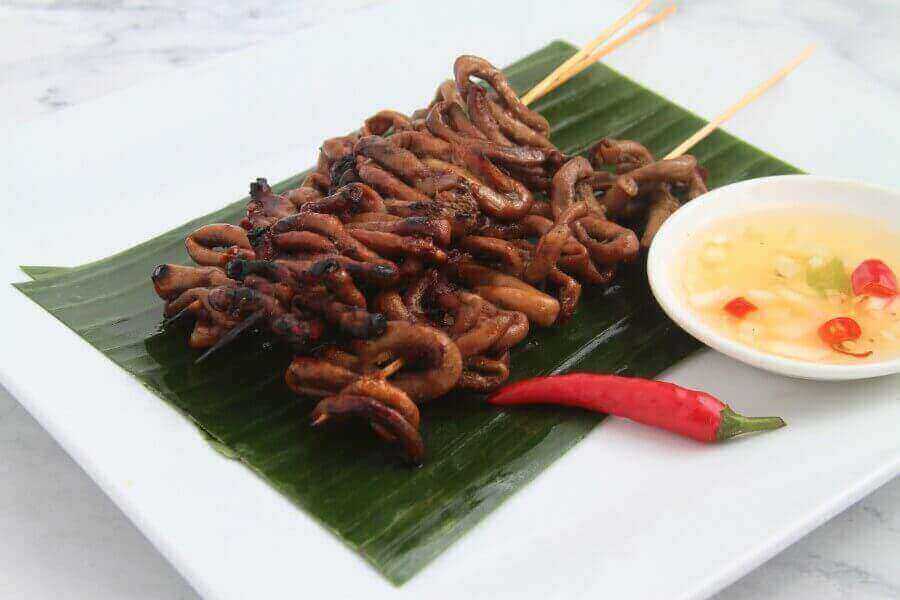
Isaw may sound unfamiliar, but it regularly captures the hearts of those who try this exotic food in the Philippines. These are grilled chicken or pork intestines, skewered and cooked over an open flame until they acquire smoky, savory, and slightly chewy textures that meld together.

Isaw transforms an often overlooked animal part into a beloved Filipino street food delicacy, showcasing the resourcefulness and ingenuity of Filipinos. It also demonstrates that hidden treasures can be found in unexpected places and that trying something new can lead to discoveries.

Adidas (Chicken Feet)

filipino-food-adidas

This exotic food in the Philippines has gained popularity in Filipino cuisine as a weird addicting snack or appetizer. The nickname “Adidas” originates from the three-striped resemblance of the chicken feet to the iconic sportswear brand.

Once cooked, Adidas offers a combination of textures alongside a savory taste – soft skin, gelatinous cartilage, and a small bone in the center. It’s often enjoyed by using the teeth to strip off the tender meat and cartilage from the bone, providing a satisfying and enjoyable dining experience.

In addition to their enjoyable taste and texture, chicken feet are appreciated for their collagen content, which some believe has skin-enhancing properties.

Helmet (Grilled Chicken Heads)

Helmet is a Philippine exotic food, particularly in urban areas where street vendors offer an array of grilled delights. The dish is enjoyed using hands, with diners breaking off the beak and nibbling on its tender meat – fun, right?

The chicken head, or “Helmet,” is seasoned with various spices and perfectly grilled over an open flame. It offers a combination of tender meat, crispy skin, and flavorful cartilage, resulting in a medley of textures that provide a truly immersive dining experience.

Tuslob Buwa (Pig’s Brain And Liver)

Tuslob Buwa is a Philippine exotic food that translates to “Dip in Bubbles” and originates from the bustling streets of Cebu City. It revolves around a simmering mixture of pig’s brain, liver, intestines, and other offal, cooked in a flavorful sauce made from soy sauce, garlic, onions, and spices.

The fun part is how it is enjoyed. Tuslob Buwa invites diners to participate in the cooking process actively. Typically, a large wok is placed on a stove at the center of the dining area; diners gather around and use bamboo skewers or bread to dip into the simmering mixture.

Dipping and swirling the skewers or bread in the bubbling sauce encourages conversation and connection. Such unusual yet communal street dining practices are part of the fun facts about Filipino culture.

Funky Snacks And Exotic Foods In The Philippines 

Set aside the usual potato chips and candy bar, here are some snacks with a twist that you can find in different parts of the Philippines.

Balut (Fertilized Duck Egg)

philippines-famous-balut

The most popular exotic food in the Philippines is Balut – a culinary curiosity that may appear unusual at first glance but holds a special place in Filipino gastronomy. This unique edible creation is made from a developing duck embryo, typically consumed when it reaches a specific incubation stage.

When you crack open the shell, you’ll find a partially formed duckling inside, complete with soft bones, feathers, and the beginnings of its beak. It is commonly enjoyed by savoring the broth surrounding the embryo, followed by biting into the developing duck’s tender yet slightly chewy flesh.

It is often sprinkled with salt, vinegar, or chili for an extra kick of flavor. Balut is regularly featured as one of the weird Filipino foods for really adventurous eaters.

Kamaru (Fried Mole Crickets)

exotic-food-kamaru

Kamaru is a lesser-known Philippine exotic food that surprises and captivates those who venture into the diverse realm of Filipino cuisine. These edible crickets are harvested, prepared, and transformed into a crunchy and flavorful treat.

While eating insects might be unconventional to some, camaru has become a beloved and sought-after snack for locals. The crickets – cleaned, seasoned, and fried until delightfully crispy – offers a flavorful combination of textures with a crunchy exterior and a slightly chewy interior.

In the Philippines, insects play a vital role in local culinary traditions, as they’ve proven sustainable and protein-rich food. 

Tamales (Filipino Sticky Rice with Chicken Or Pork Toppings)

Tamales are a culinary tradition deeply rooted in Latin American and Filipino cuisine known for a strange mixture of flavors, often prepared and shared during festive occasions and celebrations.

This exotic food in the Philippines is made with rice flour and coconut milk, topped with meat, salted egg, or vegetables. Not to be confused with the Mexican version, Filipino Tamales are often wrapped in banana leaves and filled with meats, peanuts, and various aromatics.

Taho (Filipino Sweet Tofu with Tapioca Pearls)

philippines-popular-taho

Taho is a beloved and iconic Philippine exotic food, a sweet and comforting treat that has become integral to Filipino food culture.

Often enjoyed during breakfast in Philippines, Taho consists of three main components: soft tofu, sago pearls (tapioca pearls), and a sweet syrup known as arnibal. The soft tofu, made from soybeans, is smooth and silky, while the sago pearls add a chewy texture. You can even enjoy this as a dessert in the Philippines.

Taho vendors, known as “magtataho,” roam the streets with a large aluminum container called a “taho cart” balanced on a pole across their shoulders. They call out “Tahooooo!” to attract customers, drawing attention to this beloved treat.

Uok (Stir-fried Coconut Beetle Larvae)

Uok, or coconut beetle larvae, is a pest that infests coconut trees in some areas of the Philippines. But instead of getting rid of them, Filipinos have found a way to make these pests into the culinary repertoire of specific communities.

The larvae are harvested from fallen or infested coconut logs and are prepared as a protein-rich ingredient. The larvae are boiled or sautéed with various seasonings and spices and are often enjoyed as a crunchy and flavorful snack.

Uok represents Filipino’s deep connection with the environment and their ability to turn unconventional ingredients into delicious and nutritious meals.

Must-try Entree Among Exotic Filipino Foods

Still there? Now let’s talk about the main Filipino dishes. Foreigners and even some locals consider these the super weird foods in the Philippines, so get ready.

Tamilok (Woodworm)

Tamilok is as peculiar as it sounds. This tongue-tickling Philippine exotic food is a curious kind of woodworm, specifically shipworms, harvested from the bark and trunks of mangrove trees.

These long, slender creatures dwell within the wood, feeding on decaying plant matter. While consuming wood-dwelling worms might seem unusual, tamilok is considered a delicacy in some areas of the Philippines.

The consumption of tamilok is believed to have originated from the coastal communities where mangroves thrive. The locals discovered that these woodworms, when properly prepared in a mixture of vinegar, calamansi, and spices, had a slightly acidic and salty flavor profile, reminiscent of oysters or clams – soft and gelatinous, providing a contrast to their initial appearance.

Dinuguan (Pork Blood Stew)

filipino-food-dinuguan

Dinuguan, a distinctive and exotic food in the Philippines, intrigues and surprises the adventurous palate. It is also known as “chocolate meat” or “blood stew” because of its unexpected ingredient – pig’s blood.

Dinuguan’s savory blood stew is typically mixed with pork meat, pork belly, intestines, and offal. The blood gives the dish its distinct dark color, resembling chocolate. While it might sound unconventional, this weird Filipino food has been a beloved comfort snack for generations.

Some regions, such as the Ilocos province, have their own version called “dinardaraan,” which uses additional ingredients like ginger and chili for added complexity.

Betute Tugak (Deep-fried Stuffed Frog)

You might be surprised, but Betute Tugak has gained popularity as a regional specialty. The dish uses edible frogs, native to the region’s rice fields and marshlands, showcasing the culinary traditions of Pampanga, where the dish has become a symbol of local pride.

What sets Betute Tugak apart is the intricate process of stuffing the harvested frogs, which transforms them into delightful delicacies of the Philippines. After deboning them, the frogs are stuffed with ground pork or beef, spices, and aromatics, adding a unique twist.

Betute Tugak serves as a reminder that there are always new flavors and culinary adventures waiting to be discovered, even in the most unexpected places.

Wild Stews And Exotic Foods In The Philippines 

Last but not least, we have exotic Filipino foods that are warm and hearty. 

Soup No. 5 (Filipino Soup with Bull’s Testes)

Soup No. 5, also known as “Sopas ng Puso,” is a distinctive Filipino soup incorporating unconventional ingredients. While its exact composition may vary, the dish typically includes various beef parts and organs, including testicles, kidneys, spleen, tripe, and marrow bones.

Soup No. 5 has its reputation as an aphrodisiac. It is believed that consuming the various beef parts in this soup can enhance one’s vitality and romantic desires. However, note that the alleged aphrodisiac properties of Soup No. 5 are based on cultural beliefs and not scientific evidence.

Balbacua (Philippine Ox Tail Stew)

Originating from the islands of Mindanao, Balbacua is a Philippine exotic food made from various cuts of beef, typically the shank or oxtail, and cooked for several hours until the meat is tender and the flavors have melded together.

It is a hearty and flavorful slow-cooked stew known for its rich and aromatic broth, often infused with spices and herbs. The long cooking allows the collagen in the beef to break down to a tender and gelatinous texture.

Unknown to many, Balbacua has its roots in a traditional dish from the indigenous Lumad people of Mindanao. The Lumads would cook a similar dish using buffalo or carabao meat, simmered for a prolonged period to create a nourishing and hearty meal.

Papaitan (Filipino Bitter Soup)

Speaking of weird, Papaitan’s bitter and strong offal-like flavor is surprisingly tasty! It’s a Philippine exotic food that ignites the taste buds and showcases the adventurous spirit of Filipino cuisine.

Papaitan, which translates to “bitter,” is a soup that uses goat’s chopped meat and innards like liver and sometimes tripe. Adding bile gives the soup its characteristic bitter taste, balanced by the robustness of the other flavors.

Papaitan is best enjoyed with steamed rice, allowing the flavors to meld together and providing a satisfying and comforting dining experience.

Sampling Exotic Food In Philippines

These exotic and weird Filipino foods offer an opportunity to explore the diversity of global culinary traditions and challenge preconceived notions about food.

While some may consider these foods peculiar or unconventional, they hold cultural significance and reflect the resourcefulness of Filipino chefs who make the most of local ingredients, minimizing waste and transforming humble ingredients into culinary masterpieces.

As you enjoy the beautiful landmarks in the Philippines, don’t forget to also check out the exotic food scene!


PIN THESE EXOTIC FOODS IN THE PHILIPPINES!

20 Best Filipino Breakfast Dishes In The Philippines [Local Guide]

Breakfast in the Philippines can be a mouthwatering journey through various flavors and textures. Filipino breakfast is known for hearty and diverse offerings, featuring a delightful fusion of Spanish, Chinese, and indigenous influences. 

What’s Special About Breakfast In The Philippines?

One of the most notable traits of Filipino breakfast is its use of bold flavors and contrasting textures that reflects the country’s rich cultural heritage.

Traditional Filipino breakfast favorites include silog dishes, which typically consist of garlic fried rice, eggs cooked to your preference, and a protein such as tocino (sweet cured pork), tapa (dried or cured beef), or longganisa (Filipino sausage).

Other popular dishes include champorado (chocolate rice porridge) and arroz caldo (rice porridge with chicken or pork), which is typically garnished with crispy garlic and spring onions.

Another thing that sets Pinoy breakfast apart from other cuisines is its heavy use of vinegar and soy sauce as condiments. These add an acidic and salty kick to many dishes and are especially delicious when paired with fried foods.

Let’s explore some of the traditional Filipino breakfast dishes that will increase your appetite. We will delve into the delightful array of morning treats that make up the Pinoy breakfast experience and make you say “Magandang Umaga.”

Filipino Breakfast – Our Favorite Silog!

I’m telling you, when you say Filipino breakfast, we say silog. It’s a Pinoy term combining sinangag (fried rice) and itlog (egg) because they taste better together! Let’s see what else we can pair it with.

Tapsilog / Tapa-Sinangag-Itlog (Marinated Beef – Fried Rice – Egg)

delicious-breakfast-tapsilog

Tapsilog is a beloved Filipino breakfast staple that combines irresistible flavors in a single plate. Tapa, the star of the dish, is sweet with a bit of tanginess from the marinade. It is often tender and savory, depending on how you want it done.

The tender beef pairs harmoniously with the fragrant garlic rice, while the richness of the fried egg creates a symphony of flavors that balance each other perfectly. Locals make sure to add vinegar and chili on the side to add a little spice.

Longsilog / Longganisa-Sinangag-Itlog (Filipino Sausage – Fried Rice – Egg)

filipino-breakfast-longsilog

Longganisa is made from ground pork seasoned with garlic and pepper, spices, sugar, and sturdy vinegar, then stuffed into casings. Most Filipino-styled sausage has a unique sweet, salty, or garlicky flavor.

Depending on the location, each region has its version of Longganisa. Northern parts of the Philippines, like Ilocos and Vigan, are known for their spicy-sweet longganisa. Meanwhile, in the South, they prefer mild-flavored sausage.

When enjoyed together, Longsilog results in a satisfying and hearty Filipino breakfast many locals love.

Bangsilog / Bangus-Sinangag-Itlog (Marinated Milkfish – Fried Rice – Egg)

philippines-breakfast-bangsilog

Bangus, the Philippines’ national fish, also creates a complementary flavor along with aromatic fried rice and a sunny-side-up. The fish can be prepared by frying or grilling, producing crispy skin and succulent flesh.

You will enjoy this Pinoy breakfast. But beware, the fish bones may be tricky if you are not used to eating them! Just like Tapsilog, Bangsilog is enjoyed with a side of vinegar or tomato ketchup for added tanginess.

Tocilog / Tocino-Sinangag-Itlog (Sweet Cured Pork – Fried Rice – Egg)

filipino-dish-tocilog

Next to Tapsilog, Tocilog is one of the most popular silog dishes. Tocino, or sweet cured pork, is marinated and cured with sugar, soy sauce, and various spices.

The tender and caramelized tocino pairs beautifully with the aromatic garlic rice, while the creamy egg adds a satisfying richness to every bite. No sauce or condiments are necessary because the savory flavors of tocino are enough to tantalize your taste buds. It makes for the perfect breakfast in the Philippines.

Cornsilog / Corned Beef-Sinangag-Itlog

Creative, right? Cornsilog is a Filipino breakfast that features flavorful and tender beef brisket brined and seasoned with spices. Unlike Tapsilog, the meat of Corned Beef is shredded, often cooked with small cubed potatoes.

This Pinoy breakfast showcases the fusion of international influences and Filipino culinary creativity, as corned beef is a product of Western cuisine incorporated into local breakfast favorites.

Hot Rice And Signature Dishes For Filipino Breakfast 

Don’t skip; we’re not done yet. If you feel like going the extra mile and are having something heavy for breakfast, here are Filipino signature dishes to pair with hot rice.

Adobong Manok (Filipino Chicken In Soy Sauce And Vinegar-braised Stew)

famous-dish-adobo

Adobong Manok, the unofficial national dish that the Philippines is known for, holds a special place in the hearts and palates of locals and foreigners. 

The combination of vinegar and soy sauce creates a distinct flavor profile that is both comforting and addictive, while the slow cooking process results in the meat absorbing the flavors.

Adobo can be chicken, pork, or other proteins such as beef, seafood, or vegetables. Each variation offers a slightly different taste experience, but they all retain the essence of the adobo cooking method.

Tortang Talong (Filipino Eggplant Omelet)

philippines-eggplant-omelet

Tortang Talong is a Filipino breakfast food that showcases the simplicity and deliciousness of eggplant, mashed or flattened, then pan-fried with scrambled eggs until golden brown on both sides.

The basic version – eggplant and egg – can become special with additional ingredients like ground meat, onions, tomatoes, or cheese, enhancing the flavors and creating variations of the dish. The charred flavor from the roasted eggplant enhances the overall taste, giving it a unique smoky undertone.

Sinangag (Filipino Garlic Fried Rice)

filipino-fried-rice

Yes, fried rice is one of the many signature Filipino breakfast food. It is loved for its aromatic flavors and versatility.

Sinangag is known for its ability to transform leftover rice into a delicious and satisfying meal. It is often prepared using day-old rice, as the drier texture of the leftover rice allows it to absorb the flavors more effectively during the frying process.

To make this Pinoy breakfast a standalone dish, locals mix it with shreds of leftover meat and small cuts of vegetables and garnish it with a stripe cut of scrambled eggs on top, giving you the Filipino version of Chinese Chao Fan but more appealing to Filipino tastebuds.

Tinolang Manok / Chicken Tinola (Filipino Chicken Stew)

flavorful-tinolang-manok

Chicken Tinola is a comforting and flavorful soup made with chicken pieces simmered in a broth flavored with ginger, garlic, onion, and papaya or chayote, enriched with malunggay (moringa), spinach, or chili leaves.

Chicken Tinola is commonly cooked for lunch, but who makes the rule? It may as well be enjoyed as a Filipino breakfast since locals are very flexible.

It is commonly served during rainy days or as a remedy for common illnesses, as it is believed to have a warming effect on the body and provide relief. The pairing of the soup and rice creates a wholesome and complete meal.

Sinigang na Baboy / Pork Sinigang (Filipino Sour Soup Dish)

filipino-dish-sinigang

This is another on the lunch menu, but Filipinos also enjoy eating in the morning. Because why not? Sinigang na Baboy with steamed hot rice is always perfection.

This is one of those delightful Filipino breakfast ideas featuring pork as its main protein, cooked in a tamarind-based broth along with kangkong (water spinach), gabi (taro), radish, tomatoes, and string beans.

The hallmark of Sinigang na Baboy is its distinct sourness, achieved by using tamarind as the primary souring agent. The harmonious blend of flavors becomes so comforting it makes you feel at home. It’s one of the interesting facts about Filipino cuisine.

Filipino Breakfast – More Rice, Anyone?

Filipinos love rice. This means that you will almost always find it somehow in an authentic breakfast in the Philippines. Check these out for some Pinoy breakfast ideas.

Ginataang Bilo-Bilo (Sticky Rice Balls In Coconut Milk)

Ginataang Bilo-bilo is a popular and comforting Filipino dish, bursting with flavors of creamy and fragrant coconut milk broth along with chewy and slightly sweet rice balls, sweet potatoes, taro, jackfruit, plantains, and tapioca pearls.

With its velvety texture and sweet, creamy nature, Ginataang Bilo-Bilo is commonly served warm for the best taste. It is often consumed as a Filipino breakfast, snack, or a post-meal treat, meaning you can enjoy this dish any time of the day.

Champorado (Filipino Chocolate Rice Porridge)

Champorado is a sweet iconic Filipino breakfast that combines the richness of chocolate and the comforting warmth of glutinous rice.

The chocolatey flavor comes from the natural cocoa powder or tablea (traditional Filipino chocolate). The rice absorbs the flavors of the chocolate, resulting in a thick and velvety consistency.

Champorado is typically served with condensed milk, evaporated milk, or powdered milk for added creaminess. Locals pair the sweetness with tuyo or dilis (dried fish or anchovy) to contrast the sweetness. The result is both surprising and satisfying.

Did you already miss it for breakfast? No worries, you can even enjoy it as a filling Filipino dessert or sweet. There’s always an excuse for good food, isn’t it?

Chicken Arroz Caldo (Chicken Rice Porridge)

famous-arroz-caldo

Chicken Arroz Caldo or Congree is a popular dish among many Asian cuisines. It is commonly served as a Filipino breakfast, a comfort meal, or a remedy for colds and flu.

Chicken Rice Porridge is slowly cooked and continuously stirred rice simmered in chicken broth, flavored with spices. Shredded or small pieces of chicken are often added to the porridge to provide protein and depth of flavor.

The porridge has a smooth and creamy consistency, is seasoned with soy sauce, and is often garnished with toppings like spring onions, crispy garlic, and a squeeze of calamansi or lemon for a hint of tanginess.

Goto (Filipino Rice Porridge with Ox tail)

filipino-popular-goto

Goto is another version of rice porridge served as a Filipino breakfast or late-night snack. This comforting dish is tasty and offers a sense of warmth and familiarity.

The difference between Goto with chicken rice porridge is the beef tripe, or the lining of the cow’s stomach, offering a slightly chewy and gelatinous component.

Goto is also enjoyed with a range of toppings and condiments. Popular choices include crunchy fried garlic, crispy fried pork intestines called chicharon bulaklak, spring onions, calamansi (Philippine lime), and chili peppers for added heat.

Lugaw (Filipino Rice Porridge)

filipino-rice-porridge

The simplest version of rice porridge, served alone or with a hard-boiled egg. This Filipino breakfast can comfort and nourish in a humbling way, representing a warm and familiar Pinoy taste.

The flavor of Lugaw is enhanced with various toppings such as ginger, garlic, onions, and calamansi, depending on your preferences. Whatever it is, your choice of ingredients will infuse the porridge with a savory and aromatic taste that gives a sense of warmth and well-being with every spoonful.

Pastries And Cakes For Filipino Breakfast 

Even if you’re not a rice lover or someone undergoing a strict diet, the following Filipino breakfast ideas are the ideal start for you.

Puto (Steamed Rice Cake)

filipino-famous-puto

It’s a famous Filipino breakfast and delicacy, and you can often see it with Kutsinta (sticky rice cake). Puto has a soft, fluffy, airy texture, delicate sweetness, and distinctively light flavor.

Puto is often white, but variations with different flavors like pandan, ube (purple yam), or cheese are also popular. Some variations include toppings like cheese, salted eggs, or grated coconut for added texture and taste.

It can be enjoyed independently or paired with dishes like Dinuguan (Filipino Pork Blood Stew) or Pancit (dry noodles). The light taste and versatility is what makes Puto one of the popular street foods in the Philippines.

Pan de sal (Filipino Salt Bread)

Pandesal is a staple Filipino breakfast that is soft and slightly sweet, typically enjoyed with butter, jam, or cheese. It’s a classic bread roll known for its delightful aroma and warmth when freshly baked early in the morning.

Pandesal is incredibly versatile and can be eaten plain, but it goes well with a variety of fillings like ham, eggs, corned beef, or even sweet spreads like peanut butter or condensed milk.

This beloved Pinoy breakfast is shared among family members or neighbors, symbolizing Filipino hospitality and camaraderie.

Kakanin (Filipino Sticky Rice Cake)

filipino-dessert-kakanin

Kakanin, or Filipino sticky rice delicacies, are traditional desserts and snacks. But as it tastes so good with hot coffee, it’s not rare to see locals serve it as Filipino breakfast.

Kakain has different variations in the Philippines, but most of them are a chewy texture and are right in sweetness. We have rice cakes cooked in banana leaves; another topped with latik or coconut milk curds; one with colorful layers; and one coated in grated coconut and sugar.

Kakanin is special in Filipino culture, particularly during festive occasions, religious celebrations, and family gatherings. It reflects creativity, resourcefulness, and Filipino love for rice.

Pan de Coco (Filipino Coconut Bread)

Did you know that the sweet and comforting taste of Pan de Coco has made it a favorite among Filipinos of all ages? It is a testament to the rich culinary heritage of the Philippines and the creativity in using coconut in traditional baked goods.

Pan De Coco is a Filipino breakfast made from flour, sugar, and milk and filled with a sweet coconut mixture before it is rolled and baked. Once golden brown, the coconut filling becomes moist and tender, infusing the bread with its delightful tropical flavor.

Pianono (Filipino Sponge Cake Roll)

pianono-in-philippines

Pianono is a delightful sponge cake roll loved for its light and fluffy texture and sweet, creamy custard filling. Who wouldn’t love this for breakfast, right?

Pianono is often served sliced into bite-sized pieces, making it easy to enjoy as a finger food. But as locals enjoy a cup of hot beverage, typically a coffee or chocolate, they’ve learned to enjoy it as a Filipino breakfast.

The simplicity of the Pianono offers a taste of Filipino indulgence and is a delightful reminder of the sweet moments shared with loved ones during special occasions.

One Big Heavy Filipino Breakfast Meal

Filipino breakfast dishes are incredibly varied, and the options can satisfy all kinds of cravings. Whether you’re looking for something savory or sweet, there is a dish that will fit your needs. Generations of Filipinos have enjoyed these traditional recipes as they come together to share stories over morning meals.

Try out some of these classic Filipino breakfasts! And if you’re feeling adventurous enough to take on the challenge – pamper yourself with a hearty meal before exploring the stunning attractions in the Philippines.


PIN THESE FILIPINO BREAKFAST FOR LATER!

15 Famous Foods In San Diego You Have To Try

Among all the attractive facts about California, you should have heard about the local, fresh food culture in the state. What you may not know is that the food from San Diego is just as vibrant as the city! From the beautiful seafood pulled straight from the ocean to the Baja-inspired cuisine, there are plenty of San Diego foods and dishes to try!

What’s Special About San Diego Foods? 

A lot of the food San Diego is known for relates to its amazing seaside location. Like much of California, San Diego cuisine owes a lot to its coastal access. It means the city has an abundance of fresh seafood, which comes to life in fish tacos, lobster rolls, and much more! 

Since San Diego is so close to Mexico, Mexican cuisine has heavily influenced food from San Diego, giving rise to Cali-Baja cuisine. This fusion of Californian food and Mexican flavors combines fresh, local ingredients with traditional Mexican techniques, resulting in vibrant, flavorful dishes. 

Planning a Trip to San Diego?

You’ll definitely wanna eat your way around town, and this guide is a tasty start. If you’re hungry for more, we’ve curated the specialty food tours, hotel suggestions, family-friendly activities, and side trips that make the whole trip even better. Map out your trip with our San Diego itinerary and the best things to do in the city.

Most Famous Food In San Diego 

Fish Tacos

fish-tacos

What food is San Diego known for if not delicious fish tacos? This shouldn’t be a surprise since fish tacos are a perfect combination of two popular San Diego foods: fresh seafood and Cali-Baja cuisine. The fresh seafood in the tacos always delivers a delightful and flavorful experience. 

San Diego fish tacos are bursting with vibrant flavors, often topped with shredded cabbage or lettuce, tangy salsa or pico de gallo, creamy sauces like crema or sour cream, and a squeeze of lime, creating a harmonious blend of tastes and textures. The fun mix of flavors and local ingredients make fish tacos an unmissable San Diego food. 

Fish tacos have become an iconic dish associated with San Diego’s culinary identity, capturing the laid-back and casual atmosphere of the city. It’s also just an iconic dish associated with the city’s larger cultural identity, which you have to try when you visit!

For a deeper discovery of more authentic Mexican cuisine, the Old Town History and Food tour is a great introduction to the city. You even get to visit the cemetery for some ghastly tales of the past.

California-Style Dishes In San Diego Foods

California Burrito 

california-burrito

A lot of famous San Diego foods are also prevalent throughout the state as well, such as the California burrito! This renowned burrito originated in California, particularly in San Diego, so it’s only right that you try one while here. 

California burritos are known for their generous sizes and flavorful combination of ingredients, combining elements of Mexican and American cuisine. 

The key feature of a California burrito is the inclusion of french fries or crispy potato wedges alongside more traditional burrito fillings, creating a unique texture you won’t get in a regular burrito. 

In addition to the french fries, you can expect a California burrito to come with grilled carne asada and classic ingredients, such as beans, cheese, and guacamole. For anyone looking for true San Diego food, make sure you don’t miss out on the California burrito. 

California-Style Sushi / California Roll

california-roll

With the influence of Asian cultures in California, it is no wonder California-style sushi is one of the famous foods of San Diego. 

California-style sushi is characterized by its innovative and fusion-oriented approach, blending traditional sushi techniques with local ingredients and flavors. It embraces the use of non-traditional ingredients, like cream cheese, mayonnaise, and different vegetables, which introduce new textures and flavors to the sushi rolls. 

While we’re talking about California-style sushi, we can’t forget to talk specifically about California rolls! They are definitely a notable food of San Diego, since it features delicious San Diego seafood options. A California roll typically consists of crab meat, avocado, and cucumber rolled in nori (seaweed) and rice. 

An emphasis on fresh and high-quality ingredients is a hallmark of California-style sushi. Locally sourced seafood and garnishes really put these dishes over the top. It is often extremely visually appealing as well, so snap a photo before you dig in! 

Foods In San Diego: Seafood

Seafood Ceviche

seafood-ceviche

As you should know now, fresh seafood in San Diego can’t be beat, due to the city’s prime location on the coast. 

There is an abundance of different kinds of seafood, which is harvested locally, showcasing the fresh flavors and local pride of San Diego foods. So what better way to enjoy this local delicacy than by chowing down on fresh ceviche? 

Made with raw fish or shrimp marinated in citrus juices, such as lime or lemon, and mixed with onions, tomatoes, cilantro, and spices, ceviche is a light and tangy dish that highlights the freshness of the seafood. 

You can enjoy ceviche at the city’s waterfront restaurants, seafood markets, and beachside eateries. It will allow you to soak in the views alongside the delicious food, and help immerse you in the city’s charm.

Oysters

oysters-san-diego

From their coastal origins to their diverse species and vibrant culinary events, oysters in San Diego are an integral part of the food San Diego is known for. 

The city has a diverse selection of fresh, briny oysters that come from local oyster farms or nearby waters. With a wide range of oyster species, ranging from Pacific oysters to Kumamoto, Fanny Bay, and more, oysters in San Diego are among the best you can get. 

The farm-to-table philosophy and fresh seafood combination make for an exemplary experience of San Diego food. To make it even better, oysters in San Diego are often served with an array of accompaniments that enhance their flavors. 

With an array of traditional garnishes, such as mignonette sauce, lemon wedges, cocktail sauce, or horseradish, there is always a way to customize your San Diego food experience. 

Seafood Cioppino

seafood-cioppino

Inspired by Italian-Americna cuisine, San Diego’s seafood cioppino is a hearty and flavorful dish, guaranteed to satisfy the seafood lovers among you. 

As we know, San Diego foods make use of local ingredients, and this dish is no exception. It typically includes a combination of fresh seafood, such as fish, clams, mussels, shrimp, and crab, cooked in a rich tomato-based broth with herbs and spices. 

You’ll often find this classic served with crusty bread, so you can have a true seafood feast! If you want to try some of the best, consider a meal at Ironside Fish & Oyster, located in the Little Italy neighborhood. Or for a local favorite, step into one of Blue Water Seafood Market & Grill’s multiple locations!

You can also join a Little Italy food tour to sample the best and hidden gems around the neighborhood with fellow foodies!

Sushi Burritos

sushi-burritos

Sushi burritos are a unique San Diego food creation, which started in San Diego but spread to Southern California more broadly. These oversized sushi rolls are made by combining traditional sushi ingredients such as raw or cooked seafood, rice, vegetables, and sauces, all wrapped in a large sheet of seaweed or a tortilla. They offer a convenient and portable way to enjoy sushi, as well as making use of the fresh seafood in the area. 

The fusion of Japanese and Mexican flavors in sushi burritos resultss in an amazing combination of textures and tastes. They also have Instagram-worthy presentations in addition to great taste, making them very popular among locals and tourists. 

American Classics Foods From San Diego

San Diego-Style Pizza

san-diego-style-pizza

Pizza probably isn’t the first thing that comes to mind when you hear “food from San Diego,” but San Diego-style pizza is a famous go-to in the city.

This dish is known for the thin, crispy crust that strikes a balance between chewiness and crunchiness. The crust is often made with a light and airy dough, resulting in a distinctively light and delicate texture. 

The toppings on San Diego-style pizza also tend to be bold and flavorful, including fresh ingredients like locally-sourced produce, artisanal cheeses, and high-quality meats. These toppings give the pizzas a unique and satisfying flavor profile, so be sure to give it a try while you’re in town! 

Gourmet Burgers

gourmet-burgers

If you’re looking for a burger while in San Diego, you are in for a treat! The city’s gourmet burger scene showcases a diverse range of creative and high-quality burgers crafted with premium ingredients, elevating the burger experience to a truly gourmet level. 

These burgers often feature specialty and artisanal buns, like brioche or pretzel, which gives them a special touch. 

If you’re looking for a truly awesome burger, check out Balboa Bar & Grill or Hodad’s. These are both local institutions that are known for their burgers. Whether you prefer a classic combination or a unique flavor fusion, both places offer gourmet burgers that are sure to satisfy burger aficionados seeking an elevated indulgence. 

Avocado Toast

avocado-toast

While you can get avocado toast in just about any city in the United States, you should not miss out on avocado toast in San Diego. The city brings this hip classic to a new level with fresh ingredients! 

In fact, San Diego produces over 50% of the avocados from California, meaning you’re getting the freshest produce when you order avocado toast in San Diego. 

Avocado toast is normally an open-faced sandwich made with toasted bread, smashed avocado, fresh citrus juice (lemon or lime), olive oil, and salt. You can grab this breakfast classic at any breakfast or brunch place around the city. Don’t miss out on this delicious San Diego food! 

Mexican-Inspired Foods Of San Diego / Cali-Baja Cuisine 

Cali-Baja cuisine is a culinary style that blends the flavors of Mexico and California, which is particularly popular in San Diego cuisine. With the use of locally sourced ingredients, they offer vibrant ingredients and flavors. There are many more options amongst the food from San Diego. Make sure you give them a try! 

Mexican Street Food 

mexican-street-food

Cali-Baja cuisine often takes elements of Mexican street foods and re-imagine them with a California twist.

Mexican street food in San Diego offers an authentic and flavorful experience that showcases the vibrant culinary traditions of Mexico, with food carts and stalls throughout the city.

As you might expect, tacos take center stage in Mexcian street food, with a wide variety of authentic flavors and fillings, like carne asada, al pastor, carnitas, and grilled fish or shrimp. 

While you may be tempted to just go for Cali-Baja cuisine while in San Diego, don’t forget you can still get an authentic plate of Mexican street food around the city. 

If you want to take it up next level, you can even make a day trip to Tijuana with a Mexican street food tour right across the border!

Carne Asada Fries 

carne-asada-fries

If you’re in the mood for an indulgent dish, go and grab some carne asada fries! Carne asada fries feature a bed of crispy french fries topped with marinated and grilled carne asada, a flavorful and tender grilled beef, seasoned with spices and citrus juices. 

As the name suggests, these fries are typically loaded with delicious toppings such as melted cheese, guacamole, sour cream, salsa, and pico de gallo. 

As you might expect, this is generally an absolutely heaping serving of food, meaning it can be a solid snack or even a whole meal. The combination of savory, crispy fries with juicy and flavorful grilled meat, cheese, and a variety of other toppings creates a delicious flavor that makes it a beloved food in San Diego. 

Desserts And Sweet Foods In San Diego

Gelato 

gelato-san-diego

When checking out all the famous San Diego landmarks amidst the sunny weather, you might find a craving for some cold, sweet treats.

Gelato in San Diego captures the essence of traditional Italian craftsmanship, bringing the creamy and luscious frozen dessert to life. Gelato shops in San Diego pride themselves on using high-quality ingredients, including fresh fruits, premium chocolates, and locally sourced dairy, which makes for a rich, creamy treat. 

If you want to try some of the local favorites in gelato, check out Pappalecco, which is known for its traditional methods and high-quality ingredients. You can also visit Gelato Paradiso, which offers both classic flavors and inventive options as well. No matter what you prefer, make sure you get a scoop while you’re in town! 

Acai Bowls 

acai-bowls

If you think about California food, simple and nutritious dishes often come to mind. The acai bowls, which are a famous food in San Diego, fall perfectly into this pattern! The refreshing and nutritious treat captures the essence of the city’s health-conscious culture. 

Acai bowls make for a vibrant breakfast or snack option, featuring a base of blended acai berries. These bowls are typically thick and creamy, resembling a smoothie, and are often topped with a variety of toppings, such as granola, fresh fruit, coconut flakes, chia seeds, and honey (or nut) butters. 

Since the city can be quite hot, these cold treats are popular among foods in San Diego, especially along the coastline. While spending some time at the beautiful beaches of San Diego, cool off with a bowl of Acai.

Drinks In San Diego

Craft Beer

craft-beer

Craft Beer in San Diego is a thriving part of the culinary scene, with a community of passionate brewers dedicated to producing innovative and high-quality beers. In fact, the city has earned the title of “Craft Beer Capital of America” for its craft beer scene. 

The beers embrace creativity and push boundaries with unique ingredients, flavor combinations, and brewing techniques, which means there is always something new to try in the craft beer scene.

San Diego’s craft breweries are known for their vast selection of beer styles, ranging from hop-forward West Coast IPAs to barrel-aged stouts, sour ales, Belgian-inspired brewers, and experimental creations. 

If you want a taste of this unique beer culture, you could try a Sculpin IPA from Ballast Point Brewing Company, Stone IPA by Stone Brewing, or the AleSmith Speedway Stout by AleSmith Brewing Company. Besides, you can always enjoy a pint with the array of delicious San Diego foods.

Sampling Famous San Diego Foods 

When you think about San Diego, you probably think of the things California is known for, such as the stunning beaches, mild climate, and vibrant lifestyle.

However, don’t sleep on the delectable foods in San Diego! Although the fish tacos and acai bowls are known all around the country, there are many other San Diego staples you won’t want to miss out on. 

This food list will definitely get you hungry, but don’t stop here. We’ve rounded up the best food tours to dive into the scene firsthand. If you’re planning your visit, take a look at our itinerary guide, top attractions, and hotel picks. You’ll also find ideas for family fun and easy day trips if you’re staying a bit longer.


PIN THESE SAN DIEGO FOODS FOR LATER!

25 Amazing Things Delhi Is Famous And Known For

Delhi is famous for its rich historic landmarks, bustling markets like Chandni Chowk, and diverse cuisine, ranging from street food favorites like chaat and kebabs to fine dining experiences.

New Delhi is the diverse capital city of India found in the northernmost part of the country. It is a city belonging to Delhi, a larger territory. However, the two terms are exchangeable and can often get confused! Flowing through it is the Yamuna River, creating entrancing scenery and the opportunity for the fresh foods Delhi is famous for.

What Is Delhi Famous For? 

Delhi is famous for its mouth-watering street foods, whose recipes have been preserved for generations. To no surprise, it is the proud home of the largest Asian spice market, which contributes to the unique flavors of its cuisine. Additionally, Delhi is known for its impressive monuments, many of which were inspired by the Mughal Empire.

History, Culture, And Traditions Delhi Is Known For

The Original Capital

When asked what is Delhi is famous for, you may say for being the capital of India. However, this has not always historically been true. In 1931, Delhi gained its official capital title. Unofficially, it had been the capital since 1911. 

Before this, for over a century, it was Calcutta. During the reign of colonial Britain, George V, the Emperor of the British Empire decided it was time for change. According to him, it was more accessible and better economically.

Meenakari 

Derived from the Hindi language meaning enameling, meenakari is an ancient art form. It includes adding gold statement jewelry such as long earrings or flashy necklaces, to make them more eye-catching. 

Usually, these pieces are worn at affluent events such as weddings or traditional celebrations. You can often find them at markets within matching sets in a variety of colors and designs.

Odd Museums 

One of the strangest things Delhi is famous for is its bizarre museums. 

If you are searching for a fun day out, be sure to check out the Sulabh International Museum Of Toilets. This explains the history of sanitation throughout the world. Another unique example is Shankar’s International Doll Museum, with a collection of over 6,500.

Similarly, the Museum of Illusions is a great attraction to bring children to, consisting of captivating holograms and whacky artistry. Nevertheless, there are also cultural and historical museums where you can learn plenty of fun facts about India.

Earthquakes

Delhi is prone to earthquakes because of its location on the boundary of two tectonic plates that can shift. As a result, it is close to a major fault line, making it a rather hazardous place to live. 

Perhaps the most catastrophic earthquake in Asia was in 1948, which destroyed the Bahai Temple in Turkmenistan, one of the two Bahai temples on the entire continent. Only one now stands, known as the Lotus Temple, in Delhi.

Largest Spice Market In Asia

delhi-spice-market

Gadodia Market on Khari Baoli Street is the largest spice market in Asia. As soon as you enter the vicinity, you will be entranced with the familiar waft of herbs. These are key ingredients to make some of the most fragrant dishes Delhi is famous for. 

Aside from spices, you can find wholesale nuts, herbs, and teas. While it serves merchants that are searching for affordable bulk prices, it also draws regular shoppers who enjoy the variety of foods.

Encapsulated By Gates

Once upon a time, Delhi was protected by 14 gates. Because of the sheer size of the city, it was necessary to guard its civilians and riches.  

Unfortunately, only 4 gates are preserved: Ajmeri, Lahori, Delhi, and Turkman. They are each located at varying sites defending different structures. Perhaps the most valuable is the Delhi Gate, which towers over the Red Fort. Vising this historic Indian landmark is one of the most popular things to do in Delhi.

Districts And Areas Delhi Is Famous For

Chanakyapuri

Chanakyapuri is a lively district in Delhi named after Chanakya, an influential Indian philosopher.

It is best known for Nehru Park, a large and family-friendly green space. This beautiful park is dedicated to the first Prime Minister of India, Jawaharlal Nehru. Scattered around it are flowers, tiny statues, and benches – the perfect place to relax amidst the bustling capital.

As we mentioned, Delhi is famous for its many museums. The National Rail Museum is one of the interesting attractions, demonstrating the history of locomotives.

Connaught Place 

Connaught Place is a popular district to visit regardless if you are with friends or traveling solo. It is a contemporary industrial hub filled with affluent landmarks and energetic restaurants. 

The most distinctive structure here is Jantar Mantar, home to the largest stone sundial in the world. It was built with the purpose of measuring the size of planets and the length of days. 

Furthermore, it is home to Janpath Market, a bustling market with an array of foods and fashion pieces. It’s a great place to shop for some famous Delhi things and trinkets to take home with you. 

Hauz Khas

Hauz Khas is a trendy village adored by the younger generation. The modern restaurants and relaxing cafes here are a perfect contrast to the crowded landmarks Delhi is known for. Additionally, it is acclaimed for being culturally diverse.

You can find most of the famous traditional food in Delhi in Hauz Khas, which is renowned for its gastronomy. Whether you are craving a juicy kebab, filling curry, or a sweet treat, this village has it all.

Gole Market 

In the heart of Delhi, you can find Gole Market, a historic neighborhood. 

The area is densely packed with many religious landmarks of the city. Take a trip to the Sikh holy site, Gurudwara Bangla Sahib. It was built in honor of the eighth guru and therefore is of great importance. 

Located next to the Gurudwara is the Sacred Heart Cathedral. Whilst Hinduism is the predominant religion, Delhi is multicultural and values a range of beliefs. 

Landmarks And Architecture Delhi Is Famous For

India Gate 

famous-india-gate

The visually impressive India Gate was constructed in 1931 to honor the soldiers of the Indian Army who fought in World War I. 

An estimated 70,000 Indians died during this time. Ultimately, India is famous for having one of the biggest war graves in the world. It is otherwise known as Delhi Memorial for this reason.

The Duke of Connaught, Prince Arthur of the United Kingdom, laid down the first stone of the memorial.

Red Fort

delhi-famous-landmark

Red Fort is undoubtedly one of the most visited landmarks in Delhi. Furthermore, it is the largest monument in the city. It was first opened in 1648 during the Mughal Empire, on the orders of Emperor Shah Jahan. The Prime Minister of India typically holds his speech here on Independence Day.

An interesting Delhi fact is that Red Fort was initially white! Originally, the building was made from white limestone but later painted red to mask the natural degradation.

Gurudwara Bangla Sahib 

The Gurudwara Bangla Sahib is a sacred Sikh place of worship, known as a gurudwara. It was built in 1783, and has had extensive renovations, especially after World War II. The purpose was to dedicate the shrine to the eighth Sikh Guru.

Arguably the most significant structural quality of the building is the golden dome, called a gumbad. The gurudwara overlooks a pond and houses both an art gallery and a school. 

Humayun’s Tomb

famous-humayun’s-tomb

Humayun was the powerful second king of the Mughal Empire. Although he was born in Kabul, his final resting place is in Delhi. 

The tomb, which was built in 1570, is amongst one of the most famous things in Delhi to visit. This is because it was the first garden tomb in India, located in a 27-hectare complex with an array of additional tombs for Mughal royalty.

There are elaborate beams, colossal pillars, and intricate floor designs.

Lodi Gardens

popular-lodi-gardens

Whilst many things to do in Delhi are centered around trade and industry, Lodi Gardens is a serene natural landmark. The green space is peppered with aromatic flowers and trees, as well as a lotus pond. Be sure to look out for the pink bougainvillea trees, that are truly picture-perfect.

In addition to being surrounded by nature, they are overlooked by several monuments. Famously, this includes Shish Gumbad, which is poignantly lined by graves for the unidentifiable. You will also find Mohammed Shah’s Tomb here.

Jantar Mantar

indian-jantar-mantar

Jantar Mantar is considered to be one of the seven wonders of India. Directly translated, it means ‘instruments used to calculate.’ It is an anatomical site made up of a collection of 19 instruments, built by King Sawai Jai Singh II in the 18th century. 

Delhi is known for having the largest stone sundial in the world, the Samrat Yantra. As the sun changes position throughout the day, the rod casts different changes. 

Food Delhi Is Famous For

Chole Bhature

delicious-chole-bhature

Indian food is often praised for its fragrance, variety, and health benefits. Chole bhature, fried bread with curry, is considered to be the most popular food in Delhi.

The chole element refers to a chickpea curry, whilst bhature is a fluffy deep-fried bread. They are eaten together, often for breakfast.

This dish is usually accompanied by yogurt for a refreshing touch.

Chaat

indian-dish-chaat

Chaat comes from the Hindi word to snack. 

Essentially, it is a combination of foods thrown together to create a unique dish. Originally, this meant fried dough, potatoes, and chickpeas. However, the recipe has been adapted, and you can find an array of variations such as rice or chutney.

You are most likely to find chaat at markets. This is where most of the famous food in Delhi is also served in a traditional manner at affordable prices.

Paranthas 

delhi-famous-flatbread

Paranthas is a flatbread that is eaten as a side to other dishes. It originates from South Asian countries and has been around since 1000AD. Traditionally, Mughal emperors would pair it with ghee, a fatty butter. 

In Delhi, paranthas are popularly stuffed with pickled vegetables such as beetroot. It can be eaten with lassi, a type of yogurt drink. Alternatively, you can try it with curries or omelets.

Kebab 

delhi-kebab-dish

Surprisingly, kebabs originated from Central Asia! Whilst many believe that they were invented in Turkey, others state they come from Samarkand, an ancient Persian city.

Nevertheless, kebabs are a staple in every country and have become increasingly popular since their invention. In India specifically, there is a huge variety in the way they are served. Seekh Kebab is the most popular kebab Delhi is famous for, comprised of lamb spiced with masala and chili.

Gulab Jamun

delhi-gulab-jamun

Desserts in India are relentlessly underrated because of their savory competitors. However, some of the most famous food in Delhi is sweet treats, the most prominent being gulab jamun.

These dough balls are made with milk and flour before being topped with a syrupy coating. The main constituents of this glaze are rosewater and cardamom, creating a rich nuance.

Although you can find Gulab Jamun at markets, it is also eaten during celebrations such as Eid ul-Fitr and Diwali.

Famous People From Delhi

Shah Rukh Khan

Shah Rukh Khan is an actor primarily taking on roles in Hindi movies. The artist born in Delhi is famous for being the King of Bollywood due to his long career. He began his descent into the industry back in 1988 and has achieved multiple awards since. 

Overall, he has won Best Actor in a variety of awards shows at least 8 times. Khan has starred in romantic comedies, thrillers, and more, proving his range. 

Virat Kohli

India is often considered to have the best cricket team in the world. Many athletes have contributed to their success, Virat Kohli being one of them. 

In 2008, Kohli joined the national team as a right-handed batsman. Almost a decade later, he took on the responsibility of captain.

Kohli and his wife, Bollywood actress Anushka Sharma, are prominent celebrity figures. Aside from their work, they are philanthropists and regularly attend galas and charity events. 

Nandita Das

Nandita Das is a globally-recognized actress and filmmaker. She attended the well-known university that Delhi is famous for, the School of Social Work. Additionally, she attended Yale in Connecticut. 

Das has starred in countless movies that have aired in 10 different languages, helping her become a worldwide success. She has both directed and acted in movies, as well as narrating audiobooks.

Because of her inspiring life, Das has given speeches at many events, as well as being the face of eminent campaigns against racism.

Shahid Kapoor

Shahid Kapoor is an actor and celebrity figure in India. He was born in New Delhi and has been active since 1997. Since then, he has managed to build an image in the media, earning a multitude of loyal followers. 

Kapoor’s early work was heavily centered around being the romantic interest, however, in recent times has starred more so in thrillers. An example of this is the movie Haider, for which he won Best Actor.

Discovering More Things Delhi Is Famous For

Delhi is known for an abundant array of attractions, from historical monuments to an exciting culinary scene. This buzzing city serves as a timeless testament to India’s rich heritage while continuing to make future strides. It is constantly changing, thinking of creative new attractions whilst preserving the old ones.

There are opportunities to get lost in the chaos of the markets, as well as peaceful trips to the parks. Whether you’re a history enthusiast, a foodie, or an avid film fan, prepare to soak in the unique charm and allure of this iconic city that inspires with its interactive museums, touching monuments, and divine foods.


WHAT IS DELHI FAMOUS FOR? PIN IT FOR LATER!

17 Incredible Things Oaxaca Is Known and Famous For

The vibrant city of Oaxaca is known for being a place where ancient civilizations, diverse cultures, and mouthwatering cuisine converge into a mesmerizing mosaic of experiences. Here’s a handy guide, written with love and a dash of picante, to give you a taste of what our city is famous for.

What Is Oaxaca Known For?

Oaxaca is famous for its flavorful mole sauces, smokey mezcal, colorful celebrations like Dia de los Muertos, and vibrant Zapotec tapestries that reflect the deep-rooted artistic tradition. This remarkable region is a sensory overload in the best way possible – it’s not just a place to visit; it’s an experience to savor.

Oaxaca is known for its melting pot of rich history, vibrant culture, and delectable cuisine that leaves visitors captivated and yearning for more. Every turn is a gateway into a new world of flavors, colors, and stories. Be prepared for a myriad of experiences when you visit.

History Oaxaca Is Famous For

Zapotec And Mixtec Civilizations

Long before the Spanish stepped onto the Mexican shores, Oaxaca was home to the Zapotec and Mixtec civilizations. They built impressive city-states, like the archaeological site of Monte Albán. 

UNESCO World Heritage Site is like a massive, open-air museum where every stone has a story to tell, and the panoramic views aren’t half bad either.

This hilltop archaeological wonder was once the Zapotec’s snazzy capital. Here, ancient temples, tombs, and glyphs narrate fascinating tales of the city’s pre-Colombian past. It almost feels like you’re on an Indiana Jones adventure as you roam around the ruins.

This is one of the amazing facts about Oaxaca for history buffs. The city’s got enough ancient history to rival your grandma’s attic. Many of the historical sites surrounding and within Oaxaca are worthy visits.

Hot tip – remember to wear comfortable shoes; the Zapotecs didn’t consider elevators when they designed the city! Consider packing a hat and sunscreen as well.

Colonial History

colonial-history

When the Spanish conquistadors showed up in the 16th century, they brought along their own building plans, and this was when Oaxaca’s historic center was born. 

The region then became settled by mostly Spanish immigrants from Europe and the African slaves they brought with them. This new population mixed with the indigenous population and cultures, such as the Zapotecs and Mixtecs, resulting in the rich and complex tapestry of cultures today.

As such, you can explore many historic buildings and landmarks, which provide a glimpse into the region’s unique and fascinating past. Some feature the Baroque and Neoclassical styles that the Spanish brought along.

The star of the show is probably Santo Domingo, a grand 16th-century monastery that lies in the heart of Oaxaca. The beautifully preserved colonial architecture hints at our Spanish past. It is now a museum and cultural center that combines religious history with an extraordinary ethnobotanical garden. 

Culture And Traditions Oaxaca Is Known For

Guelaguetza Festival

If there’s one thing Oaxacans know how to do, it’s how to throw a fantastic fiesta! And the Guelaguetza Festival is one of the biggest parties of them all. 

Every July, Oaxaca explodes in a riot of color, dance, and music during the Guelaguetza Festival. It’s our most cherished tradition, where indigenous communities come together to share their unique cultures. Imagine Mardi Gras, but with more folk dancing and less jazz.

This colorful celebration is all about the different regions of Oaxaca, showing off their unique traditions. You will find plenty of music, dance, and, of course, those mouthwatering Oaxacan foods. Not forgetting the beautiful traditional costumes on showcase!

The parades in Oaxaca are so vibrant that you will just find yourself shimmying along to the beat. This is a great time to visit if you want to witness this extravaganza for yourself.

Dia de Los Muertos (Day Of The Dead)

dia-de-los-muertos

Wait what? A festival about death? While you might think it sounds kind of morbid, that’s not the case at all in Oaxaca. 

Mexico is famous for the Day of the Dead, or Dia de Los Muertos, but many consider Oaxaca to be where the best celebration is at. As such, this becomes a peak tourist season in the city.

If you have watched the Disney animation “Coco,” you will know the general gist of the festival. And if you haven’t, we highly recommend that movie; so good!

Dia de Los Muertos, takes place at the end of October and beginning of November, and it’s all about remembering and celebrating loved ones who have passed away. But don’t imagine a somber event. Nope, think sugar skulls, marigold flowers, and candlelit altars piled high with offerings like tamales, chocolate, and mezcal (who wouldn’t want to come back from the afterlife for that?). 

It’s a bit like Thanksgiving, but with more ancestors and fewer turkeys! Graveyards are transformed into lively places of celebration, filled with music, dancing, and storytelling. You might just find yourself having the time of your life… at a death festival. 

Areas And Districts Oaxaca Is Famous For

Zócalo (Plaza de la Constitución de Oaxaca)

famous-zocalo

First off, here’s a helpful fact about Mexico; the term “Zocalo” often refers to the main square in any city. So if you are wondering where to start your exploration, it’s usually the easy place to begin. 

You can use that generic term to communicate that to your taxi driver in all Mexican cities. In Oaxaca, the main square’s specific name is Plaza de la Constitución.

This is the prime place for people-watching and feeling the heartbeat of the city. Surrounded by charming colonial buildings, cafes, and a whole load of trees for you to lazily lounge under, it’s Oaxacan life in a neat little package.

You will find plenty of locals, especially retired folks hanging around here too. So grab a coffee, some Mexican snacks (don’t forget the churros!), and soak in the local bustle, or rather, local chill vibes. You will very likely see street musicians, mimes, balloon sellers, and maybe even political protesters. 

Centro Histórico

what-is-oaxaca-famous-for

Oaxaca’s Zócalo is situated in or near the Centro Historico, and this is easily a key highlight of the city.

With its cobbled streets, colorful houses, and, of course, that famous yellow Oaxaca Cathedral, it’s an Instagrammer’s dream. And it’s not just about the visuals, every cobblestone street tells a story. 

Here, the stunning Spanish colonial buildings house quaint cafes, intriguing museums, and artisan shops. It’s where history meets hipster, and you won’t want to miss it. Make sure you have enough space on your phone or memory card for all the photos you are going to snap!

Mitla

oaxaco-known-for-mitla

Want to get out of the city for a day of adventure? The beautifully preserved archaeological site of Mitla, about 40 km from the city, is a popular option. 

This archaeological site was an important religious center of the Zapotec civilization. The name eerily translates to “Place of the Dead” in Nahuatl language. However, the place is less creepy and more captivating. 

The intricate mosaic fretwork and red-and-white-striped pottery are seriously mindblowing. The detailed fretwork and geometric patterns in the buildings are like an ancient version of a brain teaser. And these were believed to have been created without any sort of cement or mortar.

Apart from the mesmerizing designs, one of the mysterious highlights here is the column of death in the burial chamber. There are many legends around it, many of which relate to your life span (I mean, this place is called the “underworld,” so that’s probably apt). One of which is that when you hug it, the distance between your hands determines how long you will live. 

Landmarks And Architecture Oaxaca Is Known For

Templo de Santo Domingo

templo-de-santo-domingo

It’s no surprise that this temple is the key landmark in Oaxaca City. This baroque-style church is an architectural gem that features intricate gold leaf work that will leave you in awe.

There is more bling on this structure than your average rapper. We’re talking gold, gold, and, you guessed it, more gold. 

Built in the 16th century, it’s chock-a-block with intricate sculptures and elaborate frescoes, all covered in a thick layer of golden paint. But it’s not all about the exterior glitz and glamor. Templo de Santo Domingo has seen its fair share of history, and you will find plenty of impressive art and frescos in the chapel.

Oaxaca Ethnobotanical Garden 

Along with the impressive Santo Domingo Church, you will find the equally incredible Ethnobotanical Garden. 

The garden exhibits hundreds of live plant species, many of which the locals have used for centuries for everything from food and medicine to building materials. As such, they are mainly native to Oaxaca and surrounding areas. 

You can explore the garden’s different sections, which are organized by plant type and use. Some of the garden’s highlights include its collection of cacti and succulents, medicinal plants, and agave plants used for making mezcal.

Monte Alban

monte-alban

And when it comes to history in Oaxaca, it’s hard to get any better than Monte Alban. This UNESCO World Heritage Site was the ancient capital of the Zapotec civilization. It’s relatively well preserved, which gives you insights into the life of ancient ones. 

You will find remains of temples, tombs, and a ball court where losers really lost. It’s believed that sometimes the losing team gets sacrificed to the gods, so it’s serious business.

Needless to say, this is one of the famous historic landmarks in Mexico. The hike to the top of the Main Plaza is worth the effort, especially if you want to feel like you’re on top of the world or at least on top of Oaxaca. The reward is a 360-degree view of the valleys below.

While you’re soaking it all in, consider how these massive structures were all built without a crane or bulldozer. Mind blown!

Hierve el Agua

hierve-el-agua

Now, if you want to know Mother Nature’s answer to an infinity pool, Hierve el Agua certainly fits the bill. 

This is a set of stunning, petrified waterfalls that look like they’re cascading down the side of a mountain. Perched on a cliff’s edge, you’ll find natural mineral pools where you can kick back and enjoy a scenic soak with stunning views over the valleys. 

Although the name translates to ‘The Water Boils’, the water isn’t actually boiling. In fact, the pools aren’t even heated. It’s a perfect spot for a refreshing dip. So don’t forget your swimsuit, or you’ll have to do it the way the ancient Zapotecs did… and let’s just say they weren’t big on tan lines. (But seriously, that’s probably going to be frowned upon if it’s even allowed. Nude bathing is just not in the current culture)

Food Oaxaca Is Known For

Mole

delicious-mole

It’s a word you’ll hear a lot in Oaxaca, and trust me; you’re going to want to remember it. Because you sure want to at least sample, if not consistently, indulge in it. These complex sauces, each with a unique blend of ingredients, are the soul of Oaxacan cuisine. 

Oaxaca is known for being “The Land Of Seven Moles,” and locals take this title seriously. You will find different moles, from red to black, each with its own unique charm. They are elegant, sophisticated, and downright impressive. 

Mole Negro (Black), the most famous of the lot, is a delicious mix of over 30 ingredients, including chocolate, chilies, spices, fruits, and nuts. It’s sweet, it’s spicy, it’s smoky – like a rich and thick party in your mouth.

Drizzle it over chicken, pork, or your favorite veggies, and get ready for a flavor rollercoaster ride! We enjoyed the best ones in the local market, and they are super affordable. You can go back every day to try a different mole.

Mezcal

mezcal-oaxaca

Mexico is famous for its tequilas, but you will be missing out if you sleep on the mezcal. This is a smokey, potent spirit that’s been produced in Oaxaca for centuries. 

Made from the heart of the agave plant, this potent libation is an integral part of Oaxacan life. Remember the Spanish motto, “Para todo mal, mezcal, y para todo bien, también” (For everything bad, mezcal; for everything good, the same). It just means Mezcal for good or bad times.

This stuff has a real kick; it is meant to be savored, one slow sip at a time. One of the best things to do in Oaxaca is to visit a local distillery or hop on a Mezcal tasting tour around the best in the region.

Tlayudas

tasty-tlayudas

Picture a giant, crispy tortilla loaded with beans, cheese, meat, salsa, and a rainbow of veggies – that’s tlayuda. If you think that sounds like pizza or a taco, you’re right. Tlayuda resembles a combination of those goodies, and it makes for a favorite late-night snack in Oaxaca.

This is a plate-sized fiesta of flavors. But be warned, the tlayuda is not a dish for the faint-hearted; it can be a big, hearty eat – but hey, you’re on vacation, right? That said, it is also great for sharing!

Oaxacan Chocolate

oaxacan-chocolate

Now if you are looking for something sweet, Oaxacan chocolate is a must-try. To be honest, this isn’t your typical candy bar, but oh so good! It’s more of a hot, frothy, sip-able treat. 

Oaxacan chocolate is a blend of cacao beans, sugar, cinnamon, and almonds that are ground into a paste and then whipped up with hot water. Similar to regular chocolates, there are variations of different sweetness levels. 

You can, of course, get a ready-made cuppa, which feels like a warm, sweet hug in a mug. Or you can buy the chocolate bars so you can make them anytime you want! These make for great souvenirs as well.

And for the brave ones, you can try innovative ones with a dash of chili. Spicy chocolate can definitely be a new hype; it has an acquired but also rather addictive taste.

People Oaxaca Is Known For

Zapotec Weavers

zapotec-weavers

The master craftsmen of the Oaxcan textile world have to be the Zapotec weavers. They’ve been honing their craft since ancient times and utilize traditional techniques passed down through generations. That includes using natural dyes made from local plants, insects, and minerals. 

You’ll find these artisan geniuses in Teotitlán del Valle, a small village in Oaxaca, weaving the most gorgeous rugs, blankets, and tapestries you’ve ever laid eyes on. 

The vibrant, intricate designs they create will make your grandma’s knitting circle green with envy. So if you are looking for a statement piece for your living room floor, this is where you might just find it!

Alebrijes Artisans

alebrijes-artisans

On the other hand, you also have the creative minds behind Alebrijes, which are these fantastical, brightly painted mythical creatures. Some say they ward off evil spirits, but mainly they make pretty cool souvenirs!

The source of brilliance is none other than the artisans of San Martín Tilcajete. They craft a surreal world of dragons, armadillo-eagle hybrids, or psychedelic rabbits with their handy skills – it’s like a full-on fantasy menagerie. And each one comes with its own legend. 

Every Alebrijes is hand-carved from copal wood and hand-painted with dizzying patterns and colors. If you’re not on the Alebrijes train yet, you want to check them out.

Discovering More Things Oaxaca Is Known For

When you think of Oaxaca, it’s not just about its fantastic gastronomy or its breathtaking natural beauty. It’s also about the warmth of the people, the richness of its culture, and the magic that’s woven into every tapestry and brewed into every bottle of Mezcal. 

Oaxaca is known for many things, from the Zapotec weavers’ vibrant creations to the mythical Alebrijes that fill your imagination with color. Every corner of this Mexican gem has a story to tell. 

This is a place that promises a feast for the senses and a treasure trove of experiences that will linger in your memory long after you’ve left its borders.


WHAT IS OAXACA KNOWN FOR? PIN IT FOR LATER!

15 Things Saudi Arabia Is Known And Famous For

An Arabian country located in the Middle East, Saudi Arabia is known for its oil reserves, Islamic heritage, and hospitality culture.

The country’s religious and geographical location make it a prime destination for pilgrimage. There are many things that Saudi Arabia is famous for, which make it an important country. We’ll explore some of its history and culture while also discovering interesting facts about Saudi Arabia.

What Is Saudi Arabia Known For?

Saudi Arabia is famous for hosting the two holiest cities in Islam, traditional culture and Islamic heritage, as well as its stunning coastline. Additionally, Saudi Arabia is known for its architectural marvels, date production, and traditional male attire.

The country offers an intriguing blend of old and new. Its historic sites, such as Madain Salih and the Diriyah, transport visitors back in time, revealing stories of ancient civilizations and the birth of Islam. Yet, the modern metropolis of Riyadh, with its towering skyscrapers and state-of-the-art infrastructures, showcases the country’s rapid development and progress.

This unique juxtaposition of tradition and modernity, history and progression, is what makes Saudi Arabia a fascinating destination.

History, Culture, And Traditions Saudi Arabia Is Known For

The Wahhabi Islamic Movement

One of the practices Saudi Arabia is known for is the Wahhabi Islamic movement. Also known as Salafism, Wahhabi Islam is a conservative interpretation of Sunni Islam and is founded on the principle of adhering strictly to the teachings of the Qur’an and the Hadith.

Salafism places a strong emphasis on certain concepts such as the oneness of God, rejection of Bid’ah (practices introduced to Islam after the time of Prophet Mohammed), and social and moral conservatism, which accentuates modest dressing, gender segregation, and more.

Wahhabism has had a significant impact on the religious and legal systems of Saudi Arabia and has shaped many of the country’s policies, education system, and legal framework.

Tourists visiting Saudi Arabia should be aware of Wahhabi laws and practices to ensure they remain respectful of the local culture while traveling around.

Hospitality Culture

Saudi Arabia is known for its generous and warm hospitality. This practice is deeply ingrained in their culture and stems from a genuine desire to make guests feel comfortable.

Hospitality in Saudi Arabia is commonly called “diyafa” and encompasses several aspects. These include a warm welcome for guests, whether they are strangers or friends, offering and pouring coffee in a particular style, serving plentiful meals, and more.

For guests who are staying over, Saudi hosts strive to ensure their comfort and well-being by providing suitable living conditions that make them feel well cared for.

This hospitality culture also extends to the tourism and hotel industry, so tourists visiting Saudi Arabia will definitely have a nice time being pampered and well cared for.

Bedouin Culture

popular-bedouin-lifestyle

Bedouin culture is a nomadic lifestyle practiced by natives of Saudi Arabia and other countries in the Middle East. This culture has been sustained for centuries by the Arabians and remains a part of their day-to-day interactions.

The Bedouin lifestyle is nomadic, involving constant movement in search of water and pasture for their livestock. Due to their frequent travels, the Bedouin people possess extensive knowledge of desert geography and seasonal patterns.

Prominent aspects of Bedouin culture in Saudi Arabia include their renowned hospitality culture, tribal structure, and sports such as camel racing and falconry.

While modern innovations and changes in Saudi Arabia have brought some modifications to Bedouin culture, its core elements and traditional way of life are still preserved and celebrated.

Traditional Male Dress

traditional-male-dress

Traditional attire for Saudi men reflects the country’s cultural heritage, religious values, and practical considerations for the desert climate.

Some of the traditional male garments that Saudi Arabia is known for include the following:

Thobe: An ankle-length loose robe made from lightweight fabric, often worn as an outer garment and accompanied by a head covering.

Ghutra and Agal: Commonly worn as a head covering and for protection against the sun and sand.

Bisht: Worn over the thobe, resembling a cloak. It is primarily worn on formal occasions and symbolizes status and respect.

These traditional dresses are beautiful and serve as important aspects of Saudi Arabian male identity.

Dates

world-dates-producer

Saudi Arabia is renowned as one of the world’s largest producers of dates. These sweet treats play a significant role in Saudi Arabian culture, cuisine, heritage, and hospitality.

Date cultivation in Saudi Arabia dates back thousands of years, and the date palm, known as “nakhl,” is often referred to as the tree of life due to its ability to thrive in extreme desert conditions.

Dates are an important Saudi Arabia food option, providing quick energy, especially for the Bedouins who are often on the move. Their long shelf life also makes them an ideal food option.

Dates are considered symbols of generosity and hospitality. You will almost definitely see them when visiting a local family. It is common for hosts to welcome guests with a tray of dates and a cup of Arabic coffee.

Throughout the year, various date festivals are celebrated, showcasing and celebrating different varieties of dates.

Dates are not only a nutritious and versatile food but also hold cultural, religious, hospitality, and economic significance in Saudi Arabian society. They make for great souvenirs to bring home, and you will be spoilt for choice with the large selection on offer.

So, if you’re planning on visiting Saudi Arabia anytime soon, be prepared to indulge in dates – although we do not mean the romantic kind.

Traditional Music And Dance

Saudi Arabians have a vibrant culture, vividly reflected in their music and dance.

They have a wide range of traditional music styles and dances. Some of their most prominent traditional music genres include Al Shiba, played with a lute and often accompanied by poems highlighting love and nature, Al Mizmar, and Al Ardah, to mention a few.

Several of these music genres and dance styles are accompanied by traditional instruments, each with its own unique sound that contributes to the overall character of the music.

Saudi Arabia considers its traditional music and dances an integral part of its history and has taken steps to ensure its preservation. There are several cultural organizations, festivals, and institutions actively supporting the preservation of traditional music and dance forms to pass them on to younger generations.

When visiting Saudi Arabia, you will certainly get the chance to witness and observe these traditional artistic forms during festivals. Who knows, you might even find yourself gyrating with the natives to the melodic beats of the music.

Cities And Areas Saudi Arabia Is Known For

Riyadh

saudi-arabia-capital

Located on the eastern part of the Najd plateau, and founded in the 18th century, Riyadh is a bustling metropolitan city and the capital of Saudi Arabia. As such, it serves as the political, administrative, and financial center of the country.

Historically, Riyadh played a significant role in the growth and development of Saudi Arabia. What was once a small oasis town and trading center has transformed over the years into a modern city with impressive infrastructure and a stunning skyline.

With a plethora of shopping malls, landmarks, educational institutes, and entertainment options, Riyadh offers plenty to have an amazing time in Saudi Arabia. 

Mecca

islam-gathering-place

Mecca is perhaps the most famous city Saudi Arabia is known for. It is a prominently religiously significant city, especially for practitioners of Islam.

Apart from being the birthplace of the Prophet Mohammed, the city also houses several religious structures, such as the Kaaba and the Great Mosque. Therefore, it attracts a constant influx of visitors and pilgrims throughout the year. Additionally, the Hajj pilgrimage, one of the five pillars of Islam, also takes place in Mecca.

Mecca serves as a gathering point for Muslims from diverse backgrounds, cultures, and nationalities. During the Hajj and Umrah seasons, there is always a massive influx of pilgrims from around the world, fostering a sense of unity among Muslims.

Given the dominant Muslim community in the country, Mecca’s connection to the Prophet Mohammed and its significance as the holiest city make it a crucial destination in Saudi Arabia.

Medina

religious-city-medina

As a predominantly Muslim country, Saudi Arabia is known for its cities that hold great religious significance in Islam; and Medina is one of those cities.

Medina is almost as significant as Mecca in terms of religious importance and is regarded as the second-holiest Islamic city in the world. It is home to the Prophet’s Mosque, which is the burial site of the prophet. 

Medina also played a pivotal role in the development of Islam in Saudi Arabia. When the prophet and his followers were persecuted in Mecca, they fled to Medina to continue their Islamic practice. Subsequently, the city became the center of the growing Muslim community and served as a base for Islam.

Historically, Medina is the birthplace of many firsts in Islam. It was here that the prophet established the first Islamic state, and the Constitution of Medina was first implemented.

The religious city also houses several historical landmarks and architectural pieces that will provide you with insights into how people lived in the days of the prophet.

Jeddah

second-largest-city

This is the second largest city in Saudi Arabia. Known for its coastal location on the Red Sea, Jeddah is one of the major port cities in Saudi Arabia and holds significant economic status. It is also considered the gateway to Medina and Mecca.

Jeddah is also famous for its stunning coastlines, picturesque beaches, parks, restaurants, and exotic resorts where tourists and locals can indulge in recreational activities and relax.

If you want to explore Saudi Arabia in style, away from the crowds of pilgrims, Jeddah is the perfect place to visit.

Landmarks Saudi Arabia Is Known For 

The Great Mosque Of Mecca

mecca-great-mosque

Also known as Masjid al-Haram, the Great Mosque of Mecca is one of the landmarks Saudi Arabia is famous for. It is also the most sacred mosque in Islam.

The mosque is believed to have been built by the Prophet Ibrahim and his son, Ishmael, as a place of worship. Over the years, the mosque has undergone extensive renovations to accommodate the millions of pilgrims who visit it annually.

The architecture of the mosque is unique, combining old, traditional Islamic design elements with modern construction techniques. In fact, it is considered an architectural marvel and boasts several features such as courtyards, prayer halls, the Mataf, and the Tawaf.

The mosque also contains the Maqam Ibrahim, where a stone believed to bear the footsteps of Prophet Ibrahim is enclosed and venerated.

The Zamzam well, which is believed to be the well that miraculously appeared to Hajar, Ismail’s mother, when she was searching for water for her son, is also located in the vicinity of the mosque.

To this day, the Great Mosque stands tall as a place of worship, spiritual connection, and unity for Muslims worldwide.

Kingdom Center Tower

saudi-arabia-iconic-skyscraper

The Kingdom Center is an iconic skyscraper known for its architectural style and unique design. It was designed by renowned architect Sir Norman Foster and stands at a towering height of 992 feet.

The tower boasts a sleek design and is a multi-use complex hosting a shopping mall, apartments, restaurants, and offices. It also features an observation deck where visitors can enjoy stunning views of Riyadh’s skyline and landscapes.

The Kingdom Center Tower stands as a testament to Saudi Arabia’s progress and modernity. With its striking architecture, luxurious shopping options, and panoramic views it offers, it is a must-visit when in Saudi Arabia.

King Fahd Mountain

King Fahd Mountain is located in the Asir region of southwestern Saudi Arabia. It is situated in the Sarawat mountain range and is characterized by rugged terrain, towering peaks, and lush greenery.

With a staggering height of 8,200 feet, the mountain offers a spectacular view of the surrounding landscape, valleys, canyons, and plateaus.

The mountain is a popular destination for outdoor enthusiasts and nature lovers, where visitors can partake in hiking, trekking, and camping. A visit to this natural gem offers a blend of awe-inspiring landscapes, outdoor adventures, and cultural experiences.

Famous Saudi Arabians

Mohammed bin Salman

Commonly referred to as MBS and born on August 31, 1985, Mohammed bin Salman is the Crown Prince of Saudi Arabia and holds several influential positions within the Saudi government.

He rose to prominence in 2015 when he was appointed as the Minister of Defense. Since then, he has emerged as a key figure in Saudi Arabian politics and has been involved in several ambitious plans as part of the Saudi Vision 2030 plan.

Under MBS’ leadership, the ban on women driving was lifted, and he fostered the introduction of several entertainment and cultural reforms aimed at reducing Saudi Arabia’s dependence on oil.

To this day, MBS continues to be a prominent figure in the Saudi Arabian political scene.

Rania Nashar

Rania Nashar made history as the first female CEO of a major Saudi bank. This played a pivotal role in further promoting gender equality in Saudi Arabia’s corporate sector.

Rania has held various leadership positions, especially in the banking sector, and this ultimately led to her appointment as the CEO of the Samba Financial Group.

Beyond her accomplishments within the banking sector, she has been an advocate for women’s empowerment in the workforce and continues to be an influential and inspirational figure in the Saudi Arabian business community.

Exploring More Things Saudi Arabia Is Known For

Saudi Arabia is a tourist haven and hosts a wide range of attractions that will keep you on your toes. With its impeccable hospitality culture, stunning landscapes, and savory dishes, a visit to Saudi Arabia is an experience you won’t forget in a hurry.

From the sprawling deserts of Rub’ al Khali to the bustling markets of Riyadh, there is plenty to discover in its rich history and vibrant culture that is deeply rooted in Islamic traditions. You are sure to uncover more things Saudi Arabia is famous for.


WHAT IS SAUDI ARABIA KNOWN FOR? PIN IT FOR LATER!

7 Traditional Venezuelan Breakfast Food In Venezuela To Try

Venezuelan food has a long and elaborate history, tracing back many hundreds of years. Over the centuries, different cultures have helped shape the foods and dishes that are now an integral part of the traditional cuisine of Venezuela. These include the popular and much-loved Venezuelan breakfast options.

You can find Spanish, African, and Portuguese influence, just to name a few. And when traveling or exploring the country or its cuisine, you will no doubt fall in love with many of the foods and dishes that remain an important part of the traditions in Venezuela.

What Makes Venezuelan Breakfast So Special?

Venezuelan breakfast is a rich tapestry of culture, flavor, and tradition. When traveling across this beautiful country, you will see a wide variety of ingredients, but the most commonly used foods are corn flour, plantains, and rice.

An amazing thing about breakfast in Venezuela is the versatile use of these simple ingredients. Locals thrive on them to make a variety of different foods that will both amaze you and your taste buds.

Let’s dive into some of the most popular traditional Venezuelan breakfast foods you should try!

The Most Popular Venezuelan Breakfasts

Arepa (Traditional Cornbread Pancakes)

breakfast-in-venezuela-arepas

Arepa, also known as traditional cornbread, is usually made from either ground corn dough or pre-cooked corn flour. It’s popular in many parts of Latin America and has always been a favorite choice of Venezuelan breakfast. People in Venezuela eat arepa any time of day, all over the country, regardless of their income status.

Arepa is also a perfect way to start your day! They’re usually filled with a bunch of different toppings, from beans and cheese to avocado and beef and onion. 

There is a good reason why it’s one of the things Venezuela is famous for. You can get really creative with it or keep it simple with the stuffing. They are super versatile. 

Arepas are usually served with a nice cup of coffee, and the sweet variations also make for lovely Venezuelan desserts.

Cachapa (Venezuelan Breakfast Wrap)

cachapa-venezuelan-breakfast

Cachapas are a type of corn flour dish originating in Venezuela. Similar to arepas, these are commonly sold as a more fast food style Venezuelan breakfast. As such, you can find them on the streets as well.

Cachapas can be made in the form of pancakes made with fresh corn dough. They can even be wrapped in dried corn leaves and cooked as pancakes with a variety of fillings, from cheese to beans to meat.

The most common types of cachapas are made by mixing fresh ground corn with a thick batter. 

Corn was cultivated by the indigenous peoples who lived in the Miranda region of north-central Venezuela and considered it to be of divine origin. Thus, it has remained a key component of breakfast in Venezuela.

Meat-Based Foods For Breakfast In Venezuela

Ropa Vieja (Slow Cooked Meat And Peppers)

ropa-vieja-breakfast-in-venezuela

While not the most obvious choice of Venezuelan breakfast, Ropa Vieja is popular across the country at any time of the day. Because this dish is usually prepared in large quantities and cooked for the entire day, there are almost always leftovers to be enjoyed with other popular foods in the morning, like arepa and cachapa.

The meat is cooked with tomatoes and peppers on low heat so that it gently simmers for many hours during the day.

Around the 1850s, it’s thought that Ropa Vieja was introduced to Venezuela and other Latin American countries from the cuisine of the Canary Islands. It now remains an integral part of Venezuelan cuisine and a hearty choice of breakfast in Venezuela.

Longaniza (Traditional Venezuelan Sausage)

traditional-venezuelan-breakfast-longaniza

This is a traditional Venezuelan breakfast sausage that is enjoyed across the country. Many different types of sides are served with Longaniza, like cheese, rice, and beans.

Longanisa is a type of pork sausage that originated in Spain many centuries ago. It is usually cured, smoked, and cooked well because of the pork. 

If you’re a meat lover, this sweet and spicy sausage is both integral to Venezuelan cuisine and wonderfully delicious. They’re also the prized joy of Venezuelan street food!

Vegetarian Breakfast In Venezuela

Perico Venezolano (Venezuelan Scrambled Eggs)

traditional-venezuelan-breakfast-in-venezuela

Perico is an egg dish that’s popular in Latin American countries and has been a much-loved breakfast in Venezuela for a long time. It’s made with eggs, butter, tomatoes, onion, and other ingredients. In Venezuela, it’s usually topped with coriander and other spices like annatto and ground peppers.

This dish is derived from the word meaning parrot, because of the various shades of this Venezuelan breakfast.

There are many reasons to love this dish! The ingredients are readily available year-round. It doesn’t take a lot of cooking experience to make this dish. It’s also easy to pair with a variety of dishes, including beans, bacon, and arepas.

Mandoca (Deep-Fried Venezuelan Breakfast Pastry)

Mandoca is one of the oldest and most traditional dishes in Venezuela. It originated in the state of Zulia and continues to be a staple of Venezuelan breakfast and cuisine. This traditional breakfast in Venezuela is best served fresh and still warm with a cup of coffee or tea.

The mandoca is made by rolling the dough in cornmeal, adding plantains and refined sugar, then water, and topping it with white cheese. Then the magic happens when these Venezuelan snacks are deep-fried in oil until perfectly crispy and golden.

Drinks For Breakfast In Venezuela

Horchata (Sweet Rice Milk)

horchata-cinnamon-breakfast-in-venezuela

Horchata, Spanish for “sweet rice milk,” is a beverage composed of rice and milk, vanilla, and cinnamon – and is a highly popular choice for breakfast in Venezuela.

Originally from North Africa, Horchata is believed to have been introduced to Europe around the 11th century. It spread to Spain, Portugal, and eventually Venezuela. 

Horchata is often one of the most popular non-alcoholic beverages in many different countries, including Venezuela. You make it with a variety of grains – rice is the most popular, but you can also use wheat or barley.

The Beautiful Diversity In Venezuelan Breakfast 

When it comes to Venezuela, it’s safe to say that food lies at the heart of tradition in this country. 

From sweet and savory Arepas to the comforting aroma of Ropa Vieja, the diverse and vibrant Venezuelan cuisine reflects the country’s rich cultural heritage and the love and passion its people have for food. 

Family, connection, and community are highly valued by the people, and much of its food is centered around sharing and the gathering of family. That community and family bonding is one of the special facts about Venezuela.

If you’re looking to explore the culinary world of Venezuelan breakfast, you’ve made the right choice!


PIN THESE VENEZUELAN BREAKFAST FOR LATER!

20 Famous Charleston Foods You Have To Try

What is South Carolina known for, if not the beautiful beach city of Charleston? While you might be thinking about the beaches or church steeples when it comes to this coastal city, Charleston foods are iconic as well! With a wonderful location right on the water, Charleston has amazing seafood and Southern classics to share. 

Here are some of the food from Charleston to try! 

What’s Special About Foods In Charleston? 

Charleston food boasts a vibrant mix of flavors deeply rooted in Southern traditions, as well as African, Caribbean, and European influences. The city’s historical significance shaped Charleston cuisine, resulting in a unique blend of flavors and techniques. In addition to this, Charleston has an amazing location right along the ocean, providing tons of fresh seafood. 

Additionally, food from Charleston really embraces the farm-to-table philosophy, emphasizing the use of locally sourced ingredients. This ranges from the Atlantic Ocean to produce from local farms and everything in between. In fact, this is such a big part of the Charleston food scene that you can even take a chef-guided farm-to-table food tour! 

Most Famous Food From Charleston

She Crab Soup

she-crab-soup

When it comes to food, Charleston is best known for the She Crab soup. The name implies what makes this South Carolina food special. It is a crab soup that features orange roe extracted from female crabs. 

In addition to the special roe, She Crab Soup utilizes some Charleston food favorites: crab meat, heavy stock, and sherry. 

Legend has it this dish was created in the early 1900s, during a dinner between President Taft and Charleston Mayor Rhett. The mayor’s chef, William Deas, heard about President Taft’s affection for Turtle Soup, so he tried to concoct a similar dish for him. The result was She Crab Soup, which is still part of what Charleston is known for. 

If you want to get a feel for Charleston’s history and food, check out a History + Food and Wine Tour! Seafood and wine make a perfect combination for a nice dinner out or a classy lunch along the beach. Make sure you get a taste!  

Famous Charleston Foods: Seafood Specialities 

Shrimp & Grits

shrimp-and-grits

Among all the iconic foods in Charleston, shrimp and grits is a beloved Southern classic. This dish features succulent shrimp sauteed with bacon or country ham, cooked in a flavorful sauce, and served over a bed of creamy stone-ground grits. As you may know, grits are a staple in Southern cuisine, and in this case, they are cooked low and slow to create a velvety texture. 

The combination of tender shrimp, smoky bacon or ham, and creamy grits creates a harmonious blend of flavors and textures that is both comforting and indulgent. Shrimp and grits really showcases the region’s fresh seafood and highlights traditional Southern ingredients that dominate food from Charleston. 

Lowcountry Boil

lowcountry-boil

Lowcountry Boil, also known as Frogmore Stew, is a popular and iconic Charleston food. This communal seafood boil typically consists of a delightful medley of fresh shrimp, corn on the cob, sausage, and potatoes. The ingredients are simmered together in a flavorful brother, often seasoned with Old Bay or similar spices, infusing the seafood and vegetables with rich, aromatic flavors. 

If you want to be really traditional, make sure you get served on a newspaper-covered table, with a relaxed and casual feel. If you’re interested in Lowcountry cuisine more broadly, you should check out an Upper King Street Food Tour! You get to sample some of the best Lowcountry dishes Charleston cuisine can offer.

Oyster Pot Pie 

Charleston oyster pot pie is a delectable meal that showcases the amazing oyster harvest, often utilized in the foods of Charleston. The savory and comforting pie format gives a unique twist on a traditional pot pie, featuring plump oysters combined with creamy sauce, vegetables such as onions and celery, and sometimes bacon or ham for additional flavor. This delicious dish is a classic for a reason! 

The filling is encased in a flaky pie crust, creating a fun contrast of textures between the creamy interior and the buttery crust. Oyster pot pie is clearly a food from Charleston, celebrating the city’s coastal location and the rich flavor of the briny oysters harvested from nearby waters. 

She-crab Dip

If you don’t feel up to She-Crab Soup, you can enjoy some of the same flavors in She-crab dip! This is a creamy and indulgent seafood dip, which features the iconic blue crab from Charleston cuisine. 

The dip is typically made with a combination of crab meat, cream cheese, mayonnaise, Worcestershire sauce, and a variety of seasonings such as Old Bray or Chesapeake Bay seasoning. 

You’ll know this Charleston food by its rich and velvety texture, with sweetness and briny taste mixed in every bite. It is often served warm, either baked in the oven until bubbly or heated on the stove, with crackers or toasted bread. If you’re looking for an appetizer among foods in Charleston, look no further!

Rice Dishes In Charleston Foods

Shrimp Pilau

shrimp-pilau

Shrimp pilau is a comforting rice dish that is popular throughout the Lowcountry region, but especially among foods in Charleston. 

This is often a one-pot dish with shrimp, cooked in aromatic seasonings such as onions, garlic, and spices, combined with rice and simmered to perfection. The rice on its own is delicious, cooked in a flavorful broth, often infused with other ingredients to enhance the flavor. 

This is a very versatile dish that can easily be customized with other ingredients to accommodate different regions and personal preferences. With the combination of great seafood and savory notes, shrimp pilau is a great representation of food from Charleston. 

Charleston Red Rice

charleston-red-rice

Charleston red rice is a flavorful and colorful rice dish that features a combination of sausage, tomatoes, bell peppers, onions, and blended spices. These spices give the dish its distinctive red tone. 

The rice dish is robust and savory, with smoky, tangy, and slightly spicy notes that are sure to delight any palette. You’ll often find this served alongside other foods of Charleston as a side. It’s a great compliment for seafood in particular, so if you see it on the menu, give it a try! 

Hoppin’ John

hoppin-john

Hoppin’ John is a traditional Southern dish with roots in Charleston, known for its simple yet flavorful combination of black-eyed peas, rice, and ham hocks or bacon. 

Among the various classic Charleston foods, this dish is believed to have African origins and has become a staple in Southern cuisine more broadly. If you’re around on New Year’s Day, you’ll find it served often for good luck! 

The black-eyed peas are cooked until they are tender, then simmered with aromatics and sometimes meats to create a smoky richness. You’ll typically find this dish served on a bed of rice so that the flavor permeates the rice. 

Charleston Crab Rice

charleston-crab-rice

Charleston crab rice is a great way to enjoy the flavors of the coast and blue crab that are so common in foods from Charleston. The dish combines cooked rice with succulent crab meat, aromatic vegetables, and blended spices. While the vegetables and seasoning give the dish depth, the crab meat infuses the delicious flavors of the sea. 

You can have this as a main dish or a side dish in many restaurants. No matter how you enjoy it, if you like seafood, this is one food in Charleston you have to try! 

Carolina Gold Rice

If that isn’t enough rice for you, the Charleston food scene has one more dish to offer: Carolina gold rice. Carolina gold rice is a unique, historic rice that has a special role in the agricultural and culinary history of Charleston. It is an heirloom rice variety that has a distinctive flavor and texture. 

The rice gets its name from its beautiful golden hue and nutty, almost buttery flavor, which makes it unique. You’ll find this rice used in a variety of dishes, from risotto to jambalaya. If you want to tap into a bit of Charleston food culture, make sure you look out for Carolina gold rice. 

Charleston Foods: Southern Classics

Okra Soup

okra-soup

On cooler days, okra soup is a popular choice among all the different Charleston foods on offer. This soup is normally prepared by simmering okra, tomatoes, onions, garlic, and spices in a broth. Some chefs will add meat or seafood for an additional layer of flavor. 

Since the okra pods release a natural thickening agent during the cooking process, the soup has a unique, silky texture. Like many foods in Charleston, okra soup features local ingredients and flavors. It makes for a classic, Southern meal anytime! 

Benne Wafers

These delicious wafers originated in Charleston, with a rich history dating back to the African diaspora. They are thin and crisp cookies that are made of toasted sesame seeds, butter, sugar, and flour, resulting in a delicate and nutty flavor. In fact, the word “benne” comes from the West African term for sesame seeds. 

Benne wafers are unique among the sweet foods of Charleston since they have a distinctive golden-brown color and slightly-sweet flavor. The nutty flavor comes from the sesame seeds, making the wafer unique. This food from Charleston makes for a great snack or coffee accompaniment. 

Pimento Cheese

pimento-cheese

You’d be hard-pressed to find a dish that is more beloved than this Southern spread. Pimento cheese is made with a combination of grated cheddar cheese, diced pimentos, mayonnaise, and various seasonings. You’ll find this delicious treat served as a dip, sandwich filling, or a spotlight ingredient in other recipes. 

The spread can be customized with additional ingredients, like onions, garlic, and hot sauce. These variations offer additional layers of flavor, which can spice up the traditional Southern experience. Make sure you try this Southern gem among all the attractive Charleston foods!

Biscuits & Gravy

biscuits-and-gravy

When you think about Charleston and the South, one breakfast food likely comes to mind: biscuits & gravy! This classic among foods in Charleston combines fluffy biscuits with a rich and savory sausage gravy. The biscuits are famous for their flaky, tender texture, while the gravy is known for its thick texture and bold flavor. 

The gravy is made by cooking crumbled breakfast sausage in roux, then adding milk or cream, and allowing it to thicken. When you’re served, the biscuits are split open and topped with gravy, which ensures the flavors are paired together. If you’re looking for a hearty breakfast dish, this is the perfect choice! 

Fried Green Tomatoes

fried-green-tomatoes

South Carolina foods have a gem in fried green tomatoes. These are beloved Southern delights that are so famous you can find them across the United States. Fried green tomatoes are made by slicing unripe, firm green tomatoes, coating them in cornmeal, and then frying them until they’re golden. 

The green tomatoes offer a tartness distinct from red tomatoes and a satisfying crunch from the crispy outer coating. This food from Charleston is most commonly served as an appetizer or a side dish with a dipping sauce. Fried green tomatoes are an amazing way to get a taste of the farm-to-table culture and Southern flair. 

Tomato Pie

tomato-pie

Tomato pie is a Southern specialty that takes advantage of the local, ripe tomatoes. This delicious pie features a flaky pie crust filled with layers of sliced tomatoes, seasoned with herbs, spices, and (often) mayonnaise and cream. Since the tomatoes release juice as they bake, the pie develops a creamy, cheesy flavor. 

Like many Charleston foods, there are lots of variations when it comes to the tomato pie. It changes based on the region and preferences of the chef. 

Unlike lots of dishes, you’ll find this dish served either warm or at room temperature. No matter what version you sample, we’re sure you’ll enjoy tomato pie! 

Sweets And Desserts In Charleston Foods

Charleston Chew

It’s right there in the name, so you know this one is a traditional food from Charleston. Charleston chew is a classic American candy, sometimes candy bar, that has been around for decades. It is known for its chewy texture and indulgent flavor. 

Legend has it the name comes from a popular dance, the Charleston, which was popular in the 1920’s when the candy was introduced. It typically has a vanilla nougat center, coated in a layer of rich, chocolatey coating. No matter what your favorite flavor is, you can grab a Charleston chew to match, since they come in vanilla, chocolate, and strawberry. 

Pecan Pie

pecan-pie

If you know of any Southern dessert, it’s probably pecan pie. This famous food in Charleston is renowned for its rich, buttery filling packed with pecans. It has a sweet and gooey stuffing made with a combination of eggs, sugar, corn syrup, butter, and pecans. The delish goodness is then poured into a flaky pie crust and baked to perfection. 

Among all the Charleston foods and desserts, pecan pie is known for its irresistible combination of flavors and textures, with the crunchy pecans adding a delightful contrast to the smooth filling. Whether you grab this pie for a special occasion or self-indulgence, make sure you don’t miss this star of Charleston cuisine. 

Iconic Drinks In Charleston

Light Dragoon’s Punch

If you’re out for a drink, you might encounter Charleston Light Dragoon’s Punch. This is a signature drink of Charleston, with a historic recipe that dates back to the Revolutionary War era. It has become a local tradition, just as much as the classic foods from Charleston. 

The punch is made with a combination of spirits, including rum, brandy, and peach brandy, mixed with black tea, lemon juice, sugar, and sparkling water. It’s a refreshing and flavorful drink that captures the essence of Charleston’s history and Southern hospitality more generally. 

Planter’s Punch

If one punch isn’t enough to help you wash down all the Charleston foods, you can also give Planter’s Punch a try! While this punch isn’t only found in Charleston, it is popular in the city and throughout the South more generally. 

Planter’s Punch is a tropical rum-based cocktail that typically includes dark rum, citrus juices, grenadine or simple syrup, and a dash of Angostura bitters. 

The fruity flavor makes it a refreshing beverage that can be enjoyed at a classy restaurant or out by the beautiful beaches of South Carolina. The tropical feel also embodies the laid-back culture Charleston is known for. If you need a cool beverage, give it a try! 

Sampling Famous Foods In Charleston

When visiting this beach-front city, exploring the foods in Charleston should definitely be on your list of to-dos. Although the seafood dishes are amazing, you definitely shouldn’t miss out on the Southern dessert classics, like pecan pie and Charleston chew as well. 

If you want to get a taste of everything, consider a Downtown Charleston food tour where you can sample all the delights with other foodies! With the farm-to-table philosophy and special balance of culinary influences, Charleston foods are delicious and unique. 


PIN THESE CHARLESTON FOODS FOR LATER!

20 Best Guatemalan Desserts And Sweets To Try

A famous travel destination in Latin America, Guatemala is one of the most beautiful countries in the world; it also doubles as the largest Central American country. Beyond pretty beaches and colorful streets, there are some amazing sweets and desserts from Guatemala that are not to be missed. 

What Is Special About Guatemalan Desserts?

Desserts in Guatemala have a tight relationship with aromatic spices like cinnamon, cloves, and nutmeg. Milk is also a staple in many Guatemalan desserts. Beyond these flavors, you would find some of the best banana-based goodies in Guatemala. 

An interesting fact about Guatemala that you might not know – the country used to be known as the “Banana Republic” in the early 90s. It probably still is, as the country’s economy depends largely on agriculture, and their top exports still include bananas.

They form a significant portion of traditional Guatemalan cuisine, so don’t miss out on them.

Fried Guatemalan Desserts And Sweets

Bunuelos (Deep Fried Dough Balls)

famous-bunuelos

Bunuelos is a popular fried dessert from Guatemala. You can see them across Central America, but make no mistake, they are not the same, as every country has its version. Some countries use wheat flour, while others use all-purpose flour to make their batter.

Some countries have their bunuelos in the form of tortillas (thin, circular unleavened flatbread), but that’s not the case in Guatemala. Guatemalan bunuelos are small round dough balls deep-fried in oil. 

The main ingredients include flour, butter, eggs, and yeast. You can also add cinnamon if you like. When fried, it takes on an attractive golden-brown color. This Guatemalan dessert is enjoyed nationwide.

Corbatas (Honey-Soaked Fried Dough)

Corbatas is named after a necktie as it has a similar shape. It is culturally important to Guatemalans as they tend to make this dessert more during Lent (a fasting period for Christians). But you can enjoy this crunchy puff pastry all year round in the country.

Corbatas is made with flour; you can use fine corn flour or all-purpose flour; the dough is soaked in honey or syrup to make it sweeter before frying in oil.

Popular Desserts In Guatemala

Tres Leches Cake (Three Milk Cake)

three-milk-cake

This is a classic Guatemalan dessert and a staple in many Latin American countries. It is a cake born out of three different types of milk: sweet, evaporated, and condensed milk. These three kinds of milk lay the foundation for this impressive treat.

In addition, this dessert in Guatemala is rather easy to make. Start by baking your spongy and moist cake. Then you poke holes into the cake with a fork after it has cooled. You pour the milk mixture on the cake, allowing it to absorb through the holes. Cover and allow it to refrigerate for at least 60 minutes before serving.

While it’s not part of the traditional version, you can even add whipped cream or sliced fruits like a strawberry on the cake for extra flavor and sweetness. 

Ayote En Dulce (Sweet Pumpkin)

sweet-pumpkin

Ayotte en dulce is a sumptuous Guatemalan dessert; it has similarities with the English pumpkin pie. However, it doesn’t have all the crust and fuss the English pie has. 

Instead, ayote en dulce is spicy, soft, and sweet. It has a nice flavor that is soothing to the palate and soul. The best part is that it is easy to make.

You only need your pumpkin (diced), sugar (brown or piloncillo), and cinnamon. Mix well and boil until it blends perfectly. Once it is cooked, you have yourself an amazing Guatemalan dessert you can never get enough of. 

Polvorosas (Round Shortbread Cookies)

round-shortbread-cookies

It’s hard to talk about desserts in Guatemala and not mention polvorosas. Although this dessert is more popular in Venezuela and Colombia, it is also common in Guatemala. Unlike the other versions, this crunchy Guatemalan dessert is hard on the outside but soft and powdery on the inside. 

Polvorosas are often covered with powdered sugar, which ultimately gave them the name. These cookies are made with flour, fat, cinnamon, and granulated sugar.

Polvorosas assume a round shape with a flat top coved with powdered sugar. Spoiler, this dessert is a fun treat but can get a bit messy. When you bite, it might leave crumbs and powder (sugar) on your hands and lips. That shouldn’t stop you from enjoying this delicious Guatemalan dessert. 

Guatemalan Candy And Sweets

Canillitas De Leche (Milk Candy)

Canillitas de leche is a dessert in the form of candy. Many visitors have picked this as their favorite sweet in the country. This Guatemalan candy has milk (powdered and condensed) and sugar as the base ingredient. 

It takes less than a quarter of an hour to make. Canillitas de leche has a hard texture on the outside but is soft on the inside, allowing it to melt easily in the mouth. 

It’s a natural candy with no special preservatives; you just need to melt your milk and sugar, then mold it to whatever shape you like. 

El Dulce De Leche (Caramelized Milk Candy)

caramelized-milk-candy

A popular caramelized milk dessert in many Latin American countries, this Guatemalan candy is made by heating sugar and milk on low heat for hours until it melts for a sauce-like consistency. 

Unlike other candies, el dulce de leche is often used as an additive to make other foods sweet, although it can also be enjoted alone. It is brown, and you can add any spice you choose to give it a desired flavor.

Chocobananos (Banana Sweets)

banana-sweets

There are claims that chocobananos originated from El Salvador; it doesn’t matter, though, as it is a staple dessert in Guatemala.

This is an exciting Guatemalan sweet dessert that is loved by kids. However, adults too can enjoy chocobananos. This sweet treat is made out of frozen bananas dipped in chocolate. You can spice it up with candy sprinkles or crushed nuts. 

Pudding In Guatemalan Desserts

Arroz En Leche (Rice Pudding)

rice-pudding

Arroz en leche is a famous dessert in Latin America; as such, there are variations of this classic Guatemalan dessert. Guatemalan arroz en leche is a rice pudding made by boiling rice with a cinnamon stick until it absorbs the cinnamon and attains a soft and spongy texture. 

In Guatemala, it is served more as a drink than a dessert you eat, like cake or cookie. After boiling the pudding, add whole and evaporated milk, sugar, salt, and raisins to enhance the flavor. 

You can enjoy arroz en leche hot or cold. It’s a dessert in Guatemala synonymous with the summer months.

Banana-Based Desserts In Guatemala

Rellenitos De Platano (Plantain Balls With Black Beans)

Plantain is a staple food in Guatemalan cuisine, and many desserts from Guatemala have a touch of plantain.

Rellenitos da platano is a fried plantain balls dessert stuffed with black beans and sprinkled with sugar. It is a famous food in the country. You can find them sold on the streets and made in every household.

To make rellenitos, simply mash ripe plantain and stuff them with fried black beans. You can also add cinnamon, sugar, and sometimes cocoa powder to give it a real Guatemalan taste.

Bananas En Leche (Creamy Vanilla Banana)

As you already know, bananas are staples in Guatemalan desserts. This simple treat balances the richness of bananas and the creaminess of vanilla sauce.

You can have Bananas En Leche with a cup of coffee or with a scoop of ice cream. It is best enjoyed in the early noon or the evening. 

Guatemalan Bread And Desserts

Pan De Banano (Guatemalan Banana Bread)

guatemalan-banana-bread

Pan de banano is a Guatemalan dessert similar to regular banana bread, albeit with a Guatemalan twist. Compared to traditional banana bread, pan de banano is moister and crispier on the outside. 

Mashed banana is mixed with flour, butter, cinnamon, sugar, eggs, and baking powder before baking to create this delight. This bread is not overly sweet, but the banana goodness makes it yummy. With honey and butter drizzled over it, it offers a phenomenal taste that words cannot describe.

Torrejas (Guatemalan Sweet Bread)

Another Guatemalan bread dessert, Torrejas is delicious, flavourful, and easy to prepare. This sweet bread is made with eggs, flour, pan dulces (brioche bread), and vegetable oil.

The secret of torrejas is in the syrup that takes the taste up a notch. It is made of orange, allspice, clove flavors, and cinnamon. You can add raisins and sugar to the mix as well. People also sometimes sprinkle colored sugar on it to give it a better visual. 

Bocado De Reina (Bread Cake)

bread-cake

This beautiful Guatemalan dessert is made with leftover bread but has a cake-like appearance. Because of its shape and form, it looks unique compared to the usual bread pudding.

Bocado de reina is primarily made with a mixture of condensed milk, eggs, and breadcrumbs. Vanilla extracts, raisins, and cinnamons are added to give it more flavor.

People often enjoy this rich and creamy dessert with a warm cup of tea or a hot cup of coffee. 

Guatemalan Borracho (Drunken Cake)

It’s fair to say borracho is the poster boy of all cake desserts in Guatemala. The name borracho is Spanish for “drunk.” This cake is soaked in an alcohol-based syrup hence the name.

The barracho is made with dark rum, whipped cream, and sugar. You can add a twist to it by topping it with fruits of your choice or pitted prunes.

Borracho is popular in other Latin American countries but goes by a different name, “Sopa borracha,” notably in Nicaragua and Panama.

Snacks And Cookies In Guatemalan Desserts

Champurradas (Sesame Seed Cookies)

sesame-seed-cookies

Champurradas are well-loved desserts in Guatemala. The origin of these Guatemalan cookies cannot be confirmed as it has different variations across Europe.

Unlike regular cookies, champurradas are not that sweet. But this thin, crispy, buttery treat has the flavor and crunchiness to compensate for its lack of sweetness with the sesame seed toppings on it. 

It’s an easy dessert to make with no standout ingredients. The main ingredients include masa harina (corn flour), piloncillo (cane sugar), sesame seed, and butter. Interestingly you don’t make champurradas with yeast. 

Many locals enjoy these Guatemalan cookies with tea for breakfast or coffee during “café de las tre” (traditional mid-afternoon coffee break in Guatemala). 

Empanadas De Manjar (Guatemalan Pineapple Empanadas)

Guatemalans love their pineapple empanada. Empanadas are popular in the Americas and even in some parts of Europe, although a pineapple stuffings version is rather rare. 

This beautiful Guatemalan dessert has a meat pie-like shape but is more sumptuous with its sweet fruity filling. It has a flaky crust covered in powdered sugar. 

You make your empanadas with an all-purpose flour dough housing sweet pineapple filling. You can enjoy it any time of the day; definitely a dessert in Guatemala to try.

Empanadas Dulces (Sweet Empanadas)

sweet-empanadas

This is another empanada loved by Guatemalans, and it becomes more popular during Semana Santa (the week before Easter). This is not the regular empanadas as the name implies; dulce in Spanish which means “sweet.” 

It’s more like a homemade pie filled with sweet stuffings like vanilla, fruit jam, or cinnamon-flavored pastry cream. The exact origin of this dessert is still a mystery, but it is a dessert enjoyed in Guatemala. 

Chancletas

Chancletas means slippers or flips flops in Spanish, but make no mistake; this Guatemalan dessert has nothing to do with slippers or feet. This is one dessert from Guatemala that can be found across Latin America.

Chancletas is made from chayote squash steamed or boiled to soften, then split in half to remove some of the flesh. This treat is stuffed with raisins, almonds, and nuts; then, you bind them with breadcrumbs and egg yolk. It’s and healthy and sumptuous Guatemalan dessert you should try. 

Quesadilla De Arroz (Rice Quesadilla)

This is not the Mexican savory quesadilla which is a tortilla filled with cream, cheese, or even meat. This Guatemalan dessert is more of a sweet pound cake, with a brown exterior and a dense color on the inside. 

Rice flour is mixed with fat, sugar, cream, and cheese to form a rich batter. The result is one of many delicious Guatemalan sweet breads. It’s a staple dish in many bakeries and café across Guatemala.  

Magdalena Cake (Guatemalan Fluffy Bun)

guatemalan-fluffy-bun

This bun dessert is popular for its creamy consistency and orange zest flavor. Coupled with that, it has a sweet and fluffy texture.

This is a core traditional Guatemalan dessert loved by young and old. Magdalena Cake is best enjoyed after lunch, cold or hot, depending on your preference. It goes well with a warm cup of tea or hot brewed coffee. To take it further, try it with a scoop of ice cream for the ultimate treat.

Discovering Guatemalan Desserts And Sweets

Influenced by its Mayan heritage and Spanish colonials, Guatemalan desserts offer a perfect cultural blend. Guatemala is famous not only for its volcanic landscapes and Mayan culture but also for its amazing sweets and desserts. The perfect blend of intercultural gastronomy makes Guatemalan dishes one to try.


PIN THESE GUATEMALAN DESSERTS FOR LATER!